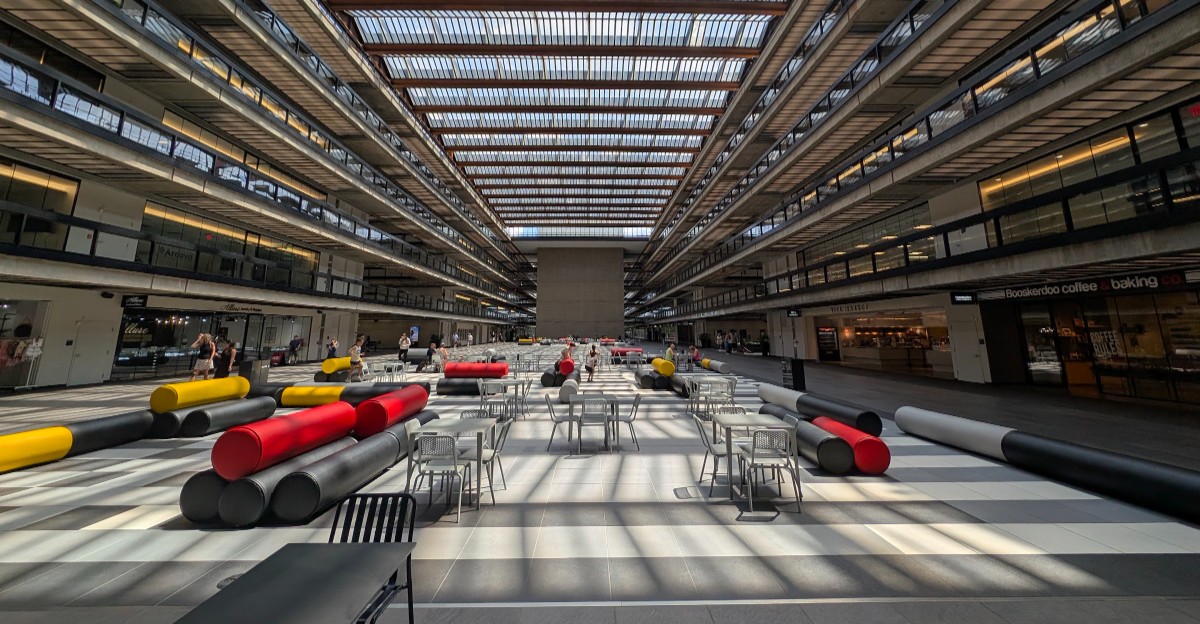
Two scientists once heard a strange hiss in their antenna and blamed pigeon droppings. That hiss turned out to be leftover energy from the birth of the universe.
They won a Nobel Prize for it.
The discovery happened at Bell Labs’ Crawford Hill research site in Holmdel, near the famous mirrored laboratory complex that later became Bell Works. Both locations are part of New Jersey’s remarkable scientific history.
Thousands of engineers helped shape the phones, lasers, and modems we use every day.
Then the scientists left, and the giant glass box went quiet for years. I like that nobody gave up on it.
Today you can grab pizza, borrow a library book, or play pickleball where history was made.
I can’t imagine a better plot twist for an old office building.
The Accidental Discovery That Earned A Trip To Stockholm
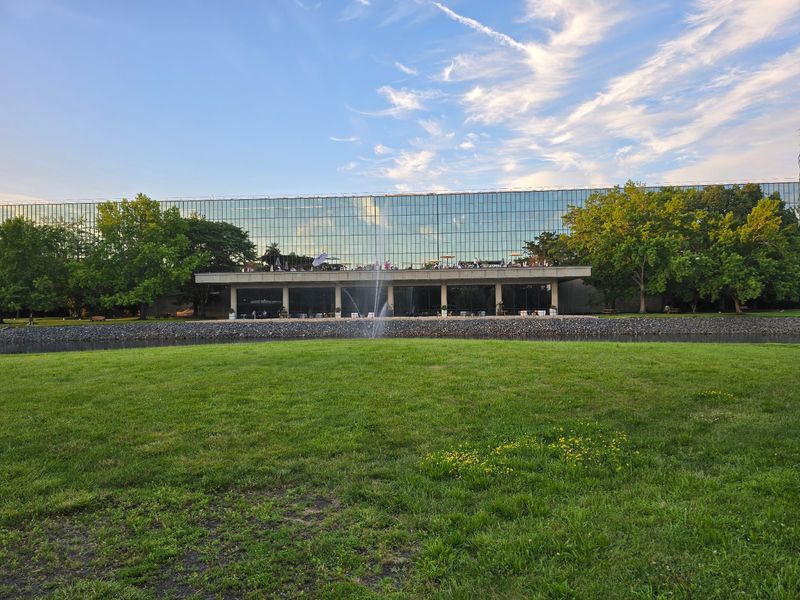
Pigeons almost got the credit. In 1964, Arno Penzias and Robert Wilson kept hearing a stubborn background noise in their giant horn antenna.
They cleaned the equipment and even shooed away nesting birds. The hiss stayed put, because it was coming from space itself.
That signal was cosmic microwave background radiation, a faint glow left over from the Big Bang. Their find gave strong support to the idea that the universe had a beginning.
In 1978, both men received the Nobel Prize in Physics.
Their work was connected to the Bell Labs Holmdel Complex, now known as Bell Works. Back then, it was a top research site for the Bell System.
Scientists there worked from 1962 until 2007.
Penzias and Wilson weren’t the only stars. The Holmdel research complex was associated with numerous Nobel Prize-winning scientists, including Steven Chu, whose laser-cooling research helped earn him the 1997 Nobel Prize in Physics.
I love how this story starts with frustration and ends with a cosmic answer. Next time static bugs you, remember it once rewrote science.
Not every annoying noise deserves that much respect, though. Your neighbor’s leaf blower still doesn’t count.
More Nobel Brainpower Than Your Average Office Park
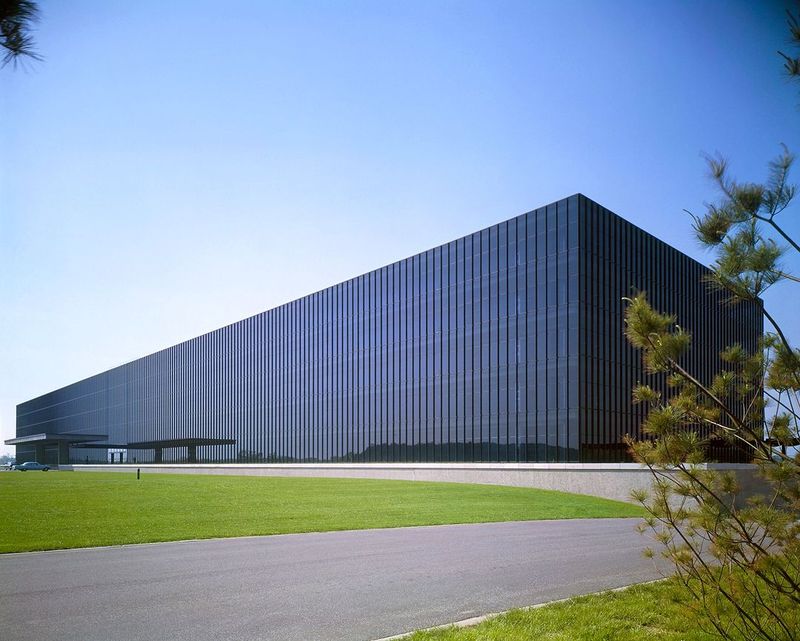
Lasers, magnets, and atoms slowed to a crawl. Those were everyday topics inside this building when Bell Labs ran the show.
Steven Chu did laser cooling research here, using light to slow atoms way down. That work helped earn him the 1997 Nobel Prize in Physics.
It sounds like science fiction, but it was real lab work in Holmdel.
Philip W. Anderson won the 1977 Nobel Prize in Physics for research into magnetic and disordered systems at Bell Labs.
Arthur Schawlow and Charles Townes published their groundbreaking laser proposal in 1958 while associated with Bell Labs’ Murray Hill research center. Both later received Nobel Prizes for related scientific contributions.
The Holmdel complex also pushed forward mobile phones, fax machines, microwaves, modems, solar power, and lasers. At its peak, more than 6,000 employees worked inside.
That’s bigger than plenty of small towns.
So when you check your phone in the atrium, there’s a fun irony. Some ideas behind that device took shape a few floors from where you’re sitting.
I think that’s pretty humbling.
Kids especially might enjoy hearing this. A school project about lasers hits different when you can visit the actual building connected to the story.
A Mirror So Big It Earned A Nickname
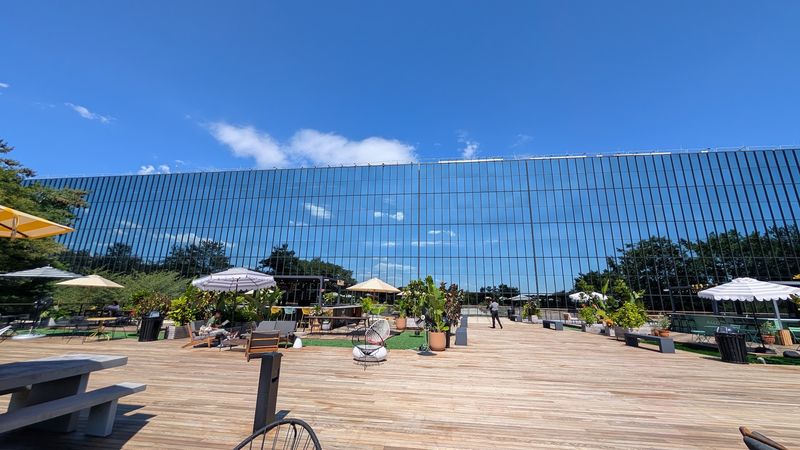
Eero Saarinen designed some famous stuff, including the Gateway Arch. Yet his only design in New Jersey is this sleek glass giant in Holmdel.
He worked on it between 1959 and 1962. Later expansions came from the firm Roche-Dinkeloo.
The mirrored exterior became so iconic that people called it the biggest mirror ever.
The building is six stories tall and stretches across about two million square feet. Its open atrium runs roughly a quarter mile.
That’s a solid warm-up walk before you even reach the coffee.
Saarinen also used inside-out hallways and open spaces. The idea was to help scientists bump into each other and swap ideas.
Good design can spark big conversations.
In 2017, the complex joined the National Register of Historic Places. That listing helped support its makeover into today’s Bell Works.
Bring a camera if you love architecture. The reflections change with the sky, so the building never looks quite the same twice.
Many people consider it one of the most iconic buildings in the Garden State. Honestly, it’s hard to argue with a structure that doubles as a giant selfie mirror.
Somebody Had To Invent The Word Metroburb
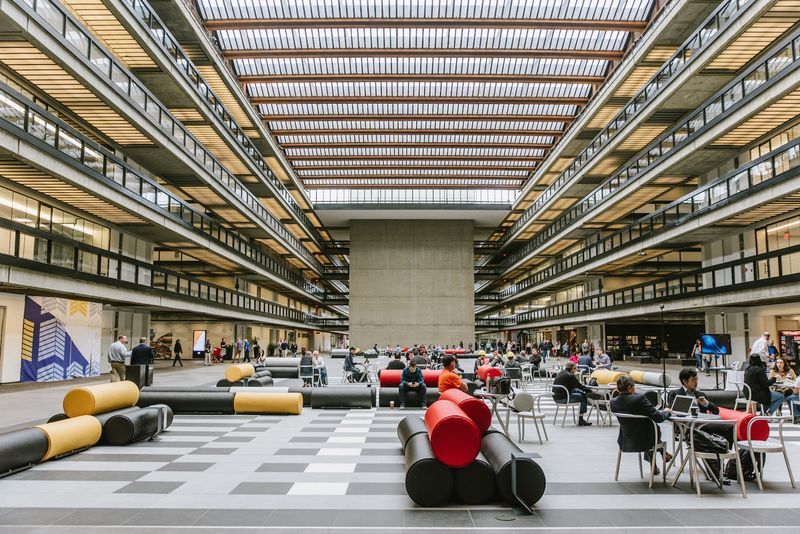
After Alcatel-Lucent moved out in 2007, the huge building sat empty. A lot of people wondered what could possibly fill two million square feet.
Somerset Development bought the complex in 2013 and took on a massive adaptive reuse project. The goal was bold.
Turn an old research lab into a lively mixed-use destination called Bell Works.
Ralph Zucker, CEO of Inspired by Somerset Development, coined a new word for it. He called it a metroburb, meaning a self-contained metropolis in suburbia.
Think city perks, but with easier parking.
Under one roof, you’ll find offices, shops, food, entertainment, wellness, and culture. The building is open daily from 6 a.m. to midnight.
Admission is free, which makes it an easy outing.
I think the best part is how the history stays visible. The long sightlines and soaring atrium still feel like Saarinen’s vision.
Now they just come with snacks and shopping bags.
The full address is 101 Crawfords Corner Road, Holmdel, NJ 07733. It’s an easy drive for much of central New Jersey.
Plan for more time than you expect, because wandering is half the fun here.
Your Lunch Plans Just Got Complicated In The Best Way
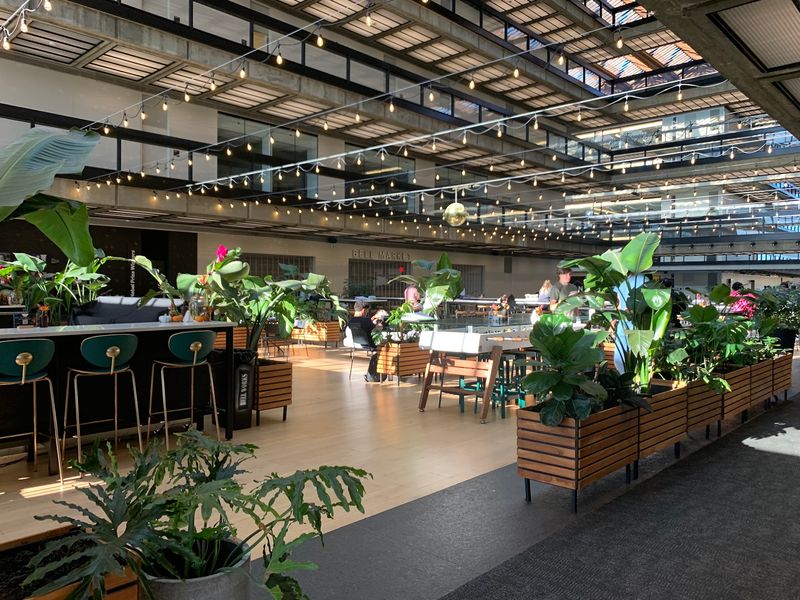
Wood-fired pizza, ramen, or a grain bowl? Bell Market makes you choose, and that’s a nice problem to have.
The food hall at Bell Works features Corbo & Sons with wood-burning stove pizzas. Jozu Sushi + Ramen covers sushi and noodle bowls.
Broadfork serves organic salads and bowls built around Garden State greens and grains.
You’ll also find deli sandwiches and breakfast items in the market. Groups with mixed cravings can split up and meet back at a table.
Nobody has to compromise on dinner.
Corbo & Sons also runs an Italian restaurant with fresh pastas and coastal Italian classics. Outdoor dining is available there too.
It’s a good pick when you want a sit-down meal.
Mabel offers full-service dining with coastal European-inspired bites. During warmer months, it also serves on the roof deck.
That view adds a little extra flavor.
My tip? Walk the whole food area before ordering.
Everything smells tempting, and decision regret is real. The place is big enough that a second lap counts as exercise, so I say you’ve earned dessert afterward.
Coffee, Pastries, And A Market Worth Planning Around
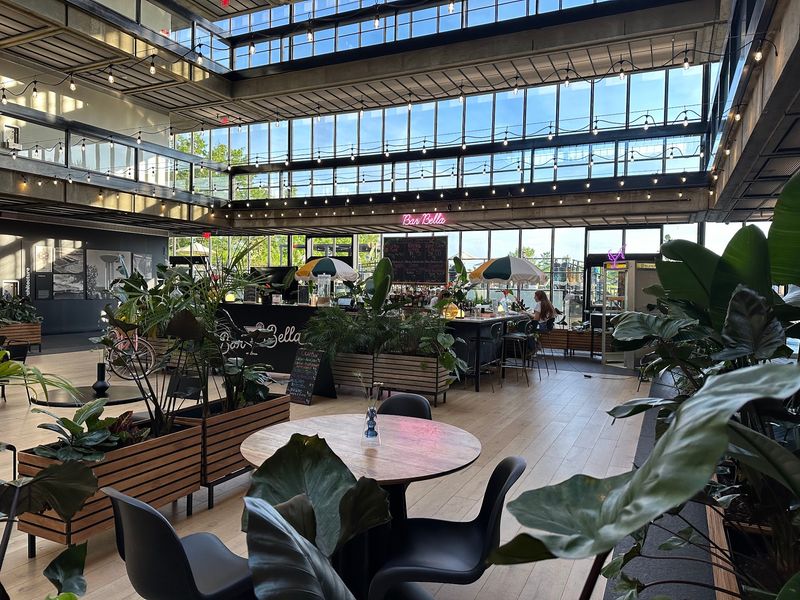
Morning people get rewarded here. The doors open at 6 a.m., and coffee is never far away.
Honeybell Bakery & Café bakes fresh pastries and serves handcrafted coffee. Grab-and-go options make it handy before a meeting.
Booskerdoo Coffee & Bakery adds locally roasted coffee and bakery snacks to the mix.
Two coffee spots in one building might sound like a lot. It isn’t, especially when the atrium stretches a quarter mile.
You’ll want fuel for the walk.
Then there’s the Bell Works Fresh Market. This weekly farmers and makers market sets up in the Main Atrium.
Local makers, bakers, and artists show off their goods.
Shopping continues at The Gathering Shops, which feature local and emerging brands. They even offer private shopping events.
It’s a fun way to find gifts you won’t spot at a big chain store.
I like that this side of Bell Works feels small and personal. The building is enormous, but the vendors keep it friendly.
Check the official schedule before you go, since market days can shift. A pastry in one hand and a handmade find in the other is a pretty great Saturday.
Escape Rooms, Pickleball, And A Stage For Showtime
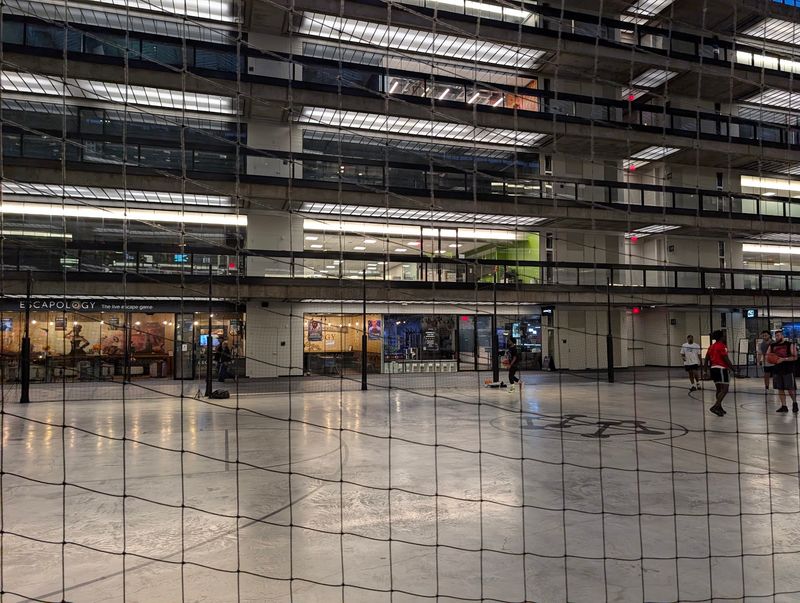
Fun takes up serious square footage at Bell Works. A former science lab now holds games, courts, and a real theater.
Jersey Pickleball Club offers facilities for the sport everyone’s suddenly obsessed with. Basketball courts are available too.
On a rainy day, that’s a big win for restless kids and grown-ups.
Escapology Holmdel brings escape room challenges to the building. There’s something fitting about solving puzzles where famous scientists once cracked real mysteries.
No Nobel Prize for escaping, sadly.
Bell Theater is a performance venue with a varied lineup. Musicals, plays, concerts, dance productions, and comedy shows all take the stage.
It supports both established and emerging artists.
Events fill the calendar as well. Sundown Sessions bring live music, and rooftop yoga keeps things calm.
Rotating art exhibits also give you something new to see on repeat visits.
My advice is to pair activities. Play a pickleball match, grab a bite, then catch a show downstairs.
You could easily spend a whole day without stepping outside. In a New Jersey winter, that sounds like a smart plan to me.
Bring The Dog, Borrow A Book, Stay Awhile
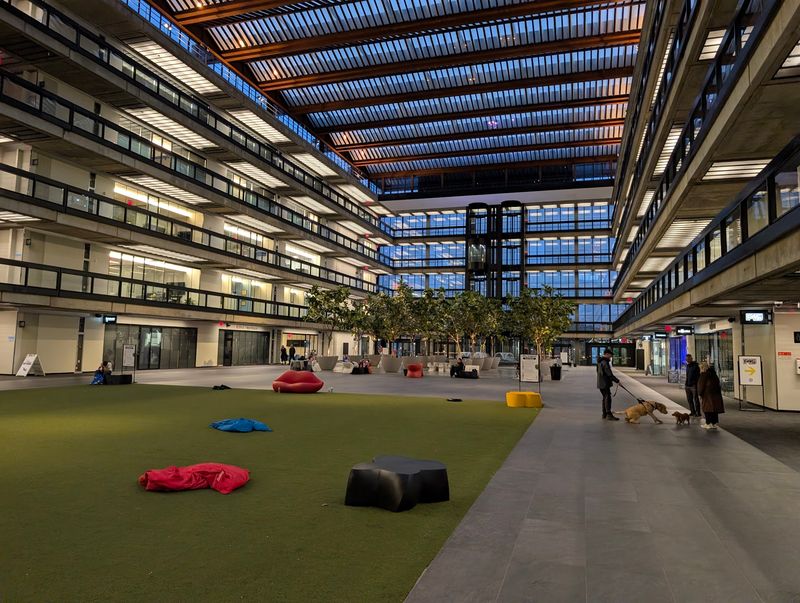
Leashes welcome. Bell Works is pet-friendly, so leashed dogs can join the outing.
The building even hosts Yappy Hours, which are social events for pets and their people. That’s a sentence Bell Labs engineers probably never expected.
Your pup gets a field trip through architectural history.
Bookworms have their own reason to visit. An 18,000-square-foot Holmdel Library sits right inside the complex.
It’s a calm spot for reading, studying, or homework.
I love that a library lives in a building famous for discovery. Kids can check out a science book where real science happened.
That connection feels pretty special.
The facility is ADA accessible, and admission is free. Families can spend hours without spending much.
Wellness events add another way to recharge.
For bigger moments, Pa’amon Catering provides on-site kosher catering for events. OceanFirst, a community bank, also has a spot here.
Small details like these make the place feel like a real neighborhood.
So pack a water bowl and a library card. Few places let you handle both errands and fun under one giant glass roof.
Your Next Desk Could Have A Famous Backstory
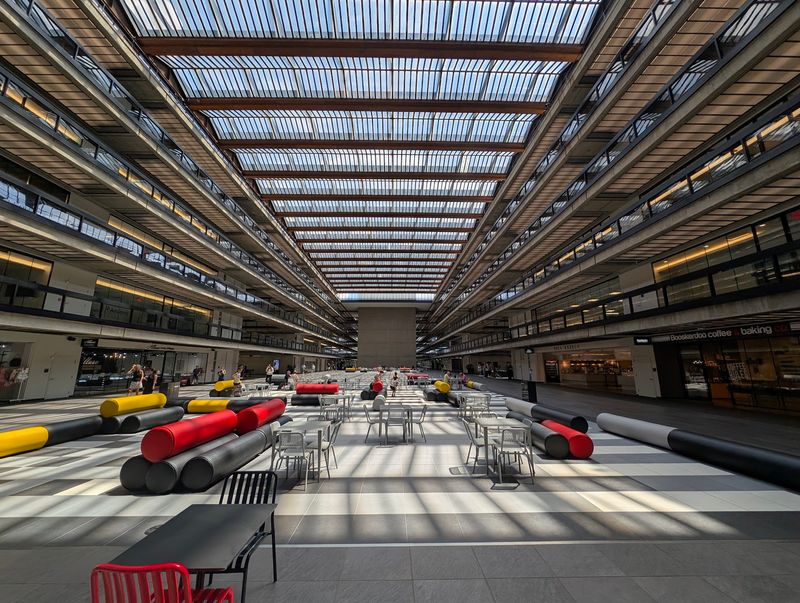
Work still happens here, just with better snacks downstairs. The building that once held more than 6,000 Bell Labs employees now welcomes businesses of all sizes.
Traditional office suites range from about 1,000 to 3,600 square feet. That’s room for small companies that want a standout address.
Clients will definitely remember the lobby.
CoLab is the coworking and innovation hub at Bell Works. Members get flexible workspaces, meeting rooms, phone booths, and fully furnished offices.
They also get 24/7 member-only access.
CoLab is pet-friendly too. Picture a coworker who only wants belly rubs.
Morale boost, achieved.
I believe Saarinen would appreciate this chapter. His open design was meant to spark collaboration between scientists.
Today it does the same for freelancers, startups, and remote workers across New Jersey.
Need a break? Lunch, coffee, and a quick walk through the atrium are all steps away.
That beats staring at your kitchen wall.
The long-term vision for Bell Works also includes a hotel and conference center. Who knows which future breakthrough might start at one of these desks?
This building has done it before, after all.
