Verdicts were once waited for in a courthouse, bunks still bolted to the wall in a jail, corn ground in a mill until the machinery went quiet. These buildings did not begin as attractions.
They simply outlived their first purpose and got a second chance. I have spent many favorite days in North Carolina wandering through places like these, drawn by the small stuff left behind: worn floorboards, old signage, the smell of aged wood and machine oil.
Driving between them takes you across the state, passing rolling hills and coastal plains, and the scenery keeps changing while the theme stays the same. Each stop feels like a conversation with the people who built it, the ones who worked there, the ones who left.
You can almost hear the echoes of footsteps and voices in the empty rooms. History that still feels lived in is rare, and this route is worth clearing a weekend for.
1. N.C. Transportation Museum, Spencer
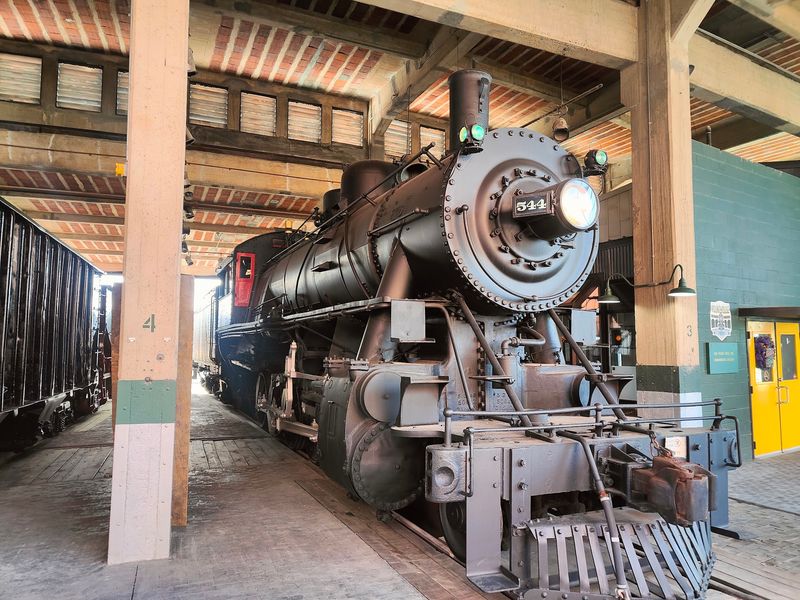
Roundhouses have a way of making grown adults go quiet, and this one did it to me within about thirty seconds. The scale is the first thing that lands, then the details start showing up.
Back in 1896, Southern Railway built its central repair complex here, and for decades it was the largest steam locomotive servicing facility on the line. Crews handled daily light repairs on locomotives, rebuilt engines, and moved freight between trains.
At its busiest the shops employed as many as 2,500 workers, which shaped the whole town around it.
Diesel changed everything. Steam engines needed less of what this place did best, so the main shops closed in 1960 and operations stopped entirely by 1979.
The first exhibits opened to visitors in 1983, and it is now a State Historic Site.
Automobiles, aircraft, and rail equipment fill the old workspaces, with North Carolina’s railroad story running through all of it. Give yourself more time than you think you need, because the grounds spread out further than the parking lot suggests.
Wear shoes you can walk in and plan around the weather, since plenty of the walking happens outdoors between buildings.
Address: 1 Samuel Spencer Dr, Spencer, NC 28159
2. Hamlet Depot & Museums
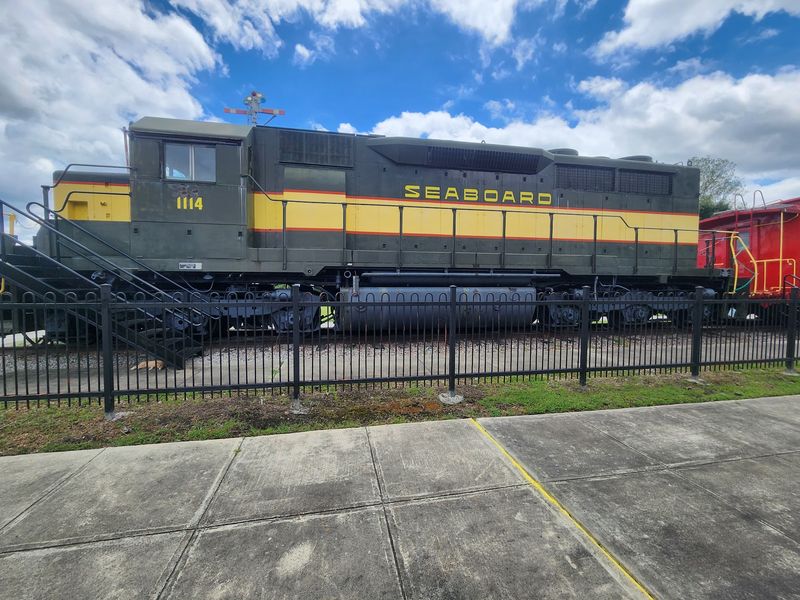
Few small-town buildings look this theatrical. Queen Anne styling, two stories of it, sitting right beside working tracks.
Built in 1900 for the Seaboard Air Line Railroad, the station served as both a passenger stop and a division headquarters. Somewhere between 28 and 32 passenger trains rolled through daily, which is how the town picked up the nickname The Hub of the Seaboard Railroad.
There was even an attached hotel here until fire took it in the 1930s.
The depot joined the National Register of Historic Places in 1971, and then came the part of the story that still amazes me. Between 2001 and 2004, crews moved the entire building 210 feet across the tracks and rotated it 90 degrees onto a new foundation.
Today it works double duty as an active Amtrak stop and a museum covering railroad history across the North Carolina Sandhills.
Interactive exhibits and displays fill the interior, and the porch is a fine spot to linger.
If you time your visit right, you might catch a train pulling in, which turns the whole place from museum back into station for a few minutes.
Address: 2 Main St, Hamlet, NC 28345
3. Old Brunswick County Jail in Southport
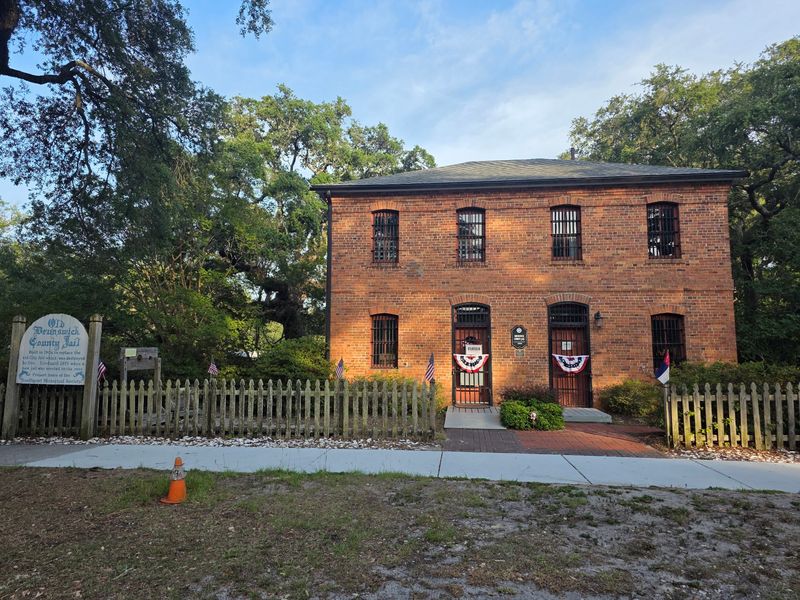
Two stories of brick, barred windows, and live oaks leaning overhead. It is the kind of building you walk past twice before realizing what it used to be.
Construction finished in 1904 at a cost of $6,738, and for more than 70 years it handled lockup duties for both the county and the town.
The layout tells you plenty about how things worked then. The jailer and his family actually lived on the first floor, while the second floor held two cells, each with four bunks, a commode, and a washbasin.
Operations wound down in 1971 once an annex was finished, and both buildings were dropped entirely in 1978 after the county seat moved.
The Southport Historical Society took over upkeep in 1984 and put serious work into restoring it.
Doors opened to visitors in 2004, and tours let you step directly into the original cells.
Standing inside one gives you a blunt sense of early twentieth century confinement that no display case can match.
Pair it with a slow wander through the surrounding streets, because the whole town rewards an unhurried pace.
Address: Corner of Nash and Rhett Streets, Southport, NC
4. Davidson County Historical Museum, Lexington
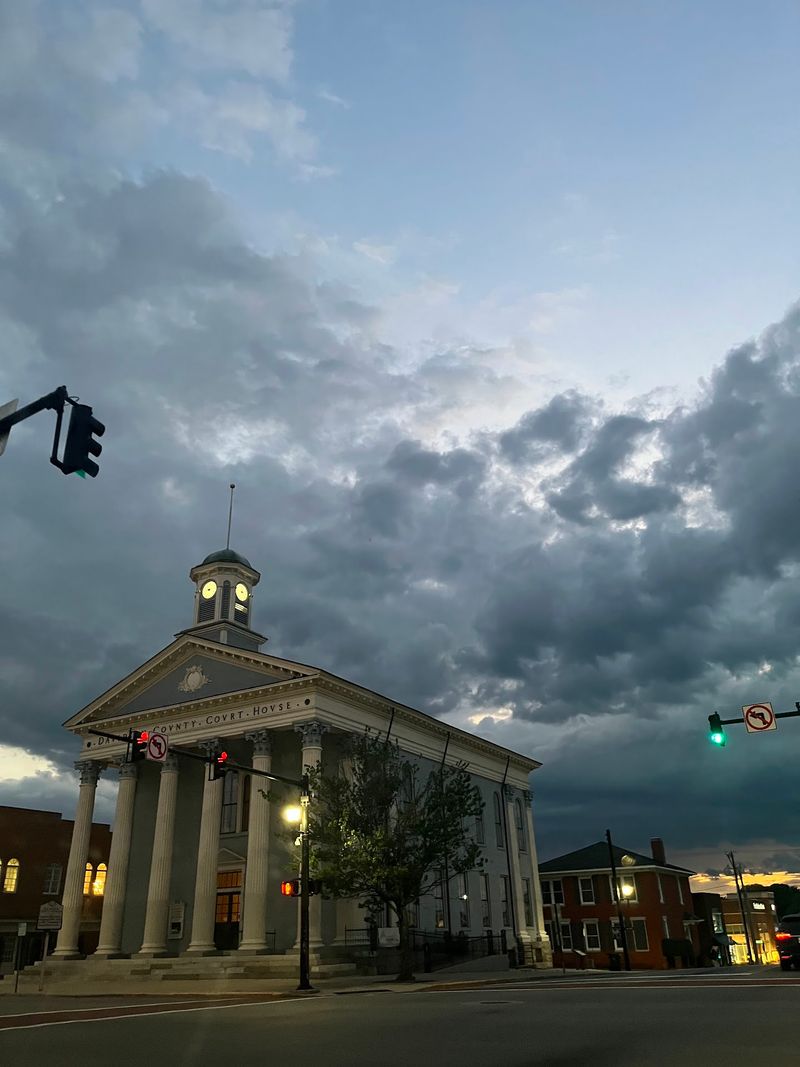
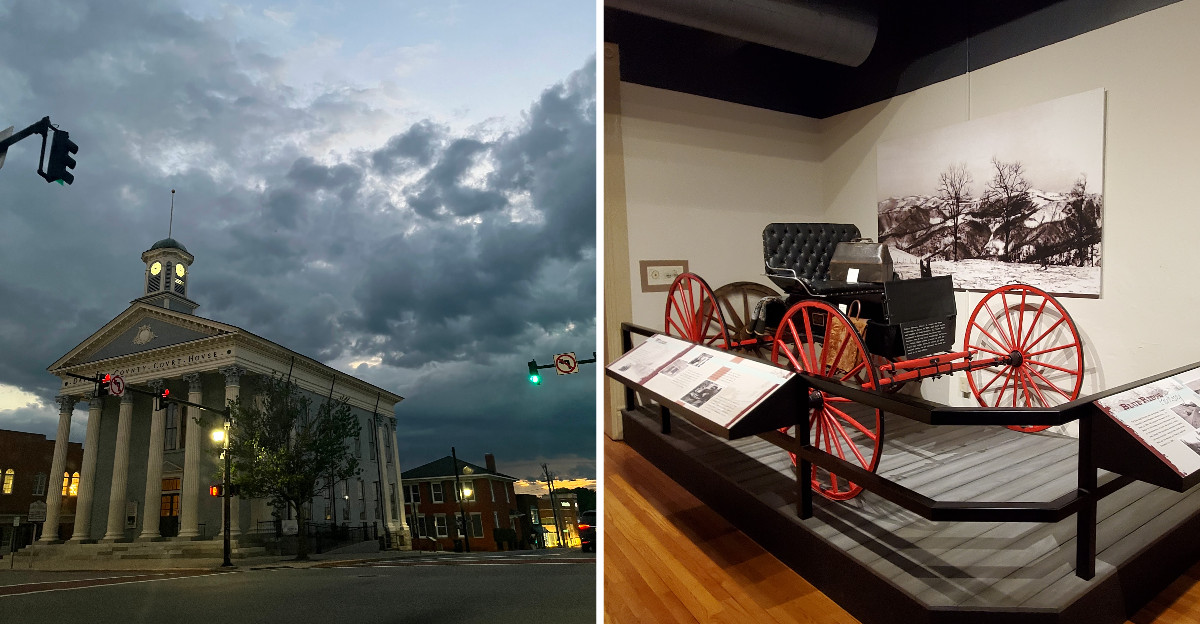
Columns, a cupola, and a square that still organizes the whole downtown around it. My first reaction was simply that they do not build civic spaces like this anymore.
Dating to 1858, the structure is considered one of the finest antebellum county courthouses in the state, with Greek Italianate Revival details that hold up beautifully.
For a full century it was where justice happened in Davidson County.
Head upstairs and the old courtroom still has its bar, judge’s bench, jury box, and a holding cell tucked nearby. Those survivals are what make the visit stick with you.
A new courthouse arrived in 1958, and the 1858 building became the Old Courthouse.
The museum started in 1976 inside that former courtroom, then gradually spread through the entire building. Exterior restoration wrapped up in 2014.
Permanent and rotating exhibits cover the natural history and cultural heritage of the county, with interactive pieces mixed in and educational programming throughout the year.
It is an easy stop to combine with lunch and a walk around the square, and I would budget an hour minimum to do the upstairs justice.
Address: 2 South Main Street, Lexington, North Carolina
5. Wilkes Heritage Museum in Wilkesboro
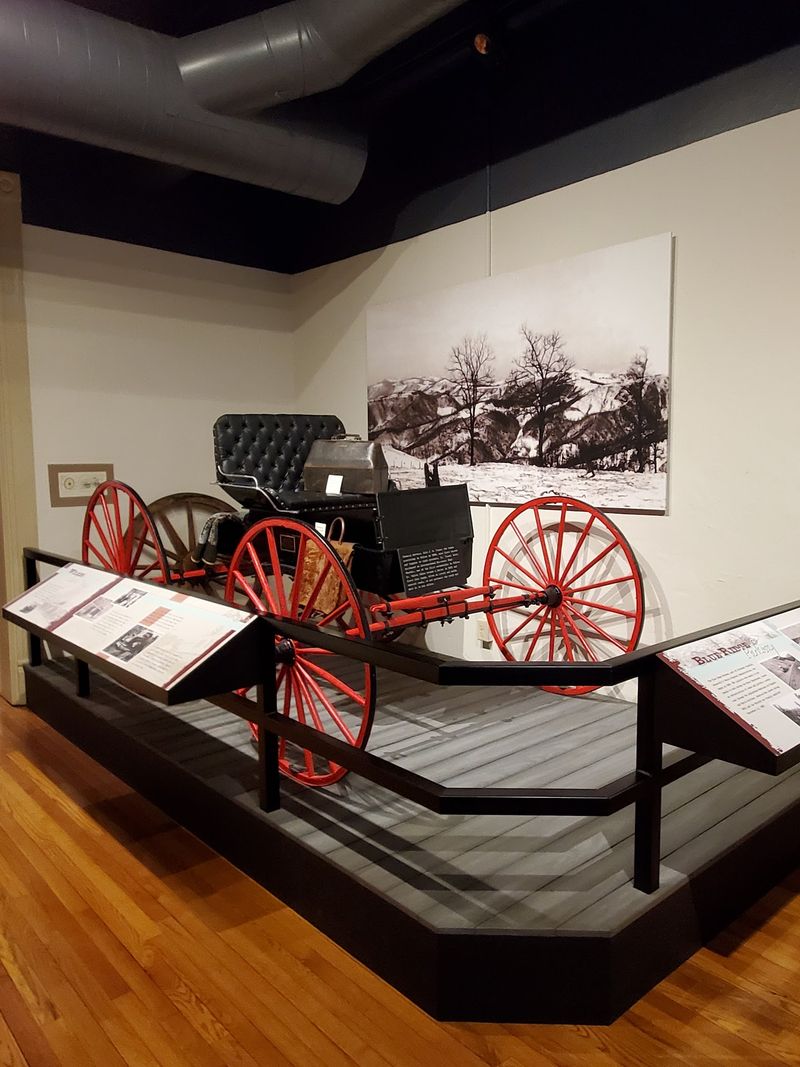
Stock car racing and a courthouse do not seem like natural roommates, and yet here they are under one roof. That combination alone sold me on the stop.
The main building is the restored 1902 Wilkes County Courthouse, though the organization also looks after the Old Wilkes Jail from around 1859 and the Robert Cleveland Log Home from about 1779.
Things began in 1968, when the group formed with one goal, returning the old jail to its 1860 appearance.
That mission widened over the years to include the courthouse and other historic properties nearby. The courthouse itself opened in its museum role in November 2005.
Exhibits run in unexpected directions. Early settlement, the roots of stock car racing, moonshining history, military service, medicine, and the traditional music that this corner of the foothills is known for.
The Blue Ridge Music Hall of Fame lives here too, which is a nice bonus if mountain music is your thing.
Three separate buildings mean you can stretch the visit or keep it short, depending on your energy.
I would start with the log home for contrast, then work forward through time.
Address: 100 East Main St, Wilkesboro, NC 28697
6. Henderson County Heritage Museum
Downtown here has that easygoing mountain-town rhythm, and the old courthouse anchors the whole scene. You cannot really miss it.
Built in 1905, the Historic Henderson County Courthouse has been a centerpiece of the main street for well over a century.
Inside, it now works as a history museum rather than a place of law.
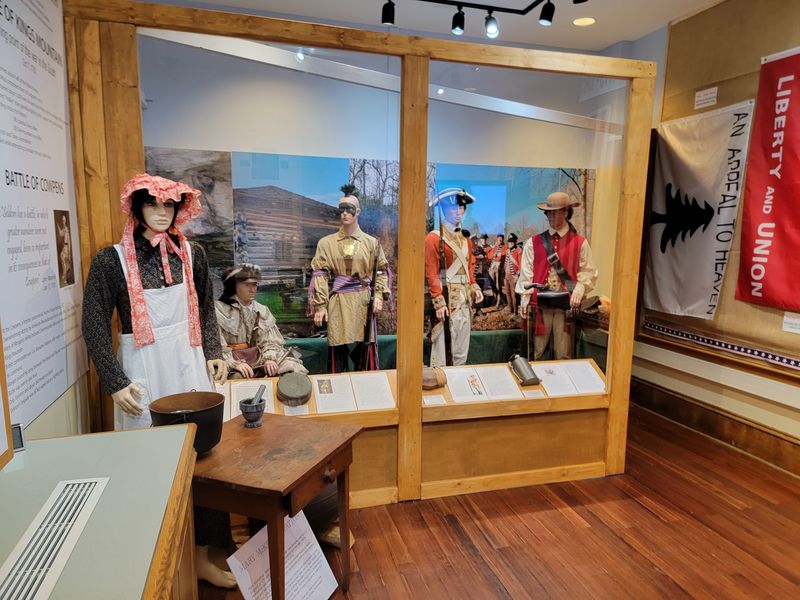
Displays, artifacts, collections, lectures, and rotating exhibitions cover the history, culture, and heritage of the county. What surprised me was how much attention goes toward everyday life, the small details of how early residents actually got by.
Space is set aside to honor veterans from all wars, and there is a notable Civil War display as well.
Together it gives you a clear picture of how the area changed over generations.
Since it sits right in the walkable core of downtown, it slots easily into an afternoon without any driving hassle.
I would go in with an hour to spare, then spill back outside onto the sidewalks afterward.
The building itself is worth a slow look from the outside too, especially the details up near the dome.
Address: 1 Historic Courthouse Square #4, Hendersonville, NC 28792
7. Historic Railroad Depot, Hendersonville
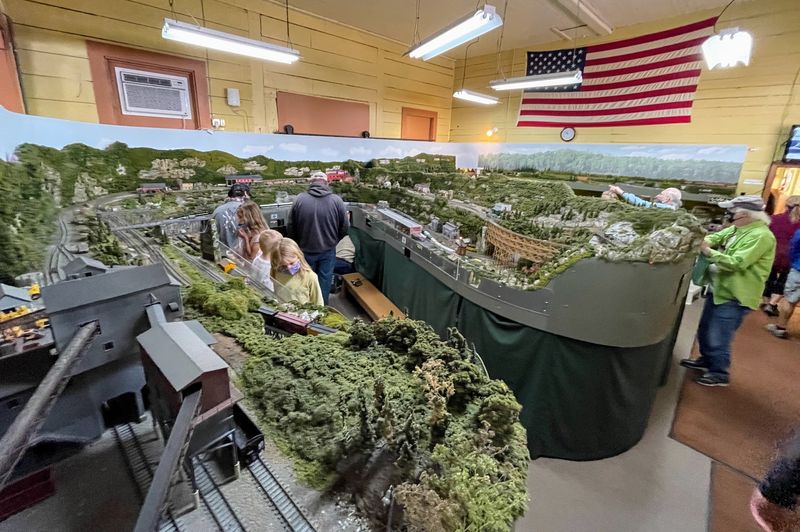
A red caboose parked outside gives away what waits inside, and kids tend to spot it before adults do. I did not expect to lose an hour here, but I did.
Southern Railway put up this depot in 1902, replacing an 1879 station that had grown too small for the traffic. The older building was demoted to freight house duty.
Passenger service ran for decades with segregated waiting rooms, alongside steady freight moving through town, until it ended in 1968.
For a stretch afterward, the open pavilion section became an informal gathering spot where men waited on job offers.
Landmark recognition came in 2000, and the city has leased the building to the Apple Valley Model Railroad Club since 1992.
The museum inside features an elaborate HO scale layout recreating Western North Carolina scenery, plus an outdoor G scale garden railway and assorted railroad artifacts.
Hours are limited, so check before you go rather than showing up hopefully.
Club members often run the trains themselves and will happily answer questions, and the caboose next door is open to walk through.
Address: 650 Maple St, Hendersonville, NC 28792
8. Murray’s Mill Historic Site, Catawba County
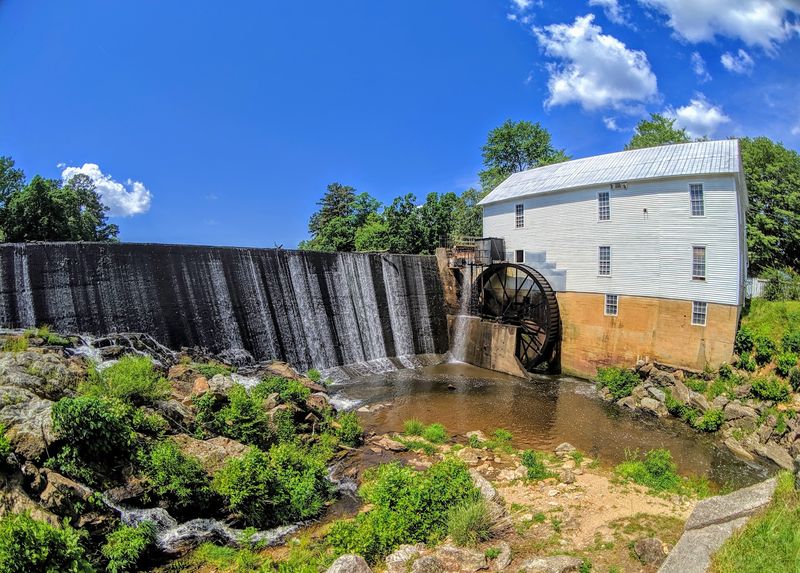
Water, a big wooden wheel, and hills rolling off in every direction. Eastern Catawba County has a softness to it that catches you off guard.
William Murray built the first mill here in 1883. His son John later replaced it with the two-story mill and waterwheel you see today, finished in 1913.
Corn and wheat came in, flour and meal went out, and the surrounding community depended on it.
The property grew to include an 1890s general store and an 1880s wheat house. Three generations of the family kept things running until 1967, when rising taxes and bureaucratic headaches finally shut it down.
The Catawba County Historical Association stepped in during 1980, and after an eight-year restoration the site reopened to visitors in 1988.
It now carries National Register status and operates as a museum.
You can explore the 1913 mill, the Murray and Minges General Store, the wheat house that serves as an exhibit gallery, and the 1913 John Murray House.
Walking trails wind across the grounds, so bring a camera and leave time to just wander near the water.
Address: 1489 Murray’s Mill Rd, Catawba, NC 28609
9. Freedmen’s Schoolhouse in Smithfield
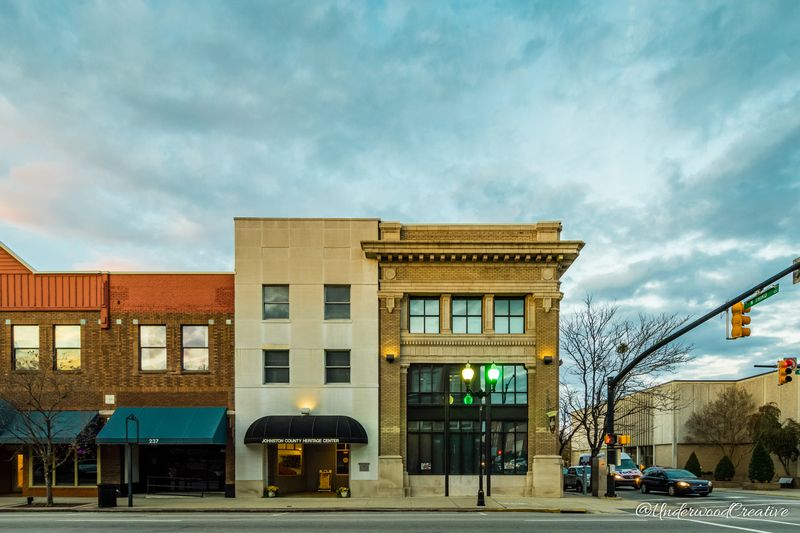
Small, plain, and unbelievably rare. This is the only known remaining freedmen’s schoolhouse in North Carolina, which is a sentence worth sitting with for a moment.
Construction happened between 1868 and 1869, carried out by the federal Freedmen’s Bureau with guidance from the American Missionary Association.
The purpose was straightforward and enormous at once, providing education to formerly enslaved African Americans during Reconstruction.
Classes continued here for generations of African American students long after those first years.
Bringing it back took nearly a decade of work by the Historic Smithfield Foundation and the Johnston County Heritage Center, aimed at returning the building to its 1869 appearance and opening it as an interpretive site.
Visits are often arranged by appointment, so reach out ahead of time rather than dropping by.
Inside, you learn about its central role in African American education across the state.
There is also an online database where researchers and descendants can search for names of students who attended more than a century ago.
I left thinking about how much weight one modest wooden building can carry, and how close it came to disappearing entirely.
Address: 308 N. Fourth Street, Smithfield, NC 27577
10. Charlotte Hawkins Brown Museum, Gibsonville
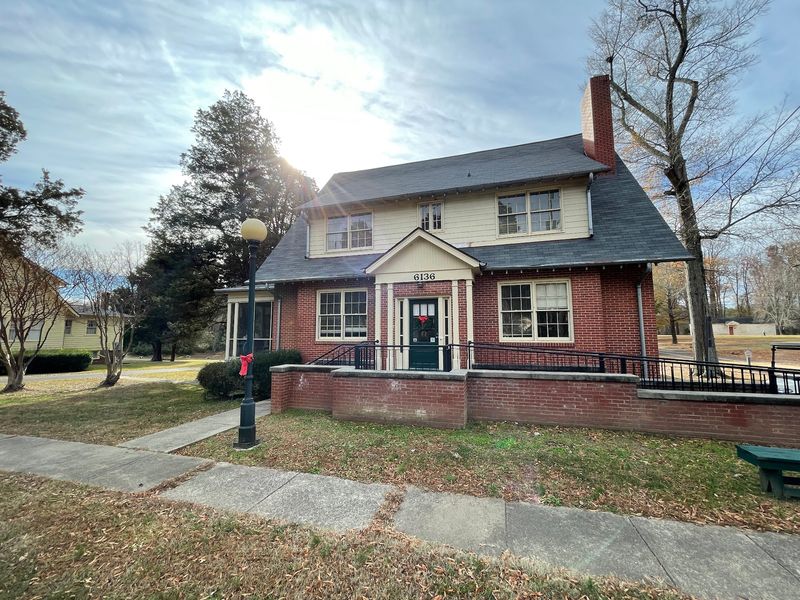
A blacksmith shop became a nationally respected school, and that alone tells you what kind of determination built this place.
Dr. Charlotte Hawkins Brown founded the Alice Freeman Palmer Memorial Institute in 1902, at just 19 years old.
Over 70 years it expanded into a campus of 14 buildings spread across several hundred acres.
Early instruction leaned toward agricultural and industrial training, then shifted into a fully accredited college preparatory and social finishing school with a national reputation. More than a thousand African American students passed through before it closed in 1971.
Decline followed under different owners until the General Assembly set aside funds in 1983 to plan a state historic site.
The state acquired 40 acres of the core campus, and the site opened in November 1987 as North Carolina’s first state historic site devoted to African American history and to a woman.
Canary Cottage, Dr. Brown’s furnished home, and the Carrie M. Stone Teachers’ Cottage were carefully restored.
Exhibits connect her work to African American education, women’s history, and broader social history.
Walking the restored grounds gives the whole story a scale that photographs simply cannot deliver.
Address: 6136 Burlington Rd, Gibsonville, NC 27249
