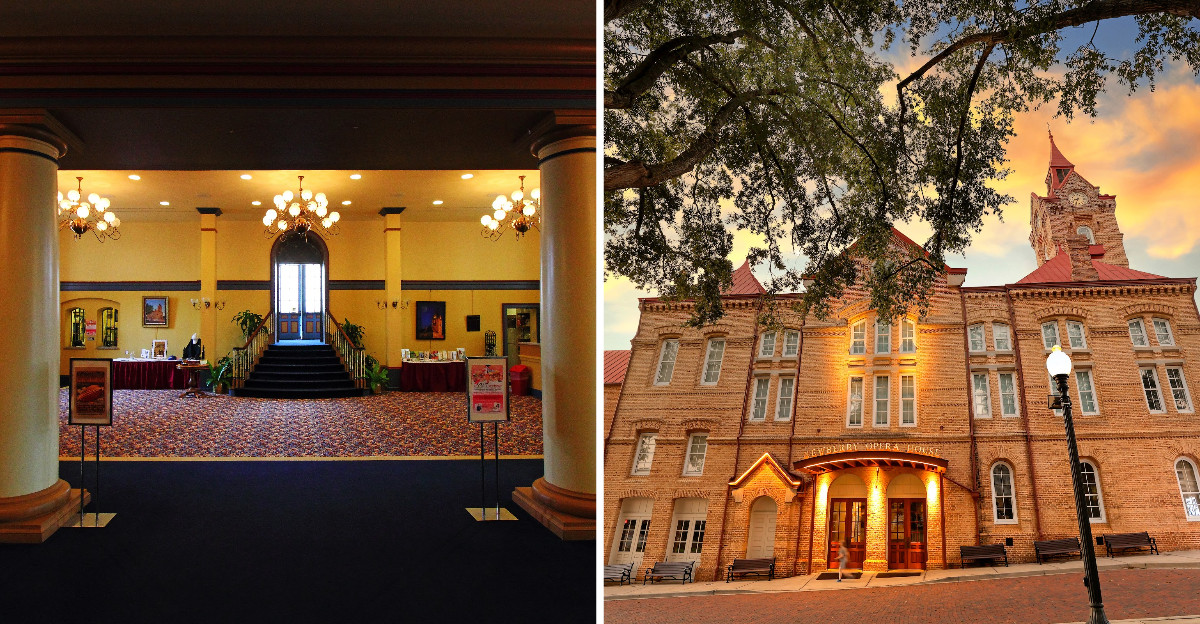
Clock tower rising above a row of small-town storefronts like a piece of another country is not what I expected on a quiet afternoon drive. The brick landmark has arched windows, granite trim, and a weather vane shaped like a fish spinning in the breeze.
Inside, the hall is small enough to hear a violin breathe, which helps explain why audiences drive long distances to sit in one of those four hundred seats. What struck me most was learning how close the building came to being knocked down, and how ordinary residents refused to let that happen.
Roles changed over the decades: town hall, jail, silent film house, empty shell, and now one of the most beloved stages in South Carolina. I walked out thinking about how rare it is to stand in a place that has held so many jobs and still feels completely itself.
Buildings do not need to stay the same to keep their soul.
Built in 1881 for a Town That Needed Everything at Once
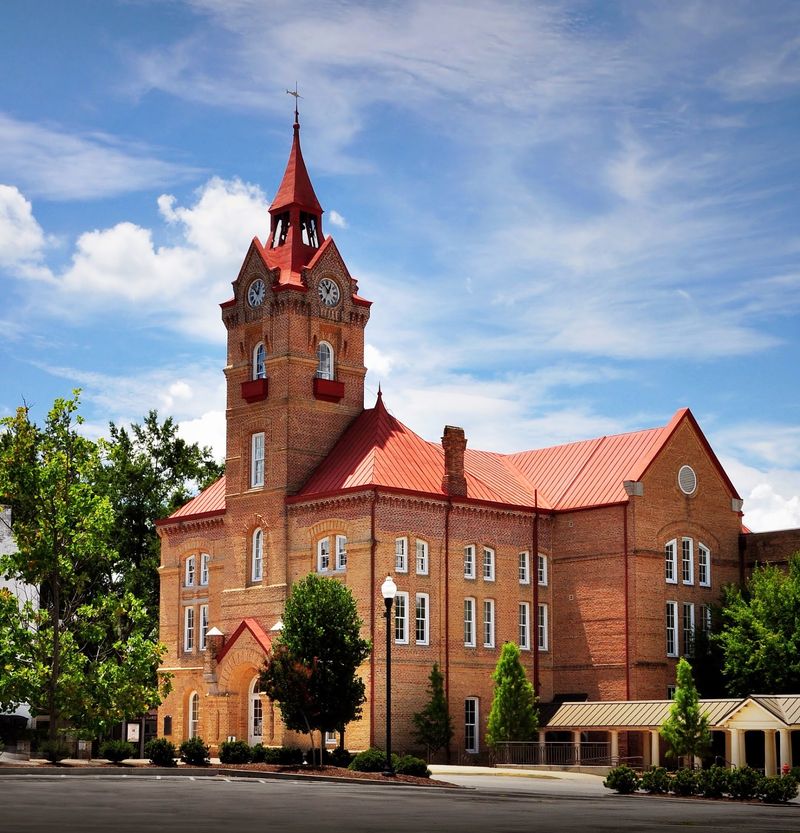
Most towns build a theater or a city hall. Newberry built both, stacked on top of each other, and somehow made it look elegant.
The building was completed in 1881 at a cost of roughly thirty thousand dollars, which was an enormous commitment for a small South Carolina town recovering from hard years. Architect G.
L. Norrman designed it with a mix of French Gothic and Victorian civic styles, with touches that echo the work of Philadelphia architect Frank Furness.
What surprised me was the ground floor. It originally held the fire engine room, council chambers, a clerk’s office, a police station, and three jail cells.
Upstairs, the performance hall measured about 53 by 52 feet with a stage 29 feet deep, plus a ticket office, a green room, a cloakroom, and three dressing rooms.
Materials came from close to home, with bricks from three Newberry brickyards and granite pulled from a nearby quarry. That local sourcing is part of why the place feels rooted rather than imported.
The 130-foot clock tower holds an E. Howard town clock set about 90 feet above the sidewalk, topped by a garfish weather vane.
Standing outside on a quiet afternoon, I found the mix of jail cells and orchestra seats oddly charming, a reminder that practical towns build practical landmarks.
That unusual combination of civic offices and entertainment space also explains why the building became so important locally, serving everyday practical needs downstairs while giving residents a place to gather upstairs.
When Touring Stars Made Newberry the Entertainment Center of the Midlands
Hard to imagine now, but there was a stretch when this little hall earned the nickname of the entertainment center of the Midlands.
Touring companies rolled in from New York with full plays. Between those visits came singers, public speakers, magicians, minstrel shows, and even boxing matches, which is a lineup no modern venue would attempt in a single season.
Edwin Booth performed here. So did members of the Barrymore family, and later Tallulah Bankhead, names that connect this small South Carolina stage to the biggest theatrical dynasties in American history.
I kept trying to picture what an evening looked like back then, with families arriving on foot from a few blocks away and the clock tower marking the hour above them.
Travel was slower, entertainment was rarer, and a night at the opera house was a genuine event rather than a casual outing.
That history still shapes how the room feels today. The stage is not huge, the ceiling is not soaring, and the audience sits close enough that performers can read faces in the front rows.
Knowing that Booth once stood on roughly the same spot gave the whole visit a weight I did not expect from a town of this size.
For a relatively small town, attracting performers of that caliber says plenty about the Opera House’s reputation, especially during an era when touring required long train journeys and considerably more complicated logistics.
The Movie Years That Quietly Replaced Live Performance
Entertainment habits shifted fast in the early 1900s, and buildings like this one had to adapt or close.
Silent films arrived, then talkies, and audiences who once waited months for a touring troupe could suddenly see a new picture every week. The Newberry Opera House followed the crowd and became a movie theater during the 1920s.
Film had actually appeared here earlier, with a screening of The Birth of a Nation inside these walls in 1915.
For decades the projector replaced the footlights, and the hall that once hosted magicians and orchestras filled instead with the flicker of the screen.
That era ended in 1952 after the final film, The Outlaw, played to its last audience. Then the doors closed on the theater entirely.
I find that part of the timeline strangely moving, because it is the moment when a building stops being useful to the people who once loved it.
By 1959 demolition was a real possibility, the same fate that erased countless historic theaters across the country during those years.
Knowing how narrowly it escaped changes the way you look at the brickwork. Every arch and window survived a decision that could easily have gone the other way.
That transition also shows just how adaptable the old hall had already become, changing along with its audiences instead of remaining frozen as a nineteenth-century performance space nobody had much reason to use.
A Community That Refused to Let the Wrecking Ball Win
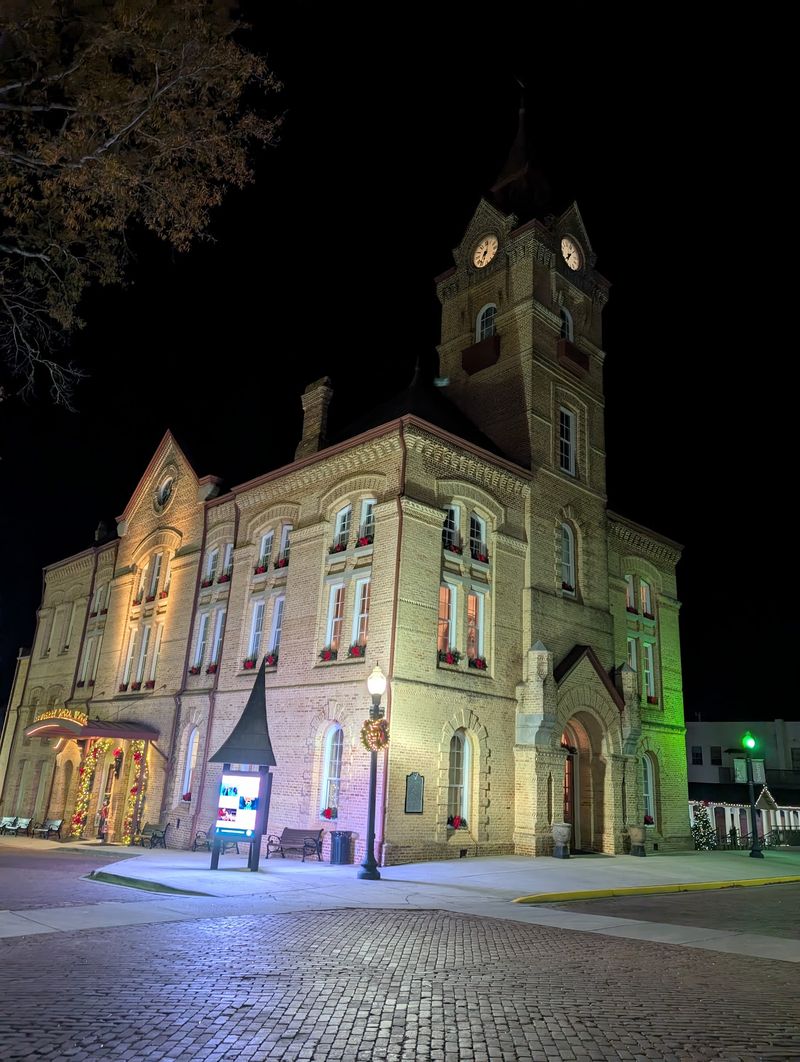
Saving a building this size takes stubbornness, and Newberry clearly had plenty.
In 1969 the Newberry Historical Society began pushing for preservation, and that local effort grew into something larger. The following year, in 1970, the Opera House was added to the National Register of Historic Places, which gave it a layer of recognition and protection it badly needed.
City government continued using the building until the mid-1990s, when offices finally moved out.
The Newberry Opera House Foundation then formed to study the structure and plan a full restoration, a project far bigger than patching a roof.
Exterior work and window replacement wrapped up in 1994. Interior renovation began in 1996, guided by architects Craig Gaulden Davis of Greenville.
The total cost came to roughly 5.5 million dollars, and the reopening arrived in 1998 after decades of uncertainty.
What gets me about this chapter is that none of it was inevitable. A group of residents decided a 19th century building mattered enough to fund, argue over, and rebuild piece by piece.
Walk the sidewalk out front today and you are essentially looking at the result of a long community argument that ended well.
Old Bones, Modern Sound, and Signatures on the Elevator Walls
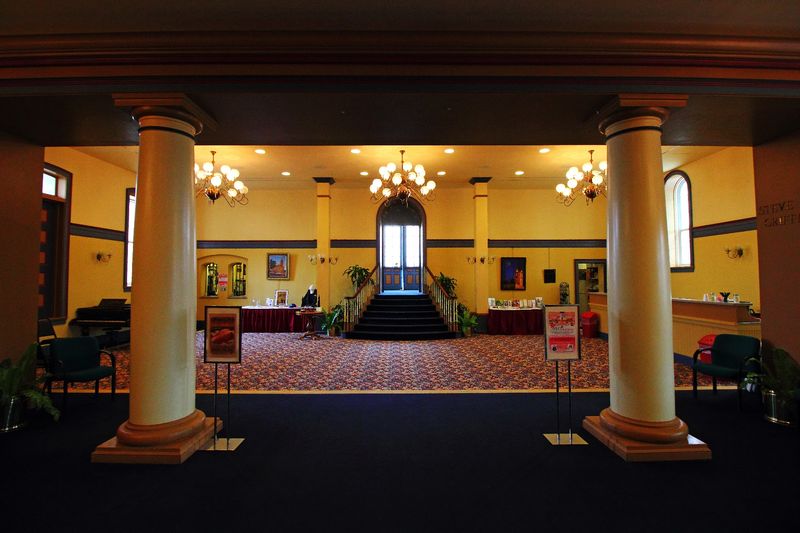
Sit anywhere in this room and you will notice the same thing everyone mentions: the sound.
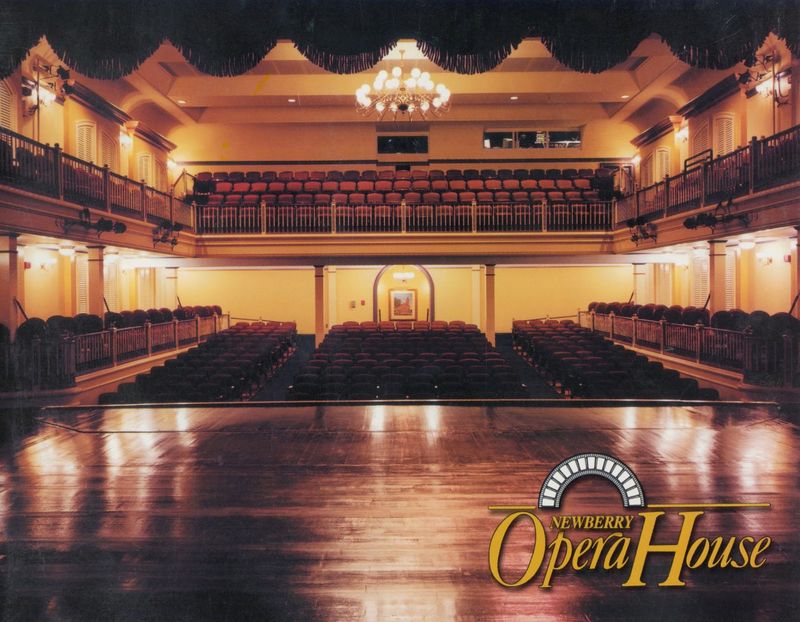
The restored horseshoe balcony curves above the floor seating, and the original proscenium arch still frames the stage, so the historical bones are fully visible. Beneath that vintage look sit modern lighting, upgraded acoustics, and accessibility features built for contemporary touring shows.
Here is the detail I loved most. The 1881 architects worked before electric amplification existed, so they had to shape the room itself to carry a voice to the back wall.
That old limitation now works as an advantage, giving the hall a warm, close sound that performers notice immediately.
Renovation added about 10,000 square feet, including a loading dock, an elevator, a rehearsal stage, and proper dressing rooms, turning a small historic hall into a working production facility.
Then there are the signatures. Thousands of performers have signed the green room and elevator panels over the years, with names ranging from Willie Nelson to Loretta Lynn to members of Jefferson Airplane.
A 1.8 million dollar refresh in 2023 focused heavily on ADA improvements, so more visitors can move through the building comfortably.
The result is a boutique-sized theater where roughly 400 seats all feel close to the action.
How One Stage Keeps a Whole Downtown Alive
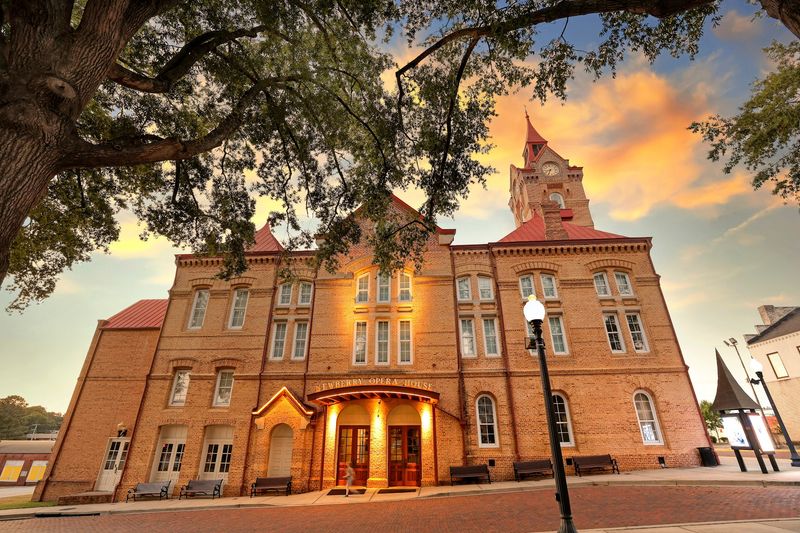
More than 200 performances a year run through this building, which is a remarkable number for a town this size.
The calendar swings widely, covering touring musicians, Broadway-style productions, classical concerts, comedy, dance, and local shows. That variety is why regulars keep returning season after season, and why some visitors drive several hours each way for a single evening.
Roughly 100,000 people come to Newberry annually because of the Opera House, and they eat, shop, and wander downtown while they are here.
A 2023 economic impact study from the University of South Carolina found the venue generates close to 49 million dollars in yearly economic output for the county and region, supporting 696 jobs and 17.9 million dollars in labor income.
Education is a big part of the mission too. Through Newberry Arts For All, third, fourth, and fifth graders attend performances, and the Opera House offers ticket scholarships, school shows, STEAM camps, and free community concerts.
In 2008 it received the League of Historic American Theatres Outstanding Historic Theatre Award.
Parking is easy, the staff is genuinely helpful, and nearby restaurants make a pre-show dinner simple to plan.
Address: 1201 McKibben Street, Newberry, South Carolina
