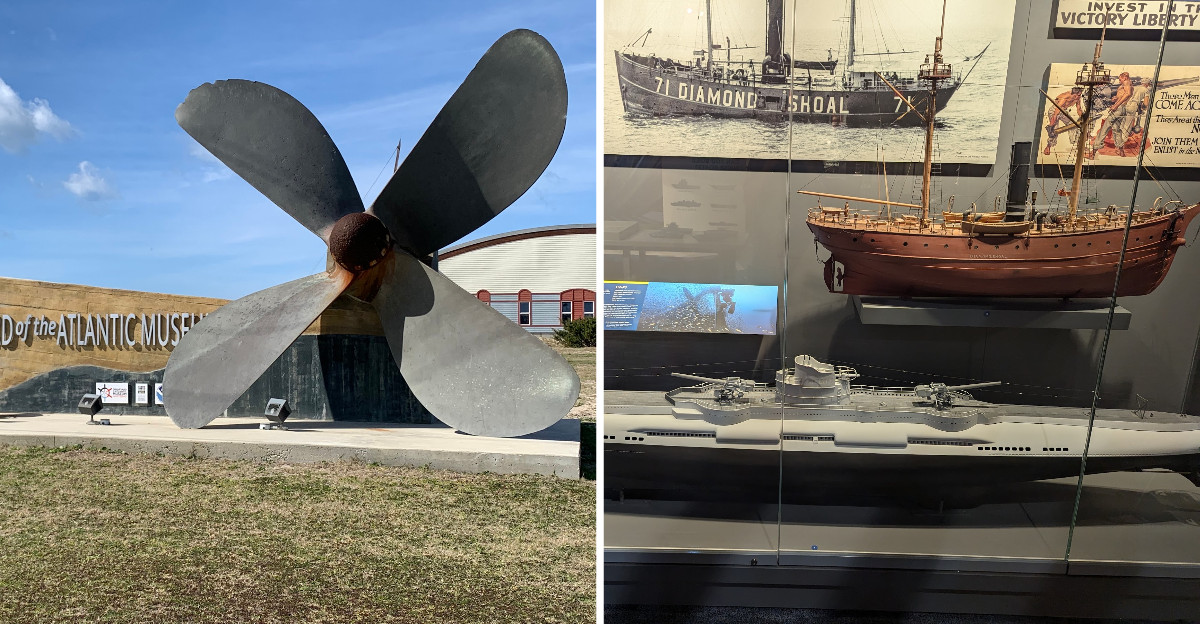
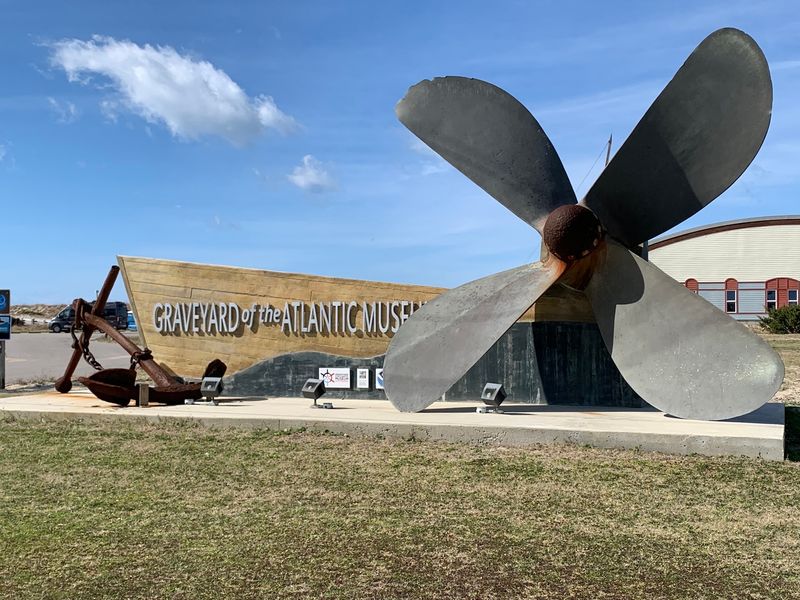
Thousands of ships rest on the ocean floor off this North Carolina coast, their stories buried in sand and saltwater until a small museum decided to pull them back into the light. The building sits in a quiet village where ferry engines rumble and salt hangs in the air, but the calm outside disappears once you step through the door.
Cannons, figureheads, and rescued objects fill the rooms, each one tied to a wreck that once terrified sailors. Between 2,000 and 5,000 vessels went down in these waters, a number that stops being abstract when you see the faces of the people who survived.
Hours disappear while reading about captains and crews who fought the shoals and the storms. Leaving with sandy shoes and a head full of shipwreck tales, the ocean feels different than it did before.
This place grabs hold and does not let go.
Why These Waters Swallowed So Many Ships
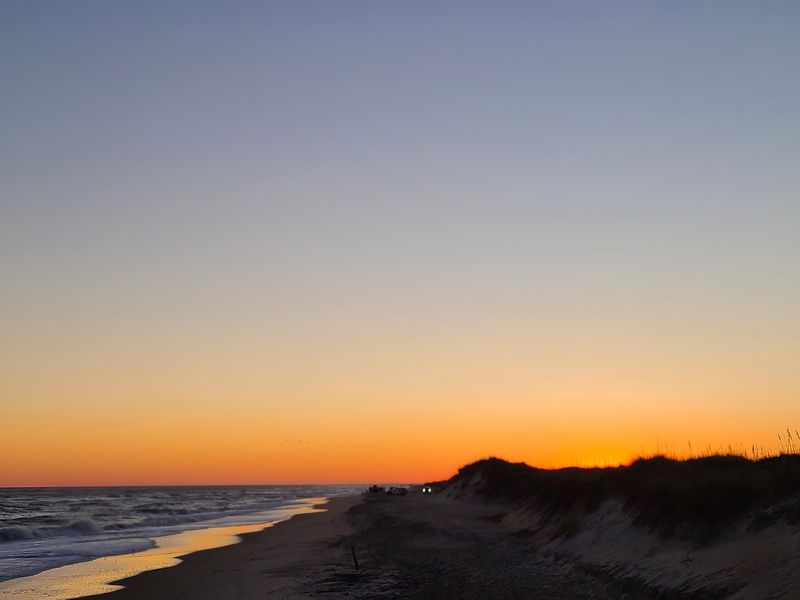
My first stop inside was a map, and it made my stomach flip a little. Off Cape Hatteras, the sandbars called Diamond Shoals reach far out into the sea, hiding just under the waves.
They move with storms and tides, so a safe path one year could be a trap the next.
Out here, two big ocean currents meet. The warm Gulf Stream flows up from the south, while the chilly Labrador Current pushes down from the north.
When they bump into each other, the water gets rough and hard to predict.
Add sudden storms and hurricanes, and you get a pretty scary recipe for sailors. Ships also crowded these waters because the route was a busy trade path along the coast.
More ships plus more danger meant more wrecks, simple as that.
I liked how the museum explained all of this without making it feel like a science lecture. The displays use clear pictures and short text, so even younger visitors can follow along easily.
By the time I moved on, I understood why the nickname stuck so firmly. Honestly, I also started looking at the calm beach outside with slightly more careful eyes.
A Building Shaped by the Sea
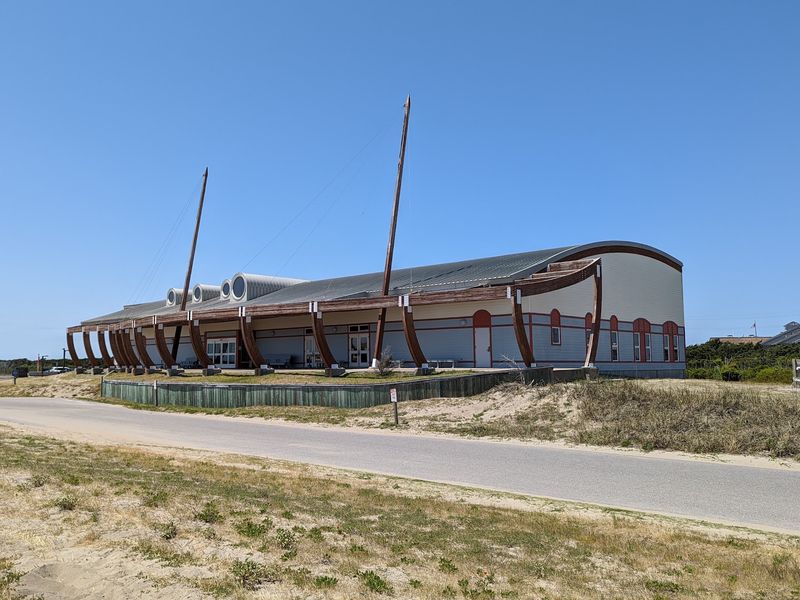
One reviewer warned not to let the outside fool you, and I get it now. From the parking lot, the museum looks sleek and modern, with curves that remind me of a ship’s hull.
It sits raised off the ground, ready for the storms that visit Hatteras.
The design is not just for looks. Its shape and height help it stand up to the same wild weather the exhibits talk about.
I thought that was a clever touch, almost like the building itself is part of the story.
Inside, the space is not huge, but it flows nicely from one room to the next. You can see everything in about an hour, although I stretched it longer because I kept reading every sign.
The bathrooms are clean, the air conditioning is a lifesaver in summer, and parking is easy.
Another bonus surprised me. The Hatteras ferry dock sits right next door, and there is beach access close by.
I packed a towel in the car and headed for the sand afterward, which felt like the perfect way to finish. Bring your swimsuit, trust me on that one.
Thousands of Wrecks at Your Fingertips
Tap. Another dot lit up, and another ship’s story popped onto the screen in front of me.
The digital shipwreck map was easily my favorite spot in the whole museum.
Every little dot on the North Carolina coastline stands for a lost vessel. Touch one, and you learn what kind of ship it was, when it went down, and why.
Seeing all those dots packed together near Cape Hatteras really made the scale hit home.
I spent way too long poking around. Some wrecks were old wooden schooners, while others were modern freighters and warships.
A few surprised me with how recent they were, proving the ocean still has the final say here.
The museum also uses holograms of actors playing real people from history. They share personal accounts of shipwrecks and wartime struggles, and it gives the rooms a spooky, living feel.
Kids around me were glued to them, and so was I, if I am being honest.
My tip is to give yourself a little extra time at this map. It is the kind of exhibit that pulls you in, one story leading to the next.
Pick a random dot and see where it takes you.
Pirates, Gold, and a Ghost Ship
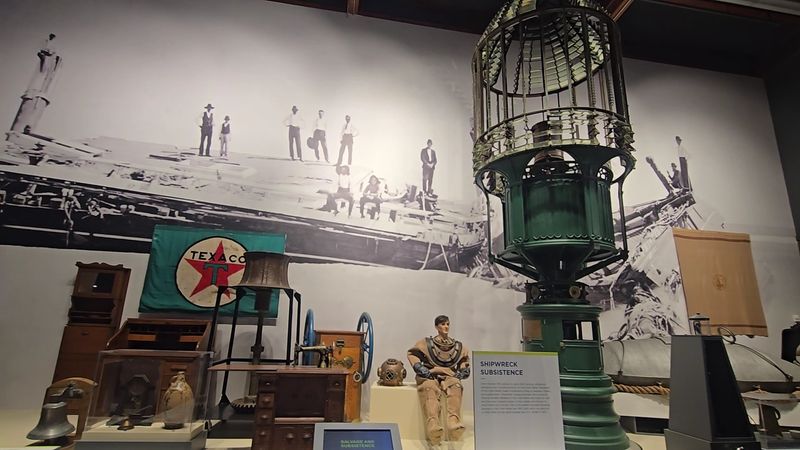
Blackbeard sailed these waters, and I will admit that fact made me grin like a kid. During the 1600s and 1700s, the twisty inlets of the Outer Banks gave pirates great hiding places.
His ship, the Adventure, even ran aground near Beaufort Inlet in 1718.
Treasure stories pop up too. In 1750, a Spanish ship called El Salvador sank here, reportedly carrying gold and silver coins.
Tales like that still spark daydreams of buried riches along the shore.
Then comes the mystery that gave me goosebumps. In 1921, the five-masted schooner Carroll A.
Deering ran aground on Diamond Shoals. When rescuers finally reached it, the crew had completely vanished, and nobody has ever solved what happened.
The museum handles these tales in a fun but respectful way. Pirates are a big hit with families, and it is easy to see why.
Real history can be just as exciting as any movie.
If your kids ask for the scavenger hunt at the front desk, say yes. It sends them searching for items all over the museum, and finishers get a small prize.
It kept the younger crowd busy and happy while parents actually got to read.
Torpedo Alley and the Enigma Machine
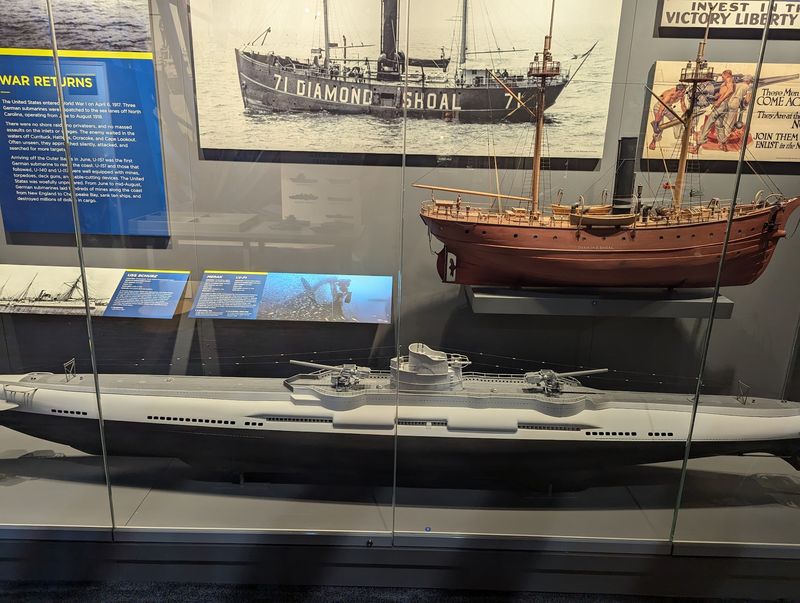
Few people realize that World War II came right up to these beaches. German U-boats hunted ships off the Outer Banks, sinking so many that the area earned the name Torpedo Alley.
People on shore could sometimes see burning ships at night.
The museum brings this chapter to life with some seriously rare artifacts. The star is an Enigma machine recovered from the wreck of the German submarine U-85.
Staring at those little keys and rotors, I tried to picture the sailors who used it to send secret messages. The machine looks almost like an old typewriter, yet it held some of the war’s biggest secrets.
It is one of those objects that makes history feel close enough to touch.
The Civil War is covered too. The famous ironclad USS Monitor sank in a storm off Cape Hatteras in 1862, and its wreck is now federally protected.
Military history fans, plan to linger here. Even if war stories are not normally your thing, this section offers a powerful look at how global events reached this quiet coast.
Heroes in Surfboats and a Giant Glowing Lens
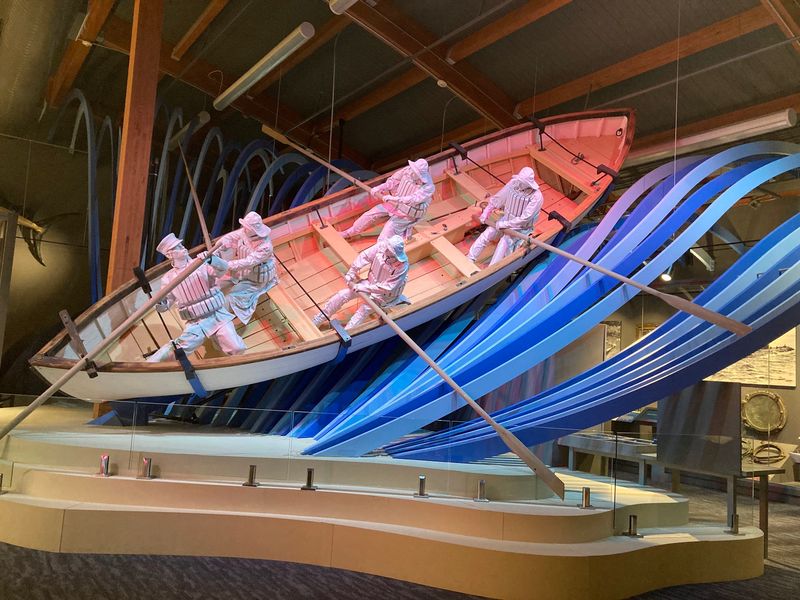
Brave is the only word I kept thinking while reading about the surfmen. These rescuers worked for the U.S.
Life-Saving Service, and many were local fishermen. When a ship crashed, they rowed small boats straight into crashing waves to save the crew.
A real Monomoy surfboat sits in the museum as a tribute to them. It looked so small next to my mental picture of a stormy sea.
I could not imagine rowing that thing through a hurricane.
Right nearby is something that sparkles. The first-order Fresnel lens from the Cape Hatteras Lighthouse once beamed light far over the dark ocean, warning ships away from the shoals.
Up close, its layers of glass prisms look almost like a giant jewel.
Standing beside it, I thought about how many lives that light probably saved over the years. The lighthouse and the lifesavers balance out the sad stories in a nice way.
This coast is not only about loss, it is also about people who refused to give up.
Quick tip: after seeing the lens, drive up to the Cape Hatteras Lighthouse itself. Seeing where the lens once lived makes the connection click in a satisfying way.
Everyday Sea Life and Planning Your Visit
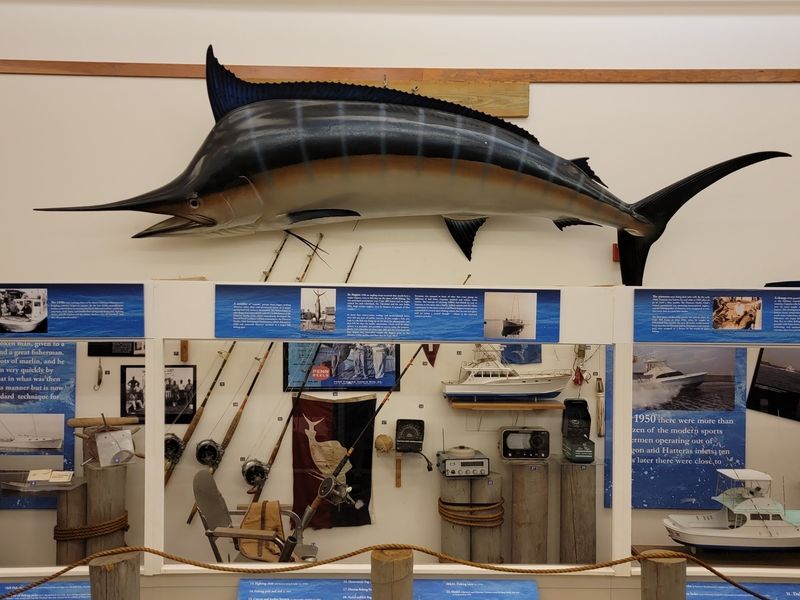
Not every exhibit is about disaster, and I really enjoyed that change of pace. One area follows the history of diving, from clunky old helmets to modern gear.
Other displays cover fishing, boat building, local families, and how sailors learned to navigate and communicate.
These smaller stories show how the ocean shaped daily life on Hatteras Island. People here fished it, built boats for it, and learned to live with its moods.
That human side made the whole visit feel warmer to me.
Now for the practical stuff. The museum is free to enter, though donations are welcome and help fund preservation work.
Hours are typically 10 AM to 5 PM Tuesday through Thursday and Saturday, so check the official website before you go.
The gift shop is worth a peek too, with stickers, hats, taffy, and books about local history. Staff members are friendly and happy to answer questions, which I appreciated more than once.
Pair your visit with a ferry ride to Ocracoke or a stroll on the nearby beach. It makes an easy, rewarding half day.
Address: 59200 Museum Drive, Hatteras, North Carolina 27943
