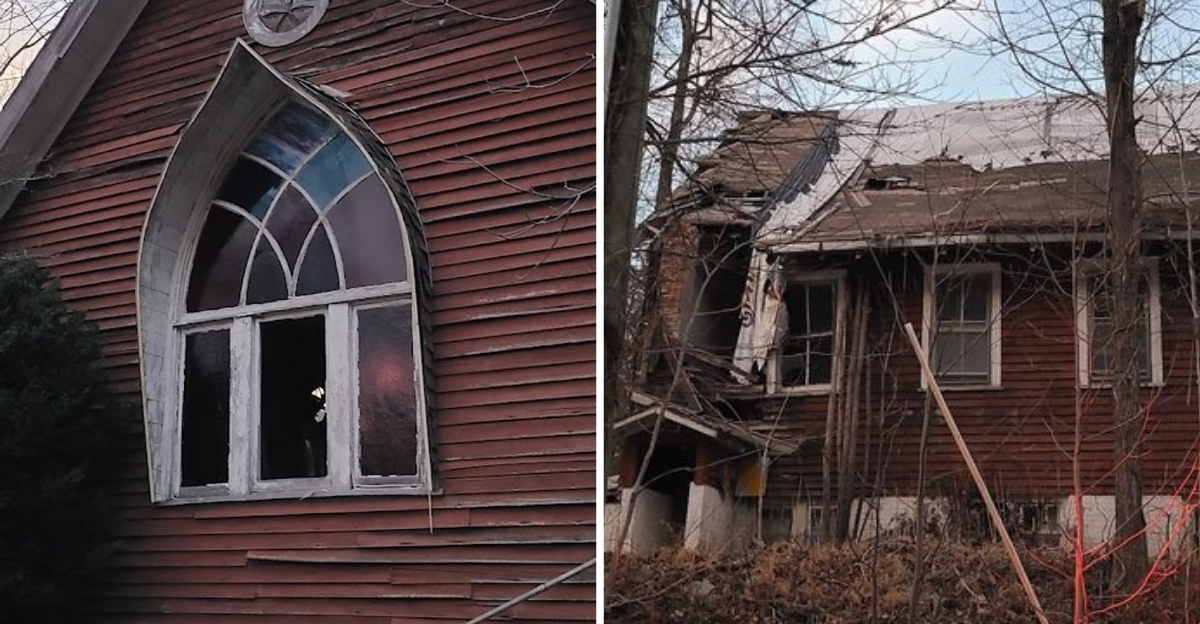
The chapel sits at the end of a gravel road in North Carolina, surrounded by nothing but fields and sky. No houses nearby.
No businesses. Just a small brick building with a steeple and a door that has not been locked in decades. The roof has caved in now, vines crawl through broken windows, and the pews sit empty beneath the weight of silence.
But the cemetery beside the church remains carefully tended, fresh flowers appearing on graves decade after decade. Those resting there are not forgotten, and neither is the little church that once held their prayers. I pushed open what was left of the door on a quiet afternoon and sat where the back row used to be, listening to the breeze move through the cracks.
North Carolina has plenty of churches full of people. This one belongs to the wind.
A Church Built on Donated Land and Deep Roots
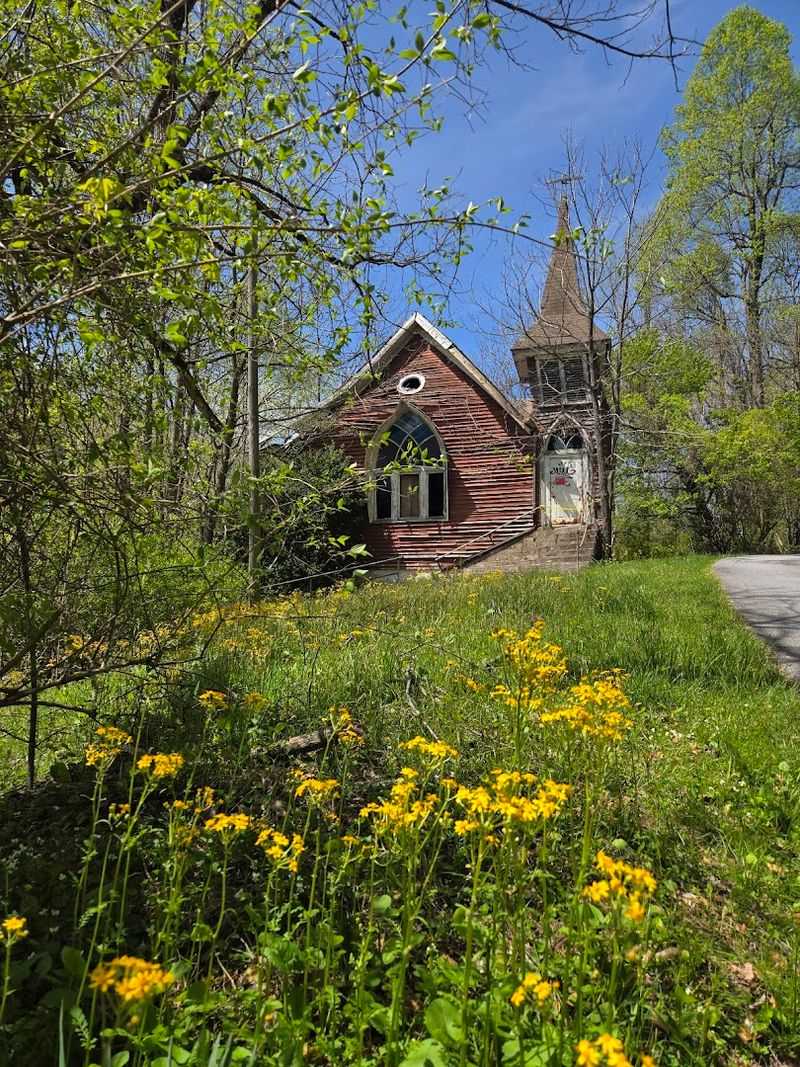
The story of Jones Gap Baptist Church does not start with bricks and mortar. It starts with a man named Hicks Jones, who donated the very land this church was built on, carrying forward a legacy tied to his ancestor Solomon Jones, a road builder whose name is woven into the history of this corner of North Carolina.
The church itself was constructed in 1913, rising as a Neo-Gothic brick structure on a hill that overlooked the surrounding countryside. For a rural mountain community, a building like this would have felt genuinely impressive.
The Gothic Revival style was not common in small farming communities, which made this chapel something worth talking about.
Its roots actually trace back even further, to Mount Crystal Baptist Church, which was established in 1892. That earlier congregation laid the spiritual groundwork for what eventually became the Jones Gap community of faith.
Two decades of gathered Sunday mornings, hymns, and shared meals built the foundation before a single brick was ever laid.
Knowing that history makes standing near those crumbling walls feel different. You are not just looking at an old building.
You are standing at the intersection of family legacy, mountain community, and a faith that outlasted the structure built to hold it.
Today, the roof has caved in, vines crawl through broken windows, and the pews sit empty beneath the weight of silence. Yet the cemetery beside the church remains carefully tended, fresh flowers appearing on graves decade after decade.
The resting ones are not forgotten, and neither is the little brick church that once held their prayers.
The Gothic Revival Beauty Hidden in the Foothills
Most people driving the back roads near Hendersonville are not expecting to come across anything like this. The old church sits at the crossroads of Hebron Road, Finley Cove Road, and Limberlost Drive, tucked into the kind of quiet landscape that makes you slow down naturally.
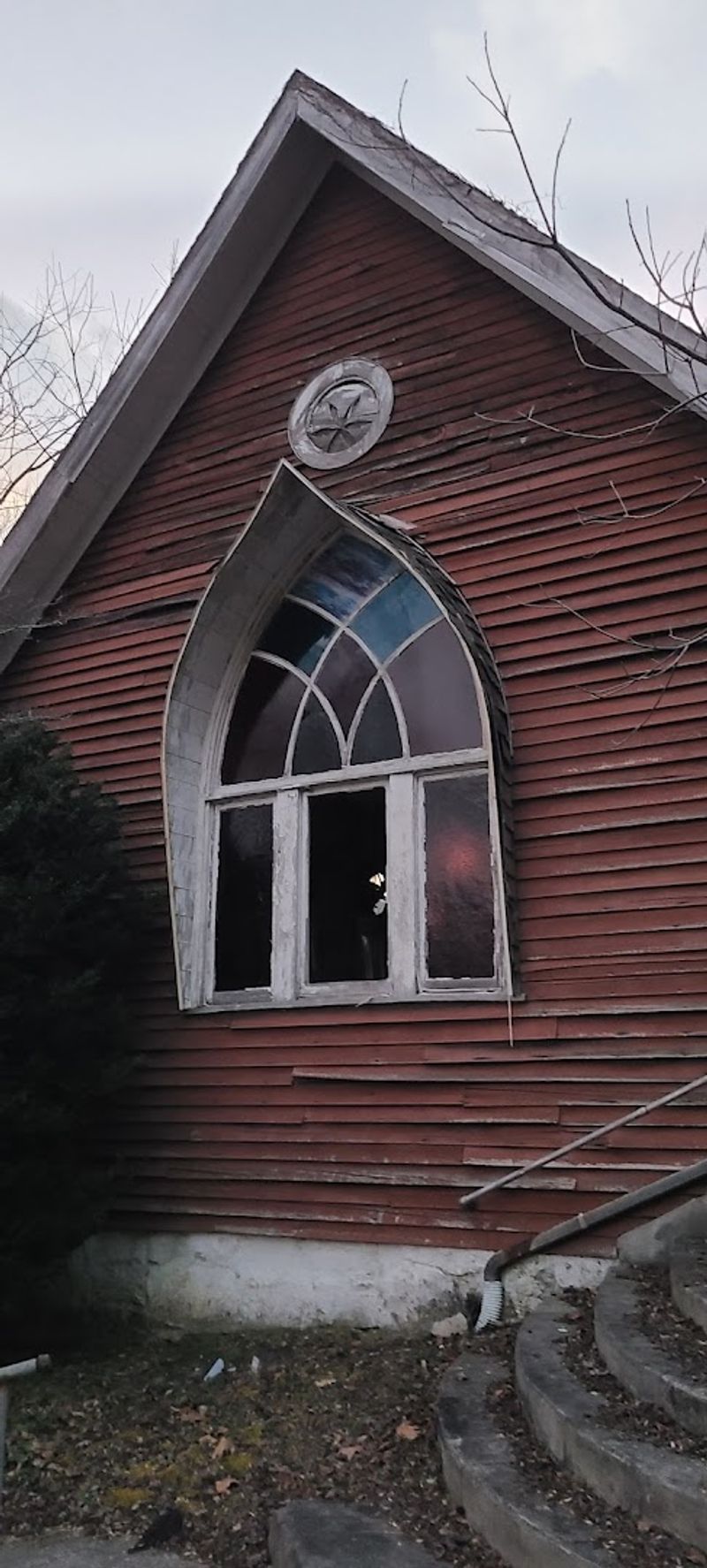
The Gothic Revival style gives the building a presence that feels out of place in the best way. Pointed arched windows, brick facade, and a wooden spire that once held a cross all speak to a time when even small rural congregations wanted their worship space to feel soaring and serious.
It is the kind of architecture you expect to find in a city, not perched on a fog-covered hillside in the mountains.
Stained-glass windows still cling to the frames, though they wear the tired expression of something long neglected. They catch the light on clear mornings in a way that is genuinely beautiful, even as the building around them slowly surrenders to time.
The empty bell tower adds a particular kind of silence to the scene.
For anyone who appreciates architecture, history, or just the strange poetry of forgotten places, the visual drama of this building is worth every mile of winding mountain road it takes to reach it.
Nature’s Patient Takeover of the Old Sanctuary
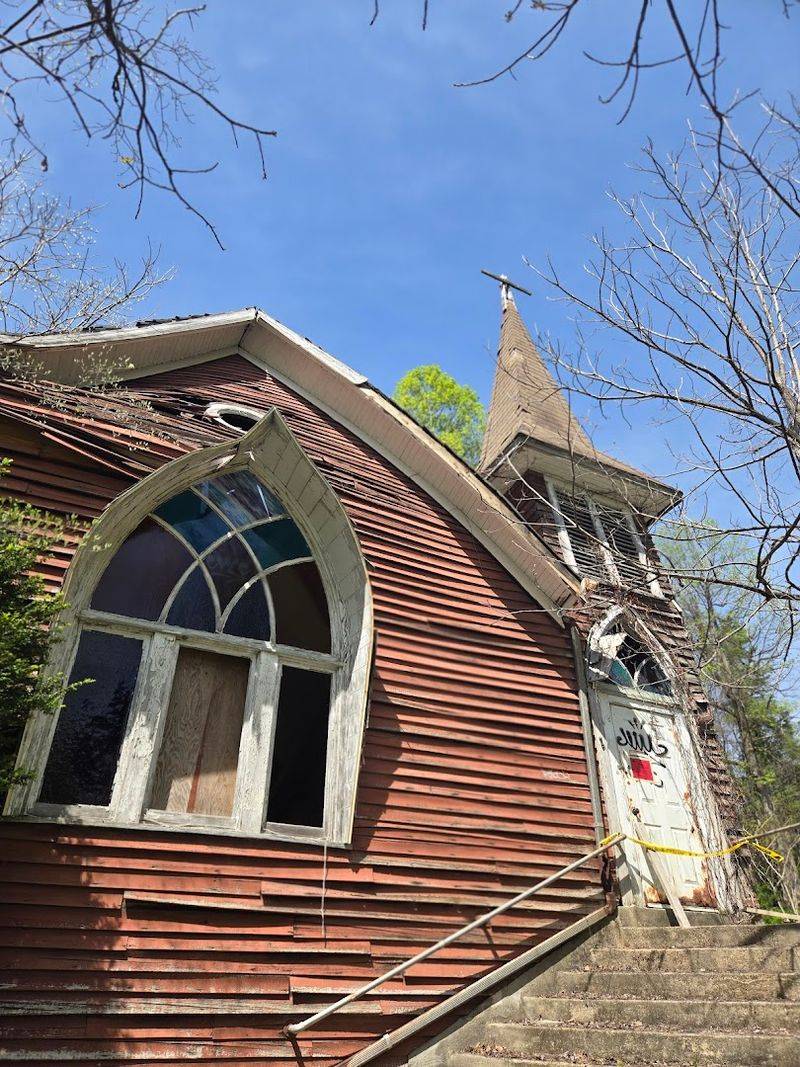
Rain found its way in first, then snow, then whatever seeds the wind carried through the broken windows. The hole in the sanctuary roof has been open long enough that the inside of the old Jones Gap Baptist Church has become something closer to an outdoor space than an indoor one.
Nature does not rush, but it is thorough.
Vegetation has wrapped itself around the exterior with the casual confidence of something that knows it has already won. The wooden spire still points upward, though the cross at its tip is broken now.
Even that detail feels symbolic, though maybe not in the way you would expect. It reads less like defeat and more like a building mid-conversation with the sky.
Visiting a place like this puts you in a reflective mood almost immediately. There is something grounding about watching nature reclaim a man-made structure so gradually and so completely.
It is not sad exactly, more like watching a slow exhale.
Hurricane Helene added its own chapter to this story, dealing significant additional damage to a building already on its last structural legs. One visitor noted afterward that only the concrete stairs remained standing.
For a building that started as a point of community pride in 1913, that is a quietly powerful ending.
Fire, Loss, and the Records That Vanished
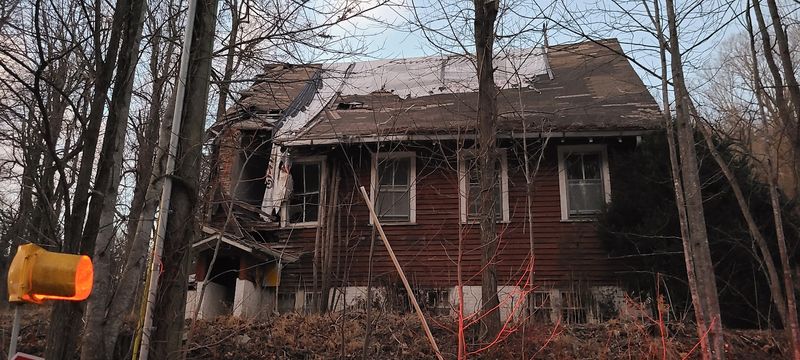
Some buildings carry quiet trauma in their walls, and the old Jones Gap Baptist Church is no exception. In 1950, a house fire destroyed many of the church’s records, erasing a significant portion of its documented history.
Names, dates, baptisms, and membership rolls, all of it gone in one night.
Then in 1971, the building itself was targeted in an arson incident. The fact that the congregation continued to gather there after both of those events says something real about the people who called this church home.
They were not easily shaken loose from the place that mattered to them.
Losing records in a fire is a particular kind of grief. It is not just paperwork.
It is the written proof that people existed, gathered, and belonged to something. For a mountain community with deep family ties, those records connected living people to their grandparents and great-grandparents in a very tangible way.
History like this adds weight to the ruins. When you look at those crumbling walls now, you are looking at a building that survived fire and arson, decades of weather, and eventually its own congregation moving on.
The fact that it stood as long as it did feels almost stubborn, in the most admirable sense of the word.
Preservation Efforts and the Complicated Question of Ownership
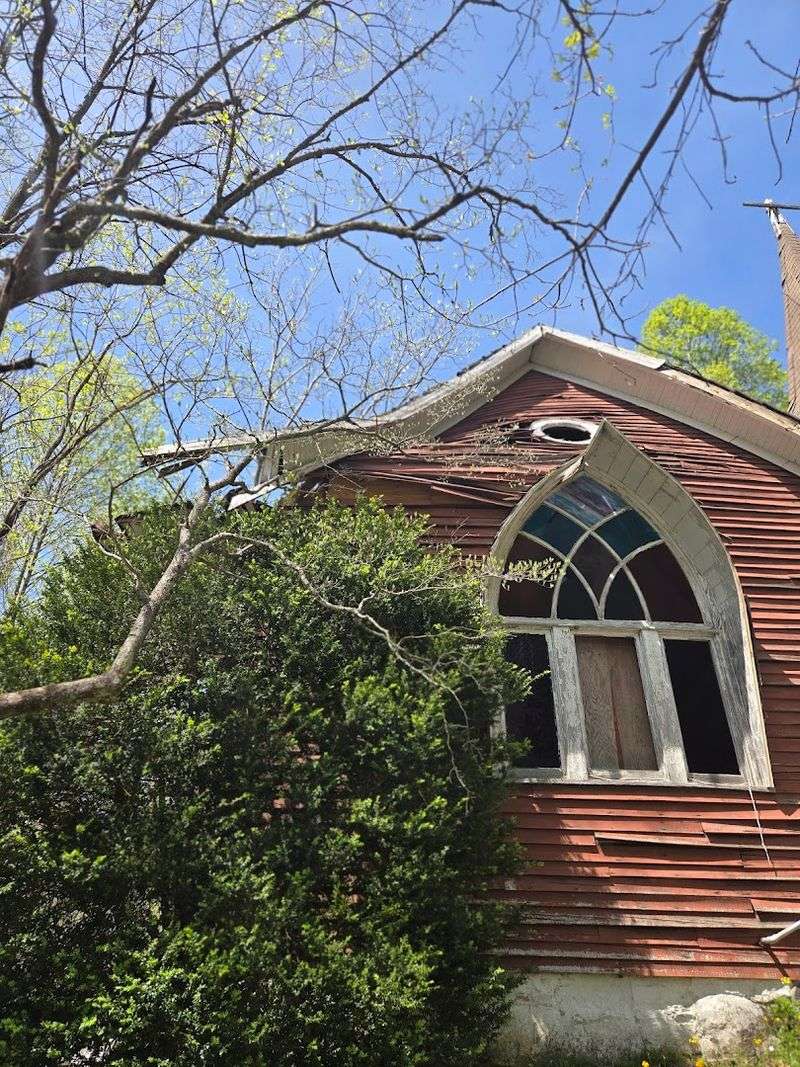
Not everyone was willing to let the old building disappear without a fight. In 2018, an emergency stabilization effort brought together descendants of Hicks Jones and Preservation North Carolina in an attempt to patch the roof and slow the decay.
It was exactly the kind of community-driven effort that makes you feel good about people.
The work was meaningful, but the situation was complicated from the start. Ownership of the property was arranged so that it would revert to the heirs of Hicks Jones, the man who originally donated the land.
That deed arrangement created real legal and practical obstacles for anyone hoping to pursue a full restoration.
Preservation efforts are rarely simple, and this one carried layers that went beyond just finding funding or volunteers. When ownership is tied up in family inheritance and historical deed language, even well-intentioned projects can stall.
The 2018 stabilization was a genuine act of care, but it could only do so much against the weight of those complications.
Stories like this one are a reminder that saving old buildings is not purely about money or ambition. It requires legal clarity, community agreement, and sometimes a willingness to sit with the uncomfortable truth that some things cannot be saved.
The effort still mattered, even if the outcome was uncertain.
Why This Lonely Chapel Is Still Worth the Drive
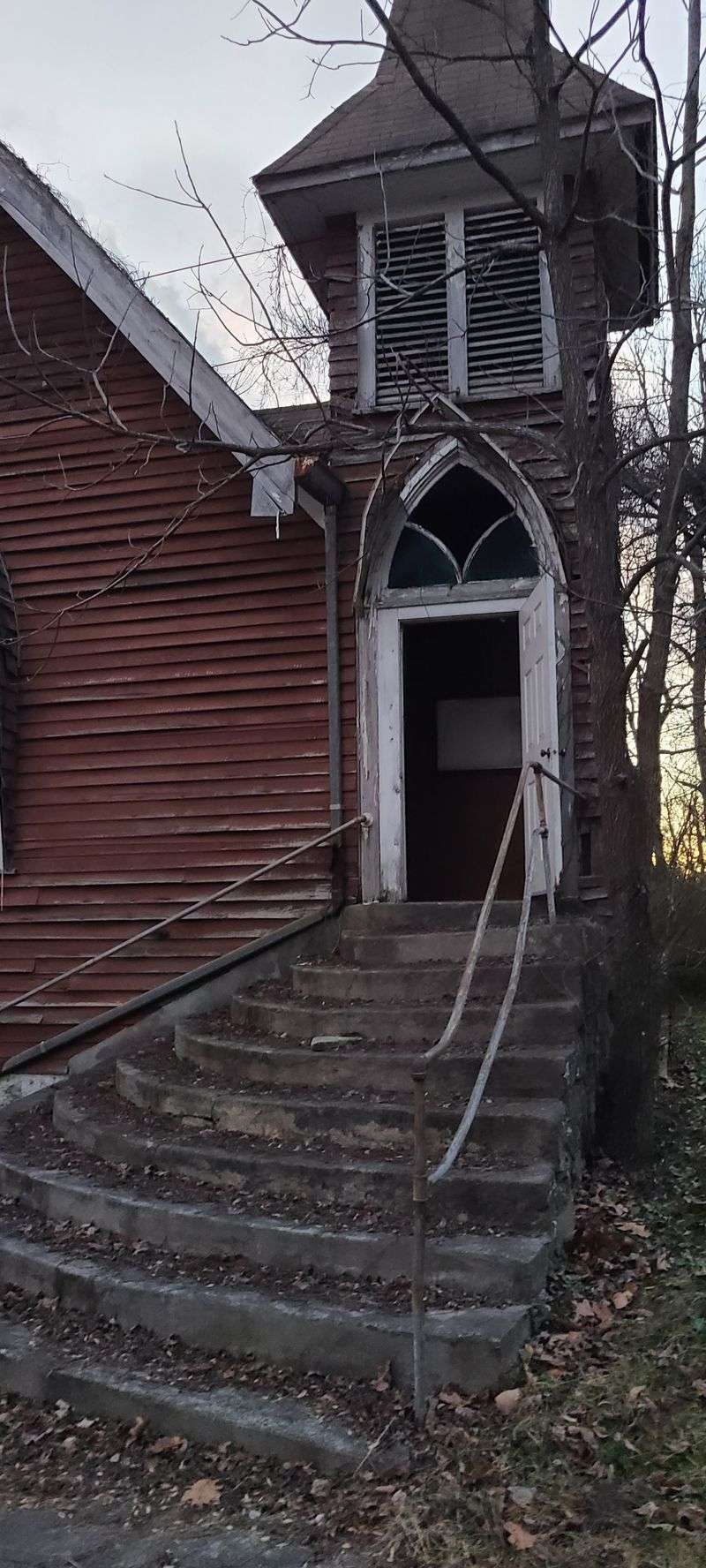
Before Hurricane Helene and the eventual collapse of most of the structure, the old Jones Gap Baptist Church was one of those places that rewarded the curious traveler who was willing to leave the main road behind. Even now, the site at 33 Limberlost Drive holds a kind of presence that is hard to explain until you have stood near it.
The crossroads setting, where Hebron Road meets Finley Cove Road and Limberlost Drive, feels appropriately cinematic for a place this atmospheric. The surrounding landscape is classic western North Carolina, rolling hills, tree lines, and the kind of quiet that city people drive hours to find.
The old church added something to that quiet that was entirely its own.
For photographers, history enthusiasts, or anyone drawn to the beauty of impermanence, this corner of Henderson County offered a rare kind of experience. You could stand there and feel the full weight of a community’s history, its faith, its losses, and its persistence, all compressed into one crumbling brick structure.
Even in its final state, the story of this chapel is worth knowing. It is the kind of place that reminds you how much meaning a building can hold long after the last hymn has faded and only the wind remains to fill the silence.
Address: 33 Limberlost Dr, Hendersonville, NC 28739
