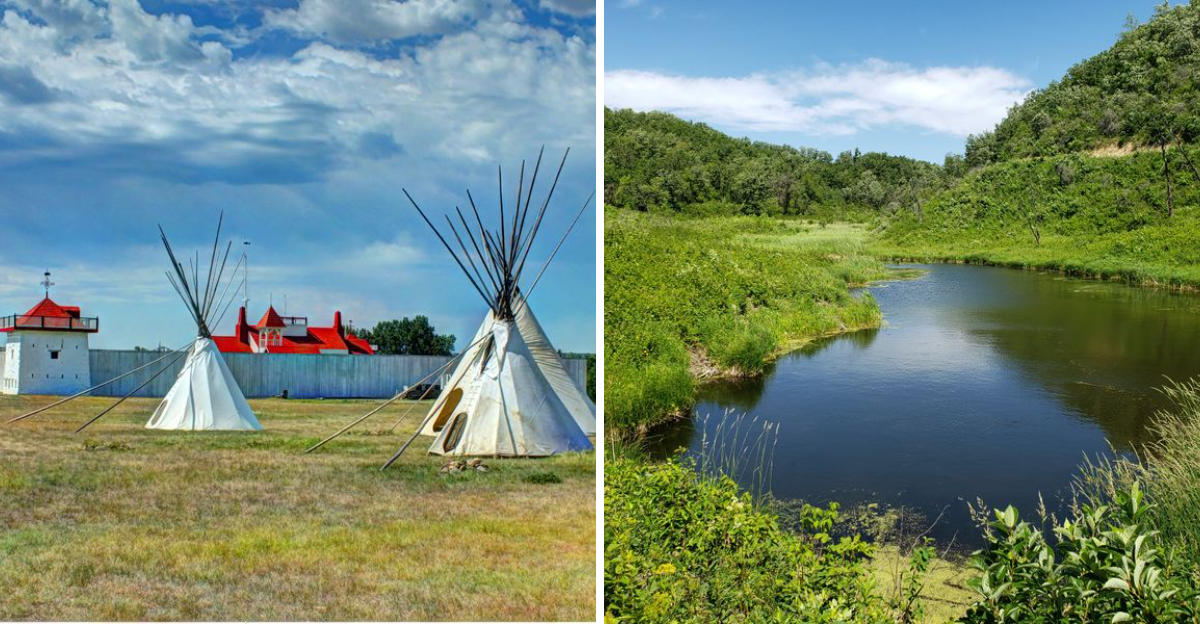
North Dakota might not be the first place that comes to mind when planning your next adventure, but this hidden gem holds some of the most stunning and surprising destinations in America.
From ancient geological wonders to historic landmarks that shaped the nation, the Peace Garden State offers experiences you simply cannot find anywhere else.
Many travelers overlook this northern state, rushing past on their way to more famous destinations, but those who stop discover landscapes that look like they belong on another planet.
Whether you love nature, history, or just finding places where crowds haven’t yet discovered, North Dakota delivers in ways that will genuinely surprise you.
The sites on this list range from colorful badlands to peaceful refuges, from quirky roadside attractions to sacred Native American grounds.
Each location tells a unique story about the land, the people, and the forces that shaped this remarkable region.
Getting to know these places means understanding a side of America that often gets forgotten in travel guides and Instagram feeds.
So buckle up and get ready to add some unexpected stops to your travel bucket list.
1. Theodore Roosevelt National Park
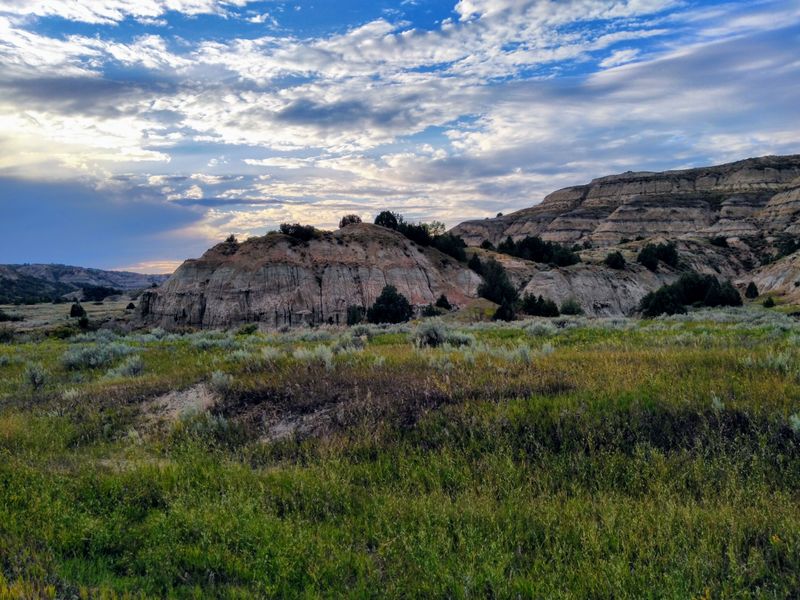
Picture a landscape so wild and colorful it looks like something from a Western movie, and you’ll start to understand what makes Theodore Roosevelt National Park absolutely unforgettable.
Located in the western part of North Dakota near Medora, this park showcases the dramatic badlands that once inspired a young Theodore Roosevelt to become one of America’s greatest conservationists.
The rugged terrain features striped rock formations in shades of red, tan, and brown that change color throughout the day as the sun moves across the sky.
Wild bison roam freely across the prairie grasslands, and if you’re patient and quiet, you might spot prairie dogs popping up from their underground towns or wild horses galloping across the horizon.
The park is divided into three units, with the South Unit being the most accessible and popular among visitors.
Scenic drives wind through the badlands, offering pullouts where you can stop and soak in views that stretch for miles without a single building in sight.
Hiking trails range from easy walks to challenging backcountry routes, and camping under the stars here reveals a night sky so clear you’ll see the Milky Way stretching overhead.
Fall brings especially gorgeous colors when the cottonwood trees turn golden yellow against the russet badlands.
Winter transforms the park into a quiet wonderland where snow dusts the strange rock formations and wildlife tracks tell stories in the fresh powder.
The Painted Canyon Visitor Center provides an excellent introduction with overlooks that’ll make your jaw drop.
Whether you spend a few hours or several days exploring, Theodore Roosevelt National Park will change how you think about North Dakota and remind you that some of America’s best landscapes hide in unexpected places.
2. Enchanted Highway
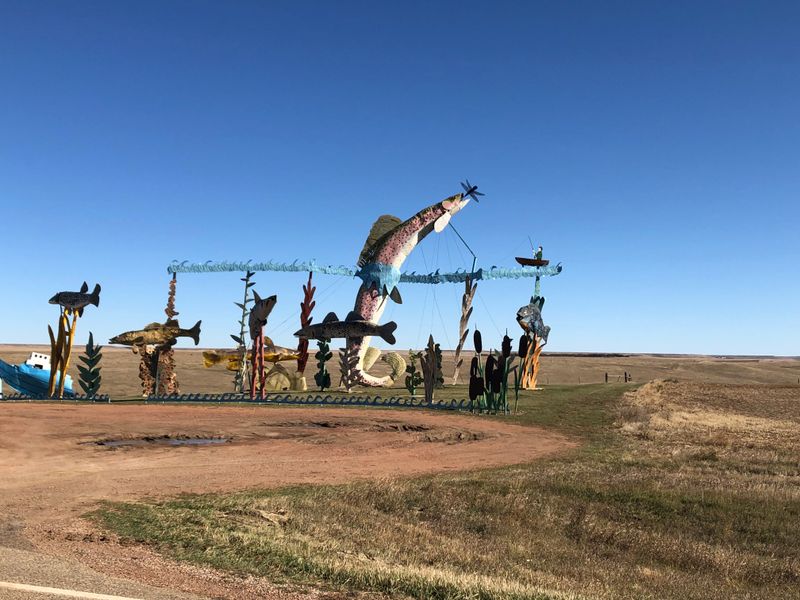
Driving down a rural North Dakota highway probably sounds pretty ordinary, but the Enchanted Highway between Gladstone and Regent transforms a simple road trip into an outdoor art gallery like nowhere else on Earth.
Local artist Gary Greff created massive metal sculptures that tower over the prairie, turning a 32-mile stretch of road into one of the world’s most unusual attractions.
These aren’t small roadside statues; we’re talking about gigantic creations that can be seen from miles away, including the world’s largest scrap metal sculpture.
The journey begins with “Geese in Flight,” a formation of enormous geese that look like they’re soaring above the grasslands.
Further along, you’ll encounter “Grasshoppers in the Field,” where giant insects appear to be hopping across the landscape in a scene both whimsical and slightly surreal.
“Fisherman’s Dream” features a massive angler reeling in an equally huge fish, while “Pheasants on the Prairie” showcases North Dakota’s state bird in spectacular oversized form.
Each sculpture tells a story about life in rural North Dakota, celebrating the agricultural heritage and natural wildlife of the region.
Greff built these incredible works to attract visitors to the small towns along the route and preserve the communities he loves.
The project took decades of welding, planning, and sheer determination, with each sculpture requiring tons of metal and countless hours of work.
Photographers absolutely love this place because the sculptures create amazing photo opportunities against the big sky backdrop.
Families enjoy the scavenger hunt aspect of finding all the sculptures along the route.
By the time you reach Regent, you’ll understand why this quirky highway has become one of North Dakota’s most beloved attractions and why Gary Greff’s vision deserves recognition as genuine American folk art.
3. International Peace Garden
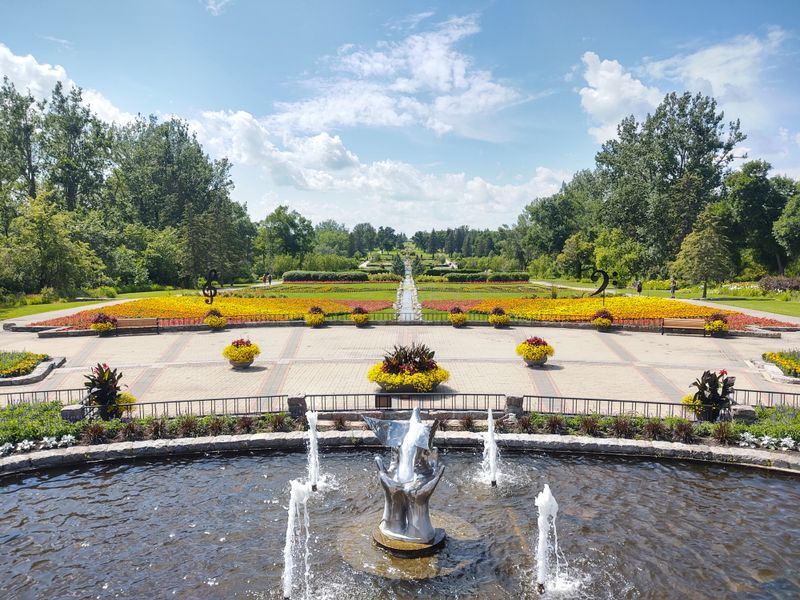
Straddling the border between North Dakota and Manitoba, Canada, the International Peace Garden represents something bigger than just beautiful flowers and peaceful walking paths.
This 2,339-acre garden was dedicated in 1932 to symbolize the peaceful relationship between the United States and Canada, and it remains one of the few places where you can literally walk between two countries without going through customs.
The formal gardens burst with color during summer months, featuring over 150,000 flowers arranged in elaborate displays that change with the seasons.
A stone cairn marks the exact border, and visitors love taking photos with one foot in each country.
The Peace Chapel, built from native stone, provides a quiet place for reflection and often hosts weddings for couples who want a truly unique ceremony location.
Sunken gardens, fountains, and carefully maintained flower beds create a sense of tranquility that feels worlds away from everyday stress.
Beyond the formal gardens, the property includes natural areas with hiking trails that wind through forests and around lakes.
The Peace Tower stands 120 feet tall and offers panoramic views of the surrounding landscape.
During summer, the garden hosts concerts, festivals, and special events that celebrate both American and Canadian culture.
Kids particularly enjoy the Music Camp that takes place here each summer, where young musicians from both countries come together to learn and perform.
The International Music Camp has been running since 1956 and has introduced thousands of students to the arts in this peaceful setting.
Visiting during peak bloom season in July and August guarantees the most spectacular displays, but even spring and fall offer their own quiet beauty.
The garden serves as a living reminder that neighbors can coexist peacefully and that borders don’t have to divide people.
It’s a message worth remembering, delivered through the simple beauty of flowers and thoughtful landscaping.
4. Knife River Indian Villages National Historic Site
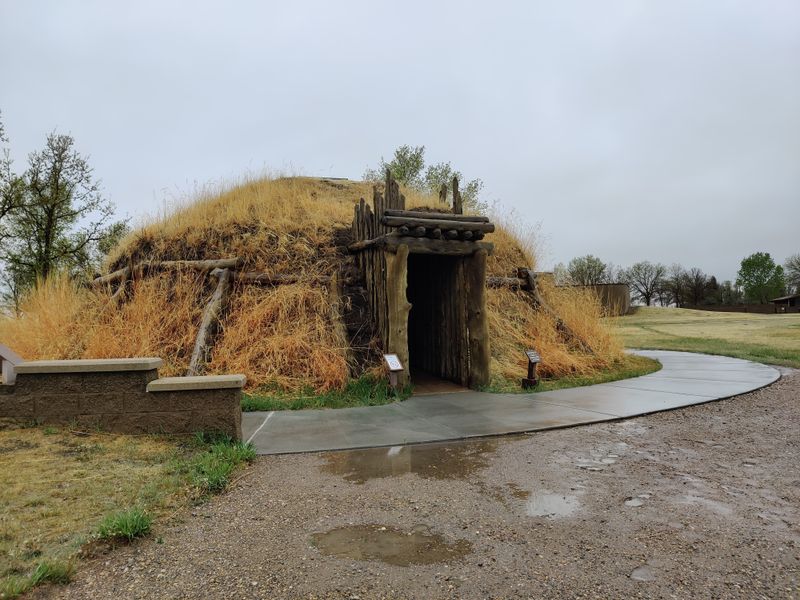
Long before European explorers arrived in North Dakota, thriving Native American communities built sophisticated villages along the Knife River, and today you can step back in time at this remarkable historic site.
The Hidatsa and Mandan people lived here for hundreds of years, creating permanent settlements with earth lodges, extensive trade networks, and rich cultural traditions.
Located near Stanton, North Dakota, the site preserves the remains of three villages and offers visitors a chance to understand the complex societies that flourished on the Northern Plains.
Walking trails lead you past circular depressions in the earth that mark where earth lodges once stood, home to families who farmed, hunted, and traded with tribes from across the continent.
A reconstructed earth lodge at the visitor center lets you experience the ingenious design that kept families warm during brutal prairie winters and cool during hot summers.
The structure’s thick earthen walls and central fire pit created a comfortable living space that could house extended families together.
This was also the home of Sacagawea before she joined the Lewis and Clark Expedition, adding another layer of historical significance to the site.
The villages served as important trading centers where goods from the Pacific Coast, the Gulf of Mexico, and the Great Lakes all changed hands.
Archaeological evidence shows that people lived in this area for at least 8,000 years, with the most recent villages dating from around 1600 to the mid-1800s.
Rangers and interpreters share stories about daily life, agricultural practices, and the devastating impact of diseases brought by European contact.
The visitor center features artifacts discovered at the site, including tools, pottery, and trade goods that reveal connections spanning thousands of miles.
Visiting here provides essential context for understanding Northern Plains history and recognizing the sophisticated cultures that called this region home long before it became North Dakota.
5. Maah Daah Hey Trail
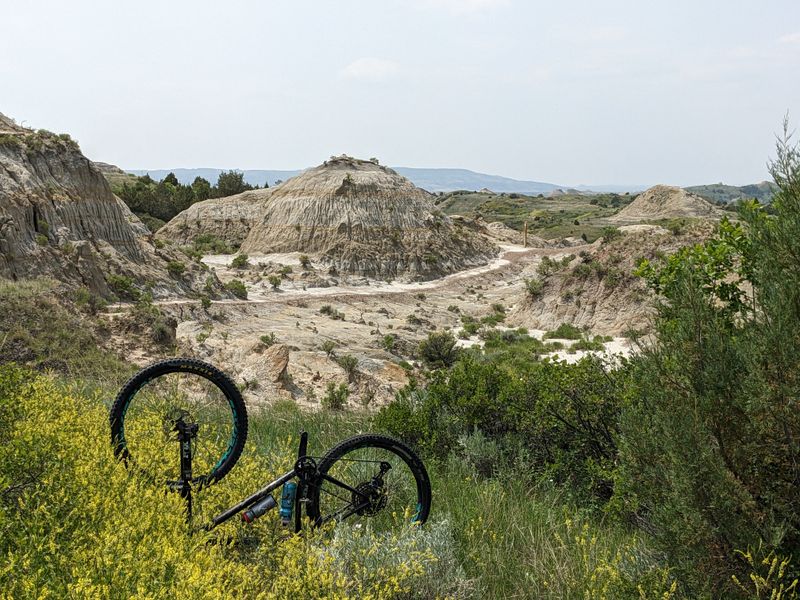
Adventure seekers and outdoor enthusiasts have discovered what locals have known for years—the Maah Daah Hey Trail offers some of the most challenging and rewarding backcountry experiences in the entire Midwest.
This 144-mile non-motorized trail winds through the North Dakota badlands, connecting the southern and northern units of Theodore Roosevelt National Park.
The name comes from a Mandan phrase meaning “an area that has been or will be around for a long time,” which perfectly captures the ancient landscape the trail traverses.
Mountain bikers consider this trail a bucket-list destination because of its technical terrain, stunning scenery, and remote wilderness character.
The path climbs steep buttes, descends into hidden valleys, crosses prairie grasslands, and navigates narrow ridges with drop-offs on both sides.
Hikers and horseback riders also use the trail, though bikes have become the most popular way to experience its full length.
Camping along the trail requires careful planning since water sources are limited and the weather can change rapidly.
Designated campsites provide basic amenities, but you’ll need to carry everything you need and practice Leave No Trace principles.
Spring and fall offer the best conditions, with summer bringing intense heat and winter making the trail virtually impassable.
Wildlife encounters are common, from prairie rattlesnakes sunning on the trail to herds of bison that sometimes block the path.
The solitude and sense of accomplishment that come from completing sections of this trail create memories that last a lifetime.
Many riders tackle the entire trail over several days, while others enjoy shorter out-and-back trips from various trailheads.
Local bike shops in Medora offer shuttles, rentals, and guided trips for those new to the trail.
The Maah Daah Hey Trail Association maintains the path and organizes annual races that attract competitors from across the country, proving that North Dakota’s badlands can compete with any mountain biking destination.
6. Fort Union Trading Post National Historic Site
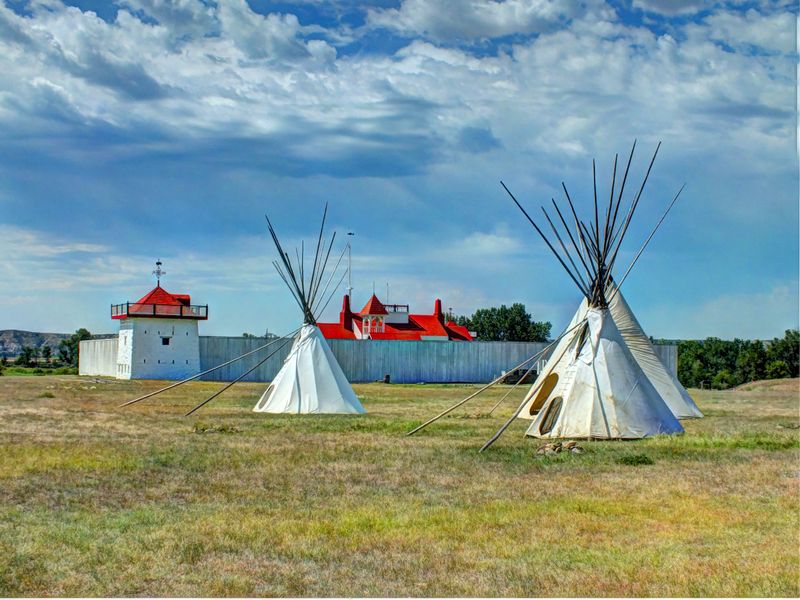
At the confluence of the Yellowstone and Missouri Rivers, Fort Union Trading Post once stood as the most important fur trading depot on the upper Missouri River, and today’s reconstruction brings that bustling era back to life.
Built in 1828 by John Jacob Astor’s American Fur Company, the fort served as the economic and social hub for a vast region where Native Americans, trappers, traders, and explorers came together.
The site sits on the North Dakota-Montana border near Williston, preserving stories of commerce, cultural exchange, and the complex relationships that defined the fur trade era.
The reconstructed fort features the impressive Bourgeois House, where the fort’s manager lived in surprising luxury considering the remote location.
White-washed walls, sturdy wooden palisades, and trade houses recreate the fort’s appearance during its heyday in the 1850s.
Costumed interpreters demonstrate trades like blacksmithing, explain the economics of the fur trade, and share stories about the diverse people who passed through these gates.
Native American tribes including the Assiniboine, Crow, Cree, and Blackfeet came to trade buffalo robes, beaver pelts, and other furs for manufactured goods like metal tools, cloth, and beads.
The fort operated for nearly four decades, witnessing the transformation of the American West from a Native-controlled region to U.S. territory.
Famous explorers and artists including George Catlin and Karl Bodmer visited the fort, creating paintings and descriptions that provide invaluable records of Plains Indian culture.
Walking through the fort today, you can imagine the bustling activity during trading season when hundreds of people gathered for commerce and celebration.
The visitor center displays artifacts recovered from archaeological excavations, including trade goods, tools, and personal items that tell intimate stories about daily life.
Special events throughout the year, including the annual Rendezvous, feature living history demonstrations, traditional crafts, and cultural programs that make history feel immediate and relevant rather than distant and dusty.
7. Pembina Gorge
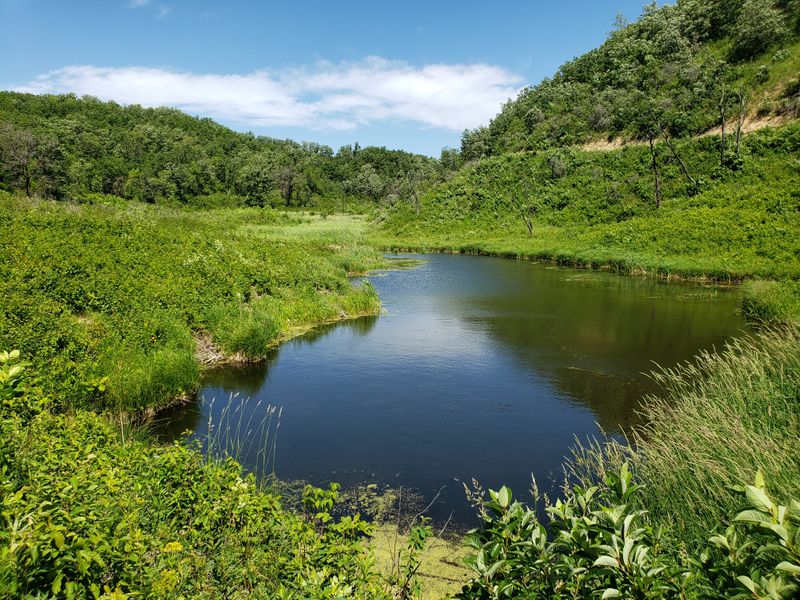
Most people imagine North Dakota as flat, treeless prairie, so discovering Pembina Gorge feels like finding a secret that shouldn’t exist in this landscape.
Located in the northeastern corner of the state within the Pembina State Forest, this hidden valley features heavily forested hills, a winding river, and terrain that looks more like northern Minnesota than typical North Dakota.
The gorge was carved by glacial meltwater thousands of years ago, creating a microclimate where trees thrive and wildlife finds shelter.
Hiking and mountain biking trails crisscross the area, leading through forests of oak, ash, and aspen that explode with color during fall.
The Pembina River flows through the bottom of the gorge, offering opportunities for fishing, canoeing, and cooling off during summer heat.
Winter transforms the gorge into a wonderland for cross-country skiing and snowshoeing, with trails that wind through snow-covered forests in peaceful silence.
Wildlife watching is exceptional here because the forested habitat attracts species not commonly seen in other parts of North Dakota.
White-tailed deer, black bears, moose, and numerous bird species make their homes in this protected area.
The diversity of plant life also stands out, with wildflowers blooming throughout spring and summer in varieties rarely found elsewhere in the state.
Several primitive campgrounds provide base camps for exploring the gorge, though facilities are basic and the area maintains a true backcountry feel.
The Gunlogson Nature Preserve and Arboretum, located within the state forest, features nature trails and educational programs about the unique ecosystem.
Because Pembina Gorge remains relatively unknown even among North Dakotans, you can often explore the trails without encountering another person for hours.
This solitude and the unexpected landscape make the gorge feel like a personal discovery, a place you want to keep secret while simultaneously wanting to share its beauty with others.
For anyone who thinks they know what North Dakota looks like, Pembina Gorge provides a beautiful correction to that assumption.
Dear Reader: This page may contain affiliate links which may earn a commission if you click through and make a purchase. Our independent journalism is not influenced by any advertiser or commercial initiative unless it is clearly marked as sponsored content. As travel products change, please be sure to reconfirm all details and stay up to date with current events to ensure a safe and successful trip.
