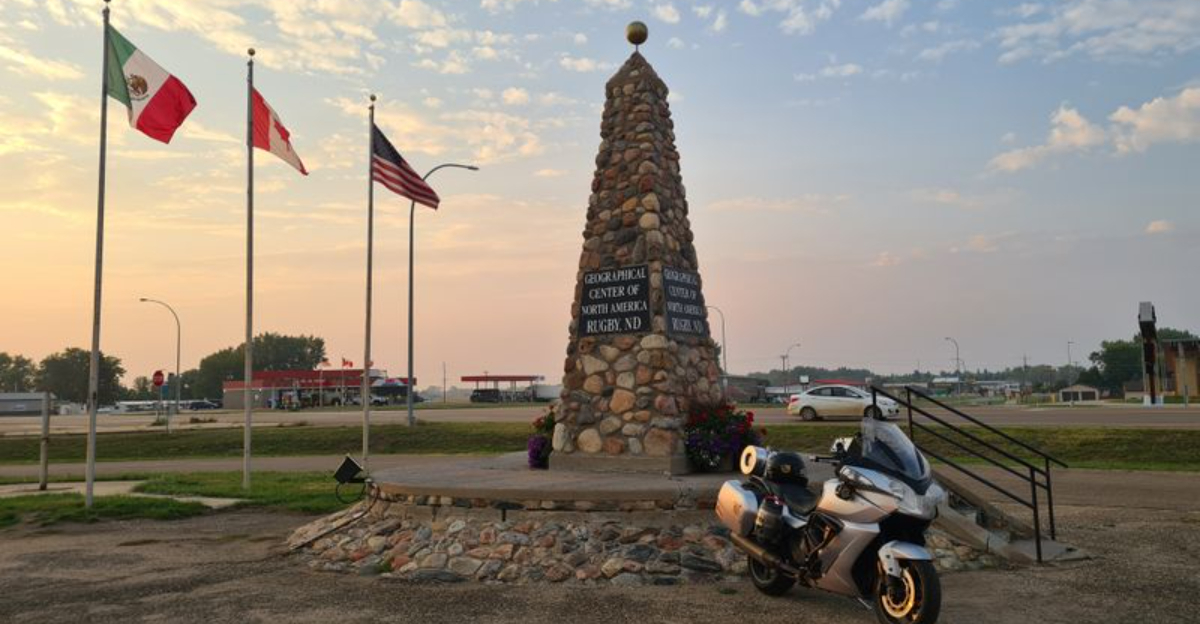
North Dakota might not be the first state that comes to mind when planning an adventure, but this hidden gem holds some of the most charming and unexpected small towns in America.
These little communities offer everything from stunning natural landscapes to quirky museums and fascinating history.
Whether you’re looking for outdoor thrills, unique cultural experiences, or just a peaceful escape from the everyday hustle, North Dakota’s small towns deliver surprises at every turn.
Pack your bags and prepare to discover places that will change the way you think about the Great Plains forever.
1. Medora: Gateway to the Badlands
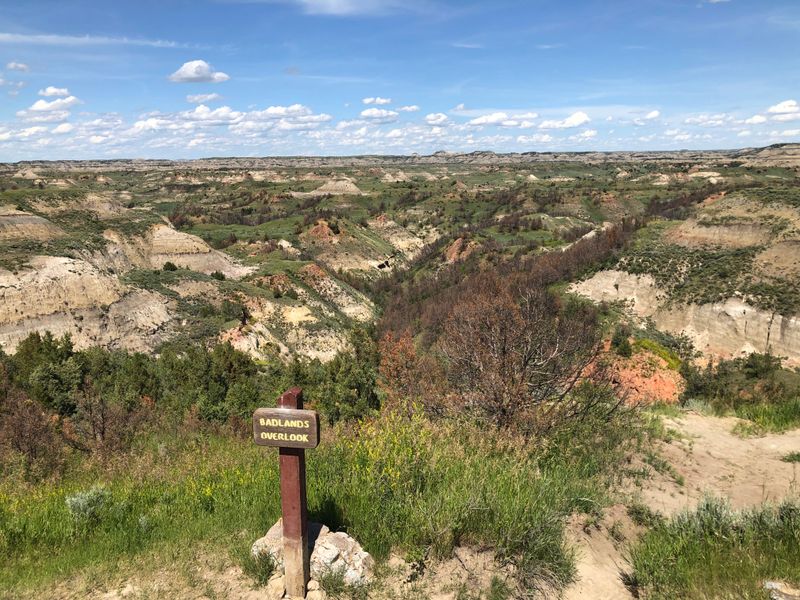
Nestled at the edge of Theodore Roosevelt National Park, Medora transforms visitors into time travelers who experience the Old West like nowhere else.
This tiny town of fewer than 150 residents swells with tourists each summer, drawn by its authentic frontier charm and spectacular natural surroundings.
The Badlands stretch endlessly beyond the town limits, offering hiking trails that wind through otherworldly rock formations painted in shades of rust, gold, and amber.
Wild horses roam freely across the prairie, and bison herds graze peacefully in valleys carved by ancient rivers.
Downtown Medora preserves its 1880s character with wooden boardwalks, historic storefronts, and the famous Medora Musical, a lively outdoor show that runs nightly during summer months.
The Chateau de Mores State Historic Site tells the story of a French nobleman who tried to build a cattle empire here in the 1880s.
His 26-room mansion still stands, filled with original furnishings that transport you back to frontier elegance.
Adventure seekers can horseback ride through Theodore Roosevelt’s beloved landscape, mountain bike rugged trails, or kayak the Little Missouri River.
The Maah Daah Hey Trail offers 144 miles of premier backcountry biking through some of America’s most dramatic terrain.
Pitchfork Steak Fondue serves authentic cowboy-style meals cooked on actual pitchforks over open fires.
After dark, the lack of light pollution reveals star-filled skies so brilliant they’ll leave you breathless.
Medora proves that big adventures come in small packages, especially when surrounded by landscape this magnificent.
2. Rugby: The Geographical Center of North America
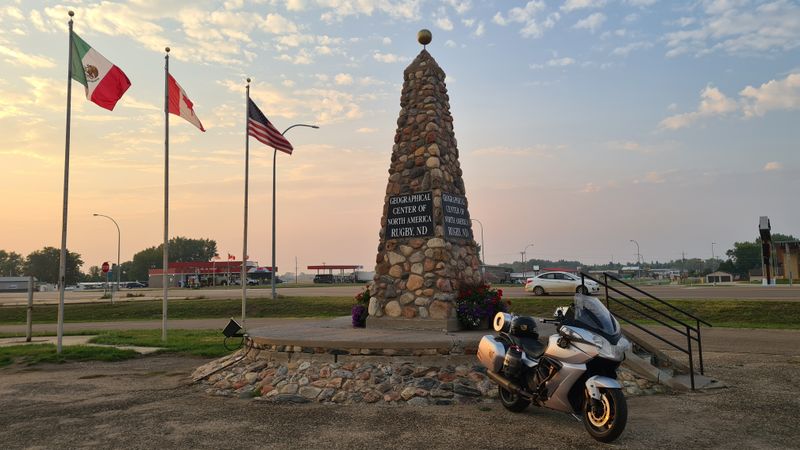
Standing at the exact geographical center of the North American continent feels like touching the heart of the land itself.
Rugby proudly marks this unique distinction with a 15-foot stone cairn monument that draws curious travelers from around the world.
Built in 1931, this pyramid-shaped marker reminds visitors they’re equidistant from the Atlantic, Pacific, and Arctic Oceans.
The town celebrates its special location with the Geographical Center Historical Museum, which houses an impressive collection of pioneer artifacts, antique farm equipment, and Native American relics.
One fascinating exhibit features the Victorian Dress Collection, showcasing clothing styles from the late 1800s through the early 1900s.
Rugby’s downtown maintains its small-town friendliness, where locals wave to strangers and cafes serve homemade pie that tastes like grandma’s recipe.
The Northern Lights Tower stands as North Dakota’s tallest structure at 180 feet, offering panoramic views of endless prairie stretching to every horizon.
Pierce Lake provides excellent fishing opportunities for walleye, northern pike, and perch, while the surrounding wetlands attract countless migratory birds each spring and fall.
Birdwatchers bring binoculars to spot rare species passing through on ancient flyways.
The Prairie Village Museum complex features 27 historic buildings relocated from across the region, creating an authentic pioneer settlement complete with a one-room schoolhouse, blacksmith shop, and country church.
Walking these dusty streets between weathered buildings feels like stepping into a history book.
Local restaurants serve hearty Midwestern comfort food, and the hospitality makes everyone feel like family.
Rugby reminds travelers that sometimes the most meaningful destinations aren’t famous landmarks but quiet places where geography and human story intersect perfectly.
3. Dunseith: Home of the International Peace Garden
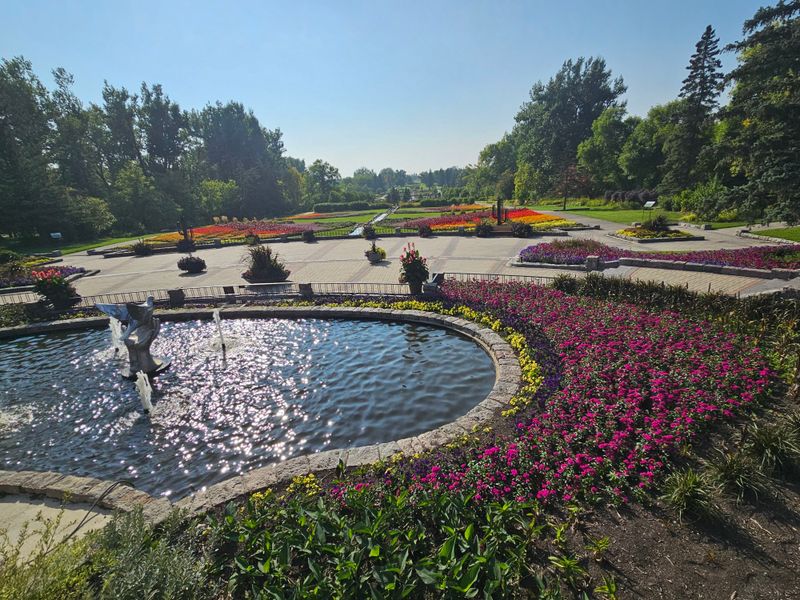
Imagine standing with one foot in the United States and the other in Canada, surrounded by 2,300 acres of stunning gardens celebrating international friendship.
Dunseith serves as the gateway to the International Peace Garden, a botanical wonderland straddling the border between North Dakota and Manitoba.
This living symbol of harmony between nations features over 150,000 flowers arranged in spectacular displays that bloom from spring through fall.
The formal gardens showcase roses, annuals, and perennials in intricate patterns that change with the seasons.
A sunken garden creates a peaceful sanctuary where fountains tinkle softly and stone pathways wind through fragrant blooms.
The Peace Chapel stands as an architectural gem, its simple beauty reflecting the garden’s message of unity and understanding.
Visitors from both countries mingle freely without passport checks, experiencing what borders could look like when nations choose cooperation over division.
The Peace Tower rises 120 feet above the landscape, topped with four pillars representing the diversity within unity.
Hiking trails meander through forests of aspen and birch, leading to hidden lakes perfect for quiet reflection.
Dunseith itself charms visitors with the fascinating Wee’l Turtle, the world’s largest turtle sculpture made entirely from over 2,000 recycled steel wheel rims.
This quirky roadside attraction stands three stories tall and weighs an incredible 2,000 pounds.
Tommy Turtle, as locals affectionately call it, represents the Turtle Mountains region’s character and the community’s creative spirit.
Local shops sell handcrafted items, and family-owned restaurants serve meals that taste like home cooking.
The area offers exceptional wildlife viewing, with white-tailed deer, moose, and black bears inhabiting the forested hills.
Dunseith demonstrates that even the smallest communities can host monuments to humanity’s highest ideals while maintaining authentic prairie charm.
4. Fort Ransom: Valley Beauty and Outdoor Recreation
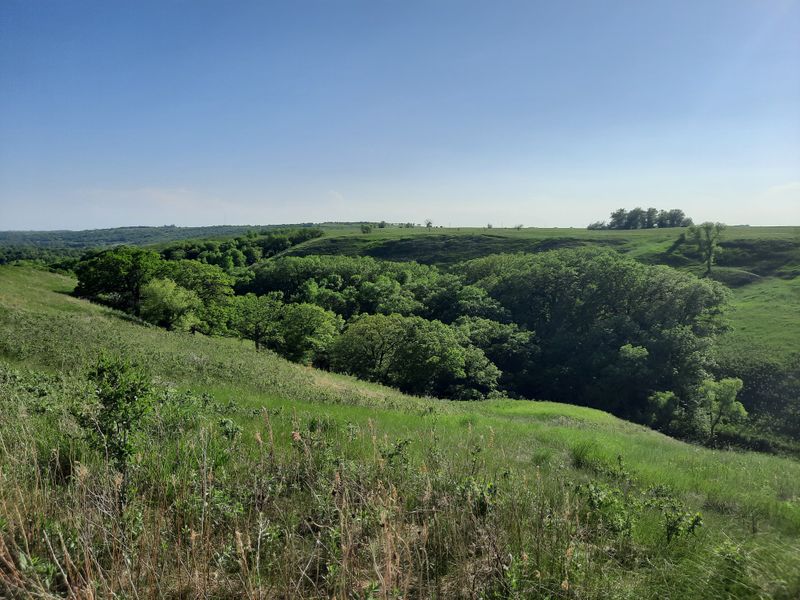
Tucked into the Sheyenne River Valley, Fort Ransom surprises visitors with landscape that defies every flat-prairie stereotype about North Dakota.
Rolling hills covered in hardwood forests create a topography more reminiscent of New England than the Great Plains.
Fort Ransom State Park protects this ecological treasure, offering hiking trails that wind through valleys ablaze with autumn color each September and October.
The Bjornson Trail challenges hikers with steep climbs rewarded by spectacular overlooks of the meandering Sheyenne River below.
Spring brings wildflowers carpeting the forest floor, while summer offers cool shade beneath towering oaks and elms.
The town itself preserves its agricultural heritage at the Fort Ransom Historic Site, where original 1867 military buildings stand as reminders of frontier settlement days.
Sodbuster Days, held annually in September, celebrates pioneer life with demonstrations of traditional crafts, antique machinery displays, and threshing shows using vintage equipment.
The aroma of freshly made lefse and homemade sausage fills the air as visitors sample Norwegian heritage foods prepared using century-old recipes.
Local artisans demonstrate blacksmithing, quilting, and woodworking skills passed down through generations.
The Sheyenne River provides excellent canoeing and kayaking opportunities, with gentle currents perfect for beginners and families.
Fishermen cast lines for catfish and northern pike in quiet pools beneath overhanging willows.
Winter transforms the valley into a snowy wonderland ideal for cross-country skiing and snowshoeing through silent forests.
The historic Ransom County Museum, located at 7 Broadway in Fort Ransom, houses collections documenting the area’s rich Scandinavian settlement history.
Fort Ransom Steakhouse serves hearty meals featuring locally raised beef that melts in your mouth.
This hidden valley proves that North Dakota holds landscape diversity that surprises even seasoned travelers expecting nothing but endless flatness.
5. Regent: Where Enchanted Highway Begins
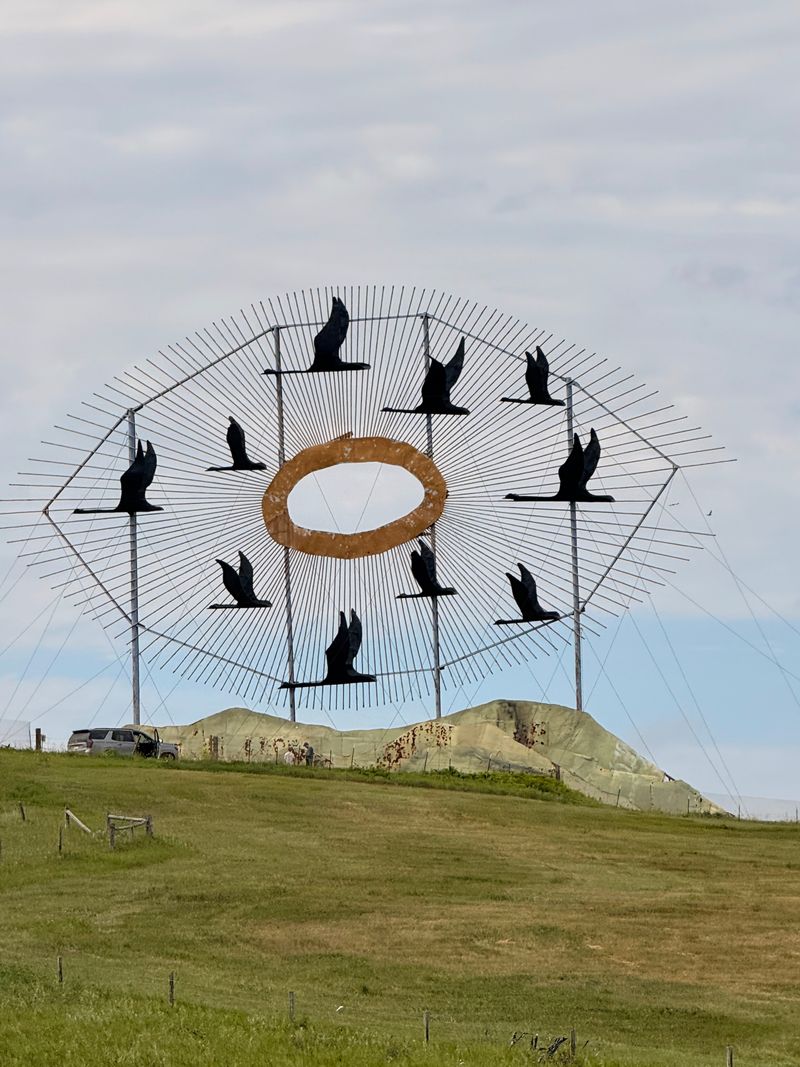
Driving south from Interstate 94 toward Regent, travelers encounter something completely unexpected rising from the prairie horizon.
Massive metal sculptures appear like giants frozen mid-stride across the grasslands, creating the world’s largest collection of scrap metal art.
The Enchanted Highway stretches 32 miles between Gladstone and Regent, featuring seven enormous installations created by local artist Gary Greff.
Geese in Flight stands 110 feet tall with a wingspan of 150 feet, making it one of the world’s largest scrap metal sculptures.
Grasshoppers in the Field features insects towering 50 feet high, their bodies constructed from oil tanks and farm equipment.
Pheasants on the Prairie showcases North Dakota’s state bird in sculptures reaching 40 feet tall and 75 feet long.
Each artwork required thousands of hours of welding and tons of recycled metal transformed into whimsical prairie creatures.
Regent serves as the southern terminus of this outdoor art gallery, welcoming visitors with small-town hospitality and the Enchanted Castle, a fairy-tale style building housing tourist information and unique gifts.
The castle’s turrets and colorful exterior look like something from a storybook dropped onto Main Street.
Local cafes serve comfort food where conversations with farmers and ranchers provide authentic insights into prairie life.
The surrounding countryside offers photography opportunities at every turn, especially during golden hour when the sculptures cast dramatic shadows across endless wheat fields.
Greff created the Enchanted Highway hoping to draw visitors and preserve his beloved hometown from economic decline.
His vision succeeded, transforming Regent into a destination that proves art and imagination can thrive anywhere.
Visitors leave inspired by how one person’s creative determination can transform an entire community.
The sculptures stand as monuments not just to artistic vision but to the resilience of small-town America refusing to fade away.
6. Pembina: Where North Dakota History Began
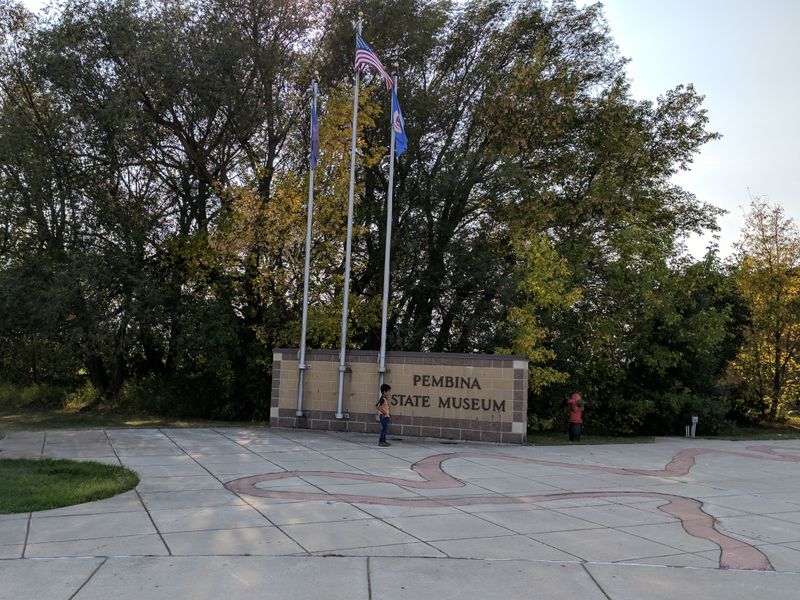
At North Dakota’s northeastern corner, where the Pembina River flows into the Red River, sits the state’s oldest European settlement and a place where history runs deep.
Pembina traces its roots to 1797 when fur traders established a North West Company post, making it older than most American cities west of the Mississippi.
The Pembina State Museum, located at 805 Highway 59, preserves this rich heritage with exhibits spanning three centuries of human occupation.
Native American artifacts reveal thousands of years of indigenous presence before European contact.
Fur trade displays showcase the beaver pelts, trade goods, and canoes that fueled the early economy.
Military history comes alive through exhibits about Fort Daer and Fort Pembina, frontier outposts that protected traders and settlers during turbulent territorial disputes.
The museum’s location atop a hill overlooking the confluence of two rivers provides the same strategic view that attracted those first fur traders.
Downtown Pembina retains buildings from the late 1800s, their brick facades weathered by over a century of prairie winds and winters.
The town sits directly on the Canadian border, with Manitoba’s fields visible just across the international boundary.
The Pembina Gorge stretches south from town, creating North Dakota’s most dramatic river valley with forested slopes dropping 400 feet to the water below.
Hiking trails wind through this ecological transition zone where northern boreal forest meets prairie grassland.
Wildlife viewing opportunities abound, with moose, deer, and black bears inhabiting the dense woods.
The Red River provides excellent catfish fishing, especially from shore near the mouth of the Pembina.
Icelandic State Park lies just minutes south, offering camping, swimming, and a pioneer heritage center celebrating the Icelandic immigrants who settled the region.
Pembina reminds travelers that understanding where history began helps appreciate how far we’ve traveled since.
7. Washburn: Riverfront Charm and Lewis and Clark History
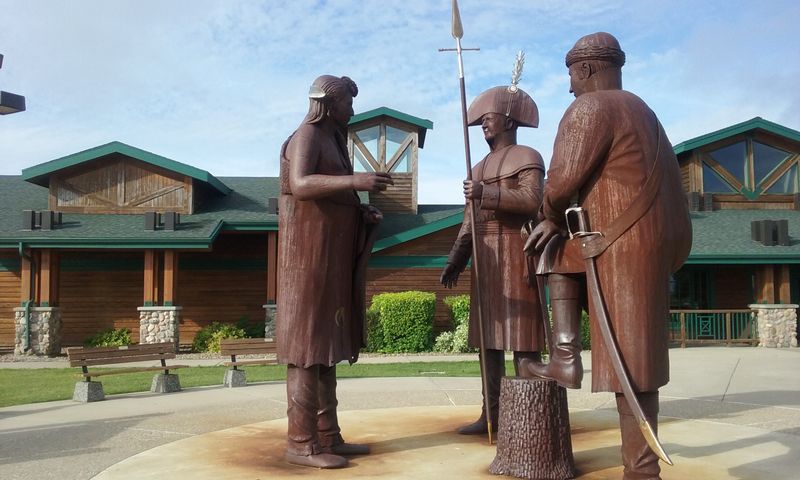
Perched on bluffs overlooking the Missouri River, Washburn combines breathtaking natural beauty with connections to America’s most famous exploration journey.
The Lewis and Clark Interpretive Center, located at 2576 8th Street Southwest, offers world-class exhibits detailing the Corps of Discovery’s 1804-1806 expedition.
Life-size dioramas recreate encounters between explorers and Mandan villagers, while artifacts and interactive displays bring the journey to life.
The center’s location provides panoramic views across the Missouri River to where Fort Mandan once stood, the expedition’s winter quarters during the brutal 1804-1805 season.
A full-scale replica fort sits across the river, allowing visitors to experience the cramped log buildings where Lewis, Clark, and their men endured temperatures plunging to 45 degrees below zero.
Sacagawea joined the expedition here, and her story receives special attention in exhibits honoring her crucial contributions as interpreter and guide.
The surrounding landscape looks much as it did when keelboats first rounded the river bend over two centuries ago.
Washburn’s downtown features antique shops, local cafes, and the McLean County Historical Society Museum showcasing regional pioneer history.
The Coal Creek Station, a working power plant, offers tours explaining how North Dakota’s lignite coal generates electricity for the region.
Lake Sakakawea, created by Garrison Dam, begins just upriver from Washburn, providing 1,500 miles of shoreline perfect for boating, fishing, and water sports.
Walleye fishing draws anglers from across the Midwest, with trophy-sized fish common in these productive waters.
Cross Ranch State Park protects native prairie and Missouri River bottomland forest where bison roam and prairie dogs build underground cities.
Hiking trails lead to overlooks where eagles soar on thermal currents rising from the river valley.
Washburn proves that small towns can preserve significant history while offering modern outdoor recreation that satisfies any adventurous spirit seeking authentic American experiences.
Dear Reader: This page may contain affiliate links which may earn a commission if you click through and make a purchase. Our independent journalism is not influenced by any advertiser or commercial initiative unless it is clearly marked as sponsored content. As travel products change, please be sure to reconfirm all details and stay up to date with current events to ensure a safe and successful trip.
