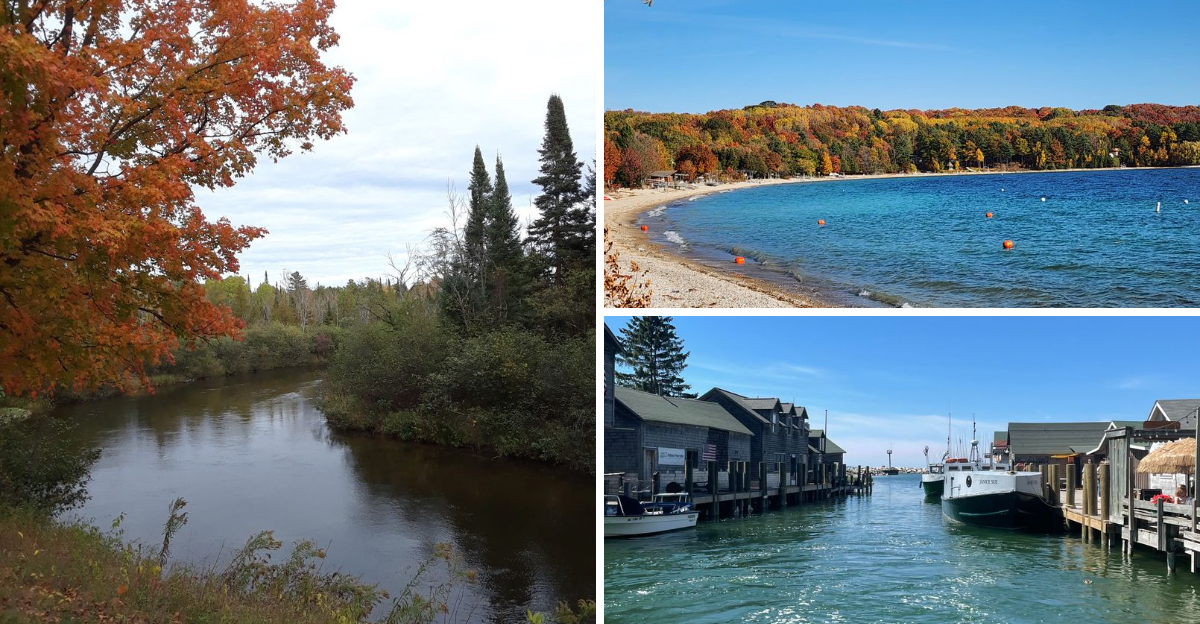
Northern Michigan holds a special place in the hearts of travelers who seek places where time seems to move just a little slower.
Along the shores of crystal-clear lakes and beneath towering pines, small towns have preserved their historic character while the modern world rushes past.
These lakeside communities offer a glimpse into a quieter era, with weathered docks, vintage storefronts, and tree-lined streets that have welcomed generations of visitors.
Whether you’re drawn to the peaceful rhythm of waterfront life or the charm of Main Street traditions, these northern gems promise an authentic escape into Michigan’s timeless beauty.
1. Glen Haven
Stepping into Glen Haven feels like walking through a living museum where every building tells a story of Northern Michigan’s maritime past.
This tiny restored village sits tucked along the shoreline of Lake Michigan within the protected boundaries of Sleeping Bear Dunes National Lakeshore.
Once a bustling port town serving steamships and lumber operations, Glen Haven now stands as a carefully preserved reminder of the 1800s.
The General Store, with its creaky wooden floors and shelves stocked with period goods, invites visitors to imagine what shopping was like over a century ago.
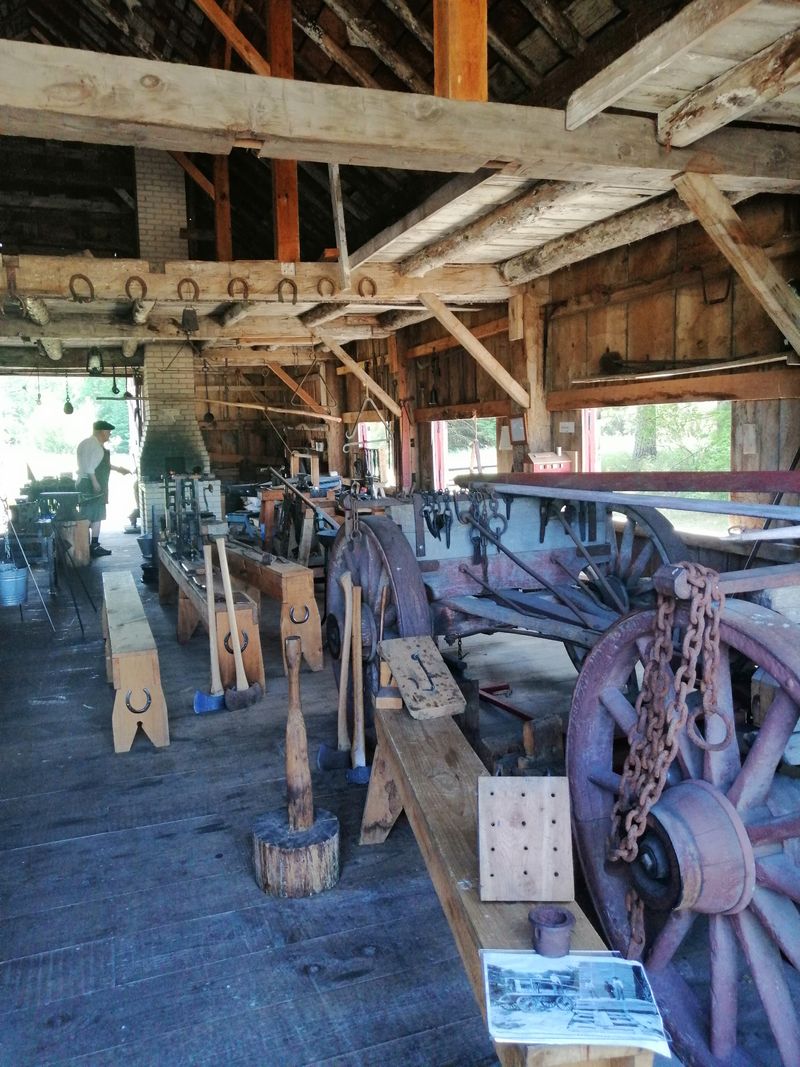
Next door, the Blacksmith Shop still displays tools and equipment that craftsmen once used to forge horseshoes and repair wagon wheels.
Walking the quiet streets, you’ll notice how little has changed since families gathered here for supplies before heading back to their farms and fishing camps.
The Sleeping Bear Point Coast Guard Station Maritime Museum adds another layer to the village’s nautical heritage, showcasing the brave work of lifesaving crews.
Sandy beaches stretch in both directions, offering the same stunning lake views that drew settlers here generations ago.
Unlike many tourist destinations that have modernized beyond recognition, Glen Haven maintains its authentic character through careful preservation efforts.
No chain stores or flashy signs interrupt the historical atmosphere.
Instead, weathered wooden buildings stand against a backdrop of dunes and endless blue water, creating a scene that could easily belong to another century.
For anyone seeking to understand what life was like in early Michigan lake towns, Glen Haven offers an unmatched window into the past.
2. Charlevoix
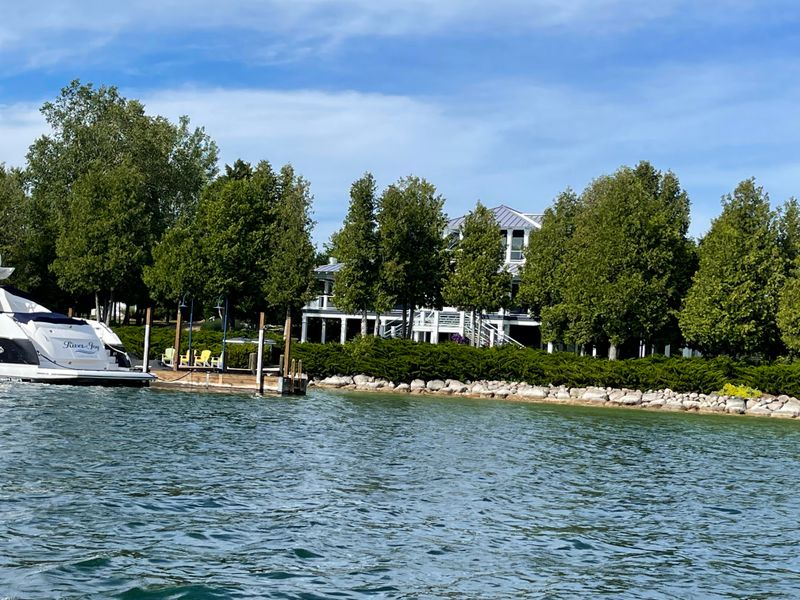
Charlevoix sits like a jewel between two magnificent bodies of water, Lake Michigan on one side and Lake Charlevoix on the other.
This positioning has shaped the town’s identity for well over a hundred years, creating a community deeply connected to its aquatic surroundings.
What makes Charlevoix truly distinctive are the whimsical mushroom houses scattered throughout the area, built from rounded stones by architect Earl Young in the early 1900s.
These fairytale-like structures look as though they’ve sprouted naturally from the earth, their curved rooflines and stone walls blending seamlessly with the landscape.
Downtown Charlevoix maintains much of its original character, with brick buildings housing family-owned shops that have served locals and visitors for decades.
The drawbridge that connects the two sides of town still raises regularly to allow boats passage between the lakes, a ritual that has marked time here since 1950.
Watching sailboats glide through the channel while cars wait patiently captures the unhurried pace that defines this community.
Historic homes with wraparound porches line residential streets, many built during Charlevoix’s resort town heyday in the late 1800s.
The waterfront park remains a gathering place where families spread blankets for sunset views, just as their grandparents did.
Fishermen still cast lines from the same piers that welcomed commercial fishing boats a century ago.
While Charlevoix has grown, it has resisted the urge to replace its historic core with modern development.
The commitment to preserving architectural heritage and maintaining connection to the water keeps this town firmly rooted in its past while welcoming each new generation of lake lovers.
3. Frankfort
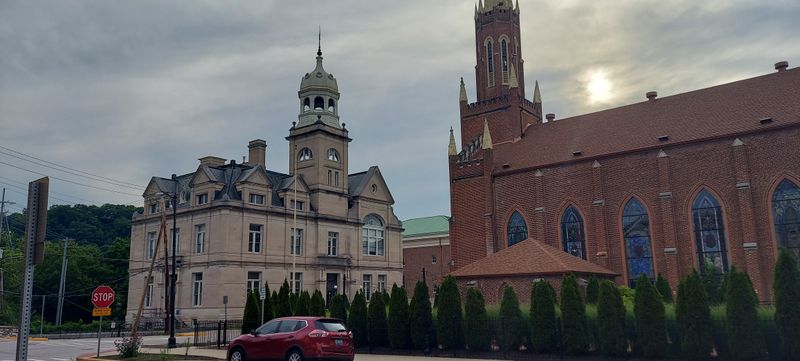
Frankfort’s Main Street runs straight toward Lake Michigan, ending at one of the most photographed lighthouses in the state.
This direct connection between downtown and waterfront has defined the town’s layout since its founding in the mid-1800s.
The Frankfort North Breakwater Lighthouse stands as a beacon both literally and symbolically, representing the town’s enduring relationship with the big lake.
Built in 1932, the bright red structure guides boats into Betsie Bay just as it has for nearly a century.
Walking from the shops and cafes down to the pier feels like a journey through time, with historic buildings giving way to sandy beaches and rocky breakwaters.
Crystal Lake lies just south of town, offering a warmer, calmer alternative to Lake Michigan’s sometimes chilly waters.
Generations of families have spent summers here, swimming in Crystal Lake during the day and watching sunsets over Lake Michigan in the evening.
The Betsie Valley Trail, a former railroad corridor, now provides miles of scenic paths through forests and farmland.
This rail-to-trail conversion honors the region’s transportation history while giving modern visitors a peaceful way to explore.
Downtown Frankfort retains its small-town character, with locally owned businesses occupying buildings that have stood for over a hundred years.
No big-box stores or corporate chains have replaced the mom-and-pop shops that give the town its personality.
The annual Frankfort Art Fair and other community events continue traditions that date back decades, bringing neighbors together in ways that feel increasingly rare.
For those seeking an authentic Northern Michigan experience, Frankfort delivers history, natural beauty, and small-town warmth in equal measure.
4. Lake Ann

Lake Ann sits quietly on the northern shore of the lake that shares its name, a tiny village where everybody knows their neighbors.
Founded in the 1800s as a logging community, the town has never grown beyond its original small footprint.
This lack of expansion has preserved Lake Ann’s intimate character, making it feel like a place that progress forgot.
The village center consists of just a few blocks, with a general store, post office, and handful of other essential businesses.
No traffic lights interrupt the flow of the occasional car passing through on its way to somewhere busier.
Lake Ann itself is a spring-fed beauty, its clear waters reflecting the surrounding forests and sky.
Families who have owned cottages here for generations return each summer, their children and grandchildren following the same routines of swimming, fishing, and evening campfires.
The public access point remains simple and unadorned, without the fancy facilities that mark more developed lakefronts.
Nearby Traverse City offers urban amenities just twenty minutes away, but Lake Ann residents cherish their distance from the bustle.
Historic homes line the quiet streets, many built when logging was still the area’s primary industry.
These simple structures, maintained with care over the decades, give the village a cohesive architectural identity.
Walking through Lake Ann, you won’t find trendy boutiques or upscale restaurants.
Instead, you’ll discover a community that values simplicity and natural beauty over commercial development.
This commitment to remaining small has kept Lake Ann feeling like a secret hideaway, a place where the modern world’s demands fade away beside peaceful waters.
5. Interlochen
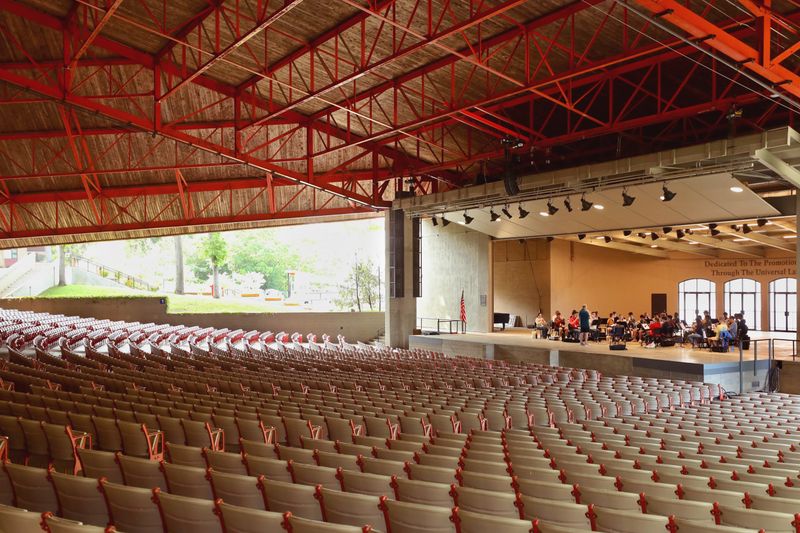
Music drifts through the pine trees in Interlochen, a community where artistic tradition runs as deep as the roots of ancient forests.
Nestled between Duck Lake and Green Lake, this small settlement has been shaped by the presence of the Interlochen Center for the Arts since 1928.
The arts center began as a summer camp for young musicians and has grown into a world-renowned institution while maintaining its rustic, nature-focused character.
Wooden cabins still house students who come from around the globe to study music, theater, dance, and visual arts.
The outdoor amphitheater, surrounded by towering pines, hosts performances that echo through the woods just as they have for nearly a century.
Beyond the arts campus, Interlochen village remains wonderfully understated, with no commercial center to speak of.
A few essential businesses serve the local population, but the area has never developed the tourist infrastructure found in nearby towns.
This restraint has preserved the natural environment that makes Interlochen special, with forests and lakes dominating the landscape.
Duck Lake and Green Lake offer quiet recreation, their shores lined with modest cottages rather than sprawling developments.
Paths wind through the woods, connecting the lakes and providing peaceful walks beneath the canopy.
The community’s identity remains tied to arts education and natural preservation, values established nearly a century ago.
Visitors attending concerts or dropping off aspiring young artists find themselves in a place where time moves to the rhythm of music rather than commerce.
Interlochen proves that a town can maintain its character by staying true to its founding purpose, resisting pressures to modernize or expand beyond its original vision.
6. Kalkaska

Kalkaska proudly calls itself the Trout Capital of Michigan, a title earned through generations of fishing tradition.
The Boardman River and countless surrounding lakes have drawn anglers here since the town’s founding in 1872.
Each spring, the National Trout Festival transforms Main Street into a celebration that has barely changed since it began in 1933.
Parades, fishing contests, and community gatherings follow the same format that entertained grandparents and great-grandparents decades ago.
This continuity gives Kalkaska a sense of stability rare in modern America, where traditions often fade with each passing generation.
Downtown retains its small-town character, with brick storefronts housing businesses that serve locals first and tourists second.
The pace here moves slower than in cities to the south, matching the patient rhythm required for successful fly fishing.
Tackle shops still do brisk business, their walls covered with photos of trophy catches spanning many decades.
Old-timers gather to swap stories about the ones that got away, continuing conversations that started years ago.
Surrounding forests and waterways remain largely undeveloped, protected by residents who understand that pristine habitat means healthy fish populations.
This environmental stewardship isn’t new-age thinking but rather practical wisdom passed down through generations of people who depend on nature’s bounty.
Historic homes on tree-lined streets show the architectural styles popular when logging and fishing drove the local economy.
Many families have lived in Kalkaska for over a hundred years, their roots growing as deep as the pines.
For anyone seeking a town where outdoor tradition and community spirit remain strong, Kalkaska offers an authentic glimpse of Northern Michigan’s enduring character.
7. Houghton Lake

Houghton Lake stretches across more surface area than any other inland lake in Michigan, a vast expanse of water that has anchored this community since the 1800s.
The lake’s size and shallow depth make it warm quickly in summer and freeze solidly in winter, supporting year-round recreation.
Fishing shanties dot the frozen surface each winter, a tradition that has continued unbroken for over a century.
Ice fishing tournaments draw competitors who follow rules and techniques passed down through generations of anglers.
Summer brings boaters and swimmers to waters that have provided the same simple pleasures since Michigan became a state.
The town surrounding the lake developed as a resort destination in the late 1800s, when trains brought wealthy families north to escape city heat.
Many of the original cottages still stand, their modest construction reflecting an era before McMansions crowded other lakefronts.
Main roads around the lake pass tackle shops, bait stores, and family restaurants that have served the community for decades.
These businesses maintain the same straightforward approach to hospitality that welcomed visitors generations ago.
No luxury resorts or exclusive developments have replaced the democratic accessibility that has always characterized Houghton Lake.
Working families can still afford a week at the lake, just as their parents and grandparents could.
This economic accessibility has preserved the area’s down-to-earth character, preventing the gentrification that has transformed other popular destinations.
Snowmobiling trails that crisscross the region follow routes established when the sport first gained popularity in the 1960s.
For those who value tradition over trendiness, Houghton Lake remains a place where outdoor recreation follows time-tested patterns rather than chasing the latest fads.
8. Leland
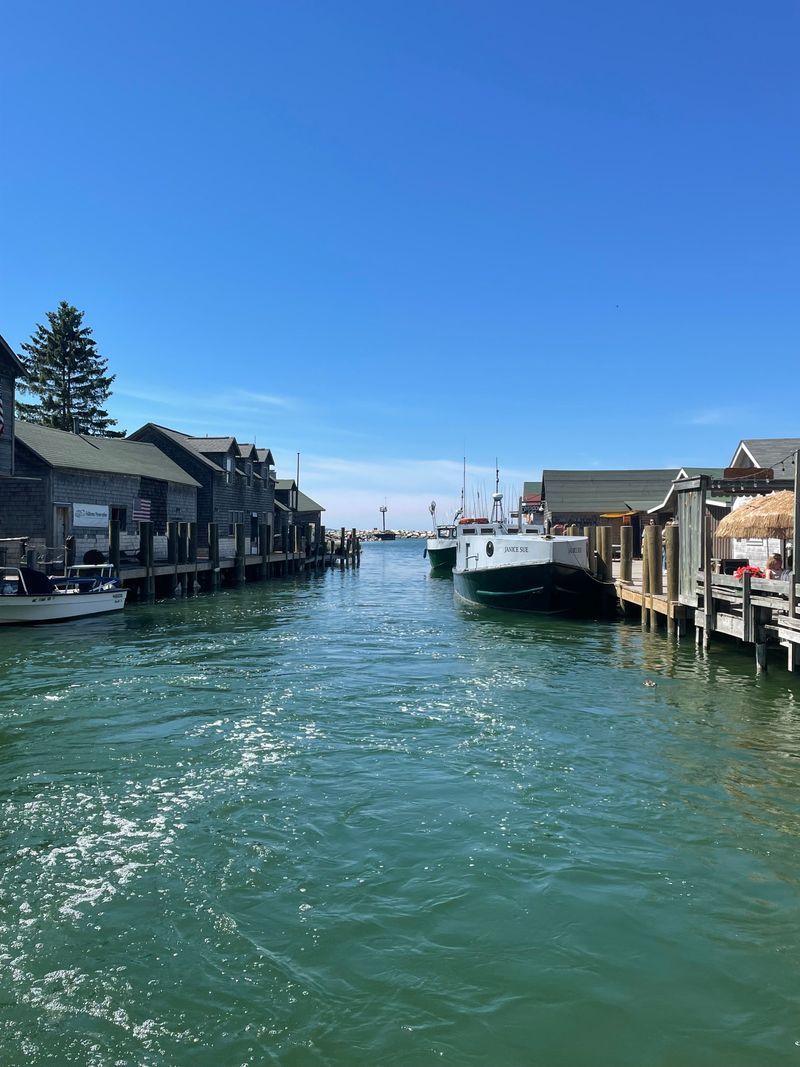
Leland’s Fishtown stands as one of the last working fishing villages on the Great Lakes, its weathered shanties clinging to the banks of the Leland River.
These gray wooden structures have housed commercial fishing operations since the 1800s, their worn appearance testament to over a century of use.
Walking the docks, you can still watch fishermen unload their catch, continuing work their grandfathers performed in exactly the same spot.
The smell of smoked fish drifts from small smokehouses, prepared using methods that haven’t changed in generations.
Nets hang drying in the sun, and boats with names like family heirlooms bob at their moorings.
Unlike reconstructed historical sites, Fishtown remains authentically functional, not a museum but a living workplace.
This working character gives the area an honesty that staged tourist attractions can never match.
Beyond Fishtown, Leland’s downtown maintains its village scale, with shops occupying buildings that date back to the town’s founding.
The harbor welcomes both commercial fishermen and recreational boaters, continuing its role as a maritime hub.
Ferries to the Manitou Islands depart from Leland’s docks, carrying visitors to even more remote and unchanged landscapes.
Residential streets feature homes built during Leland’s early days as a lumber and fishing port.
These structures show the practical architecture of working people rather than the grand summer estates found in fancier resort towns.
Community events still center around the water, from blessing of the fleet ceremonies to fish boils that feed the whole town.
For travelers seeking genuine connection to Michigan’s maritime past, Leland offers an experience that feels real because it is, a place where history continues rather than being merely remembered.
9. Suttons Bay
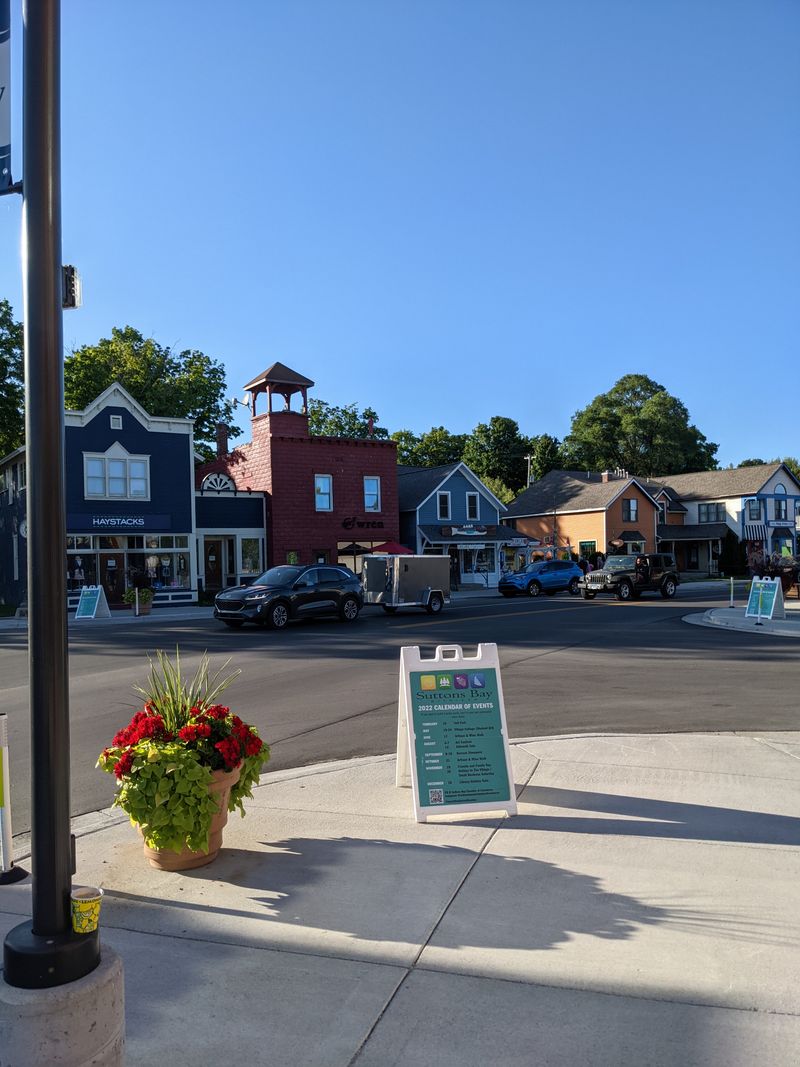
Suttons Bay curves along the eastern shore of the bay that shares its name, a crescent of land where orchards meet water.
This agricultural heritage remains visible in the cherry and apple trees that blanket the surrounding hills, planted by farmers over a hundred years ago.
Downtown consists of a single main street running perpendicular to the bay, its layout unchanged since the town’s platting in the 1850s.
Brick buildings line this street, their facades showing the commercial architecture typical of Northern Michigan’s settlement era.
Family-owned businesses occupy many of these historic structures, some run by the third or fourth generation of the same family.
This continuity of ownership has helped preserve the town’s character, as longtime residents resist changes that might erase what makes Suttons Bay special.
The waterfront remains publicly accessible, with a simple park and dock where residents gather for sunset views.
No high-rise condos or exclusive developments block access to the bay, maintaining the democratic spirit of earlier times.
Marina slips accommodate modest sailboats and fishing vessels rather than luxury yachts, reflecting the town’s unpretentious nature.
Surrounding farms still produce the cherries that made this region famous, their fruit stands selling directly to customers as they have for generations.
This connection to agriculture grounds Suttons Bay in practical, seasonal rhythms rather than tourism trends.
The town’s size has remained relatively stable, growing slowly enough that newcomers must adapt to existing culture rather than overwhelming it.
Walking through Suttons Bay, you sense a community that knows who it is and feels no need to become something else, a rare confidence in an age of constant change.
10. Omena
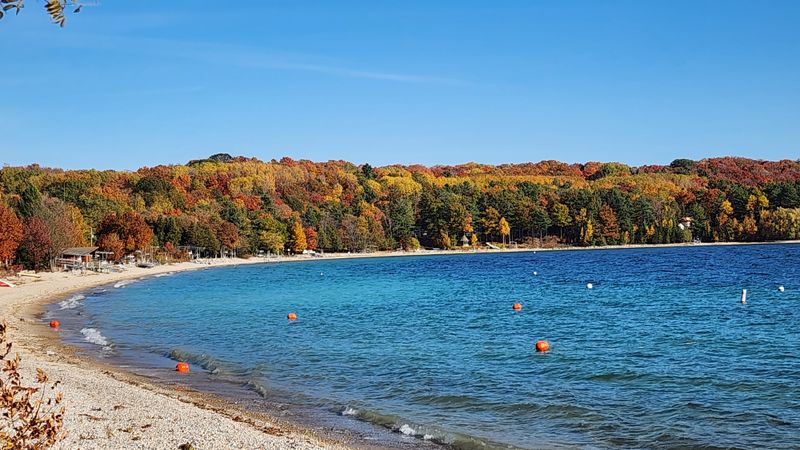
Omena might be the smallest town on this list, a tiny cluster of buildings on the shore of Grand Traverse Bay.
Blink while driving through and you might miss it entirely, though that would be a shame.
The village consists of little more than a historic general store, a church, and a scattering of homes, yet it captures something essential about Northern Michigan’s past.
The Omena General Store has served the community since the 1800s, its shelves stocked with essentials for locals and curious visitors alike.
Step inside and you’re transported to an era when such stores served as community centers, post offices, and gathering places all in one.
The wooden floors creak underfoot, and the smell of coffee mingles with that of old wood and produce.
Across the road, a small church with a tall white steeple has called the faithful to worship for over a century.
Its simple design reflects the practical faith of farming and fishing families who built it.
Cherry orchards surround Omena, their orderly rows stretching across hillsides that slope toward the bay.
These orchards represent generations of agricultural work, trees planted by grandparents still producing fruit today.
The bay itself provides stunning views, especially at sunset when the water reflects orange and pink across the waves.
No commercial development mars this coastline, just natural beauty and quiet.
Omena’s size has protected it from the pressures that push larger towns toward growth and modernization.
There’s simply nowhere to build big resorts or shopping centers, and residents prefer it that way, valuing tranquility over economic expansion and preserving a way of life that moves at nature’s pace.
11. Northport

Northport sits at the very tip of the Leelanau Peninsula, the end of the road in the most literal sense.
This geographic isolation has shaped the town’s character, keeping it separate from the more developed areas to the south.
Founded in the 1840s as a refueling stop for steamships traveling Lake Michigan, Northport quickly became an important port.
The marina still welcomes boats today, though recreational sailors have largely replaced commercial vessels.
Downtown occupies just a few blocks, with historic buildings housing galleries, cafes, and shops that cater to a mix of locals and summer visitors.
These structures date from Northport’s heyday as a lumber and fishing town, their solid construction a testament to 19th-century craftsmanship.
The town has resisted chain stores and franchises, maintaining a fiercely independent business community.
This independence gives Northport a distinctive personality, each shop reflecting its owner’s tastes rather than corporate mandates.
North of town, the Grand Traverse Lighthouse stands at the peninsula’s tip, guiding boats since 1858.
Now a museum, the lighthouse offers glimpses into the lives of keepers who maintained the light through long, isolated winters.
Beaches stretch along both sides of the peninsula near Northport, their pebbled shores much as they were when Native Americans camped here centuries ago.
The town’s location makes it a natural stopping point for travelers exploring Leelanau, yet it has avoided becoming overly touristy.
Residents maintain strong community bonds, organizing festivals and events that feel like genuine celebrations rather than manufactured attractions.
For those willing to drive to the end of the peninsula, Northport rewards with authentic charm and a sense of having reached somewhere truly special.
12. Elk Rapids
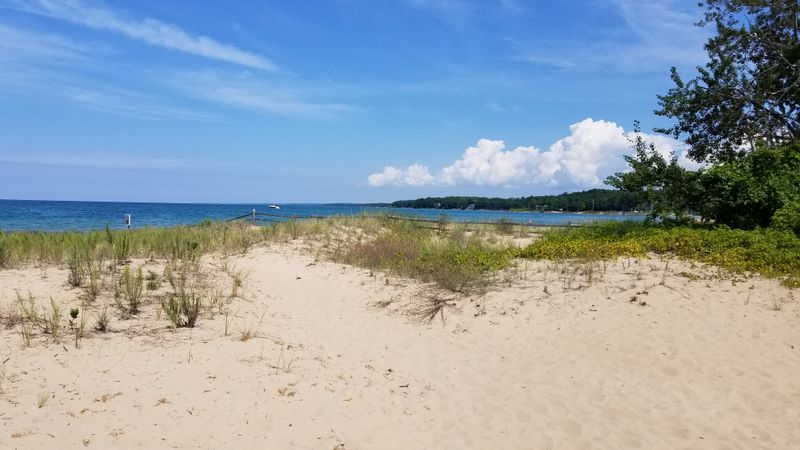
Elk Rapids earned its name from the rapids that once connected a chain of inland lakes to Grand Traverse Bay.
Though a dam now controls the water flow, the town still sits at this important junction between inland and Great Lakes waters.
This unique position made Elk Rapids a natural location for mills and industry in the 1800s, when lumber drove Northern Michigan’s economy.
Many buildings from that prosperous era still stand, their brick and stone construction built to last generations.
Downtown follows the curve of the bay, with shops and restaurants occupying historic storefronts that have served the community for over a century.
The town beach provides public access right in the heart of the village, a rare amenity that reflects earlier values about shared resources.
Families spread blankets on the sand just as their ancestors did, swimming in the same gentle waters.
The harbor accommodates both fishing boats and pleasure craft, continuing its role as a working waterfront.
A scenic boardwalk connects the beach to downtown, offering views across the bay toward Old Mission Peninsula.
Residential neighborhoods feature homes built during Elk Rapids’ lumber boom, their Victorian and Craftsman styles showing the architectural preferences of prosperous merchants and mill owners.
These houses have been carefully maintained, creating streetscapes that look remarkably similar to old photographs from the early 1900s.
The chain of lakes stretching inland from town still attracts boaters and anglers, their waters connected by the river that gave Elk Rapids its name.
Community events like the Harbor Days festival follow traditions established decades ago, bringing neighbors together in celebration of their shared home and reminding everyone why this small town is worth preserving.
Dear Reader: This page may contain affiliate links which may earn a commission if you click through and make a purchase. Our independent journalism is not influenced by any advertiser or commercial initiative unless it is clearly marked as sponsored content. As travel products change, please be sure to reconfirm all details and stay up to date with current events to ensure a safe and successful trip.
