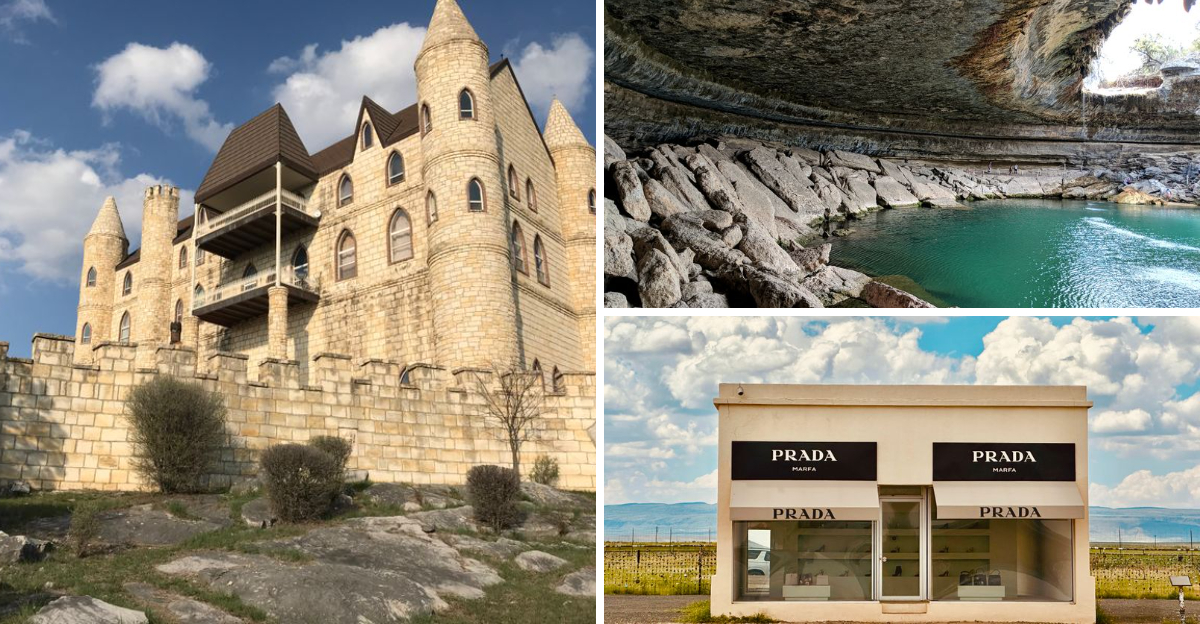
I thought I had Texas figured out until I started running into places that made absolutely no sense in the best way. Castles where you least expect them, ghost towns that feel frozen mid-story, lights in the desert with no explanation, and towns that lean fully into being weird instead of hiding it.
This is not the Texas people put on postcards. This is the version you stumble into and immediately start questioning.
Once you see it, the cowboy stereotype kind of falls apart. Texas gets strange fast if you let it.
So where are these places, and how did they end up here? These ten destinations completely flip the script on what Texas looks like, and they might be the most memorable stops you will ever make in the state.
1. Cadillac Ranch, Amarillo
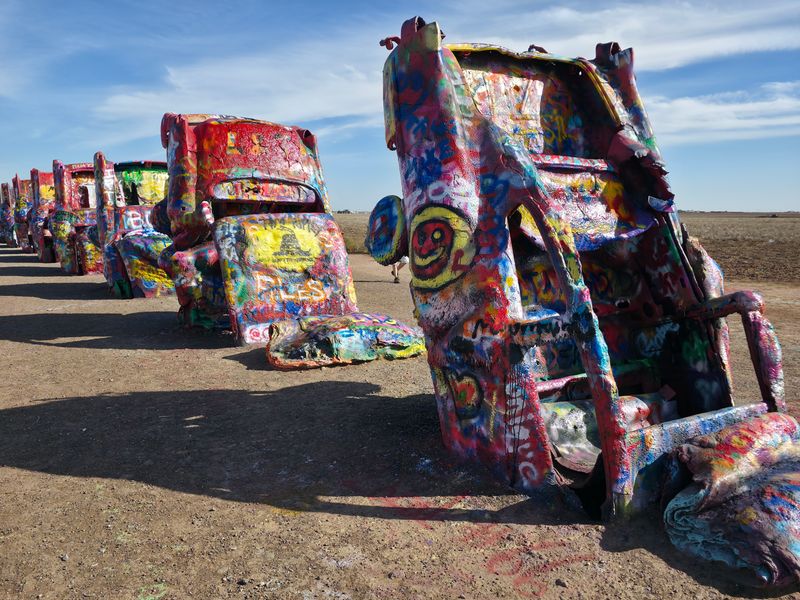
Picture this: ten classic Cadillacs planted nose-down in the dirt like metallic flowers reaching toward the center of the earth. That’s Cadillac Ranch, and it’s exactly as bizarre as it sounds.
Created in 1974 by an art collective called Ant Farm, this installation has become one of the most photographed roadside attractions in America, yet it still manages to surprise first-time visitors with its sheer audacity.
The cars span the golden age of American automotive design, from 1949 to 1963, each one representing a year when fins got bigger and chrome got shinier. What started as a statement about the death of the American Dream has transformed into something entirely different: a constantly evolving canvas where anyone can leave their mark.
Visitors are actively encouraged to bring spray paint and add their own designs, making this one of the few art installations where vandalism is not just permitted but celebrated.
Every surface tells a story, layered upon layers of messages, names, declarations of love, and random bursts of creativity. Some people spend hours here, meticulously crafting their contribution.
Others make quick tags and move on. The beauty lies in knowing your artwork won’t last forever because tomorrow someone else will paint over it, creating an endless cycle of creation and destruction that somehow feels perfect for the wide-open Texas Panhandle.
Standing among these tilted titans at sunset, watching the light play off countless coats of paint, you’ll understand why this place has endured for nearly five decades. It’s weird, it’s wonderful, and it’s absolutely, undeniably Texas in the most unexpected way possible.
Address: 13651 I-40 Frontage Rd, Amarillo, Texas.
2. Marfa Lights Viewing Area
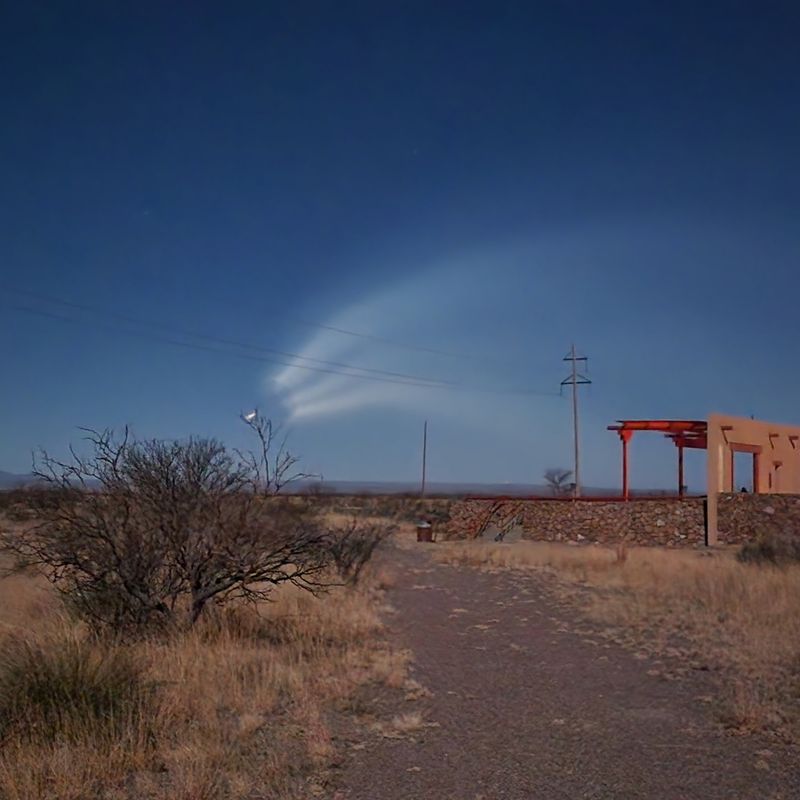
Nobody can explain them, scientists have tried and failed, and yet they keep appearing. The Marfa Lights have been documented since the 1880s, when a young cowhand named Robert Ellison first reported seeing strange flickering lights dancing across the desert.
More than a century later, people still gather at the official viewing area, hoping to witness something that defies rational explanation.
The lights appear as glowing orbs that split, merge, disappear, and reappear across the horizon south of town. They change colors from white to yellow to orange to red.
They move erratically, sometimes hovering in place, other times darting across the landscape at impossible speeds.
Theories range from atmospheric reflections to swamp gas to car headlights from distant highways, but none fully account for reports that predate automobiles or explain why the phenomenon occurs so consistently in this specific location.
The official viewing area sits about nine miles east of Marfa on Highway 90, complete with parking, restrooms, and historical markers. Your best chance of seeing the lights comes on clear nights, particularly in fall and winter.
Some visitors see nothing. Others witness a full light show that leaves them questioning everything they thought they knew about physics.
There’s something deeply humbling about standing in the darkness, staring at unexplained lights, and accepting that some mysteries remain unsolved.
Whether you believe in paranormal phenomena or prefer scientific explanations, the experience of watching for the Marfa Lights connects you to generations of observers who stood in this same spot, wondering the same questions. The desert holds its secrets close, and maybe that’s exactly how it should be.
Address: Highway 90, Marfa, Texas.
3. Terlingua Ghost Town
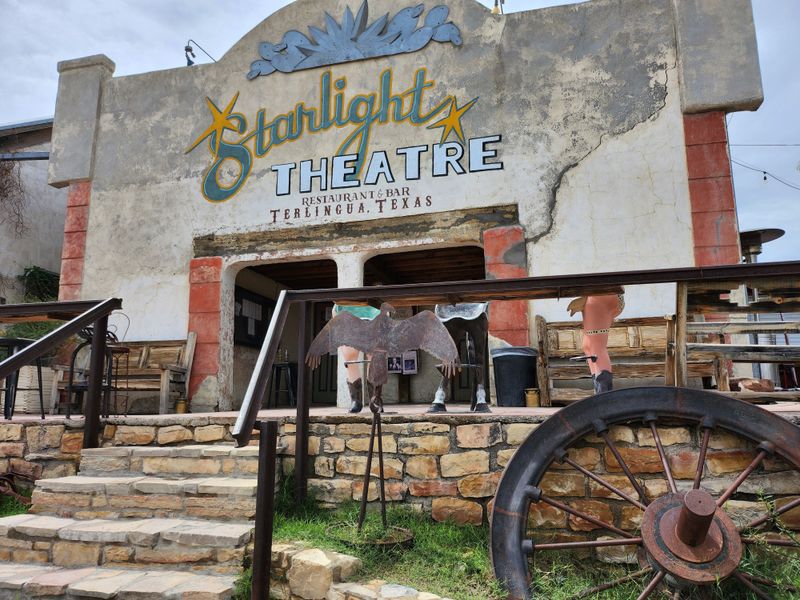
Once upon a time, Terlingua bustled with miners extracting mercury from cinnabar ore, their fortunes rising and falling with the price of quicksilver. Then the mines closed, the population scattered, and the desert began reclaiming what humans had built.
But Terlingua didn’t die completely; it transformed into something stranger and more interesting than a typical ghost town.
Walking through the ruins feels like stepping onto a movie set designed to capture the essence of the Old West. Crumbling stone buildings stand as silent witnesses to boom-and-bust economics.
The old Perry Mansion overlooks the town from its hilltop perch, windows empty but somehow still watching. A historic cemetery sprawls across a hillside, headstones marking lives lived hard and fast in unforgiving country.
Yet among these remnants of the past, new life has taken root in the most unexpected ways.
Artists, musicians, and free spirits have adopted Terlingua as their own, creating a thriving creative community within the shell of the abandoned town. The famous Terlingua International Chili Championship draws thousands every November, transforming the ghost town into a raucous celebration of competitive cooking and general mayhem.
Local establishments serve up authentic border cuisine while live music echoes off ancient stone walls. The contrast between past and present creates an atmosphere you won’t find anywhere else.
Visit during the day to explore the ruins and soak up the history, then stick around as evening falls and the town comes alive in its own quirky way. This is Texas at its most beautifully contradictory: dead and alive, abandoned and inhabited, forgotten and celebrated all at once.
4. Falkenstein Castle, Burnet
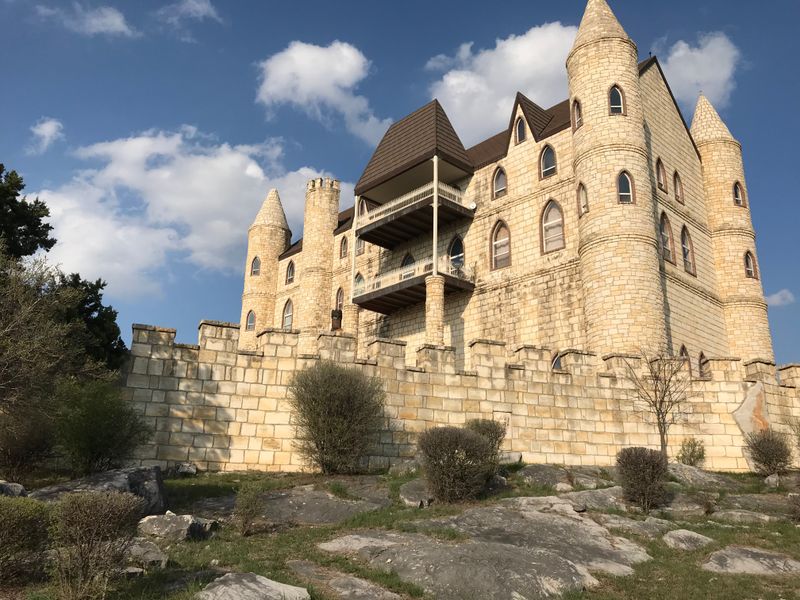
Somewhere in the Texas Hill Country, a Bavarian castle rises from the landscape like it got seriously lost on its way to Germany.
Falkenstein Castle shouldn’t exist here among the live oaks and limestone outcroppings, yet there it stands, all turrets and stone walls and European fairy tale architecture transplanted onto Texas soil.
Built by a couple who fell in love with medieval European castles during their travels, this structure represents an obsessive attention to detail that borders on magnificent madness. Authentic stonework imported from Germany forms the exterior walls.
Hand-carved details adorn every surface. The interior features period-appropriate furnishings, tapestries, and decorative elements that transport visitors straight into a medieval fantasy.
From certain angles, you could absolutely convince yourself you’ve somehow teleported to the Bavarian Alps, at least until you notice the prickly pear cactus growing nearby.
The castle serves as a private residence and event venue, offering tours by appointment that reveal the incredible craftsmanship involved in creating such an anachronistic masterpiece. Every room tells a story of dedication to a vision that most people would have dismissed as impossible.
The views from the towers stretch across Hill Country vistas that look nothing like Europe, creating a delightful cognitive dissonance that makes the whole experience even more surreal.
Standing in the courtyard, you’ll find yourself grinning at the sheer audacity of building a German castle in Central Texas. It makes no practical sense, serves no logical purpose, and yet it exists as a testament to the fact that in Texas, if you can dream it big enough, you can probably build it.
Address: 7400 Park Rd 4 S, Burnet, Texas.
5. Willow City Loop
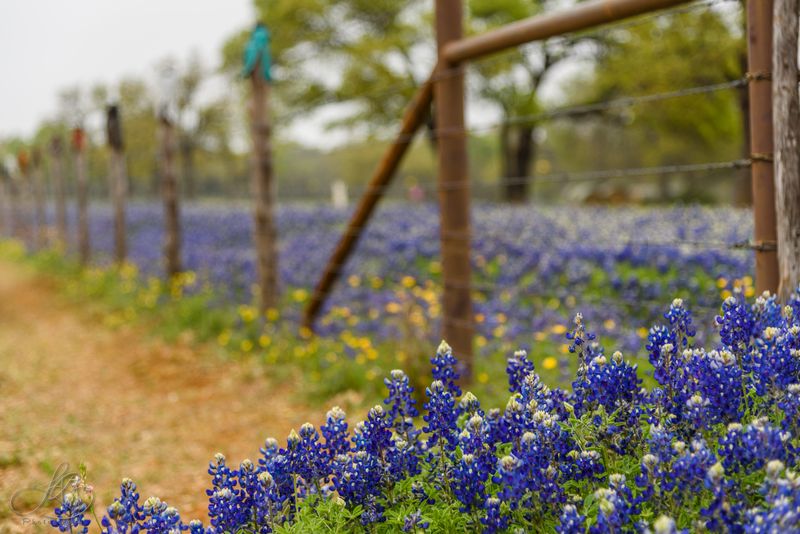
Every spring, something magical happens along a thirteen-mile stretch of country road northwest of Fredericksburg. Wildflowers explode across the landscape in a riot of color so intense it looks like someone spilled paint across the Hill Country.
Willow City Loop becomes a pilgrimage site for flower enthusiasts, photographers, and anyone who appreciates nature putting on her very best show.
Bluebonnets steal the spotlight, blanketing entire hillsides in shades of blue that seem impossible in nature. But they don’t perform alone.
Indian paintbrush adds splashes of orange and red. Pink evening primrose and white prickly poppies fill in the supporting roles.
Yellow coreopsis and wine cups round out the cast. Together, they create a living tapestry that changes slightly every year depending on rainfall, temperature, and the mysterious preferences of wildflower gods.
The loop follows a winding path through working ranch land, past limestone outcroppings and old stone fences, under canopies of ancient live oaks. Peak bloom typically occurs in late March through mid-April, though timing varies with weather patterns.
Locals will tell you the best displays happen after wet winters, when the seeds that have been waiting patiently in the soil finally get their chance to shine. Drive slowly, pull off at the designated areas, and resist the urge to trample the flowers for that perfect photo.
This isn’t a curated garden or planned attraction; it’s simply nature doing what nature does best when given the right conditions. The fact that it happens on a public road where anyone can witness it for free makes it even more special.
Come during peak season and you’ll understand why Texans get genuinely emotional about their wildflowers.
6. Hamilton Pool Preserve, Dripping Springs
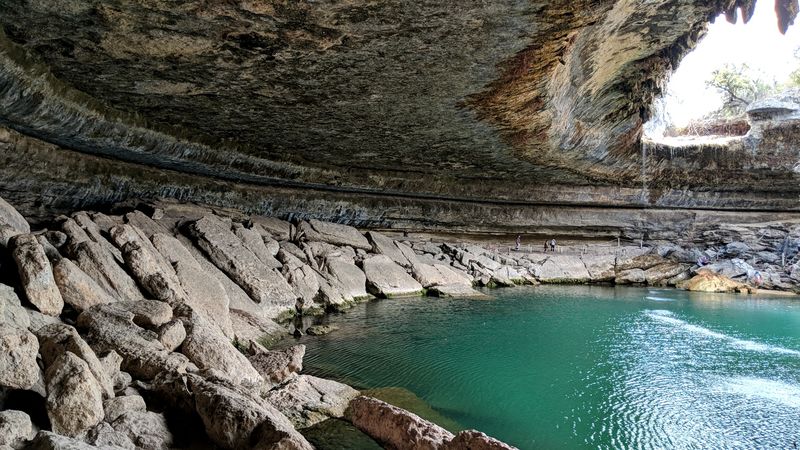
Thousands of years ago, the dome of an underground river collapsed, creating a natural grotto that looks more like a fantasy illustration than an actual place in Texas.
Hamilton Pool hides in a limestone canyon, where a fifty-foot waterfall spills over the edge of a massive overhang into a jade-green swimming hole that stays cool even during the scorching Texas summer.
The preservation area encompasses 232 acres of protected habitat along Cypress Creek, but the pool itself is the undeniable star. Massive stalactites hang from the grotto ceiling like nature’s chandelier.
Ferns and moss cling to the dripping rock walls. The waterfall’s flow varies with rainfall, sometimes reduced to a gentle trickle, other times thundering down with impressive force.
Swimming beneath the overhang feels like discovering a secret that the earth kept hidden for millennia before finally deciding to share.
Due to its popularity, reservations are now required for entry, which helps protect this fragile ecosystem from being loved to death. The reservation system also means you won’t be fighting crowds for space in the pool, making the experience far more enjoyable than it was during the free-for-all days.
The hike from the parking area to the pool takes about a quarter mile down a moderately steep trail, so wear appropriate shoes and be prepared for some uphill work on the return journey.
Water quality determines whether swimming is permitted on any given day, as the preserve takes seriously its responsibility to protect both visitors and the delicate environment. Even if swimming is closed, the visual spectacle alone justifies the visit.
This is the kind of place that makes you grateful for geological accidents and the forces that shaped our landscape into something extraordinary.
Address: 24300 Hamilton Pool Rd, Dripping Springs, Texas.
7. Prada Marfa
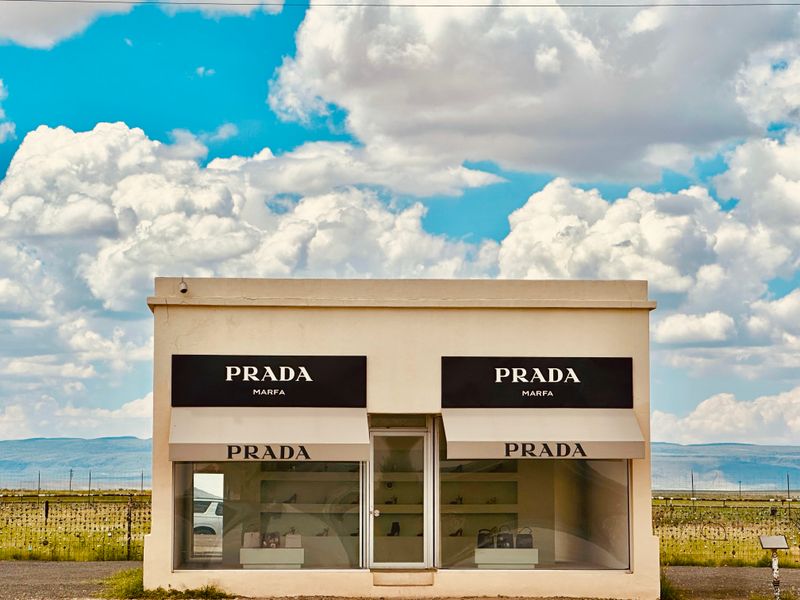
A luxury boutique stands in the middle of absolutely nowhere, thirty miles northwest of Marfa, displaying designer handbags and shoes behind pristine windows. Except it’s not actually a store.
You can’t go inside. Nothing is for sale.
Prada Marfa is a permanent art installation that comments on consumerism, luxury, and the absurdity of placing high fashion in one of the most remote corners of Texas.
Artists Elmgreen and Dragset created this piece in 2005, stocking it with actual Prada merchandise from the fall/winter collection of that year.
The building mimics a real Prada store’s aesthetic down to the smallest details, except for one crucial difference: the door doesn’t open and the whole thing is meant to slowly deteriorate in the harsh desert environment.
It’s a sculpture disguised as a store, a commentary on the temporary nature of fashion and the permanence of art, or maybe it’s the other way around.
Over the years, Prada Marfa has been vandalized, repaired, vandalized again, and restored repeatedly. Thieves have broken in and stolen the merchandise, which was then replaced with permanent plexiglass replicas.
The building has become a pilgrimage site for fashion lovers, art enthusiasts, and Instagram users seeking the perfect shot of luxury goods against a backdrop of desert scrubland. The contrast between the sleek modern structure and the ancient landscape creates a visual tension that makes the piece work.
Pull off Highway 90 and contemplate the weirdness of it all. Consider the fact that maintaining a fake store in the desert requires ongoing effort and resources.
Think about what it means that this has become one of West Texas’s most photographed landmarks. Prada Marfa asks questions without providing answers, which is exactly what good art should do.
Address: 14880 US-90, Valentine, Texas.
8. Devil’s Sinkhole, Rocksprings
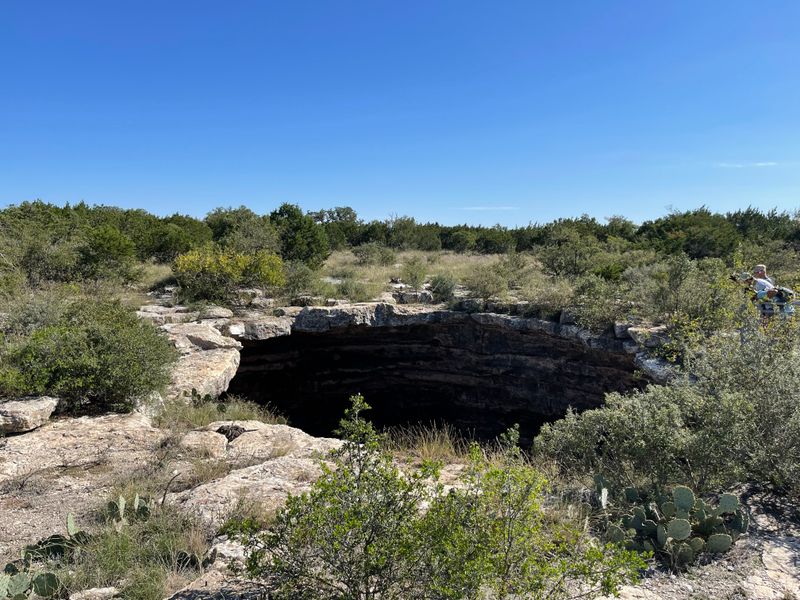
A gaping hole in the earth drops straight down into darkness, creating a vertical cave that plunges 350 feet below the surface. Devil’s Sinkhole earned its ominous name honestly; standing at the observation deck and peering into the void feels like looking into the planet’s open mouth.
But the real magic happens at dusk when millions of Mexican free-tailed bats emerge from the depths in a spiraling tornado of wings.
The sinkhole formed over millions of years as water dissolved limestone bedrock, creating a massive underground chamber connected to the surface by a single vertical shaft. The cave system below extends far beyond what the opening suggests, with passages winding through the Edwards Plateau aquifer.
But most visitors come for the bats, which use the sinkhole as their summer home, raising their young in the constant temperature and humidity of the cave before migrating to Mexico for winter.
Access to Devil’s Sinkhole requires joining a guided tour through the Devil’s Sinkhole Society, as the area is protected to preserve both the geological formation and the bat colony. Tours typically run from May through October when the bats are in residence.
As sunset approaches, you’ll hear them before you see them, a chittering roar rising from the depths. Then they begin to emerge, thousands per minute, swirling upward in a counterclockwise spiral before dispersing across the landscape to hunt insects through the night.
Watching this nightly exodus, you realize you’re witnessing something that has happened every summer evening for thousands of years, long before humans arrived to give the place a name. The bats don’t perform for tourists; they’re simply living their lives, and we’re lucky enough to observe.
Address: Rocksprings, Texas.
9. Chinati Foundation, Marfa
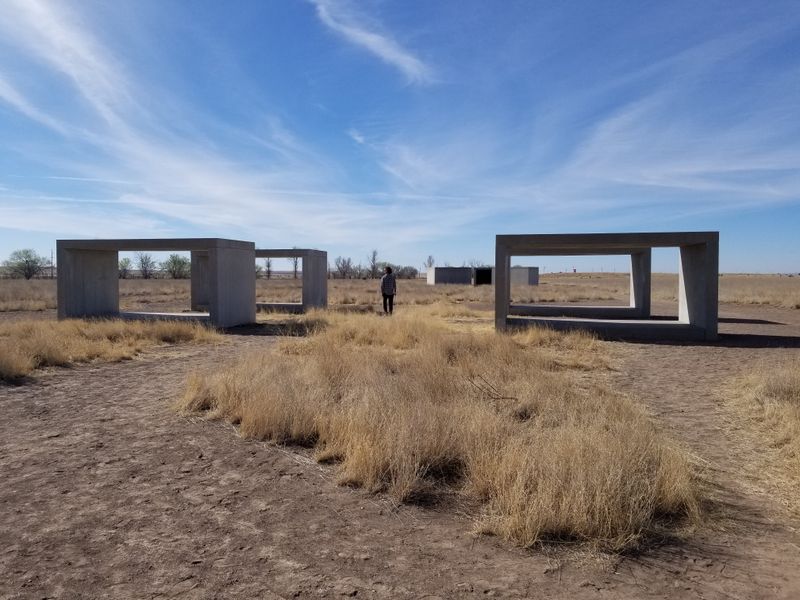
What do you do with a decommissioned military fort in the middle of the desert? If you’re minimalist artist Donald Judd, you transform it into one of the world’s most important contemporary art museums.
The Chinati Foundation occupies the former Fort D.A. Russell, converting barracks, artillery sheds, and other military buildings into exhibition spaces that showcase large-scale installations in a way traditional museums never could.
Judd believed that art needed space to breathe, room to exist on its own terms without the constraints of conventional gallery walls. At Chinati, his vision came to life across 340 acres where permanent installations by Judd and other artists interact with the dramatic West Texas landscape.
One hundred aluminum boxes occupy two converted artillery sheds, each piece identical yet unique in how it catches and reflects the desert light. Concrete works fill another building, their massive presence creating a meditation on form, space, and the relationship between art and architecture.
The foundation also features works by other artists who shared Judd’s vision, including John Chamberlain’s crushed car sculptures and Dan Flavin’s fluorescent light installations in former barracks buildings. Everything here exists on a scale that demands attention and rewards careful observation.
You can’t rush through Chinati; the art won’t allow it. Each piece requires time and contemplation to fully appreciate.
Visiting Chinati means surrendering to a different pace, accepting that art doesn’t have to be immediately accessible or easily digestible. The combination of minimalist sculpture, military architecture, and endless desert creates an atmosphere unlike any other museum experience.
Tours are required and typically last several hours, so plan accordingly and prepare to have your assumptions about art challenged.
Address: 1 Cavalry Row, Marfa, Texas.
10. Cathedral of Junk, Austin
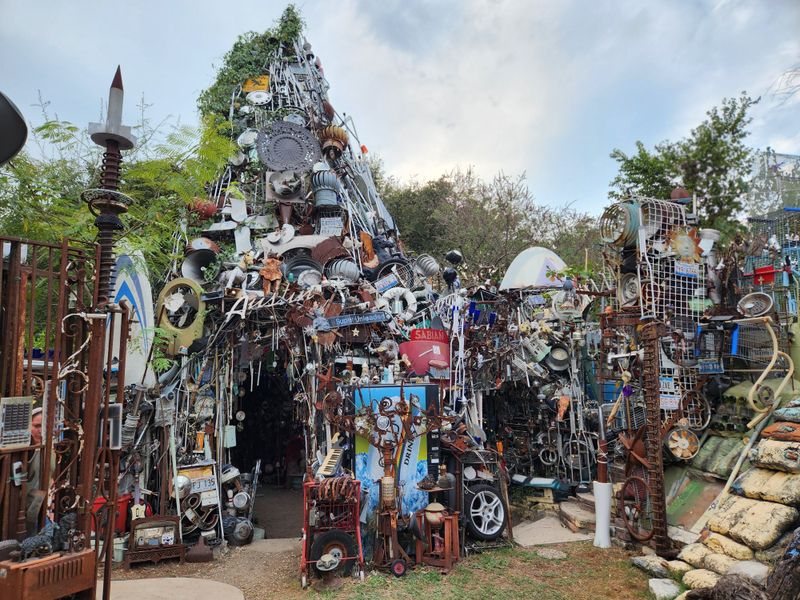
In a South Austin backyard, Vince Hannemann has spent over three decades building a towering structure entirely from other people’s trash. The Cathedral of Junk rises three stories high, constructed from more than sixty tons of discarded objects that most people would haul to the dump without a second thought.
Bicycle wheels, hubcaps, old toys, typewriters, circuit boards, mirrors, and countless other items interlock and stack and weave together into something that transcends its humble origins.
Calling it a cathedral isn’t hyperbole; standing inside this monument to creative reuse genuinely feels like entering a sacred space dedicated to the god of recycling. Narrow passages wind through the structure, leading to chambers and alcoves where specific themes emerge from the chaos.
Light filters through gaps in the junk, creating unexpected patterns and shadows. Every surface offers something new to discover, some small detail or clever arrangement that makes you smile at the ingenuity involved.
Hannemann welcomes visitors by appointment, giving tours that reveal the stories behind various sections and explaining the engineering challenges of building something so massive from materials never designed to support structural weight.
The Cathedral has survived city code enforcement battles and weather events that would have toppled lesser creations.
It stands as proof that one person’s trash really can become another person’s treasure, given enough vision and determination.
Climbing through the upper levels, surrounded by the detritus of consumer culture transformed into folk art, you’ll find yourself thinking differently about the objects we discard. Everything here had a previous life, served some purpose, meant something to someone before ending up in Vince’s creation.
The Cathedral of Junk celebrates second chances and creative vision while quietly commenting on our throwaway society.
Address: 4422 Lareina Dr, Austin, Texas.
Dear Reader: This page may contain affiliate links which may earn a commission if you click through and make a purchase. Our independent journalism is not influenced by any advertiser or commercial initiative unless it is clearly marked as sponsored content. As travel products change, please be sure to reconfirm all details and stay up to date with current events to ensure a safe and successful trip.
