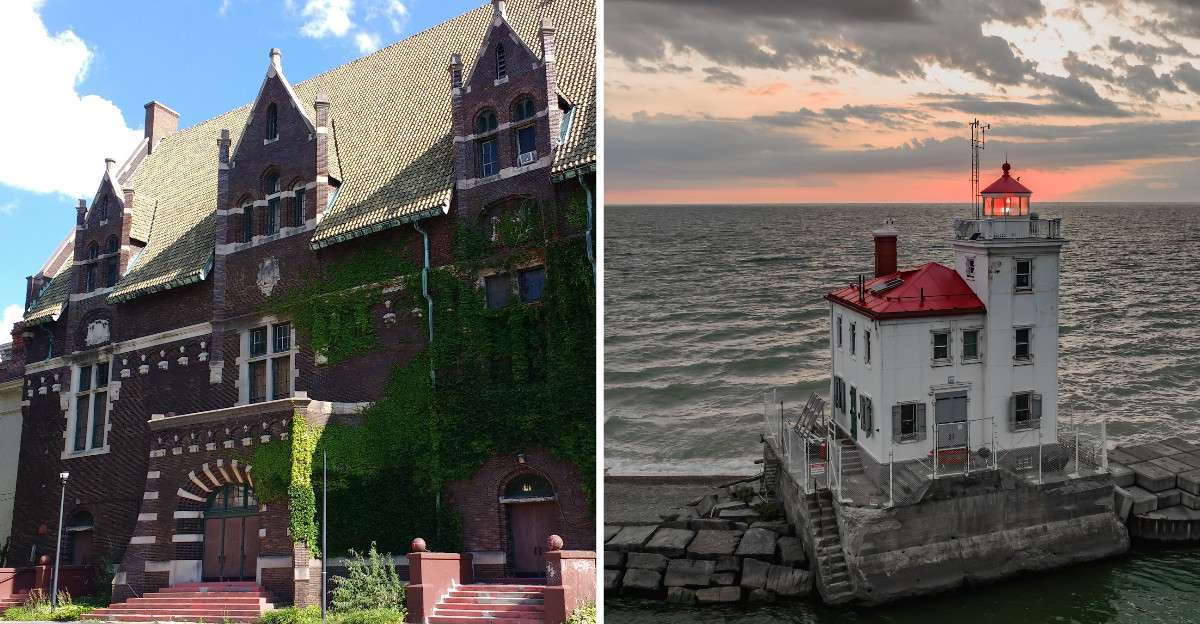
Ohio has plenty of places where the past refuses to stay completely quiet. Old mansions, theaters, hotels, and lonely stretches near the water carry stories that can feel unsettling long before anyone brings up ghosts.
What interests me most is usually the history underneath those tales. Families endured devastating losses, communities survived epidemics, and buildings somehow remained standing through fires, floods, abandonment, and decades of change.
Walk through them today and it is easy to understand how darker legends eventually took hold. A creaking floorboard or empty hallway becomes much more interesting once you know who walked there generations earlier.
Across Ohio, these eight locations offer plenty of real history, strange atmosphere, and lingering mystery without needing anyone to prove that a ghost is actually waiting inside.
1. Franklin Castle, Cleveland, A Family Home With Heavy Memories
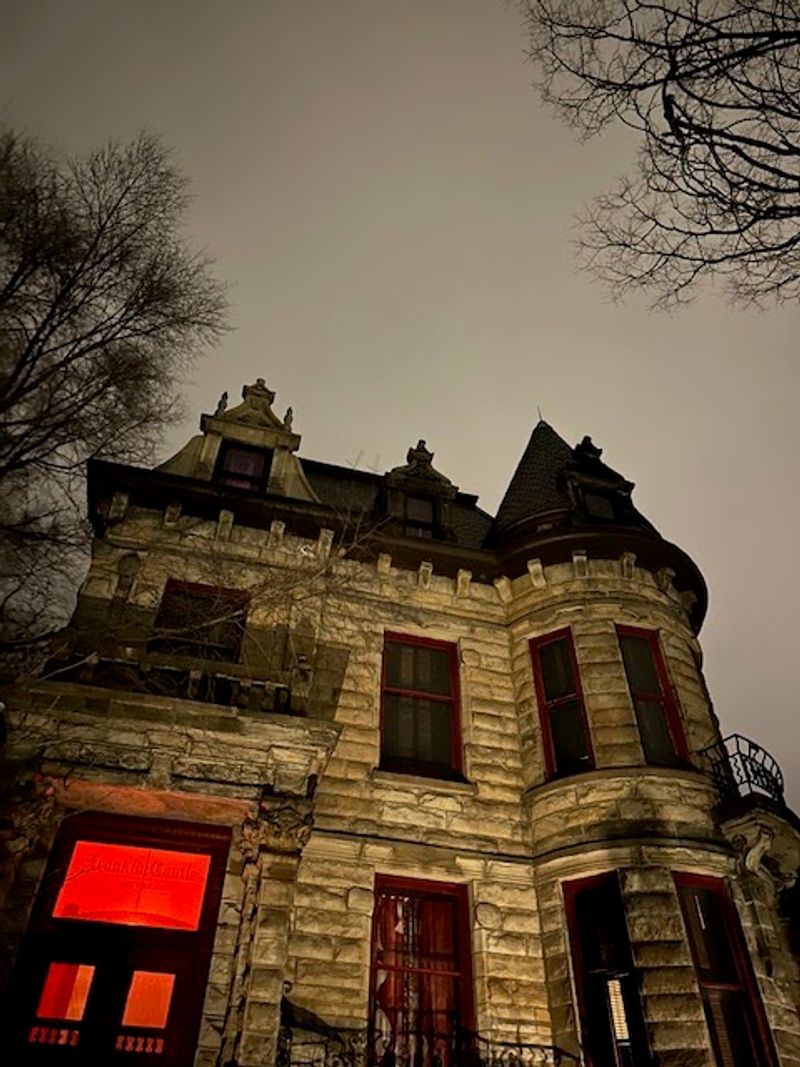
The towers caught my attention first, but the family story made me look at the windows differently. Franklin Castle was built in the early 1880s as a grand home for banker Hannes Tiedemann and his family.
Its stone walls and unusual shape still stand out among the houses on Franklin Boulevard. Behind that striking exterior lies a record of loss that needs no extra effects.
Tiedemann’s daughter Emma passed young, followed soon after by his mother, Wiebeka. Three more children were gone in infancy, and his wife, Louise, in 1895.
Illness and early end were frightening parts of life in that era, even for a family with money. Knowing this makes the house sadder and more human than its fearsome nickname suggests.
Stories about hidden passages and sinister acts have grown around the building for years. Treat those tales as tales, not proof that anyone in the family committed a crime.
The documented losses deserve more care than a dramatic rumor. I find the contrast between the costly architecture and the family’s grief unsettling enough on its own.
Franklin Castle is a building to appreciate from a respectful distance unless an authorized visit is available. Check current access before setting out, stay on public sidewalks, and remember that nearby homes are private too.
A slow look at the stonework gives you plenty to notice without trying a locked door.
Address: 4308 Franklin Boulevard, Cleveland, Ohio
2. Punderson Manor, Newbury, An Unfinished Dream by the Lake
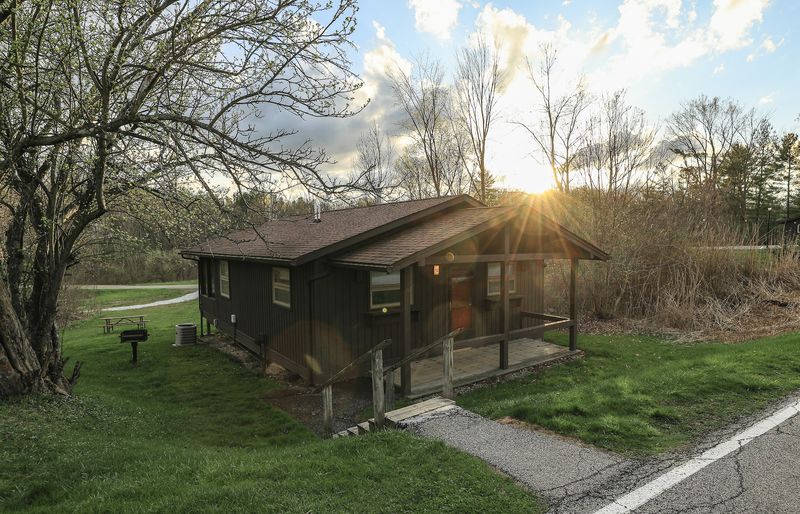
I would have guessed the manor belonged in an old storybook, especially with the lake close by. Its Tudor-style walls rise above the wooded grounds of Punderson State Park, where the quiet can make every distant sound seem louder.
The building’s real story is less magical: an ambitious project ran into a hard financial crisis.
Construction began in the late 1920s for Karl Long, who planned a large private home. Then the Great Depression shattered his finances, and the work stopped before his dream was complete.
That sudden halt is easy to picture while looking at such a grand structure. Someone imagined a future here that never arrived as planned.
The land has an older history as well. Lemuel Punderson settled in this area in the early 1800s and passed away of malaria in 1822.
Later stories connect the manor to a passing in its attic, but that claim has not been firmly established. Keeping rumor separate from fact leaves the economic hardship and the earlier illness in clear view.
For a visit, give the building and the park equal time. Follow marked paths, watch your footing near the water, and check which parts of the lodge are open to visitors.
I like the idea of returning outside after learning its history: the lake looks peaceful, yet the unfinished plan behind the manor changes how you see it.
Address: 11755 Kinsman Road, Newbury, Ohio
3. Majestic Theatre, Chillicothe, When the Show Had to Stop
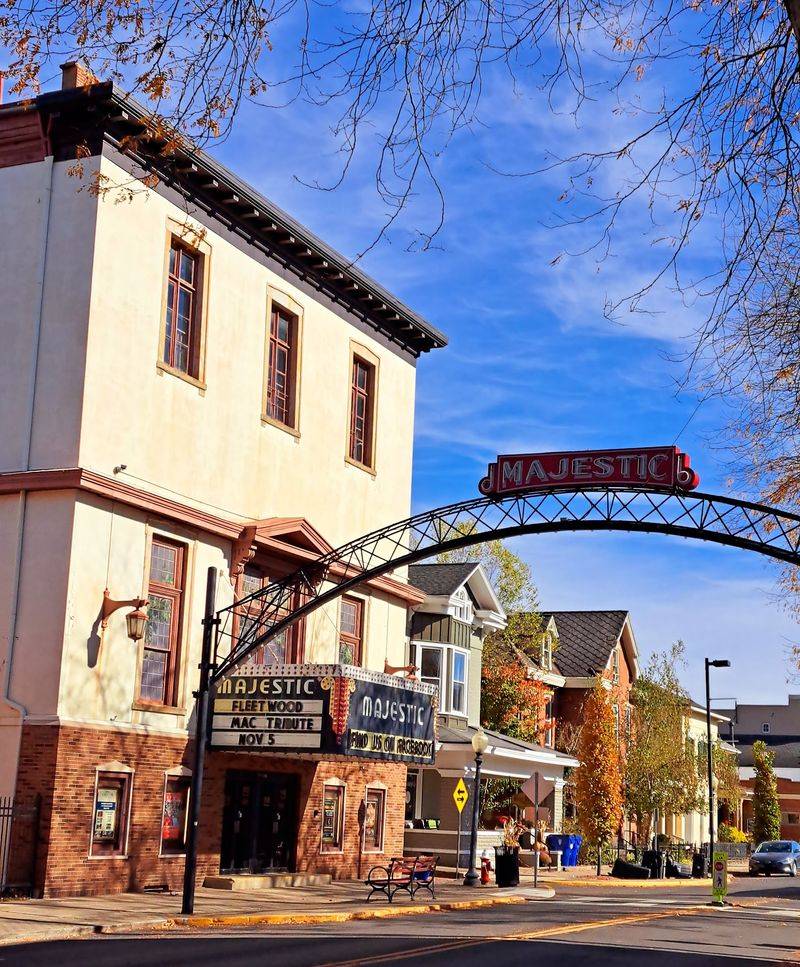
The thought of a bright stage going dark during a health crisis gives me a chill. Chillicothe’s Majestic Theatre opened in 1853 as the Masonic Opera House and spent decades welcoming performers and audiences.
Its long life makes one chapter especially striking: during the 1918 influenza pandemic, the building reportedly served as a temporary morgue.
Nearby Camp Sherman was hit hard by the outbreak, and the number of tragedies overwhelmed local services. Accounts describe bodies held in rooms beneath the stage.
Picture the change in purpose without adding any ghost story: a place built for applause became part of a desperate response to illness. That shift tells you how deeply the pandemic reached into everyday life.
The theater also saw major changes in entertainment. It hosted live acts, adopted electric lighting, showed early films, and took the Majestic name in 1915.
Those details matter because they show the building as more than the scene of one terrible event. Generations came here to share ordinary evenings before and after the emergency.
Look at the entrance and think about how many different crowds have passed through it. If you plan to go inside, check the current event schedule and follow the staff’s directions; working theaters need room for rehearsals and shows.
The pandemic story calls for care, not a dare to explore backstage. I would leave time for a quiet walk downtown afterward.
Address: 45 East 2nd Street, Chillicothe, Ohio
4. Rider’s Inn, Painesville, Shelter Along a Dangerous Route
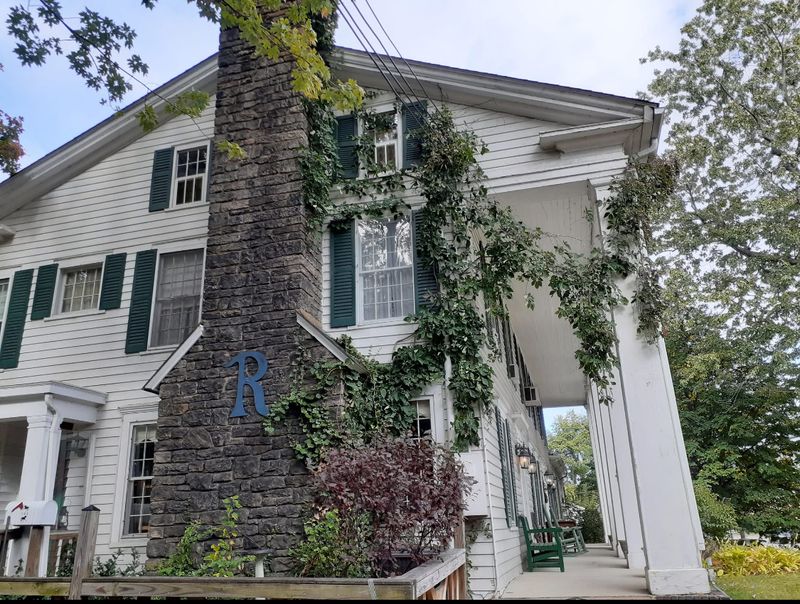
A roadside inn can seem cozy until you imagine arriving there while fearing for your life. Rider’s Inn began serving travelers in 1812, when stagecoach routes made stops like this essential.
Its history includes a far more urgent kind of journey: accounts identify it as a refuge on the Underground Railroad.
Freedom seekers traveling north faced capture and terrible harm. Local stories describe a hidden route through a dry well to the inn’s basement, where people could shelter before continuing toward Lake Erie and Canada.
Some accounts give large estimates for how many passed through, but exact totals are hard to confirm. The danger itself is not hard to understand.
For the people seeking safety, staying unseen could decide what happened next.
The building also carries stories about the Rider family, including an account of Suzanne Rider dying after a fall on a staircase. Claims that her end was deliberate belong in the category of rumor unless supported by reliable records.
When you visit, notice how an ordinary doorway could mean very different things to different travelers: rest for some, a brief chance of safety for others. Check visitor access in advance, respect private areas, and seek out local history resources for more context.
The inn offers a strong reminder that courage sometimes meant opening a door and keeping quiet.
Address: 792 Mentor Avenue, Painesville, Ohio
5. Lafayette Hotel, Marietta, Fire Behind It, Floodwater Below
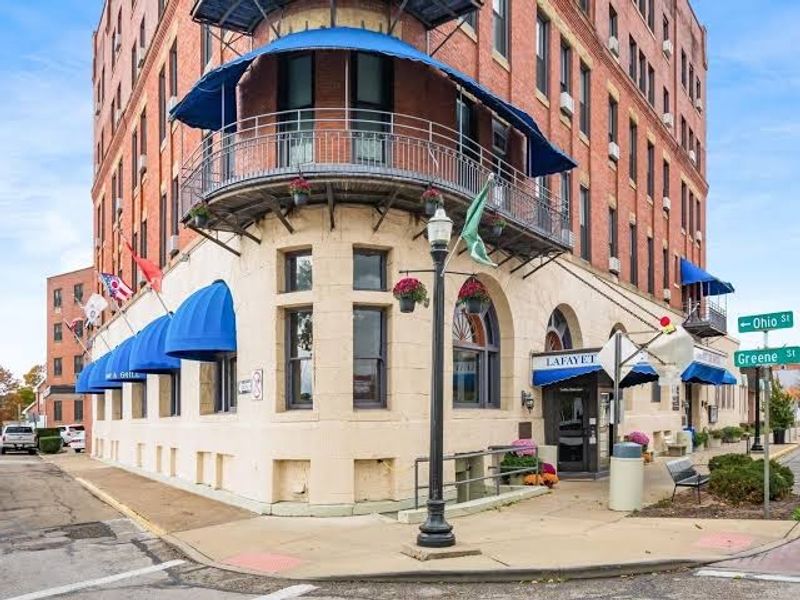
I find riverfront buildings beautiful, but I always wonder how they have weathered the water. At Marietta’s Lafayette Hotel, that question has a dramatic answer.
The present building opened in 1918 on the site of the Bellevue Hotel, which a fire destroyed in 1916. Photographs of that earlier disaster are displayed inside.
The fire left more than an empty lot. It interrupted a place where travelers had gathered since the Bellevue opened in 1892.
Rebuilding meant starting again in a town shaped by its riverfront location. The new hotel took its name from the Marquis de Lafayette, who visited Marietta in 1825, linking a fresh start to an older piece of local history.
Then the river supplied another challenge. During the 1937 flood, water rose more than ten feet above the lobby floor.
That height is difficult to grasp until you picture it inside a room meant for arrivals and greetings. Other floods have also tested the building.
Fire and water, not ghosts, explain much of the uneasy feeling that comes with knowing its past.
If you stop by, look for the Bellevue fire photographs where visitors are permitted and spend a little time at the nearby riverfront. Check access before entering spaces used by guests.
I would compare the calm water you see today with the old flood levels in your mind. The view becomes more powerful when you remember how quickly a familiar river can change.
Address: 101 Front Street, Marietta, Ohio
6. Fairport Harbor Marine Museum & Lighthouse, A Light in Risky Waters
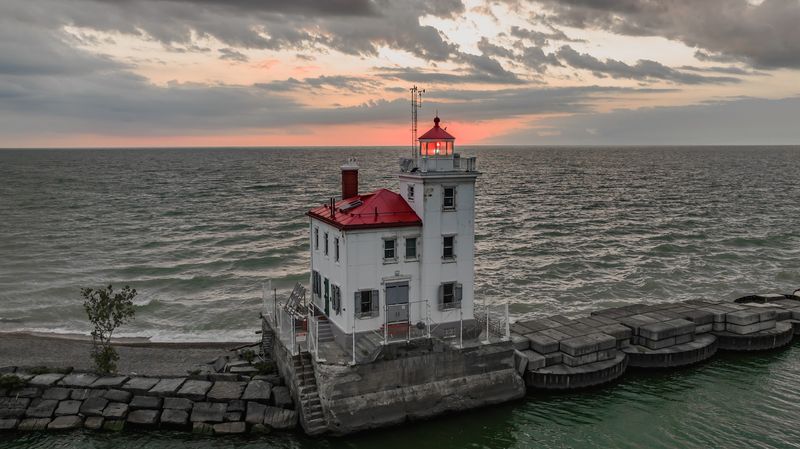
Lake Erie looked wide and restless to me even on a mild day, which makes the lighthouse’s long service easy to respect. Fairport Harbor’s present sandstone tower and keeper’s house date to 1871.
The light helped guide vessels through waters where sudden storms could turn a routine trip dangerous.
Life beside that beacon required more than keeping a lamp working. Families lived with isolation and the worry that people out on the lake might not make it home.
One keeper, Civil War veteran Joseph C. Babcock, lost his young son Robbie to smallpox while the family lived at the station.
That grief gives the keeper’s house a deeply personal history.
The harbor also has ties to the Underground Railroad. Accounts describe people seeking freedom reaching the lake and finding help toward Canada.
Learn about that history with attention to the people who took the risk, rather than treating a hiding place as an exciting trick. The shore could offer hope, but crossing it demanded courage and help from others.
Today the museum provides a way to connect the tower with the work and lives around it. Check seasonal opening information before visiting, and be ready for steps if tower access is offered.
Wind can make the lakeside feel colder than you expect, so an extra layer is useful. I would pause outdoors afterward and watch the horizon; it explains the need for a guiding light better than any eerie tale could.
Address: 129 Second Street, Fairport Harbor, Ohio
7. Twin City Opera House, McConnelsville, Built Where Fire Had Passed
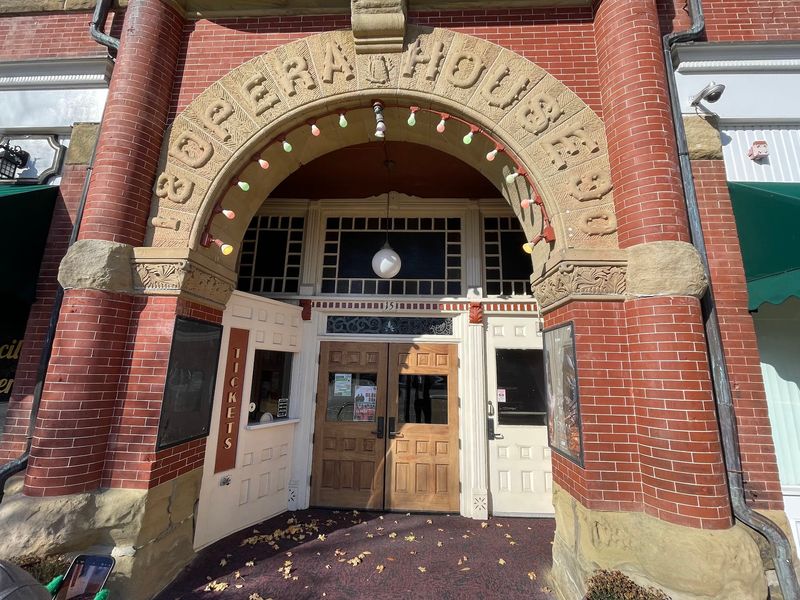
The first detail that stayed with me was not a ghost report but the ground beneath the building. Twin City Opera House opened in 1892 on part of McConnelsville’s burned district, an area damaged by a major fire in 1879.
For years, the vacant space showed what the town had lost. Putting a hall there made the new building a sign of recovery.
It was designed to serve two public needs, with space for town business as well as performances. That mix makes it easy to imagine very different evenings under one roof.
A lively show could follow an argument about local affairs. The project itself faced political disagreement, so even its construction was hardly a smooth community effort.
Opening night brought a surprise worthy of a stage comedy, though surely not to the organizers. The building was meant to show off electric lighting, but a problem at the local power plant left it dark.
Later decades brought accounts of more serious events, including a reported stabbing in the ballroom. Details of such stories deserve careful checking, rather than an extra layer of dramatic invention.
See whether a public performance or authorized tour fits your trip, and let the building work as a theater rather than treating it like an abandoned set. Take a moment outside to picture the fire damaged block that came before it.
I like that its real past holds both loss and an awkward opening night; towns remember both kinds of trouble.
Address: 15 West Main Street, McConnelsville, Ohio
8. Collingwood Arts Center, Toledo, Many Lives Inside One Building
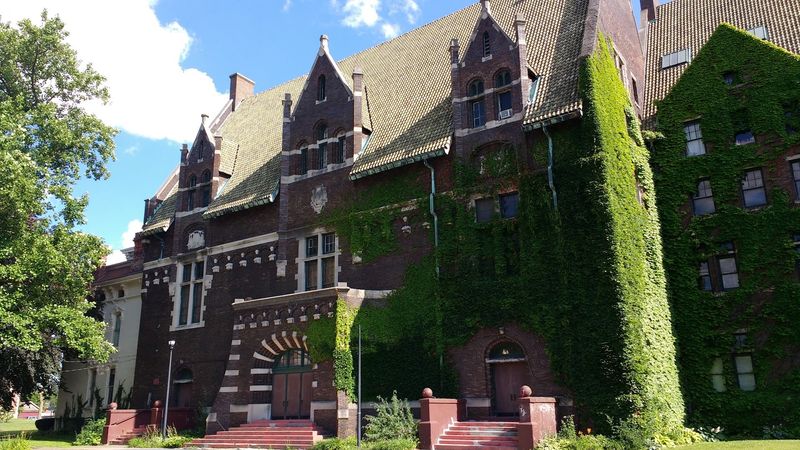
I had to slow down to take in the size of this Toledo building; one glance misses half its details. The oldest part of the Collingwood Arts Center dates to 1872, while its main structure opened in 1905.
Its steep lines and Gothic details hint at a long past, but the changes inside tell the fuller story.
The Ursuline sisters used the complex for education and religious life. It housed St. Ursula Academy and Mary Manse College, and later served as a retirement home for nuns.
Imagine the daily sounds those uses brought: lessons, footsteps, conversations, and periods of quiet. When a large building changes purpose over many decades, empty corridors can seem charged with memories without anything strange happening at all.
One oft repeated account says a nun passed away in the basement in the 1950s. Because reliable details are difficult to confirm, I would not present that story as a proven event.
The building’s documented roles already invite thought about aging, care, and what happens when a familiar home or school closes. It has also endured periods of vacancy and neglect.
Now associated with the arts, the complex shows how an old place can gain another life instead of disappearing. Look for public events or approved visiting hours before you go, and respect areas used by artists and other occupants.
I would spend extra time studying the exterior: its many windows make the building feel like a collection of lives, not one spooky story.
Address: 2413 Collingwood Boulevard, Toledo, Ohio
