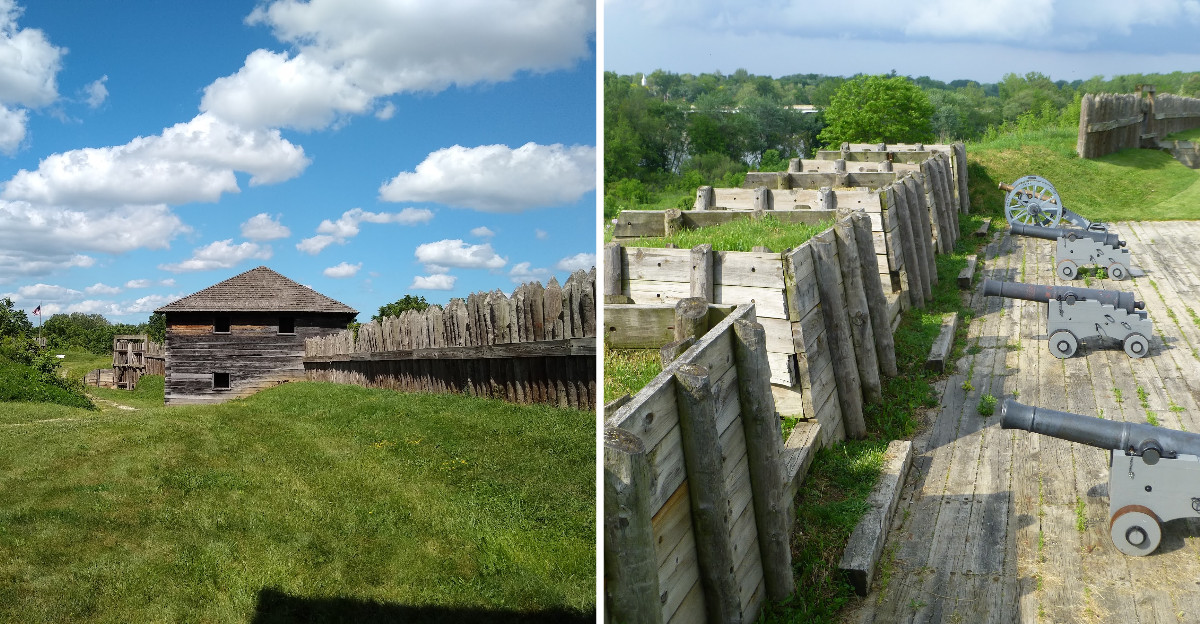
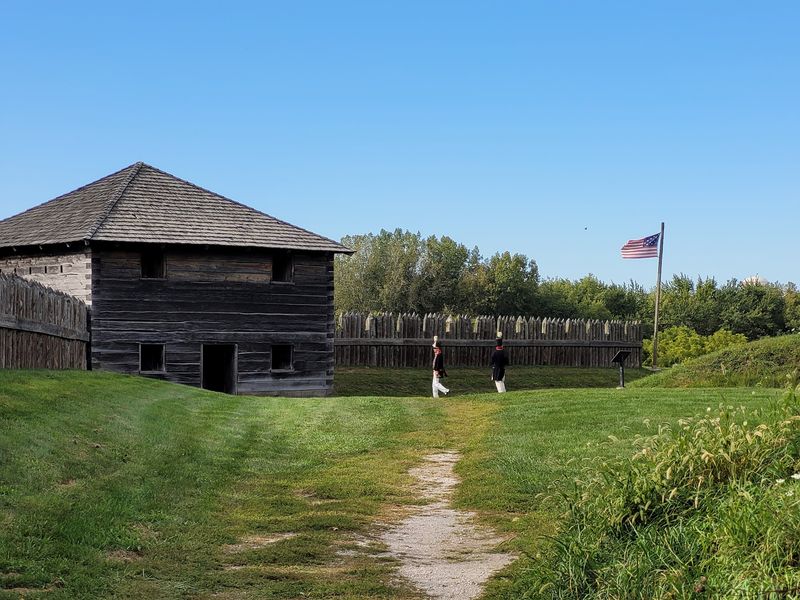
Wooden walls run on and on along the Maumee River in Ohio, and what was expected at this site was a small log stockade. The rebuilt fort covers about ten acres, and its timber fence stretches close to a mile around.
Back in 1813, thousands of American soldiers camped, dug, and fought on this exact ground during the War of 1812. Knowing that the grass underfoot was the same soil they once churned into mud gives the place a weight that signs alone cannot.
Today the Ohio History Connection keeps it alive with blockhouses, cannons, a museum, and people in period clothes who love to talk. Nine reasons this giant wooden fort deserves a spot on your next road trip fill the rest of this guide.
The walls still stand, and the stories still echo.
A Fence You Could Jog Around
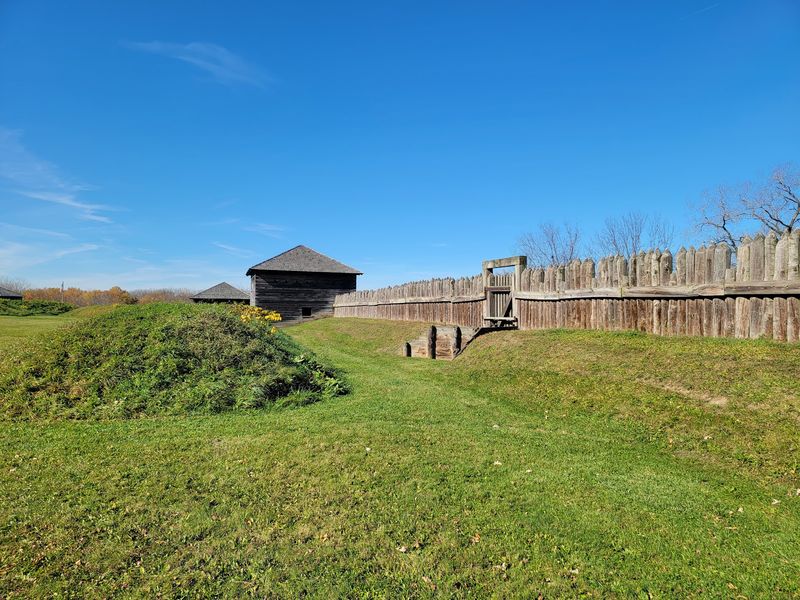
My first lap around the outside wall took longer than I planned, and I was grinning the whole way. Fort Meigs was the largest wooden fortification in North America when soldiers finished it in 1813, and the reconstruction follows that same giant footprint.
The enclosure covers about 10 acres. Its perimeter fence runs close to one mile, built from tall upright timbers set side by side like a wall of pencils.
Seven blockhouses and five artillery batteries sit along the edges, each one placed to watch a different stretch of ground.
Why so big? General William Henry Harrison needed space for a huge army, piles of supplies, and room to move cannons.
The fort served as a supply depot and a launch point for pushing into Upper Canada, so it had to hold far more than a small frontier outpost ever could.
Here is a tip I wish I had known. Wear comfortable shoes, because the path around the fort is mostly flat dirt and gravel, and you will want to wander.
Morning light makes the timber walls glow a warm honey color, which is great for photos.
Size is the thing that sticks with you. Even after reading about it, seeing that endless line of logs in person made the history feel very real and very large.
Mud, Snow, and Shovels in February 1813
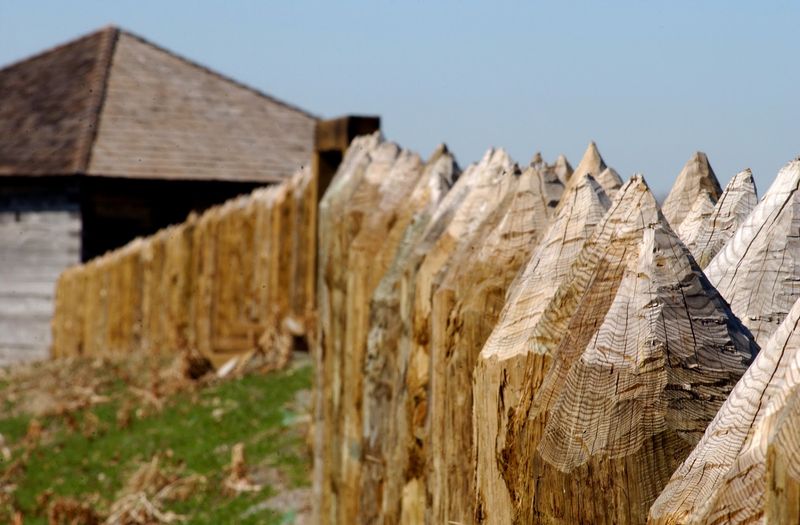
Honestly, my boots got muddy on a spring visit, and that tiny mess made me respect the builders even more. Soldiers broke ground here in February 1813, in the middle of a harsh Ohio winter, often working in mud that reached their knees.
They had about three months to finish. Men cut trees, hauled logs, dug trenches, and raised the walls by hand, with no machines to help.
By late April the fort was ready, because British forces arrived right as the work wrapped up.
The fort took its name from Return J. Meigs Jr., who was governor of Ohio at the time.
Harrison chose this high bluff above the rapids of the Maumee River because it gave a clear view of anyone coming by water or land. Control of that river mattered a lot, since it was a main path between Lake Erie and the Ohio frontier.
Fun fact: the soldiers were mostly young volunteers and militia from states like Ohio, Kentucky, Pennsylvania, and Virginia. Many had never built anything close to this size.
When you visit, look closely at the timbers and the tall earthen mounds. Try picturing those same shapes rising out of frozen, sloppy ground with only axes, shovels, and stubborn muscle.
It changes the way you see every log.
The Spring Siege That Shook the Ground
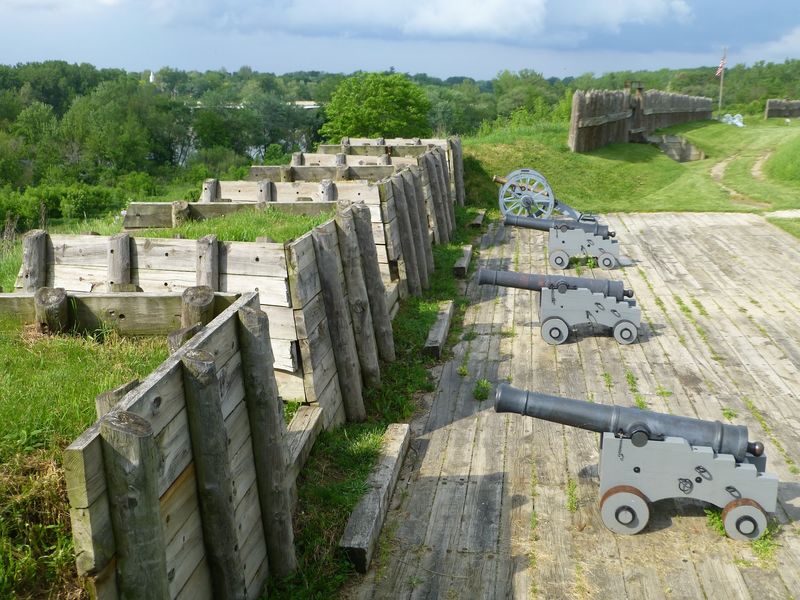
On April 28, 1813, British cannons across the Maumee River opened fire, and the brand new fort had to prove itself fast. British troops, backed by warriors from Tecumseh’s Confederacy, hoped to knock Fort Meigs out of the war before it could cause them trouble.
I stood near the riverside edge of the grounds and tried to imagine cannonballs thumping into the dirt. The soldiers inside dug in deep and waited it out.
For days the bombardment kept coming, yet the walls and earthworks held.
Reinforcements from Kentucky arrived in early May and swelled the garrison. One group attacked the British guns across the river and even captured them for a short time, but many of those men chased the enemy too far into the woods and were terminated or captured.
That painful moment is often called Dudley’s Defeat, and it is worth reading about before you go.
After about twelve days of fighting, the British and their allies pulled back. The fort had survived its first real test.
If you like maps, spend a few minutes with the displays that show where the British batteries sat. Then head outside and look across the water toward that same spot.
Seeing the actual distance helps you understand how loud, tense, and scary those days must have been for everyone inside.
Tecumseh’s Clever Trick in July
Picture a fake battle staged just to fool an army, and you have one of my favorite stories from this place. In July 1813, British forces and Tecumseh’s warriors returned for a second try at Fort Meigs.
This time they tried a trick instead of pure firepower. Warriors staged a mock battle in the woods outside the fort, firing guns and shouting so it sounded like American reinforcements were under attack.
The plan was to lure the soldiers out of their walls and straight into an ambush.
It did not work. The Americans inside saw through the act and stayed put behind their defenses.
Then a strong thunderstorm rolled in, and soon after, the British and their allies gave up and withdrew.
Holding the fort twice was a big deal. It stopped British attacks from pushing deeper into Ohio and bought time for Americans to build a navy on Lake Erie.
That fleet later helped secure the Great Lakes region, changing the direction of the war in the west.
Kids especially love this chapter, so share it with them before you walk the walls. Point toward the tree line and ask where they would hide if they were planning the trick.
It turns a history lesson into a guessing game, and the story sticks with them long after the car ride home.
Blockhouses and Mounds Worth Climbing Into
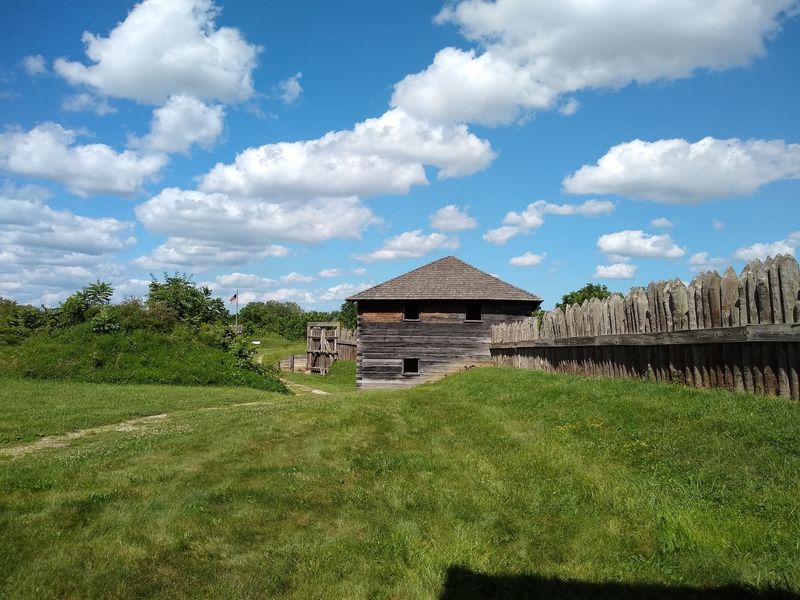
Cool air and the smell of old wood greeted me inside the first blockhouse, and I stayed much longer than I meant to. Seven of these sturdy log buildings line the fort walls, and several hold exhibits about soldier life, building the fort, and the two sieges.
The rooms feel snug. Wooden beams hang low, small openings let in slivers of daylight, and you quickly realize how cramped life could get with men watching the ground day and night.
Signs are clear and easy to read, so you can explore on your own if you miss a guided tour.
Between the buildings, keep an eye out for the traverses. They are giant earthen mounds, first built around 14 feet high, meant to shield soldiers from British cannon fire.
From a distance they look like grassy hills, but up close they show just how much digging the men had to do.
The quartermaster’s warehouse is another stop worth making. It hints at the huge job of feeding, clothing, and supplying thousands of people in one spot.
Take a moment there to picture the crates and wagons moving in and out.
One practical note: bring water on warm days, since shade can be spotty out on the open grounds. A hat helps too, and so does a slow pace, because every blockhouse rewards a second look.
Artifacts That Whisper Soldiers’ Stories
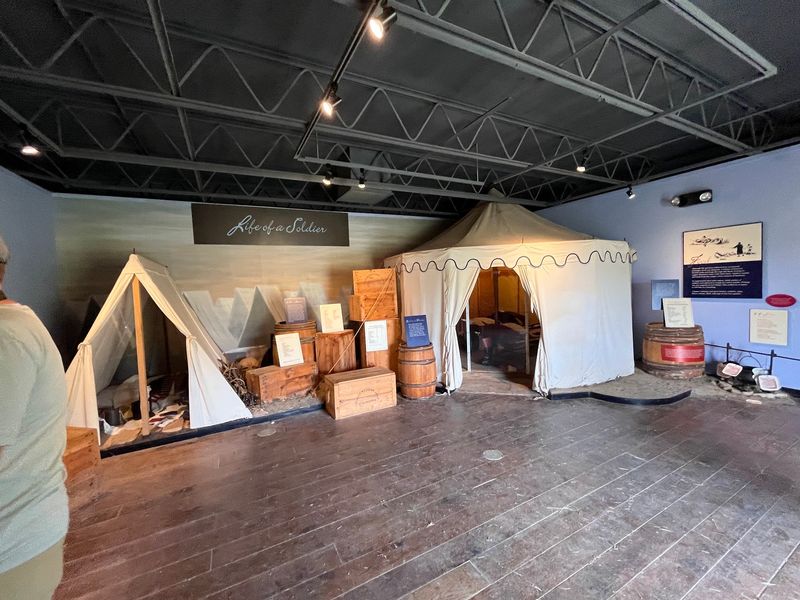
Have you ever read a letter written more than 200 years ago? The Museum and Education Center at Fort Meigs gave me that chance, and it was one of the quietest, most moving parts of my day.
The exhibits fill around 3,000 square feet and display hundreds of original artifacts. You will find weapons, uniforms, maps, and personal letters written by soldiers, along with objects uncovered through archaeological digs on the site.
Seeing items pulled from the same soil outside made me feel oddly close to the people who lost them.
A big focus here is Ohio’s role in the War of 1812. The displays explain how a young state on the frontier ended up right in the middle of a fight between the United States, Britain, and Native nations.
Start your visit with the short film in the visitor center. It runs about a quarter of an hour and sets up the leaders, the strategy, and the timeline, so everything outside makes more sense.
The museum is also the one part of the site open all year. If you visit in winter, when the outdoor fort is closed, you can still spend a solid hour or two among the cases.
Rainy days work well for this, too, and the building stays calm and comfortable while you read.
Reenactment Weekends and Special Events
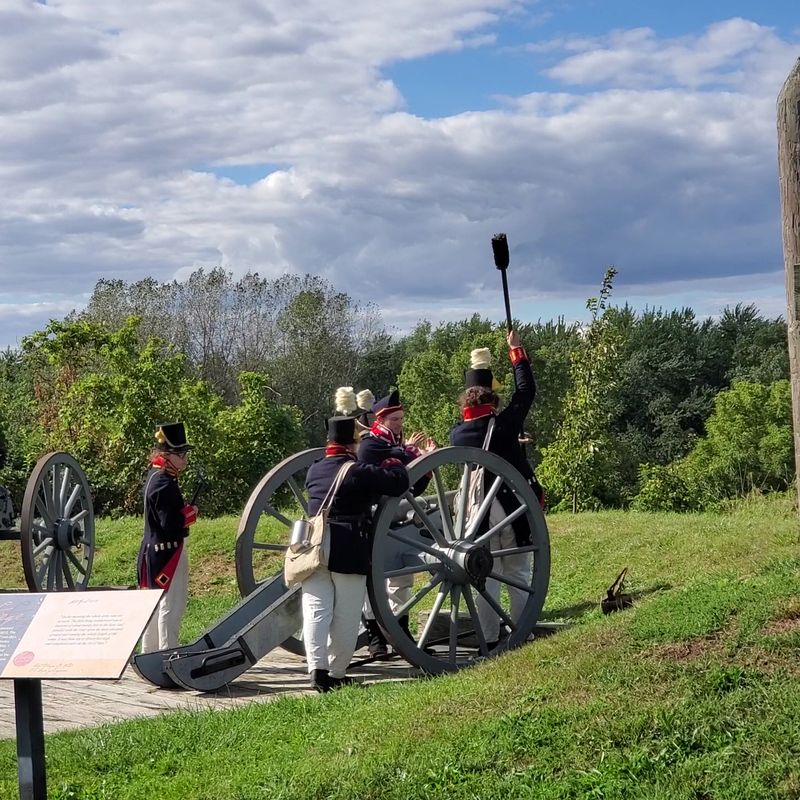
Tents, campfire smoke, and the rattle of drums can turn this quiet park into a busy army camp almost overnight. Fort Meigs hosts reenactments and special events throughout the year, mostly in the warmer months, and they add a whole new layer to a visit.
Some weekends recreate the drama of the 1813 siege with infantry and artillery demonstrations. Others focus on civilian life in early Ohio, with craftspeople showing trades like tinsmithing and presenters explaining how people dressed and worked.
You can wander through the camps and talk with the reenactors, who are usually happy to share what they know.
I like how these events let you move beyond looking at things to actually hearing and smelling the past. The sound of marching feet on gravel is surprisingly powerful.
Holiday weekends such as Memorial Day and Labor Day often draw folks too, and some evenings bring special programs like ghost walks.
Check the official website before you go, since the calendar changes each season. Event days can get busy, so arriving early helps with parking and gives you first pick of demonstrations.
Even if your dates do not line up with a big event, the fort still offers plenty. Regular days are calmer, which is nice if you want time to read every sign and linger along the walls without a crowd.
River Views, Picnics, and Planning Your Day
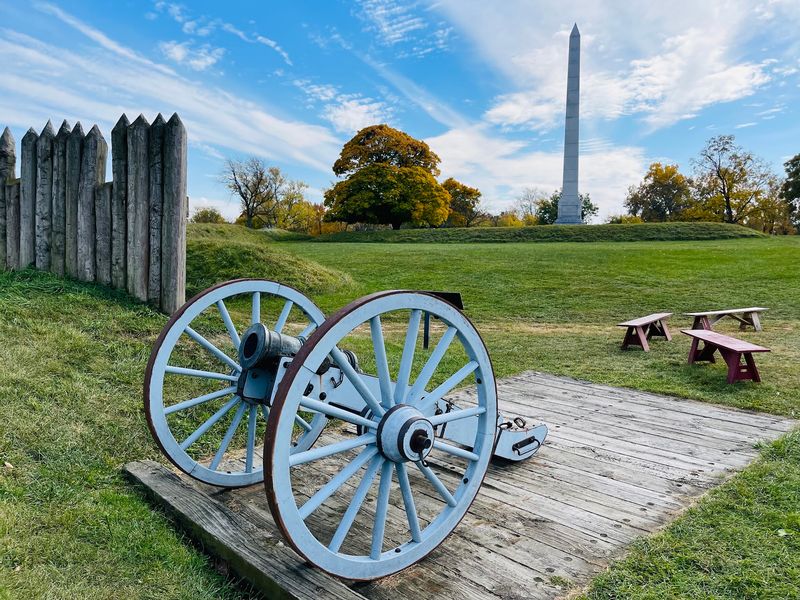
Before heading home, I found a quiet spot and watched the Maumee River roll past, the same water both armies fought to control. It is a peaceful view, and it ties the whole story together in a way that feels calm instead of heavy.
The entire park covers about 65 acres, so there is room to stretch your legs. Picnic tables sit in a shaded grove near the museum, which makes packing a lunch an easy win.
The obelisk monument, dedicated in 1908 to honor fallen soldiers, is another spot to pause and reflect.
The gift shop deserves time as well. It stocks books on the War of 1812 and early American history, historic-style souvenirs, and toys that keep younger travelers busy on the drive home.
I walked out with a book I had not planned on buying, and I have zero regrets.
The outdoor fort is open from April through October, while the museum stays open all year. Hours usually run Wednesday through Saturday from 9:30 am to 5 pm and Sunday from noon to 5 pm, with Mondays and Tuesdays closed.
Plan on at least two to three hours to see everything without rushing.
Address: 29100 West River Road, Perrysburg, Ohio 43551
