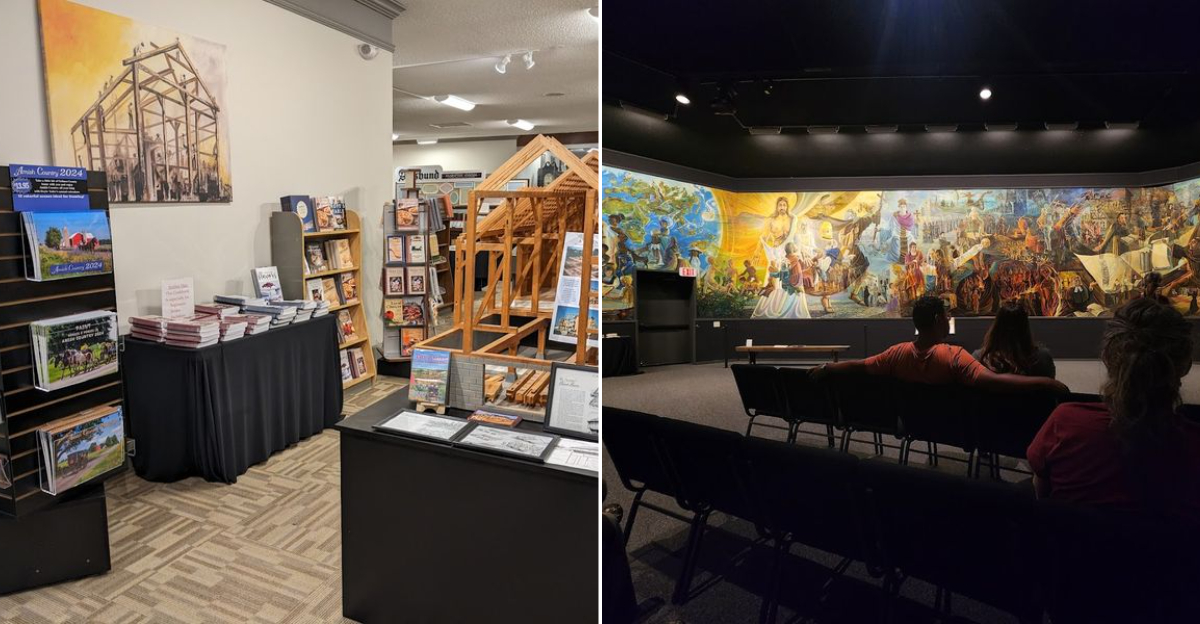
A mural that wraps around you has a way of making the present feel briefly irrelevant. Ohio’s Amish history museum with the giant circular mural feels like a time machine, because the artwork surrounds you and turns the story into something you can almost step into.
You do not just glance at it and move on. You stand there longer than planned, tracing scenes, noticing small details, and feeling your pace slow as the timeline starts to connect.
The circular layout changes everything. Instead of one framed moment, you get a panoramic sweep that makes daily life and community rhythm feel continuous, like the day is unfolding around you.
It is immersive in a quiet way, even if you expected a quick stop. People naturally lower their voices, because the scale makes it feel less like a display and more like a space you entered on purpose.
Once you move on to the rest of the museum, the mural stays in your head. It gives context to everything else you see, and it makes the whole visit feel bigger than a standard history walkthrough.
If you want an Amish country stop that feels vivid and memorable, this mural is the reason it sticks.
Behalt Cyclorama Mural That Wraps You In The Story
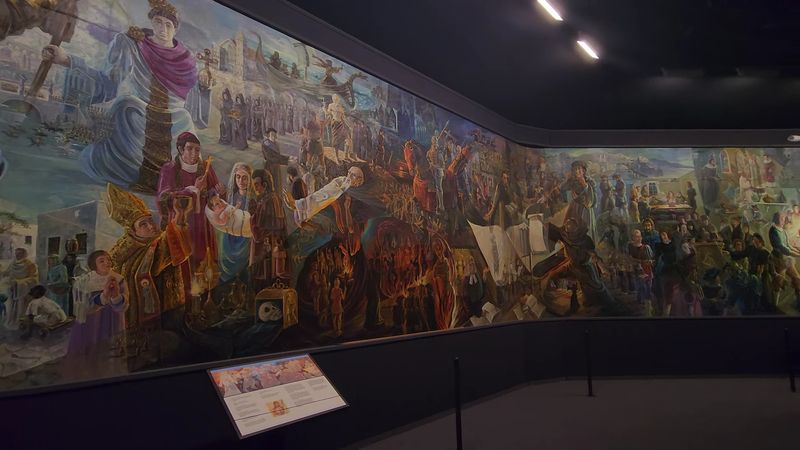
Walk in, and the room curves around you like a soft whisper, and suddenly the story is everywhere at once. The Behalt mural circles the space with scenes that are hand painted and steady, and your eyes drift from one moment to the next without rushing.
Here is where the narrative settles in, asking you to breathe a little slower and follow the thread as it moves across decisions, journeys, and hard-won peace.
I kept turning my shoulders to keep pace with the sweep of the wall, and it felt strangely comfortable to let the art set the tempo. Ohio makes a quiet appearance in the later scenes, and that landing point gives everything an everyday weight that feels close to home.
The guide keeps talking, but the mural carries the melody, and you find yourself nodding without even noticing.
You can stand still and watch the story come to you, or you can wander, letting the arc pull you along. Either way, the circular design changes how you absorb details, because there is no front row and no back row.
The moment you relax into that idea, the history opens up, and your mind does not have to negotiate corners. It is a full surround, but it never shouts, and that restraint makes the whole thing feel trustworthy.
Anabaptist Roots In 1525 That Start The Timeline
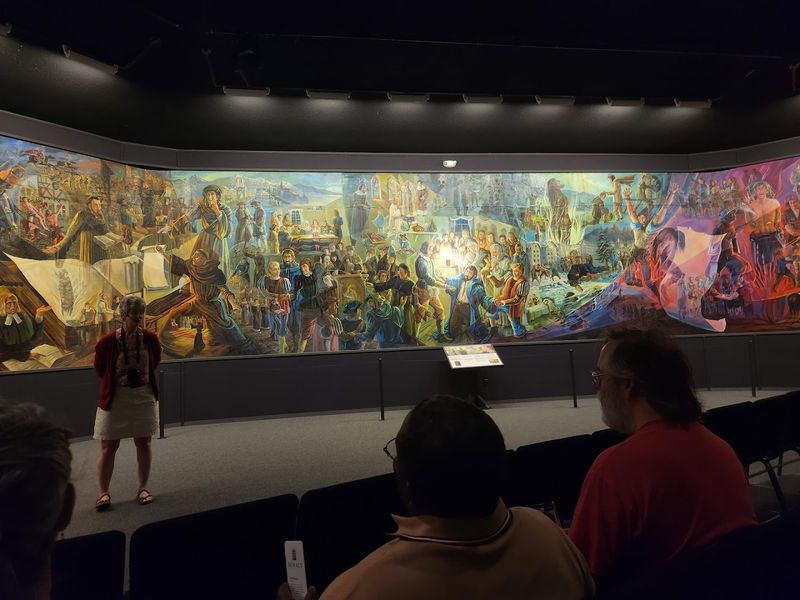
This is where the current starts, tucked into early gatherings that feel brave in a quiet way. You see ordinary people making choices that turn into lifetimes, and the mural does not rush those first steps.
It leans into the hum of risk and conviction, and you feel the ache of leaving familiar ground for something steadier, even if it is harder.
The brushwork lingers on hands, books, and doorways, and that attention makes the big ideas feel human sized. I caught myself watching the edges of scenes more than the centers, because that is where the tension sits, where someone glances back before moving forward.
It is not dramatic for drama’s sake, it is steady, and that steadiness makes the moments believable.
If you are the type who wonders how belief travels, this section answers with people, not slogans. Ohio comes later, but the seed that eventually grows here is planted in these early rooms, by people who chose community over comfort.
The guide keeps the tone simple, so you can map the feelings without getting lost in terms. By the time the timeline turns, you will likely be thinking about your own thresholds, and how every big change begins in a small room with a difficult yes.
Mural In The Round Design That Feels Like A Time Machine
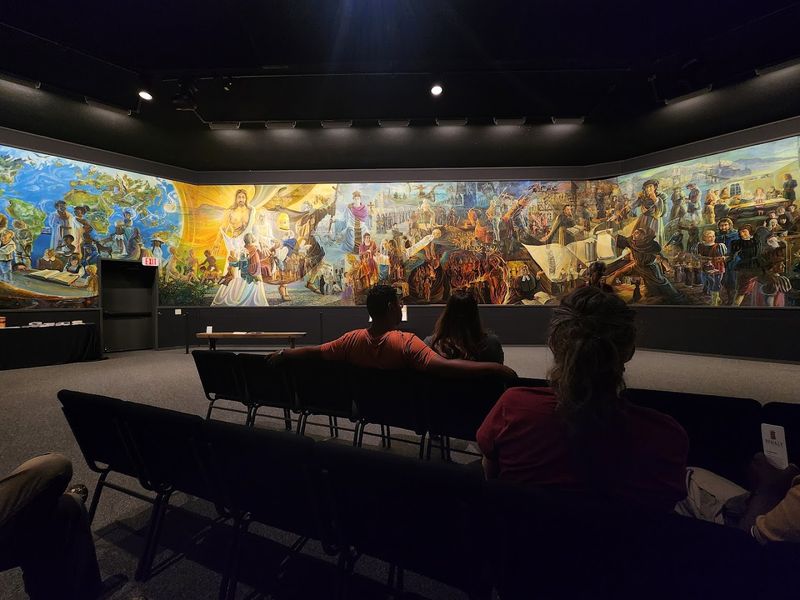
The round room changes your sense of time in a way a flat wall never can. You do not face history head on so much as you step inside it, and the way the mural loops means you are always arriving and leaving at the same moment.
It is gentle and a little trippy, like standing in the middle of a story that refuses to end because it is still going.
I liked how the curve encouraged small pauses, the kind that let a face or a field linger a second longer. In Ohio, you expect barns and rolling land, but here the landscape carries memory, not scenery, and the bend of the wall becomes a kind of heartbeat.
Your neck tilts, your shoulders soften, and suddenly the pacing of the room is the pacing of your thoughts.
People always ask, does it really feel like a time machine? Sort of, but not with gadgets and glow.
It is closer to stepping inside a memory where details continue to bloom as you circle, and the past behaves like a neighbor instead of a headline. The room does not overwhelm, it surrounds, and that distinction is why the design sticks with you long after you step back outside.
Amish And Mennonite Journey Scenes That Keep Unfolding
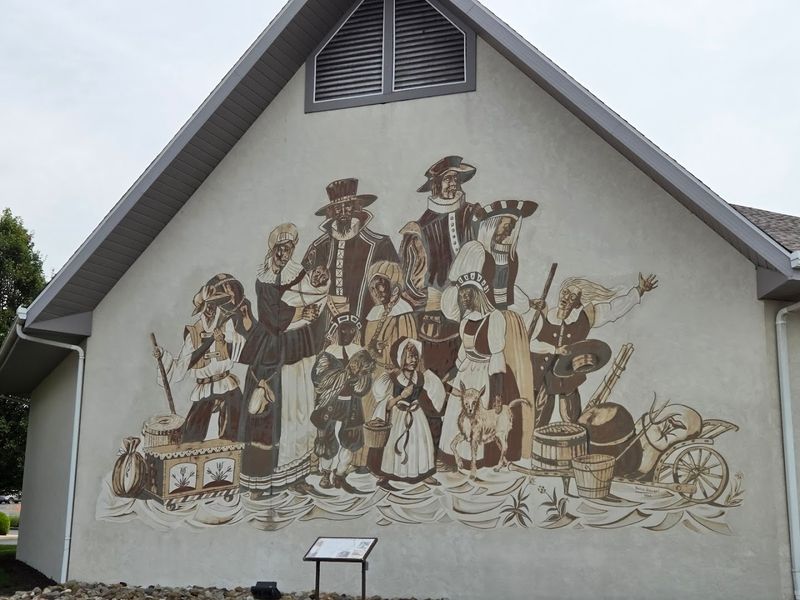
What gets me are the small motion lines, the ones you do not notice until you realize the journey never stops. The mural stacks movement in every direction, and even in the stillness of paint you feel footsteps crossing thresholds and coastlines.
You follow families, tools, and song, and the path keeps bending toward places where work becomes language and belonging gets built.
I found the travel scenes both tender and stubborn, which sounds odd until you stand there long enough. Every face is doing two things at once, grieving what was and protecting what will be, and that double work hums through the fields and water.
In Ohio, that continuity shows up in the cadence of daily life, and the mural frames it as a promise kept.
This section is where your shoulders drop because the story stops being chaptered and starts being lived. You notice the repeated gestures, the way hands fix, sew, and lift, and your body recognizes the rhythm without effort.
It is not a heroic march, it is a practiced walk. By the time the guide points to the next panel, you are already moving with it, and the unfolding feels less like travel and more like returning to something steady you already knew.
Guided Tour Format That Helps You Catch The Details
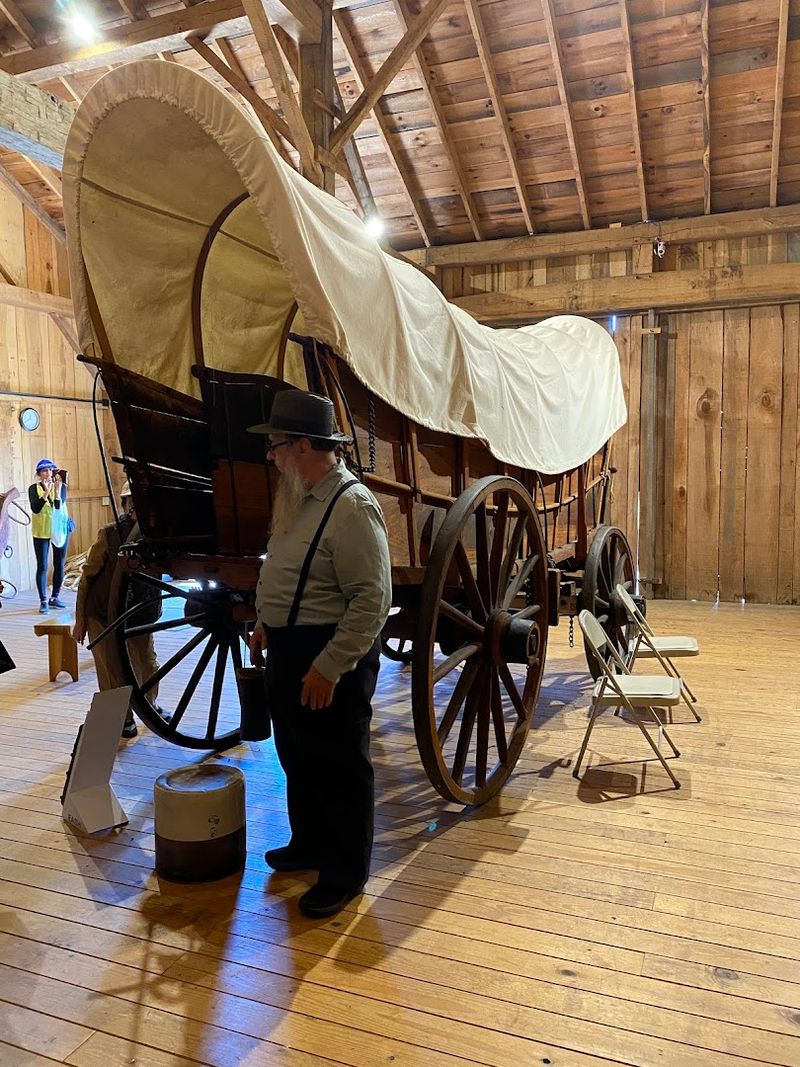
I like the tour here because it feels like a friend steering you gently so you do not miss the good stuff. The guide keeps the pace conversational, pausing when a face or symbol could slide by if you blinked.
It does not feel scripted, more like someone who knows which corners deserve a longer look and which parts will make more sense once you connect two neighboring scenes.
The best detail is how questions are welcomed without derailing the flow. You can lean in, ask something small, and then hear a story that anchors the whole timeline in a new way.
That back and forth makes the room feel alive, and the circular layout lets you re-scan a moment while still listening.
If you usually wander museums on your own, this one benefits from the company. In Ohio, the cadence of conversation mirrors the mural’s steady tone, and the tour keeps that rhythm intact.
You leave with fewer loose ends, not because everything is explained, but because someone lent you the right map. It is a gentle kind of guided, the kind that respects your curiosity and lets the art keep the last word.
One Room Schoolhouse Stop That Adds Real World Context
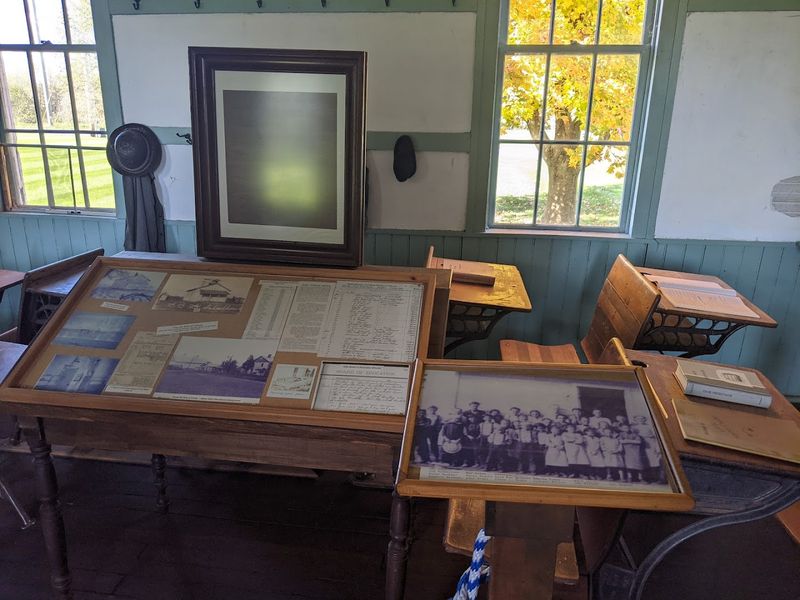
After the mural, stepping into the one room schoolhouse snaps the story into daily life. Desks line up with an honest plainness, the chalkboard holds steady in the front, and everything feels built for attention without distraction.
You can almost hear the scrape of chairs and the hush that follows a good question.
I like spaces that explain themselves without a plaque, and this one does it well. You see how learning folds into community, how routine protects focus, and how simple tools can still shape a sharp mind.
It makes the bigger themes from the mural feel grounded, because now you have a room that shows what those values look like on a weekday morning.
It is not a staged scene, it is a working memory kept tidy. In Ohio, those schoolhouses dot the countryside, and standing in this one connects the sweep of history to the feel of wood under your hand.
You leave remembering sounds and textures as much as facts. That mix of senses is what makes the visit stick, and it sends you back to the mural noticing even smaller details you missed the first time around.
Pioneer Barn Pieces That Round Out The Homestead Feel
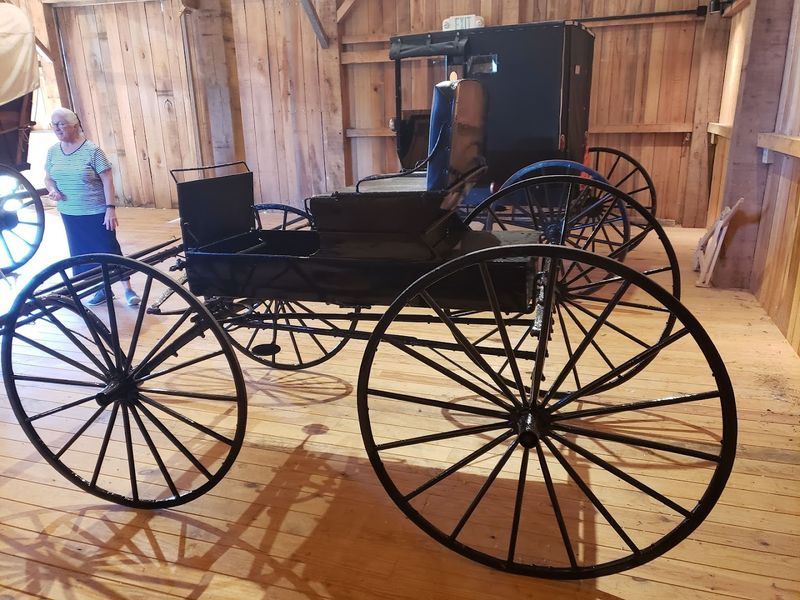
The barn exhibit has that dry wood smell that instantly drops your voice a notch. Tools hang in patient rows, and every notch and handle tells on the hands that used them.
You stand between beams and realize how much life can fit inside a simple frame when the days are full of careful work.
I caught myself tracing old tool marks with my eyes, building the moves backward like a quiet puzzle. It is easy to romanticize this stuff, but the display keeps it honest and useful, not theatrical.
That grounded tone syncs with the mural, and together they sketch what home really meant when everything depended on shared effort.
If barns make you think of postcard scenes, this one feels more like a workshop with a heartbeat. Ohio barns still hold that mix of grit and welcome, and this space respects both moods.
You come away with a better sense of how labor becomes culture, not as an idea but as muscle and time. It rounds out the visit in a way words do not, letting the wood and iron do the talking while you listen.
Bookstore And Gift Shop Finds That Extend The Visit
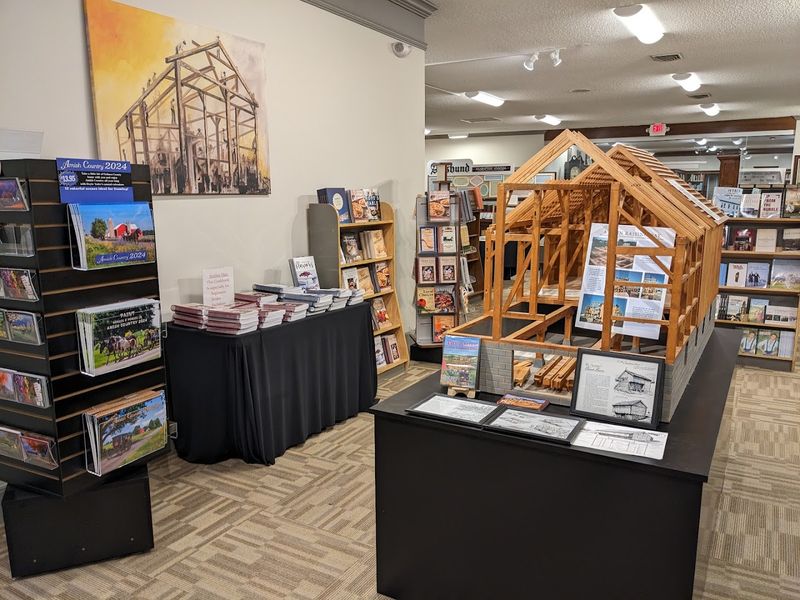
Save a few minutes for the bookstore and shop, because it stretches the visit in a good way. Shelves lean into regional history and gentle storytelling, and you can pick up maps, thoughtful reads, and small pieces that feel connected rather than touristy.
It is the kind of space where you browse slower than you planned and still leave feeling light.
I like how the selection mirrors the tone of the museum, calm and steady, with an eye for things that hold up after the drive home. You can tuck a slim book into your bag and keep the mural’s voices close for later, or grab a simple craft that reminds you of the textures you just walked through.
Nothing shouts for attention, and that makes choices easier.
If you are heading deeper into Ohio for the afternoon, this is a nice bridge between the exhibit glow and the open road. The shop team is relaxed and helpful without hovering, which matches the whole place.
You walk out feeling like you carried the story a bit further than the parking lot. That continuation is the point, I think, because the visit is less a finish line and more a thread you can keep following.
Hours And Sunday Closed Rhythm That Shapes The Plan
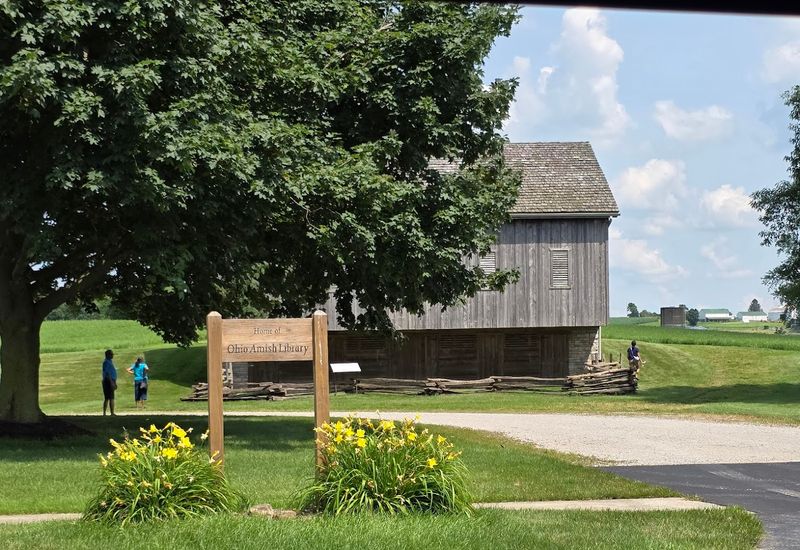
Quick planning note before you go, because timing matters more than you think. The center runs on a steady weekly rhythm, and Sundays are set aside, so you will want to aim your visit toward the other days.
That pause gives the whole place a calmer heartbeat, and it honestly fits the tone you just experienced inside.
I try to arrive with enough margin to linger in the mural room without glancing at a clock. The day feels better when you are not rushing, and the rest of the grounds make more sense when you give them room to breathe.
Ohio drives often turn into pretty meanders, so build in that cushion and let the back roads do their thing.
One last tip, call or check the site before you set out, because seasonal shifts shape start and finish times. That tiny bit of prep means you spend your energy where it counts, inside the story.
It is a low stress plan, and the reward is a visit that feels roomy instead of crammed. When you finally step back into daylight, you will be glad the schedule served the story rather than the other way around.
Dear Reader: This page may contain affiliate links which may earn a commission if you click through and make a purchase. Our independent journalism is not influenced by any advertiser or commercial initiative unless it is clearly marked as sponsored content. As travel products change, please be sure to reconfirm all details and stay up to date with current events to ensure a safe and successful trip.
