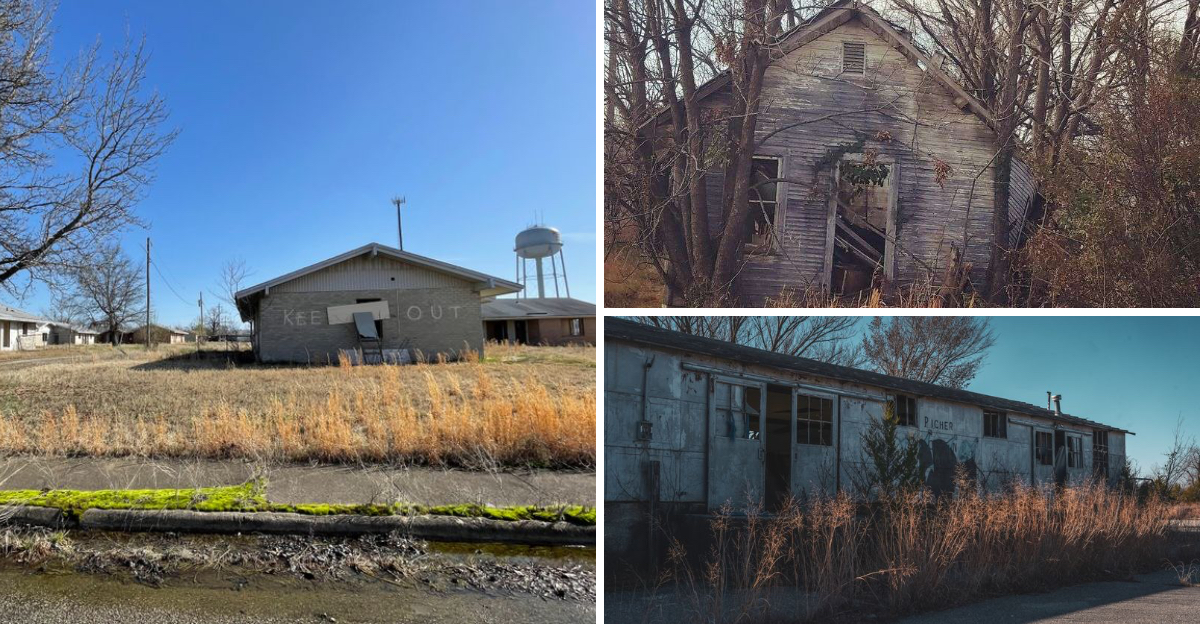
Picher, Oklahoma sits in the far northeast corner of the state like a cautionary whisper, a place where history never really left.
You can feel Oklahoma wind pulling at chain link and tin, carrying stories of miners, families, and sudden quiet.
Locals in Oklahoma and beyond repeat the same warning again and again, do not explore alone.
If the past calls you here, treat every step as a decision, not a drift.
A Mining Boomtown
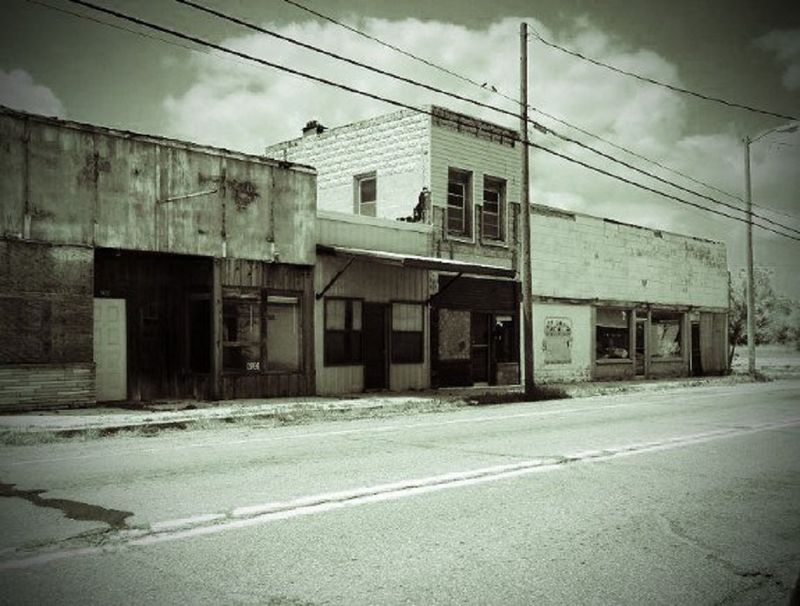
Picher, Oklahoma carried the pulse of a mining frontier, a place where work forged towns and families under a restless prairie sky.
Lead and zinc pulled people in from distant counties, and new roofs rose beside churches that rang on quiet mornings.
Downtown storefronts stacked along Main Street showed tidy signs and plate glass, a grin of industry and promise across the Oklahoma dust.
Classrooms filled with chalk dust and ambition, and band uniforms waited on hooks for parades that circled the block.
Ballfields stitched the neighborhoods together, while depot benches welcomed night shifts returning with tired laughter.
Trolley bells, truck clatter, and Sunday shoes beat a rhythm that made even the wind feel employed.
Across the Tri State Mining District, Picher’s name meant ore, wages, and enough hope to paint fresh trim every spring.
Haul trucks rattled the streets, and the whistle told time better than any clock pinned to a kitchen wall.
Miners swapped stories beside shafts, and a steaming mug cooled near the door as morning came too fast.
Families traced their weeks by the headlamps that blinked home, tiny stars weaving through the neighborhood dusk.
Hardware aisles held every bolt someone might need, and the grocer kept credit for paydays when pickaxes sang.
It felt permanent, like gravel tamped hard, a place built to stay until the ore stopped answering back.
The Town’s Sudden Decline
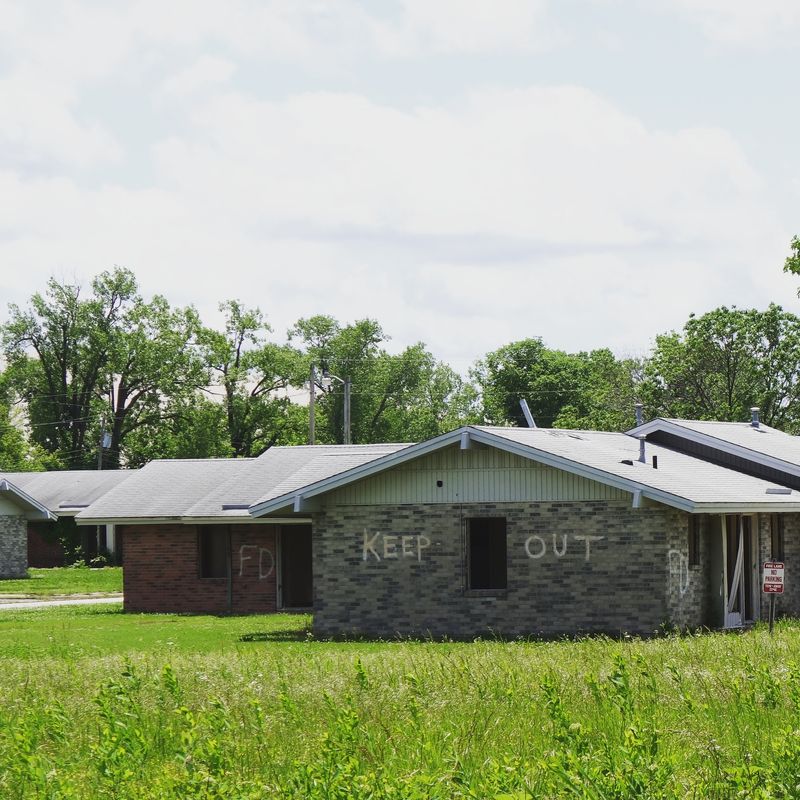
Decline arrived like a slow curtain, settling over Picher until even the sidewalks forgot the sound of school shoes.
Mines weakened the ground beneath everyday life, and worry seeped into conversations that once ended in easy plans.
Contamination crept through yards and ditches, coloring decisions that felt more like triage than choice.
Government buyouts gathered names and signatures, turning house keys into paper promises and relocation boxes.
One by one, porches emptied, and curtains no longer fluttered back when trucks rolled through the neighborhood.
Mailboxes leaned, then rusted, and grass grew tall where bikes once coasted down quiet blocks.
Streetlights stayed, but their pools of light fell on nobody, a stage without actors after the crowd had gone.
Storefronts shuttered, and the last open doors became memories traded at reunions beyond the state line.
School trophies and scoreboards waited in silence, holding seasons that would never be played again.
Even the wind felt careful, as if noise might crack the surface and send another corner sinking.
Families mapped new routines in other Oklahoma towns, leaving this one to the heavy hush of absence.
What remains is the echo of a place that knew how to thrive, then learned how to leave.
Environmental Disaster
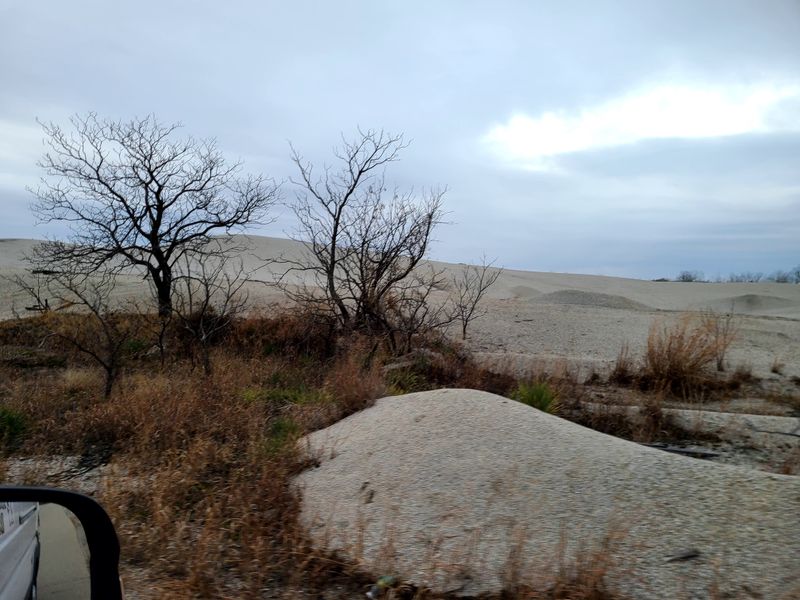
The land around Picher tells a stark environmental story, written in orange water and pale mountains of mine tailings.
Tar Creek runs discolored through open channels, a reminder that the ground still carries the chemistry of extraction.
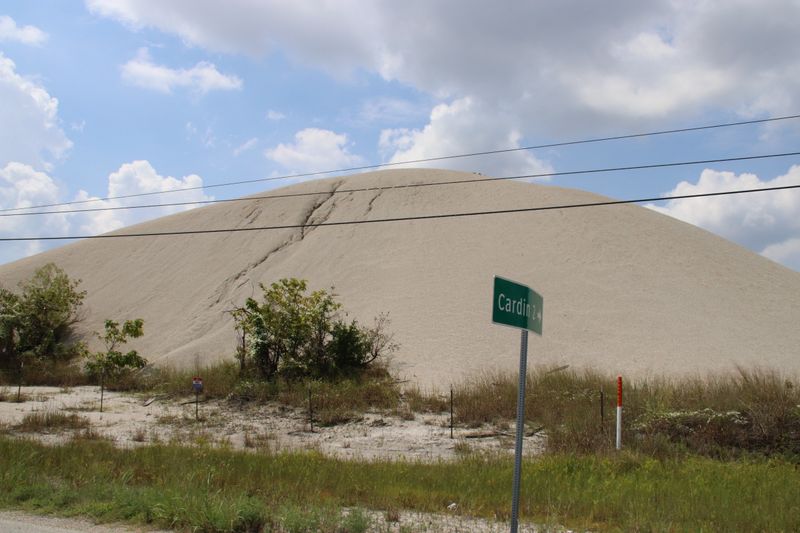
Chat piles rise like artificial dunes, shifting in the Oklahoma wind and drifting dust across empty blocks.
Soil contamination lingers in yards and lots, a legacy that outlasts fences, signs, and even the houses themselves.
Storms lift fine particles into the air, and the horizon blurs where tailings and sky trade places.
Open shafts and hidden cavities puncture the subsurface, complicating any attempt to heal what lies below.
Restoration plans wrestle with scale, cost, and the physics of a landscape reworked by a century of mining.
Warning placards stand at angles, their messages sun faded but still firm against casual curiosity.
Wild grasses root in thin layers, holding what they can while deeper issues remain unsettled and unseen.
Creek banks carry streaks of color that feel beautiful and uneasy in the same glance.
Across northeastern Oklahoma, the site anchors cautionary conversations about extraction, oversight, and community health.
The quiet here is not peace, it is a pause while the damage remains stubbornly present.
Real Dangers to Visitors
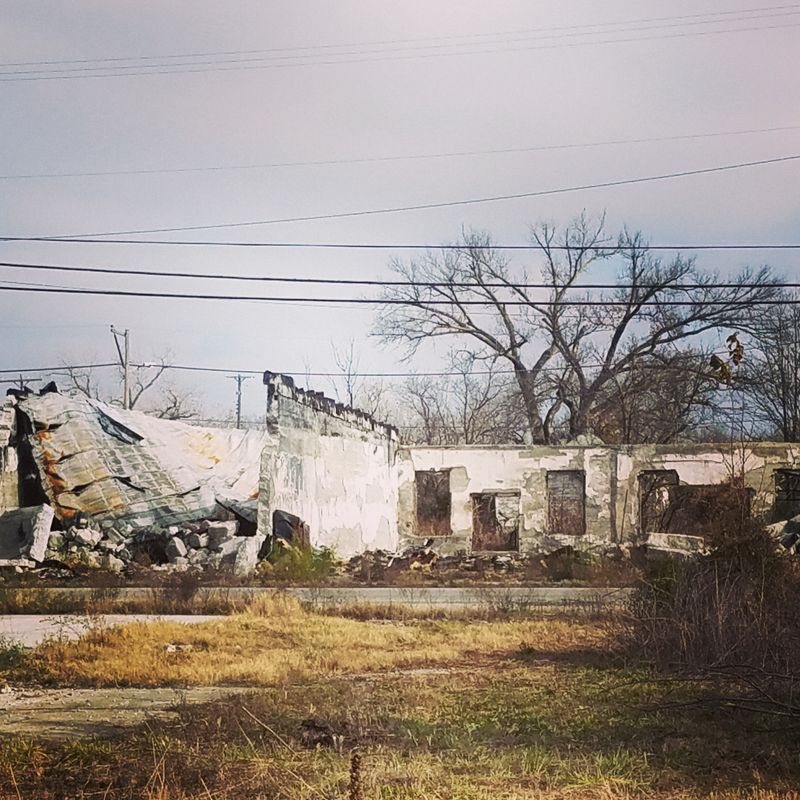
Exploring Picher alone can turn from curiosity to crisis in a single misplaced step on uncertain ground.
Subsurface voids from old tunnels create hidden collapse risks that do not announce themselves before giving way.
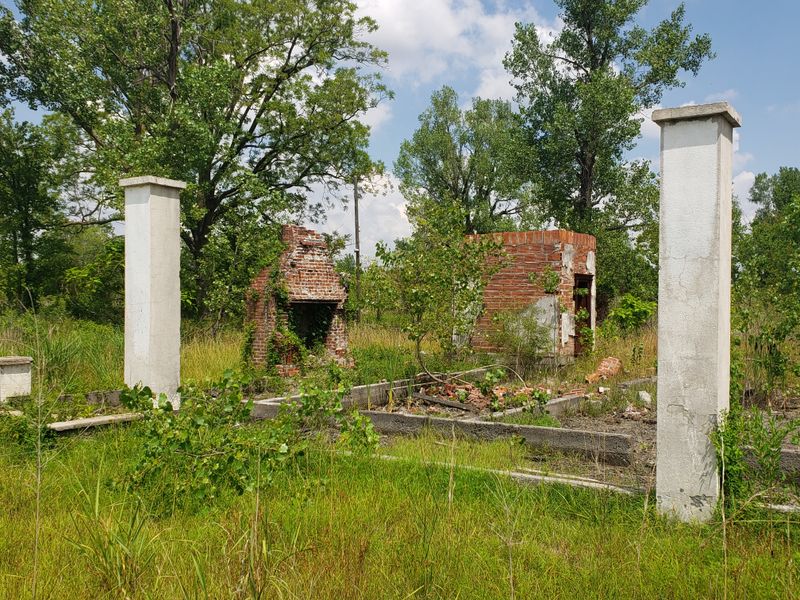
Foundations crumble under tall grass, and concrete slabs mask fractures that spider out from forgotten corners.
Roofless structures shed bricks and boards in gusts that sweep across Ottawa County without warning.
Scattered debris hides nails, wire, and glass, a jumble waiting beneath weeds and leaf litter.
Even steady streets can tilt near subsidence zones, where tires and boots find treacherous angles.
Water pooled in depressions may conceal holes, and the soil around them can behave like silt.
No building is truly safe here, not for climbing, not for lingering, not for quick looks.
Cell coverage can falter among low spots, complicating calls when something goes wrong without witnesses.
Wildlife seeks shelter in dark interiors, startled animals adding another variable to an already risky place.
Local guidance exists for a reason, a chorus from people who know how easily quiet turns dangerous.
If you come, bring caution, and trust your distance more than your nerve.
Eerie Abandoned Streets
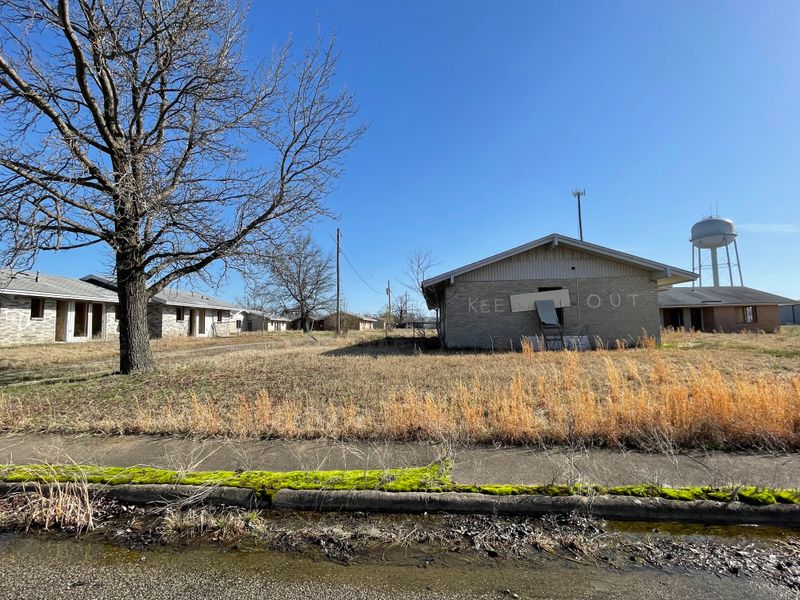
Walking Picher’s streets feels like opening a book to the last chapter and finding the ending already underlined.
Cracked asphalt wanders past driveways that now lead to air, porch steps pointing at empty space.
Rusted cars sit rooted in tall grass, quiet sculptures that once carried lunches, kids, and weekend plans.
Storefront frames hold sky where windows used to catch reflections of neighbors heading home.
Street signs still mark intersections, their arrows useful mainly to memory and map lovers.
Utility poles line up obediently, stringing wires across silence like staff lines waiting for music.
In summer, cicadas fill the vacuum, their chorus rippling down blocks that no longer answer back.
Wind farms the chat piles, combing them into soft shapes that hide hard truths underneath.
Oklahoma light moves across concrete pads, turning them into sundials that only count absence.
You can almost hear screen doors and basketball thumps, echoes that belong to houses not standing.
The emptiness is not theatrical, it is domestic, the ordinary peeled away until only bones remain.
Every corner reminds you to step lightly and let the past keep some of its quiet.
Local Warnings
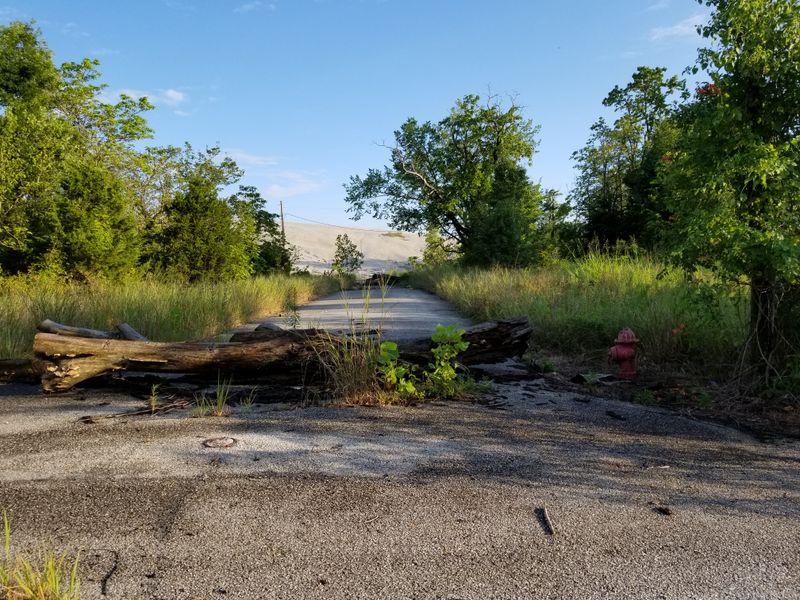
People from around Ottawa County keep repeating the same advice, do not come to Picher without a plan.
Officials and longtime residents urge visitors to stay on public roads and respect every posted warning.
Signs might look weathered, but their messages are current, and the risks have not retired.
Emergency responders operate over a wide area, and reaching you here can take longer than expected.
Private property lines still exist even when structures are gone, and trespass citations remain possible.
Local agencies track changing ground conditions, and their updates matter for more than curiosity.
Wind shifts can push dust across open lots, and masks help when particulate is likely.
Guided visits reduce risk because someone else watches for the hazards you cannot see.
Oklahoma travelers know the weather moves quickly, and storms complicate footing across disturbed soil.
If a spot feels wrong, it probably is, and backing away beats bravado every time.
Respect for the community extends beyond borders, because the story here did not end with relocation.
Listening to locals is the surest way to leave with only photographs and perspective.
Photo Opportunities
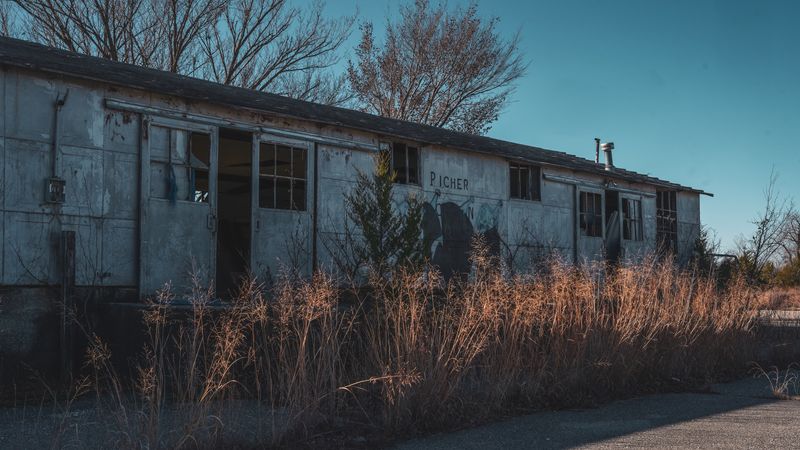
Picher rewards careful photographers who value mood, texture, and distance over risk and intrusion.
Golden hour rims chat piles with light, outlining their strange geometry against a pale Oklahoma sky.
Empty storefronts frame long perspectives, allowing leading lines that carry the eye down quiet blocks.
Rusted fences and peeling paint offer close studies that read as portraits of endurance and neglect.
Foundations form grids that work well for minimalist compositions with long shadows and open space.
Telephoto lenses compress piles and power poles into layered scenes, emphasizing scale without stepping closer.
Tripods help in low light, but set up on firm pavement to avoid unstable surfaces nearby.
Interior shots are unsafe, so use exterior angles through missing windows to keep distance and context.
Cloudy days flatten glare, letting textures show in concrete, brick, and corrugated metal.
Respect privacy and property, even where walls are gone, because boundaries remain even after departure.
Capture the hush without staging, letting wind, birds, and open space create honest atmosphere.
Leave no trace beyond tire tracks on public roads and a memory card full of caution.
History Preserved in Silence
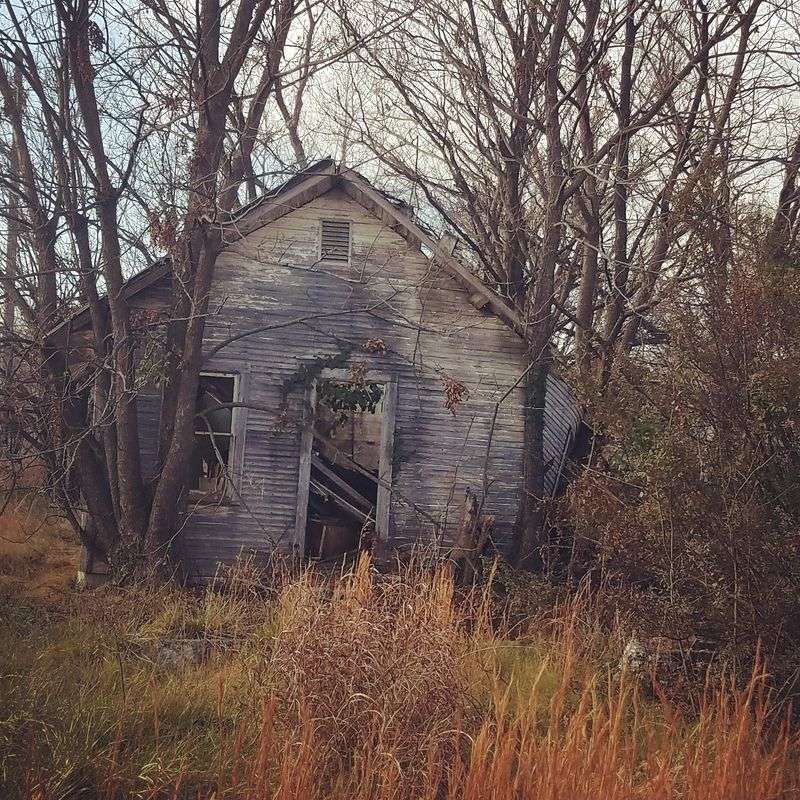
Silence holds the town’s record as surely as any archive, and Picher’s streets read like footnotes underfoot.
Plaques and markers near the district sketch the arc from discovery to departure without sentimentality.
Online collections store photographs and maps that pair with on site glimpses for context and care.
Local historians in Oklahoma maintain interviews that preserve voices from kitchens, shafts, and school bleachers.
Newspapers documented the relocations, tracing addresses that migrated to other towns and fresh beginnings.
Museum exhibits beyond the site explain the geology that set the stage for extraction and risk.
Academic work analyzes the health impacts and policy turns that shaped outcomes for families here.
Old yearbooks list teams and classmates, stitching together names that scattered when the streets emptied.
Family albums surface at reunions, bridging memory and place with careful storytelling and patience.
Satellite images reveal change across decades, a time lapse of absence that still feels intimate.
None of this replaces the lived community, but it helps honor what effort built and hazard unbuilt.
The best listening happens gently, with time, distance, and respect for what remains unsaid.
Visiting Safely
Choose daylight and fair weather, because clear visibility and firm ground make every decision easier.
Arrive with a partner or reputable guide, so attention and judgment do not rest on one set of eyes.
Keep to public roads and well used pull offs, avoiding shoulders that crumble toward unseen voids.
Wear sturdy boots, long pants, and gloves, because sharp debris hides where grass looks harmless.
Carry a mask for dusty conditions, and do not approach tailing piles even if they seem gentle.
Pack water, a charged phone, and an offline map, since reception can fail at low spots.
Leave buildings alone, resisting the urge to step inside or test floors that will not forgive.
Mark your turnaround time before you start, and stick to it even if the light turns perfect.
Park where emergency vehicles could pass, keeping shoulders clear and angles predictable.
Watch the sky, because Oklahoma storms arrive quickly and complicate footing and orientation.
Share your plans with someone outside the site, and check in when you leave the area.
Caution here is not fear, it is respect for a landscape still working through its wounds.
Why Picher Captures the Imagination
Picher resonates because it speaks plainly about cost, hope, and the thin line between both.
The town’s remains show how work can build a life and unbuild it without asking permission.
Every empty lot feels like a paused sentence, a thought interrupted by geology and consequence.
You stand at a curb and understand that progress can echo long after the applause fades.
Oklahoma light turns ruins into mirrors, asking visitors what they would trade for momentum.
The setting resists nostalgia, yet compassion grows as you imagine routines that once fit these rooms.
Photographers seek it for stark beauty, historians for evidence, and travelers for perspective that lingers.
Silence becomes a guide, pointing toward patience, humility, and careful steps on uncertain ground.
The story connects beyond state borders, but it remains rooted in this specific corner of earth.
To witness it is to learn how absence can teach as clearly as presence ever did.
Memory works differently here, slower, like film exposed to a soft and unforgiving sun.
Leave with respect, and let that feeling shape the way you move through other places.
Dear Reader: This page may contain affiliate links which may earn a commission if you click through and make a purchase. Our independent journalism is not influenced by any advertiser or commercial initiative unless it is clearly marked as sponsored content. As travel products change, please be sure to reconfirm all details and stay up to date with current events to ensure a safe and successful trip.
