Most people hear “Oklahoma” and picture flat prairie and oil pumps nodding against the sky. I used to think that was the whole story too.
Then I started wandering off the main highways. Out beyond the obvious landmarks, I found places so overlooked that even longtime residents drive past them without slowing down.
No big signs. No crowds.
Just quiet trails, strange rock formations, empty ghost towns, and pockets of history that feel like they’re waiting for someone to notice. I’ve stood in spots where I was the only person around for miles, listening to the wind and wondering how this never made it into the guidebooks.
After years of exploring every corner I could reach, I’ve narrowed it down to ten places that completely changed how I see this state. Caves, forgotten towns, landscapes that look almost unreal.
If you think you’ve already figured Oklahoma out, this might prove otherwise.
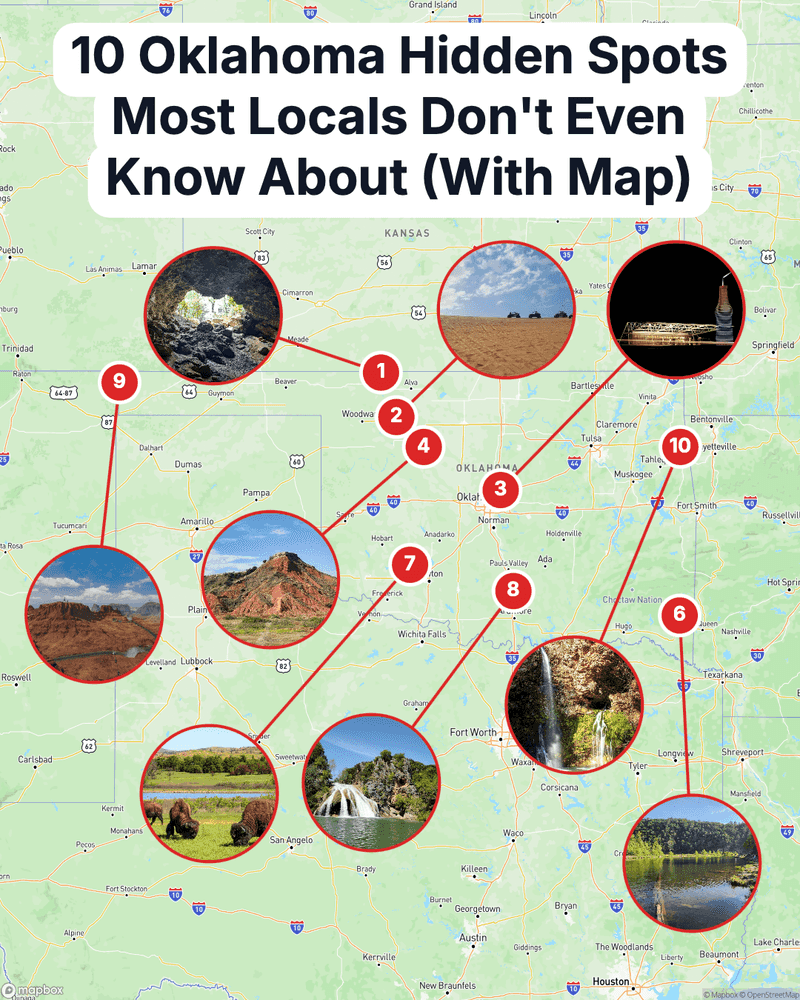
1. Alabaster Caverns State Park, Freedom
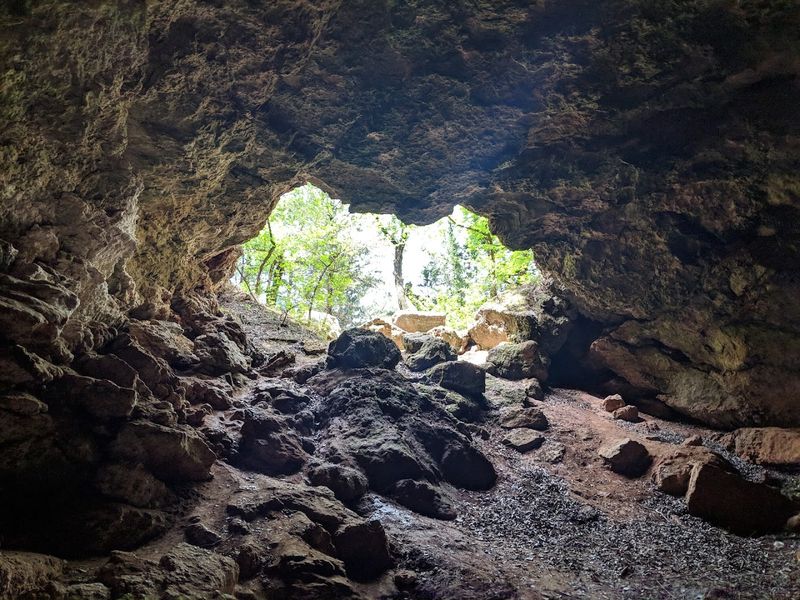
Most people think Oklahoma is all flat plains, but beneath the surface near Freedom lies one of the largest natural gypsum caves open to the public in the United States. Alabaster Caverns stretches three-quarters of a mile into the earth, with passages that glow pink and white from the alabaster deposits.
The cave stays a constant 50 degrees year-round, which feels amazing during Oklahoma’s blazing summers. You’ll walk through chambers where bats hang from the ceiling during certain seasons, and the formations look like frozen waterfalls made of stone.
What makes this place truly special is how few people know about it. While Carlsbad Caverns gets millions of visitors, Alabaster remains Oklahoma’s best-kept underground secret.
The guided tours take you deep enough that you’ll lose all sense of the outside world.
The park also offers wild cave tours for the adventurous types who don’t mind crawling through tight spaces. These tours require reservations and a willingness to get muddy, but they reward you with sights that maybe a hundred people have ever seen.
Spring and fall offer the best visiting conditions since the park above ground becomes a wildflower paradise during these seasons. The drive through the gypsum hills alone is worth the trip, with landscapes that look more like the Southwest than the Midwest.
Bring a jacket even in summer because that cave temperature doesn’t budge. The park rangers are incredibly knowledgeable and share stories about the cave’s formation that make geology actually interesting.
2. Little Sahara State Park, Waynoka
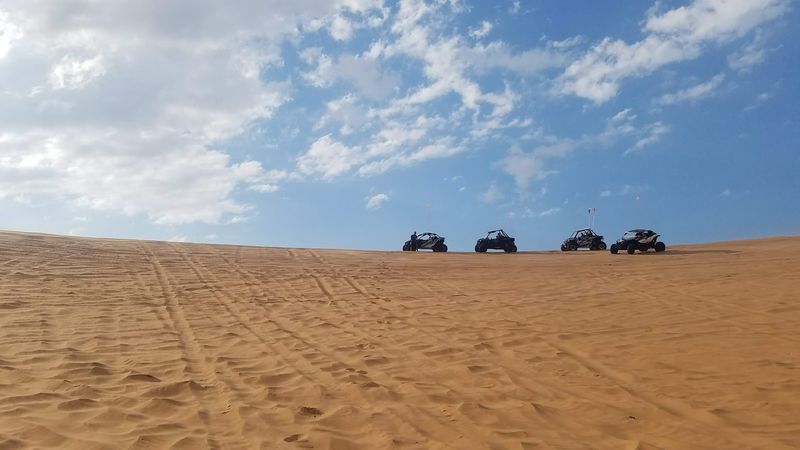
Picture sand dunes stretching over 1,600 acres in the middle of Oklahoma, and you’ll understand why this place feels like you’ve been transported to another continent. Little Sahara features hills of fine sand that reach up to 75 feet high, perfect for sandboarding, ATV riding, or just tumbling down like a kid.
The sand here is actually ancient, left behind by a river system that dried up thousands of years ago. Now it creates one of the most unique landscapes in the entire state, where you can watch the sunset paint the dunes in shades of orange and gold.
Most Oklahomans have never heard of this place, which means you can often find yourself alone on a dune with nothing but wind and sky around you. The park allows off-road vehicles, so weekends can get lively with the sound of engines, but weekdays remain peaceful.
If you visit after a rain, the sand becomes firm enough to walk on without sinking, and the patterns left by water create temporary art installations across the landscape. The contrast between the dunes and the surrounding prairie grasslands creates photo opportunities that don’t look real.
Camping is available right in the dunes, letting you fall asleep to the sound of shifting sand and wake up to a sunrise that turns the entire park pink. The park also has a small lake where you can cool off after a day of desert exploration.
Bring plenty of water and sunscreen because there’s zero shade out on those dunes. The sand reflects heat like a mirror, making summer visits challenging but spring and fall absolutely perfect.
3. Pops 66, Arcadia
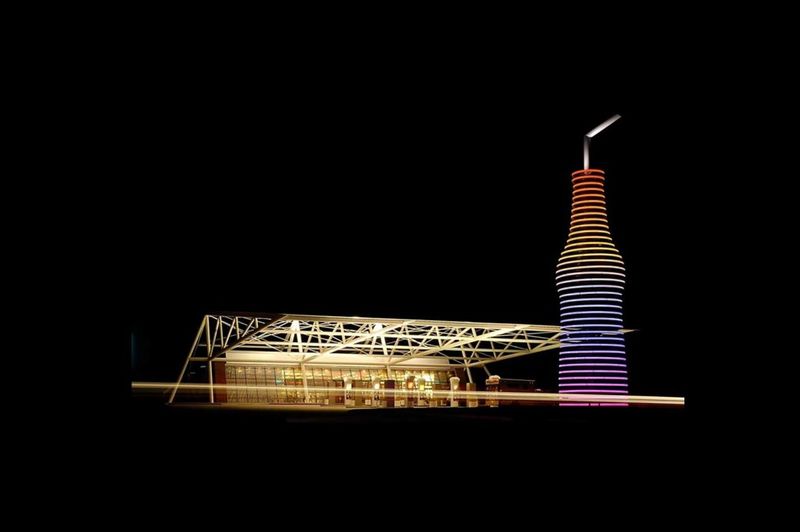
Standing 66 feet tall along Route 66, this massive LED-lit soda bottle has become an accidental icon that most locals speed past without stopping. Pops isn’t just a roadside attraction; it’s a temple to fizzy drinks with over 700 different soda varieties from around the world.
The building itself looks like it was designed by someone who watched too many Jetsons episodes, with sweeping curves and floor-to-ceiling windows. At night, the giant bottle cycles through a rainbow of colors that can be seen from miles away on the highway.
Inside, the walls are lined with refrigerators containing sodas you didn’t know existed. Want a peanut butter and jelly soda?
They have it. Curious about what bacon-flavored pop tastes like?
They’ve got that too, though I can’t recommend it.
The attached restaurant serves classic American comfort food with portions that could feed a family. Their burgers are legitimately good, not just novelty food, and the onion rings are crispy enough to make you order a second basket.
What locals miss by not stopping is the chance to try sodas made with real sugar instead of corn syrup, imported from small bottlers across America and beyond. The staff actually knows about each variety and can guide you to something amazing based on your taste preferences.
The gift shop sells Route 66 memorabilia that ranges from tasteful to delightfully tacky. Kids go wild for the candy section, which rivals the soda selection in its overwhelming variety.
Visit during golden hour when the setting sun makes the whole building glow. The Instagram opportunities are endless, but the real treasure is finding your new favorite drink among those 700 options.
4. Gloss Mountain State Park, Fairview
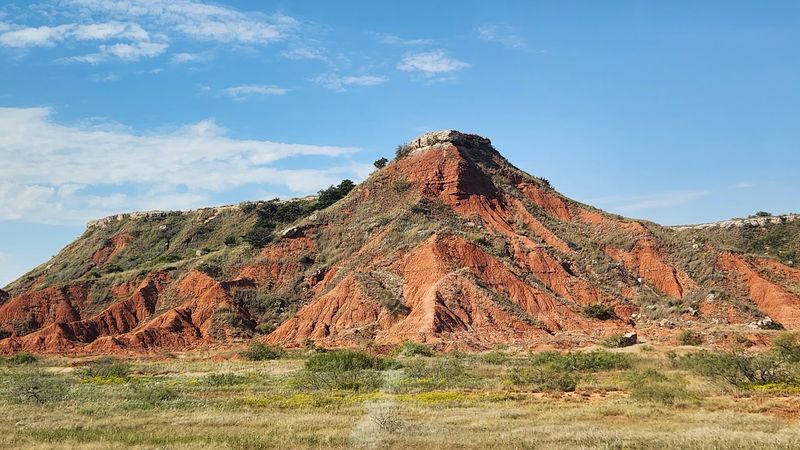
These mesas rise from the plains like something out of a Western movie, their sides striped with layers of red, pink, and white selenite that sparkle in the sunlight. Gloss Mountain gets its name from the way these crystals catch the light, making the whole formation shimmer like it’s been dusted with glitter.
The hike to the top is short but steep, gaining about 200 feet in elevation over half a mile. Once you reach the summit, you’re rewarded with views that stretch for miles across the Salt Plains and surrounding prairie.
What makes this place truly hidden is its location in northwestern Oklahoma, far from the interstate highways that most travelers stick to. The nearest town is tiny, and there are no signs screaming for your attention, just quiet natural beauty waiting to be discovered.
The best time to visit is early morning or late afternoon when the low sun angle makes those selenite crystals absolutely glow. Photographers have been known to spend hours here waiting for the perfect light, and the wait always pays off.
The rock formations tell a story of ancient seas that covered Oklahoma millions of years ago. The red color comes from iron oxide, while the white bands are pure selenite crystal, created when seawater evaporated and left minerals behind.
Spring brings wildflowers that carpet the base of the mountains in purple and yellow. Summer can be brutally hot with no shade on the trail, so bring more water than you think you’ll need.
The park has minimal facilities, which is part of its charm. No crowds, no gift shops, just you and some of the most unique geology in the state.
5. Talimena Scenic Drive, Talihina to Mena
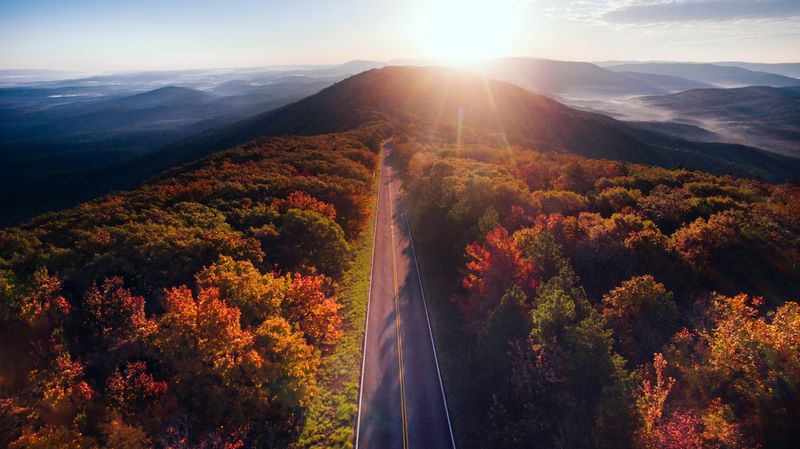
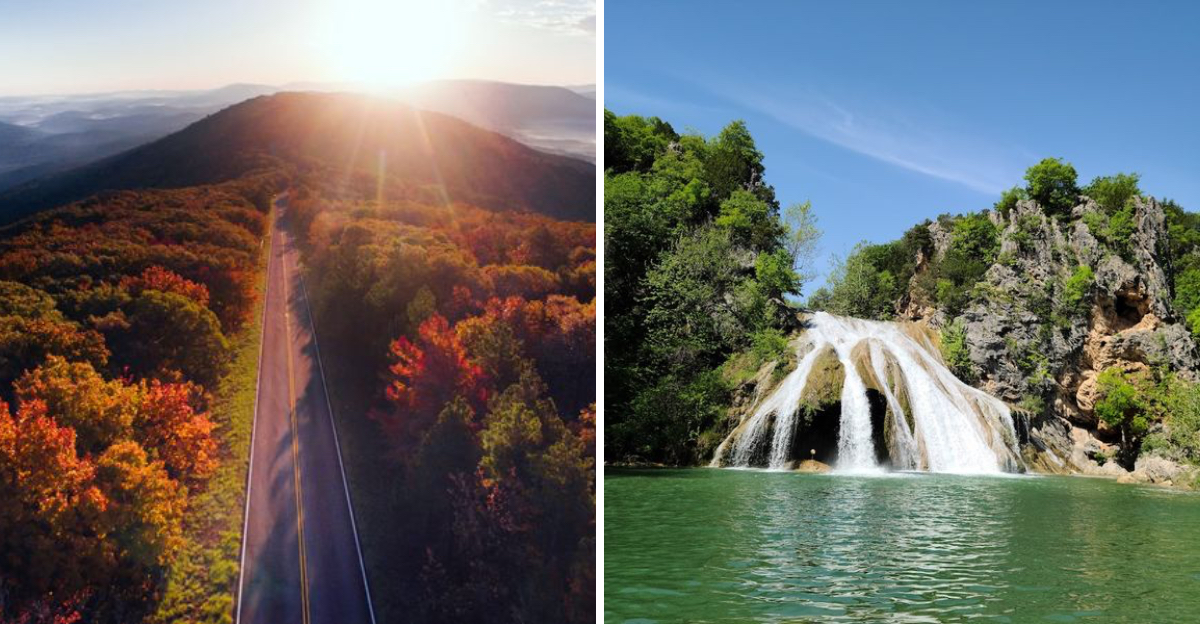
Stretching 54 miles along the crest of the Ouachita Mountains, this drive proves that Oklahoma has real mountains, not just the gentle hills most people imagine. The road connects Talihina, Oklahoma with Mena, Arkansas, climbing to nearly 2,700 feet and offering views that rival anything in the Smokies.
Fall transforms this route into one of the most spectacular drives in the entire country. The hardwood forests explode in reds, oranges, and golds that seem almost too bright to be real, and the overlooks become packed with photographers trying to capture the impossible beauty.
But here’s the secret: visit in spring instead. The mountains come alive with wildflowers, the weather is perfect for hiking, and you’ll have the road mostly to yourself.
The redbud trees create purple clouds against the green hillsides, and the views are just as stunning without the crowds.
Multiple pullouts along the route let you stop and soak in the panoramic views. Some overlooks have short trails that lead to even better vantage points, where you can see layer after layer of mountains fading into the distance.
The drive takes about two hours if you don’t stop, but that would be a crime. Plan for at least half a day to truly experience it, with time for picnics at the scenic areas and short hikes on the trails that branch off from the main route.
Talimena comes from combining the names Talihina and Mena, and the route was specifically designed as a scenic drive in the 1960s. The engineering follows the natural contours of the mountains, creating a driving experience that feels more like flying.
Cell service is spotty, so download maps before you go. The nearest gas stations are at either end, so fill up before starting your journey into these hidden mountains.
6. Beavers Bend State Park, Broken Bow
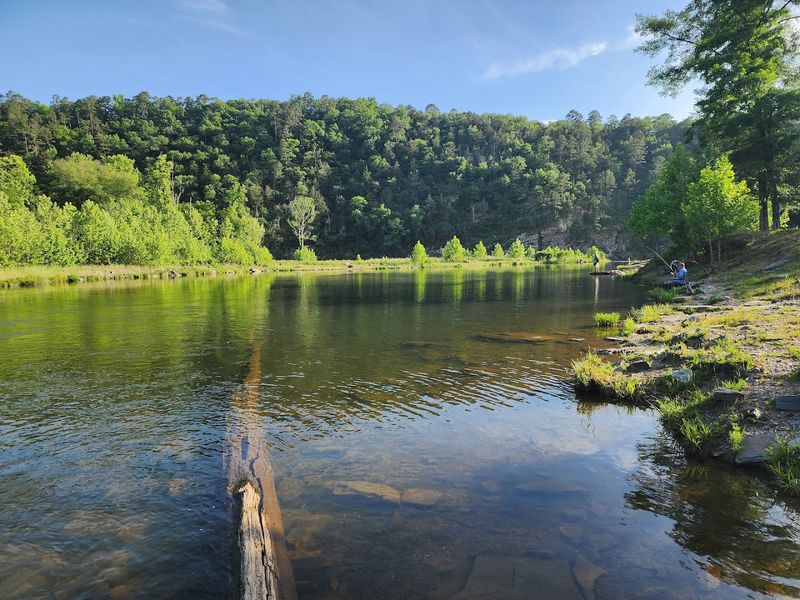
Tucked into the southeastern corner of Oklahoma, Beavers Bend feels more like Colorado than the plains state most people picture. The Mountain Fork River runs crystal clear through pine forests, creating a landscape that surprises every first-time visitor.
The park offers some of the best trout fishing in the region, with the cold river water supporting rainbow and brown trout that don’t typically survive in Oklahoma’s heat. Early mornings, you’ll see fly fishermen standing in the mist-covered water, casting lines that sparkle in the sunrise.
Hiking trails wind through the forest, ranging from easy riverside walks to challenging climbs that reward you with views over the treetops. The Forest Heritage Center Museum sits within the park, teaching visitors about the lumber industry that once dominated this region.
What locals know but tourists miss is that this area becomes absolutely magical in October. The cypress trees lining the river turn brilliant orange before dropping their needles, and the fall colors rival anything in New England but with a fraction of the visitors.
The park has cabins that book up months in advance, but the campgrounds offer excellent spots right along the river. Waking up to the sound of flowing water and birds singing in the pines beats any alarm clock ever invented.
Nearby Broken Bow Lake adds another dimension to the area, with clear water perfect for kayaking and swimming. The lake was created by damming the Mountain Fork River, and it maintains that same pristine clarity that makes the river so special.
Rent a canoe and paddle the river for a few hours, watching for beavers, deer, and the occasional bald eagle. The current is gentle enough for beginners but interesting enough to keep experienced paddlers engaged.
7. Wichita Mountains Wildlife Refuge, Indiahoma
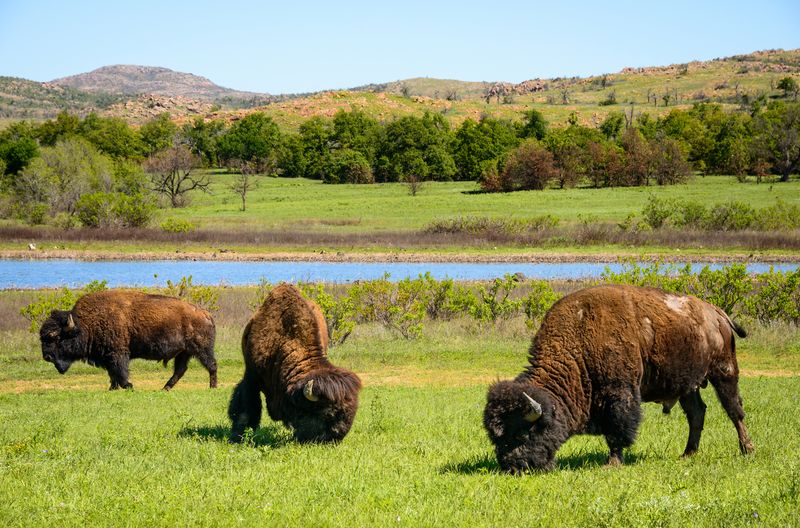
Ancient granite mountains rise abruptly from the prairie, creating an island of peaks in a sea of grassland. The Wichita Mountains are some of the oldest exposed rocks in North America, formed over 500 million years ago when this area was a massive volcanic mountain range.
The wildlife refuge protects not just the landscape but also herds of bison, elk, and longhorn cattle that roam freely across 59,000 acres.
Driving the scenic roads, you’ll round a corner and suddenly find yourself face-to-face with a massive bison standing in the middle of the pavement, completely unconcerned by your presence.
Mount Scott offers the most accessible peak experience, with a paved road winding to the summit at 2,464 feet. The 360-degree views from the top reveal the full scope of the refuge, with granite boulders scattered across the hillsides like a giant’s playground.
Rock climbers come here for world-class granite climbing that most people don’t know exists in Oklahoma. The Narrows and Crab Eyes are famous among climbers but unknown to the general public, offering routes that challenge everyone from beginners to experts.
Multiple lakes dot the refuge, with clear water perfect for swimming and fishing. The Boulder Beach area becomes a local favorite in summer, though it remains relatively uncrowded compared to typical swimming holes.
Prairie dog towns create entertainment for kids and adults alike, with these social creatures popping up from their burrows to check out visitors before diving back underground. Their warning calls echo across the grasslands whenever a hawk flies overhead.
Fall brings the elk rut, when massive bulls bugle challenges that echo off the granite cliffs. This natural spectacle happens every September and October, drawing wildlife photographers from across the country to witness and capture the drama.
8. Turner Falls Park, Davis
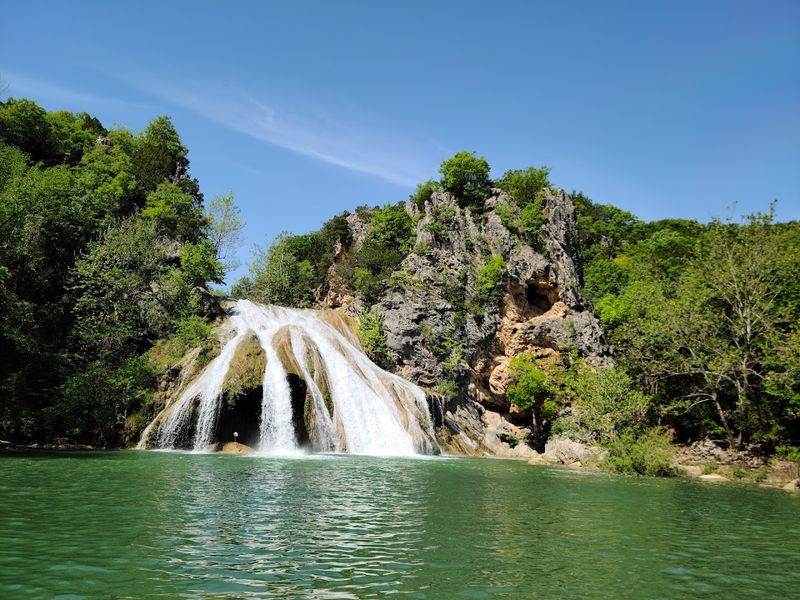
Oklahoma’s tallest waterfall plunges 77 feet over a limestone cliff, creating a swimming hole that has been cooling off visitors since the 1800s. Turner Falls sits in the heart of the Arbuckle Mountains, where ancient seas left behind the rocks that now form this spectacular cascade.
The main falls area can get crowded on summer weekends, but here’s what locals know: hike upstream to find smaller waterfalls and pools where you might be the only person swimming. These secret spots require a bit of scrambling over rocks, but the reward is your own private waterfall.
Caves honeycomb the limestone cliffs surrounding the falls, inviting exploration for anyone willing to get a little muddy. The most famous is Collings Castle, a three-story stone structure built into the cliff face in the 1930s that looks like something from a fairy tale.
Honey Creek flows through the park, creating more swimming opportunities beyond the main falls. The water stays cold year-round, fed by springs that maintain a constant temperature regardless of the Oklahoma heat.
The park offers camping right along the creek, with sites that range from primitive tent spots to full RV hookups. Falling asleep to the sound of rushing water is worth the price of admission alone.
Spring brings wildflowers that cover the hillsides in purple, yellow, and white. The redbud trees bloom in March and April, creating a canopy of pink blossoms over the trails that wind through the park.
Summer weekends turn the main pool into a party scene, but weekday mornings remain peaceful. Arrive early to claim a spot on the rocks near the base of the falls, where the mist keeps you cool even on the hottest days.
The surrounding area offers excellent hiking, with trails that climb the Arbuckle Mountains and provide views over the park and beyond.
9. Black Mesa, Kenton
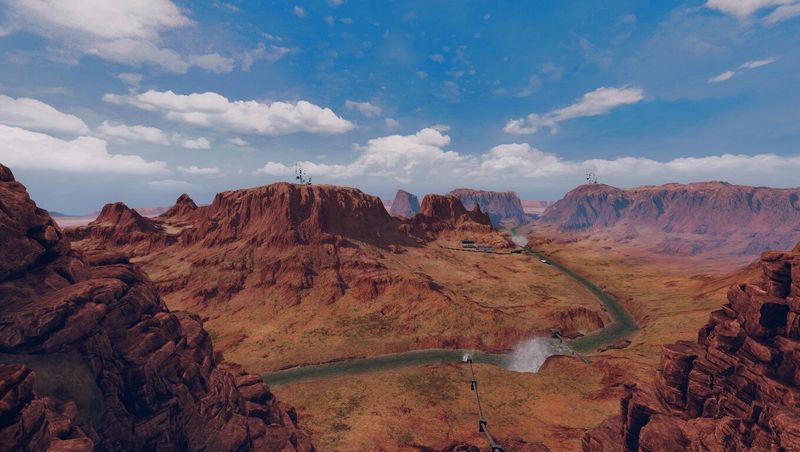
In the absolute northwestern tip of Oklahoma’s panhandle, Black Mesa rises to 4,973 feet, making it the highest point in the state. The landscape here looks nothing like the rest of Oklahoma, with high desert terrain, piñon pines, and views that stretch into Kansas, Colorado, and New Mexico.
The hike to the summit covers 8.5 miles round trip, following an old jeep trail across terrain that feels more like Arizona than the Midwest. Along the way, you’ll pass through different ecosystems, from grasslands to juniper forests to the volcanic rock that caps the mesa.
What makes this place truly special is how few Oklahomans have ever been here. The drive alone takes you through some of the most remote country in the state, where you might drive for 30 miles without seeing another car.
The night sky here rivals any place in America for stargazing. With no light pollution for miles in any direction, the Milky Way appears so bright it casts shadows.
Amateur astronomers make pilgrimages here with their telescopes, knowing they’ll see things impossible to spot from anywhere else in Oklahoma.
Dinosaur tracks can be found in the rock layers below the mesa, though you need to know where to look. The area was once a shallow sea, then a tropical forest, then a volcanic field, and each era left its mark in stone.
The nearby town of Kenton has a population that hovers around 20 people, making it one of the smallest incorporated towns in the state. The local general store serves as post office, restaurant, and community center all in one building.
Visit in spring or fall because summer temperatures can be brutal with no shade on the trail. Bring more water than seems reasonable because the dry air dehydrates you faster than you realize.
10. Natural Falls State Park, West Siloam Springs
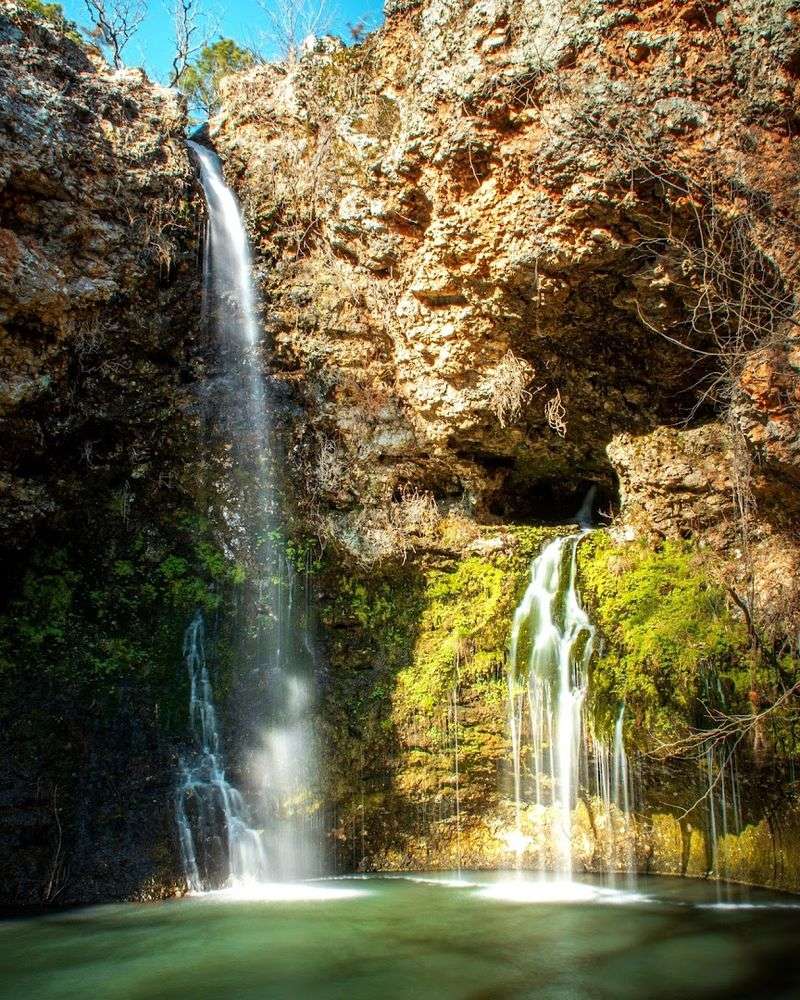
Hidden in the northeastern corner of Oklahoma near the Arkansas border, this 77-foot waterfall drops into a natural amphitheater that feels like a secret garden. The falls flow year-round, fed by springs that keep the water constant even during Oklahoma’s notorious droughts.
A wooden observation deck lets you stand right at the base of the falls, close enough that the mist soaks your clothes on humid days. The roar of water drowns out all other sounds, creating a moment of pure natural meditation that’s increasingly rare in our noisy world.
The park sits in a deep valley carved by millions of years of water erosion. Ancient hardwood trees tower overhead, creating a canopy so thick that the forest floor stays cool even in summer.
Ferns grow in the perpetual moisture near the falls, giving the whole area a prehistoric feeling.
Most people visit, see the falls, and leave within an hour. The real magic happens if you stay longer and explore the trails that wind through the surrounding forest.
These paths lead to smaller cascades, rock shelters used by Native Americans centuries ago, and viewpoints that show the falls from different angles.
The park was once privately owned and used as a backdrop for silent films in the early 1900s. You can still see the old stone stairs and pathways built for those film productions, now covered in moss and blending back into the landscape.
Spring brings the highest water flow, with the falls at their most powerful after winter rains. Fall colors the surrounding forest in brilliant reds and golds, creating a frame for the white water that photographers dream about.
The campground offers sites right on the creek above the falls, where you can hear the water even from your tent. Night sounds include owls, crickets, and the constant rush of falling water creating a natural symphony.
Dear Reader: This page may contain affiliate links which may earn a commission if you click through and make a purchase. Our independent journalism is not influenced by any advertiser or commercial initiative unless it is clearly marked as sponsored content. As travel products change, please be sure to reconfirm all details and stay up to date with current events to ensure a safe and successful trip.
