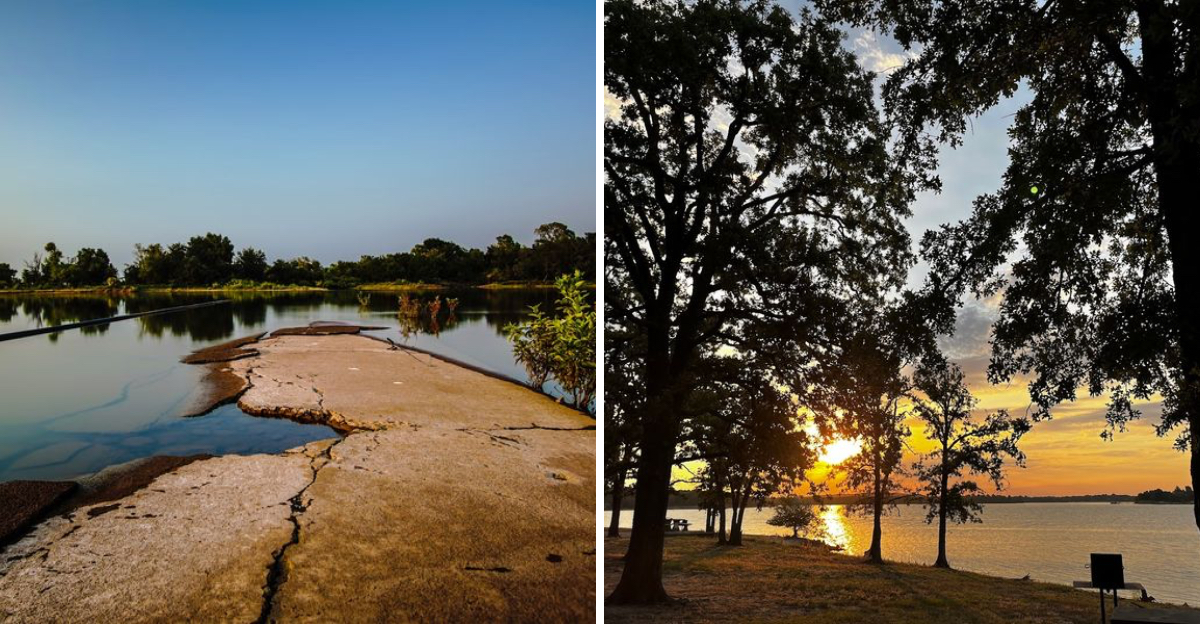
This Oklahoma lake was once a sprawling giant, covering roughly 100,000 acres at normal levels, and lately it’s been getting attention for a very different reason. As the water pulls back, stretches of shoreline that are usually hidden have started to appear.
In some areas, wide mud flats now sit where water once covered everything, giving the lake a completely different look. It’s a noticeable shift, but not an unusual one.
Changes like this are part of the lake’s natural cycle, shaped by rainfall, evaporation, and water management, not something permanent.
The Scale of Eufaula Lake Before the Water Dropped
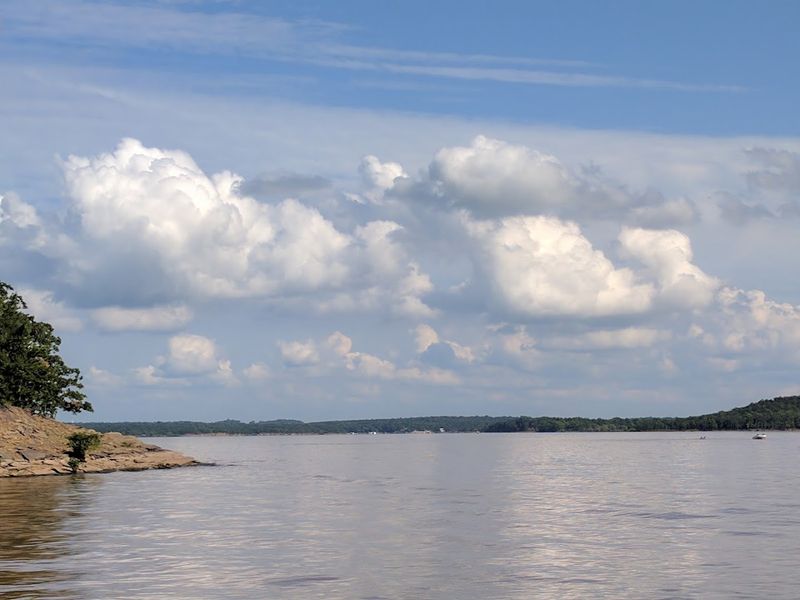
At its peak, Eufaula Lake was the largest lake in Oklahoma by surface area, covering around 102,500 acres of open water. That is not a small pond you could paddle across in an afternoon.
This reservoir sits in the eastern part of the state, formed by the damming of the Canadian River, and it once held enough water to keep boaters, anglers, and campers busy for an entire summer without running out of new spots to explore.
The sheer size of the lake made it a magnet for outdoor recreation across the region. Families drove hours to launch their boats, cast lines for bass and crappie, or simply sit on the shore and watch the sun go down over miles of glittering water.
Locals knew it as a place where you could find total solitude on a Tuesday morning or join a lively crowd of fellow anglers on a weekend. The water seemed endless, and the lake’s reputation for size was one of its most celebrated features.
Losing that visual scale, even partially, feels like a genuine shift in identity for a place so tied to the water.
What the Mud Flats Look Like Up Close
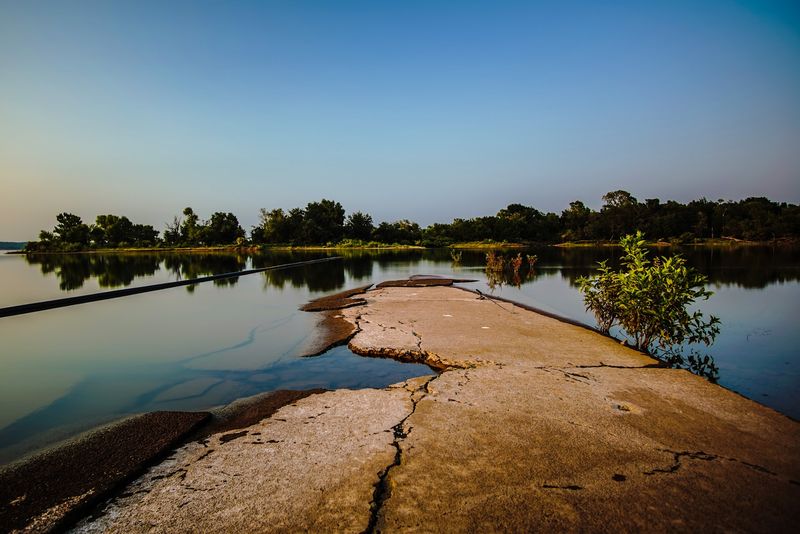
Standing at the edge of the exposed shoreline at Eufaula Lake, the mud flats stretch out in a way that feels almost surreal. The ground is a mix of pale brown clay and darker silt, cracked in places where the sun has baked it dry, and still soft and spongy in others where moisture lingers just below the surface.
Shallow pools collect in low spots, reflecting the sky in small mirrors that birds seem to appreciate far more than boaters do. Shorebirds pick their way across the exposed ground, probing for invertebrates that thrive in wet sediment.
It is oddly beautiful in a stripped-back, raw kind of way, even if it signals something concerning about water levels.
The texture of the flats changes depending on how long they have been exposed. Fresh mud near the waterline is slick and dark, while older sections farther from the current shore have dried into a crumbling crust.
Walking across them is not recommended, since boots sink in unpredictably. But viewing them from a boat or from higher ground gives you a clear picture of just how much the lake has receded in recent seasons.
The Canadian River Dam and How the Lake Was Born
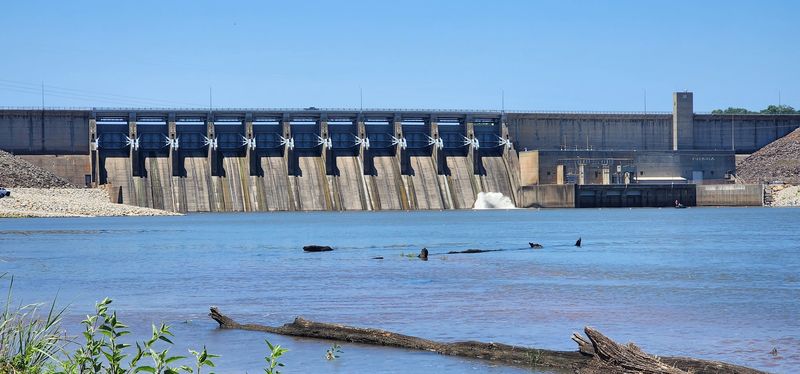
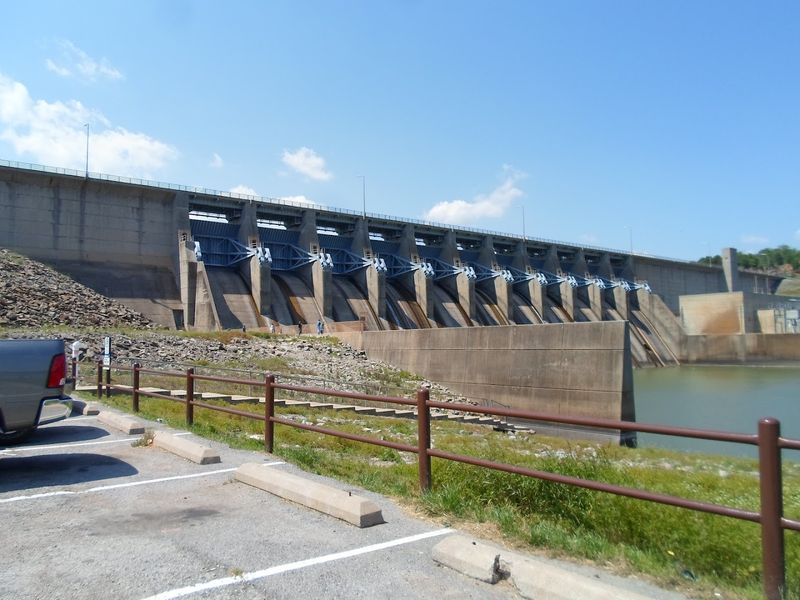
Eufaula Lake did not exist naturally. It came to life in 1964 when the U.S. Army Corps of Engineers completed Eufaula Dam on the Canadian River in eastern Oklahoma.
The project was designed to provide flood control, water supply, and hydroelectric power generation for the region, and it created what would become the largest reservoir in the state almost overnight in geological terms.
The Canadian River had been running through this landscape for thousands of years, carving its way through red clay and sandstone.
When the dam closed, the river backed up into the surrounding valleys and bottomlands, swallowing old pastures, timber stands, and low-lying terrain that had never seen standing water before.
That history matters when you stand at the lake today and see the mud flats, because what you are really seeing is the old river valley floor returning to the surface.
The sediment, the old channel contours, and even remnants of the pre-dam landscape are all down there, waiting just below whatever water level the lake holds on any given day.
It is a reminder that every reservoir has a story underneath it, one that does not disappear just because water covers it.
Why Water Levels Have Been Dropping
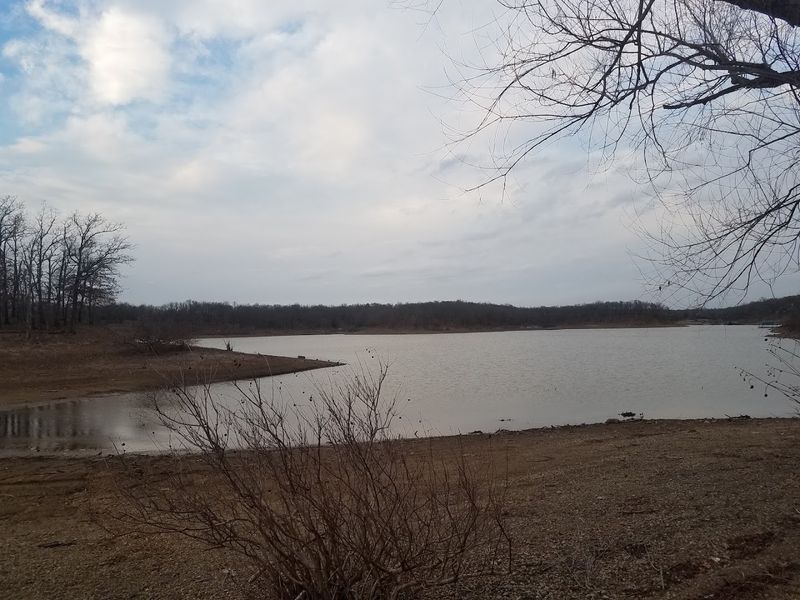
Water level fluctuations at Eufaula Lake are not a new phenomenon, but recent years have brought more dramatic swings that leave the mud flats exposed for longer stretches of time. The primary driver is reduced rainfall across eastern Oklahoma and the broader Canadian River watershed.
When the watershed does not receive enough precipitation to replenish inflows, the lake level drops steadily over weeks and months.
Drought cycles have become more intense and prolonged in Oklahoma over recent decades, and Eufaula Lake absorbs those changes directly. Evaporation also plays a significant role.
A lake this large loses an enormous volume of water to the atmosphere on hot, dry, windy days, and Oklahoma summers can deliver all three of those conditions simultaneously for weeks on end.
Upstream water use for agriculture and municipal supply further reduces the volume of water reaching the reservoir.
The U.S. Army Corps of Engineers monitors lake levels closely and manages releases through the dam to balance competing demands. Still, when the inputs fall short of the losses, the lake shrinks, and the mud flats grow wider.
Understanding these factors helps explain why what looks like a simple shoreline problem is actually a layered environmental and management challenge.
Fishing at Eufaula Lake When the Water Recedes
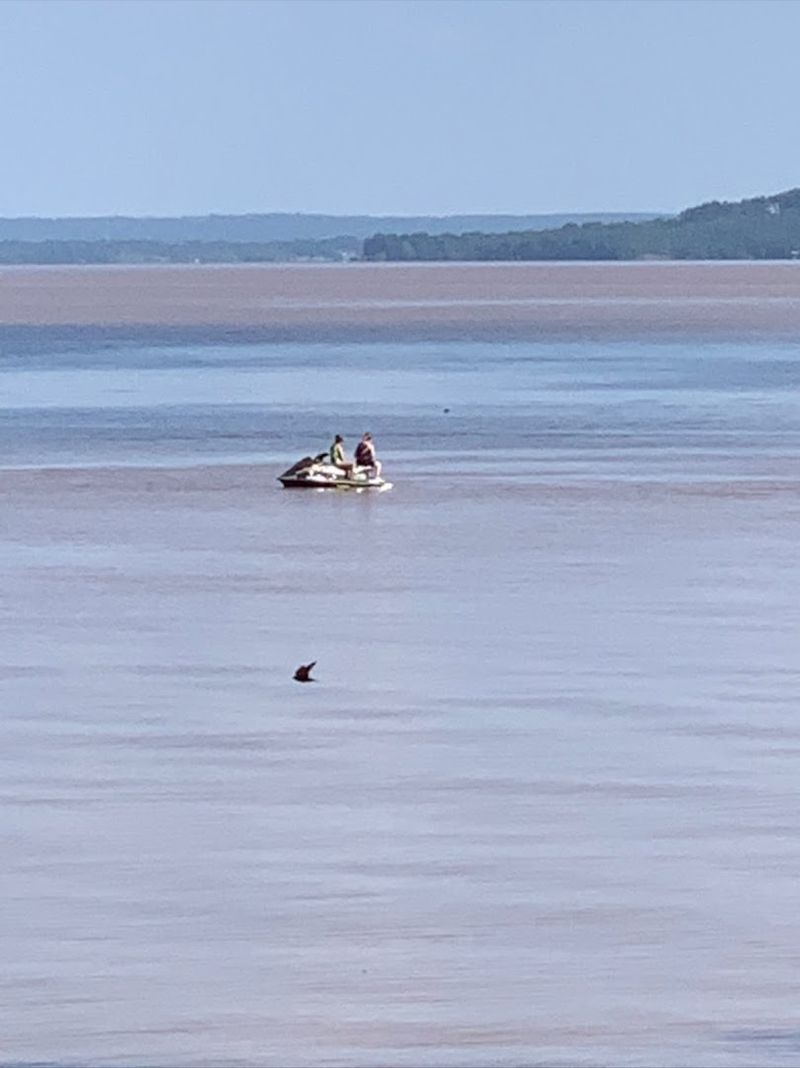
Here is something that surprises most people who have not spent much time on big reservoirs: low water can actually improve fishing in certain spots. When the lake level drops at Eufaula Lake, fish concentrate in deeper channels and remaining pools, making them easier to locate.
Bass, crappie, catfish, and flathead are all present in this lake, and experienced anglers know how to read the changed landscape to their advantage.
The exposed mud flats also reveal structure that was previously hidden. Old creek channels, submerged timber lines, and the contours of the original river bottom become visible, giving anglers a map of where fish are likely to hold once the water drops.
Crappie fishing near the dam has historically produced impressive catches, and the lake holds a reputation for largemouth bass that attracts serious tournament anglers from across the region.
Catfish enthusiasts also find Eufaula Lake rewarding, with flathead and blue catfish reaching impressive sizes in the deeper sections near the main channel. The key during low water periods is patience and flexibility, since the fish are still there.
You just need to follow them to wherever the good water has settled, and the rewards can be genuinely spectacular.
Camping Around the Lake During All Seasons
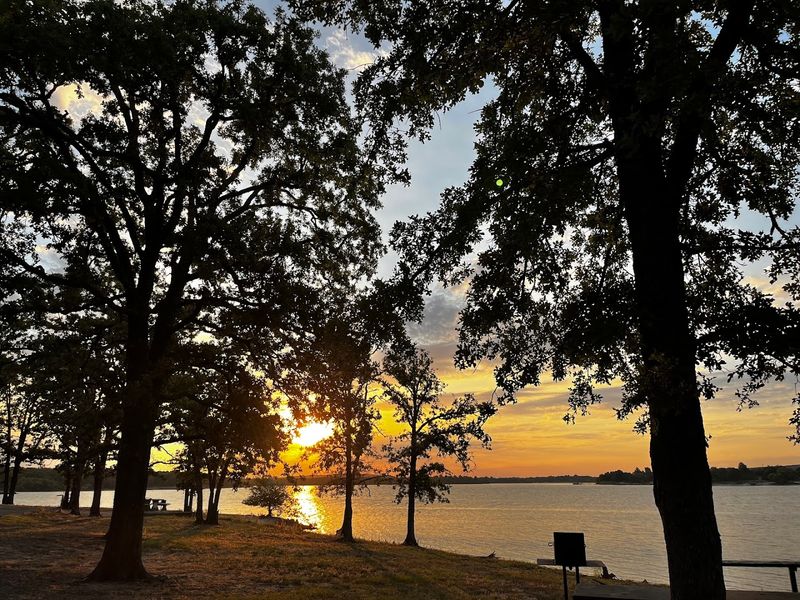
Camping at Eufaula Lake is one of those experiences that holds up regardless of what the water level is doing. The U.S. Army Corps of Engineers manages multiple campgrounds around the lake, offering everything from basic tent sites to pads with electrical hookups and water connections.
Sites are well-spaced, shaded by mature trees, and positioned close enough to the shoreline that you can hear the water from your sleeping bag.
Oklahoma State Park facilities at Eufaula add another layer of options, with yurt rentals available for those who want a roof over their heads without hauling a camper.
The Belle Star campground and the Lady Bird campground are both popular stops, each offering a slightly different feel in terms of terrain and proximity to the water.
Fall camping at Eufaula Lake is particularly rewarding. The summer crowds thin out, temperatures drop to comfortable levels, and the hardwood trees along the shoreline turn amber and gold in ways that make even a modest campsite feel like a landscape painting.
Spring brings its own appeal with wildflowers and migrating birds moving through the area. The lake in any season has a quality of stillness in the early morning that makes the drive worthwhile every single time.
Boating Across the Open Water
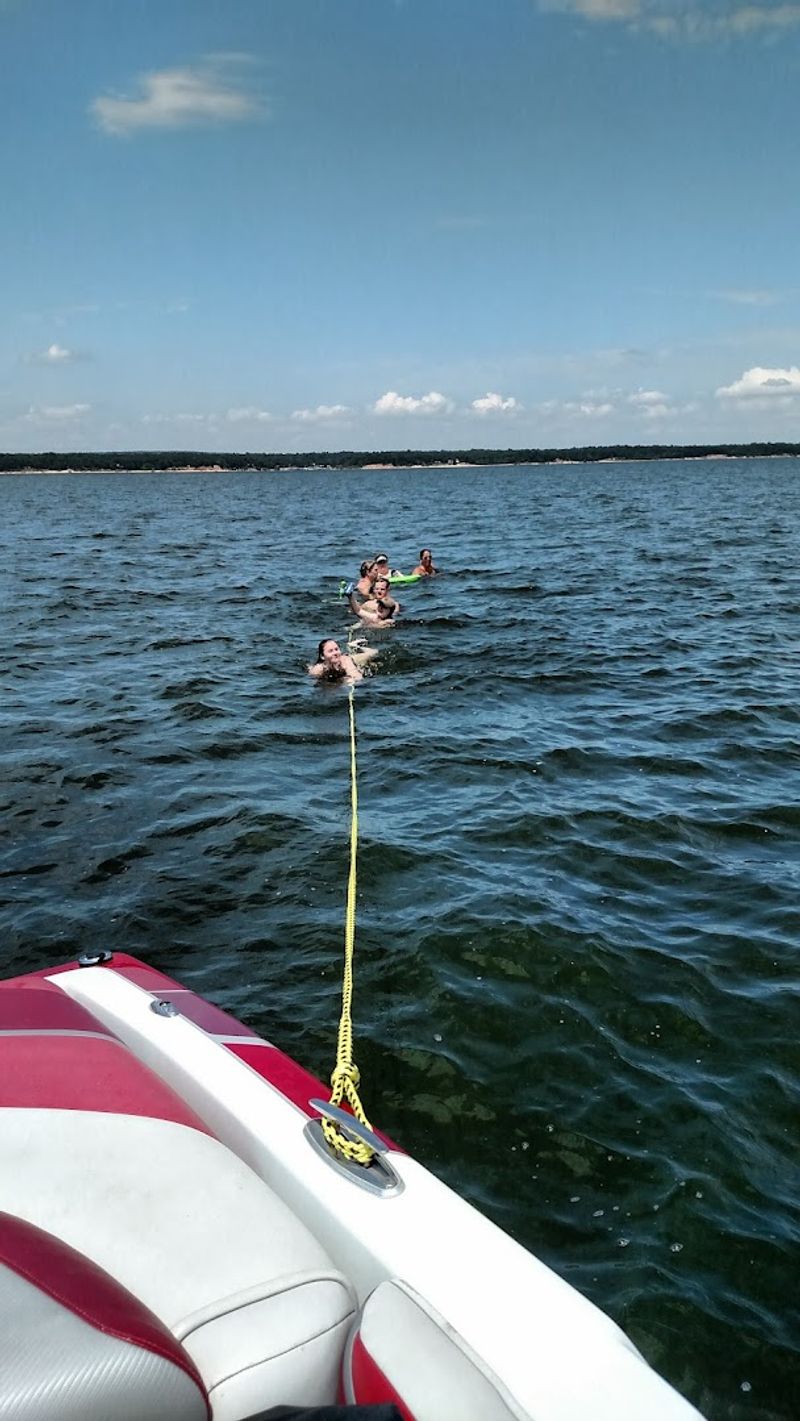
Even with reduced water levels, Eufaula Lake still offers an enormous amount of open water for boating. The main body of the lake and the deeper coves remain navigable for most recreational watercraft, and the marina at Eufaula Lake provides rentals for those who do not bring their own boat.
Jet skis, pontoons, and fishing boats all make regular appearances on the water throughout the warmer months.
One thing to keep in mind during low water periods is the location of submerged hazards that have moved closer to the surface. Stumps, old fence lines, and rocky points that were previously well below the waterline can become navigation concerns when the lake level drops significantly.
Going slowly in unfamiliar coves and watching your depth finder makes a real difference in keeping the trip enjoyable.
The size of the lake means that even on busy summer weekends, you can find quiet stretches of open water where it feels like you have the place entirely to yourself.
Heading toward the upper arms of the lake, where the old river channels wind through narrower terrain, gives a completely different feel than cruising the wide main basin.
Both are worth experiencing, and the lake is large enough that one visit rarely covers it all.
Wildlife That Thrives Around the Exposed Shoreline
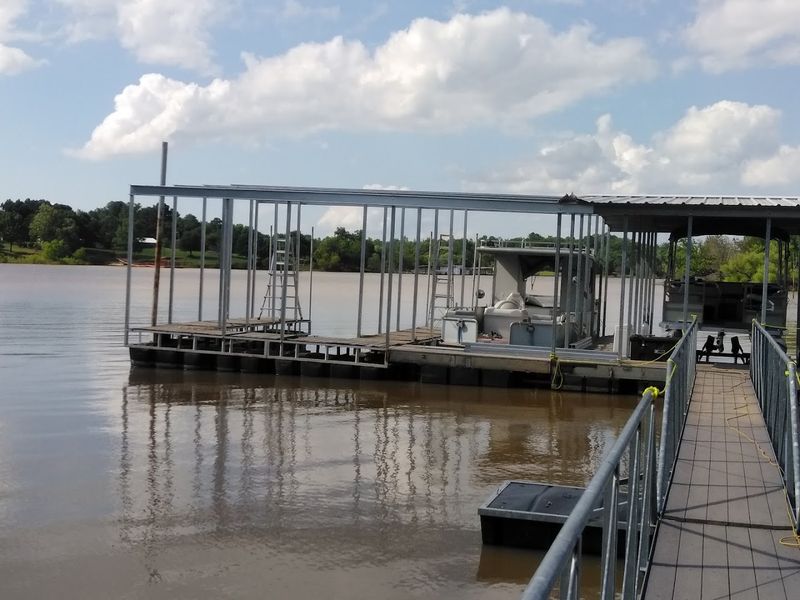
The mud flats that have appeared along Eufaula Lake’s receding shoreline are not just a visual curiosity. They have quietly become a feeding ground for a wide range of bird species that depend on exposed wet soil to find food.
Great blue herons, egrets, and various shorebirds move across the flats with a focused efficiency that is genuinely entertaining to watch from a respectful distance.
White-tailed deer are common around the lake’s wooded edges, particularly in the early morning and at dusk. Bald eagles have been documented in the area during winter months, drawn by the lake’s fish population and open water.
Wild turkey and various waterfowl species round out a wildlife lineup that makes the lake interesting even when you are not fishing or boating.
The nature center at Eufaula Lake State Park offers information on the local ecosystem, including what species are active in different seasons and where the best wildlife viewing spots are located.
Bringing binoculars is always a good idea at this lake, since the combination of open water, wooded shoreline, and now exposed mud flats creates a variety of habitats in close proximity.
Nature here does not wait for an invitation to show up.
The Sunsets That Make Every Evening Worth Staying For
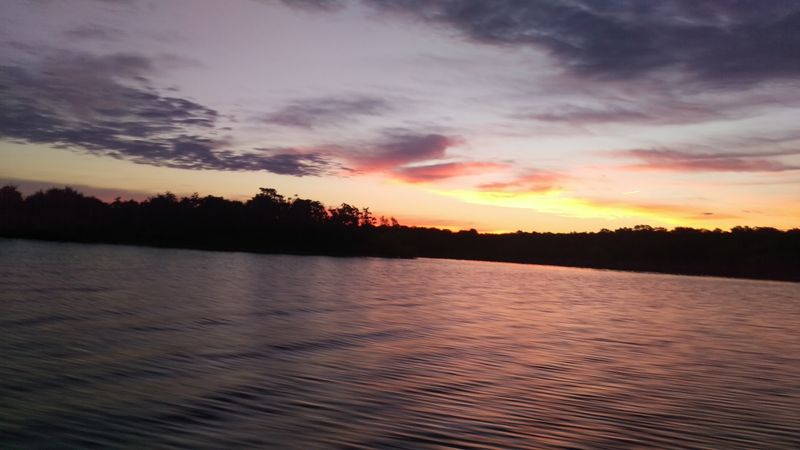
If there is one thing that Eufaula Lake does consistently and spectacularly, it is sunsets. The wide open water gives the sky room to perform, and on clear evenings the colors spread from horizon to horizon in layers of orange, pink, and deep red that reflect perfectly off the lake surface.
It is the kind of sky that makes you put your phone down and just look for a few minutes.
The best viewing spots tend to be along the western-facing shores and near the dam, where the water opens up and there are no obstructions blocking the full panorama. Camping sites positioned above the waterline offer elevated views that catch the light even longer as the sun drops below the tree line.
Low water levels have an unexpected silver lining here. The exposed mud flats, slick with moisture and reflecting the last light of the day, add a foreground element to the sunset view that would not exist at full pool.
The colors bounce off the wet ground in a way that feels almost otherworldly, turning what might look like a problem into something that a landscape photographer would actually seek out. Some evenings at this lake feel like they were designed specifically to remind you why being outside matters.
Hiking and Biking Trails Around the Lake
Getting out on the water is not the only way to experience Eufaula Lake. The state park and surrounding Corps of Engineers land include trail systems that wind through timber and along the shoreline, offering a ground-level perspective on the landscape that boating simply cannot provide.
The Deep Fork loop trail is one of the more scenic options, passing through varied terrain with views of the lake visible through the trees at several points.
Biking is also popular along the wider paths and park roads, particularly in the cooler months when the canopy is open and the light filters through bare branches in interesting ways.
The terrain is generally manageable for casual riders, with enough rolling elevation to keep things interesting without requiring serious technical skill.
Hiking during low water periods reveals stretches of exposed lakebed that you can walk along carefully, giving a completely different view of the lake’s geography than you get from a boat.
The old creek channels and river contours become visible underfoot, and the silence away from the campground areas is genuinely restorative.
Sturdy footwear is essential since the ground transitions unpredictably between firm clay, loose gravel, and soft mud depending on how recently that section was submerged.
The History of the Town of Eufaula and the Lake’s Name
The lake takes its name from the nearby town of Eufaula, Oklahoma, which itself carries a name with deep roots in the history of the Muscogee Nation.
The town was established in the 19th century as part of Indian Territory, and it holds a significant place in the story of the Five Civilized Tribes who were relocated to what is now eastern Oklahoma.
That history gives the entire region a cultural depth that goes well beyond a simple reservoir story.
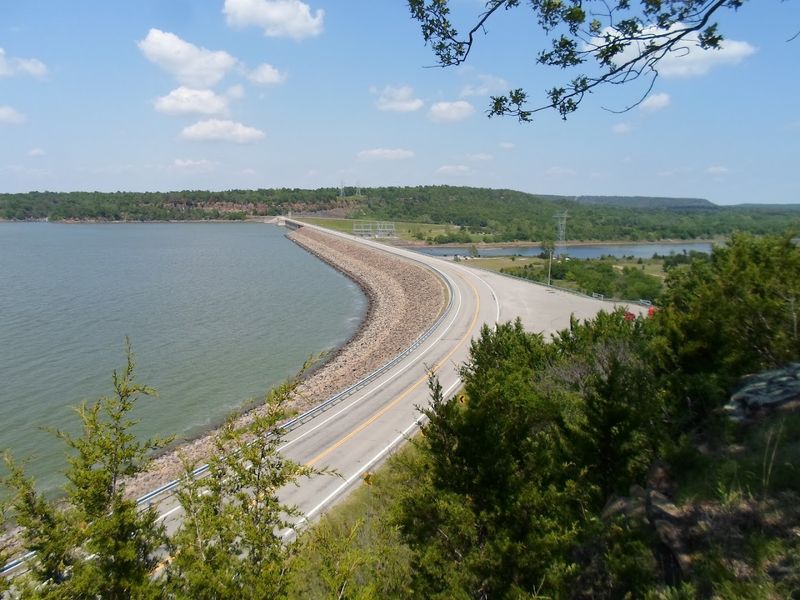
Eufaula, Oklahoma sits roughly 5 miles from the dam, and the town has long been connected to the lake’s identity and economy.
The lake brought tourism, recreation, and infrastructure development to the area after it was completed in the 1960s, transforming the regional economy in ways that are still visible today.
Understanding this background makes a visit to the lake feel more grounded. You are not just looking at a man-made reservoir.
You are standing in a landscape shaped by Indigenous history, federal engineering projects, and decades of recreational use that have all left marks on the land and the community. The mud flats revealing themselves today are just the latest chapter in a story that has been unfolding here for a very long time.
Dear Reader: This page may contain affiliate links which may earn a commission if you click through and make a purchase. Our independent journalism is not influenced by any advertiser or commercial initiative unless it is clearly marked as sponsored content. As travel products change, please be sure to reconfirm all details and stay up to date with current events to ensure a safe and successful trip.
