
Locals in Oklahoma know the drill when a funeral procession passes, but ask someone fresh from another state and they’ll look at you like you’ve lost your mind.
Plenty of laws here make perfect sense to folks who grew up around cattle crossings and horse-drawn buggies, yet they leave newcomers scratching their heads or frantically Googling state statutes.
From what you can say out loud to where you hang your laundry, Oklahoma’s legal quirks reflect its deep rural roots and old-school values that never quite faded away.
1. You Can Be Required to Yield to a Funeral Procession
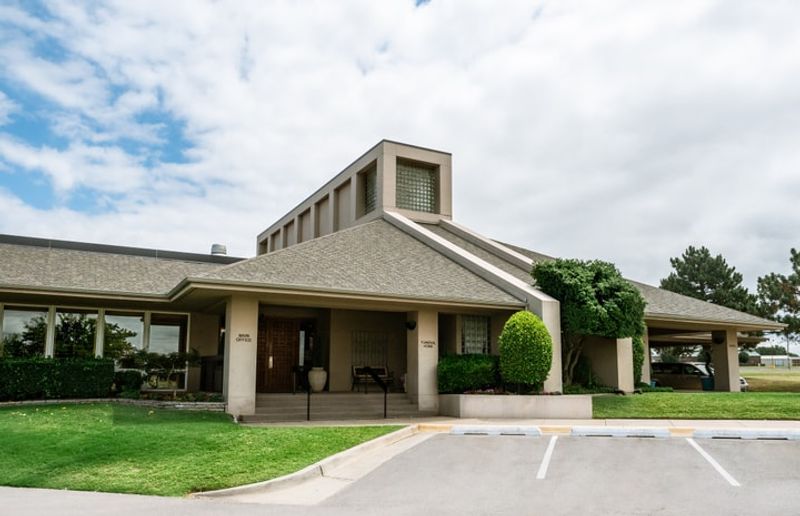
Funeral processions command a special kind of respect across Oklahoma, and the law backs it up with real teeth. Drivers approaching an intersection must yield to any funeral convoy, and cutting through one isn’t just rude, it’s illegal and can land you a citation faster than you can honk your horn.
Most born-and-raised Oklahomans don’t just yield; they pull completely off the road, turn on hazard lights, and wait until every single vehicle passes. Out-of-state drivers often mistake this for an unspoken courtesy, something kind neighbors do without obligation.
They’re shocked to discover there’s actual legal weight behind it, not just small-town tradition.
Law enforcement takes violations seriously, especially in rural counties where everyone knows everyone and funerals feel deeply personal. Officers have been known to issue tickets on the spot when someone barrels through a procession or honks impatiently at mourners.
The fines aren’t trivial either, and repeat offenders can face escalating penalties.
Culturally, funerals in Oklahoma carry a gravity that outsiders sometimes underestimate. Communities rally around grieving families, and disrupting that final journey feels like a personal affront.
Even in larger cities like Tulsa or Oklahoma City, the practice remains strong, blending legal mandate with heartfelt respect.
For newcomers, it’s a quick lesson in how Oklahoma balances modern life with deep-rooted values. What might seem like an outdated formality elsewhere is woven tightly into the social fabric here.
Miss the memo, and you’ll learn the hard way that some traditions come with consequences beyond dirty looks.
2. Vehicles Must Stop for Horse-Drawn Buggies
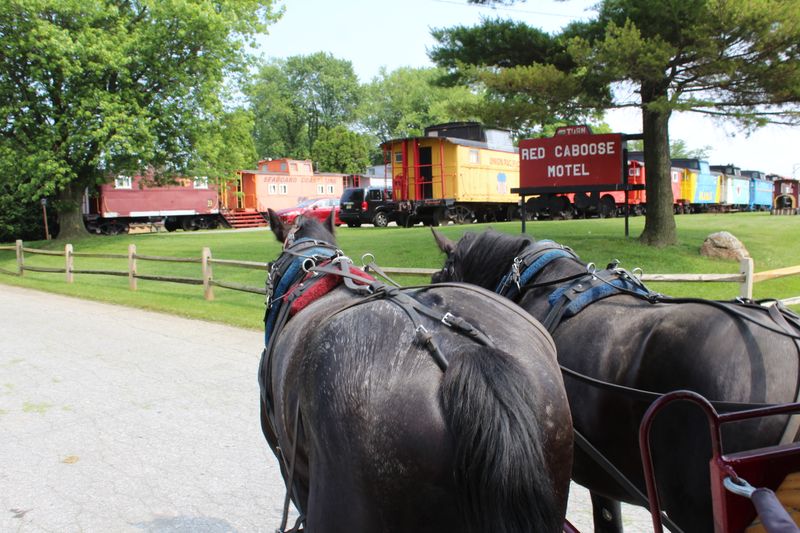
Cruising down a western Oklahoma highway, you might suddenly spot a horse-drawn buggy clip-clopping along the shoulder, orange triangle gleaming in the sun.
State law requires drivers to slow down, yield space, and pass with extreme caution around these vehicles, especially near Amish and Mennonite settlements around Hydro and Corn.
Reckless passing or aggressive driving near buggies can result in hefty fines, and accidents involving these slower vehicles receive heightened scrutiny from law enforcement. Officers don’t take kindly to impatient drivers who endanger families traveling at a literal horse’s pace.
The law recognizes that buggies have every right to share public roads, and modern vehicles must accommodate them, not the other way around.
For folks moving in from states without Plain communities, the sight alone feels like stepping into a time warp. The idea that a buggy has legal standing equal to a pickup truck surprises many, and some newcomers grumble about the inconvenience.
Yet these communities have been part of Oklahoma’s landscape for generations, and the law reflects their ongoing presence and protection.
Accidents, when they happen, are treated seriously. Investigators examine whether the motorist gave adequate space, reduced speed appropriately, and exercised patience.
Insurance claims can get complicated, and liability often falls hard on the driver who failed to respect the buggy’s right of way.
The rule serves as a daily reminder that Oklahoma’s roads aren’t just for the fast and the furious. Patience, awareness, and respect for different ways of life remain non-negotiable, whether you’re behind the wheel of a sedan or holding the reins of a horse.
3. It Is Illegal to Hang Laundry Where It’s Visible in Some Towns
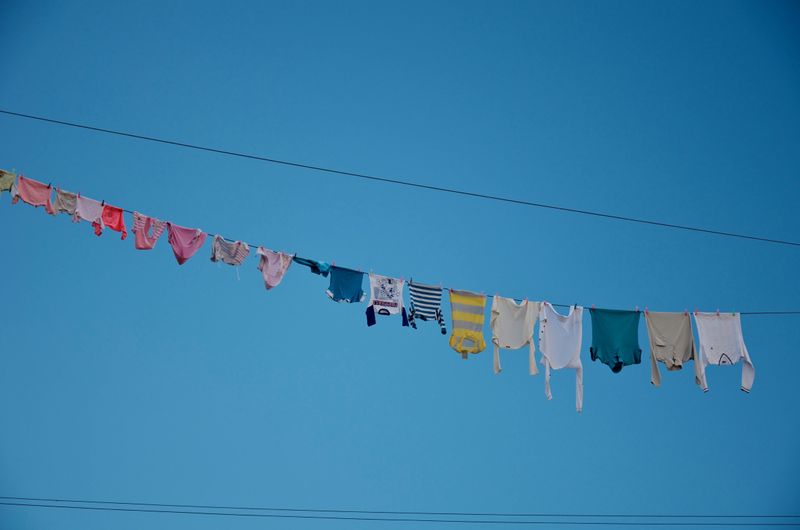
Hanging your laundry out to dry sounds like the most innocent, eco-friendly chore imaginable, but several Oklahoma municipalities beg to differ.
Local ordinances in certain towns still restrict visible clotheslines, treating them as eyesores that violate aesthetic standards and zoning codes left over from decades past.
New residents who string up a line in their backyard are often blindsided by warning letters or visits from code enforcement officers. What feels like a harmless way to save on electricity and enjoy fresh-smelling sheets becomes a bureaucratic headache.
The fines aren’t always steep, but the principle baffles people who grew up in places where clotheslines are everywhere.
These rules trace back to mid-century suburban ideals, when planned neighborhoods pushed for uniform, manicured appearances. Clotheslines were deemed unsightly, something that dragged down property values or clashed with homeowner association visions.
While many places have relaxed or repealed these laws, pockets of Oklahoma still cling to them.
Enforcement varies wildly. Some towns issue warnings and ask residents to move lines out of sight, while others levy fines after repeat violations.
Homeowners’ associations can be even stricter, wielding their own sets of rules that go beyond municipal codes.
The controversy flares up periodically, especially as more people embrace sustainable living and question why drying clothes naturally should be illegal. Advocates argue that clothesline bans are outdated and wasteful, while defenders claim they preserve neighborhood character.
Either way, newcomers learn quickly that not every small act of domesticity flies under the radar here. Check your local codes before you clip that first towel to the line.
4. You Can Be Fined for Cursing in Public
Drop an F-bomb in the wrong place at the wrong time, and you might find yourself facing more than just disapproving stares. Oklahoma retains public profanity statutes tucked under disorderly conduct laws, meaning colorful language can technically land you a citation if it’s deemed disruptive or aggressive.
Enforcement is rare and selective. Police won’t ticket you for muttering under your breath when you stub your toe, but shouting obscenities in a crowded park or hurling profane insults during a heated argument can trigger intervention.
Officers have discretion, and they tend to use these laws when language escalates a situation or disturbs the peace in a tangible way.
Outsiders often assume such laws vanished with rotary phones and cassette tapes, relics of a more puritanical era that nobody bothers enforcing. Oklahoma proves otherwise, especially in smaller towns where community standards lean conservative and public decorum still matters.
A loud, profanity-laced tirade at a Little League game or grocery store can result in a visit from local law enforcement.
The fines themselves aren’t bank-breaking, but the embarrassment and hassle of dealing with a citation for swearing feels absurd to many newcomers. Some challenge the constitutionality of these laws, arguing they infringe on free speech.
Courts have generally upheld them when profanity crosses into fighting words or incitement, leaving a gray area that officers navigate case by case.
Culturally, the law reflects Oklahoma’s blend of old-fashioned manners and no-nonsense attitudes. Respect for public spaces and consideration for families and kids remain deeply ingrained values.
Whether you agree with the law or not, it’s wise to keep your vocabulary in check when emotions run high in public.
5. You Must Stop for Livestock on the Road
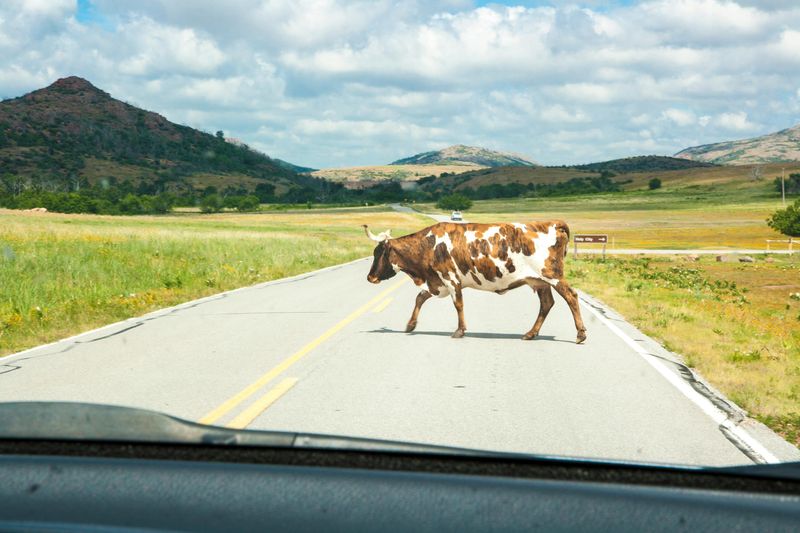
Picture this: you’re cruising down a rural Oklahoma highway, windows down, radio up, when suddenly a herd of cattle materializes in the middle of the road. Slamming on the brakes is your only option, and legally speaking, you better do it with patience and care.
Livestock has right of way on many rural roads, and drivers are expected to stop, wait, and proceed cautiously until animals clear out.
Hitting a cow, horse, or steer can result in serious liability issues, depending on the circumstances. While ranchers are generally responsible for keeping fences secure, the reality of open-range traditions and occasional fence failures means animals wander.
If you plow into livestock because you were speeding or distracted, you could face financial consequences beyond vehicle damage.
This rule shocks drivers from urban areas or states with strict fencing laws that place full responsibility on property owners. In Oklahoma, the relationship between drivers and livestock is more nuanced, reflecting the state’s agricultural backbone.
Ranchers and farmers have operated here for generations, and the legal framework accommodates their way of life.
Insurance claims involving livestock accidents can get messy. Adjusters investigate whether the driver exercised reasonable caution, whether the animal owner maintained proper fencing, and whether road conditions played a role.
It’s not always clear-cut, and disputes can drag on.
For newcomers, the first encounter with a cow blocking the road feels surreal, like something out of a Western movie. Locals barely blink, accustomed to sharing asphalt with animals that don’t care about traffic laws.
Patience is key, and honking won’t make a stubborn steer move any faster. Welcome to rural Oklahoma, where the roadways belong to everyone, hooves included.
6. Open Container Laws Apply Even to Passengers
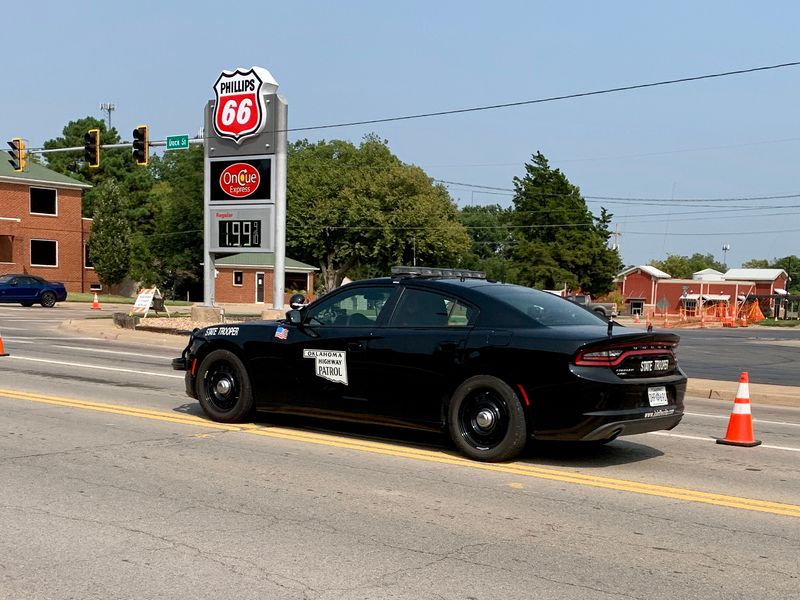
Cracking open a cold one while riding shotgun might be legal in some states, but Oklahoma isn’t one of them. Open container laws here prohibit any unsealed bottles, cans, or flasks of booze in the passenger area, whether you’re driving or just along for the ride.
Both driver and passengers face potential penalties if law enforcement spots an open container during a traffic stop.
Visitors accustomed to more relaxed passenger rules are often caught off guard when they realize they can’t legally sip a drink in the car, even if the driver is stone-cold sober. The law applies to all public roads, and exceptions are narrow.
Sealed containers stored in the trunk are fine, but anything within arm’s reach of the driver or passengers is off-limits.
Enforcement is straightforward. Officers conducting routine stops or DUI checkpoints will look for open containers, and finding one can lead to fines for everyone involved.
The penalties aren’t as severe as a DUI, but they’re annoying enough to ruin a road trip and rack up unexpected costs.
The rationale behind the law centers on reducing impaired driving and limiting temptation. Lawmakers reasoned that allowing passengers to drink increases the likelihood that drivers will partake, even if they claim otherwise.
Whether you agree with the logic or not, the rule is firmly in place.
Road-trippers and tailgaters learn quickly to plan ahead. Finish your drinks before getting in the car, or pack everything securely in the trunk.
Designated drivers and sober passengers alike must follow the same rules, making Oklahoma’s stance one of the stricter in the region. It’s a sobering reminder that not all states handle booze in vehicles the same way, and ignorance won’t save you from a ticket.
7. You Cannot Bet on High School Sports

Sports betting has exploded across Oklahoma since legalization, with casinos and online platforms offering lines on everything from NFL games to international soccer matches. But one category remains strictly off-limits: high school athletics.
Wagering on Friday night football, basketball tournaments, or any other prep-level competition is explicitly prohibited, and violators face serious consequences.
The rule reflects Oklahoma’s fierce commitment to protecting youth athletes and preserving the integrity of school-based sports. Lawmakers worried that allowing bets on teenagers would invite corruption, pressure, and exploitation.
High school sports are deeply woven into community identity here, and keeping them clean from gambling influences is a priority.
Enforcement extends to both legal sportsbooks and underground operations. Licensed operators are barred from offering high school lines, and regulators monitor compliance closely.
Informal betting pools, even among friends or coworkers, can technically run afoul of the law if they involve high school games, though prosecution is rare for casual small-stakes pools.
The ban surprises people from states with looser restrictions, especially those used to betting on college and pro sports without a second thought. It seems arbitrary to some, but the rationale centers on age and vulnerability.
High school athletes are minors, often still developing physically and emotionally, and the state draws a hard line at involving them in gambling markets.
Community reactions are mixed. Some applaud the law as a safeguard against scandals and undue pressure on young players.
Others argue it’s paternalistic and ineffective, pointing out that illegal betting happens regardless. Either way, the law stands firm, and sportsbooks operating in Oklahoma strictly adhere to it.
If you’re placing bets on game day, make sure the players are at least college-aged, or you might find yourself in hot water.
8. Carrying Firearms Is Legal in Many Places Others Ban
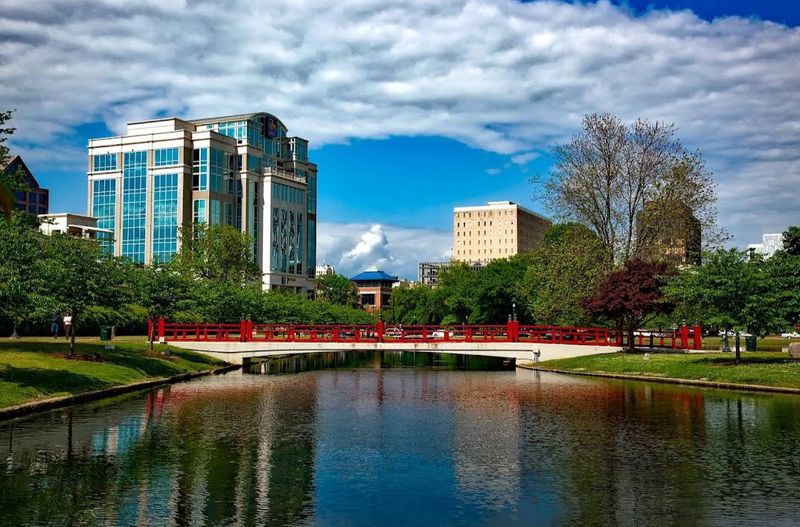
Walking into a grocery store, coffee shop, or park in Oklahoma and spotting someone openly carrying a firearm can jolt newcomers from more restrictive states. Oklahoma allows permitless carry for eligible adults, meaning you don’t need a license to carry a concealed or open firearm if you meet age and legal requirements.
The normalization of firearms in everyday settings is one of the biggest culture shocks for transplants.
The law took effect in recent years, expanding gun rights significantly and aligning Oklahoma with other permitless carry states. Supporters celebrate it as a victory for Second Amendment freedoms, while critics worry about safety implications and the potential for increased gun violence.
Either way, the legal landscape has shifted dramatically.
Private businesses retain the right to prohibit firearms on their property, and many post signs indicating their stance. Schools, government buildings, and certain other locations remain off-limits under state and federal law.
But in many public spaces, seeing a holstered pistol is just part of the scenery.
For people moving from states with strict permitting processes, waiting periods, and limited carry rights, Oklahoma feels like a different country. The ease of access and visibility of firearms can be unsettling at first, though locals insist the vast majority of carriers are responsible and law-abiding.
Law enforcement adapts to the new normal, balancing respect for legal carry with vigilance for illegal activity. Officers are trained to distinguish between lawful carriers and potential threats, though the presence of more guns in public complicates their job.
Newcomers quickly learn that firearms are a fact of life here, embedded in the culture and protected by law. Whether you embrace it or remain wary, understanding Oklahoma’s gun laws is essential for anyone planning to call this state home.
Dear Reader: This page may contain affiliate links which may earn a commission if you click through and make a purchase. Our independent journalism is not influenced by any advertiser or commercial initiative unless it is clearly marked as sponsored content. As travel products change, please be sure to reconfirm all details and stay up to date with current events to ensure a safe and successful trip.
