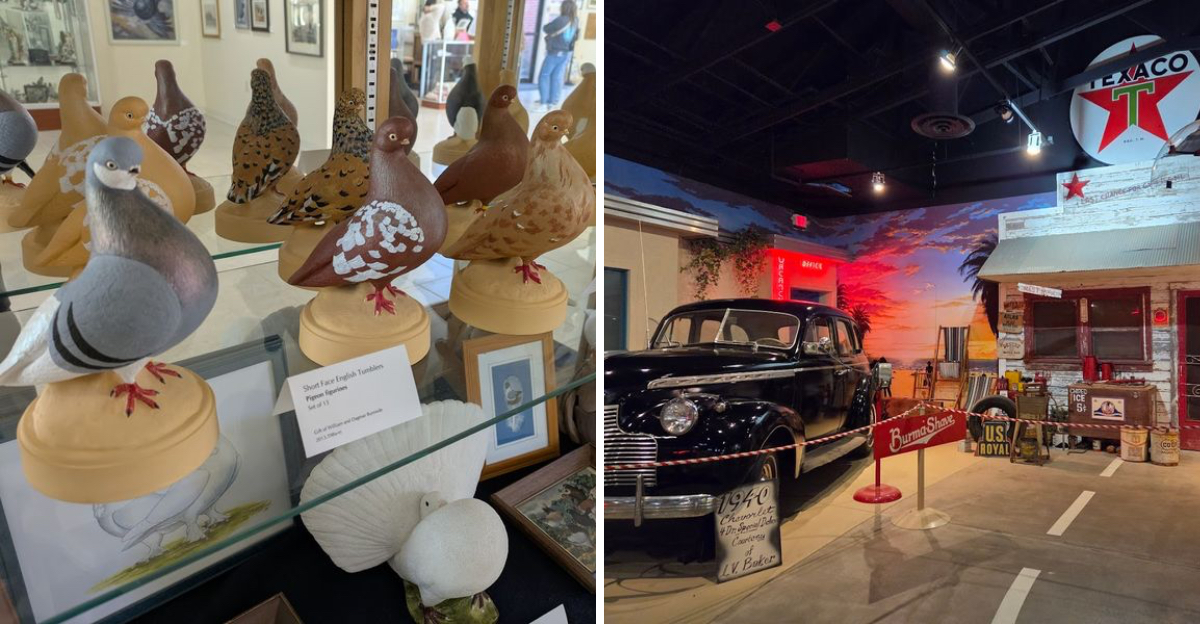
Museums have a reputation problem. Quiet hallways, white walls, the creeping fear that a guard might scold you for standing too close to a painting.
But Oklahoma decided that reputation needed a serious shakeup. Eleven museums across the state are so surprising, so wonderfully unexpected, that they will completely change what you think a museum can be.
One spot celebrates a famous dog with apparent psychic abilities. Another displays intricate wreaths and jewelry made entirely from human hair.
A collection of giant roadside attractions tells the story of American kitsch with genuine affection. These places do not care about being serious or scholarly or respected by art critics.
They care about being interesting, about sparking curiosity, about making visitors smile, gasp, or scratch their heads in delighted confusion.
The best part is how passionate the curators are. These are not people going through the motions.
They are true believers, collectors, storytellers who have spent years assembling something unique. Oklahoma’s surprising museums reward visitors willing to take a chance on something weird.
1. The Toy and Action Figure Museum, Pauls Valley, Oklahoma
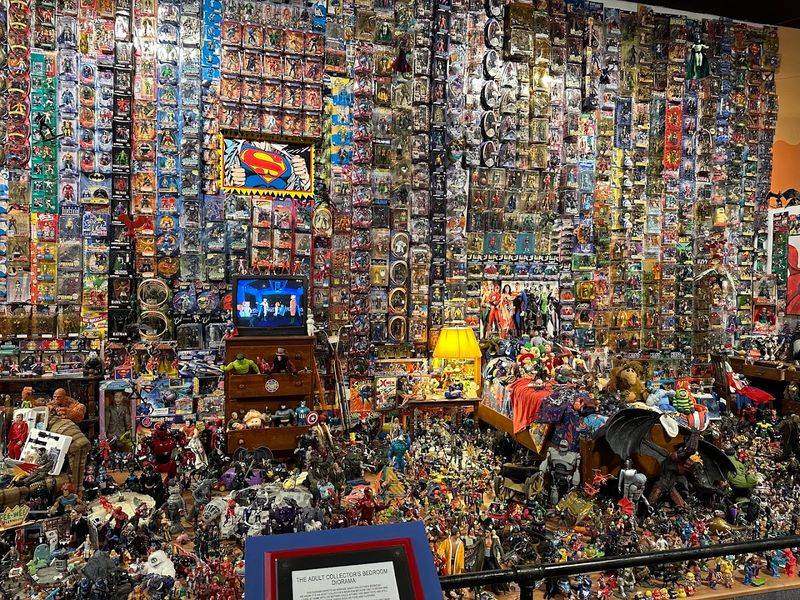
Walking into this place in Pauls Valley, Oklahoma, feels like someone pressed pause on every toy store from the last six decades. Over 13,000 action figures are arranged on shelves that seem to stretch forever, and the sheer volume of color and plastic is genuinely breathtaking.
Superheroes, sci-fi icons, and cartoon legends share wall space in a way that feels both organized and wonderfully chaotic. The Batcave room is its own universe entirely, packed floor to ceiling with Batman figures, vehicles, and collectibles spanning every era of the Dark Knight’s long history.
What I did not expect was the Oklahoma Cartoonists Collection tucked inside. It turns out that artists from this very state helped shape Superman, Batman, and Dick Tracy.
That discovery alone reframes the whole visit and gives it a surprising layer of local pride.
The museum also runs scavenger hunts where you search the building for hidden kryptonite rocks. It sounds simple, but it pulls you into corners you would have otherwise missed, revealing even more figures you had not noticed.
Pauls Valley is a small town, and this museum punches far above its weight. The attention to detail in every display shows real care and passion from the people behind it.
Hours change by season, so checking before you go is a smart move. Plan for at least two hours, because this is not a quick walk-through.
Every shelf has something worth stopping for, and the nostalgia hits harder than you would ever predict.
Address: 111 S Chickasaw St, Pauls Valley, OK 73075
2. Simpson’s Old Time Museum, Enid, Oklahoma
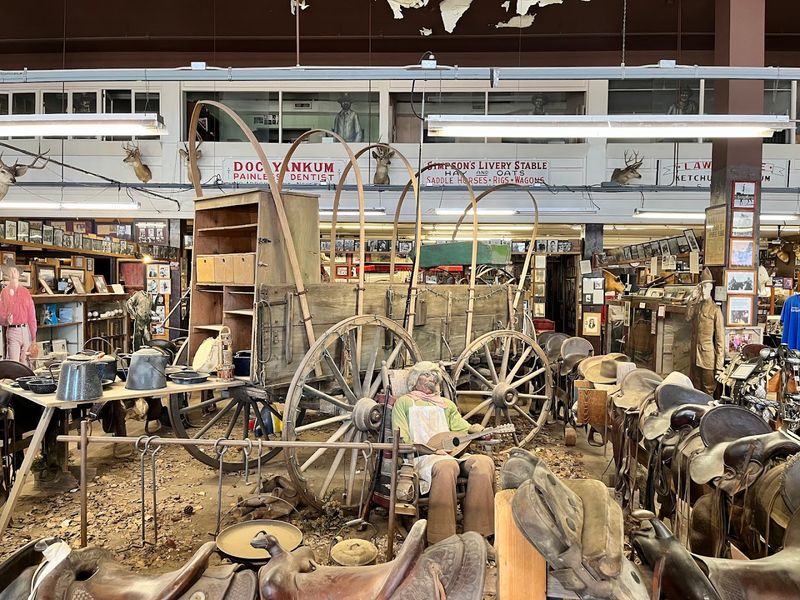
Most people drive right past the building on Randolph Avenue in Enid, Oklahoma, without a second glance. That is genuinely their loss, because what is inside rewards curiosity in a way that very few small museums manage to pull off.
Simpson’s Old Time Museum doubles as a working film production space for Skeleton Creek Productions, the family-run film company operating on-site.
Visitors can walk through actual movie sets, including a fully staged saloon interior with period-accurate props, rather than just peering at them from behind a rope.
The collection itself defies any single category. Antique wagons and saddles share floor space with vintage dolls, old firearms, horse-drawn carriages, and presidential peace medals connected to Native American history.
It is the kind of place where every corner holds something that makes you stop and ask questions.
There is no ticket booth here. The museum runs entirely on donations, which makes the generosity of access feel even more meaningful.
The person who greets you likely knows the backstory of nearly every object in the building, and those stories are what transform a casual browse into something that sticks with you.
Hours are limited, Tuesday through Saturday from 8 AM to 11 AM only, so planning ahead is essential. The tight schedule actually adds to the charm, making the visit feel like something you have to earn a little.
Enid is worth an overnight stay if you pair this with the Midgley Museum just across town. Together, the two create a genuinely satisfying museum day.
Address: 228 E Randolph Ave, Enid, OK 73701
3. Midgley Museum (The Rock House), Enid, Oklahoma
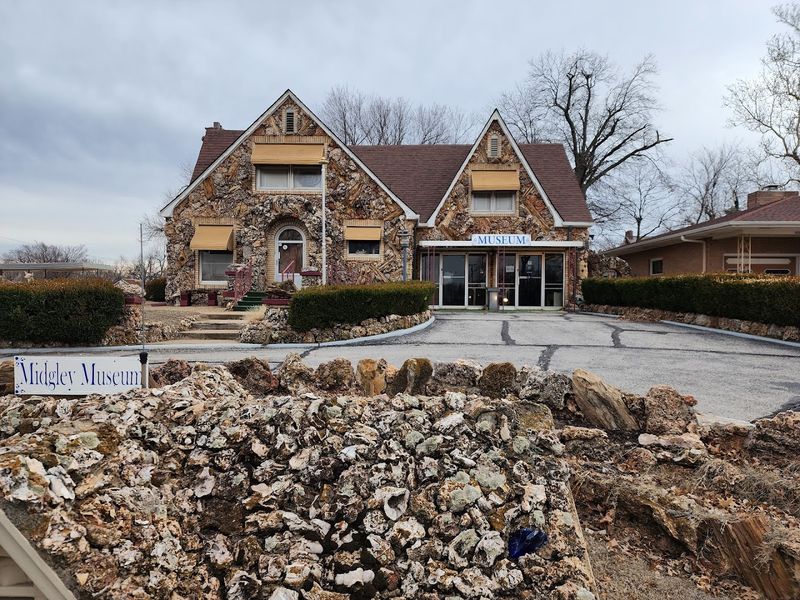
The building itself tells you something unusual is happening before you even step inside. The Midgley Museum in Enid, Oklahoma, was constructed in 1947 from petrified wood and native rock, and it looks like it grew out of the earth rather than being built on top of it.
Dan and Libbie Midgley spent decades traveling across the American Southwest, and every room inside holds the results of those journeys.
Over 30 varieties of fossils, gems, minerals, agates, and crystals fill the displays, including a 7,000-pound petrified tree stump from the Woodward area and what is reportedly the largest gypsum selenite crystal from Oklahoma’s Great Salt Plains.
The Black Light Room is a genuine crowd-pleaser for all ages. Fluorescent rocks and minerals glow under ultraviolet light in colors that look almost digital, and the effect is quietly spectacular.
It is one of those moments that makes you feel like a kid again, no matter how old you are.
There is also a Trophy Room filled with stuffed hunting specimens from global expeditions, including a one-ton buffalo, a royal Canadian elk, reindeer, moose, and javelinas from Central and South America. The mix is eccentric in the best possible way.
Admission is free, though the museum operates primarily on Saturdays from 10:30 AM to 4:00 PM and closes during winter months. Their daughter Eva arranged the family collection for public display, and the museum opened in 1991.
It is one of the most personal and quietly moving museums I have come across in the entire state.
Address: 1001 Sequoyah Dr, Enid, OK 73703
4. Cherokee Strip Museum, Perry, Oklahoma
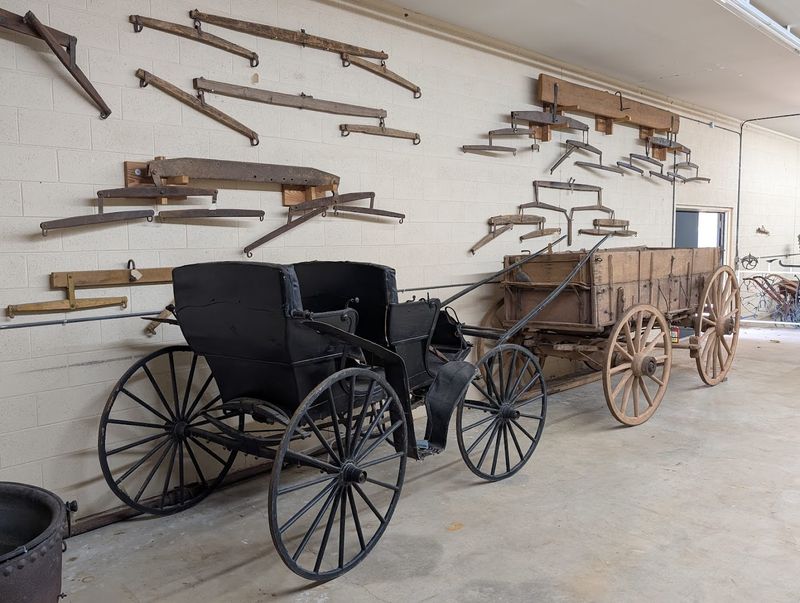
Perry, Oklahoma, sits right in the heart of land that changed hands in one of the most chaotic single days in American history. The Cherokee Strip Museum tells that story with a focus and honesty that makes it feel urgent rather than dusty.
The 1893 Cherokee Strip Land Run brought more than 100,000 people to the starting line, all waiting for a single gunshot to signal their chance at claiming land. A short film inside the museum brings the scale of that moment to life, and the effect on visitors is often visibly powerful.
People walk out looking genuinely stunned.
One of the outdoor structures on the property has developed a quiet reputation among those who pay attention. Floorboards creak in specific patterns, light shifts in ways that feel slightly off, and more than a few visitors have come back outside with a feeling they could not quite name.
Nobody on staff makes official claims, but nobody dismisses the question either.
The Rose Hill Schoolhouse functions as a living history site where a costumed teacher leads groups through a mock school day from the late 1800s. It is interactive in the best way, and kids especially connect with it in a way that no standard exhibit can replicate.
There is also a surprisingly engaging exhibit tracing the origins of Sonic Drive-In directly back to Oklahoma, which adds a layer of pop culture fun to an otherwise history-focused visit. Perry is easy to overlook on a map, but this museum gives you every reason to stop.
Plan for at least ninety minutes here.
Address: 2617 Fir St, Perry, OK 73077
5. National Cowboy and Western Heritage Museum, Oklahoma City, Oklahoma
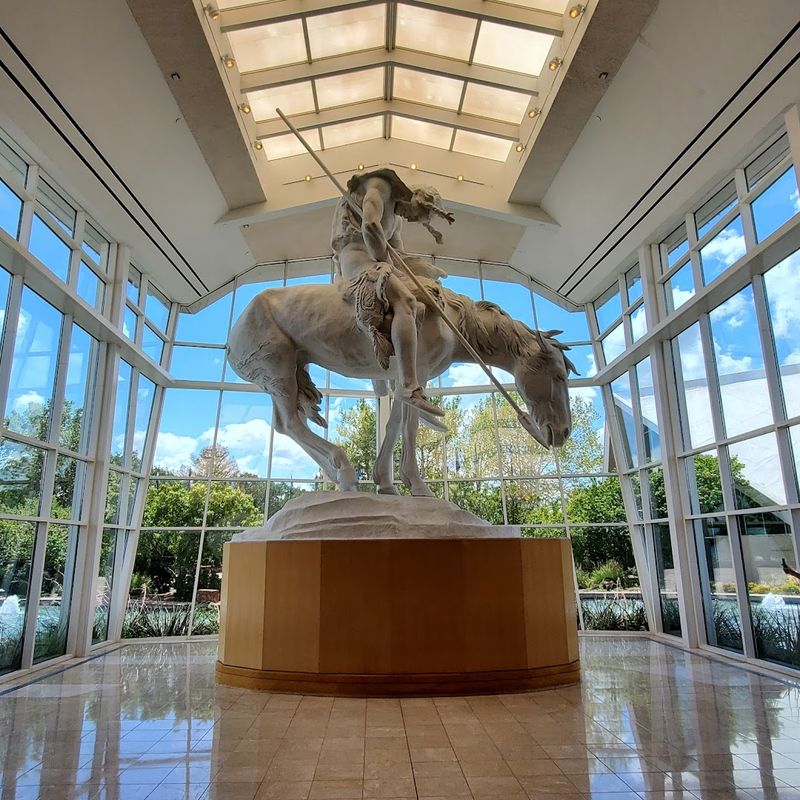
Most people arrive at this museum in Oklahoma City expecting a standard Western history exhibit and leave having experienced something considerably more layered. The 14,000-square-foot recreated frontier town inside the building is the detail that tends to stop first-time visitors in their tracks.
Full-sized storefronts line both sides of a staged street, including a jail, a general store, a bank, and a church. The lighting and staging are detailed enough that the space genuinely feels like a town that simply ran out of people one quiet afternoon.
Walking through it is oddly immersive.
The art collection is another surprise. Large paintings by Frederic Remington and Charles Russell are displayed with the kind of lighting that makes their realism almost disorienting.
More than once I found myself leaning in to confirm I was looking at paint rather than a photograph.
A significant portion of the museum is dedicated to Native American history, presented with genuine weight and care.
Beadwork, pottery, ceremonial objects, and photographic records are treated as central to the Western story rather than as a footnote, and that choice makes the whole museum feel more honest and complete.
The Rodeo Hall of Fame and a section devoted to Hollywood Westerns, including costumes worn by well-known actors, round out a visit that covers far more ground than the name alone suggests.
Thursday and Friday evening hours extend to 9 PM, making those nights a smart choice for avoiding the busiest crowds.
This museum rewards a full half-day commitment, and it earns every minute of it.
Address: 1700 NE 63rd St, Oklahoma City, OK 73111
6. National Route 66 and Transportation Museum, Elk City, Oklahoma
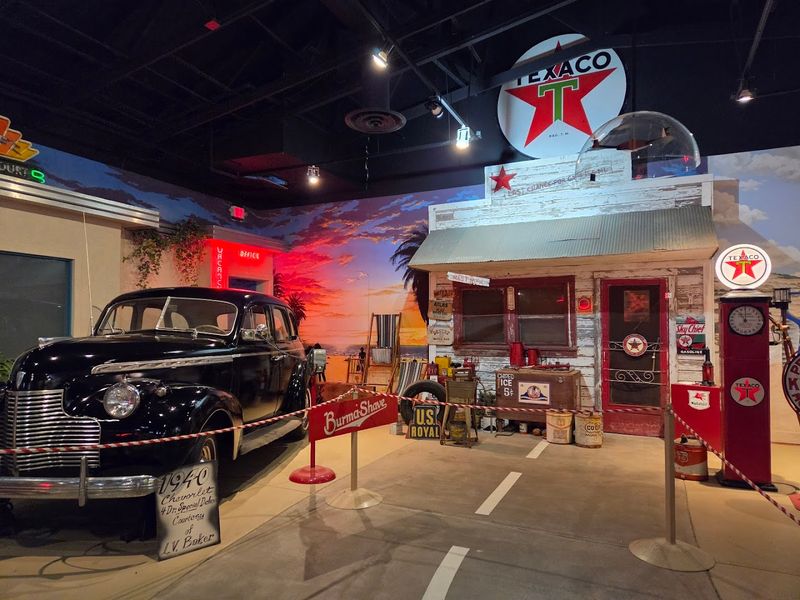
Elk City, Oklahoma, is where Route 66 history gets a home it actually deserves. The National Route 66 and Transportation Museum does not just hang old maps on walls.
It recreates the feeling of the road itself, complete with full-sized storefronts, vintage gas pumps, and period details that make the whole space feel like a living snapshot of mid-century America.
The automobile collection is the kind that makes you slow down and look carefully at every single car. Chrome tailfins catch the light in ways that feel almost theatrical, and the paint on some of these vehicles is so well preserved that you can see your own reflection in the hood.
A 1930s sedan sits beside a period-accurate gas station, and a 1950s convertible is parked at a recreated drive-in movie theater display.
What I found especially satisfying was the broader complex surrounding the main museum. A Farm and Ranch Museum, a Blacksmith Museum, and an Old Town Museum that recreates frontier community life are all part of the same site.
Together they build a comprehensive picture of what life looked like in western Oklahoma across several decades.
There is a recreated diner inside with a checkerboard floor and chrome-edged tables so convincing that your instinct is to reach for a menu. Certain display vehicles can be sat in, and old-fashioned gas pumps can be operated hands-on.
Elk City is a comfortable stop on any western Oklahoma road trip, and this museum complex is the kind of place that turns a planned thirty-minute visit into a full afternoon without anyone complaining about it.
Address: 2717 W 3rd St, Elk City, OK 73644
7. D.W. Correll Museum, Catoosa, Oklahoma
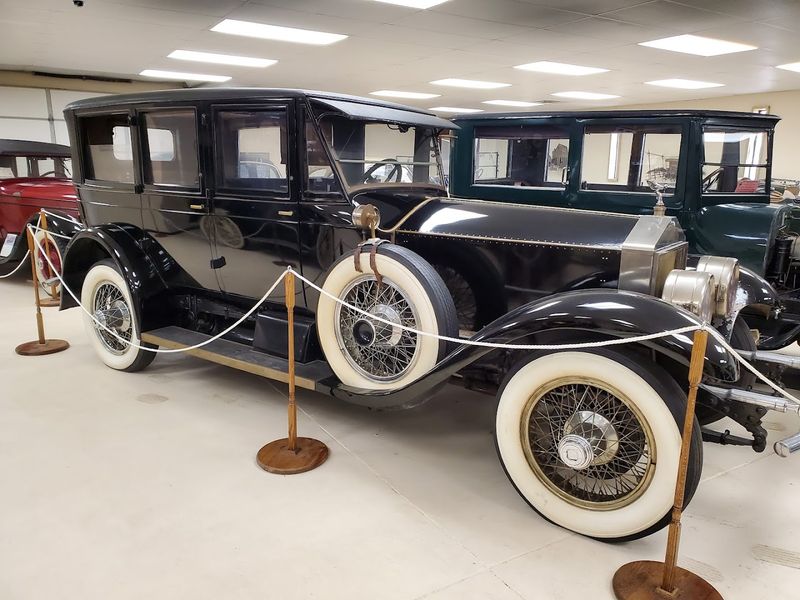
Catoosa, Oklahoma, is known mostly as a Route 66 stop, but the D.W. Correll Museum gives travelers a reason to actually get out of the car and stay for a while.
The collection here is so genuinely eclectic that the word barely covers it.
Rocks, minerals, shells, old toys, belt buckles, taxidermied birds, antique cars, and a mummified cat discovered in the walls of the old museum are all present and accounted for. It reportedly took three full years to sort through everything D.W.
Correll accumulated over his lifetime, which gives you a sense of the scale involved.
The antique car building is its own highlight. An aluminum 1919 Franklin, a 1902 Oldsmobile, a steam-powered 1899 Locomobile, and a 1906 Cadillac are among the vehicles on display, all restored personally by Correll himself.
The care he put into each restoration is visible in every detail.
The most unexpected exhibit is a quiet cabinet containing four Venus’ Flower Baskets, rare deep-sea sponges that almost certainly came from the Philippines. Oklahoma is not exactly known for its hexactinellid sponge collection, which makes their presence here all the more delightfully strange.
In the minerals building next door, Russian fuchsite and Brazilian itacolumite, known as rubber sandstone for its surprising flexibility, are among the standout pieces. D.W.
Correll was an industrial management expert who worked for McDonnell Douglas, and his curiosity clearly had no boundaries. This is a Route 66 roadside attraction that rewards genuine curiosity with something far richer than the exterior suggests.
Address: 19934 E Pine St, Catoosa, OK 74015
8. American Pigeon Museum, Oklahoma City, Oklahoma
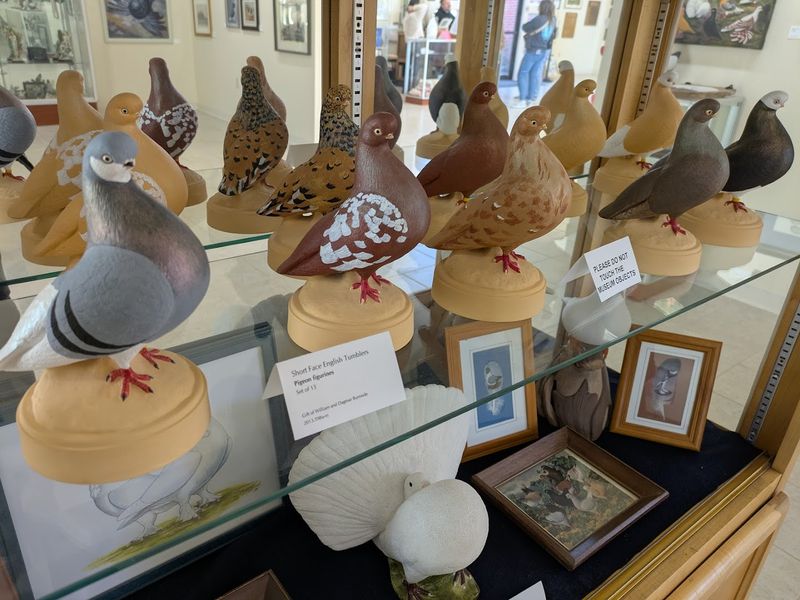
Oklahoma City is not the first place that comes to mind when you think about pigeons, but the American Pigeon Museum has been making the case for these birds since 1973. It is one of those places that sounds like a punchline until you actually walk through the door.
The museum features live birds, and that single detail changes everything. Meeting actual pigeon breeds face to face, learning their names, their histories, and the specific traits that distinguish one variety from another, turns an abstract subject into something tangible and surprisingly engaging.
The historical exhibits focus heavily on carrier pigeons and the critical roles they played during World War I and World War II.
These birds delivered messages across battlefields when no other communication method was available, and the museum presents their contributions with the seriousness that kind of service deserves.
It is genuinely moving in a way that sneaks up on you.
The museum is located at 2300 NE 63rd Street in Oklahoma City, just a short distance from the National Cowboy and Western Heritage Museum, which makes pairing the two into a single afternoon an easy and satisfying plan.
The contrast between the two could not be more dramatic, and that contrast is part of what makes Oklahoma City such an interesting city to explore.
I walked in expecting a quick look and stayed far longer than planned. The stories connected to individual birds, their documented journeys, and the people who trained and cared for them create a narrative thread that pulls you through every exhibit.
This one genuinely earns its place on any Oklahoma museum itinerary.
Address: 2300 NE 63rd St, Oklahoma City, OK 73111
9. SKELETONS: Museum of Osteology, Oklahoma City, Oklahoma
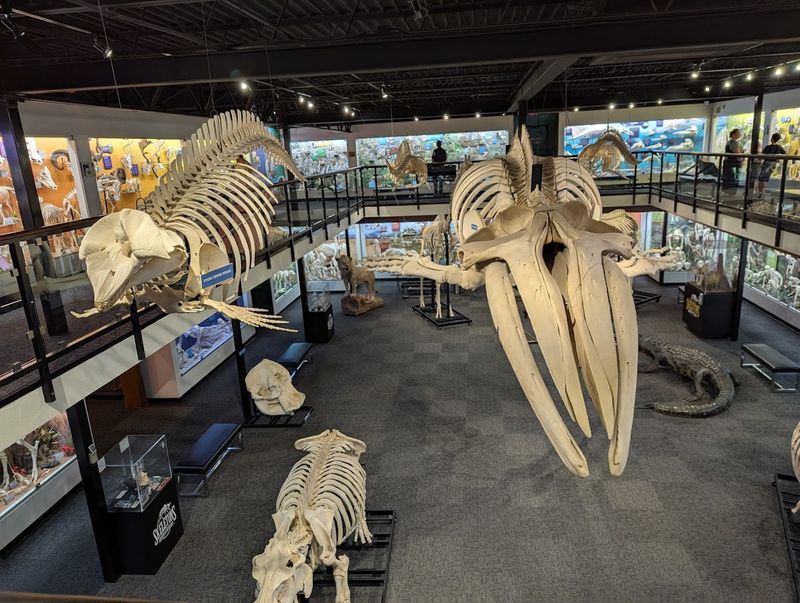
The name alone tends to split people into two camps before they ever step inside. But the SKELETONS: Museum of Osteology in Oklahoma City, located at 10301 S Sunnylane Road, manages to win over both the enthusiastic and the hesitant within about ten minutes of arrival.
Over 400 skeletons from creatures across the globe fill the space, ranging from tiny mice to a giant humpback whale. The scale difference between the smallest and largest specimens creates a perspective on the natural world that no photograph or textbook fully replicates.
Standing beneath the whale skeleton is one of those moments that physically recalibrates your sense of size.
The comparative displays are where the museum earns its reputation as genuinely educational. Skeletal structures across different species reveal evolutionary connections that most people have never had a reason to consider.
A human hand and a bat wing, side by side in a display case, make the relationship between the two suddenly and permanently obvious.
The museum does not shy away from the strange or the surprising. Some specimens are arranged in dynamic poses that emphasize movement and behavior, making the collection feel alive rather than static.
The curation is thoughtful, and the flow from one section to the next guides you naturally through a kind of informal biology lesson.
Part natural history museum, part art installation, this spot occupies a category of its own. Plan for at least a full hour to properly move through the collection without rushing.
It is the kind of museum that sends you home looking at the world slightly differently than you did when you arrived, which is exactly what a great museum should do.
Address: 10301 S Sunnylane Rd, Oklahoma City, OK 73160
10. American Banjo Museum, Oklahoma City, Oklahoma
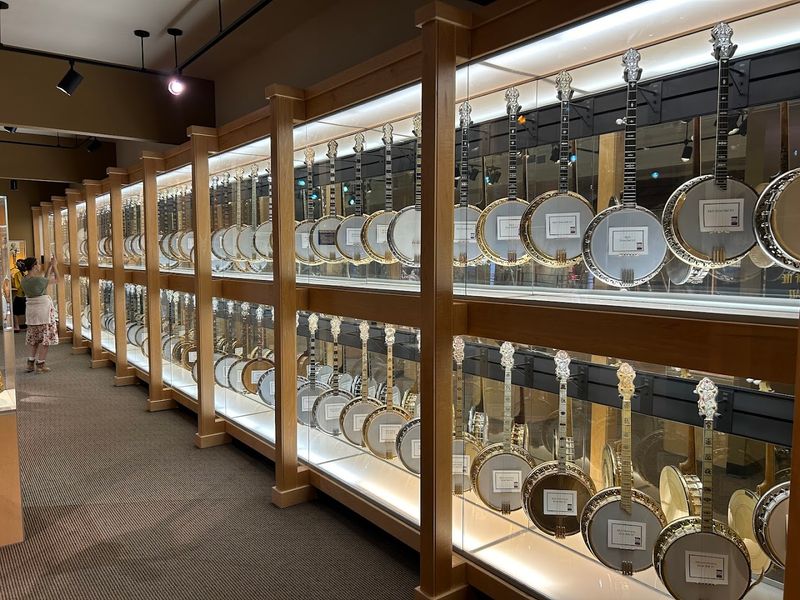
Nine East Sheridan Avenue in Oklahoma City is the address, but the American Banjo Museum feels less like a building and more like a living archive of an instrument that shaped American music more than most people realize. The collection here is the most extensive of its kind in the world.
From humble folk instruments carved with basic tools to jaw-dropping jazz-age showpieces with intricate inlays and decorative metalwork, the banjo’s journey through American musical history is laid out in a way that is both chronological and genuinely beautiful.
Some of these instruments are works of art that happen to make sound.
The first Wednesday of each month brings a lunchtime concert called Brown-Bag-it with Banjos, and the casual format makes it one of the most accessible live music experiences in the city.
Sitting in a museum surrounded by hundreds of banjos while listening to someone actually play one is a surprisingly warm and communal experience.
Beginner Pick-a-Tune classes are offered for visitors who want to try the instrument themselves.
The learning curve is real, but the instructors make the entry point feel approachable rather than intimidating, and walking away with even a basic understanding of how the instrument works deepens your appreciation for the collection around you.
Several banjos in the collection once belonged to notable musicians, and the detailed histories connecting each instrument to broader cultural movements give the exhibits a narrative weight that goes well beyond display cases and labels.
Even arriving with no particular fondness for banjo music, I left with a genuine respect for what this instrument has contributed to American culture. That shift is the museum’s quiet superpower.
Address: 9 E Sheridan Ave, Oklahoma City, OK 73104
