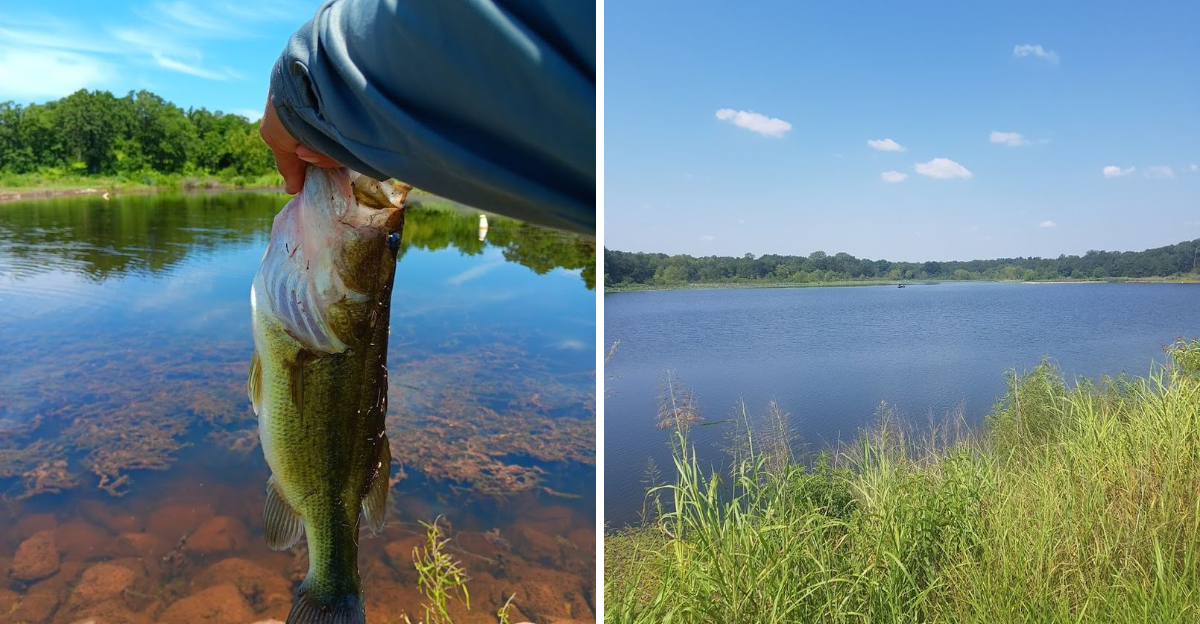
Dahlgren Lake used to be the kind of place I’d head when I wanted zero drama. Toss a line in, listen to the water, maybe chat with a couple of regulars who had been fishing there longer than I’d been alive.
It felt simple. Predictable in a good way.
Lately, though, the mood has shifted. What used to be quiet conversations about bait and weather have turned into bigger debates about stocking, access, and who’s responsible for keeping the place in shape.
For a small lake tucked away in central Oklahoma, it’s sparked more discussion than I ever expected. It’s strange how a peaceful fishing spot can suddenly sit at the center of so much tension.
The Stocking Debate That Has Everyone Talking
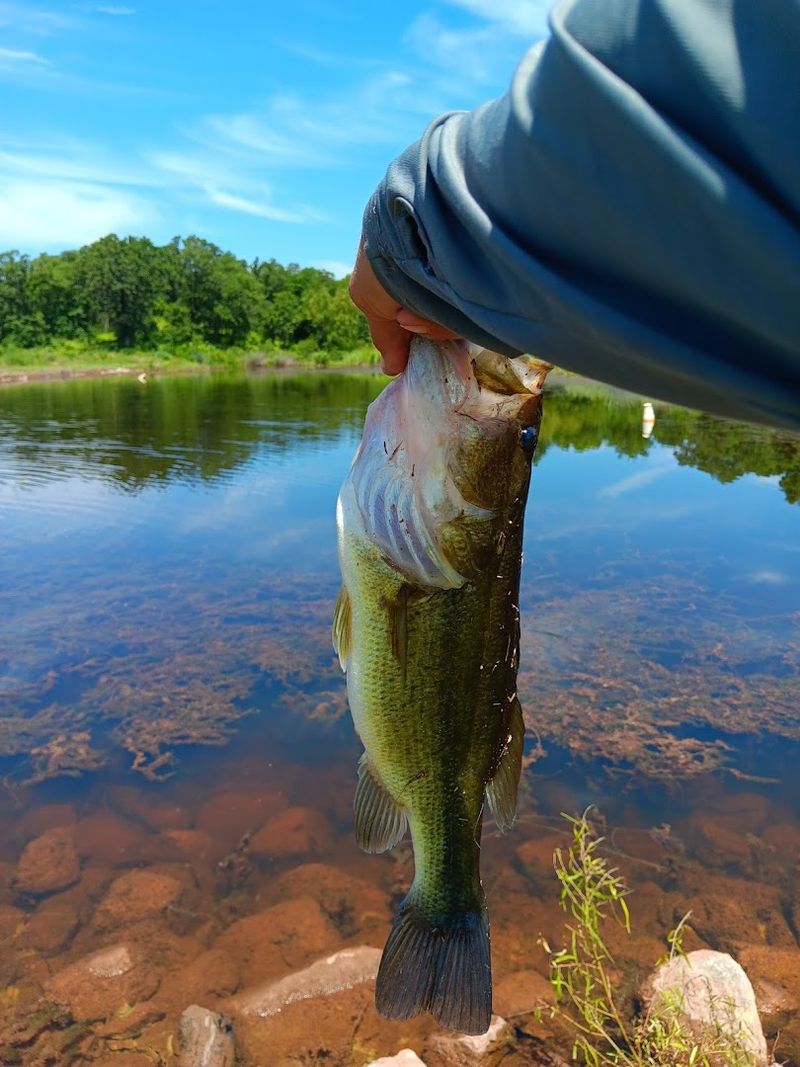
People are frustrated, and they’re not being quiet about it anymore. Recent visits to Dahlgren have left anglers coming home empty-handed, sparking heated conversations about how often the lake gets stocked with fish.
Some regulars claim the numbers have dropped dramatically compared to years past.
Local fishing groups have started pushing for more frequent stocking schedules. They argue that without consistent restocking, the lake loses its appeal and the community loses a valuable recreational resource.
State wildlife officials counter that budget constraints and ecological balance must be considered.
The controversy has split the community into camps. One side wants immediate action and more aggressive stocking programs.
The other worries that overstocking could damage the lake’s natural ecosystem and create long-term problems that are harder to fix than temporary fishing slumps.
Social media has amplified the debate, with fishing forums lighting up with complaints and theories. Some blame invasive species, others point to water quality issues, and a few suggest mismanagement by state agencies responsible for maintaining the lake’s fish population.
Vegetation Overload and the Battle for Access
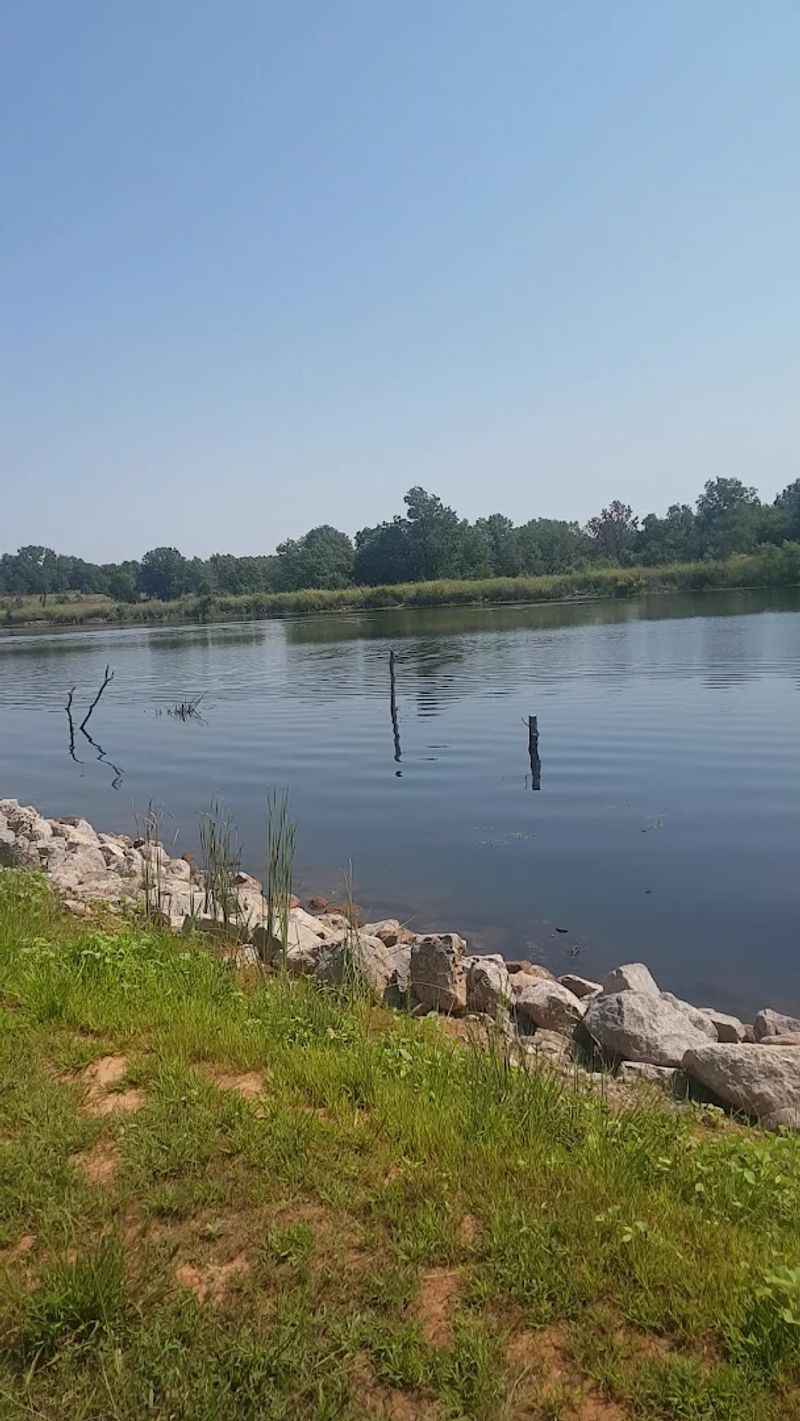
The vegetation situation at Dahlgren has become a legitimate problem. What started as natural lake growth has turned into dense underwater jungles that make fishing nearly impossible in many areas.
Lily pads, grass, and other plants have taken over large sections of the shoreline.
To their credit, authorities have carved out pathways and fishing points that give anglers a fighting chance. These cleared areas help you get around the worst of the vegetation and reach spots where you can actually cast without immediately snagging your line on plants.
But the improvements haven’t satisfied everyone. Critics say the vegetation management is reactive rather than proactive, addressing problems only after they become severe.
They want a comprehensive plan that prevents overgrowth before it chokes out fishing opportunities.
The vegetation debate ties directly into the stocking controversy. Some anglers believe the thick plant growth provides perfect habitat for fish to hide and reproduce, making the lake healthier than catch rates suggest.
Others insist the vegetation has gotten so dense it’s actually harming fish populations by reducing oxygen levels and limiting movement.
The Dramatic Transformation Over Two Decades
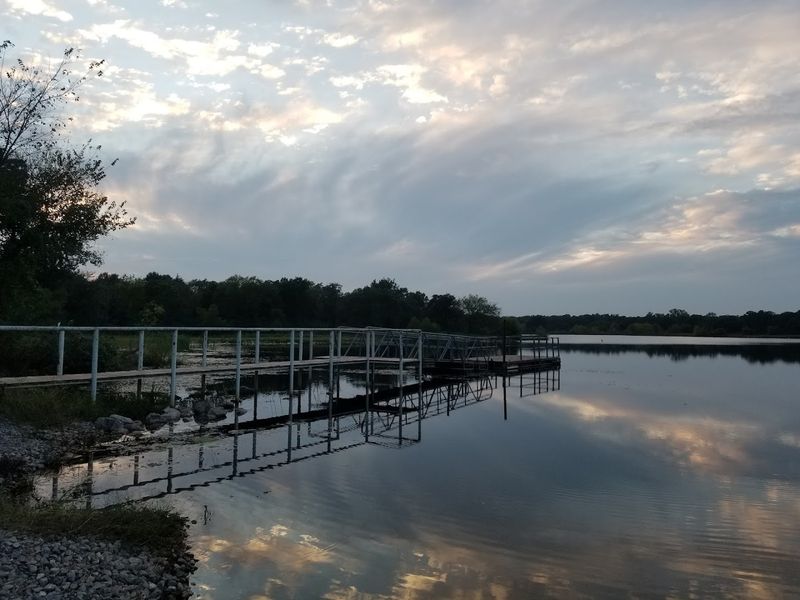
Anyone who knew Dahlgren twenty years ago would barely recognize it today. The transformation has been remarkable, with significant renovations that have opened up nearly the entire shoreline for foot access.
What was once an inaccessible tangle of brush and mud has become a network of paths and fishing spots.
The improvements represent a substantial investment in public recreation. New access points, cleared pathways, and maintained fishing areas have made the lake far more user-friendly than it ever was in the past.
For many visitors, these changes represent exactly what public land management should look like.
Yet this transformation is part of what makes the current controversies so frustrating. People remember when Dahlgren was barely accessible and feel the recent improvements should have solved all the problems.
When issues with fish populations and vegetation persist despite the renovations, it feels like a broken promise.
The contrast between physical improvements and ecological challenges highlights a fundamental tension. You can build all the paths and fishing points you want, but if the fish aren’t biting, people won’t be happy.
The infrastructure is there, but the experience doesn’t always match expectations.
The Peaceful Reputation Under Threat
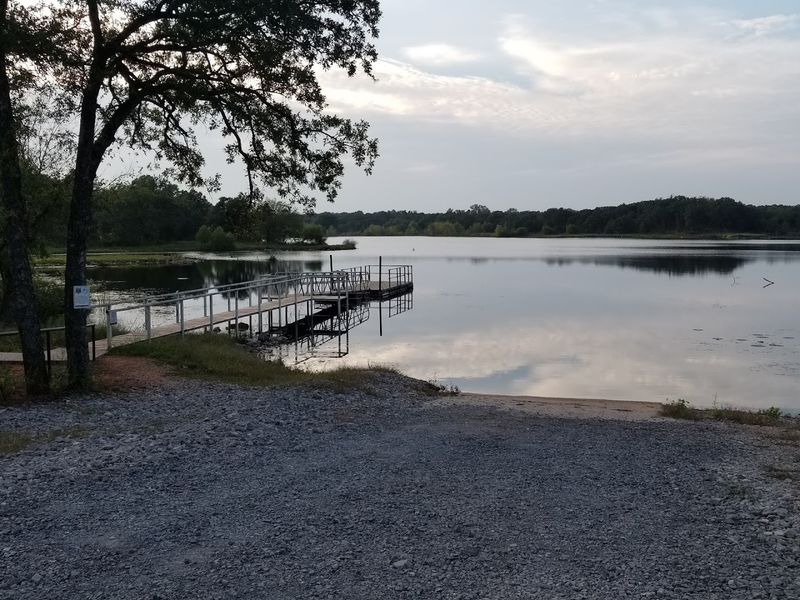
Dahlgren built its reputation on being a peaceful escape. It was never the biggest or most famous lake in Oklahoma, but that was exactly the point.
People came here specifically because it wasn’t crowded, wasn’t commercialized, and offered a genuine slice of quiet nature.
That reputation is now at risk. The controversies swirling around the lake have changed its character in ways that go beyond fish counts or vegetation.
Social media arguments, community meetings, and public complaints have transformed a peaceful retreat into a contested space where every decision gets scrutinized and debated.
Some longtime visitors say the drama has ruined the experience entirely. They remember coming to Dahlgren to get away from stress and conflict, not to wade into debates about stocking schedules and management policies.
The lake has lost some of its magic simply because it’s become associated with frustration rather than relaxation.
Others argue that controversy is better than neglect. They believe the current debates, however uncomfortable, show that people care enough about Dahlgren to fight for its future.
In their view, a little conflict now might lead to better management and a healthier lake down the road.
The Species Diversity That Should Be a Selling Point
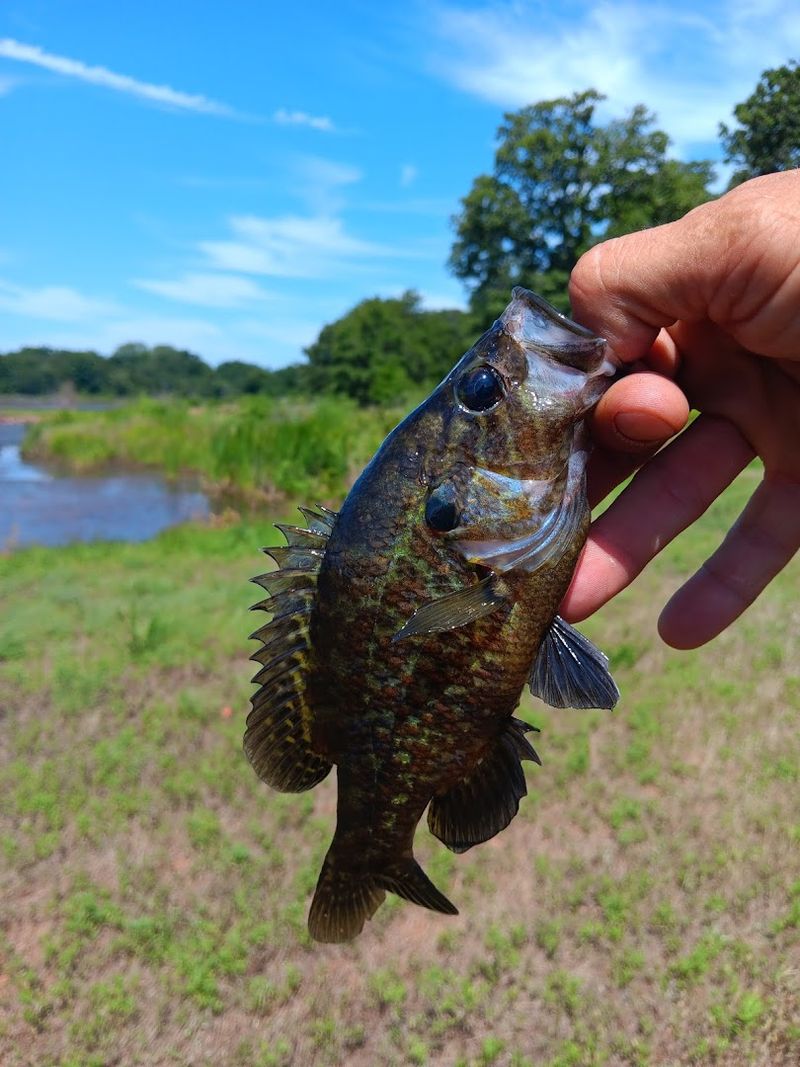
Dahlgren hosts an impressive variety of fish species. Bluegill, crappie, and largemouth bass all call this lake home, creating opportunities for different fishing styles and skill levels.
The rocky bottom and diverse habitat features provide ideal conditions for multiple species to coexist.
This diversity should make Dahlgren a premier fishing destination. Having multiple target species means anglers can adjust their tactics and still have productive days even when one species isn’t biting.
The habitat variety, from lily pads to tree stumps to rocky areas, creates the kind of structure that fish love.
Instead, the species diversity has become another point of contention. Some anglers focus exclusively on bass and complain when those populations seem low, ignoring healthy bluegill numbers.
Others argue that too much emphasis on one species has led to imbalanced stocking that favors certain fish over others.
The controversy reveals different philosophies about what makes a lake successful. Should management prioritize trophy bass fishing, or should it maintain balanced populations of all species?
Should stocking focus on what anglers want to catch or what the ecosystem can sustainably support? These questions don’t have easy answers.
The Budget Reality Nobody Wants to Discuss
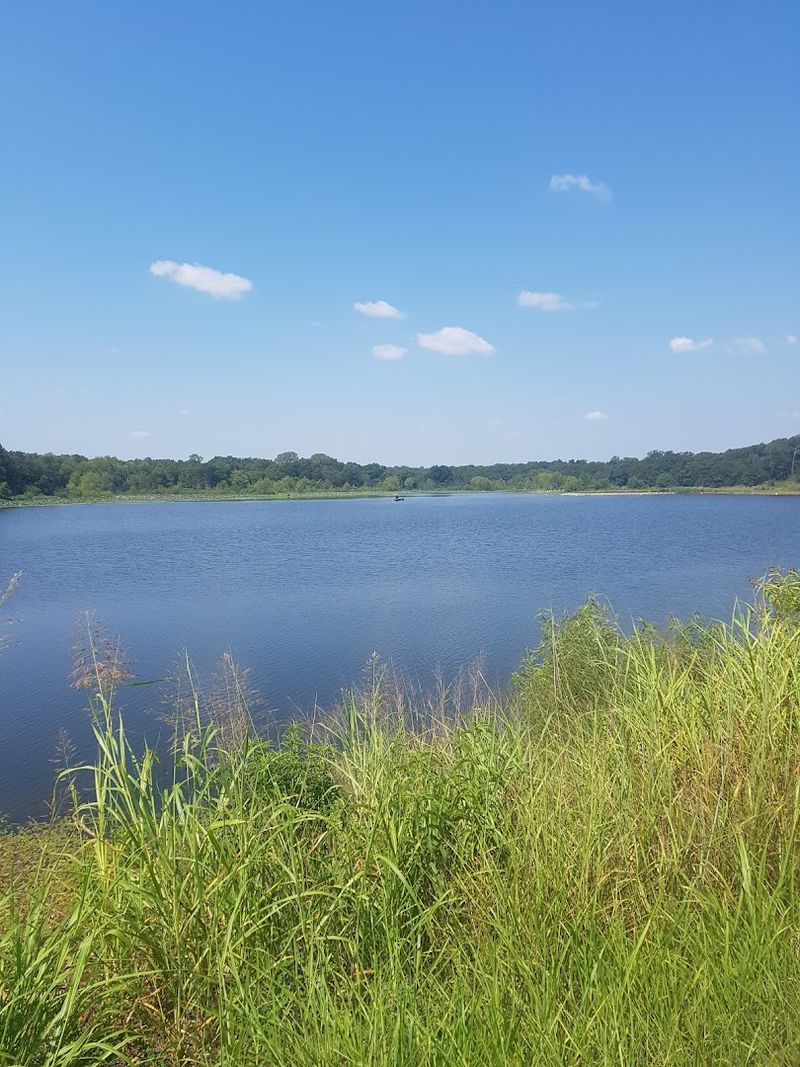
Money talks, and at Dahlgren, it’s saying some things people don’t want to hear. State wildlife agencies operate on tight budgets that must cover dozens of lakes and thousands of acres of public land.
Dahlgren is just one small piece of a much larger puzzle.
Fish stocking costs real money. Raising fish to stockable size, transporting them, and monitoring populations all require funding that comes from fishing licenses and limited state appropriations.
When anglers demand more frequent stocking, they’re essentially asking for resources that might need to come from other lakes or programs.
This budget reality doesn’t satisfy frustrated anglers who just want to catch fish. They argue that fishing license fees should guarantee quality fishing experiences, and if current funding is inadequate, the state should find more money.
The disconnect between expectations and fiscal reality fuels ongoing controversy.
Some community members have proposed local fundraising or volunteer programs to supplement state efforts. Others insist that’s not their responsibility and that proper lake management should be fully funded by existing government budgets.
The financial dimension of the controversy rarely gets discussed openly, but it underlies nearly every other debate.
The Chigger Warning That Became Legendary
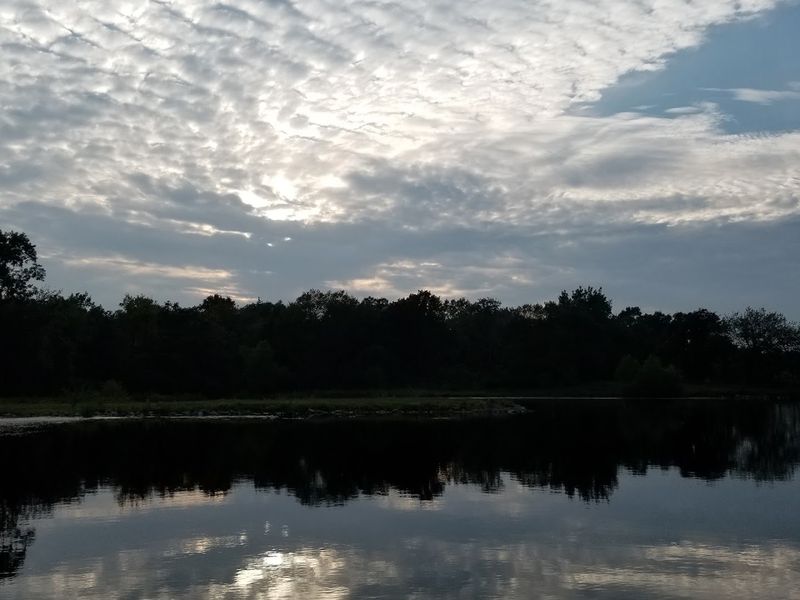
Among all the serious debates about fish populations and lake management, one warning has achieved legendary status. Stay out of the grass, there be chiggers.
This simple piece of advice, shared by a visitor, has become shorthand for the practical realities of fishing at Dahlgren.
Chiggers are tiny mites that cause intensely itchy bites, and they thrive in the kind of vegetation that surrounds much of the lake. Anyone who has experienced chigger bites understands why this warning resonates.
The itching can last for days and turn a pleasant fishing trip into a miserable memory.
The chigger situation represents the kind of natural challenge that no amount of management can completely solve. You can clear paths and maintain access points, but you can’t eliminate every natural pest from a wild area.
Some problems just come with the territory.
Yet even this simple hazard has become part of the larger controversy. Some people use it as evidence that Dahlgren isn’t properly maintained, while others see it as a normal aspect of outdoor recreation that shouldn’t be blamed on anyone.
The chigger debate, absurd as it might seem, reflects deeper tensions about expectations and reality.
The Access Improvements That Changed Everything
The ability to fish nearly all the way around by foot represents a massive improvement. Decades ago, much of Dahlgren’s shoreline was inaccessible, limiting fishing opportunities to a few crowded spots.
The new path system has democratized access in ways that benefit everyone.
These improvements required significant planning and investment. Creating durable paths that can handle foot traffic without eroding, clearing vegetation while maintaining habitat, and establishing fishing points at strategic locations all took time and resources.
The results speak for themselves in terms of physical access.
But improved access has also increased pressure on the lake. More anglers can reach more spots, which means more fishing pressure on the same fish populations.
Some believe the access improvements have actually contributed to declining catch rates by making it too easy for too many people to fish the lake intensively.
This creates an ironic situation where success breeds new problems. The very improvements that should make Dahlgren better have potentially made other issues worse.
It’s a reminder that managing public recreational resources involves complex tradeoffs that aren’t always obvious until after changes are implemented.
The future of Dahlgren remains uncertain. Current controversies show no signs of resolving quickly, and the various stakeholders remain far apart in their priorities and expectations.
State agencies face pressure to do more with limited resources while managing public expectations.
Some potential solutions are being discussed. Enhanced stocking schedules, more aggressive vegetation management, improved water quality monitoring, and better communication between officials and the public could all help address current concerns.
Implementation depends on funding, political will, and community cooperation.
The controversy has at least succeeded in drawing attention to the lake. Officials who might have ignored a small, quiet fishing spot can no longer overlook Dahlgren.
The squeaky wheel gets the grease, and this lake has gotten very squeaky indeed.
For visitors planning a trip, the situation remains complicated. Dahlgren still offers beautiful scenery, improved access, and the potential for good fishing.
But expectations should be realistic, and anyone hoping for guaranteed fishing success might want to have a backup plan. The lake’s reputation is in flux, and only time will tell how this controversy ultimately resolves.
Dear Reader: This page may contain affiliate links which may earn a commission if you click through and make a purchase. Our independent journalism is not influenced by any advertiser or commercial initiative unless it is clearly marked as sponsored content. As travel products change, please be sure to reconfirm all details and stay up to date with current events to ensure a safe and successful trip.
