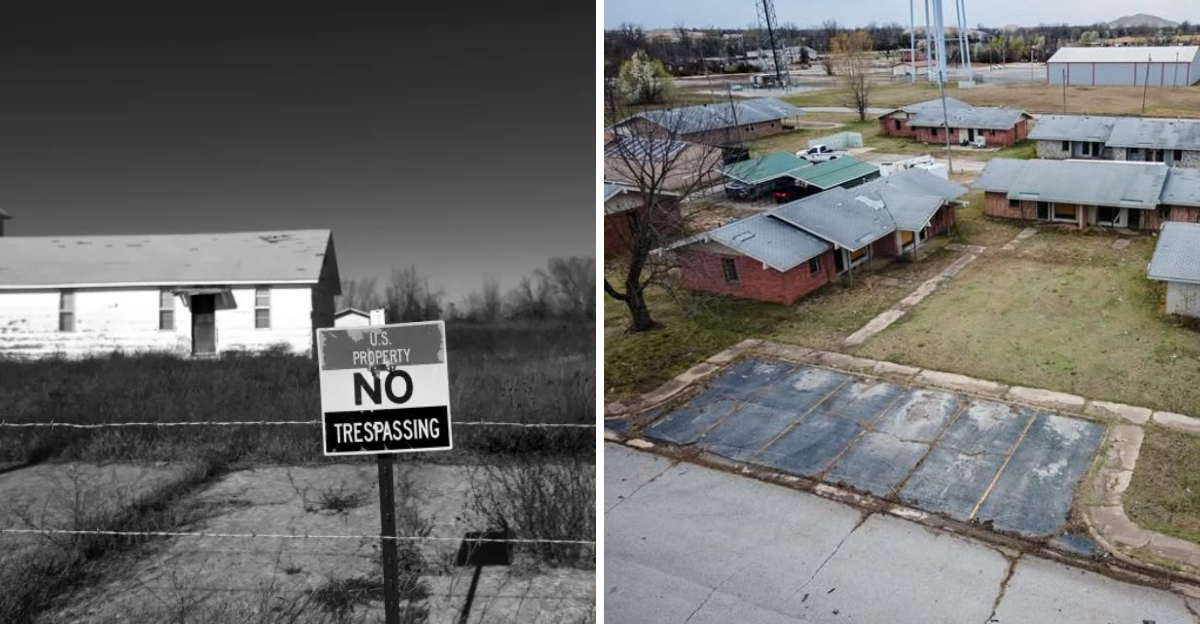
Picher, Oklahoma, once buzzed with life as a booming mining town, but today it stands silent and abandoned, a haunting reminder of environmental disaster. For decades, miners dug deep into the earth, pulling out lead and zinc that fueled industries across America.
But the treasure came with a terrible cost: mountains of toxic waste, poisoned water, and land so contaminated that living there became impossible. By the early 2000s, the government declared Picher one of the most toxic places in the United States, and residents were forced to leave their homes forever.
What remains is a ghost town, where empty buildings crumble and nature slowly reclaims the streets. The story of Picher is both tragic and fascinating, showing how human ambition can scar the land for generations.
Understanding what happened here helps us learn important lessons about protecting our environment and the communities we call home.
The Rise of a Mining Boomtown
Back in 1914, Picher sprang to life almost overnight when miners discovered huge deposits of lead and zinc beneath the Oklahoma soil. Families rushed to the area, hoping to strike it rich or find steady work in the mines.
Within a few years, the town grew from empty prairie to a bustling community with shops, schools, and thousands of residents.
The mines operated around the clock, and the sound of drilling and machinery filled the air day and night. Picher became one of the most productive mining districts in the entire country, supplying materials used in everything from ammunition to car parts. Money flowed freely, and the town seemed unstoppable.
But beneath the prosperity, danger lurked. The mining companies focused on profits, not safety or the environment. Waste piled up in massive hills called chat piles, and nobody worried much about what might happen later.
Life was good, and people believed the boom would last forever, never imagining the nightmare that would eventually unfold in their beloved town.
Chat Piles: Mountains of Toxic Waste
Imagine mountains made entirely of crushed rock and mining waste, some reaching over 200 feet tall. These are chat piles, the leftover material from decades of mining operations in Picher. Miners extracted valuable minerals from deep underground, then dumped everything else in massive heaps that eventually dominated the landscape.
At first, nobody understood how dangerous these piles really were. Kids played on them like giant playgrounds, and dust from the chat blew through town on windy days. Unfortunately, the waste contained high levels of lead, zinc, and other harmful metals that slowly poisoned the environment.
Rain washed toxic materials into the soil and water supply, spreading contamination far beyond the piles themselves. The chat also contained sharp, jagged pieces that could damage lungs when inhaled. By the time scientists realized the danger, millions of tons of toxic waste already surrounded the town.
These gray mountains became symbols of Picher’s environmental nightmare, standing as silent witnesses to decades of unchecked industrial activity and its devastating consequences for the community.
Lead Poisoning: The Silent Killer
Lead poisoning crept through Picher like an invisible enemy, harming families without them even knowing it. Children were especially vulnerable because their growing bodies absorbed lead more easily than adults. Kids who played outside, breathed dusty air, or drank contaminated water faced serious health risks that would affect them for life.
Lead exposure can damage the brain and nervous system, causing learning disabilities, behavior problems, and lower intelligence. Some children in Picher tested with lead levels far above what doctors consider safe. Parents watched helplessly as their kids struggled in school or developed mysterious health issues.
The contamination came from everywhere: dust blowing off chat piles, soil in yards, paint on old buildings, and even the water flowing from kitchen taps. By the 1990s, studies revealed that a shocking percentage of Picher’s children had elevated lead levels in their blood.
This discovery sparked outrage and fear, forcing families to confront the terrible truth that their hometown was slowly poisoning them and their children, with effects that might last generations.
Underground Collapse Risk
Beneath Picher’s streets lies a hidden danger that makes the ground itself unstable and unpredictable. Decades of mining created a vast underground maze of tunnels and empty spaces stretching for miles in every direction. Miners removed so much rock that parts of the earth above began to weaken and collapse.
Sinkholes started appearing without warning, swallowing streets, yards, and even buildings. Imagine walking to school or playing in your yard, never knowing if the ground might suddenly give way beneath your feet. Engineers discovered that roughly 30 percent of Picher sat above these dangerous underground voids.
The risk wasn’t just about sinkholes. Entire neighborhoods could potentially collapse into the mines below, creating catastrophic disasters. Homes developed cracks in their foundations, and roads buckled unexpectedly.
This underground instability, combined with the toxic contamination above ground, made Picher increasingly unlivable. Families realized they were literally living on borrowed time, with the earth beneath them as unreliable as the poisoned soil surrounding them, adding yet another layer to the town’s mounting crisis.
Tar Creek Superfund Site Designation
In 1983, the federal government made an official declaration that shocked residents: Picher and the surrounding Tar Creek area became one of the first Superfund sites in the nation.
This designation meant the Environmental Protection Agency recognized the area as one of the most polluted and dangerous places in America, requiring massive cleanup efforts.
Tar Creek itself turned orange and red from acid mine drainage, looking more like a toxic chemical spill than a natural waterway. Fish couldn’t survive in the contaminated water, and the creek became a symbol of environmental destruction.
The pollution spread across 40 square miles, affecting multiple communities.
The Superfund designation brought attention and some cleanup money, but the damage proved almost too extensive to fix. Workers tried various methods to reduce contamination, from treating water to moving chat piles, but progress came slowly.
The designation also brought shame and sadness to residents who loved their town. Being labeled one of America’s most toxic places felt like a death sentence for Picher, confirming what many feared: their hometown might never recover from decades of environmental neglect and industrial damage.
The Government Buyout Program
Facing mounting evidence that Picher was too dangerous for human habitation, the government launched a voluntary buyout program in 2006. This program offered residents money for their homes so they could relocate to safer areas.
For many families, this meant leaving behind everything they knew: their houses, their neighbors, their memories, and their community.
The decision to leave wasn’t easy. Some residents had lived in Picher for generations, and their families helped build the town. Others worried the buyout money wouldn’t be enough to start over somewhere else. But staying meant risking their health and safety every single day.
Slowly, families packed up and moved away, leaving empty houses behind. Streets that once echoed with children’s laughter fell silent. Shops closed, schools emptied, and the town began its transformation into a ghost town.
The buyout program acknowledged a heartbreaking reality: sometimes environmental damage becomes so severe that the only solution is abandonment. Watching their town empty out, remaining residents felt a mixture of relief, sadness, and anger about how things had gone so terribly wrong in their once-thriving community.
The Devastating 2008 Tornado
Just when things seemed like they couldn’t get worse, nature delivered a final blow to Picher. On May 10, 2008, a powerful EF4 tornado ripped through the already dying town, killing six people and destroying many of the remaining structures. The tornado seemed like a cruel punctuation mark on Picher’s tragic story.
Winds exceeding 200 miles per hour flattened homes, businesses, and historic buildings that had survived decades of environmental decline. Emergency responders rushed to help, but the tornado accelerated what was already inevitable. Many residents who had hesitated to leave finally accepted that Picher’s time had ended.
The disaster made national news, and people across the country learned about the town’s toxic legacy for the first time. Some saw the tornado as nature reclaiming what humans had destroyed, while others viewed it as a tragic accident that added suffering to an already devastated community.
The storm destroyed much of what little remained of Picher’s infrastructure, making rebuilding impossible and impractical. After the tornado, the town’s fate was sealed forever, transforming from a struggling community into an official ghost town abandoned by nearly everyone.
Ghost Town Status and Abandonment
Walking through Picher today feels like stepping into a post-apocalyptic movie set. Empty buildings with broken windows line silent streets where weeds push through cracked pavement. Nature slowly reclaims what humans left behind, with vines crawling up abandoned storefronts and trees growing through collapsed roofs.
The town officially disincorporated in 2013, meaning it no longer exists as a legal municipality. No mayor, no town council, no services remain. Only a handful of determined residents refused to leave, staying despite the dangers and isolation. These few holdouts live among the ruins, maintaining their properties as best they can.
Visitors who explore Picher encounter an eerie landscape frozen in time. Old signs still advertise businesses long closed, rusting cars sit in driveways, and personal belongings scatter through abandoned homes. The ghost town attracts photographers, urban explorers, and people fascinated by America’s forgotten places.
But Picher isn’t just an interesting curiosity. It represents a cautionary tale about environmental responsibility, corporate accountability, and the real human cost of prioritizing profits over people and planet. The empty streets whisper stories of what once was and what should never happen again.
Environmental Cleanup Challenges
Cleaning up Picher presents challenges so enormous that experts still debate whether it’s even possible. The contamination spreads so widely and runs so deep that traditional cleanup methods barely make a dent. Removing all the chat piles alone would require moving millions of tons of toxic material, with no safe place to put it.
The Environmental Protection Agency has spent decades and millions of dollars on various cleanup efforts. Workers have treated contaminated water, removed some chat piles from residential areas, and monitored pollution levels.
But the underground mine system continues leaching toxic metals into groundwater, creating ongoing contamination that’s incredibly difficult to stop.
Some scientists suggest the only real solution is natural attenuation, which means letting nature slowly break down and neutralize the contaminants over decades or even centuries. Others argue for more aggressive intervention, though the costs would be astronomical.
The cleanup challenges at Picher highlight how much easier and cheaper it is to prevent environmental damage than to fix it afterward. The site remains a testing ground for cleanup technologies and a reminder that some environmental scars may be permanent, no matter how much money or effort we throw at them.
Lessons Learned and Legacy
Picher’s tragedy teaches us powerful lessons about environmental protection, corporate responsibility, and community resilience. The town’s story shows what happens when companies prioritize short-term profits over long-term consequences, leaving behind damage that lasts for generations. Mining companies made millions while creating a toxic wasteland, then walked away without fully paying for the cleanup.
Modern environmental regulations exist partly because of disasters like Picher. Laws now require mining companies to plan for cleanup before they start digging, though enforcement remains imperfect. Picher reminds us that environmental damage doesn’t just hurt nature but destroys communities, families, and futures.
The former residents of Picher scattered across Oklahoma and beyond, carrying memories of their lost hometown. Some stay connected through reunions and social media groups, sharing stories and keeping their community’s memory alive.
Their experiences inspire environmental activists and inform policy debates about industrial regulation. Picher’s legacy isn’t just about what went wrong but about learning to do better.
The ghost town stands as a memorial to the people who lived there and a warning to future generations about the true cost of environmental neglect and unchecked industrial expansion.
Dear Reader: This page may contain affiliate links which may earn a commission if you click through and make a purchase. Our independent journalism is not influenced by any advertiser or commercial initiative unless it is clearly marked as sponsored content. As travel products change, please be sure to reconfirm all details and stay up to date with current events to ensure a safe and successful trip.
