Oregon boasts some of the most beautiful and historic bridges in the entire country.
Many of these structures were built decades ago, yet they continue to serve drivers, cyclists, and pedestrians every single day.
From stunning coastal spans designed by legendary engineers to charming covered bridges tucked away in rural valleys, these aging marvels tell stories of craftsmanship and innovation.
What makes them even more remarkable is that they remain fully functional, carrying modern traffic just as they did generations ago.
Exploring these bridges offers a unique glimpse into Oregon’s past while appreciating the engineering feats that keep them standing strong.
Whether you’re planning a scenic road trip or simply curious about local history, these ten bridges are worth discovering.
Each one has its own character, architectural style, and fascinating background.
1. Yaquina Bay Bridge
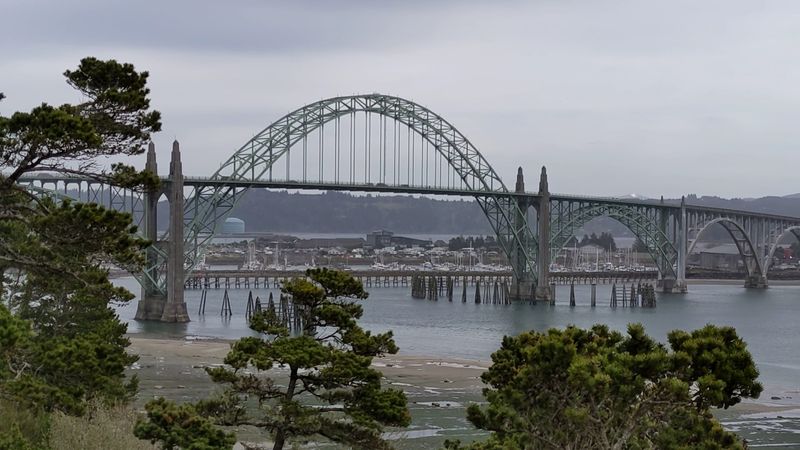
Spanning the waters of Yaquina Bay near Newport, this bridge stands as one of the most recognizable landmarks along the Oregon coast.
Designed by the famous engineer Conde McCullough, it showcases the Art Deco style that was popular during its construction era.
The through arch design gives the structure a graceful, sweeping appearance that has captivated travelers for nearly a century.
U.S. Route 101 still runs directly across this bridge, making it a vital connection for coastal communities.
Drivers crossing it are treated to stunning views of the bay, fishing boats, and surrounding hillsides.
Its ornate towers and elegant curves reflect the attention to detail that McCullough brought to every project.
Despite its age, the bridge remains in excellent condition and continues to handle heavy traffic volumes daily.
Visitors often stop nearby to take photographs and admire the craftsmanship up close.
The bridge has become a symbol of Oregon’s commitment to preserving its historic infrastructure.
Engineers and historians alike praise it as a masterpiece of early twentieth-century design.
Its enduring strength and beauty prove that quality construction can stand the test of time.
You can find it at 1950 SW Coast Hwy, Newport, Oregon.
2. Siuslaw River Bridge
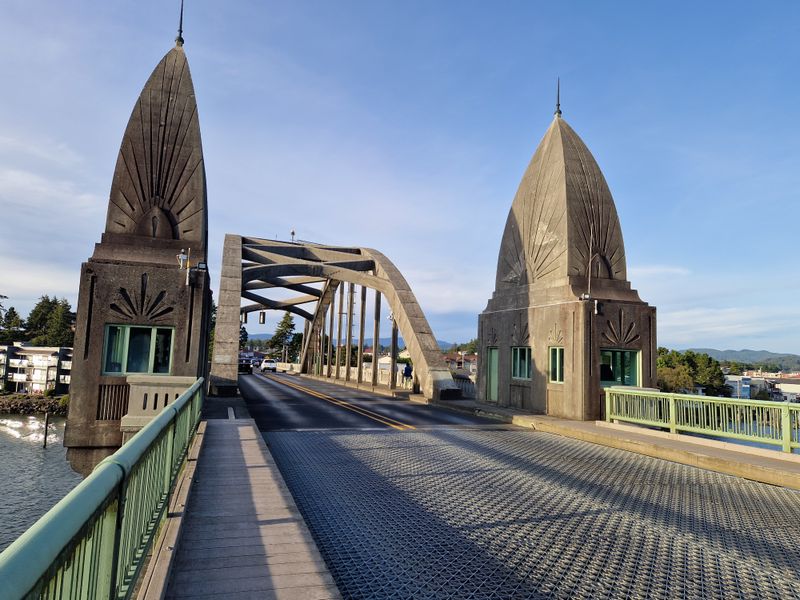
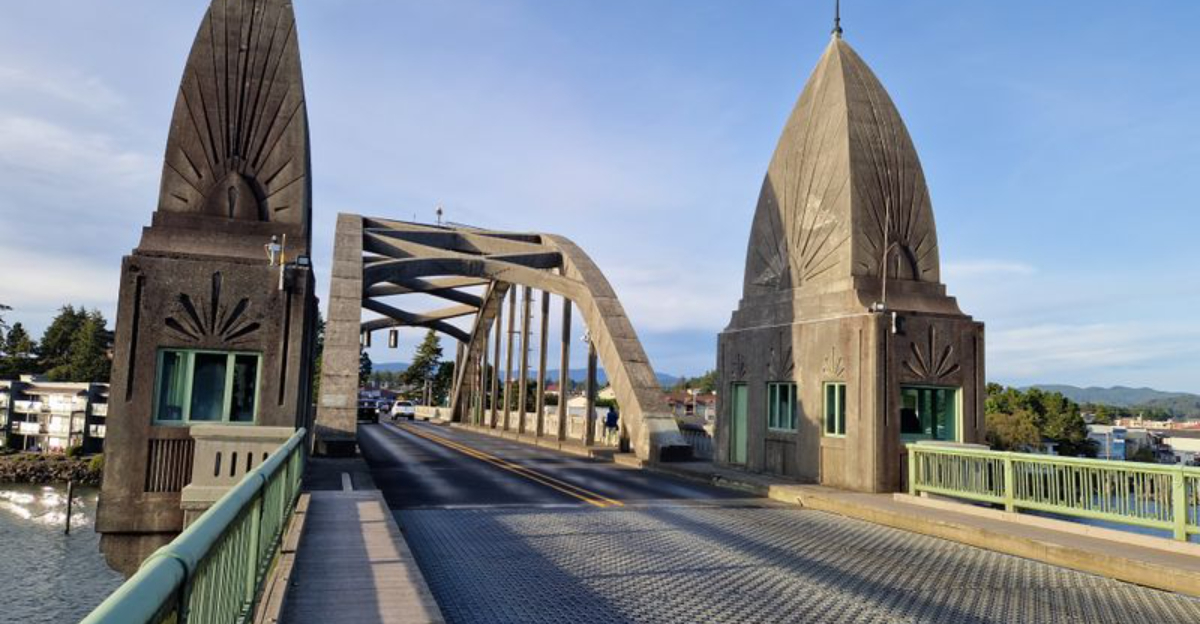
Florence owes much of its connectivity to this remarkable structure that crosses the Siuslaw River.
Another masterpiece by Conde McCullough, it features a central bascule section that can lift to allow tall vessels to pass underneath.
The Art Deco embellishments on the towers and railings give the bridge a distinctive, elegant appearance.
Travelers heading north or south on U.S. Route 101 rely on this crossing every single day.
Its movable span is a reminder of the bridge’s dual purpose, serving both road traffic and river navigation.
When the drawbridge section rises, it creates a dramatic sight that fascinates onlookers.
The bridge’s design balances functionality with artistic flair, a hallmark of McCullough’s work.
Local residents take pride in this structure, which has become a beloved part of the community’s identity.
Maintenance crews work diligently to keep it safe and operational for modern vehicles.
Photographers and architecture enthusiasts frequently visit to capture its unique features.
The bridge also plays a key role in supporting the region’s economy by facilitating transportation and commerce.
Located at 97439 US-101, Florence, Oregon, it remains a testament to innovative engineering from decades past.
3. McCullough Memorial Bridge
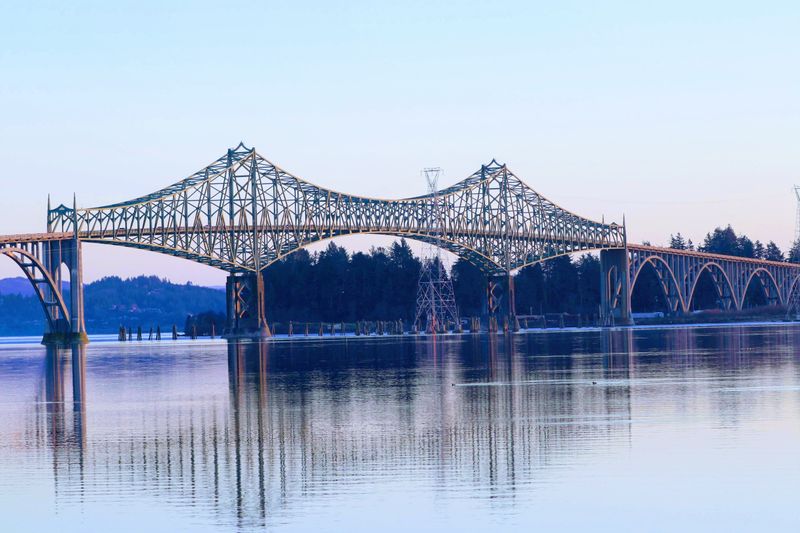
Coos Bay is home to the longest bridge on the entire Oregon coast.
This impressive cantilever truss structure stretches across the bay, providing a critical link for Highway 101 traffic.
Named in honor of the engineer who designed so many of Oregon’s iconic bridges, it serves as a fitting tribute to Conde McCullough’s legacy.
The bridge’s length and complexity make it an engineering marvel, especially considering when it was built.
Drivers crossing it experience sweeping views of the bay, with boats and wildlife often visible below.
The steel framework creates a striking silhouette against the sky, particularly at sunrise and sunset.
Despite the constant exposure to coastal weather, the bridge has been meticulously maintained over the years.
Its cantilever design distributes weight efficiently, allowing it to support heavy traffic loads without strain.
Local historians often highlight this bridge as a prime example of early twentieth-century innovation.
Tourists and residents alike appreciate the convenience it provides, eliminating the need for lengthy detours.
The bridge also plays a vital role in emergency response and evacuation routes for the region.
You can experience this engineering wonder at 93488 Kelso Rd, North Bend, Oregon.
4. Bridge of the Gods
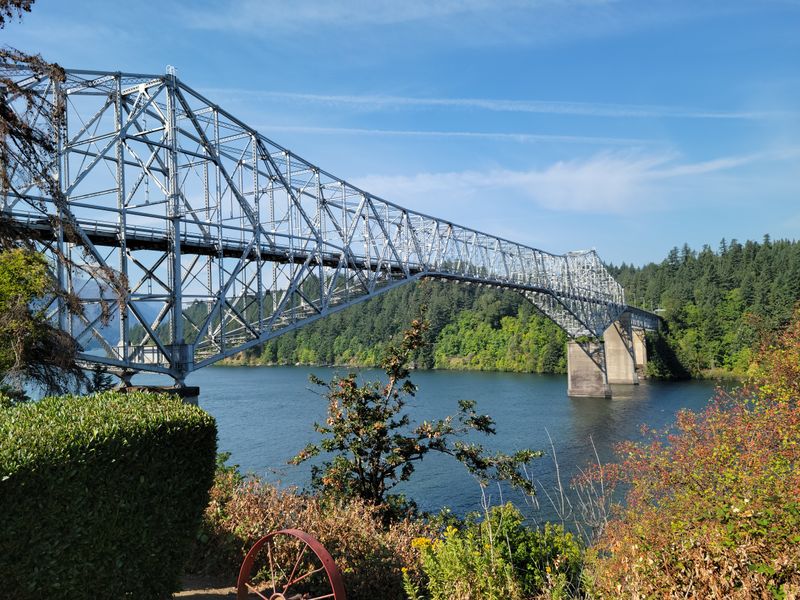
Connecting Oregon and Washington, this steel truss structure offers one of the most scenic crossings in the Pacific Northwest.
Built as a toll bridge, it allows vehicles to traverse the Columbia River while taking in breathtaking views of the gorge.
The name comes from a Native American legend about a natural land bridge that once spanned the river.
Hikers on the Pacific Crest Trail cross this bridge as part of their epic journey from Mexico to Canada.
The steel framework rises above the water, providing a sturdy and reliable route for daily commuters and long-distance travelers.
Wind often sweeps through the gorge, adding an extra challenge for drivers crossing the open span.
Despite its age, the bridge remains a crucial transportation link for the region.
Toll collectors stationed at the crossing help fund ongoing maintenance and improvements.
The surrounding landscape is stunning, with towering cliffs and dense forests framing the river below.
Wildlife sightings are common, including eagles and other birds soaring near the water.
Many visitors stop at nearby viewpoints to photograph the bridge and its dramatic setting.
Located at 806 US-30, Cascade Locks, Oregon, it continues to serve thousands of vehicles each year.
5. Hawthorne Bridge
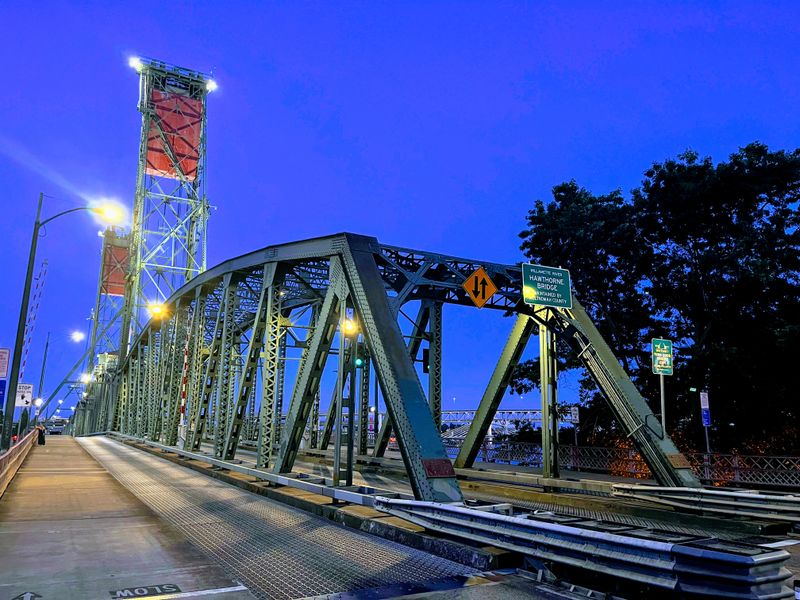
Portland’s Willamette River is crossed by several bridges, but none are as historically significant as this one.
Opening its gates over a century ago, it holds the distinction of being the oldest vertical-lift bridge still operating in the United States.
The lift mechanism allows the center section to rise vertically, accommodating tall ships and river traffic.
Thousands of vehicles, cyclists, and pedestrians use this bridge daily, making it a vital artery for the city.
Its steel trusses and distinctive towers have become iconic symbols of Portland’s skyline.
Engineers and historians marvel at how well the original design has held up over the decades.
Regular maintenance and occasional upgrades ensure the bridge remains safe and functional for modern use.
The pedestrian and bike lanes are especially popular, offering stunning views of the river and downtown area.
During bridge lifts, traffic stops briefly, creating a unique spectacle that draws curious onlookers.
The surrounding neighborhood has grown and changed dramatically, but the bridge remains a constant presence.
Local residents often refer to it with affection, recognizing its role in the city’s history and development.
You can cross it at Hawthorne Bridge, Portland, Oregon, where it continues to serve the community with distinction.
6. Broadway Bridge
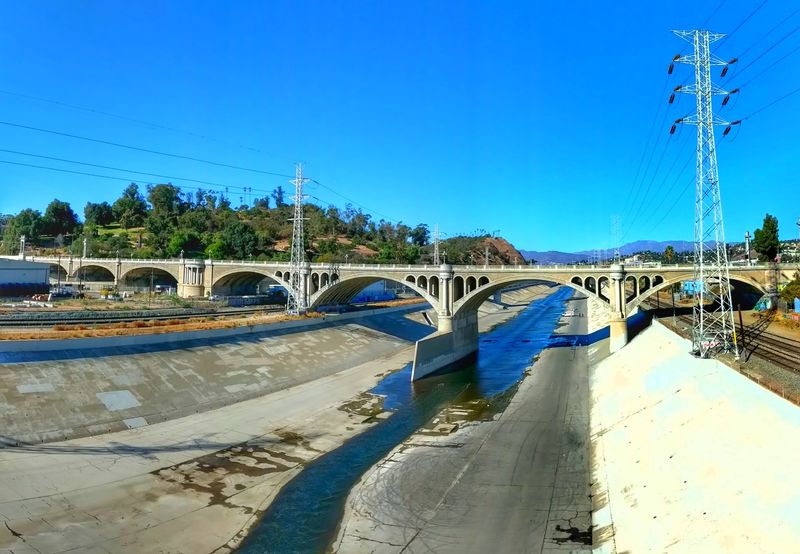
Another of Portland’s remarkable river crossings, this bascule bridge once held the record as the longest of its type anywhere in the world.
The double-leaf design allows both sides to lift simultaneously, creating a dramatic opening for river vessels.
Vehicles, cyclists, and pedestrians all share this busy crossing, which remains an essential part of the city’s transportation network.
The steel framework and mechanical systems have been carefully preserved and maintained over the years.
When the bridge opens, it creates a striking visual as the two massive sections rise into the air.
Traffic controllers coordinate the lifts with river traffic, ensuring smooth operations for everyone involved.
The bridge’s age adds to its charm, with vintage details visible in the railings and support structures.
Engineers continue to study its design, learning from the innovations that made it possible.
Pedestrians walking across enjoy panoramic views of the Willamette River and surrounding cityscape.
The bridge has witnessed Portland’s transformation from a small port town to a thriving metropolis.
Despite its historic status, it handles modern traffic demands with remarkable efficiency.
Located in the Eliot neighborhood of Portland, Oregon, it stands as a testament to early twentieth-century engineering prowess.
7. Grave Creek Covered Bridge
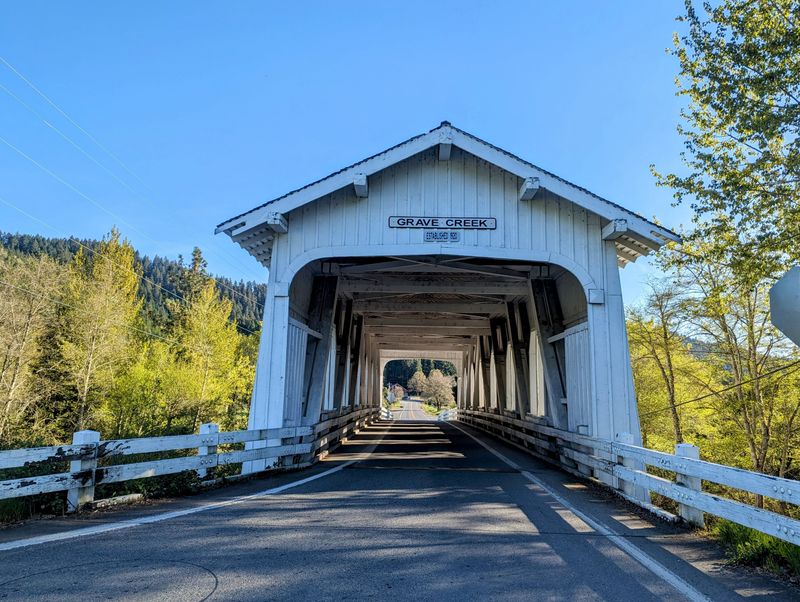
Tucked away in the scenic countryside near Wolf Creek, this covered bridge has been sheltering travelers for over a century.
Built using the Howe truss design, it features the classic covered style that once defined rural Oregon highways.
The bridge originally carried the main highway route before modern roads were constructed nearby.
Today, it remains open to vehicle traffic on Sunny Valley Loop, offering a nostalgic journey through the past.
The wooden structure and weathered exterior give it a rustic charm that photographers and history buffs adore.
Driving through the covered tunnel feels like stepping back in time to an era of slower, simpler travel.
The roof protects the wooden beams from rain and snow, extending the bridge’s lifespan considerably.
Local preservation groups work tirelessly to maintain the structure and ensure its safety for continued use.
Visitors often stop to explore the bridge on foot, examining the craftsmanship and construction techniques.
The surrounding landscape is peaceful and beautiful, with forests and farmland stretching in all directions.
This bridge serves as a reminder of Oregon’s rich transportation history and the communities that built these vital connections.
Find it at Wolf Creek, OR 97497, United States, where it continues to welcome drivers and admirers alike.
8. Historic Mosby Creek Covered Bridge
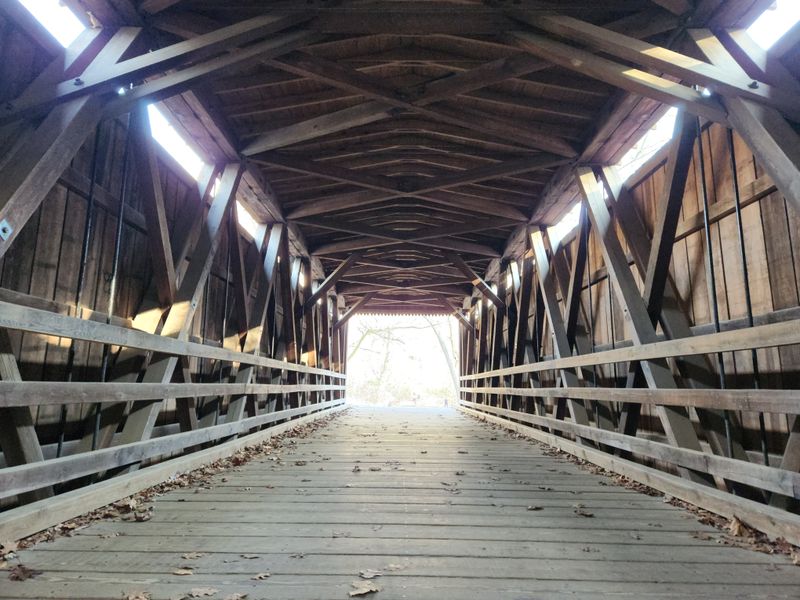
Lane County boasts numerous covered bridges, but this one holds the distinction of being the oldest still standing.
Constructed using traditional techniques, it has served local residents and travelers for more than a century.
The bridge remains open to vehicle traffic on Layng Road, connecting rural communities and providing a scenic route through the countryside.
Its wooden beams and covered design reflect the craftsmanship that was common in early bridge construction.
The roof and walls protect the structural timbers from weather damage, a clever design feature that has proven its worth over time.
Driving through the bridge offers a brief but memorable experience, with sunlight filtering through the entrance and exit.
Local historians have documented its construction and maintenance, preserving the story for future generations.
The bridge has survived floods, storms, and the passage of time, testament to the quality of its original construction.
Visitors often make special trips to see this bridge, appreciating its historical significance and rustic beauty.
The surrounding area is peaceful and picturesque, with farms and forests creating a postcard-perfect backdrop.
Preservation efforts continue to ensure the bridge remains safe and accessible for years to come.
Located at 77935 Layng Rd, Oregon, it stands as a proud symbol of the region’s heritage and commitment to preserving history.
9. Belknap Bridge
High in the Cascade Mountains, this covered bridge serves as the easternmost historic crossing of its kind still open to vehicles in Oregon.
The current structure replaced an earlier bridge that was destroyed by flooding, demonstrating the challenges of maintaining infrastructure in mountainous terrain.
Built using the Howe truss method, it combines traditional design with modern safety standards.
Highway 126 runs directly through the bridge, making it a functional part of the state’s transportation network.
Travelers heading to or from the mountains pass through this charming structure, often pausing to take photos.
The covered design protects the wooden framework from heavy snowfall and rain, common in this region.
Surrounded by dense forests and mountain peaks, the bridge offers a scenic and memorable crossing experience.
Local communities rely on it for access to remote areas, highlighting its practical importance beyond historical value.
Engineers designed the replacement to honor the original while incorporating improvements for durability and safety.
The bridge has become a beloved landmark for residents and a popular stop for tourists exploring the Cascades.
Its location at higher elevation means it experiences different weather conditions than bridges in the valleys below.
You can cross it on Highway 126 in Oregon, where it continues to serve as a vital link in the mountain transportation system.
10. Wilson River Bridge
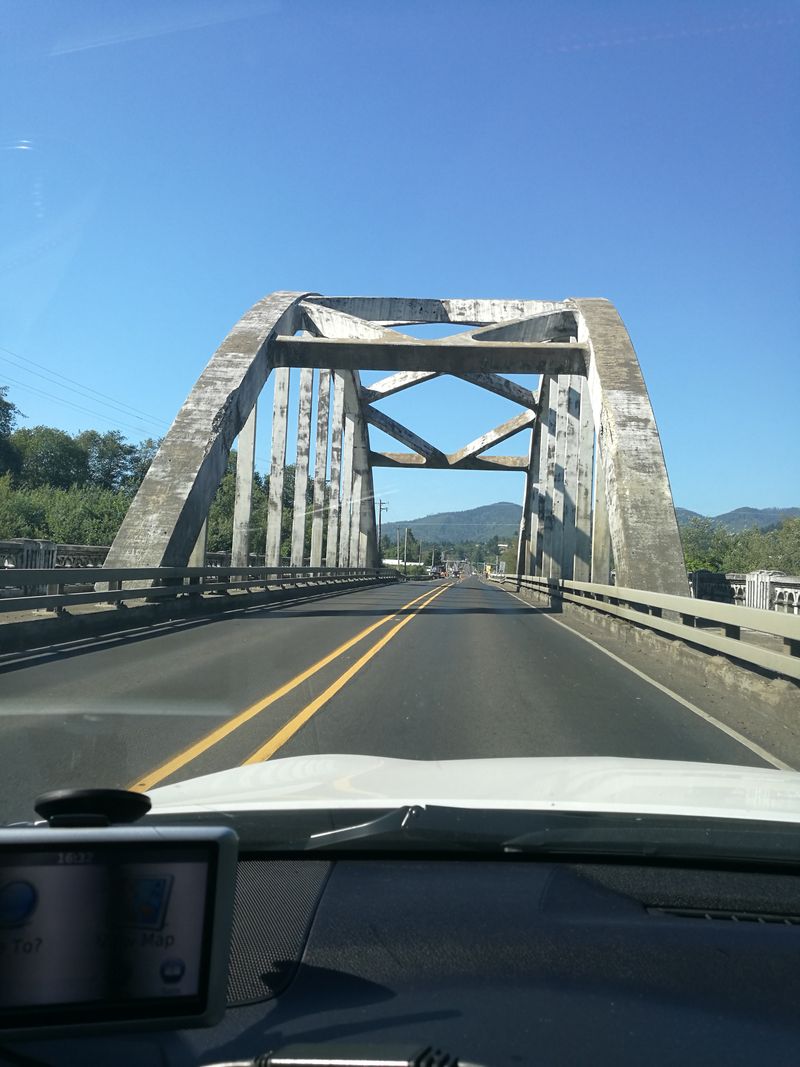
Breaking new ground in bridge construction, this structure became the first reinforced-concrete tied arch bridge in the entire United States.
Its innovative design represented a major advancement in engineering when it opened in the early twentieth century.
The tied arch configuration distributes forces efficiently, creating a strong and stable crossing over the Wilson River.
U.S. Route 101 traffic continues to flow across this bridge daily, connecting coastal communities and facilitating commerce.
The concrete construction has proven remarkably durable, withstanding decades of exposure to coastal weather conditions.
Engineers and students of bridge design often study this structure as an important milestone in construction history.
The bridge’s location along the coast provides stunning views of the surrounding landscape and river below.
Maintenance teams have worked diligently to preserve the original structure while ensuring it meets modern safety standards.
Drivers crossing it may not realize they’re passing over a piece of engineering history, but the bridge’s significance is well documented.
Local residents appreciate the convenience it provides, eliminating the need for lengthy detours through difficult terrain.
The bridge has become a quiet landmark, overshadowed by flashier coastal attractions but no less important to the region.
Find it at 3005 US-101, Oregon, where it continues to serve travelers with the same reliability it has for nearly a century.
Dear Reader: This page may contain affiliate links which may earn a commission if you click through and make a purchase. Our independent journalism is not influenced by any advertiser or commercial initiative unless it is clearly marked as sponsored content. As travel products change, please be sure to reconfirm all details and stay up to date with current events to ensure a safe and successful trip.
