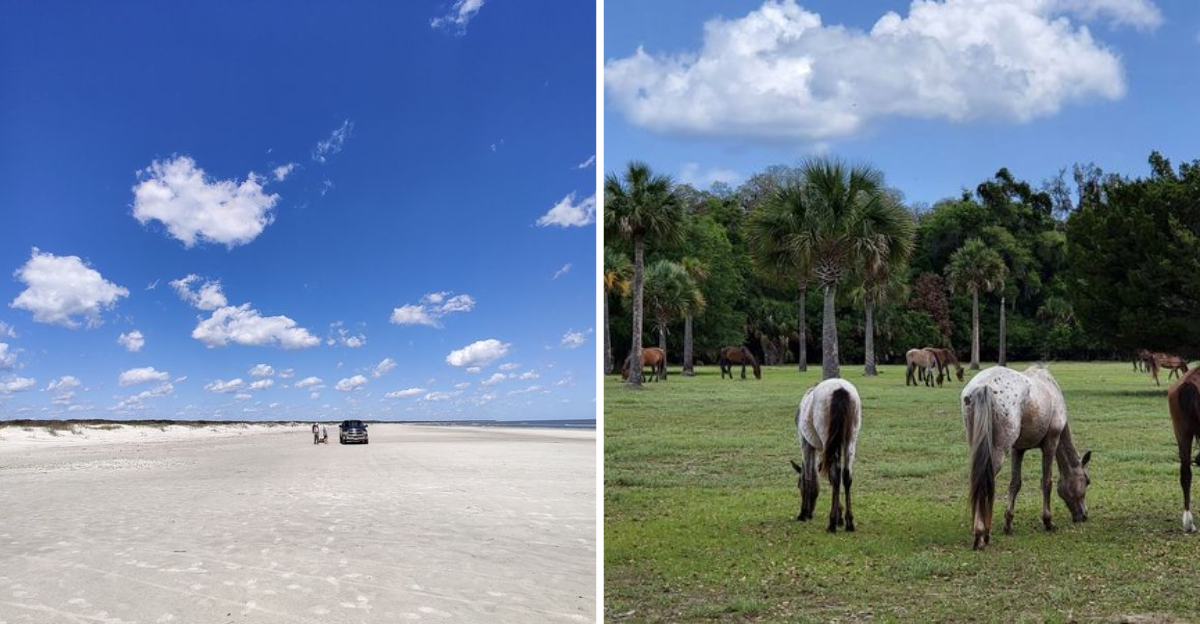
A remote barrier island along Georgia’s southern coast feels like a preserved pocket of another time, where access is limited and movement across the landscape happens without urgency. Wide stretches of untouched shoreline meet maritime forest, while historic ruins remain scattered among dunes and live oaks.
Wild horses roam freely across open fields and near weathered remnants of former estates, reinforcing a sense of life shaped more by nature than development.
The only approach requires a ferry crossing, which naturally filters crowds and preserves the island’s quiet atmosphere. Barrier islands like this highlight the intersection of coastal wilderness, layered history, and long-standing environmental preservation.
The Ferry Ride from St. Marys: Your Gateway to Another World
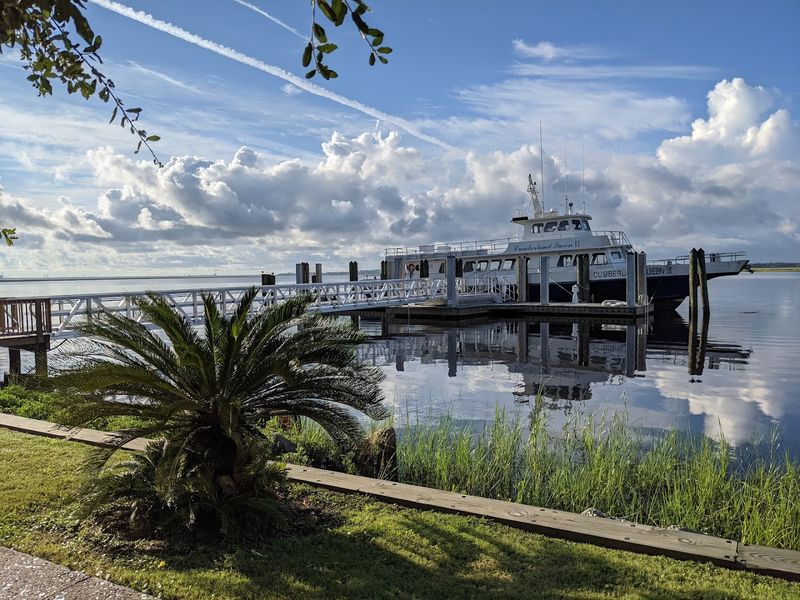
The trip to Cumberland Island begins long before you actually arrive. Boarding the ferry in St. Marys, Georgia, you get your first sense that this journey is intentional.
There are no bridges, no shortcuts, and no casual detours. The 45-minute ride across the Cumberland Sound sets the tone for everything that follows.
Watching the mainland slowly shrink behind you while the tree line of the island grows ahead is a genuinely peaceful experience. Pelicans glide alongside the boat, and the water shifts from murky green to something cleaner and more open.
It feels like crossing a threshold into a quieter version of the world.
Reservations are essential since daily visitor numbers are strictly limited, which is part of what keeps the island feeling so untouched. The ferry runs twice a day, so missing your return boat is not a casual inconvenience.
Come prepared with water, food, sunscreen, and bug spray, because once you land, the island provides nothing but beauty. That self-sufficiency requirement is also part of what makes the whole experience feel so authentic and rewarding.
Wild Horses Roaming Free Across the Island
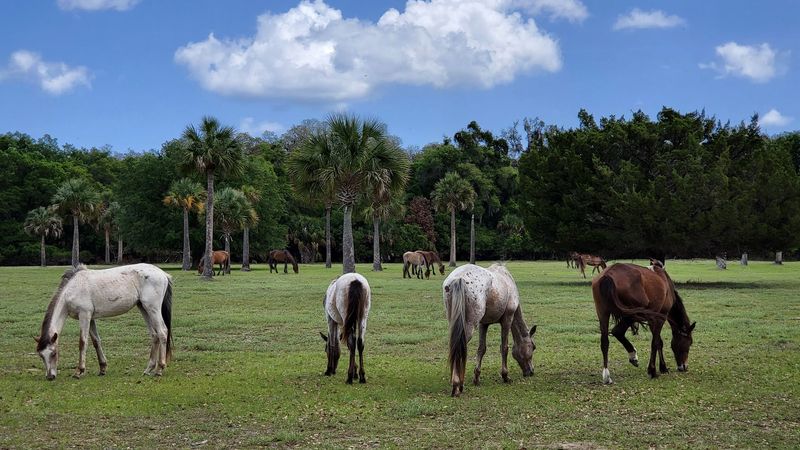
Nothing quite prepares you for the moment a group of wild horses casually strolls past you on a sandy trail. These are not tame animals performing for tourists.
Between 150 and 200 feral horses roam Cumberland Island completely unmanaged, moving between the dunes, the marshes, the maritime forest, and the ruins as they please.
Seeing them near the Dungeness ruins is a particular kind of magic. A crumbling Gilded Age mansion surrounded by overgrown gardens, with horses grazing through the archways, looks like something out of a dream or a forgotten novel.
The contrast between the wild animals and the grand old stonework is impossible to forget.
Visitors are asked to keep a respectful distance, and the horses generally ignore people with the quiet confidence of animals that know they own the place. Morning is often the best time to spot them near the southern end of the island around the Dungeness area.
If you wait near the ruins for the later ferry, reviews from visitors consistently mention that the horses tend to gather there in the afternoon. Keep your camera ready and your voice low.
The Dungeness Ruins: History Swallowed by Nature
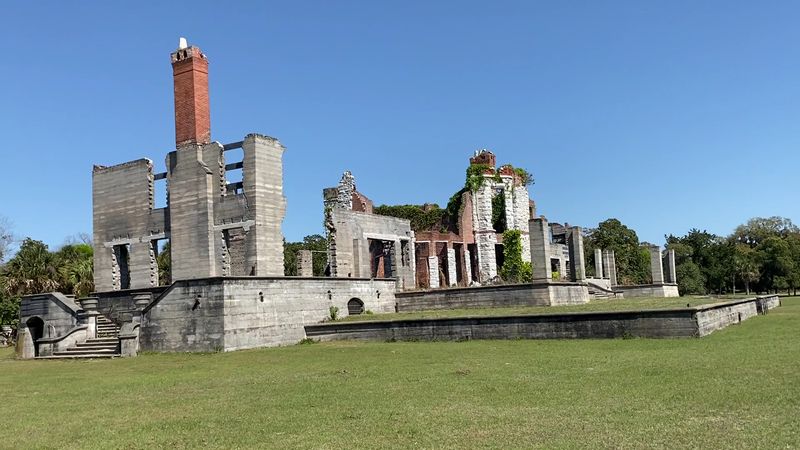
There is something deeply compelling about a place that nature has quietly reclaimed. The Dungeness Ruins on Cumberland Island are what remains of a massive Gilded Age mansion once belonging to the Carnegie family, one of the wealthiest families in American history.
The structure burned in 1959 and has been slowly consumed by vines and time ever since.
Wandering through the roofless walls and overgrown archways feels genuinely haunting in the best possible way. Sunlight filters through gaps in the stone, and the surrounding gardens have gone completely wild.
The scale of what was once here is still visible, which makes the contrast with its current state even more striking.
Before the Carnegie era, the site had an even longer history, with earlier structures dating back to colonial and Revolutionary War periods. The layered past of this single location is remarkable.
Nearby, the ruins of the old carriage house and outbuildings add even more texture to the visit. Plan to spend at least an hour exploring the grounds slowly, because the details reveal themselves gradually.
This is not a place to rush through, and the horses often wander nearby, making the atmosphere feel almost cinematic.
17 Miles of Untouched Beach All to Yourself
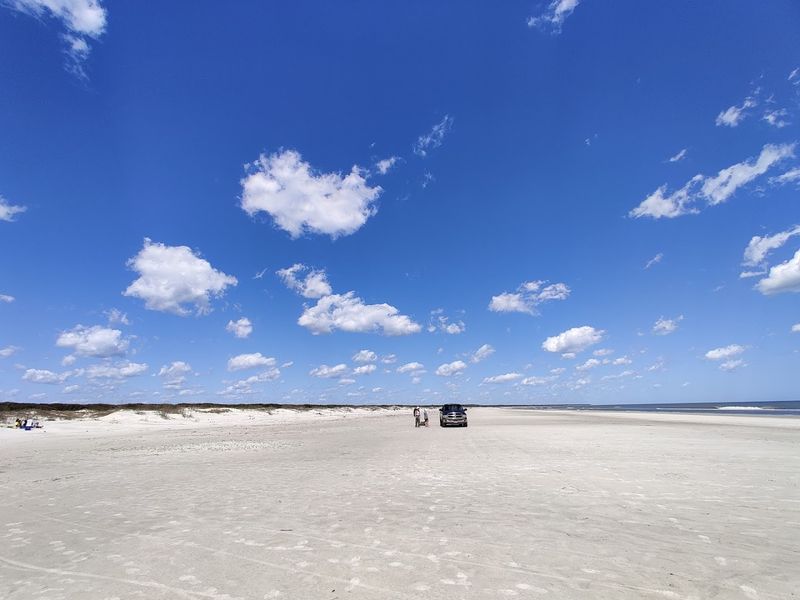
Cumberland Island has 17 miles of Atlantic coastline, and on most days, you can walk long stretches of it without seeing another person. That is not a small thing.
In a world where popular beaches are crowded from June through August, this kind of solitude feels almost surreal.
The beach itself is wide and wild, backed by rolling dunes covered in sea oats and native grasses. There are no beach chairs for rent, no vendors, and no lifeguards.
What you get instead is raw coastal beauty that looks the way Florida beaches once looked before development took over. The water is clear and the sand is pale, and the sound of the waves is the only constant soundtrack.
Horseshoe crabs, shorebirds, and loggerhead sea turtles all use this beach as part of their natural habitat. In summer, nesting sea turtles leave their tracks across the sand overnight, which rangers monitor carefully.
Bring everything you need for a full beach day, including plenty of water, since there are no concessions anywhere on the island. The walk from the main ferry dock to the beach takes about 15 to 20 minutes through a beautiful marsh boardwalk trail.
The Maritime Forest: Ancient Oaks and Spanish Moss
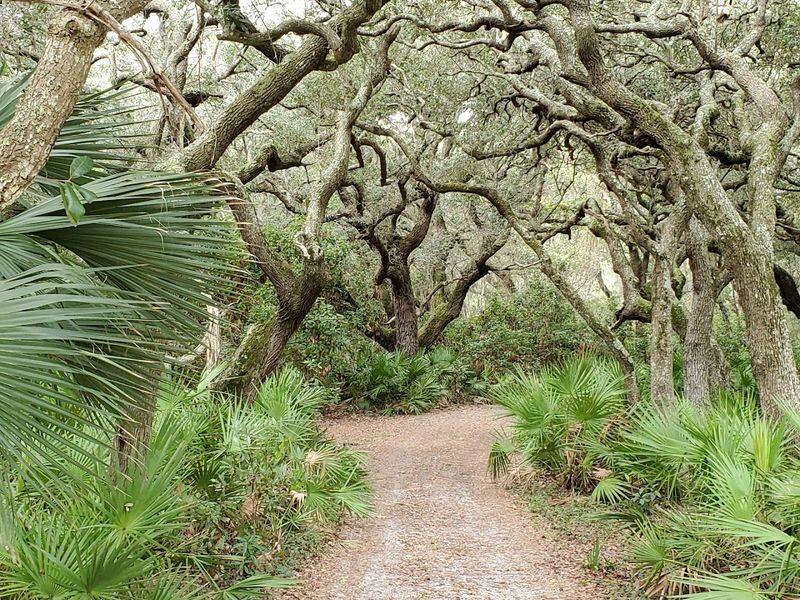
If the beach is the face of Cumberland Island, the maritime forest is its soul. Ancient live oak trees arch over the sandy trails, their massive limbs draped in curtains of Spanish moss that sway in the coastal breeze.
The light inside the forest is soft and filtered, and the air feels cooler and heavier with the scent of earth and salt.
These forests have developed over thousands of years on the protected interior of the island, sheltered from the ocean winds by the dune system. Cabbage palms grow alongside the oaks, giving the landscape a look that genuinely resembles old-growth Florida hammock forests.
That visual similarity is no accident. Cumberland Island and the Florida barrier islands share the same ecological heritage, shaped by the same forces over the same geological time scale.
Armadillos root around in the leaf litter along the trails, which always catches first-time visitors off guard. White-tailed deer are common sightings, and the birdlife is extraordinary, especially during spring and fall migration.
The trail network is mostly flat and well-maintained, making it accessible for most fitness levels. Just wear closed shoes and bring bug spray, particularly if you are visiting in warmer months.
Camping Under the Stars at SeaCamp and Beyond
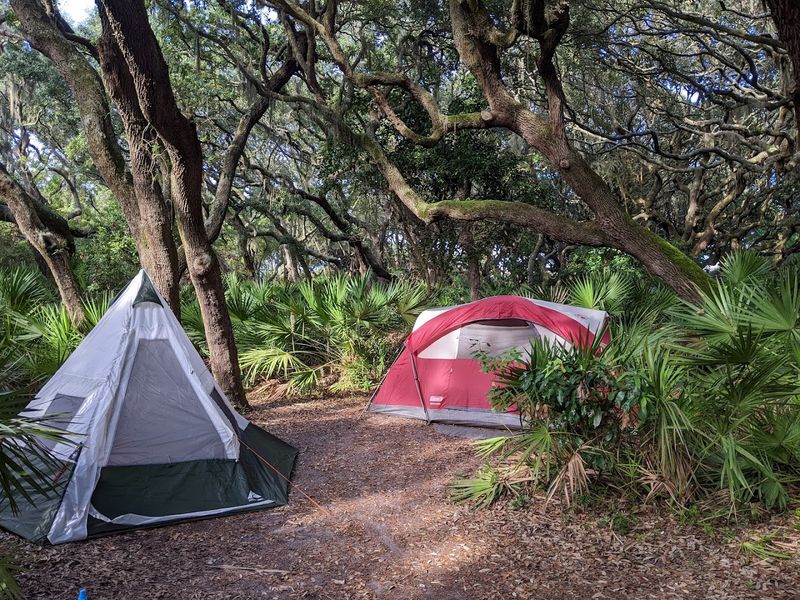
Spending a night on Cumberland Island changes the experience completely. Day visitors get a taste of the island, but campers get to feel it breathe.
The SeaCamp campground sits close to the beach and the main ferry dock, offering cold showers, restrooms, and enough space between sites to feel genuinely private.
Waking up before the day-trippers arrive means you have the trails and the beach almost entirely to yourself. Horses sometimes wander through the campsite area in the early morning, and the sounds of the island at night, waves, wind, and birds, are unexpectedly soothing.
There is something grounding about sleeping this close to nature without any of the usual buffers.
For more adventurous campers, primitive sites like Stafford Beach and Yankee Paradise are further north and require longer hikes to reach. Those sites offer even deeper solitude but come with real wilderness conditions, including ticks in warmer months, so preparation matters.
Reservations for all campsites fill up quickly, especially on weekends and during spring. The National Park Service manages all camping on the island, so booking through the official NPS reservation system well in advance is the only reliable way to secure a spot.
The First African Baptist Church and Plum Orchard Mansion
Cumberland Island holds more human history than most people expect from a wild barrier island. Two landmarks in particular stand out for very different reasons.
The First African Baptist Church in Georgia, built in 1893, is a small, simple wooden structure deep in the island’s forest. It served a community of formerly enslaved people and their descendants who built their own lives on the island after the Civil War.
The church gained additional historical attention when John F. Kennedy Jr. and Carolyn Bessette were married there in 1996.
That quiet, unannounced ceremony in such a remote and sacred space says something meaningful about what Cumberland Island represents to people who discover it. The building itself is modest and powerful at the same time.
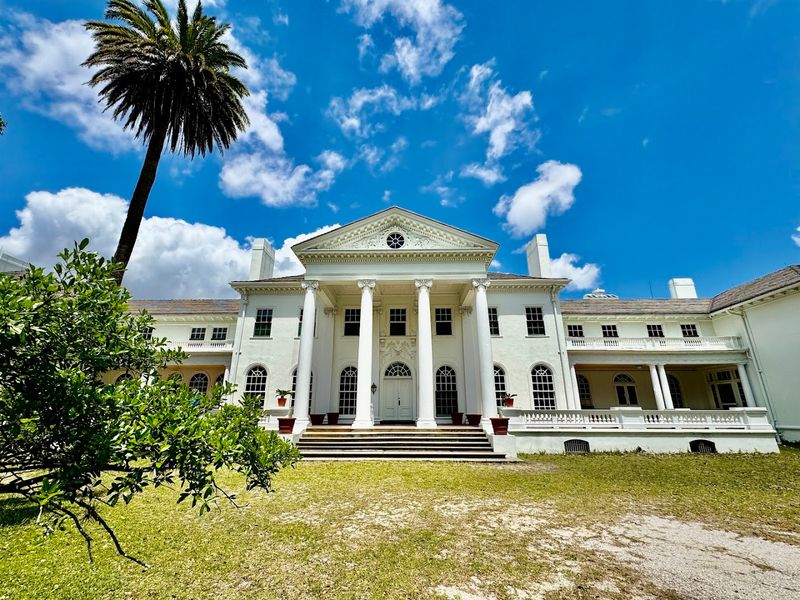
Plum Orchard Mansion, located further north on the island, is another Carnegie-era structure that has survived in much better condition than the Dungeness ruins. It is a grand Colonial Revival home that stands in striking contrast to the surrounding wilderness.
The National Park Service occasionally offers guided tours of the mansion, and the contrast between its formal architecture and the wild landscape surrounding it is genuinely remarkable. Both sites add layers of meaning to a visit that go well beyond scenic beauty.
