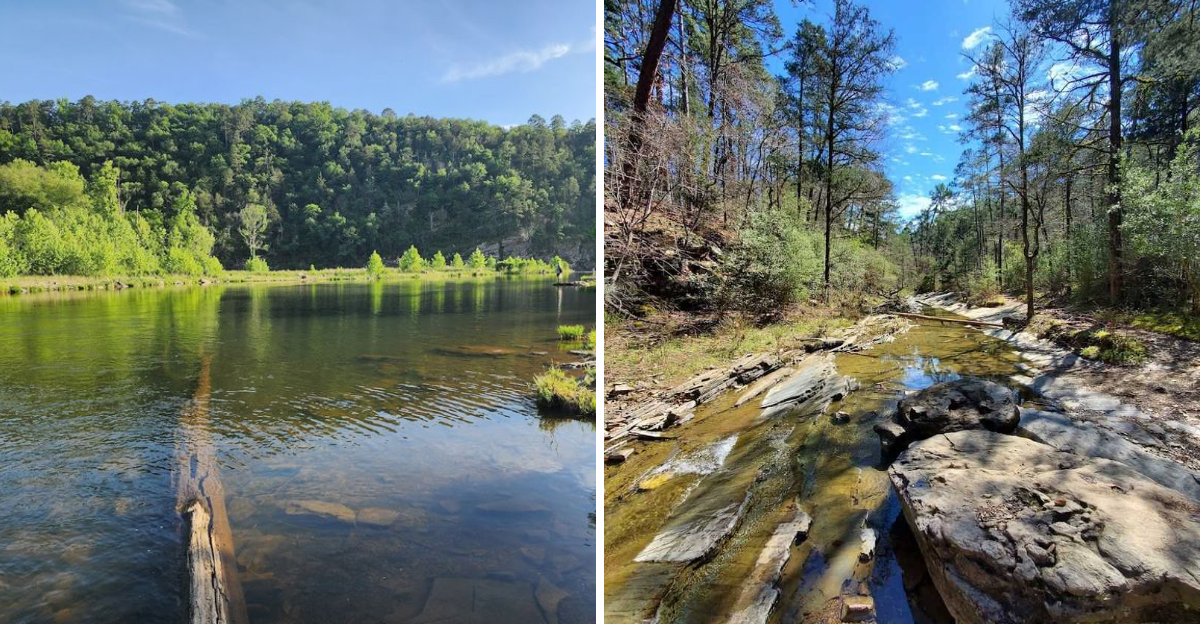
Let me be honest with you: I did not expect one mile of trail to leave me standing still, mouth open, just staring at a creek like I had never seen water move before. But that is exactly what happened.
There is something almost unfair about how much beauty gets packed into a single mile of path in the hills of southeastern Oklahoma. The trees press in close, the creek keeps pace beside you, and the whole thing feels less like a hike and more like the forest is showing off.
Beaver Creek Trail inside Beavers Bend State Park near Broken Bow, Oklahoma, is the kind of place that sneaks up on you. You think you are just going for a quick walk, and then an hour later you are still out there, finding one more bend in the trail, one more patch of sunlight hitting the water just right.
It is short enough for beginners and rich enough to satisfy anyone who takes their time. If you have been sleeping on this corner of Oklahoma, this post is your wake-up call.
Keep reading, because every section of this trail has its own personality, and every one of them is worth knowing about.
The First Step Onto the Trail Sets the Mood Immediately
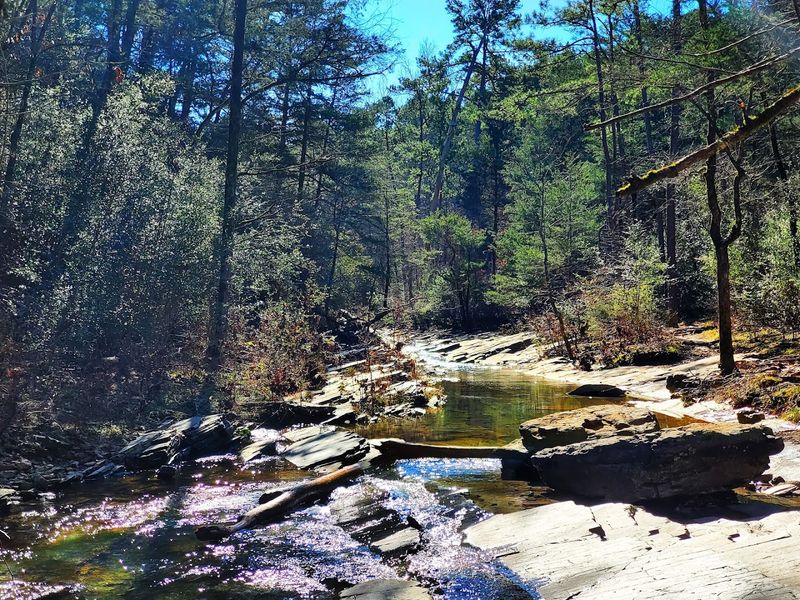
You barely make it ten feet in before the forest closes around you like a curtain dropping at the start of a show. The transition from the parking lot to the trail is almost comically fast.
Parking in the park may require a state park parking pass. One moment you are standing next to your car, and the next you are surrounded by towering pines and hardwoods with the sound of the outside world completely gone.
The trail begins with a soft, packed dirt surface that feels almost cushioned underfoot. There is an earthy smell here, that particular mix of pine resin, creek moisture, and old leaves that immediately signals your brain to slow down.
It is the kind of smell that is hard to describe but impossible to forget.
The path is clearly marked and easy to follow, which takes away any anxiety about getting lost. Even first-time hikers can walk in with confidence.
What strikes you early on is how quickly the trees overhead create a natural canopy, filtering the sunlight into long, golden streaks that fall across the trail in shifting patterns as the breeze moves through the branches.
Starting early in the morning is worth the effort. The light is softer, the air is cooler, and the birds are at their loudest.
The whole trail feels like it is waking up alongside you, and that shared energy right from the first step makes every mile feel meaningful.
Pine Trees Dominate the Skyline in the Best Possible Way
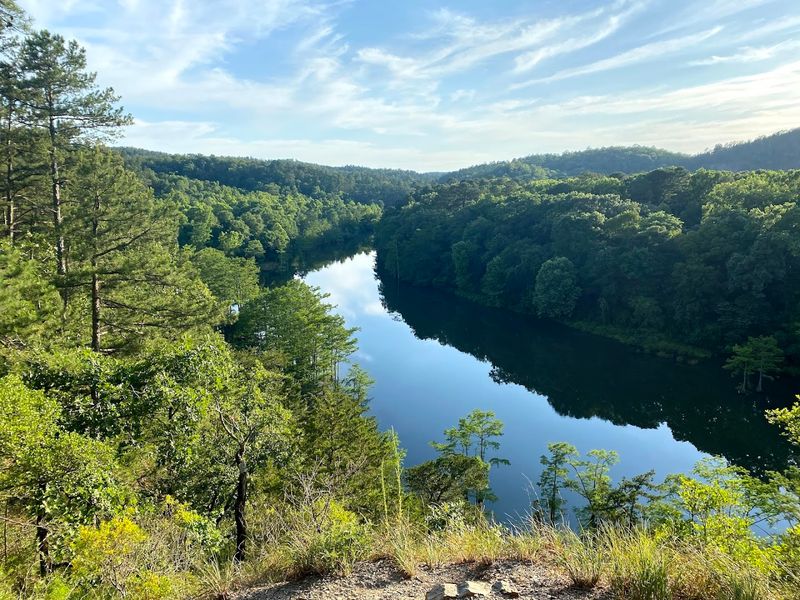
Standing at the base of a loblolly pine and looking straight up is one of those experiences that makes you feel genuinely small in the best possible way. The pines along Beaver Creek Trail are not just background scenery.
They are the main event, rising straight and tall like columns in a cathedral nobody built with hands.
Beavers Bend sits inside the Ouachita Mountains, and the pine forests here are dense, fragrant, and surprisingly dramatic. These trees can grow over a hundred feet tall, and when the wind moves through them, the sound is a low, steady rush that feels ancient.
It is one of the most calming sounds in nature, and on this trail, you get it almost the whole way through.
The pine needles carpet the ground in a thick, rust-colored layer that softens every step and keeps the trail feeling clean and natural. There is very little mud in the pine sections because the needles absorb moisture so efficiently.
That makes this stretch especially pleasant after a light rain.
Look closely at the bark of the older pines and you will see deep furrowed patterns that look almost like topographic maps. Each tree tells a story of decades of growth, and walking among them feels less like hiking and more like passing through a living archive of the forest itself.
Beaver Creek Runs Right Beside You for Most of the Hike
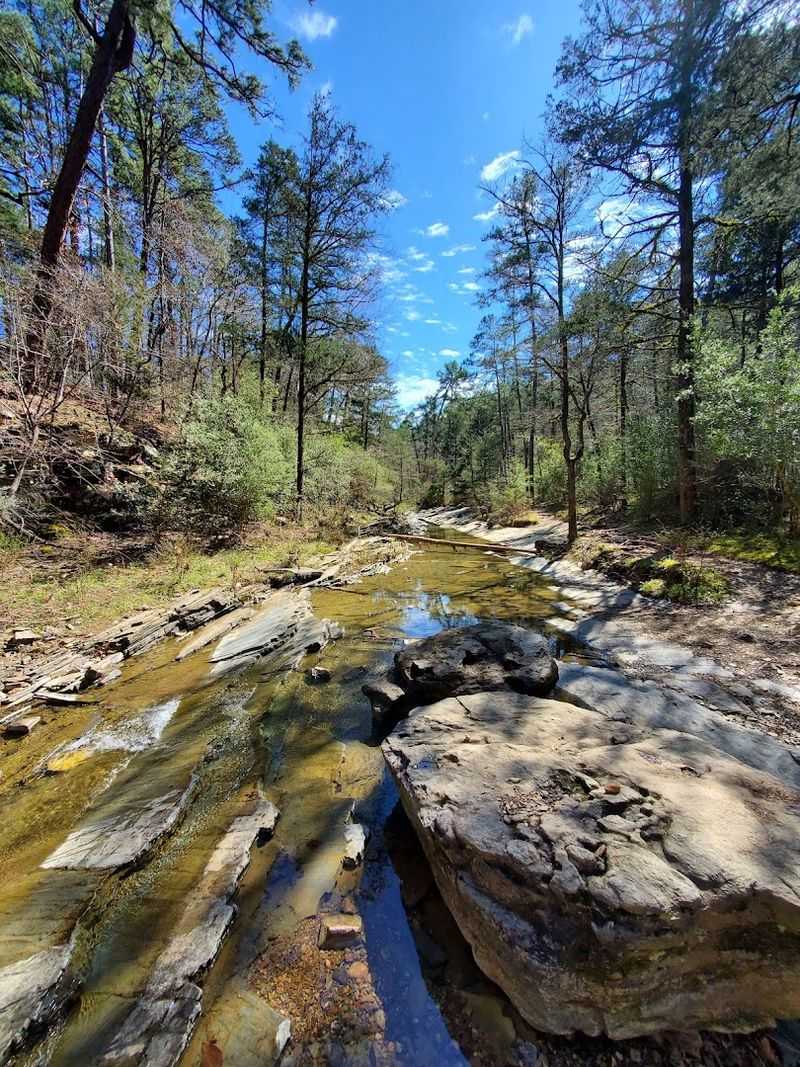
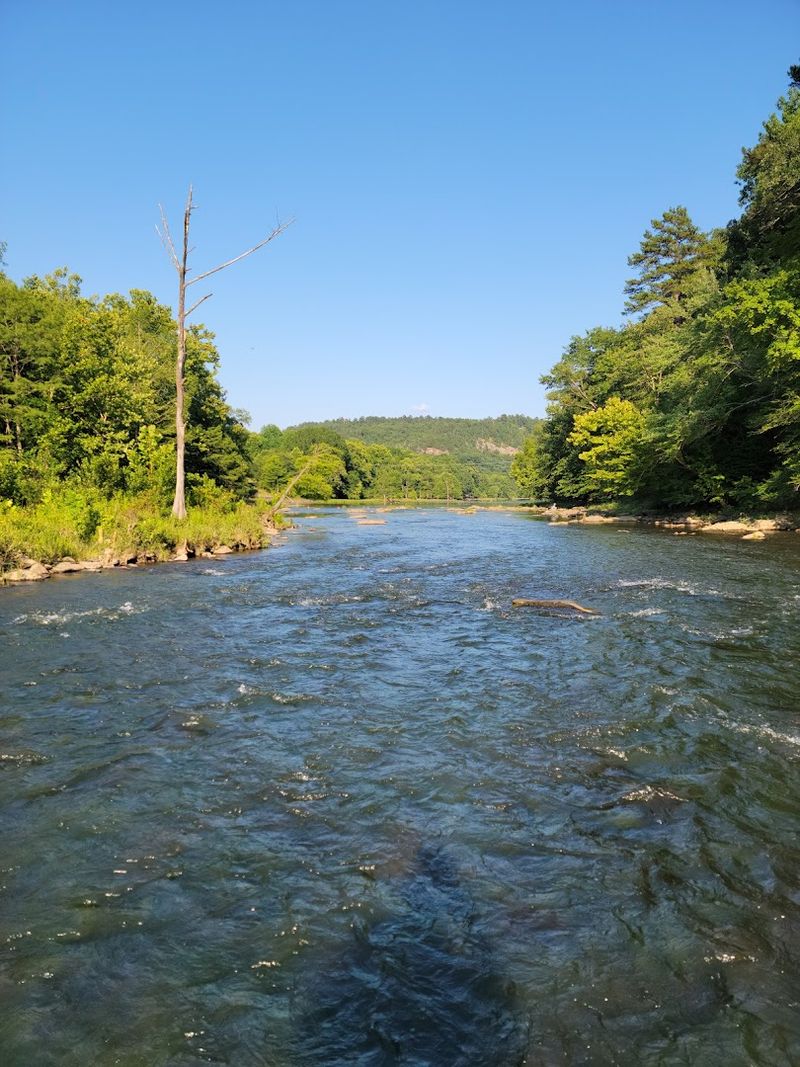
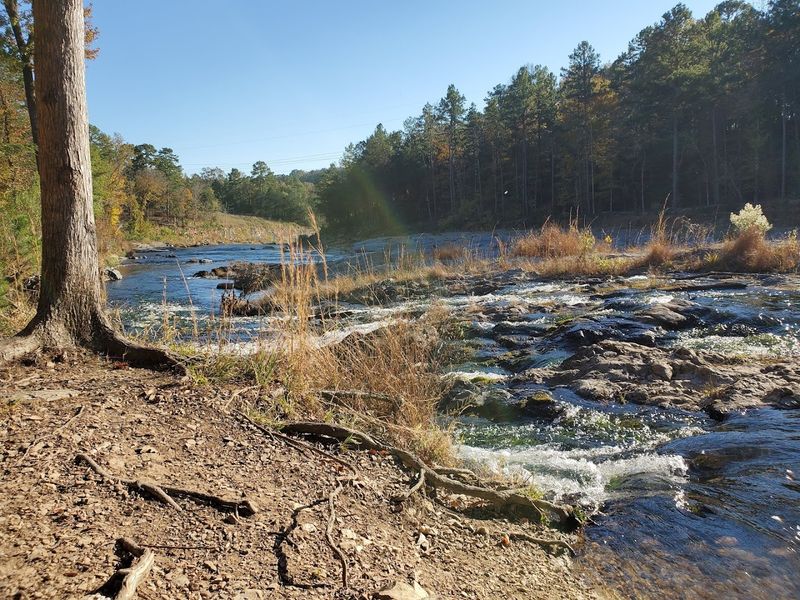
The creek is the heartbeat of this trail. You can hear it before you see it, a soft rushing sound that grows louder as you round the first bend, and then suddenly there it is, running cold and clear over smooth, dark rocks just a few feet from the path.
It feels like the trail and the creek are walking together, keeping each other company.
Beaver Creek is surprisingly clear for a forest stream. You can see straight to the bottom in most spots, watching the current move over stones and around small gravel bars.
In the shallower sections, the water barely reaches your ankle, and on a warm day, the temptation to wade in is almost impossible to resist.
The sound of moving water has a way of resetting the nervous system. Scientists have actually studied this effect, and the results back up what hikers have known forever: water sounds reduce stress hormones and lower the heart rate.
Walking next to this creek, you feel that shift happen almost immediately without even trying.
There are several natural spots along the bank where you can sit on a flat rock and just watch the water move. No agenda, no destination, just the creek doing its thing.
Those unplanned pauses end up being some of the most memorable moments the whole trail has to offer.
Wildlife Sightings Come Without Warning and Without Apology
A white-tailed deer stepped out of the brush about fifteen feet ahead of me on this trail, looked directly at me with total calm, and then walked slowly back into the trees like it had somewhere more important to be.
That kind of moment is completely normal here, and it never stops being thrilling no matter how many times it happens.
The wildlife presence along Beaver Creek Trail is one of its most underrated qualities. White-tailed deer are common and seem almost unbothered by hikers.
Wild turkey also frequent this area, and if you move quietly, you might catch a group of them picking through the leaf litter just off the path.
Birdwatching here is quietly spectacular. The forest mix of pine and hardwood attracts a wide variety of species, including woodpeckers, nuthatches, and warblers during migration season.
The creek edge adds even more variety, drawing birds that prefer to hunt near water. Bring binoculars if you have them and plan to walk slowly.
The key to seeing more wildlife is simple: slow down and make less noise. Most hikers rush through at a pace that guarantees they miss everything interesting.
When you match the rhythm of the forest instead of fighting it, the animals stop treating you like a threat and the whole trail transforms into something closer to a nature documentary you are actually living inside.
Light and Shadow Play Tricks on You All Day Long
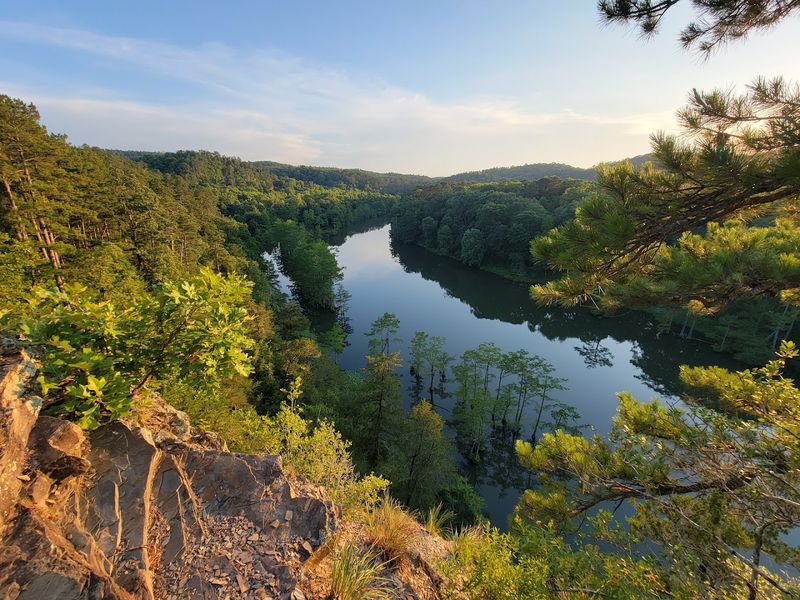
There is a particular kind of light that only happens inside a mixed forest, where pine branches and broad hardwood leaves combine overhead to create a shifting, layered canopy.
On Beaver Creek Trail, that light is everywhere, and it changes constantly depending on the time of day and how the breeze is moving through the trees above.
In the morning, shafts of light cut through the canopy at low angles and land on the forest floor in sharp, defined beams. By midday, the light becomes more diffuse and the whole trail glows with a soft green tint from sunlight filtering through leaves.
In the late afternoon, everything turns amber and warm, and the shadows stretch long across the path in ways that make even the most ordinary section of trail look cinematic.
Photographers tend to linger here longer than they planned. The combination of moving water, filtered light, and varied terrain gives almost every angle something worth capturing.
Even with just a phone camera, the images come out looking more polished than expected simply because the setting does most of the work.
Pay special attention to the spots where the creek catches the light. When sunlight hits moving water at the right angle, the reflections scatter across the surrounding rocks and trees in a way that looks almost like the forest is flickering.
It is one of those small details that stays with you long after the hike is over.
The Trail Surface Keeps Things Comfortable for All Skill Levels
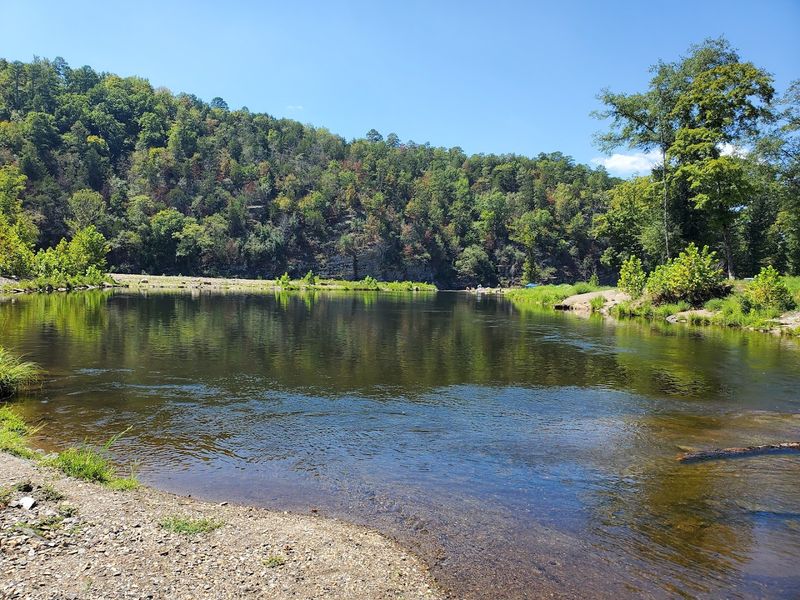
Not every trail needs to be a survival challenge to be worth your time. Beaver Creek Trail makes a strong case for the idea that accessibility and beauty are not mutually exclusive.
The surface is mostly packed dirt with some exposed tree roots and occasional small rocks, but nothing that requires technical footwear or previous hiking experience.
The elevation change along this one-mile stretch is gentle enough that most people will not feel it in their legs until after they have finished and sat down for a minute. It is not completely flat, but the rises and dips are gradual and never feel punishing.
That balance makes it genuinely enjoyable for a wide range of people, from kids who are still figuring out how their legs work to older adults looking for a peaceful outdoor experience.
Wearing trail shoes or sturdy sneakers is recommended over sandals, mostly because the creek crossings and root sections can get slippery when wet. But you do not need hiking boots or trekking poles unless you simply prefer them.
The trail is forgiving enough that most comfortable footwear will get the job done.
One practical note: the path can get soft and muddy in certain low-lying sections after heavy rain. Checking conditions before heading out is always a smart move.
But on a dry day, this trail is about as user-friendly as outdoor hiking gets, and that ease is part of what makes it so easy to love.
Seasonal Changes Transform the Same Path Into Something New
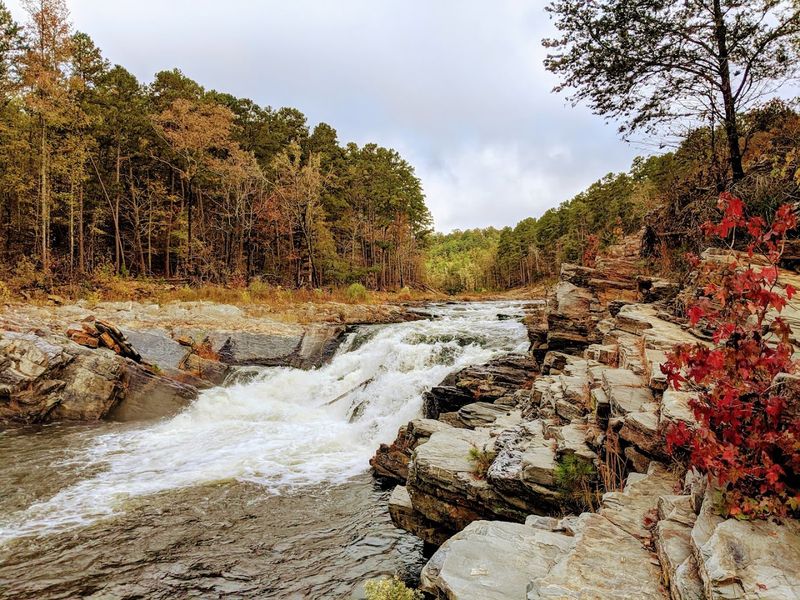
Come back to this trail four times a year and you will swear you are walking through four completely different places. That is the quiet magic of a forest path that mixes evergreen pines with deciduous hardwoods.
The bones of the trail stay the same, but the clothing it wears changes with every season in ways that keep it perpetually interesting.
Spring brings an explosion of green so vivid it almost looks artificial. New growth on the hardwoods creates a bright, lime-colored canopy, and wildflowers appear along the creek banks in small clusters of color.
The creek runs fuller and faster from winter snowmelt and spring rain, and the sound of the water becomes more dramatic and energetic.
Fall is probably the most popular season for a reason. The hardwoods turn gold, orange, and deep red while the pines stay green, creating a color contrast that looks almost deliberately artistic.
The air gets crisp, the light turns warm and golden, and the trail feels quieter in a way that is deeply satisfying.
Summer offers dense shade and cooler temperatures under the canopy, making midday hikes more comfortable than you might expect. Winter strips the hardwoods bare and opens up long views through the forest that are completely invisible in other seasons.
Each version of this trail is worth experiencing at least once, and the best hikers make a point to return.
Quiet Moments on This Trail Hit Differently Than You Expect
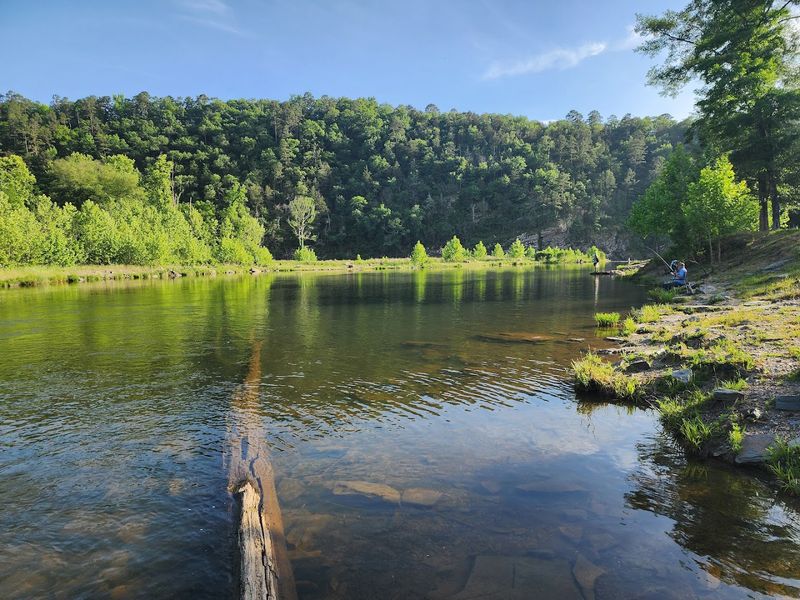
There is a spot about halfway along the trail where the creek widens slightly and the trees pull back just enough to let a wide patch of sky show through. Standing there with the water moving past and the forest on all sides, the silence is so complete it almost has a texture to it.
That kind of quiet is increasingly rare, and finding it feels like stumbling onto something precious.
Beavers Bend is not a secret, but Beaver Creek Trail specifically tends to draw a more intentional crowd than the busier spots in the park. The people here are generally quiet, moving slowly, and clearly in it for the experience rather than the social media moment.
That energy is contagious in the best way possible.
Sitting still for even ten minutes on this trail reveals a whole layer of activity that moving through would completely miss. The soft clicking of insects, the occasional splash of a fish in the creek, the distant drumming of a woodpecker working somewhere deeper in the forest.
The trail does not get louder when you stop. It gets richer.
If you are someone who carries a lot of mental noise around with you, this trail has a way of absorbing it. Not through any mystical process, just through the simple and powerful combination of moving water, living trees, and enough distance from everything else to remember what silence actually feels like.
Practical Tips Make the Whole Experience Smoother and More Enjoyable
A trail this good deserves a little preparation so nothing gets in the way of enjoying it fully. The most important thing to bring is water, even for just a one-mile hike.
The combination of Oklahoma heat and physical activity can dehydrate you faster than you expect, especially in summer. A reusable water bottle and a light snack go a long way toward keeping energy levels steady throughout the walk.
Insect repellent is worth applying before you start, particularly in the warmer months. The creek environment creates ideal conditions for mosquitoes, and walking through without protection can turn a lovely hike into an itchy memory.
A small travel-size repellent fits easily in any pocket or daypack and is absolutely worth the minimal effort.
The trailhead for Beaver Creek Trail is accessible from within Beavers Bend State Park, located near Broken Bow, Oklahoma. The park address is 4350 S Hwy/US Hwy 259A, Broken Bow, OK 74728.
Arriving early on weekends gives you the best chance of finding parking without circling. The park operates year-round, though trail conditions vary seasonally, so checking the Oklahoma State Parks website before your visit is always a smart move.
Cell service inside the park can be unreliable, so downloading an offline map before you arrive is a practical habit. The trail is short enough that getting lost is unlikely, but having a map gives peace of mind and lets you focus entirely on the experience rather than logistics.
Dear Reader: This page may contain affiliate links which may earn a commission if you click through and make a purchase. Our independent journalism is not influenced by any advertiser or commercial initiative unless it is clearly marked as sponsored content. As travel products change, please be sure to reconfirm all details and stay up to date with current events to ensure a safe and successful trip.
