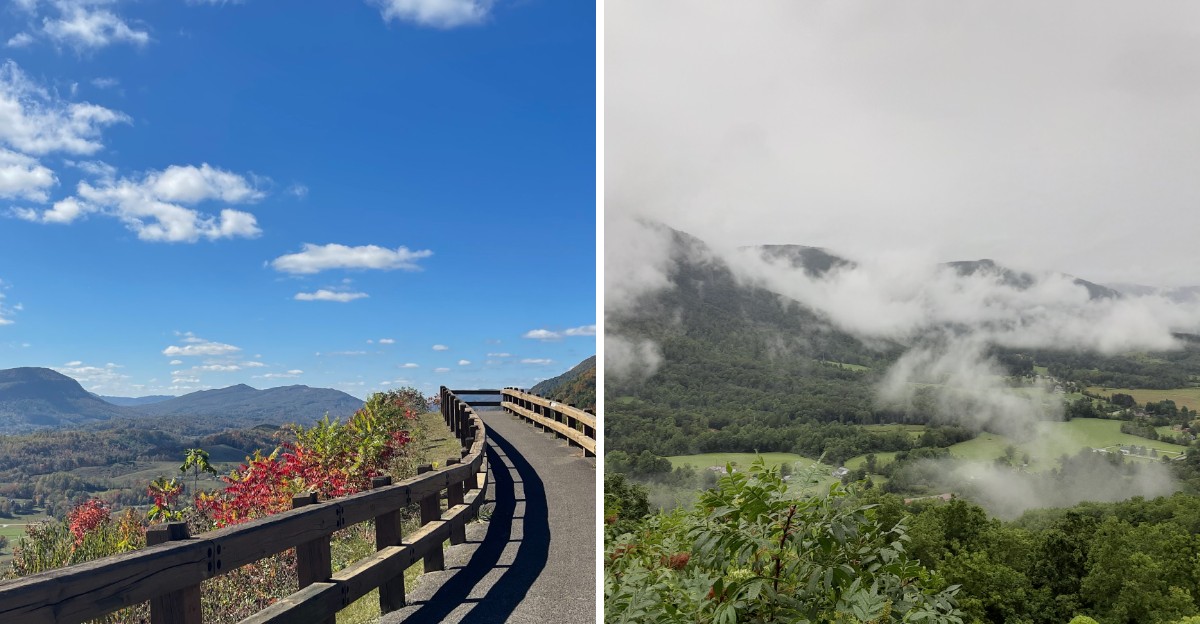
Few roads in America can claim the kind of history this one carries. It has been traveled for centuries, first by Native Americans, then by settlers, and eventually by stagecoaches and early automobiles.
Today, it winds through a forgotten corner of Virginia, passing through small towns, farmland, and forest. The route is scenic, with curves that follow the landscape and views that open up around every bend.
There are historic markers along the way, and plenty of places to stop for a meal or a stretch. It is not a fast road, and it is not meant to be.
It is a road for taking your time, for noticing the details, and for appreciating the layers of history that are still visible. Virginia has plenty of scenic routes, but this one has a story to tell.
A Pull Off That Steals the Entire Show
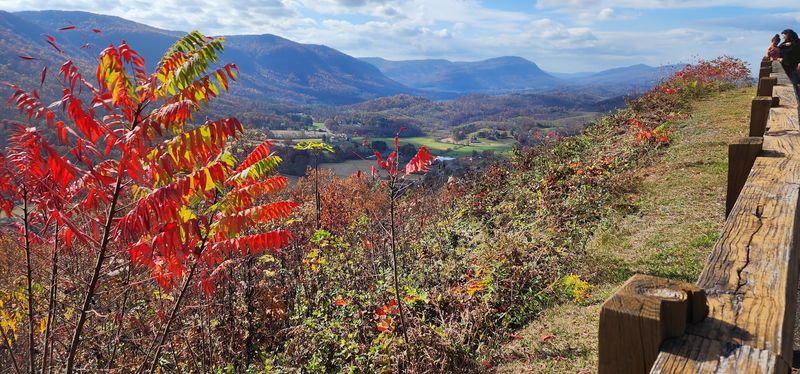
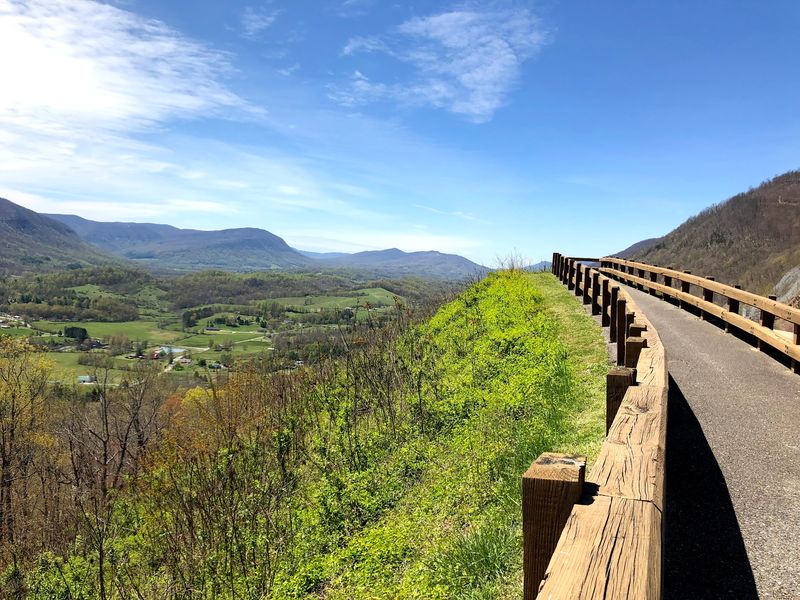
Pull off US Route 23 near the crest of Powell Mountain and the world seems to drop away beneath your shoes. The walk from the parking lot is short.
The payoff lasts a lot longer.
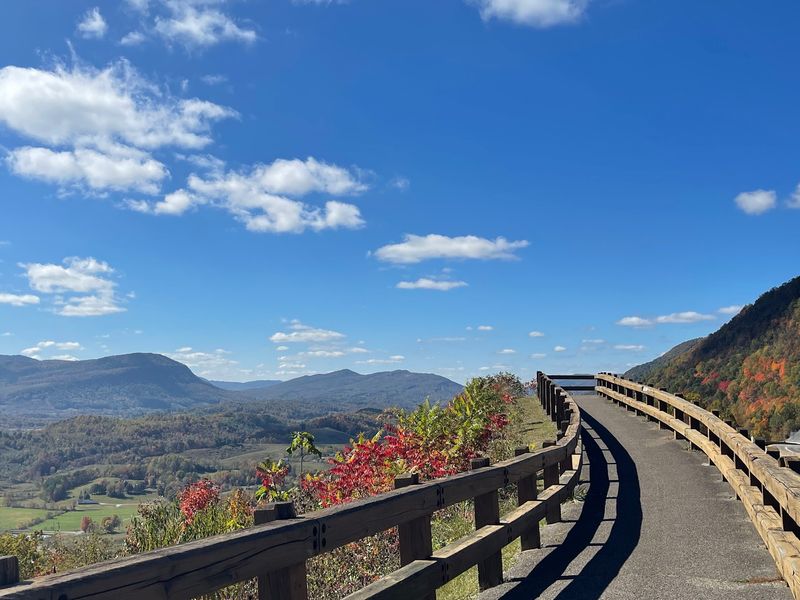
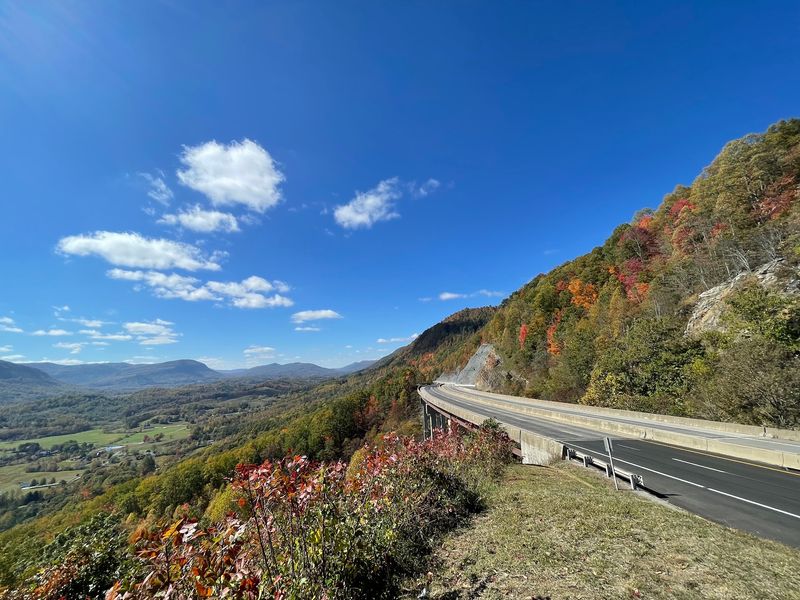
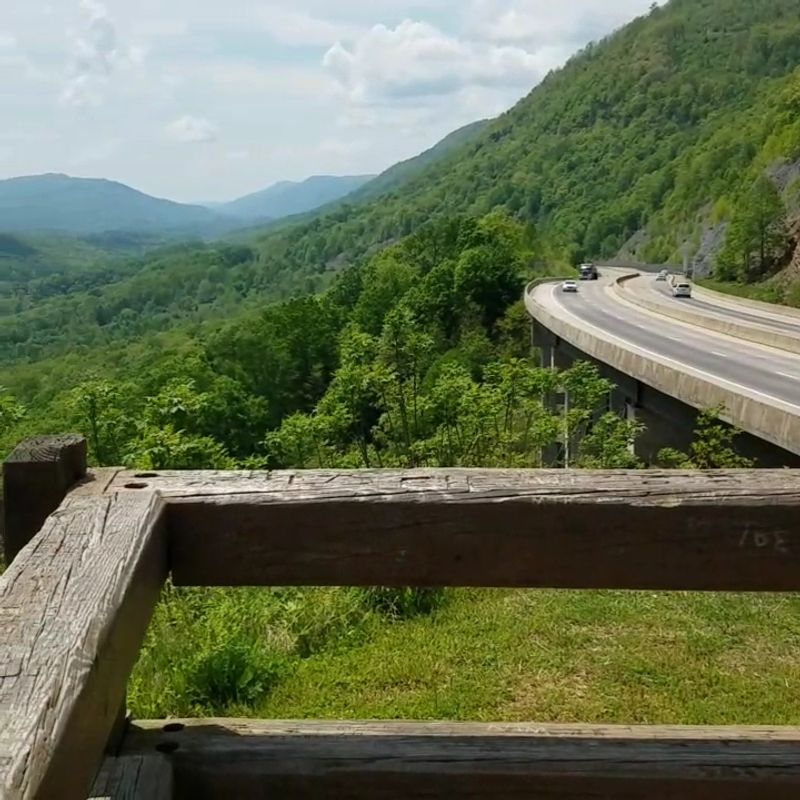
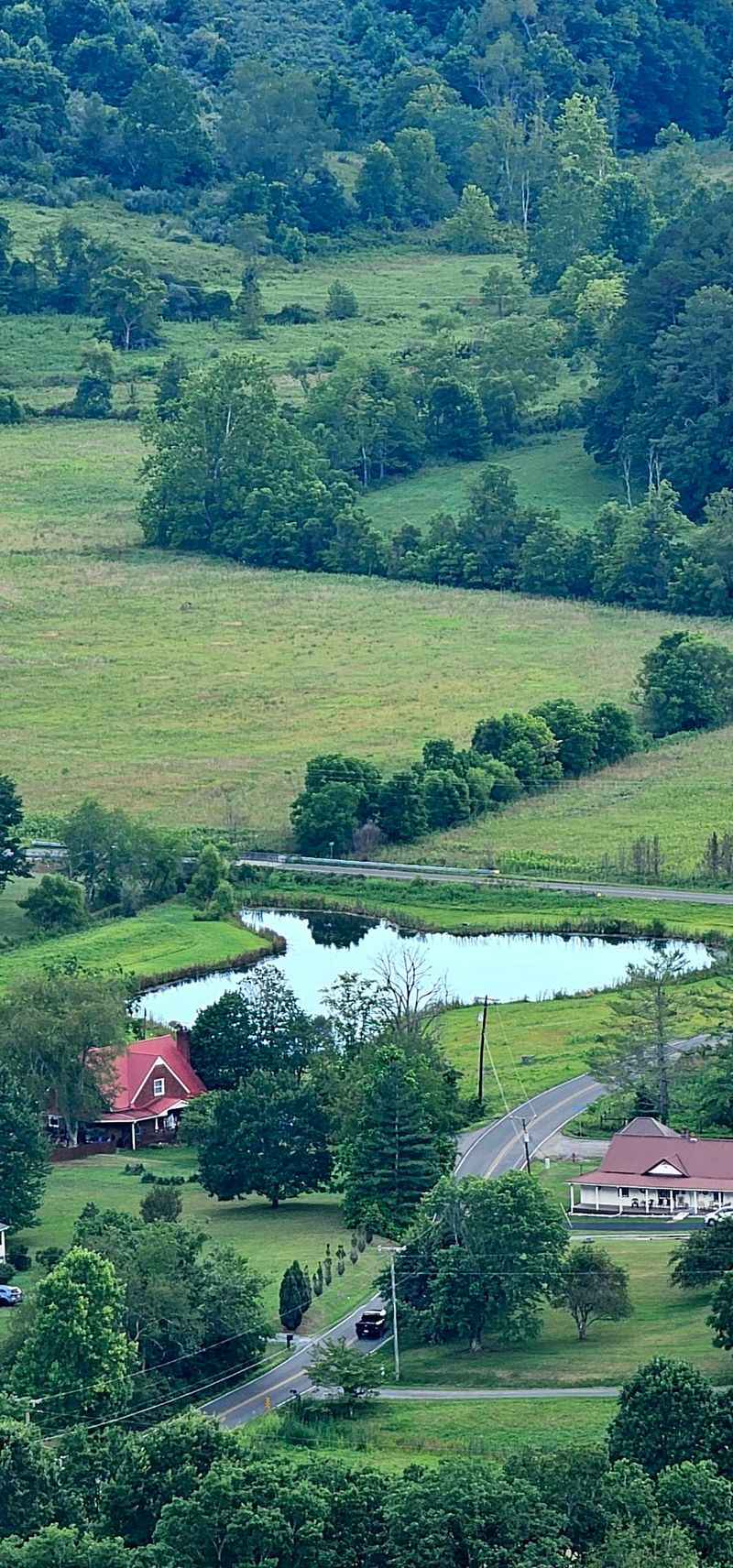
Powell Valley Overlook hands you farms stitched into green squares, the Powell River curling through them, and ridge after ridge fading into soft blue. A gazebo offers shade.
Picnic tables invite a slow lunch.
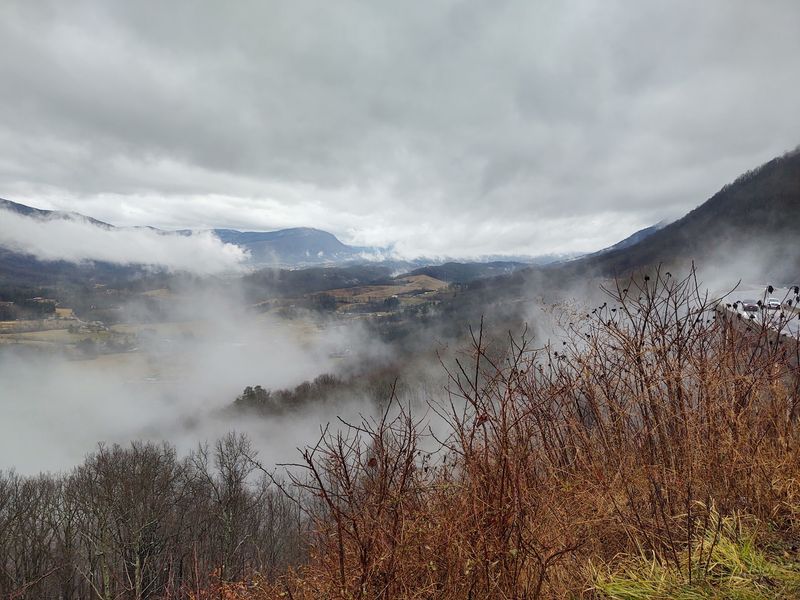
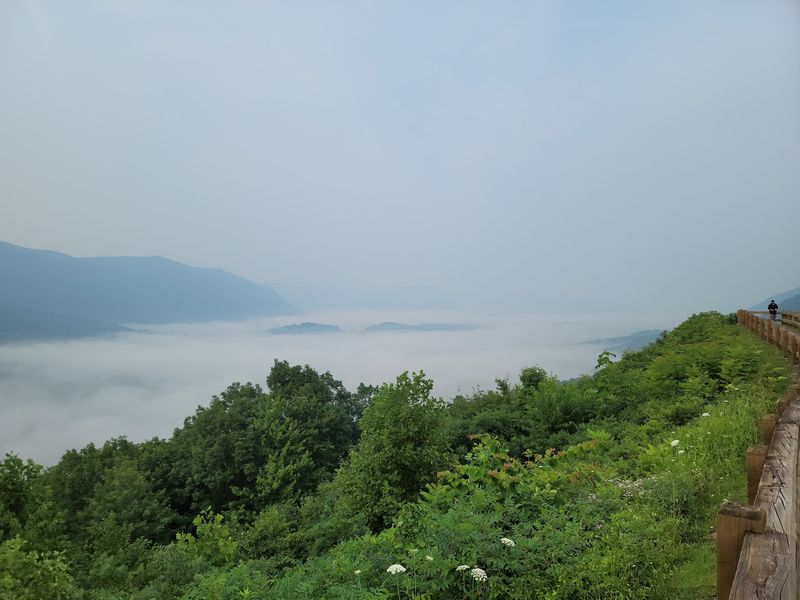
Morning fog behaves like a poured blanket down there, hiding barns and letting only the highest ridgelines poke through. Autumn turns the slopes into a bonfire of orange and gold.
Winter snow sharpens every line.
Restrooms are not available, so handle that in Big Stone Gap or Norton first. Parking is generous, and a brochure stand points you toward nearby attractions.
Names carved along the walkway posts hint at generations of families who treat this railing like a tradition.
Southwest Virginia hides its best views behind switchbacks, and this one asks almost nothing of you. No hiking boots required.
No gate, no closing time, just a highway shoulder that happens to open onto one of the state’s grandest panoramas.
Come back twice. The valley never wears the same face.
Where a Notch in the Rock Redrew the Map
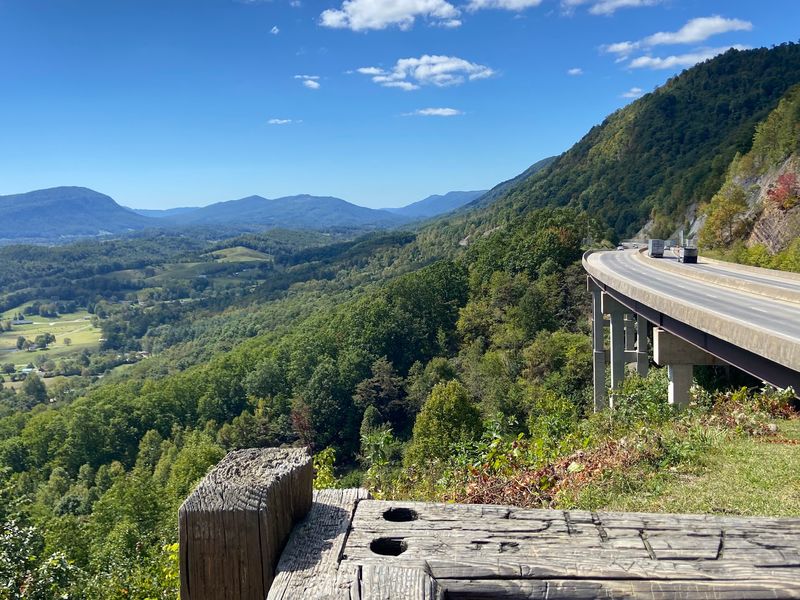
Cumberland Gap is nothing more than a dip in a long wall of rock, and that dip rewrote the map of America. Buffalo found it first.
Native hunters used it for generations before Daniel Boone and his axemen widened the path into the Wilderness Road.
Settlers poured west through the notch, hauling everything they owned toward Kentucky and whatever came next. Wagons broke.
Feet blistered. The line kept moving.
Cumberland Gap National Historical Park protects the whole story now, and the Virginia portion sits in Lee County. Drive up to Pinnacle Overlook and three states crowd the horizon at once.
Ranger led tours drop into Gap Cave, where stalactites hang above signatures scratched by Civil War soldiers. Hensley Settlement, a restored mountain homestead on Brush Mountain, asks for either a rugged shuttle ride or a serious climb.
Tri-State Peak marks the spot where three borders meet, which earns a goofy photo and a genuine history lesson in the same minute.
Stand inside the restored gap, cleared to resemble what pioneers saw, and the ground underfoot feels older than the country itself. Plenty of places have scenery.
This one carries weight.
Log Walls and Woodsmoke at Martin’s Station
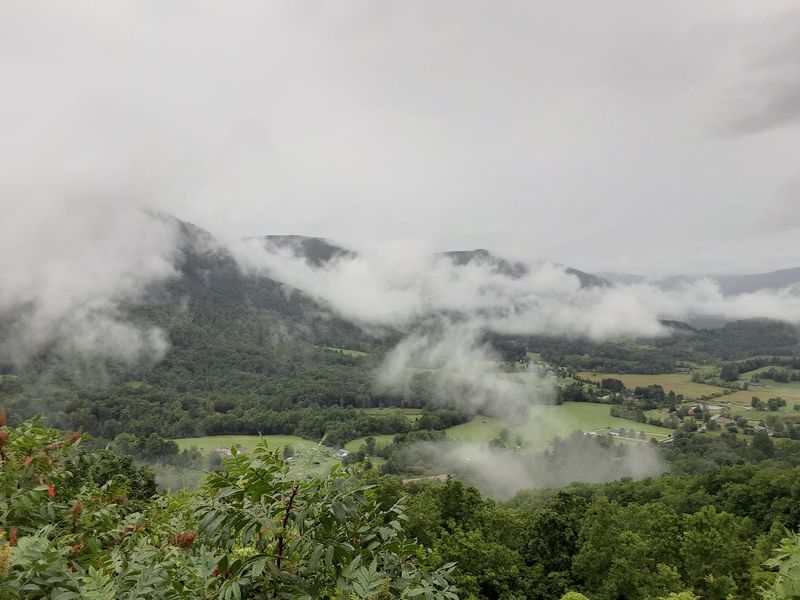
Woodsmoke drifts across a meadow in Ewing, and suddenly the calendar slips backward a couple of centuries. Wilderness Road State Park keeps a reconstructed frontier fort called Martin’s Station, built to mirror the outpost that once marked the far edge of colonial settlement.
Timber palisades enclose cabins with dirt floors, iron pots, and a blacksmith shop that smells exactly the way you imagine.
Costumed interpreters handle the demonstrations, hammering nails, stirring cornmeal over open flame, and running musket drills that make kids jump. Each spring the park stages a large reenactment of a raid on the station, complete with cannon smoke and drums.
Beyond the fort, the elegant Karlan Mansion sits on the same grounds, a reminder that this frontier eventually grew comfortable.
The Wilderness Road Trail runs flat and easy from the park toward the Cumberland Gap, perfect for bikes, strollers, or a lazy stroll at golden hour when deer wander into the fields.
Lee County stays quiet, which is precisely the charm. Few places in Virginia let you touch the frontier era this directly, with no velvet ropes and no crowds elbowing for the same photo.
Wear shoes you do not mind getting muddy.
Big Stone Gap Wears Its Coal and Its Storybook Fame
Coal built this town. Books made it famous.
Big Stone Gap sits where forks of the Powell River meet, hemmed in by ridges so close they seem to lean over the rooftops. Brick storefronts line a downtown you can walk end to end without hurrying.
The Southwest Virginia Museum Historical State Park fills a handsome stone mansion, telling how mining and railroads pulled fortune seekers into these hollows.
Across town, the June Tolliver House anchors the legend behind The Trail of the Lonesome Pine, the novel that turned this valley into a household name. Its outdoor drama, the official one for the Commonwealth of Virginia, plays through the warm months at the adjoining playhouse.
Fans of Adriana Trigiani’s novels will recognize streets, storefronts, and the pharmacy that inspired her fiction, since a film adaptation was shot right here.
The Harry W. Meador Jr. Coal Museum keeps the hard side of the story honest, with lamps, tools, and equipment from the deep mines.
Grab a coffee, look up at the wall of green above the rooflines, and understand why writers keep coming back. Small towns rarely get material this good handed to them.
Natural Tunnel Pulls Off a Trick No Other Park Can
Nature carved a railroad tunnel here long before engineers showed up with dynamite. Water and time hollowed a limestone passage through the mountain, and a working rail line still slides through it, which is a genuinely absurd thing to witness from an observation deck.
Natural Tunnel State Park in Duffield wraps around that hole in the earth with trails, overlooks, and an amphitheater tucked into the canyon.
A chairlift carries you from the rim down to the canyon floor during the warm season. Given the choice between the lift and the steep walk back up, my vote goes to the chairlift, every single time.
Lovers Leap Overlook gives the wide angle, with sheer cliff walls dropping toward the creek below.
A replica blockhouse on the grounds nods to the frontier station that once gathered settlers before they pushed westward on the old road.
Picnic shelters, a seasonal pool, and easy walking paths make the park a natural break in a long driving day.
The tunnel has been called an eighth wonder of the world by more than one enthusiastic orator. Stand beneath that stone arch and the exaggeration starts to feel reasonable.
Norton Guards a Woodbooger and a Sky High Tower
Bigfoot has a Virginia cousin, and Norton claims him proudly. Locals call the creature a Woodbooger, and Flag Rock Recreation Area above town has been declared an official sanctuary in his honor, complete with a carved wooden statue that photographs beautifully and frightens absolutely nobody.
The overlook up there stares straight down at Norton’s rooftops with ridges stacked behind them.
Keep climbing and the road bends toward High Knob, one of the loftiest points in this stretch of the Jefferson National Forest. A stone and timber observation tower crowns the summit, rebuilt after fire took the original.
Clear days stretch the view across several states, with wave after wave of mountain fading into haze.
High Knob Lake waits nearby, ringed by hemlocks and rhododendron, with a small beach area open in summer and trails that spider off into the woods.
Fog sits heavy on this mountain, so headlights on and speed down when the clouds settle in.
Norton bills itself as the smallest independent city in the Commonwealth, yet it punches far above its size for scenery, folklore, and the kind of mountain air that makes you breathe deeper without meaning to.
Fiddles Ring Out Along The Crooked Road
Banjos do not stay quiet in these mountains for long. The Crooked Road, the Commonwealth’s heritage music trail, threads through this corner of the state and strings together venues where old time and bluegrass never went out of style.
Norton’s Country Cabin hosts regular pickings where flatfoot dancers wear grooves into the floorboards.
Over in Hiltons, the Carter Family Fold honors the first family of country music with shows in a rough hewn hall built into a hillside. Dancing is not optional there.
It is basically the house rule.
Clintwood keeps the Ralph Stanley Museum, devoted to the mountain voice that carried Appalachian gospel and bluegrass around the world.
Smaller jam sessions pop up in storefronts, churches, and community centers, usually announced by word of mouth and a folding sign on the sidewalk.
Musicians here learned from grandparents, not tutorials, and it shows in the timing.
Pair an afternoon at the overlook with an evening of fiddle tunes and the road trip suddenly has a soundtrack. Bring cash for the door, clap on the offbeat, and let somebody’s aunt teach you how to buck dance.
Brick Sidewalks and a Grand Inn in Abingdon
Abingdon polished up nicely for a town that started as a rough stop on the Wilderness Road. Brick sidewalks ripple past historic homes, galleries, and storefronts, and the whole district rewards slow walking.
The Martha Washington Inn & Spa commands the best address in town, a stately brick landmark with tall columns and a long porch lined with rockers.
Its past reads like a novel. The building served as a women’s college and later as a hospital during the Civil War before settling into its current role as a grand Southern hotel with a full spa.
Directly across the street, the Barter Theatre performs as the State Theatre of Virginia, named for the days when produce bought a seat when money was scarce.
The Virginia Creeper Trail launches nearby and rolls toward Whitetop, mostly downhill if you shuttle up, which is the smart play.
Book a rocking chair on the porch of The Martha Washington Inn & Spa in autumn, when the maples turn and the town smells like woodsmoke.
Abingdon makes a comfortable bookend to a trip built on gravel, ridgelines, and old frontier ambition.
Old Houses Worth a Second Tank of Gas
Keep driving east and Virginia opens its oldest front doors. Bacon’s Castle in Surry County stands as the oldest documented brick dwelling in English North America, with curved Jacobean gables and triple stacked chimneys that look imported from a fairy tale.
Its early English garden has been carefully studied and replanted.
Colonial Williamsburg hides the Peyton Randolph House behind a deep red facade, home to a leading patriot and famous for a reputation that draws ghost tour crowds after dark. Costumed interpreters handle the daytime version of the story.
Along the Potomac, George Washington’s Mount Vernon spreads across gardens, outbuildings, and a piazza with a river view that still feels like a reward.
Virginia Beach guards two more. Ferry Plantation House carries the tale of Grace Sherwood, the woman tried by water and remembered as the Witch of Pungo.
The Adam Thoroughgood House, a squat brick survivor near the Lynnhaven River, ranks among the oldest brick homes anywhere in the country.
Tour them and the timeline clicks into place. The frontier road out west and these tidewater walls belong to the same long story.
Small Museums, Smart Timing, and the Address to Save
Tiny museums often deliver the sharpest surprises. The Weems-Botts Museum in Dumfries occupies a modest frame building once used by Parson Weems, the bookseller who invented the cherry tree tale about young Washington, in one of the Commonwealth’s oldest chartered towns.
Nearby, the Fairfax Station Railroad Museum sits in a depot connected to Clara Barton’s battlefield nursing work, packed with rail history and model trains.
Staunton adds The Blackburn Inn, a striking Greek Revival landmark on the former Western State Hospital campus, with architecture traced to a builder trained in Thomas Jefferson’s circle.
Back west, timing makes or breaks the drive. Sunrise brings the fog.
Late October brings the color. Storm light after a summer squall brings rainbows that photographers chase for years.
Fuel up and use restrooms in Big Stone Gap or Norton, since the overlook has parking and picnic tables but no facilities.
Save this address before you lose signal in the hollows. Powell Valley Overlook, Lt Hobbs Way, Big Stone Gap, VA 24219, open around the clock.
Pack a blanket, chase the fog, and go see the Virginia everyone else keeps driving past.
