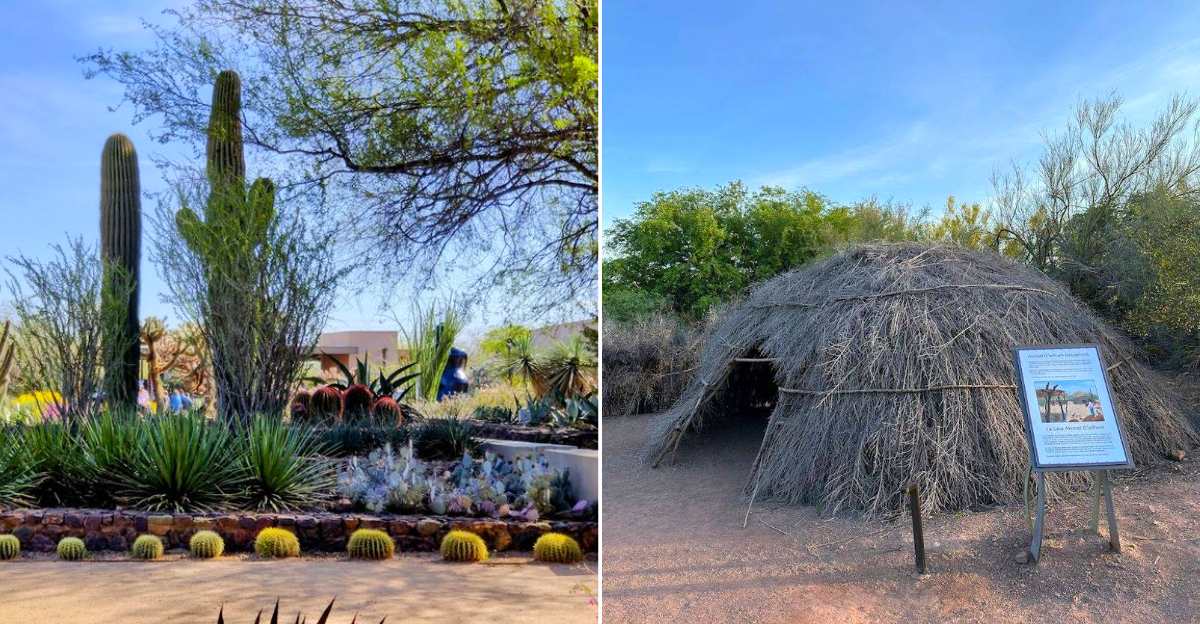
Have you ever stood speechless before a forest of towering saguaro cacti, their arms reaching toward a blazing sunset?
That is the feeling that washes over you at this breathtaking desert botanical garden in Arizona, a living museum where the harsh beauty of the Sonoran Desert is celebrated, not tamed.
Winding trails lead you past golden barrel cacti, silvery creosote bushes, and delicate wildflowers that bloom only after rain.
I remember pausing on a shaded path, watching a hummingbird hover near a scarlet hedgehog cactus, the whole world seeming to slow down.
The garden is not just a collection of plants, it is a lesson in survival, resilience, and unexpected color. You can wander for hours, discovering how desert life thrives against all odds.
Families come for the butterfly pavilion, couples find quiet benches beneath mesquite trees, and photographers chase the light across the red rock landscape.
This is not a manicured English garden. It is wild, honest, and deeply moving. Every nature lover in Arizona owes themselves an afternoon here.
That First Walk Through The Cactus-lined Entrance
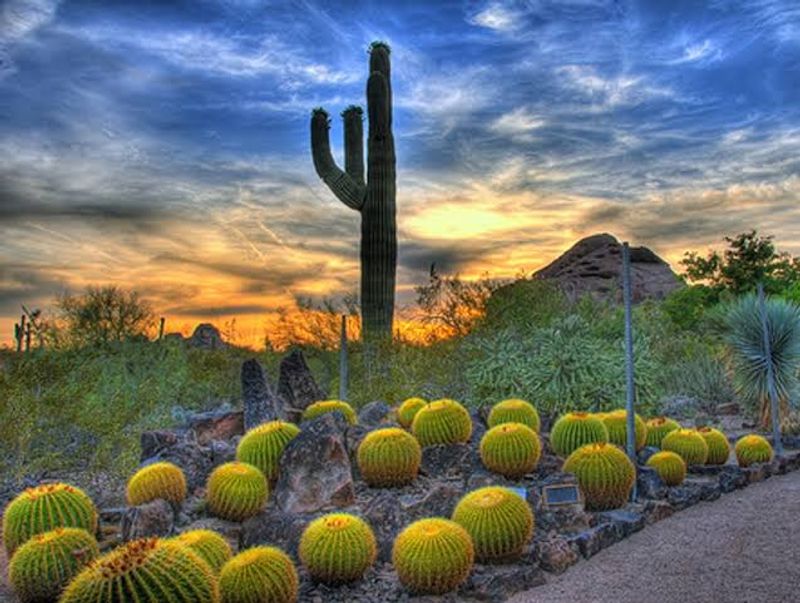
You know that feeling when a place gets your attention before you have even figured out where to look first? That is exactly what happens here, because the entrance pulls you in with towering cactus shapes, clean desert light, and this calm energy that makes Phoenix feel far away for a minute.
It is welcoming without trying too hard, which honestly made me relax right away.
As you move in, the plantings feel deliberate but never stiff, and that balance is part of the magic. Nothing is shouting for attention, yet every curve, spine, and shadow seems worth a second glance.
Even if you usually rush through gardens, this setup slows you down naturally, almost like the place is quietly teaching you how to look.
I also love that the opening stretch gives you a preview of what Arizona does so well, which is making stark landscapes feel unexpectedly graceful. The colors shift as you walk, the textures keep changing, and the red rock backdrop adds just enough drama.
By the time you are fully inside, you are not thinking about errands or traffic anymore, and that change happens faster than you would expect.
Where The Desert Starts Making Sense
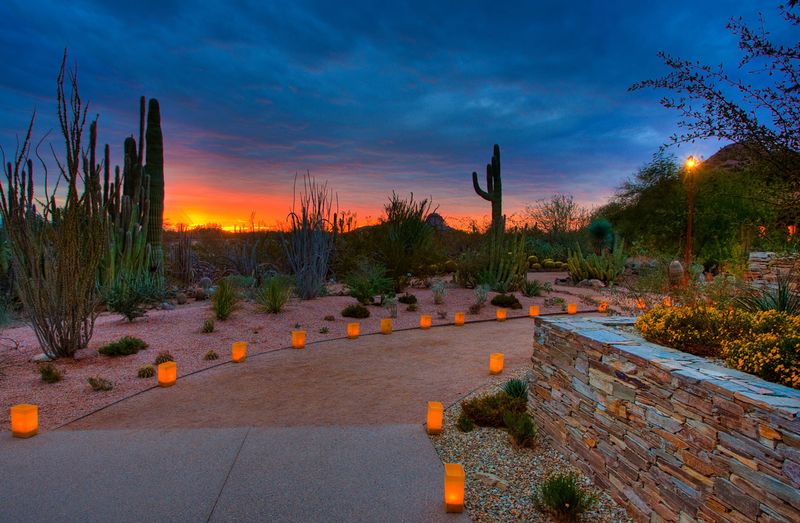
Here is where the whole place started clicking for me, because it is not just pretty, it actually helps you understand what you are seeing. Desert Botanical Garden at 1201 N Galvin Parkway, Phoenix, AZ 85008 lays everything out in a way that feels easy and human, so you are learning without feeling like you signed up for a lesson.
That is a rare trick, and it works.
The trails introduce the Sonoran Desert with enough context to keep you curious, especially if every cactus has always looked basically the same to you. Suddenly you notice differences in shape, bloom, height, and survival style, and you start realizing how much life is packed into what outsiders call empty land.
Arizona really shines in that kind of moment, when the landscape stops feeling harsh and starts feeling deeply intelligent.
What stayed with me was how the garden manages to explain things without killing the wonder. You get information, but you also get space to wander off mentally and just enjoy the weird beauty of it all.
By the end of this stretch, the desert feels less like background scenery and more like a complicated, living world that you are lucky to be walking through.
The Saguaros That Completely Steal The Show
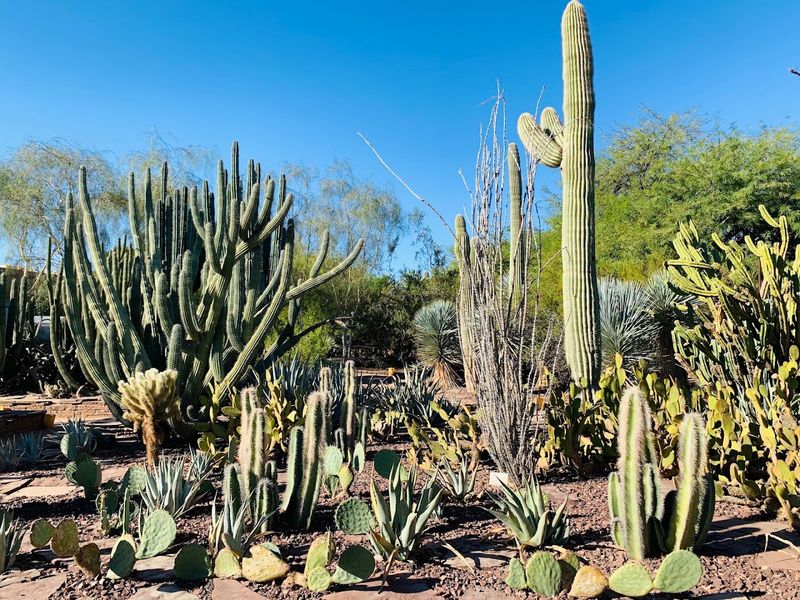
I do not care how many photos you have seen, saguaros hit differently when you are standing near them in real life. They have this quiet authority that makes everything around them feel a little more serious and a little more beautiful, and in this garden they are framed so well that you actually get to appreciate their personalities.
Yes, personalities feels like the right word.
Some lean, some stand upright like old guardians, and some branch out in ways that look almost playful. Walking past them, you start noticing scars, curves, and little shifts in posture that make each one feel distinct instead of symbolic.
That is one thing this place does really well, because it takes a plant people think they know and makes it feel specific again.
The surrounding desert views help too, especially with the Papago formations nearby adding that rusty Arizona glow in the background. It never feels crowded visually, which gives the saguaros room to be exactly what they are.
If you go when the light is low and soft, the whole scene turns almost unreal, and you may find yourself stopping way more often than you meant to just to stare.
A Trail That Shows How People And Plants Connect
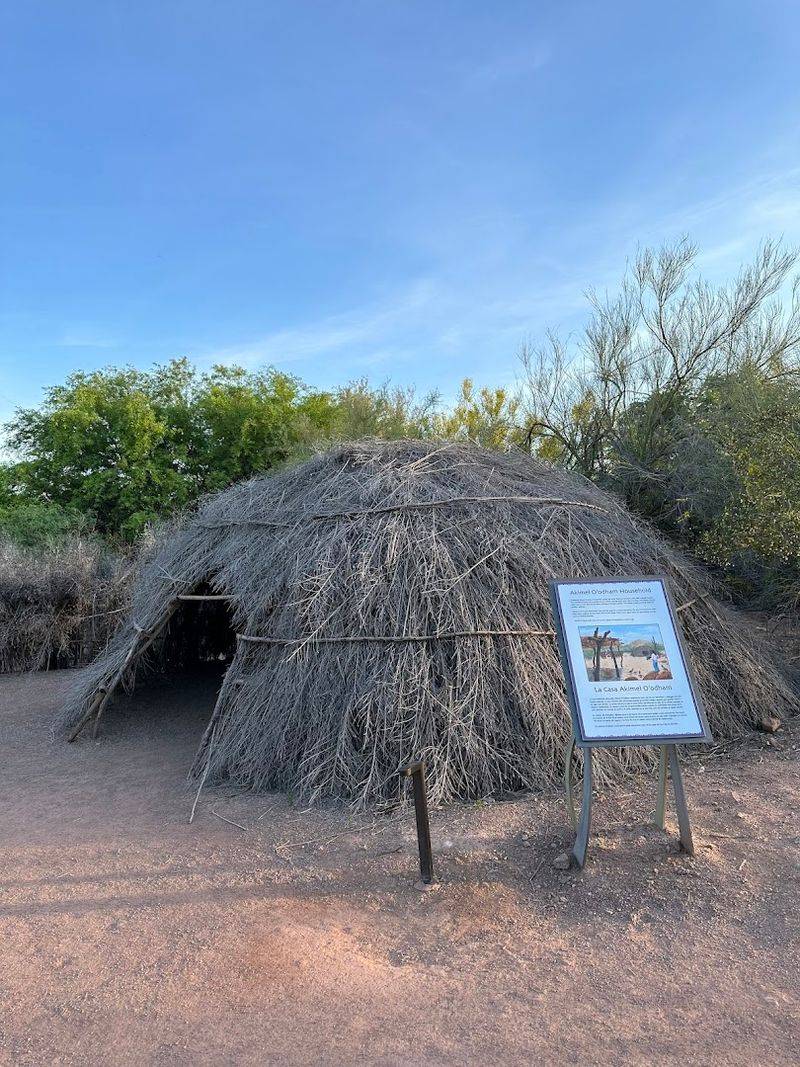
This section of the garden has a different kind of pull, and I mean that in the best way. Instead of only asking you to admire the plants, it nudges you to think about how people have actually lived with them, used them, respected them, and learned from them over time.
That shift makes the whole visit feel more grounded and a lot more memorable.
You start seeing desert plants less as dramatic shapes and more as part of daily life, culture, and survival in the Southwest. There is something really moving about that, especially in a place where the landscape can look severe at first glance.
The garden handles this beautifully, giving you just enough to think about without making the experience feel heavy or overly formal.
I liked how this trail deepened everything else I had already seen, because suddenly the cactus, shrubs, and flowering plants felt tied to real human stories. It adds warmth to the science and texture to the scenery, which is not always easy to do.
If you want the place to feel bigger than a collection of beautiful plants, spend time here and let it change the way you look at the desert around Phoenix.
When The Wildflowers Decide To Show Off
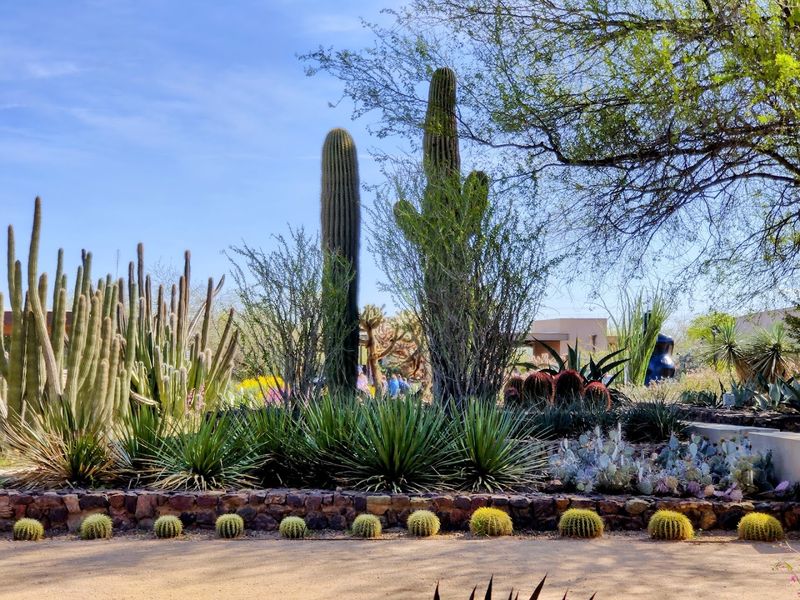
If you catch the wildflower areas at the right moment, the garden suddenly feels almost mischievous. You come expecting dusty greens and sturdy cactus forms, then out of nowhere you get these lively bursts of color that make the whole desert seem lighter on its feet.
It is one of those reminders that Arizona never looks just one way, no matter what people assume.
What I appreciate is that the blooms do not feel overly arranged or fussy, even though the effect is gorgeous. They appear among tougher plants and rougher textures, which makes their color land harder and feel more surprising.
That contrast is part of why this section sticks with you, because it shows tenderness without losing the toughness that defines the desert.
I found myself slowing down here in a different way, paying attention to smaller details instead of scanning the horizon for giant cactus silhouettes. The wildflowers pull your eyes low, toward petals, stems, and tiny variations in color you might miss if you are hurrying.
If you need proof that the Sonoran Desert can be delicate and dramatic at the same time, this part of the garden makes that point without saying a word.
The Red Rocks And Buttes In The Background
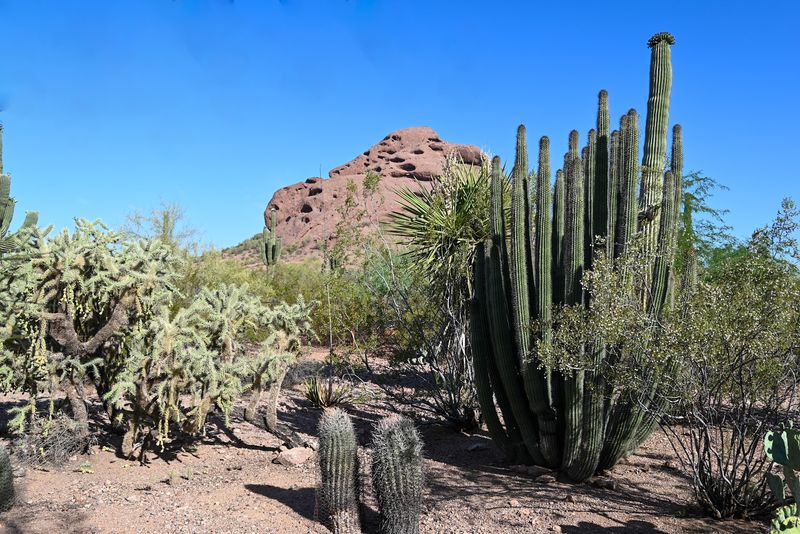
One thing that really got me was how the garden never feels sealed off from the landscape around it. Those red rocks and buttes in Papago Park keep showing up behind the plants, and that backdrop gives everything a sense of place that you just cannot fake.
It is not only a botanical garden experience, it is a very Arizona experience from start to finish.
The views make even a quiet pause on the path feel cinematic, but not in a flashy way. It is more like the scenery keeps reminding you that these plants belong here, under this light, against these rust-colored formations, in this dry and open air.
That connection between cultivated space and natural setting is a huge part of why the garden feels so convincing.
I also think the rocks change the mood as much as the plants do, especially when shadows start stretching across them. Suddenly the whole place has depth and movement, even if nothing dramatic is happening.
If you are someone who likes gardens but also needs a little landscape drama to feel fully awake, this combination is hard to beat, and Phoenix really gets to show off here.
The Quiet Corners That Make You Linger
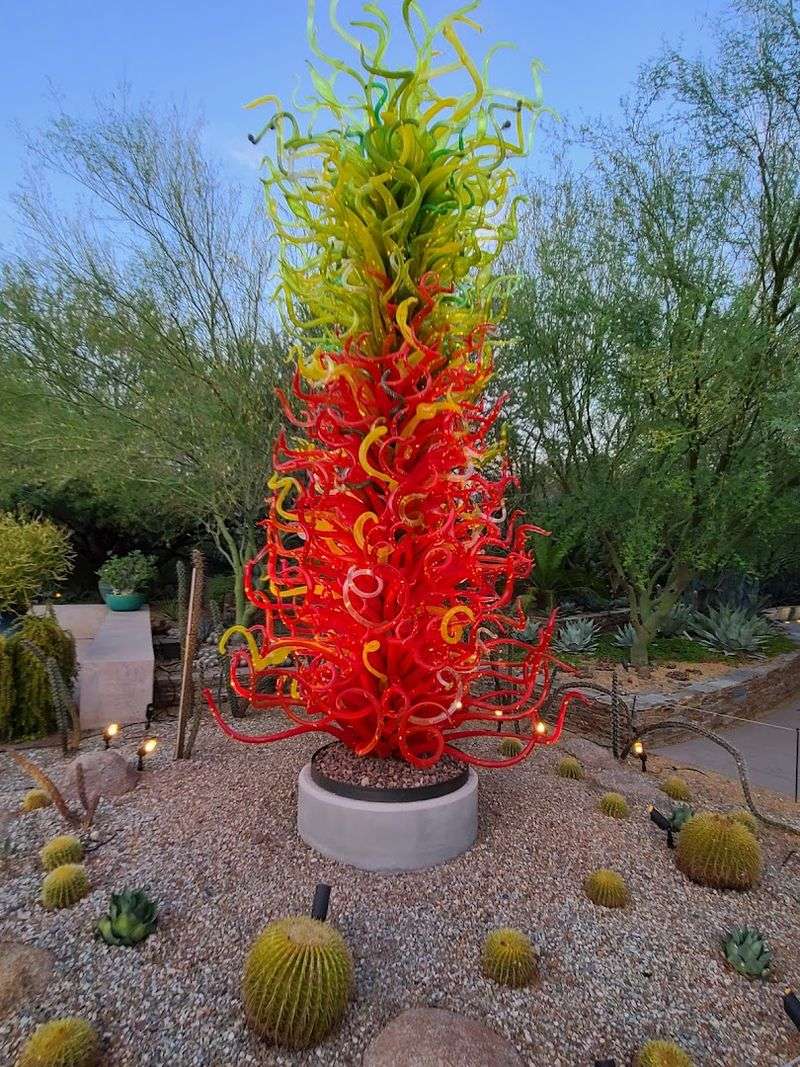
Not every memorable part of the garden announces itself right away, and that is exactly why I loved the quieter corners. You turn onto a less busy path or find a bench tucked near a cluster of desert plants, and suddenly the whole visit becomes less about seeing everything and more about actually being there.
That shift feels really good, especially if your brain has been noisy.
These calmer spots let you notice sounds, light, and little movements that disappear when you are focused on the bigger views. A bird flickers through, the breeze changes direction, shadows slide across the gravel, and the plants start feeling less static than they did at first.
It is subtle, but it pulls you in, and you end up staying longer than you planned.
I think this is where the garden earns its emotional weight, because it gives you room to have your own experience instead of handing you one. You can sit, wander, or just stand still and let the desert settle around you for a minute.
In a city as active as Phoenix, finding that kind of quiet without leaving town feels pretty special, and the garden understands exactly how to make space for it.
Why The Conservation Work Matters So Much
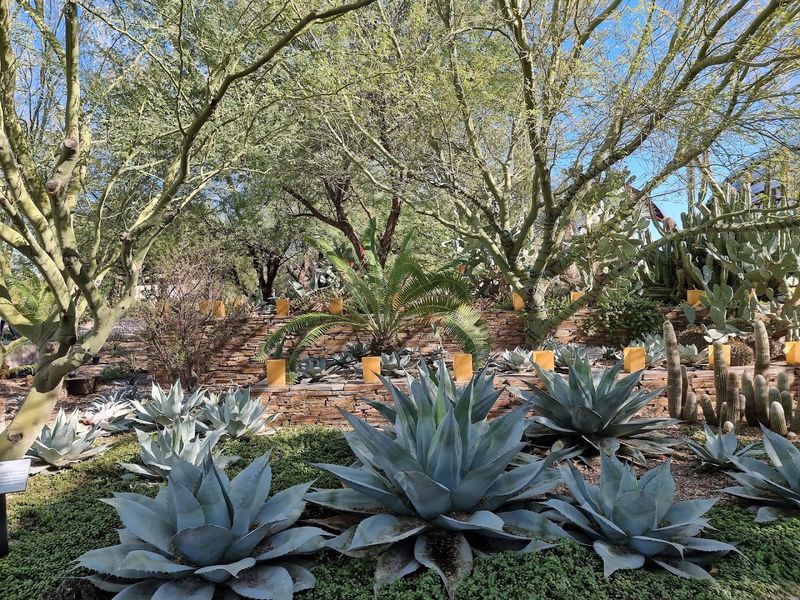
This is the part that gives the beauty some backbone, because the garden is not only here to look nice for visitors. There is serious conservation and research happening behind the scenes, and knowing that changes the way you move through the paths.
You are not just admiring unusual desert plants, you are seeing a place that is actively trying to protect them.
That matters even more when you remember how vulnerable many desert species can be, especially under pressure from habitat loss and environmental stress. The collection includes rare and threatened plants, and the work connected to seeds, pollinators, and long-term preservation gives the whole experience real weight.
Arizona benefits from having a place like this, and honestly so does anyone who cares about the future of dry landscapes.
I liked that the mission never feels separated from the visitor experience, because you can sense that care in how the garden is organized and interpreted. It adds quiet seriousness without draining any joy from the day.
If you ever need a reminder that beautiful public spaces can also do meaningful scientific and ecological work, this garden in Phoenix makes that point in a way that feels clear and deeply human.
That Late-day Light You Will Keep Thinking About
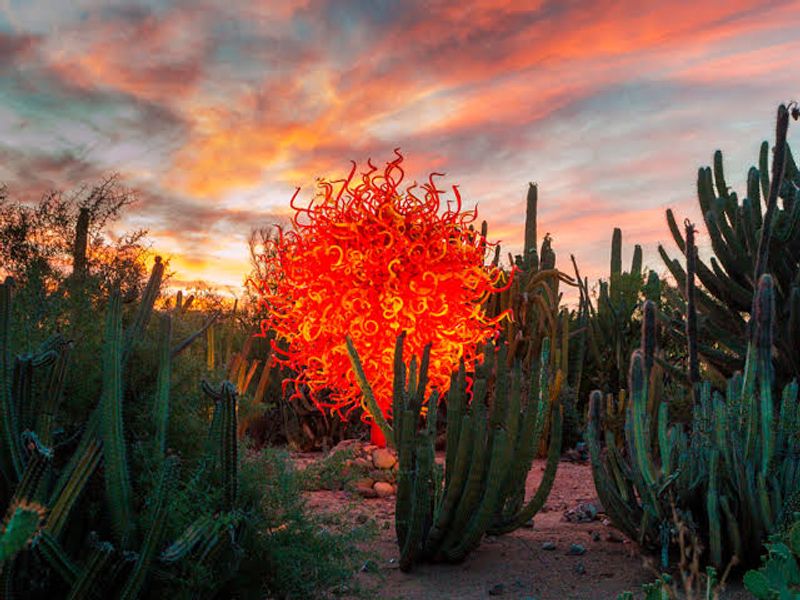
If you can be here when the light starts softening, do it, because the whole garden changes mood. The cactus glow a little warmer, the gravel picks up richer color, and the surrounding desert starts looking less sharp and more dreamlike without losing its texture.
It is the kind of shift that makes you feel lucky just for showing up at the right moment.
Late in the day, everything seems to breathe easier, including the people walking around you. Conversations get quieter, shadows get longer, and the plants start casting these beautiful shapes that stretch across the path like slow-moving drawings.
Phoenix has plenty of dramatic sunsets, but watching that light move through a place built around desert plants feels especially intimate.
By then, you are probably a little tired and a little sun-dazed, which weirdly makes the experience even better. The garden starts feeling less like an attraction and more like a landscape you have fallen into for a while.
I left with dusty shoes, too many photos, and that nice calm feeling that follows a really good wander, which is honestly all I want from a place like this in Arizona.
