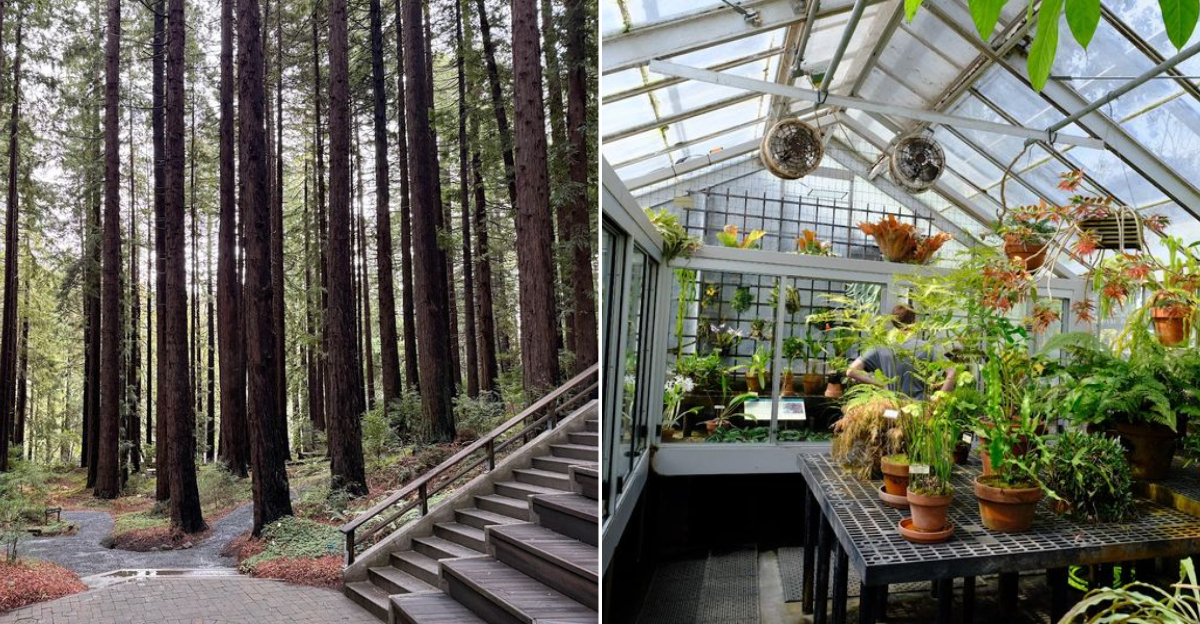
Ten thousand plant species from six continents, all growing in one hillside garden. That is not a botanical fantasy.
That is real life in California, where a stunning university garden invites you to wander from redwood groves to South African succulents without ever leaving the Bay Area. The paths are gentle and the views stretch clear to the Golden Gate.
You can smell eucalyptus, feel the shade of a Chilean palm, and sit on a bench overlooking a Japanese pool. There is no rush, no entry fee pressure, just the quiet joy of discovering that a single afternoon can hold a world of green.
Families stop to watch bees work a South American flower. Students study under an ancient olive tree.
Butterflies drift past as you read a plaque about an extinct-in-the-wild plant. California hides many treasures, but this living museum might be one of its most peaceful.
Come wander, learn a little, and leave feeling like you have traveled further than you actually did.
The First Walk In Feels Different
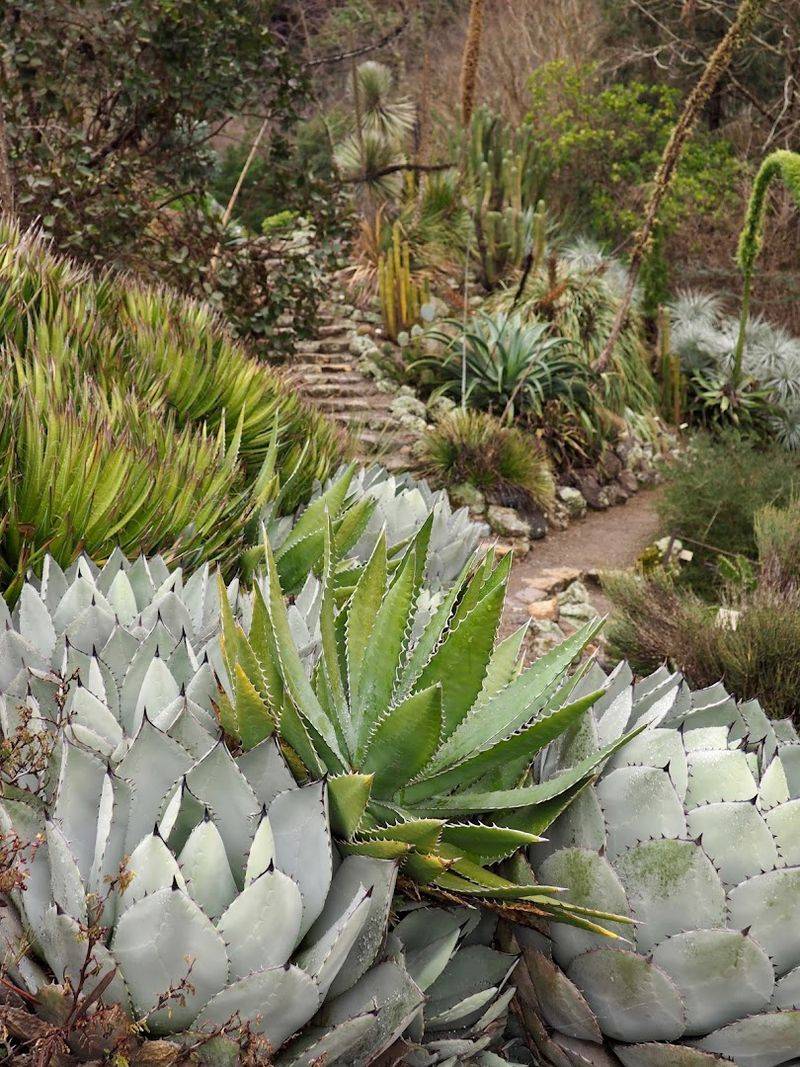
The first thing that got me here was the feeling that the garden was not trying too hard to impress me, which somehow made it more impressive right away. You step in, the air shifts a little, and suddenly Berkeley feels quieter, cooler, and more textured than it did a few minutes earlier.
That change happens fast, but it does not feel dramatic or staged, which is exactly why it works so well.
Instead of giving you one big reveal, the place kind of eases you in with winding paths, thick plantings, and little turns that make you curious about what is next. I like that you never feel rushed into the highlights, because the ordinary stretches are part of the charm and set your pace without announcing it.
You are walking, looking, listening, and before long your brain has stopped doing the usual noisy thing.
That is a big part of why this garden stands out in California, especially if you tend to get tired of attractions that tell you too loudly how special they are. Here, the beauty arrives through accumulation, with leaves, scents, shade, and hillside views slowly stacking up around you.
By the time you notice how relaxed you feel, the place already has you.
Where The Hillside Setting Really Gets You
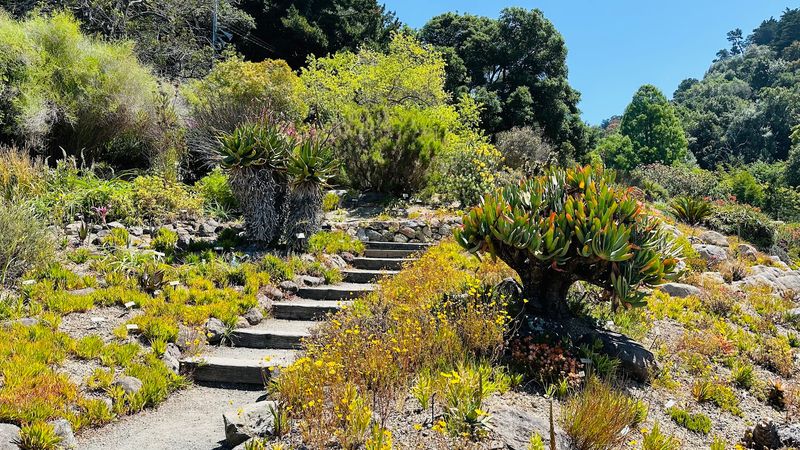
What makes this place land so hard, at least for me, is where it sits on the hillside above Berkeley. The University of California Botanical Garden, 200 Centennial Dr, Berkeley, CA 94720, folds into Strawberry Canyon in a way that feels surprisingly tucked away, even though the campus is close by.
You are in a research garden, sure, but it also feels like you wandered into a thoughtful pocket of the Berkeley Hills.
Because the terrain rises and dips, the walk never gets visually flat, and that matters more than people think. One minute you are under tree cover with filtered light, and the next minute the path opens enough to give you a little breath of sky and a reminder of the Bay beyond.
It keeps your attention without making you work for it, which is honestly a gift when you are traveling.
I also love that the setting makes the whole garden feel lived in rather than imposed on the land. The paths follow the slope, the views show up when they feel earned, and the atmosphere carries that distinct Northern California mix of study, wilderness, and calm.
It is the sort of place that quietly resets your afternoon.
You Travel The World Without Leaving The Path
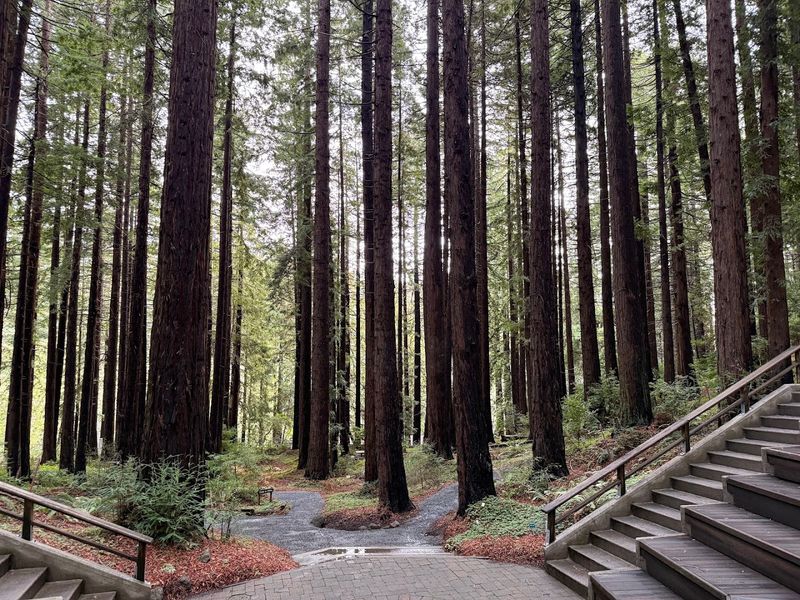
One reason this garden stays interesting the whole time is that it is arranged by world regions, and that changes the mood as you move through it. You are not just looking at a random mix of beautiful plants, which would still be nice, but walking through distinct landscapes that feel tied to actual places.
That geographic structure gives the visit a rhythm, and it keeps your eyes alert in a really satisfying way.
I found myself noticing how quickly texture and color shift from one area to the next, especially when dry planting gives way to something leafy and soft. The transitions are subtle enough to feel natural, but clear enough that you sense you have crossed into another climate conversation.
It is the closest thing to traveling widely while still staying grounded in one hillside in California.
What helps is that the garden does not turn those regions into a theme park version of the world. It stays rooted in plants, habitat, and careful curation, so the experience feels thoughtful instead of flashy.
If you like places that let you learn almost by accident while you are just enjoying yourself, this part of the garden really delivers that feeling.
The California Native Section Hits Close To Home
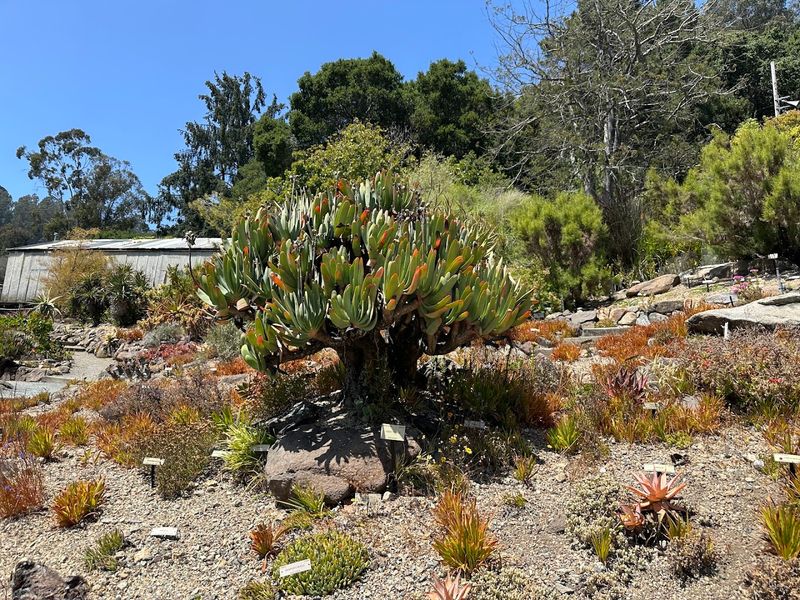
I did not expect the California native area to be one of my favorite parts, but it absolutely was. Maybe that is because it feels less like a display and more like a reminder of how beautiful this state is when you actually stop and look at what belongs here.
The planting feels grounded, familiar, and still full of surprise, which is a combination I never get tired of.
There is something really satisfying about seeing native species gathered with this much care, especially in a place where the broader mission includes conservation and education. You start noticing leaf shapes, dry fragrances, and little shifts in texture that might slip past you on a normal hike.
In that sense, the section teaches you how to see California better, not just how to identify a few plants.
I also think travelers connect with this area because it gives context to the state beyond postcards and major landmarks. It shows off the quieter beauty of local ecology and makes the rest of your trip feel a little more rooted.
If you leave with a stronger sense of place, this section probably had something to do with it.
The Greenhouses Change The Mood Entirely
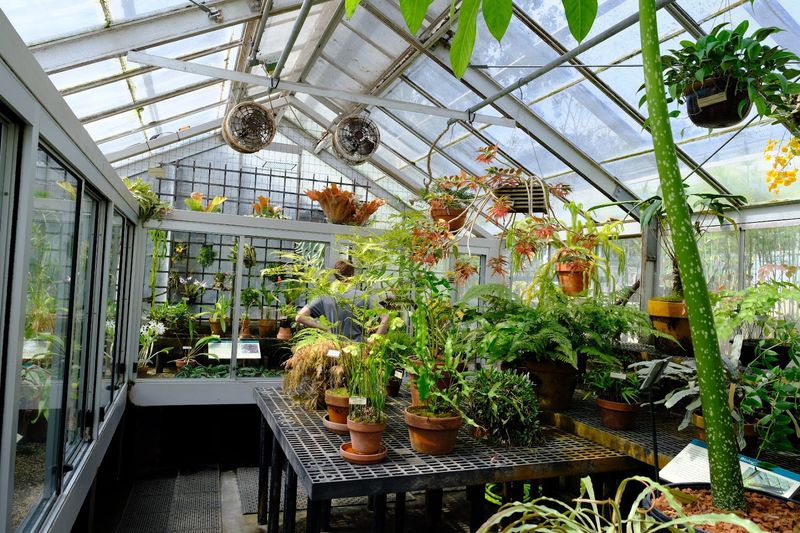
Then the greenhouses come along and completely change the energy, which I honestly loved. After all that open air and hillside wandering, stepping into a more enclosed, humid, carefully controlled space feels like entering another chapter of the same story.
The contrast wakes you up again, especially if you thought you had already settled into the garden’s rhythm.
The tropical house pulls you in with dense foliage and that immediate sense that the air itself has changed, while other spaces introduce stranger forms and textures that feel almost unreal. I kept getting drawn close to plants just to understand what I was looking at, because some of them barely resemble the shapes most people picture when they hear the word plant.
That sense of curiosity is half the fun here, and the greenhouse setting makes it feel concentrated.
What I appreciate most is that these interiors do not feel like a side note or an obligatory stop. They deepen the whole experience by showing how broad the collection really is, from cloud forest conditions to carnivorous oddities and remarkable succulents.
You walk back outside feeling like the garden just expanded without moving an inch.
Some Corners Feel Wild In The Best Way
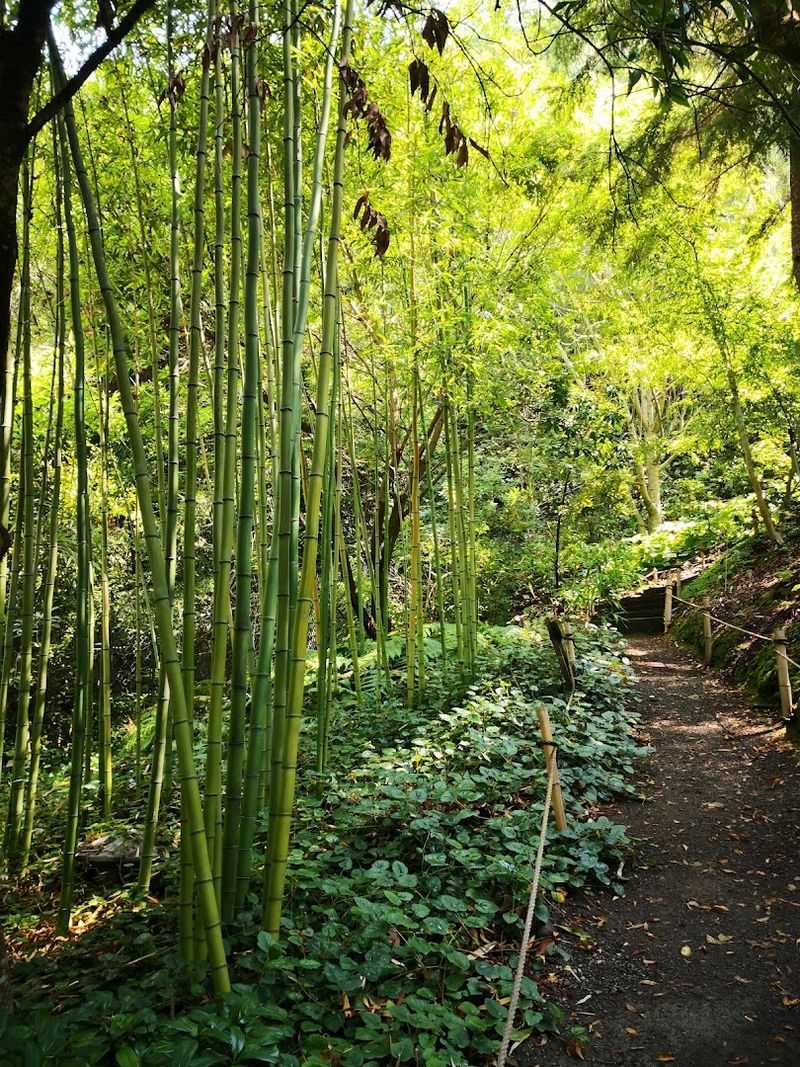
What stayed with me most were the corners that felt just a little unruly, like the garden was letting nature keep some of its own opinions. Nothing looked neglected, but plenty of spaces felt loose enough to breathe, and that made them more memorable than anything too polished ever could.
You get this gentle tension between research garden and living landscape, and it is really appealing.
On certain paths, the foliage presses in a bit, the shade gets thicker, and the sounds from the outside world fade until you are mostly hearing leaves and footsteps. That is when the place starts to feel personal, because you are not only observing it anymore, you are moving inside its atmosphere.
I think travelers who love a little moodiness in a landscape will really get attached to these stretches.
It also helps that the garden is large enough to give you moments of privacy even when other people are around. You can round a bend and feel, for a minute, like you found your own pocket of Northern California.
Those are the moments that make a visit feel less like checking off a destination and more like actually spending time somewhere meaningful.
It Feels Smart Without Feeling Heavy
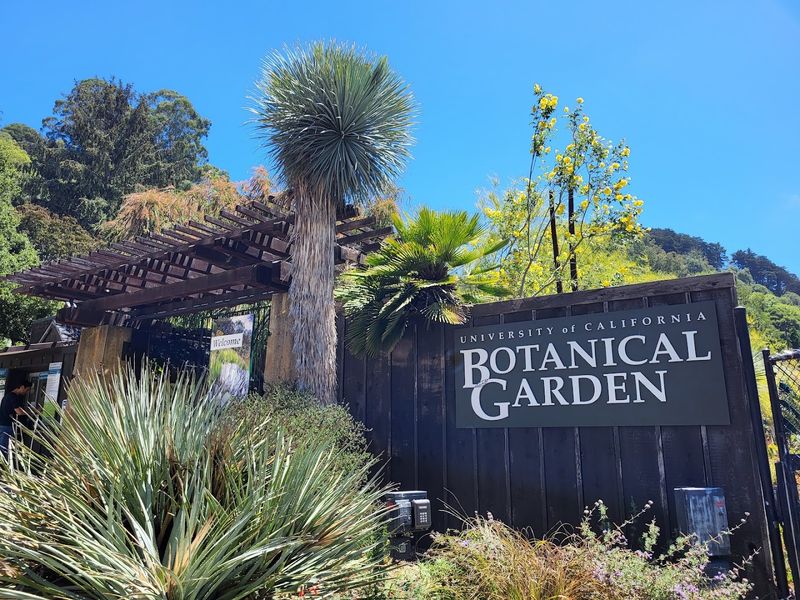
One thing I really respect about this garden is that it is clearly doing serious work, but it never dumps that seriousness on your shoulders. It is a living museum, a conservation space, and a research collection, yet the visit still feels relaxed enough that you can simply enjoy yourself without feeling like you missed the point.
That balance is harder to pull off than it looks.
You pick up plenty as you go, sometimes from signs, sometimes just from the way the collections are organized and cared for. Rare and endangered plants are part of the story, and knowing that adds weight without making the experience somber or overly academic.
If anything, it makes the beauty hit a little deeper because you understand there is real stewardship behind it.
I think that is why this place works for so many kinds of travelers, even people who do not usually seek out botanical gardens. You can come for the scenery, the quiet, or the curiosity, and the educational layer rises naturally around whatever drew you in.
By the end, you have learned more than you expected, but it never felt like homework for a second.
There Are Spots Where You Will Want To Linger
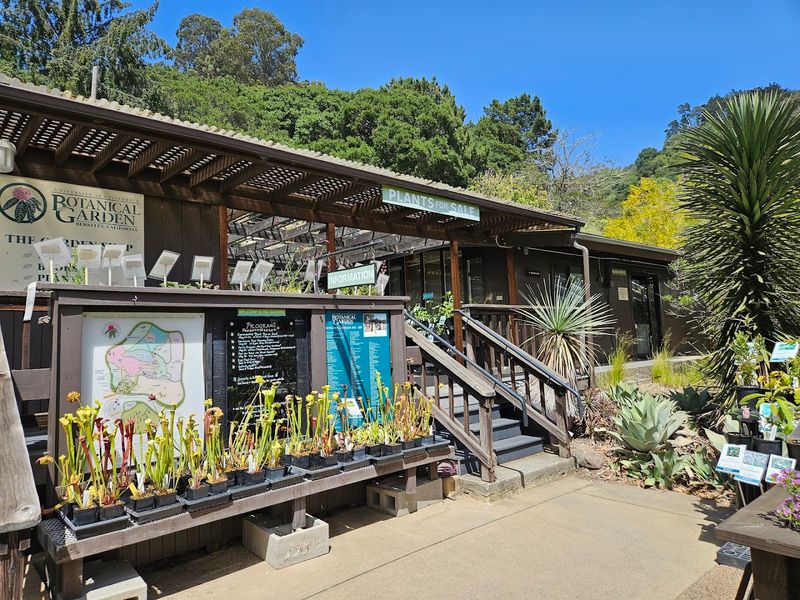
Not every garden understands that people need places to pause, but this one really does. There are areas where the mood softens and invites you to sit for a while, look around, and let everything settle instead of moving nonstop from one feature to the next.
That slower pacing suits the garden, because so much of its appeal lives in details you notice only after a few unhurried minutes.
I found those lingering spots especially nice near the taller trees and gathering spaces, where the landscape feels spacious without losing intimacy. The redwood grove setting has that hushed, almost ceremonial calm, while nearby built elements remind you that this garden also hosts learning, community, and events.
Even so, nothing feels formal in a way that pushes you out, which I appreciated.
If you are the kind of traveler who likes to let a place sink in before heading off to the next thing, this matters a lot. A good bench, a little shade, and a view into layered planting can change the whole memory of a visit.
Instead of rushing through, you get to have an actual moment there, and that is worth a lot.
