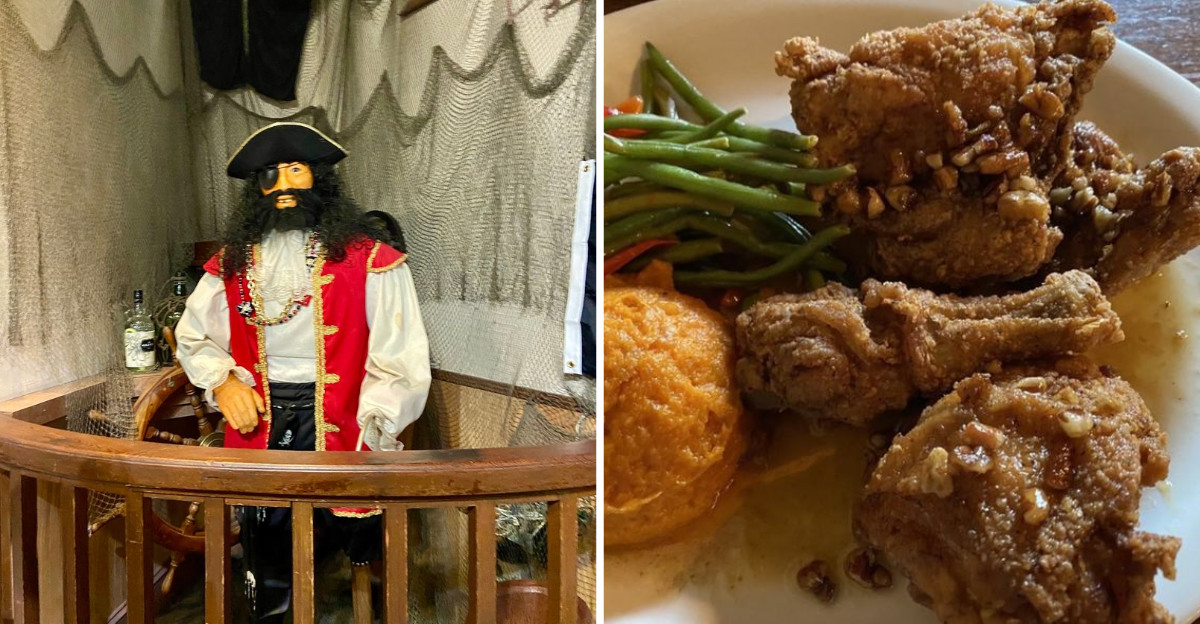
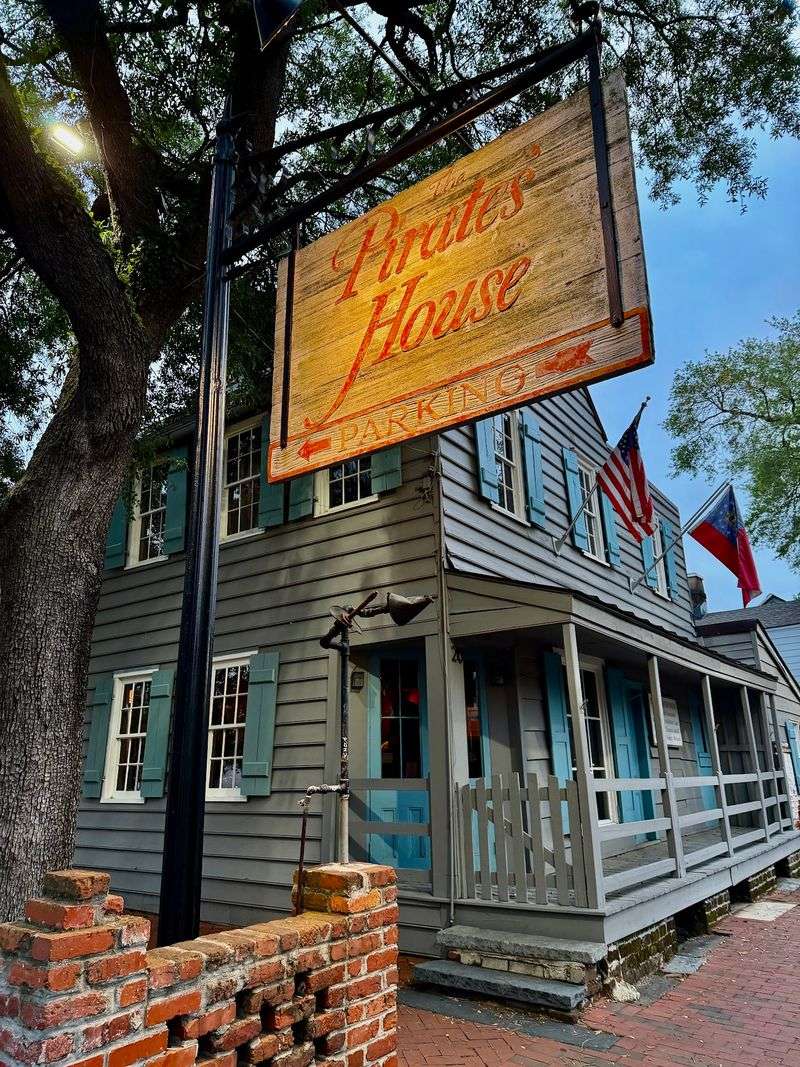
That low brick and timber building at the edge of a historic Georgia district caught my attention on a trip to the coast, and I had come expecting Spanish moss and shady squares. What I found instead was a dining room with creaky floors, fifteen separate rooms, and a rum cellar with a story attached to every corner.
Part of the structure dates back to the 1730s, making it the oldest standing building in the city, and sailors once stumbled in from ships a block away, drawn by the same warmth that still pulls people through the door.
I walked in expecting a gift-shop gimmick and instead found a place where the history is not just on the walls but in the floorboards and the low ceilings.
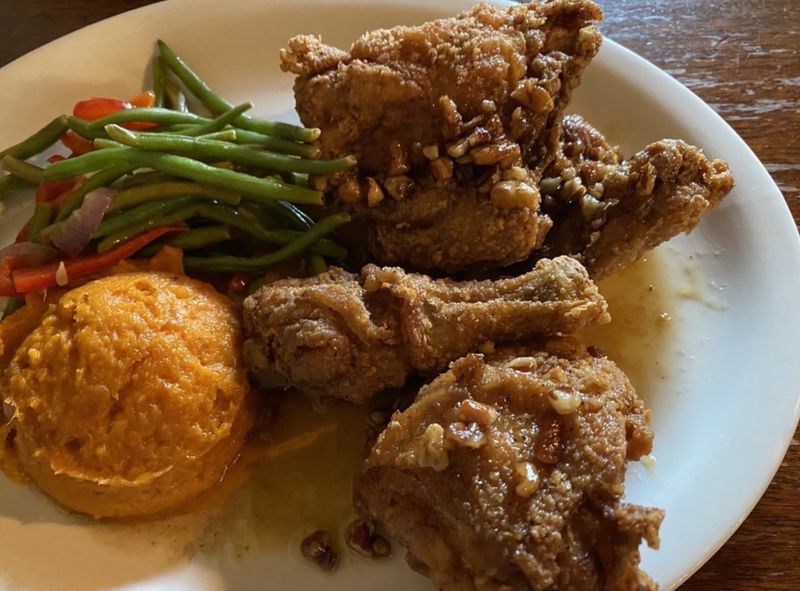
Honey pecan fried chicken showed up at my table with warm biscuits and orange marmalade, and I understood why people have been coming here for decades.
The room hummed with the kind of quiet that makes you lean in closer to the people you are with, and the meal stuck with me long after the plate was cleared.
Dinner with a side of genuine history is hard to beat, and this Georgia spot delivers both without trying too hard.
The Herb House, Georgia’s Oldest Standing Building
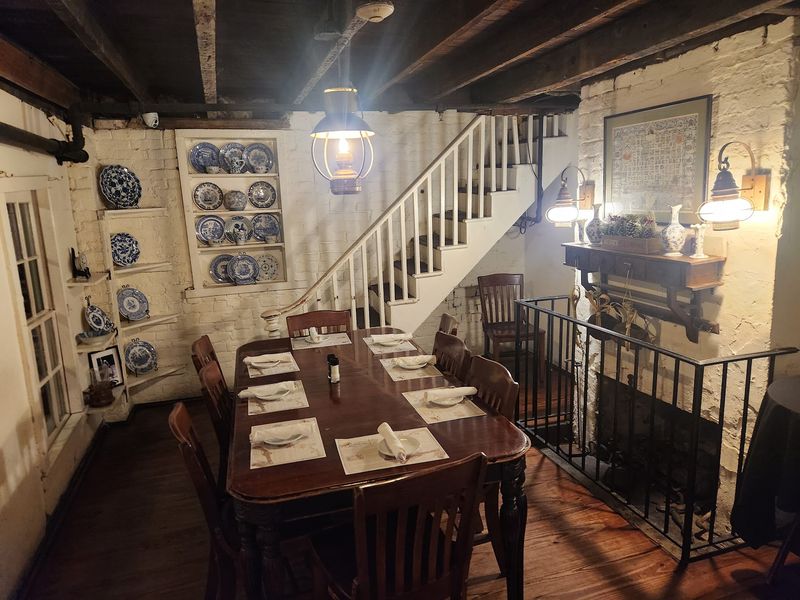
Ask for a table in the Herb House and you get to eat inside a room built in 1734. That is not a rounded-off number or a marketing flourish, it is simply the oldest standing building in the entire state of Georgia.
The space started life as a home for the gardener who tended Trustees’ Garden, America’s first public agricultural experimental garden. Colonists planted mulberry trees here hoping to build a silk industry, and while the silk dream fizzled, the peach trees they experimented with went on to define Georgia farming.
Sitting in that room, I kept looking up at the beams and thinking about how many hurricanes, fires, and wars this little building has quietly outlasted.
The ceilings feel low, the walls feel thick, and the whole space has a hush to it that the bigger dining rooms do not.
Anniversary parties and small groups sometimes get seated here, so it is worth mentioning the occasion when you book. My advice is simple.
Request the Herb House when you call ahead, then take a slow look around before your food arrives.
Trustees’ Garden and the Ground It All Grew From
Before there was a tavern, there was a garden. In 1733, one year after Savannah itself was founded, colonists laid out ten acres of experimental planting beds on this exact patch of ground.
They were testing what would survive in the Georgia climate, everything from grapes to spices to flax. It was America’s first public agricultural experimental garden, essentially a colonial science lab with dirt under its fingernails.
I love that the restaurant sits on a spot that was about growing things long before it was about serving them.
The garden project eventually wound down, but its legacy stuck around in the peach orchards that spread across the state.
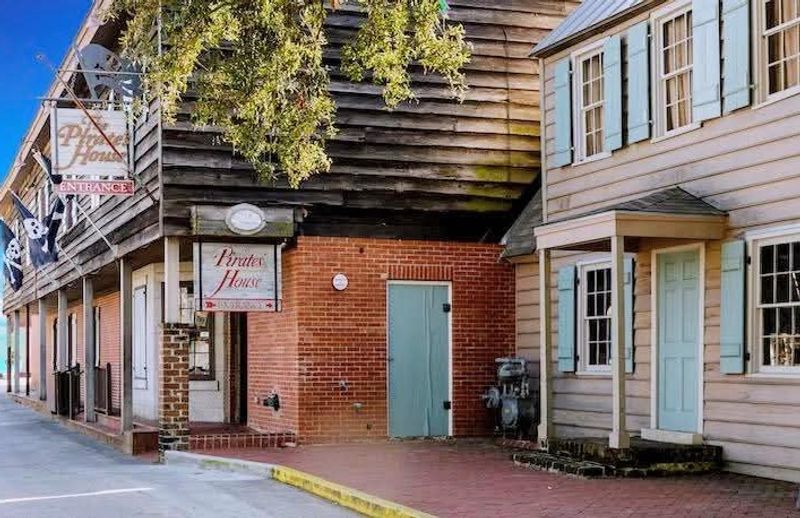
Standing outside near the historical marker, you can see how close the site sits to the river bluff, which explains why sailors found it so easily.
Give yourself a few minutes outside before you head in. The exterior brickwork, the odd angles of the rooflines, and the way the buildings seem to lean into each other tell you plenty about how many centuries of patching and adding went into the place.
A Sailors’ Inn That Opened in 1753
Roughly two decades after the garden took root, an inn went up on the property in 1753. Its location was no accident, sitting just one block from the Savannah River where ships tied up after long Atlantic crossings.
Crews came ashore hungry, tired, and looking for company. Word traveled from port to port, and before long sailors from all over the world knew exactly where to go once they hit Savannah.
By 1794 the inn had become a full-blown tavern with a reputation for noise and rowdiness.
What strikes me most is how little the basic idea has changed. Travelers still show up, still sit at long wooden tables, and still get fed well after a long day of moving around.
The dining rooms hold onto that old inn feeling through low doorways, uneven floors, and lantern-style lighting.
If you want the full effect, come in the evening when the light outside fades and the interior glow takes over. The building simply feels older after dark, and the sense of walking into a seaport gathering spot gets much stronger.
The Rum Cellar and Those River Tunnels
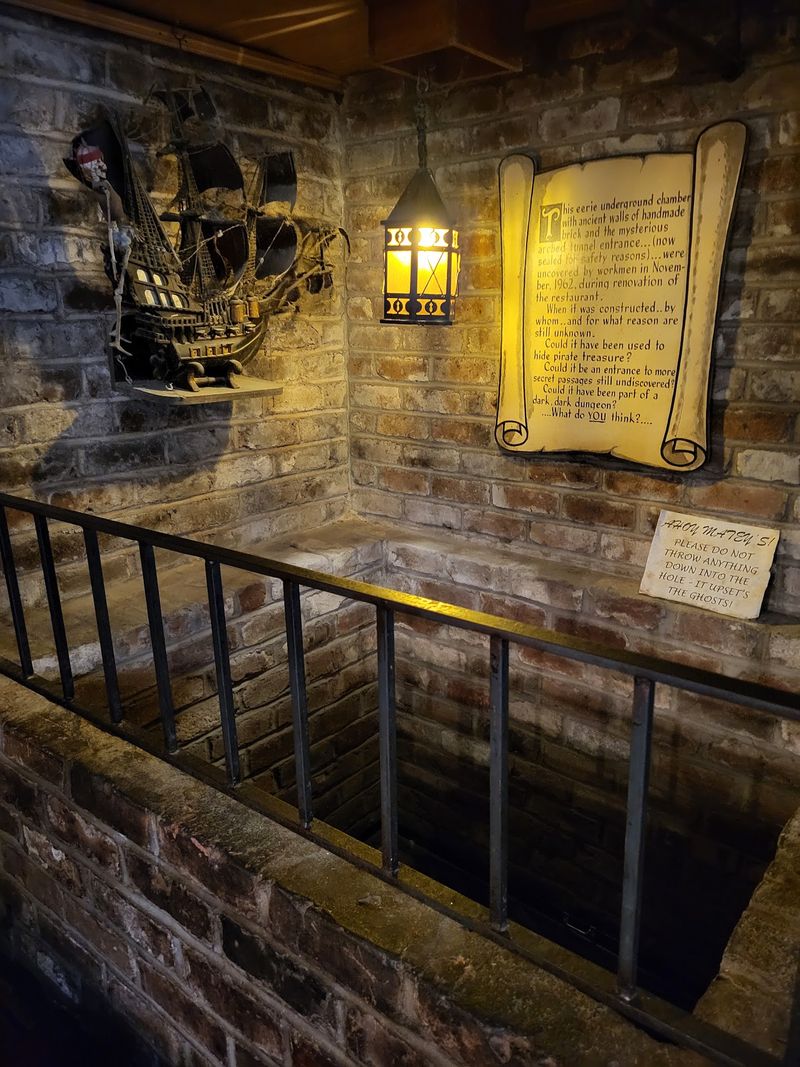
Underneath the restaurant sits a low brick cellar that once stored barrels and, according to long-told local legend, hosted quiet meetings between sailors and pirates who preferred not to be seen.
A tunnel is said to have run from that cellar toward the Savannah River. Goods could move without passing through the front door, and so, the stories go, could people.
The shanghai legends grew out of this arrangement. Tales describe unsuspecting sailors being drugged, carried through the passage, and waking up at sea on a ship they never agreed to join.
Whether every detail holds up, historians debate. The tunnel itself, though, is a real part of the building’s construction and a favorite stop for anyone curious about the underside of old port towns.
Staff often offer a short walk-through after your meal, and the cellar is usually part of it.
I would not skip it. Seeing that brickwork up close changes how you think about the polished dining room you just left, and it makes the pirate theme feel earned rather than decorative.
The Treasure Island Connection
Robert Louis Stevenson published Treasure Island in 1883, and Savannah shows up right there in the text. The story places Captain Flint’s death in the city, and locals have connected those final moments to this very building ever since.
One upstairs room carries the Captain Flint name because of it. Pages from old editions of the novel are framed and mounted along the walls, so you can read fragments of the story while you wander.
Whether Stevenson ever set foot in Savannah is a fair question, and nobody can prove he did.
Honestly, the fun does not depend on it. Reading a page about Flint calling for more grog while standing in a 1750s tavern room is a pretty great moment regardless.
Kids seem to catch onto this faster than adults do, and I have seen more than a few of them hunting for framed pages like a scavenger hunt.
Bring your own copy if you are a serious fan. Reading a chapter at a corner table here is a memory that sticks.
Saved From the Wrecking Ball in 1945
Here is the part of the story that almost ended everything. After World War II, the old buildings sat neglected and worn down, and in 1945 the property was scheduled for demolition.
The Savannah Gas Company had acquired the land. Mary Hillyer, wife of the company’s president, looked at the crumbling structures and refused to let them go.
Restoration work began under her push, room by room, beam by beam. It took years of careful effort to bring the buildings back from the edge.
In 1953, Herb Traub and Jim Casey opened the restored property as the restaurant people know today, and it has been running ever since.
I find this chapter more moving than the pirate stories. One person deciding an old building matters is the reason thousands of visitors get to sit here every year.
The American Museum Society recognizes the site as a true house museum, which is unusual for a working restaurant.
Keep that in mind while you eat. Every warped floorboard you walk across survived a demolition order, and that is a rare thing in any American city.
Fifteen Dining Rooms and a Layout Like a Puzzle
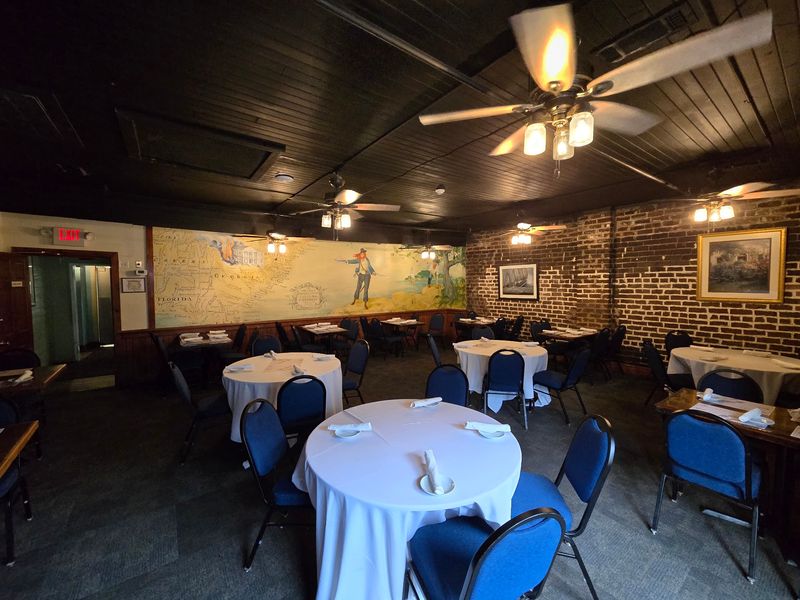
Getting turned around here is basically part of the visit. Fifteen separate dining rooms sprawl across the property, connected by narrow halls, short staircases, and doorways that appear where you least expect them.
Each room has its own personality. Some feel like a ship’s cabin with heavy timber overhead, others lean colonial with antique furniture and framed maritime pieces.
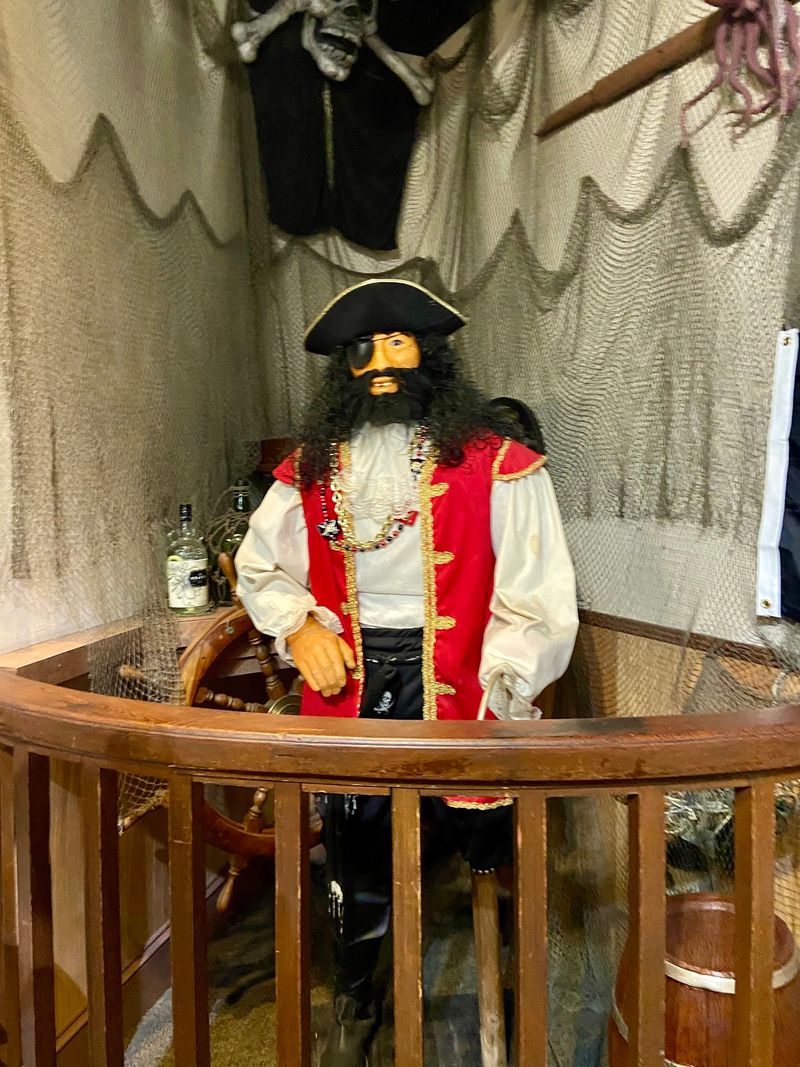
Nautical touches show up everywhere without tipping into costume-shop territory. Old maps, ropes, lanterns, and weathered wood do most of the work.
My favorite discovery was realizing you cannot see the whole restaurant from any single spot, which keeps the place feeling surprising even an hour in.
The building is wheelchair accessible and manageable with a cane, though the layout does ask for a little patience.
Upstairs sits a gift shop stocked with maps, pirate gear, and souvenirs, plus a penny press that visitors get weirdly attached to.
Take the long way back from the restroom on purpose. Wandering through a few extra rooms is one of the better free activities in Savannah, and nobody minds a curious guest.
Southern Cooking That Earns Its Reputation
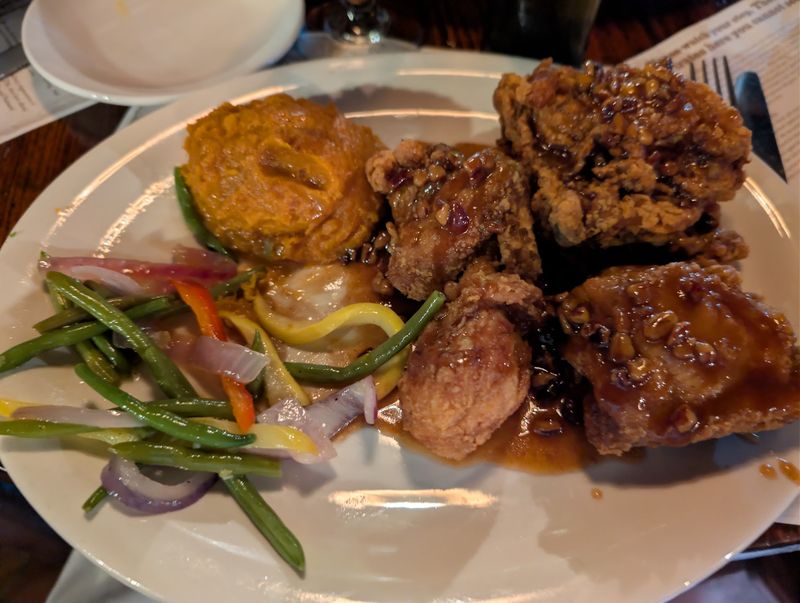
Bread arrives before you have settled in, warm cornbread muffins and biscuits with honey butter and orange marmalade. That marmalade combination sounds odd until you try it, and then it makes complete sense.
She Crab Soup is the dish people mention most, rich and creamy with a proper amount of crab. Shrimp and grits runs a close second, made with stone-ground grits that hold their texture.
The Honey Pecan Fried Chicken has won awards and shows up on nearly every table in sight. Crispy, sweet, savory, and large enough to share if you show restraint.
Fried green tomatoes served over pimento cheese hit that ideal crunch, and the Savannah crab dip could pass as a light meal on its own.
Seafood options rotate through grouper, halibut, catfish, and flounder, all leaning on the coastal location.
A lunch buffet runs around twenty dollars with dessert included, which is a genuinely good deal downtown.
Save space for peach cobbler. It is the most Georgia way possible to finish a meal in a building this old.
Planning Your Visit Without the Guesswork
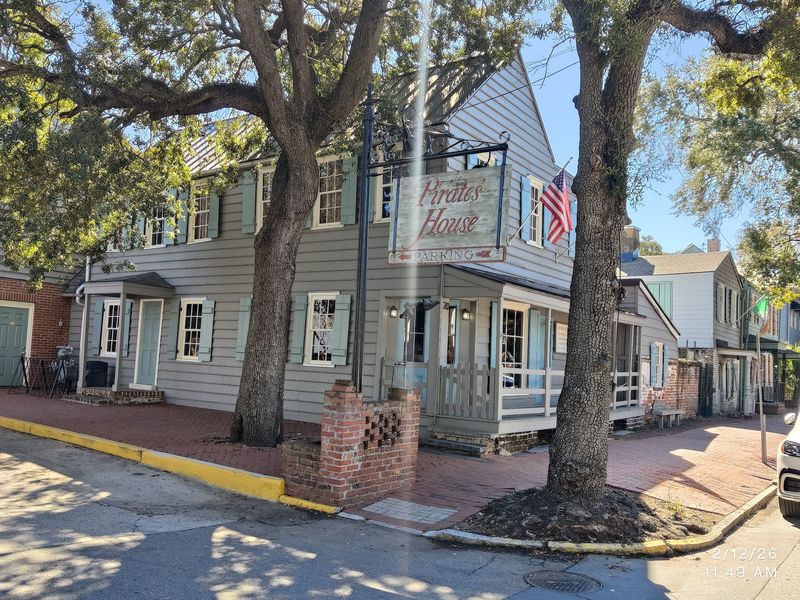
A few practical notes will make the whole thing smoother. Reservations are strongly recommended, especially for dinner, because the waiting area fills quickly even on ordinary weeknights.
Doors open at 11 AM every day, with closing at 9 PM Sunday through Thursday and 9:30 PM on Friday and Saturday. Lunch tends to be the calmer window if crowds are not your thing.
There is a parking lot beside the restaurant plus curb spots, which in downtown Savannah counts as a small miracle.
Families do well here. Kids get pirate hats to assemble, the menu has options for smaller appetites, and the maze of rooms keeps them entertained between courses.
Free guided walk-throughs are often offered after meals, led by staff who share the tunnel stories and take you upstairs.
Call ahead at 912-233-5757 if you are celebrating something, since special seating requests are sometimes possible.
Wear comfortable shoes, leave extra time for the gift shop, and treat the visit as history plus dinner rather than just a meal.
Address: 20 East Broad Street, Savannah, GA 31401
