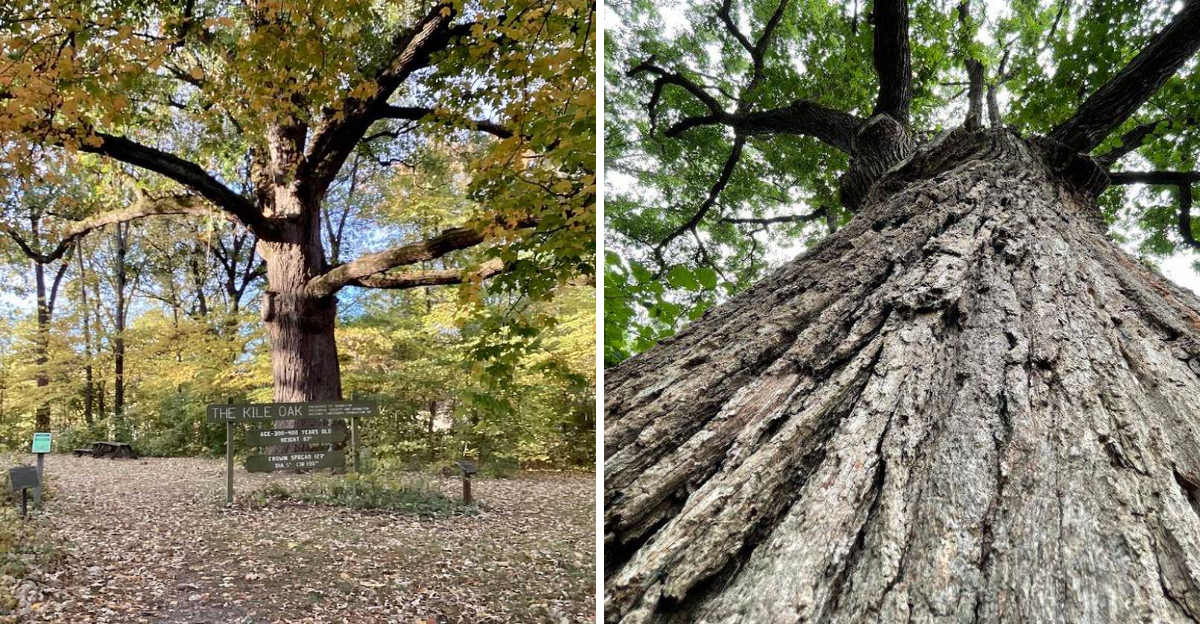
Somewhere along a quiet residential street in Indianapolis, Indiana sits a tree that has been standing since long before the United States even existed. A massive bur oak in the Irvington Historic District is estimated to be several centuries old, making it one of the most remarkable living landmarks in the state.
Most people pass by without realizing what they are seeing, which makes discovering it feel like uncovering a well-kept secret hidden in plain sight. Its wide trunk, sprawling branches, and enduring presence give it a sense of quiet strength that has watched generations come and go.
Surrounded by neighborhood streets and everyday life, it stands as a living connection to centuries of natural and human history. If you love history, nature, or simply want to experience something truly unforgettable, this ancient tree offers a rare moment of reflection right in the middle of the city.
Come See the Record-Breaking Size Up Close
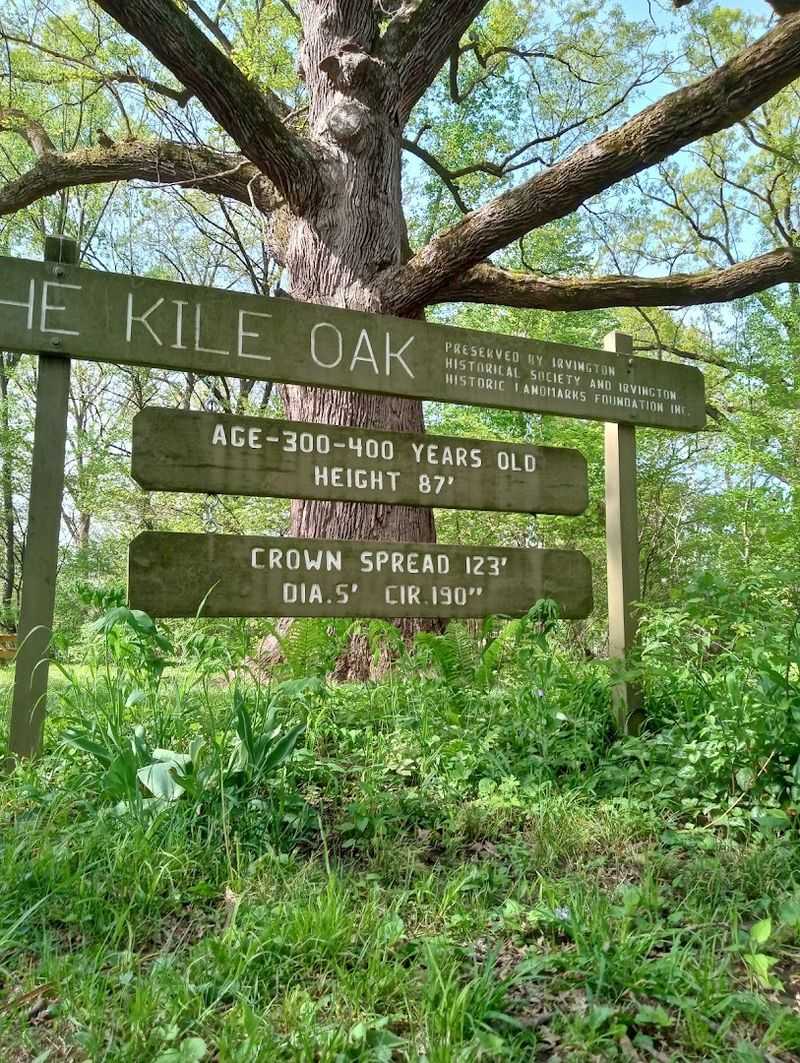
Numbers on a page are one thing, but seeing the Kile Oak in person is a completely different experience. Standing roughly 87 to 92 feet tall, this bur oak has a trunk circumference of about 15.8 feet and a crown spread that stretches between 122 and 125 feet across.
That crown is wider than many houses.
It holds the title of the largest bur oak found within any metropolitan city in Indiana and ranks sixth largest in the entire state. Those are not small achievements.
Size records like these take centuries to build, and this tree earned every inch of it.
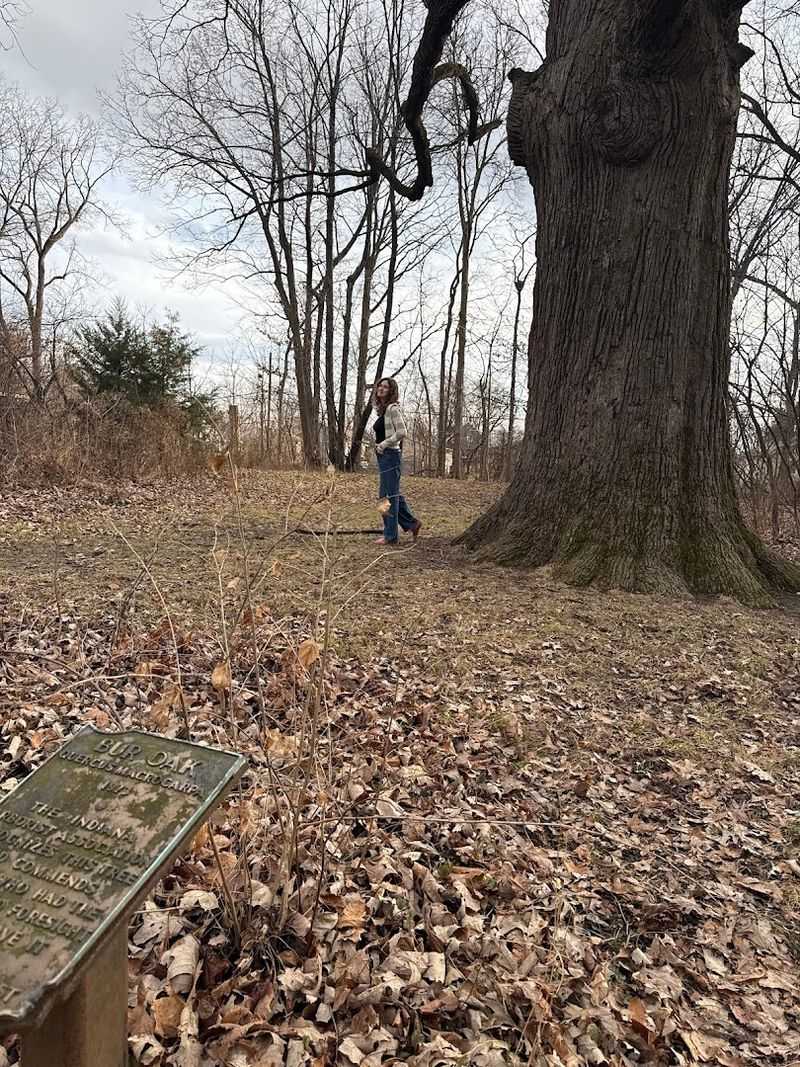
Photographs honestly do not do it justice. Standing at the base and looking up into that enormous canopy feels humbling in the best possible way.
The sheer bulk of the trunk alone is enough to stop most visitors in their tracks. Many people who visit say they had no idea a tree this large existed anywhere in the city.
It changes your sense of what is possible in nature, especially in an urban setting surrounded by houses and sidewalks. Bring someone with you just so you have a reference point in photos, because without a person standing next to it, the scale is almost impossible to believe.
Plan Your Visit Around the Story of Rev. Kile
Every great landmark has a story behind it, and this one is genuinely moving. The tree takes its name from Rev.
Oliver W. Kile, a man who purchased the lot in 1901 specifically because he was captivated by the grandeur of the oak already growing there.
He built his home right next to it, choosing to live in the shadow of something magnificent.
Rev. Kile loved the tree so deeply that when he passed away in 1924, his funeral was held beneath its branches.
That kind of devotion to a tree says something powerful about the connection people can feel with nature. After his death, his daughter Mae Kile took up the cause of protecting the tree and spent decades advocating for its preservation.
Mae even kept a guestbook for visitors, including people who traveled from other countries just to see it. That guestbook is now preserved by the Irvington Historical Society, a quiet but meaningful reminder that this tree has touched people from all over the world.
Knowing this backstory before you visit makes the experience richer. You are not just seeing a big tree.
You are visiting a place where a family poured their love and legacy into protecting something beautiful for future generations, including you.
Make Time to Explore the Irvington Historic District
The Kile Oak does not exist in a vacuum. It sits right inside the Irvington Historic District, one of Indianapolis’s most charming and historically rich neighborhoods.
Walking around Irvington before or after your visit adds a whole extra layer to the experience. The streets are lined with mature trees and well-preserved homes that give the area a warm, timeless feel.
Irvington has a strong sense of community identity, and the Kile Oak is a central part of that identity. Residents here take genuine pride in their neighborhood’s history, and that pride shows in how the area looks and feels.
You get the sense that people here actually care about where they live.
The Irvington Public Library even has a sign pointing visitors toward the Kile Oak and other local landmarks, which makes the neighborhood feel welcoming to curious travelers.
Spending an afternoon wandering through Irvington gives you a much fuller picture of why this tree matters so much to the people around it.
History is not just in textbooks here. It is in the sidewalks, the architecture, and yes, in the massive oak tree standing quietly on Beechwood Avenue.
Give yourself at least a couple of hours to soak it all in properly.
You Are Standing Next to Living History
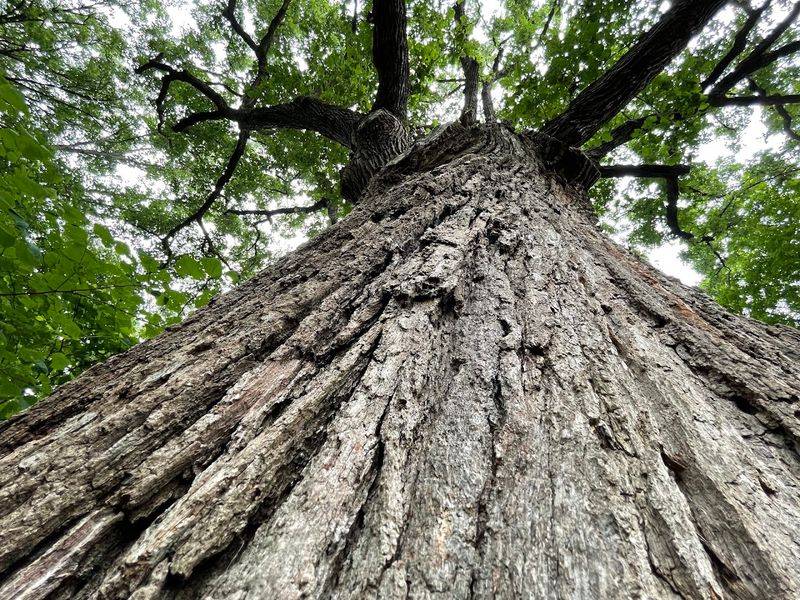
Some things are hard to wrap your mind around until you are standing right in front of them. The Kile Oak at 5939 E Beechwood Ave, Indianapolis, IN 46219, is estimated to be between 300 and 500 years old.
That means this tree was already growing when William Shakespeare was alive and when the Pilgrims landed at Plymouth Rock.
Think about that for a second. Every major event in American history happened while this tree quietly kept growing right here in Indiana.
It witnessed the Revolutionary War, the Civil War, and every decade that followed, all from the same patch of ground in what is now a peaceful neighborhood lot.
Arborists actually call it a “dinosaur” because it is so rare for a tree this old to survive in a large metropolitan area. Most ancient trees like this disappear over time due to development, storms, or disease.
The fact that this one still stands healthy and strong is nothing short of extraordinary. Visiting it gives you a real, physical connection to history that no museum exhibit can fully replicate.
You are not just looking at something old. You are sharing space with a living organism that has outlasted empires, survived centuries of weather, and continues to grow today.
Try Visiting in Different Seasons for New Views

One visit to the Kile Oak is great. Multiple visits across different seasons are even better.
The tree transforms noticeably throughout the year, and each season brings its own kind of magic to the site. In spring, fresh green leaves fill out that enormous canopy and the whole area feels alive and energetic.
Summer turns the site into a shady retreat, and the dense canopy blocks enough sunlight to make the space feel noticeably cooler. Fall is arguably the most dramatic.
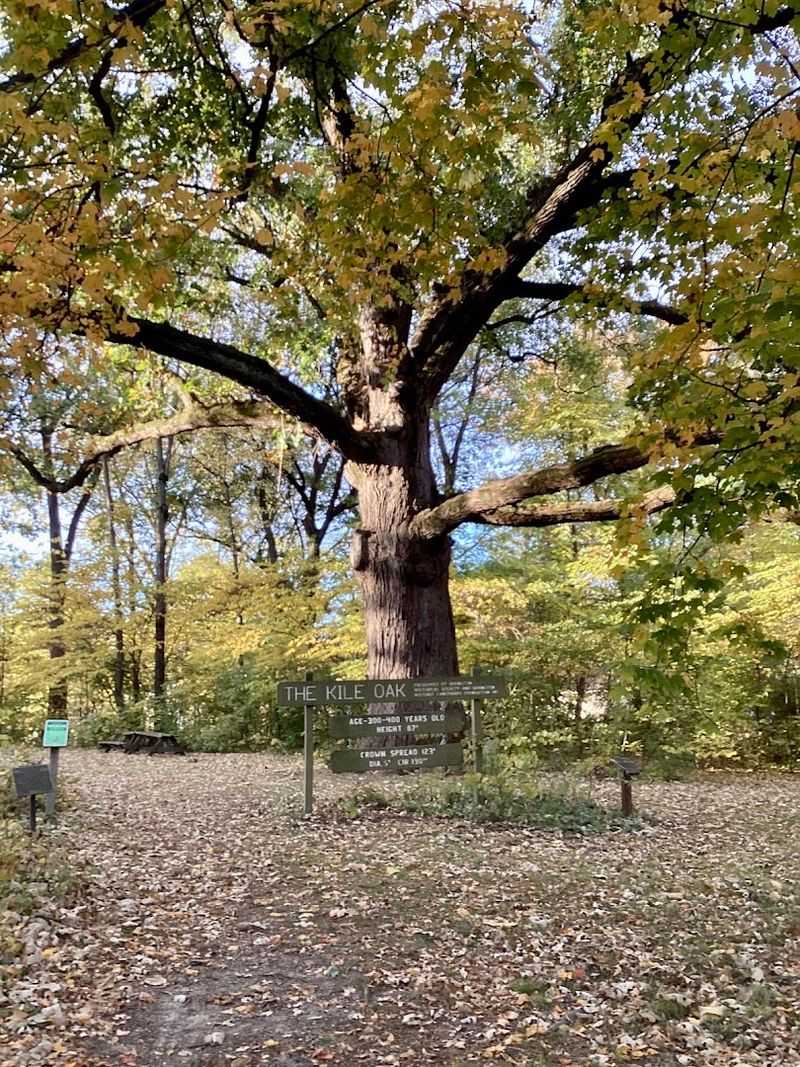
The bur oak leaves shift to warm golden and russet tones, and the entire lot takes on an almost storybook quality. More than one visitor has described visiting in late October as having a particularly special energy.
Winter strips the leaves away and actually lets you see the full architecture of the tree’s massive branching structure, which is impressive in its own right. The site is open daily from 8 AM to 7 PM, giving you plenty of flexible options for planning your visit.
Just remember to apply bug spray before heading out during warmer months, as some visitors have noted mosquitoes can be active near the garden area. Each visit feels slightly different, and that variety keeps the experience fresh no matter how many times you return to see this remarkable tree.
Skip the Crowds and Find Real Quiet Here
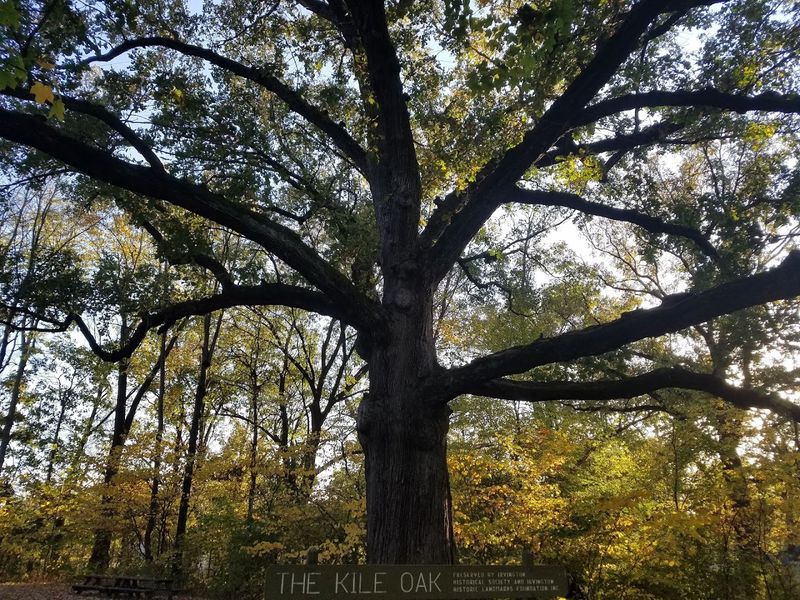
Not every worthwhile destination requires a crowd, a ticket, or a parking garage. The Kile Oak is refreshingly low-key.
You show up, you walk up to one of the oldest trees in Indiana, and you stand there in genuine quiet. There is no admission fee, no gift shop, and no tour guide talking over your experience.
For people who find peace in nature, this place delivers something rare in a city setting. The lot is small and intimate, which actually makes the contrast between the tree’s enormous size and the surrounding residential streets feel even more striking.
It is the kind of spot where you can just breathe and think without any pressure to move along.
Several visitors have described the atmosphere as almost meditative or spiritual. That is not an overstatement.
There is something genuinely grounding about being near something that has existed for centuries and will likely continue to exist long after you are gone.
The Irvington Historic Landmarks Foundation manages the property and works hard to keep it safe and welcoming, even as a small volunteer-driven organization.
Respecting the space, staying on the paths, and leaving everything as you found it helps ensure this peaceful spot stays open and enjoyable for everyone who visits after you.
Do Not Miss the Awards This Tree Has Earned
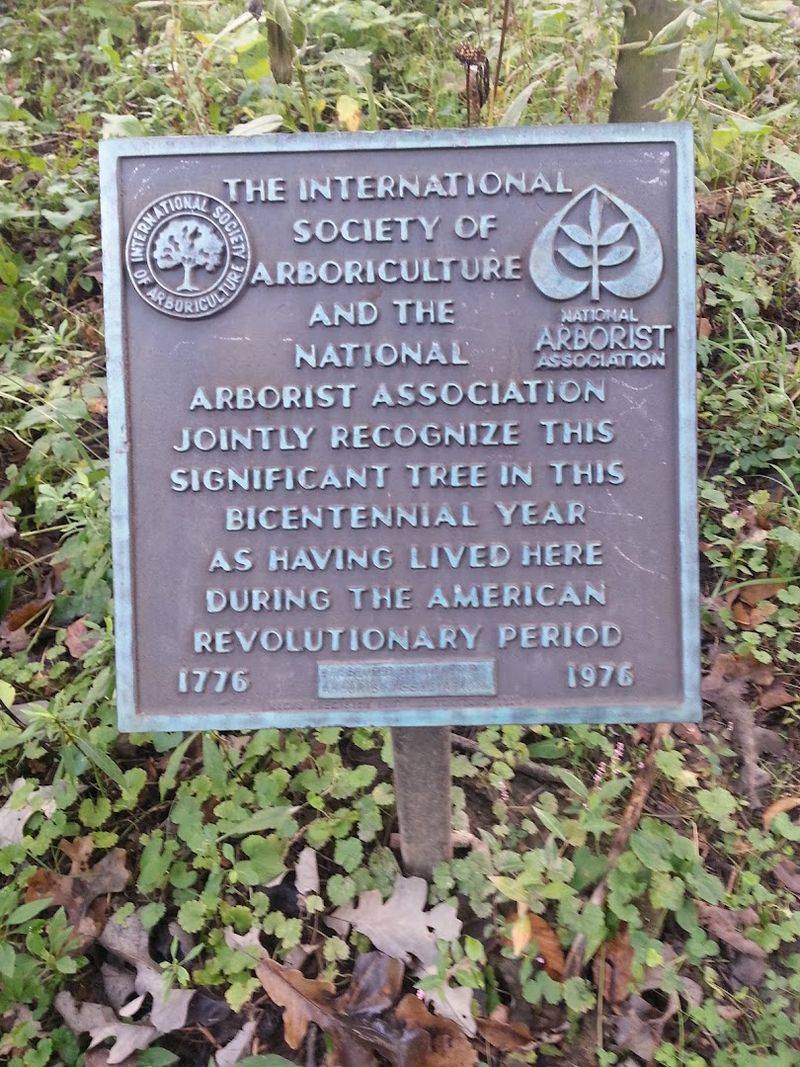
A tree this remarkable does not go unnoticed. The Kile Oak has collected a genuinely impressive list of honors over the decades, and learning about them before you visit makes the experience more meaningful.
In 1973, the Indiana Arborist Association officially named it an outstanding tree, recognizing its extraordinary age, size, and health.
Just three years later, in 1976, it received the designation of Bicentennial Tree, honoring the fact that it was already alive and growing during the American Revolutionary Period. That is a distinction very few living things anywhere in the country can claim.
More recently, in 2013, the National Wildlife Federation gave the site its Backyard Wildlife Habitat designation, recognizing the ecological value the tree and its surrounding garden provide for local wildlife.
Artists have also taken notice. Frederick Polley sketched the tree for The Indianapolis Star, and contemporary artist Wayne Kimmell has drawn inspiration from it as well.
The tree has attracted international visitors who signed Mae Kile’s old guestbook, now preserved by the Irvington Historical Society. All of these recognitions point to the same conclusion.
This is not just a big old tree growing in someone’s neighborhood. It is a certified piece of natural and cultural heritage that Indiana has officially acknowledged as worth protecting, celebrating, and visiting for generations to come.
