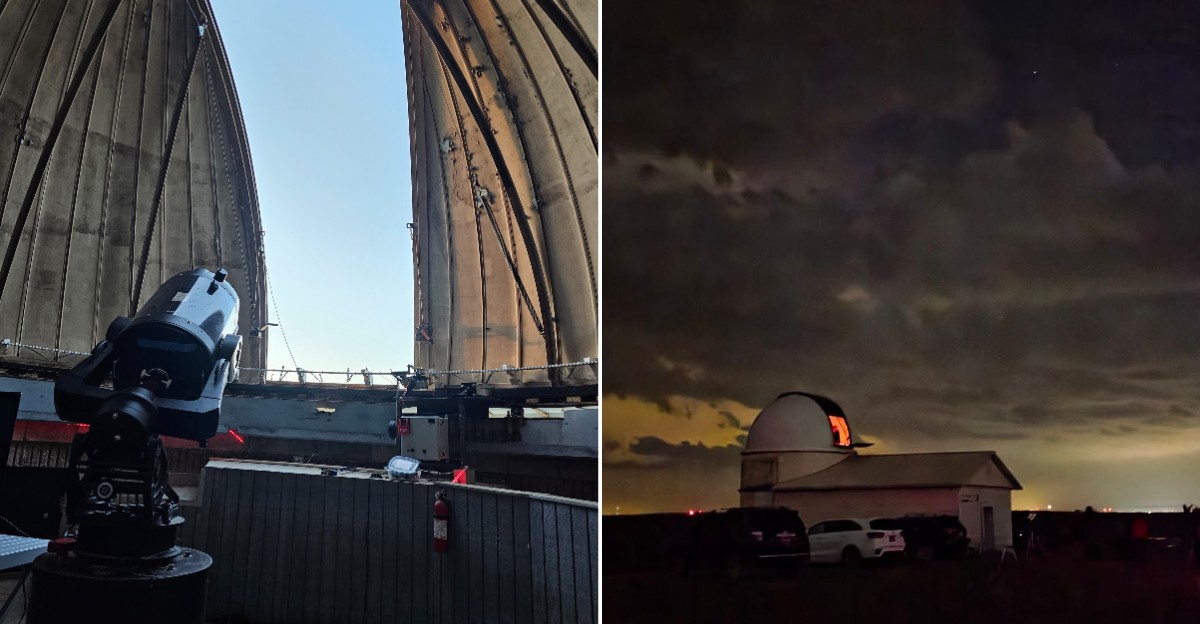
You do not need your own telescope to get a closer look at the night sky. This Oklahoma observatory gives visitors a chance to join public observing nights and see stars, planets, galaxies, and more through powerful telescopes.
Depending on the season and weather, the evening can reveal different sights overhead, making each visit a little different.
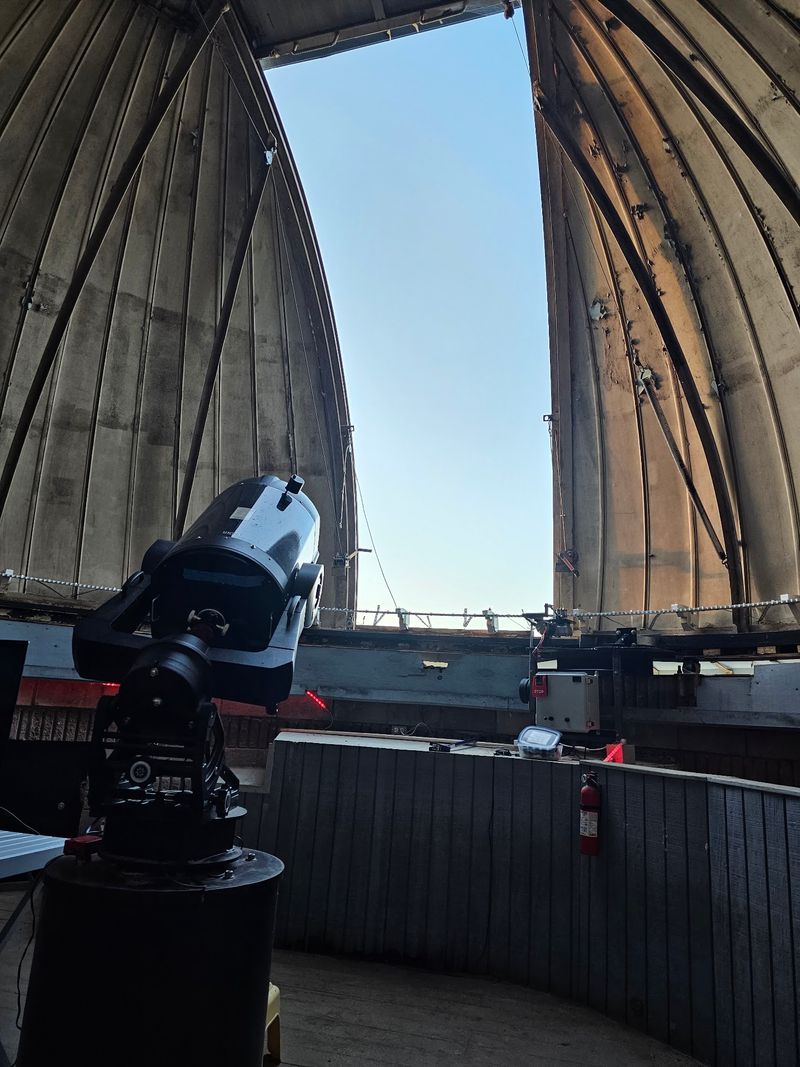
The fourteen-inch telescope inside the dome offers an especially impressive view, while additional telescopes may be set up outside for guests to explore.
Best of all, you do not need any astronomy experience to enjoy it. Club members help visitors understand what they are seeing and make the experience easy for newcomers.
For a free night out with a different kind of view, this Oklahoma stargazing experience gives you plenty of reasons to look up.
The Big Telescope Under The Dome
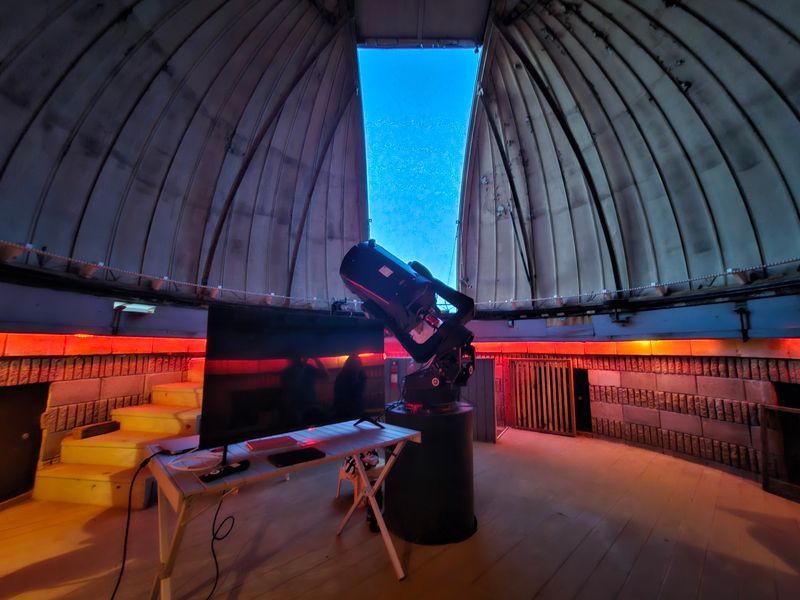
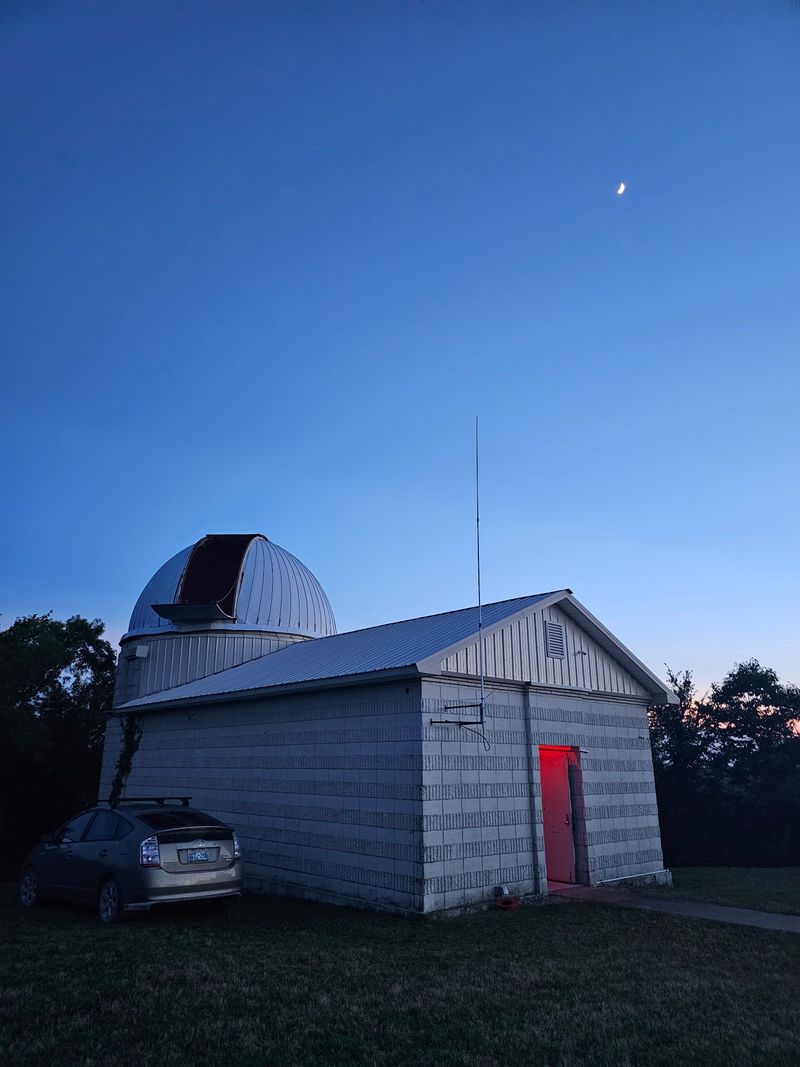
Let us start with the thing everybody shows up for, which is the club’s main telescope sitting inside a dome that measures about twenty feet across. The dome rotates and the slit opens to the sky, so the whole building basically turns into a giant eyepiece pointed at whatever the operator lines up that evening.
Standing under a working dome is a strange and wonderful feeling, because you hear the mechanism move and then suddenly a new patch of sky is framed above you. Members handle the aiming and focusing, and you simply step up, put your eye to the eyepiece, and look.
What you see depends entirely on what is above the horizon, so one visit might bring you ringed Saturn and another might hand you a fuzzy spiral galaxy or a tight ball of ancient stars. Nobody can promise a specific target in advance, and honestly that unpredictability is part of the charm of the whole thing.
Take your time at the eyepiece and let your eye settle, because details creep in after a few seconds rather than jumping out immediately. If you rush it, you miss the faint stuff, and the faint stuff is usually the part people talk about on the drive home.
Finding The Place Out Near Mounds
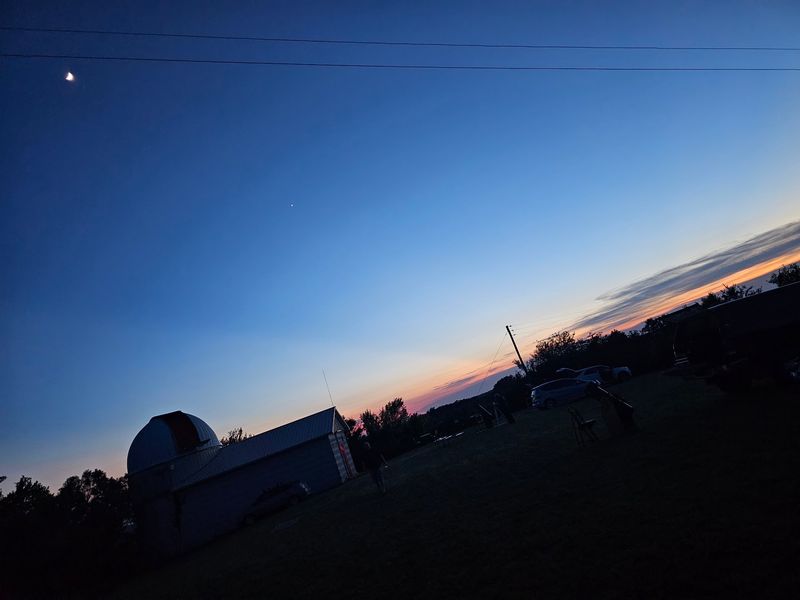
Getting there is half the reason the skies are so good, because the observatory sits well outside the city glow at 858 Ferguson Rd, Mounds, OK 74047. Plan on roughly forty to forty-five minutes of driving from Tulsa, which sounds like a trek until you realize that distance is exactly what buys you the darkness.
Punch the address into your phone before you leave, because cell service out in rural Oklahoma can get thin and you do not want to be guessing at turns in the dark. Screenshot the directions if you are the cautious type, and I usually am.
The property itself is about an acre with a wide open view of the sky, which means very little blocking your sightlines once you step out of the car. There is a real difference between suburban stars and rural stars, and you feel it the moment you look up.
Give yourself a cushion of extra time rather than cutting it close, since country roads are not the place to hurry after sunset. Arriving relaxed instead of frazzled sets the tone for the entire evening, and you will actually enjoy those first few minutes of sky instead of catching your breath.
Why Showing Up Before Sunset Actually Matters
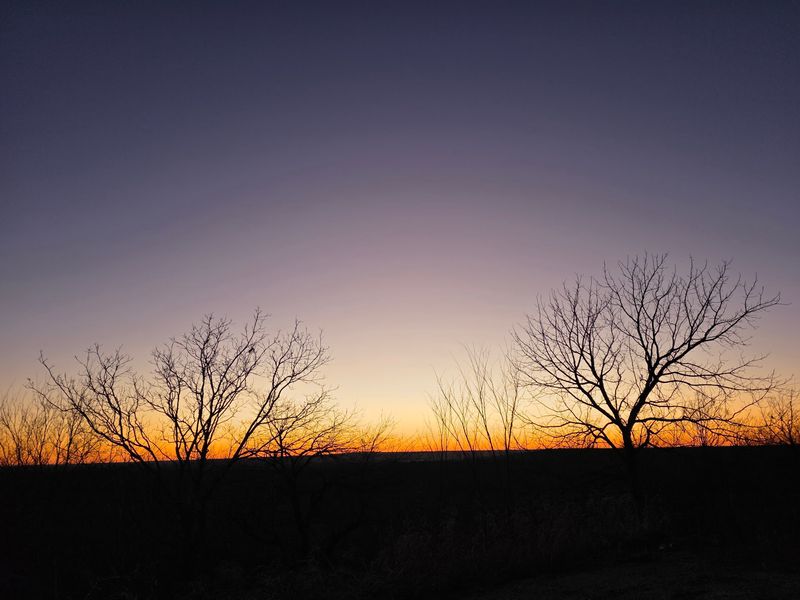
Here is the tip that first-timers always wish they had heard sooner, which is to roll in before the sun goes down. Daylight lets you park sensibly, find the restrooms, figure out where everything sits, and get your bearings without stumbling around.
Twilight out there is genuinely pretty on its own, and watching the first bright stars pop out one by one is a nice slow warmup for the main event. You also get to see the layout of the grounds, which helps enormously later when everything is pitch black.
If you do arrive after dark, the club asks that you drive slowly, keep your headlights on low beam, and then switch your lights off completely once you have parked. Bright white light wrecks everybody’s dark-adapted vision, including yours, so it is a courtesy that pays you back.
Think of it like walking into a movie theater partway through the film, except the film is the entire universe and the seats are a grassy field. Arriving early is simply easier on everyone, and it means you spend your evening looking up instead of squinting at the ground trying to find your footing.
Guest And Members Nights Are The Way In
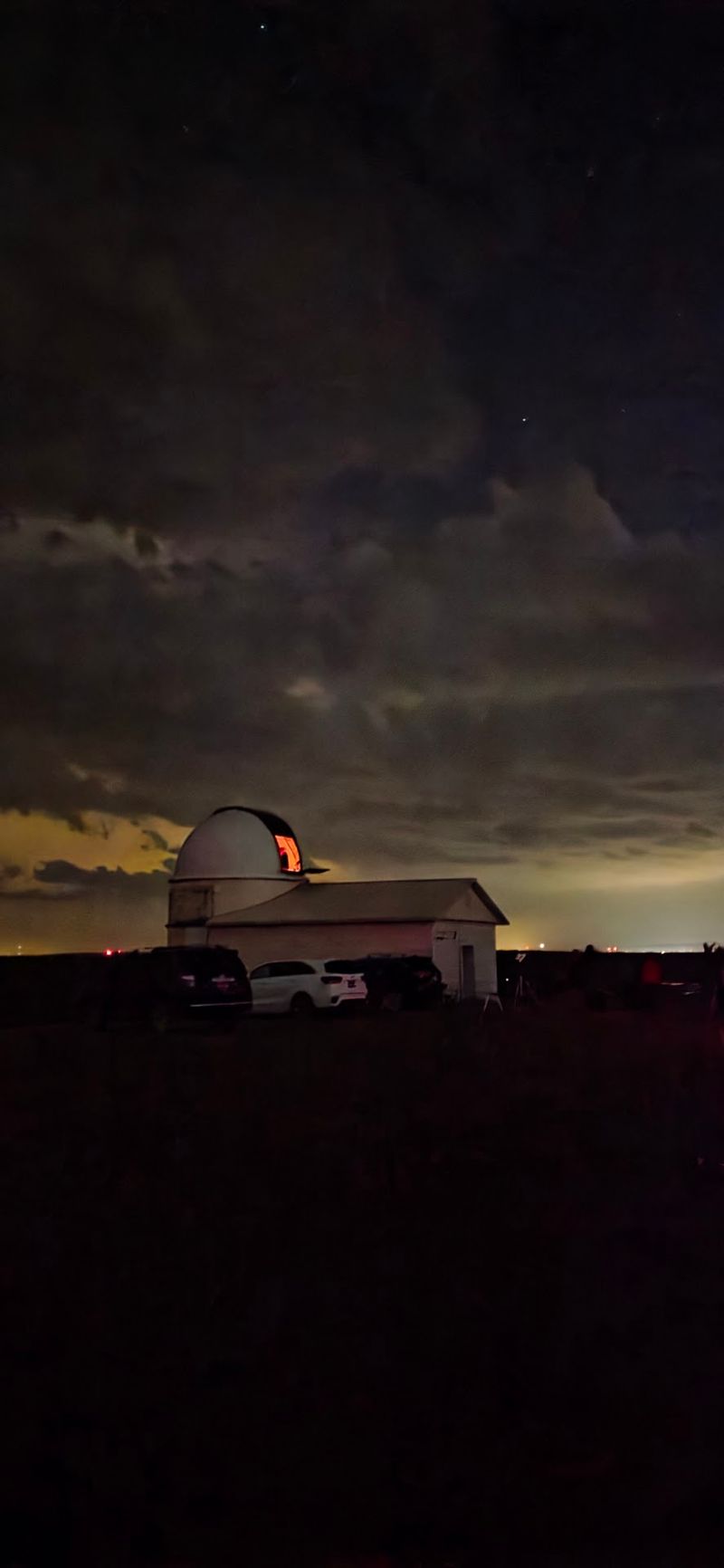
Something worth understanding up front is that the observatory is not a place you can drop by whenever the mood strikes. It opens to visitors on scheduled Guest and Members Nights, sometimes called Public Nights, and those evenings are the doorway in.
Because of that, checking the club’s website or social media before you go is not optional, it is the whole plan. Schedules shift with the seasons and the weather, so the listing is the only reliable source for when the gates are actually open.
The club also encourages guests to RSVP ahead of time, which helps the volunteers know roughly how many people to prepare for. It takes about a minute of your time and makes their night run smoother, so I would just do it.
Once you understand the rhythm of these scheduled evenings, planning around them gets easy and you can build a little trip out of it. Pick a night, confirm it is on, check the forecast, and then head southwest with the rest of the sky watchers.
Clear skies are the one ingredient nobody can control, which makes a confirmed open night feel like a small gift.
Free To Attend, Donations Welcome
Hard to beat the entry fee here, because public viewing nights are generally free to attend. The Astronomy Club of Tulsa is a non-profit run by volunteers, and sharing the sky with the public has been part of its mission for a very long stretch of Oklahoma history.
Donations are encouraged though, and they go toward the unglamorous stuff like keeping the building standing, the equipment maintained, and the lights and plumbing working. Nobody pressures you, but the gesture genuinely helps keep the doors open for the next group of curious visitors.
What strikes me about this setup is that the people operating the telescopes are not employees, they are hobbyists who chose to spend their evening helping strangers see a galaxy. That changes the feel of the place in a way that is hard to put into words.
So if you enjoy your night and you have a little something to spare, tossing it in feels like the right move. Word of mouth helps too, since telling a friend about a free stargazing night is how these community programs keep going year after year.
Generosity and enthusiasm are basically the fuel this whole operation runs on.
Protecting Your Night Vision With Red Light
Your eyes are the most important piece of equipment you will bring, and they need time to switch into dark mode. After a while in darkness, your vision adjusts and faint stars start appearing that were simply invisible when you arrived.
The catch is that one burst of white light resets the whole process, which is why visitors are asked to skip white flashlights and phone screens once night falls. Astronomers at the observatory use dim red lights instead, because red interferes far less with dark-adapted vision.
If you own a red flashlight or a headlamp with a red setting, bring it along and you will fit right in. Otherwise just trust your adjusted eyes, because starlight is brighter than people expect once you stop fighting it with screens.
Habit is the real enemy here, since most of us reach for our phones without thinking about it at all. Tuck yours away in a pocket early in the evening and you will avoid the reflex entirely.
Honestly, an hour or two without staring at a glowing rectangle is part of what makes the experience feel so different from ordinary life.
The Classroom And Restrooms Inside
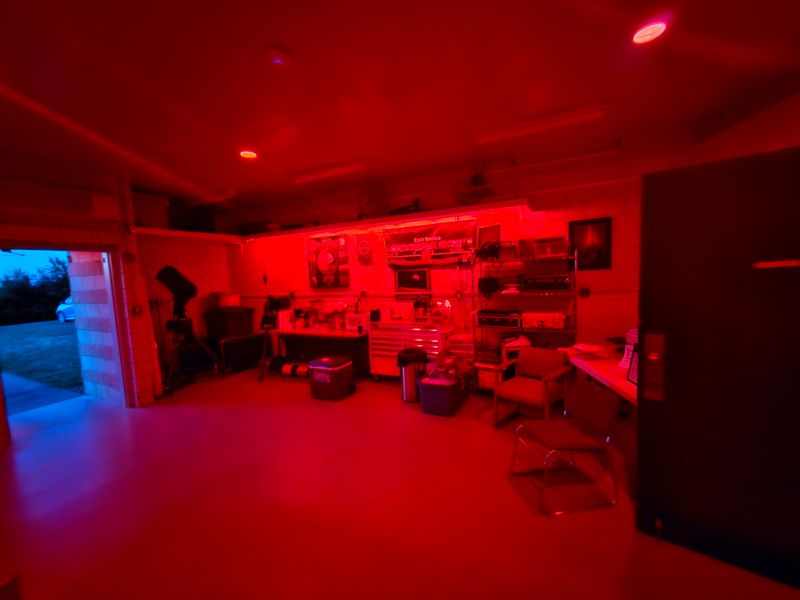
Practical stuff matters more than people admit when you are standing in a field at night. The observatory building includes a classroom space and restrooms for guests, which sounds minor until you compare it to stargazing from a random roadside pullout.
Having an indoor area means there is somewhere to gather, warm up your hands, and catch your breath between trips to the eyepiece. It also makes the whole evening far more workable for families with kids who need a break now and then.
The classroom setting fits the club’s teaching mission, since educating the public has been the point of this organization since its earliest days in Oklahoma. A room with chairs and charts turns a look through a telescope into something you actually understand afterward.
Little conveniences like these are what separate a comfortable night out from a miserable one, and I always appreciate when a place thinks about them. You are not roughing it out there, even though you are genuinely far from city lights.
Knowing there is a building with basic amenities nearby makes it much easier to stay out late and keep watching the sky change overhead.
Snacks Yes, Pets And Smoking No
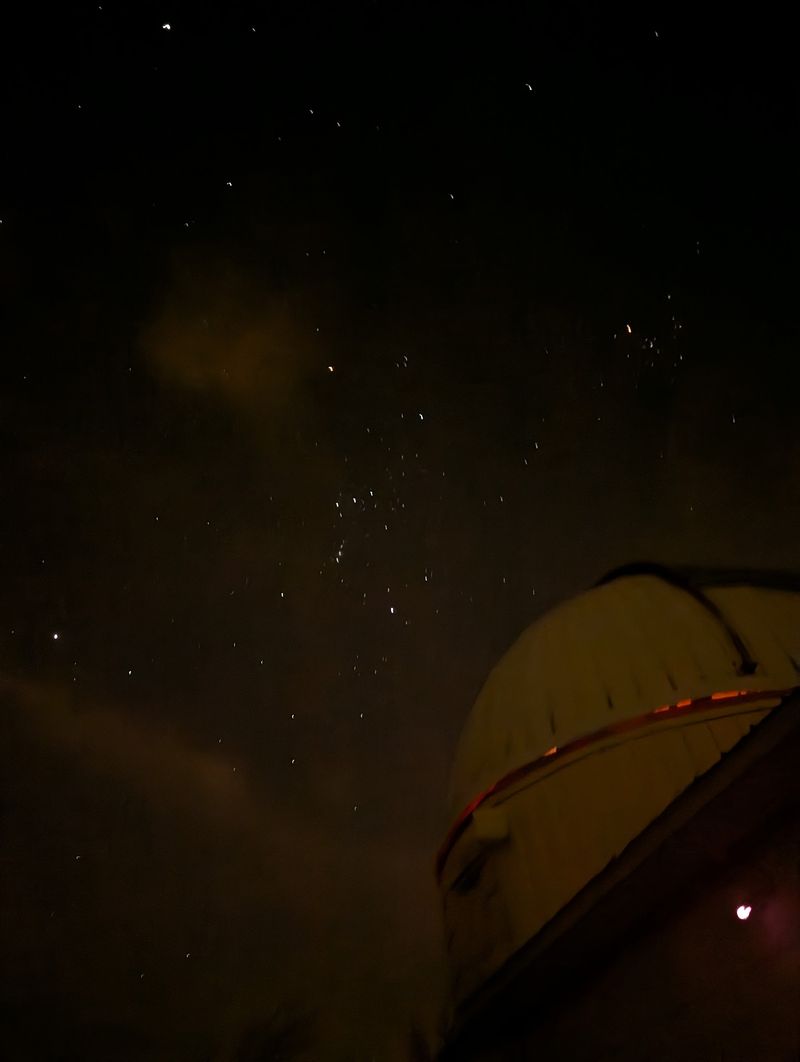
A few ground rules keep the place pleasant for everyone, and they are pretty easy to remember. You are welcome to bring snacks and non-alcoholic drinks, so packing a thermos and something to nibble on is completely fair game.
Pets, however, are not permitted at the observatory, so your dog will have to sit this adventure out at home. Smoking and tobacco use are not allowed either, which makes sense around sensitive optical equipment and people staring into eyepieces.
Folding chairs are worth considering too, since lying back and taking in the whole sky is a completely different experience from peering through a tube. Sometimes the best view of the night is just the broad sweep of stars overhead with no magnification at all.
Dress warmer than you think you need, because standing still in an open field gets chilly fast once the sun is long gone. Even mild Oklahoma evenings feel cooler when you are not moving much, and being cold is the fastest way to cut a good night short.
A jacket and a hat cost you nothing and buy you another hour under the stars.
Weather Is The Boss, So Check First
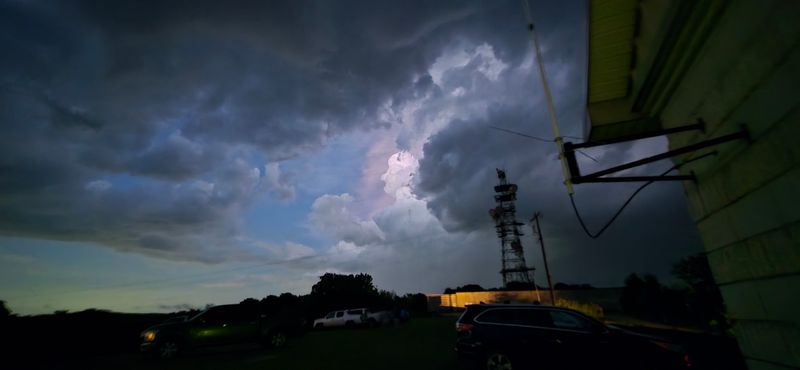
Clouds do not negotiate, which is the one unavoidable truth about stargazing anywhere on the planet. Events can be cancelled for weather, so confirming the status on the club’s official website or social media before you drive out is just smart.
Nobody wants to make a forty-five minute trip only to find a solid gray ceiling overhead, and the club posts updates precisely to spare you that. A quick check before you grab your keys saves a wasted evening.
When the sky does cooperate though, the payoff is real, and out there you might catch a satellite gliding across the stars or a meteor streaking past without warning. Those surprises are not scheduled and cannot be aimed at, which somehow makes them better.
My honest advice is to keep this one filed away as a plan you activate when the forecast looks clean rather than a date you lock in weeks ahead. Oklahoma skies change their mind often, and flexibility is your best friend here.
Stay ready, watch the forecast, and when a clear night lines up with an open viewing night, just go.
