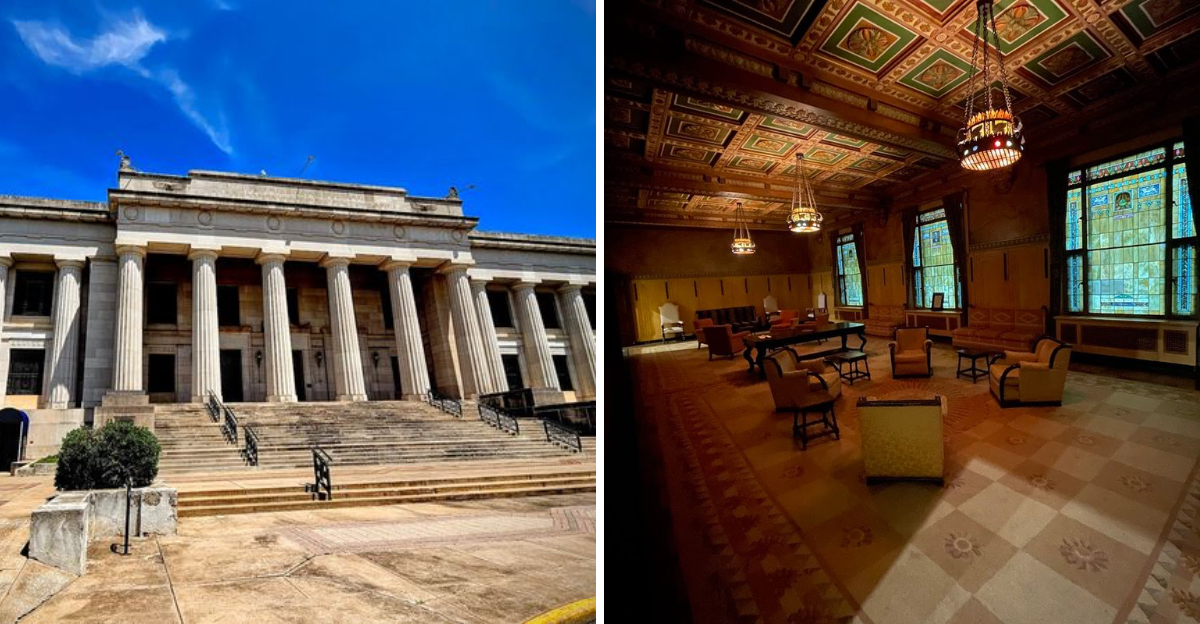
Standing in Guthrie, you come face to face with something that does not feel like it belongs in a small Oklahoma town. This massive building rises more than ten stories high, filled with marble staircases, grand halls, and rooms that seem to appear out of nowhere.
It is even larger than the House of the Temple in Washington, D.C., a detail that catches most visitors off guard. Built in the 1920s, it blends intricate craftsmanship with an almost mysterious atmosphere.
The deeper you go, the more it feels like you are uncovering something few people expect to find here
A Building That Defies Small-Town Expectations
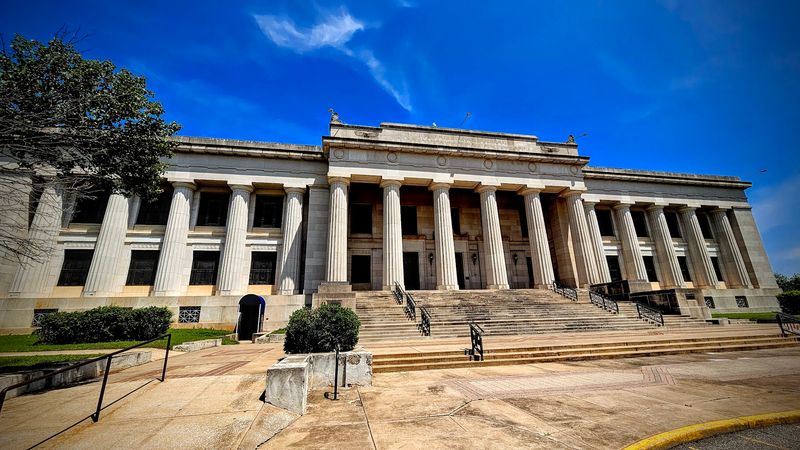
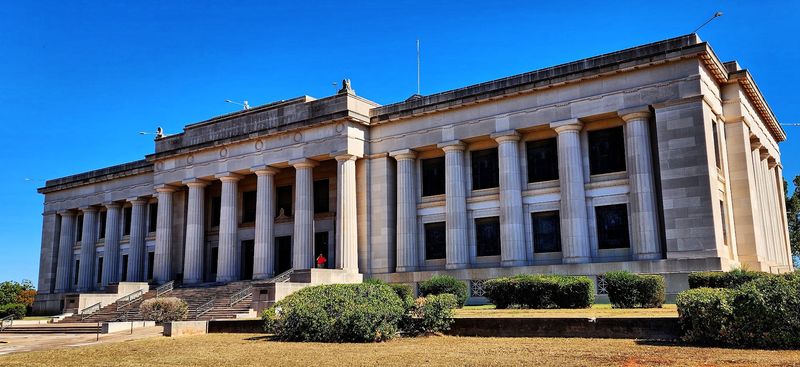
Most people driving through Guthrie, Oklahoma do not expect to find one of the largest Masonic temples in the entire country sitting right off the main road.
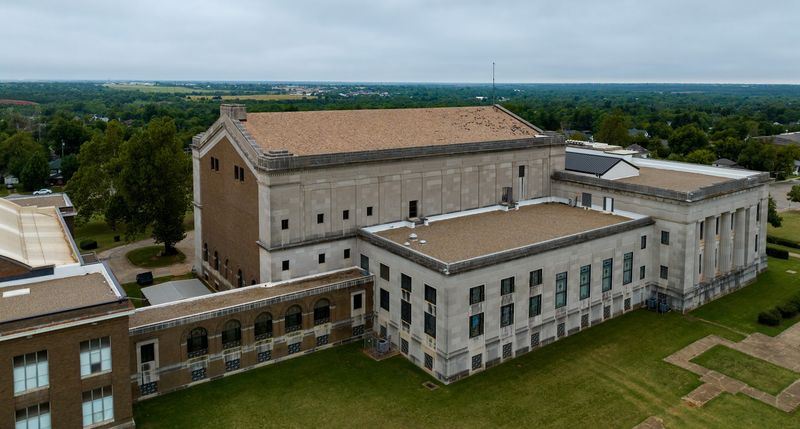
The Temple of the Scottish Rite of Freemasonry rises up with a commanding presence that feels almost impossible for a town this size. Its neoclassical stone exterior is covered in detailed carvings and supported by grand columns that signal serious architectural ambition.
Construction began in the 1920s, and the builders clearly had no interest in doing anything halfway. The result is a structure that stretches across more than ten floors of interconnected halls, rooms, and stairwells.
It surpasses the House of the Temple in Washington, D.C. in overall size, which makes it one of the most significant Masonic buildings anywhere in the United States. Oklahoma is full of surprises, but this one ranks near the top of the list.
First-time visitors often stand on the sidewalk for a long moment before walking in, just trying to take in the full scale of what they are looking at. The building earns every second of that pause.
Marble Staircases That Make Every Step Feel Important
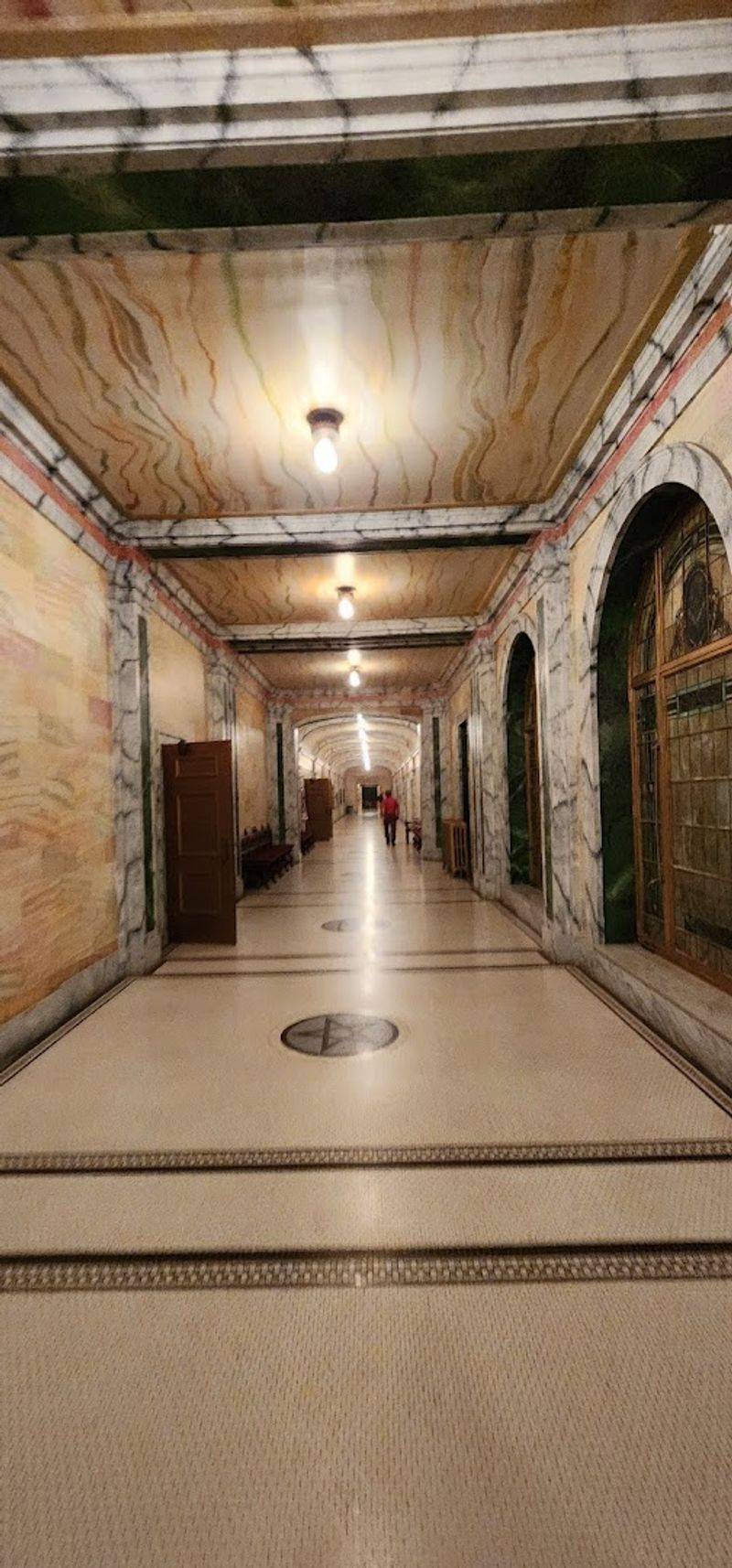
There is something about a marble staircase that immediately changes how you carry yourself. You slow down, you straighten up, and you start paying attention to your surroundings in a way that everyday spaces rarely demand.
The Temple of the Scottish Rite of Freemasonry in Guthrie, Oklahoma has that effect in full force. The marble used throughout the building was sourced from locations around the world, giving each staircase a distinct character depending on where the stone originated.
Some staircases are sweeping and wide, designed to accommodate large processions of members during formal ceremonies. Others are narrower and more tucked away, connecting floors in ways that feel almost private.
Running your hand along the cool, smooth railing while climbing several floors is one of those small but memorable travel experiences. The craftsmanship visible in every joint and carved detail tells you that the people who built this place cared deeply about the work.
Oklahoma is not often associated with this level of interior stonework, which makes discovering it here feel like finding something genuinely rare and worth celebrating.
Grand Halls That Seem to Go On Forever
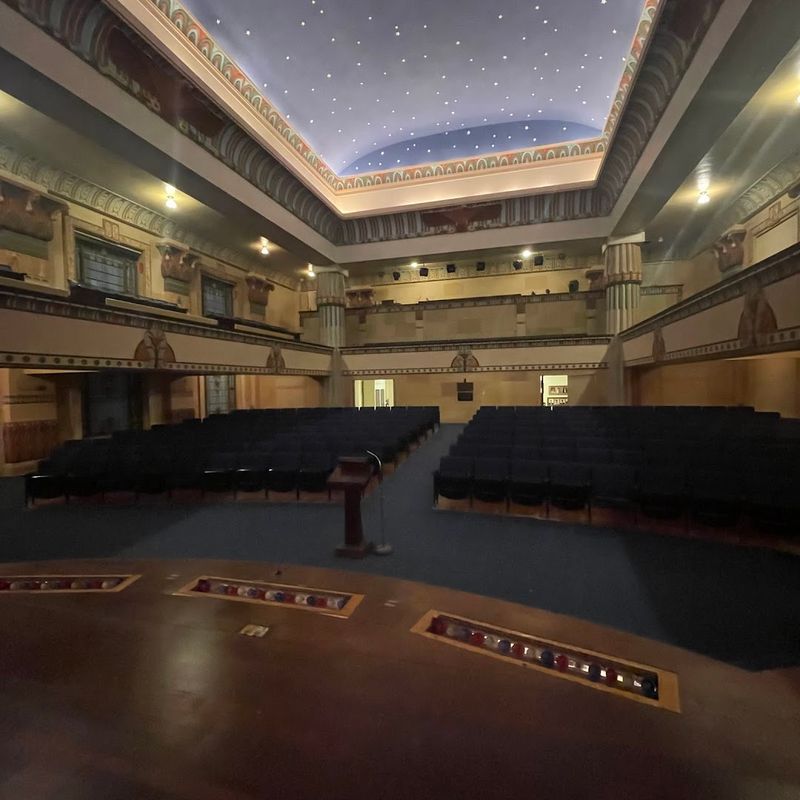
Walking into the main ceremonial halls of this temple is a moment that genuinely catches you off guard. The ceilings climb far above your head, and the sheer width of the rooms creates a sense of space that feels more like a cathedral than anything you would expect to find in a small Oklahoma city.
Each hall has its own distinct theme and decorative style, drawing from different historical and cultural traditions. Materials and artwork sourced from locations around the globe appear throughout these spaces, giving every room its own visual identity.
The acoustic quality of these halls is also worth mentioning. Sound moves through them in a way that feels intentional, which makes sense given that these spaces were designed for ritual ceremonies, music, and formal gatherings.
Standing at one end of the largest hall and looking toward the other side gives you a clear sense of just how ambitious the original design truly was. The builders wanted people to feel the weight of the space, and that goal was absolutely achieved.
Oklahoma has many historic buildings, but few manage to create this particular combination of grandeur and intimacy at the same time.
Hidden Rooms That Reward the Curious
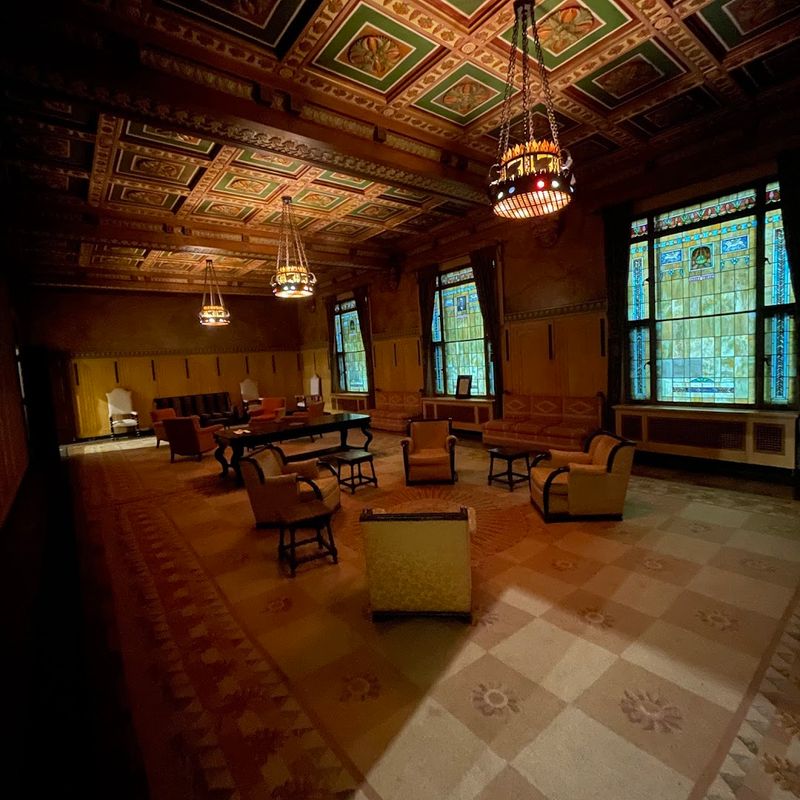
One of the most entertaining parts of exploring this building is the realization that there are always more rooms than you initially expected. Hallways branch off in directions that do not appear on any casual floor plan, and doorways appear in walls that seemed solid just moments before.
The temple contains spaces that have served very different purposes over the decades. Some were designed for private meetings among lodge members, while others functioned as libraries, offices, or storage areas for ceremonial objects and historical records.
A few of these rooms are accessible only to Master Masons, which adds a genuine layer of mystery to the experience for general visitors. Knowing that certain doors remain closed makes the ones that open feel even more rewarding to step through.
The building reportedly contains a museum, library spaces, and even an inn where guests can stay in rooms that once served as a senator’s offices. That last detail alone makes the whole place feel like a layered history lesson you can actually sleep inside.
Oklahoma history runs deep in these walls, and every hidden corner seems to hold another piece of a story that stretches back a full century.
Stained Glass Windows That Change the Quality of Light
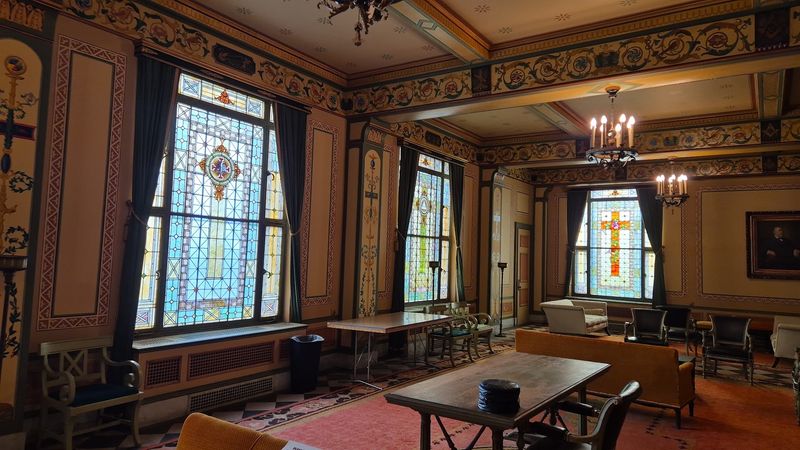
Color arrives differently in a room when it passes through stained glass. It lands on floors and walls with a softness that feels almost alive, shifting slightly as the sun moves across the sky throughout the day.
The stained glass windows throughout the Temple of the Scottish Rite of Freemasonry in Guthrie are among the most celebrated features of the entire building. Their craftsmanship is immediately obvious, with intricate patterns and symbolic imagery rendered in rich, layered tones of blue, red, gold, and green.
Each window tells a story or represents a concept meaningful to Masonic tradition, which gives them a purpose beyond simple decoration. Studying them closely reveals details that are easy to miss during a quick walk-through.
Morning light tends to bring out the warmest tones in the glass, making an early visit particularly rewarding for anyone interested in seeing the windows at their most vivid.
The combination of natural light and the building’s stone interior creates an atmosphere that is genuinely hard to replicate anywhere else.
For a state like Oklahoma, which has its share of historic churches and civic buildings, these windows still manage to stand apart as something truly exceptional.
The History Behind the Brotherhood That Built It
Scottish Rite Freemasonry has a long and layered history that stretches back several centuries, and the temple in Guthrie serves as one of its most impressive physical expressions in the United States.
The organization represents one of the appendant bodies of Freemasonry, offering additional degrees and philosophical teachings beyond the standard three degrees of the Blue Lodge.
Members progress through a series of degrees, each one building on the last with its own ceremonies, symbols, and lessons.
Guthrie, Oklahoma was the first capital of the state, and the city’s prominent role in early Oklahoma history made it a natural home for a building of this scale and significance.
The decision to construct such an ambitious temple here was a statement about the community’s ambitions and its faith in the future of the region.
The building opened in the 1920s, a decade defined by optimism and a willingness to invest in permanence. That spirit is visible in every square foot of the structure, from the imported marble to the hand-crafted woodwork that fills the interior spaces.
Understanding that context makes walking through the building feel less like tourism and more like a genuine conversation with the past.
Guthrie’s Place in Oklahoma History Adds Extra Depth
Guthrie carries a weight of history that most Oklahoma cities simply do not share. It served as the first capital of Oklahoma after statehood in 1907, and that founding energy shaped the ambitions of everyone who built something significant here during those early decades.
Walking around the city before or after a temple visit puts the building in a much richer context. The surrounding streets are lined with late Victorian and Edwardian architecture that survived the passage of time in remarkable condition.
The decision to place such an enormous Masonic temple in Guthrie rather than in a larger city was deliberate. The city had political influence, civic pride, and a membership base that wanted to make a lasting impression on the landscape of the new state.
That ambition paid off in a way that continues to reward visitors today. The temple stands as one of the clearest examples of what early Oklahoma leaders believed their state could become, built in stone and marble that was meant to last for centuries.
Spending time in Guthrie feels like reading a chapter of Oklahoma history that most textbooks leave out, and the temple is easily the most dramatic illustration of that story.
What a Guided Tour Actually Feels Like
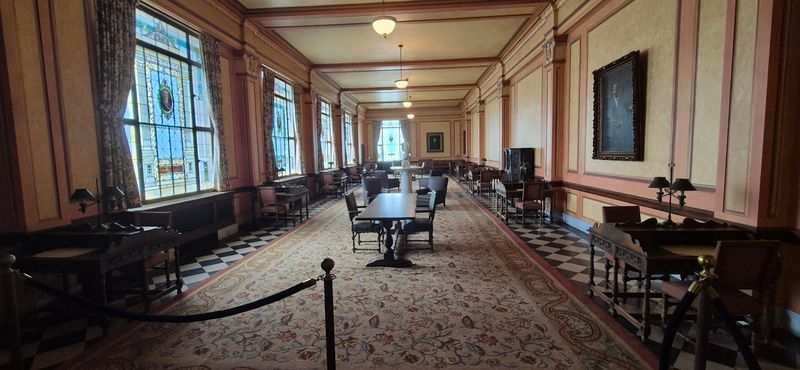
Arriving for a guided tour of the temple means preparing yourself for more information than you can comfortably hold in one visit. The guides here know the building in extraordinary detail, moving from room to room with the kind of fluency that comes from genuine enthusiasm for the subject.
Tours are available during the week, with the temple open Monday through Thursday from 9 AM to 3 PM. Calling ahead to confirm availability is always a smart move, since the building also hosts private events and lodge activities throughout the year.
Each stop on the tour reveals something new about the building’s construction, history, or purpose. The guides explain the significance of the decorative elements, the origins of the materials, and the function of the various ceremonial spaces in ways that make everything feel connected rather than overwhelming.
The scale of the building means that even a thorough tour leaves you with the sense that there is more to discover on a return visit. That feeling is part of the appeal, and it is one reason why people come back to this Oklahoma landmark more than once.
The phone number for the temple is +1 405-282-1281, and their website at guthriescottishrite.org has additional information about visiting.
Ceremonial Rooms Designed for Ritual and Meaning
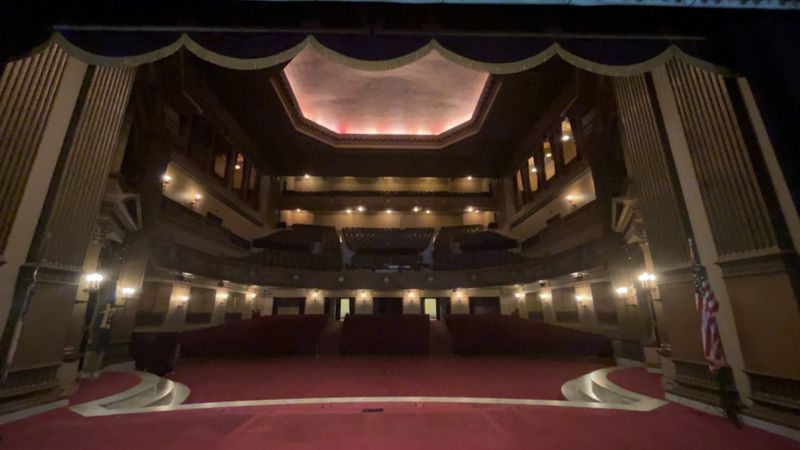
Some of the most impressive spaces in the building were designed specifically for Masonic degree ceremonies, and their theatrical quality is immediately apparent the moment you step inside.
These rooms feature tiered seating arrangements, elaborate stage areas, and decorative elements that draw from ancient Egyptian, Greek, and medieval European traditions. The visual language is dense and intentional, with every symbol and motif serving a specific purpose within the ritual context.
The lighting in these ceremonial spaces deserves special attention. Fixtures were designed to create specific atmospheric effects during performances, and even in everyday conditions the rooms carry a sense of drama that ordinary meeting spaces never achieve.
What makes these rooms particularly fascinating for non-Masonic visitors is the realization that they were built for active, ongoing use rather than purely as display spaces. These are working rooms with a living tradition behind them, not museum reconstructions of something that no longer exists.
Oklahoma has its share of impressive historic interiors, but the ceremonial rooms of this temple occupy a category of their own. The combination of artistic ambition, symbolic depth, and sheer physical scale creates an experience that stays with you long after you have returned home.
Practical Tips for Planning Your Visit
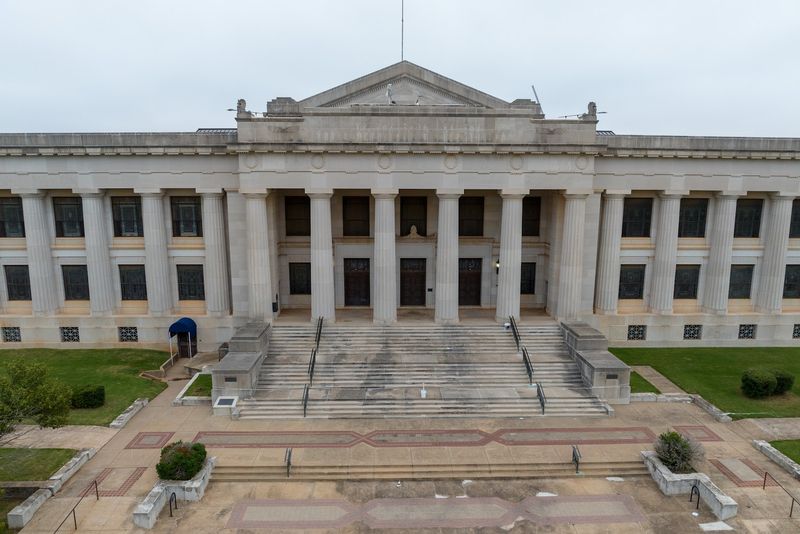
Planning a visit to the Temple of the Scottish Rite of Freemasonry in Guthrie works best when you treat it as a half-day experience rather than a quick stop. The building is large enough that rushing through it means missing most of what makes it worth seeing.
The temple is located at 900 E Oklahoma Ave, Guthrie, OK 73044, and it is open Monday through Thursday from 9 AM to 3 PM. Friday, Saturday, and Sunday are closed, so a weekday trip is essential for getting inside.
Comfortable shoes are genuinely useful here. Climbing multiple floors of marble staircases and walking through long corridors adds up quickly, and the building rewards anyone willing to take their time moving through each space.
The grounds around the building are also worth exploring. Small garden areas surround the exterior, and the architecture looks particularly striking in the early morning light when the stone facade catches the sun at a low angle.
Oklahoma is a state where historic buildings sometimes get overlooked in favor of better-known attractions, but this temple belongs near the top of any serious architecture or history itinerary. A visit here is one of those experiences that genuinely changes your sense of what the state has to offer.
Dear Reader: This page may contain affiliate links which may earn a commission if you click through and make a purchase. Our independent journalism is not influenced by any advertiser or commercial initiative unless it is clearly marked as sponsored content. As travel products change, please be sure to reconfirm all details and stay up to date with current events to ensure a safe and successful trip.
