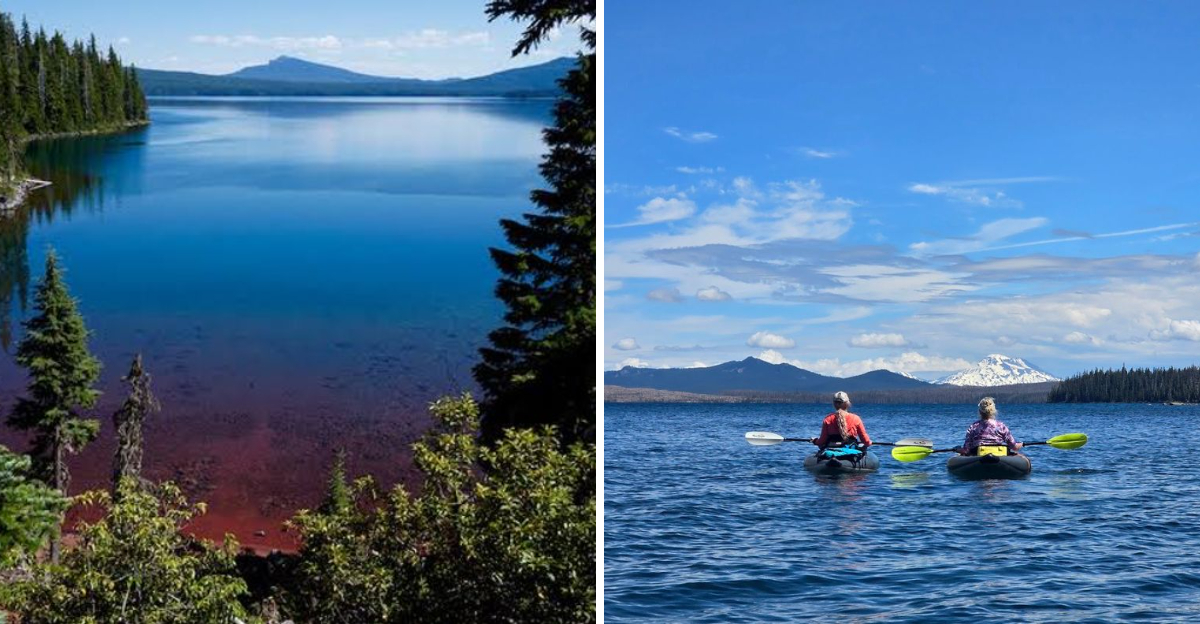
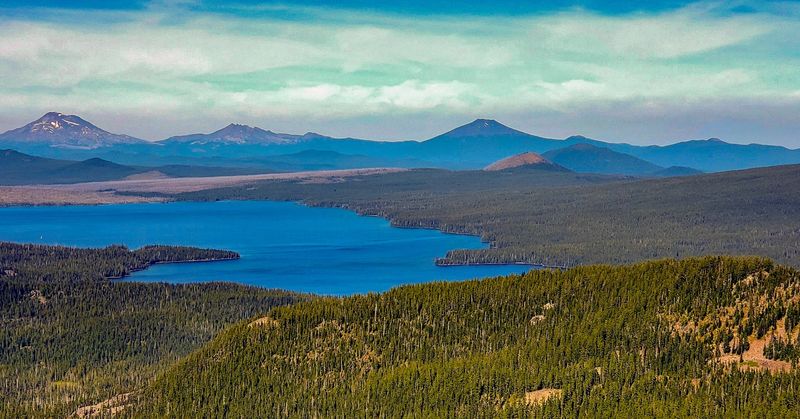
A lake so clear it almost looks unreal sits quietly in Oregon, blurring the line between freshwater calm and coastal beauty. The water carries a deep blue tone that shifts with the light, making every glance feel slightly different from the last.
I found myself stopping more than walking, just watching how the surface changes with every breeze. There’s a coastal feeling to it – open, wide, and almost ocean-like – but with a stillness that belongs only to lakes.
Everything around it feels softer, quieter, more intentional. I kept getting drawn back to the shoreline, as if the view kept resetting itself just to be seen again.
It’s the kind of place that makes you forget how close or far anything else is.
Crystal-Clear Water That Defies Belief
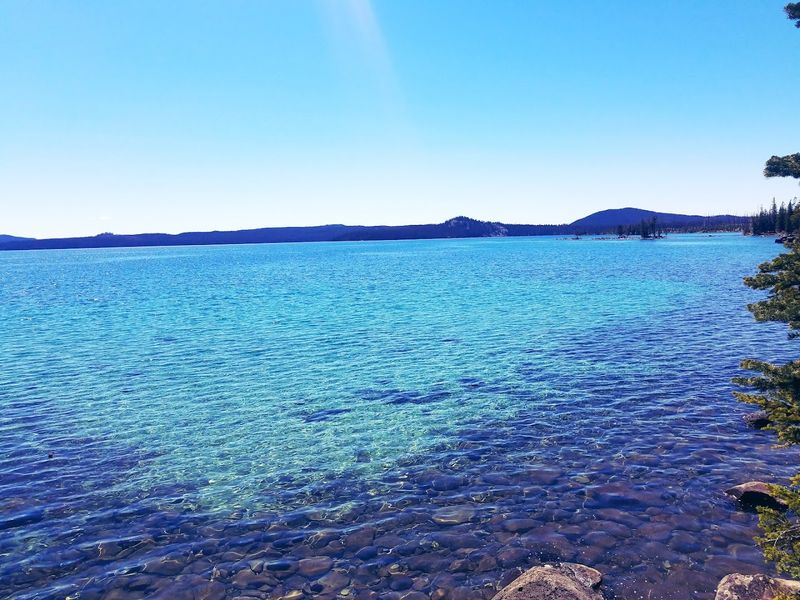
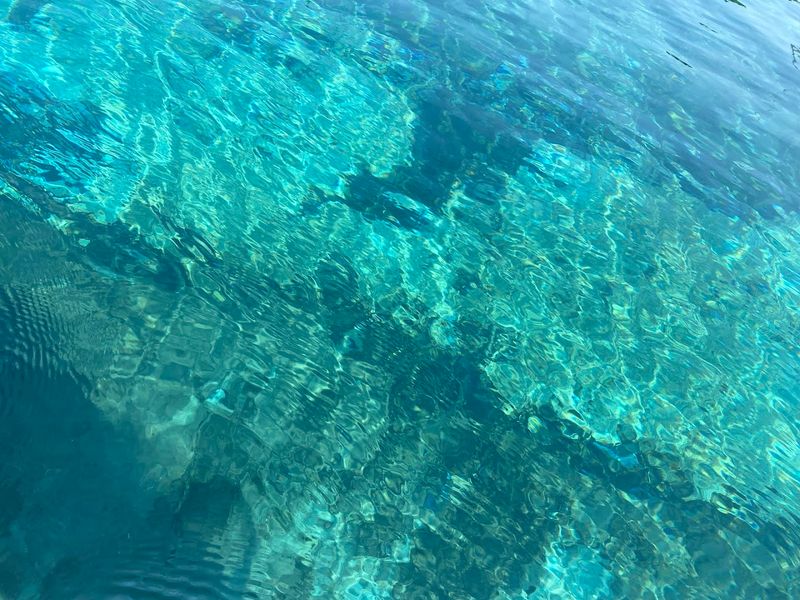
Standing at the shoreline, you can see straight down to the sandy bottom. The water at Waldo Lake is not just clear, it is almost unreal.
Visibility can reach 120 feet on a calm day, which puts it in a league with only a handful of lakes worldwide.
The reason behind this clarity is fascinating. Waldo Lake has no permanent inlet stream.
Without rivers flowing in, there are no nutrients feeding algae or plant growth. The lack of plant life keeps the water almost disturbingly pure.
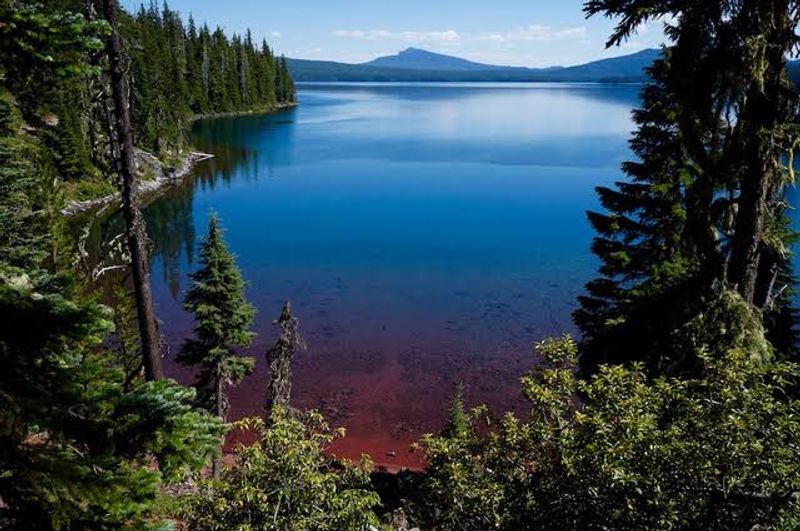
On sunny days, the color shifts between deep sapphire and bright turquoise. It genuinely looks coastal, like something you would expect to find in the Caribbean rather than the Oregon mountains.
One visitor spotted the lake bed from a paddleboard at 20 feet down, perfectly clearly. Seeing it for yourself makes you understand why people keep coming back.
The water alone is worth the drive up Highway 58.
The Science Behind the Purity
Waldo Lake earned its reputation honestly. It ranks among the purest bodies of water ever measured on Earth, and the chemistry behind that is genuinely interesting.
Pure water absorbs red and yellow light wavelengths, which is why the lake glows that deep, almost electric blue.
The lake sits in a volcanic basin with no permanent inlet stream. Rain and snowmelt feed it slowly, carrying almost no dissolved minerals or nutrients.
That low nutrient level starves algae before it can grow.
Scientists have measured the water’s clarity using a Secchi disk, a simple tool that tests how deep light can travel. At Waldo Lake, that number can hit 120 feet.
For comparison, most productive lakes struggle to reach 10 feet. The lake covers just under 10 square miles and plunges to a maximum depth of 420 feet.
That depth, combined with the near-total absence of biological matter, makes the blue color look almost painted on. It is a natural phenomenon that still surprises researchers today.
Paddleboarding and Kayaking on Glassy Calm Water
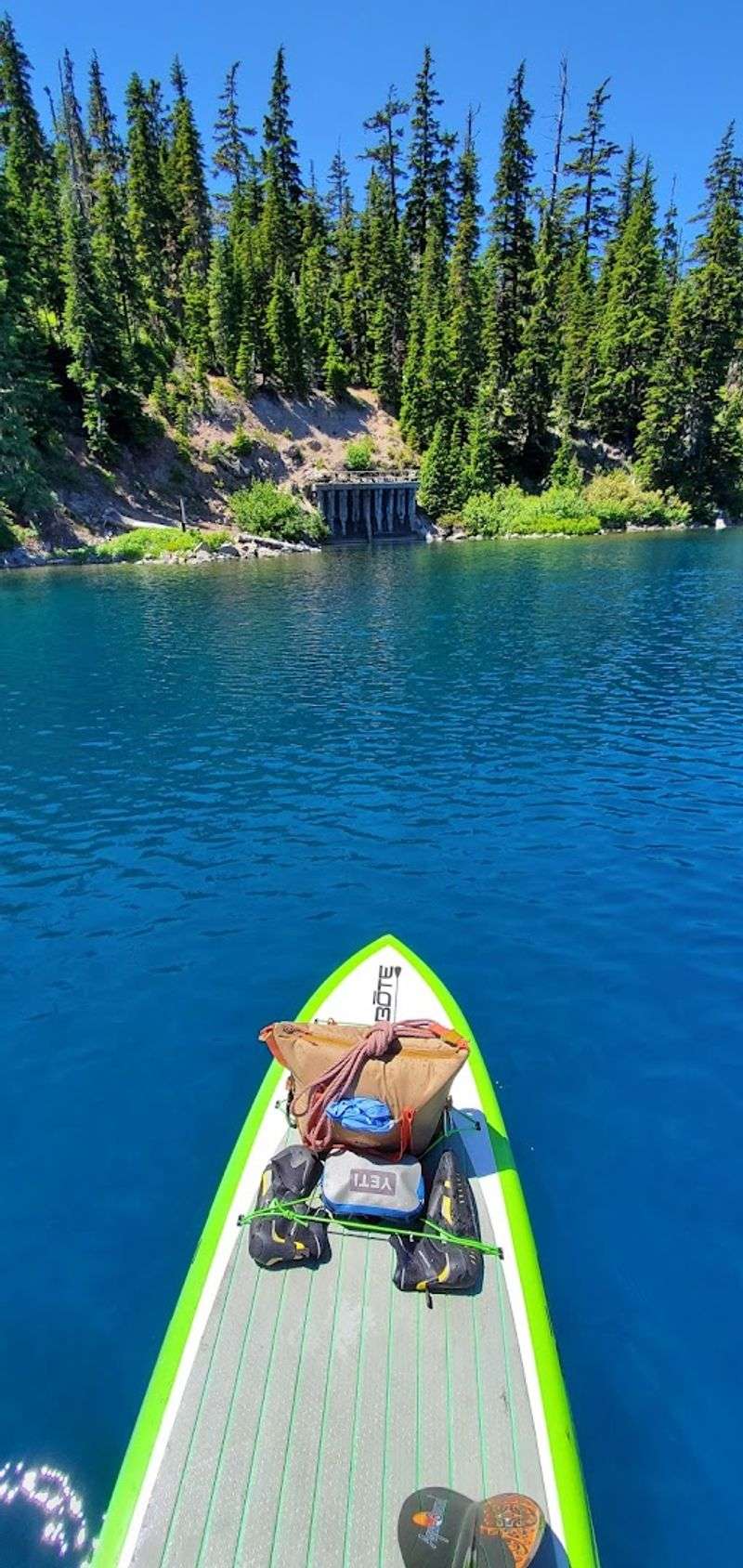
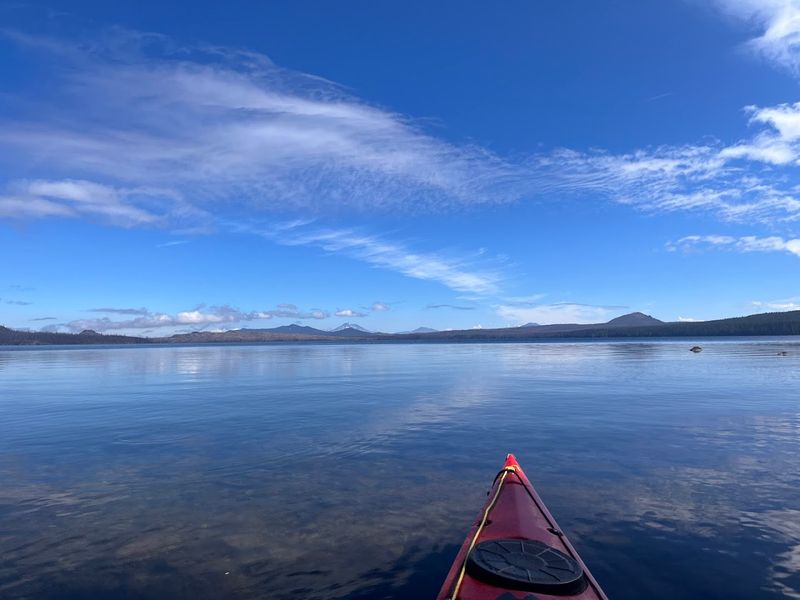
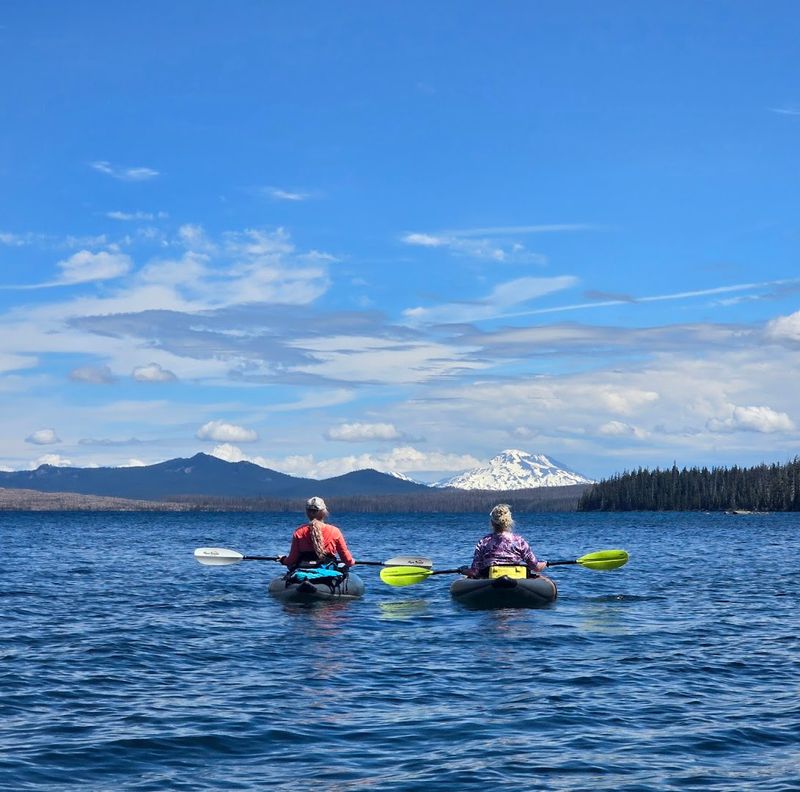
Gliding across Waldo Lake on a paddleboard is one of those experiences that stays with you. The water is so calm and clear that you feel like you are floating on glass.
Looking straight down while paddling is almost hypnotic.
No gas-powered motor boats are allowed on the lake. That rule keeps the surface smooth and quiet, which makes paddling genuinely enjoyable.
Kayakers can spend hours exploring the shoreline without fighting any wake or engine noise.
The lake stretches nearly 10 square miles, so there is plenty of room to roam. North Waldo Campground has a boat launch area that makes getting on the water easy.
Paddling toward the small island near the campground is a popular challenge for first-timers. The island sits just far enough offshore to feel like a real adventure.
Bring plenty of water and sunscreen, because the high-elevation sun is stronger than it looks. Early morning paddles are especially peaceful, with mist rising off the surface before the wind picks up.
Camping Under the Stars at Three Campgrounds
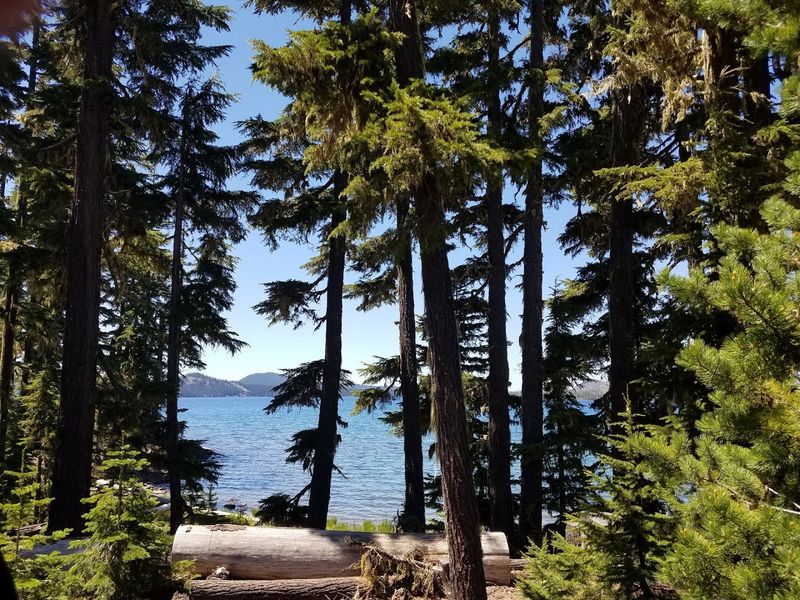
Spending the night at Waldo Lake is a completely different experience than a day visit. The three campgrounds, Shadow Bay, North Waldo, and Islet, each have their own personality.
Shadow Bay sits on the southern end and tends to feel a bit more sheltered.
North Waldo is the most popular spot and sits closest to the boat launch. Islet Campground has sandy beach access that makes it a favorite for swimmers.
All three campgrounds are well-maintained during the operating season, with clean vault toilets that visitors have actually praised.
The campsites are spread out enough that you rarely feel crowded. Waking up to the sound of wind moving through the Douglas fir and western hemlock is genuinely calming.
At night, the lack of light pollution makes the sky absolutely wild. Stars reflect off the still water, and if you paddle out after dark, the whole scene becomes something almost cinematic.
Hiking Trails That Circle the Entire Lake
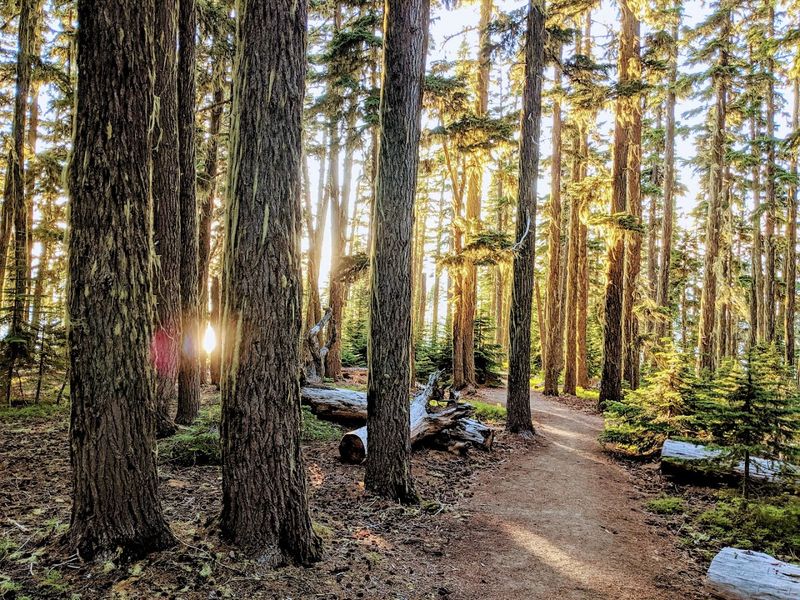
The trail system around Waldo Lake is one of the better-kept secrets in the Oregon Cascades. A full loop around the lake stretches roughly 22 miles and takes most backpackers about three days to complete.
The payoff is worth every step.
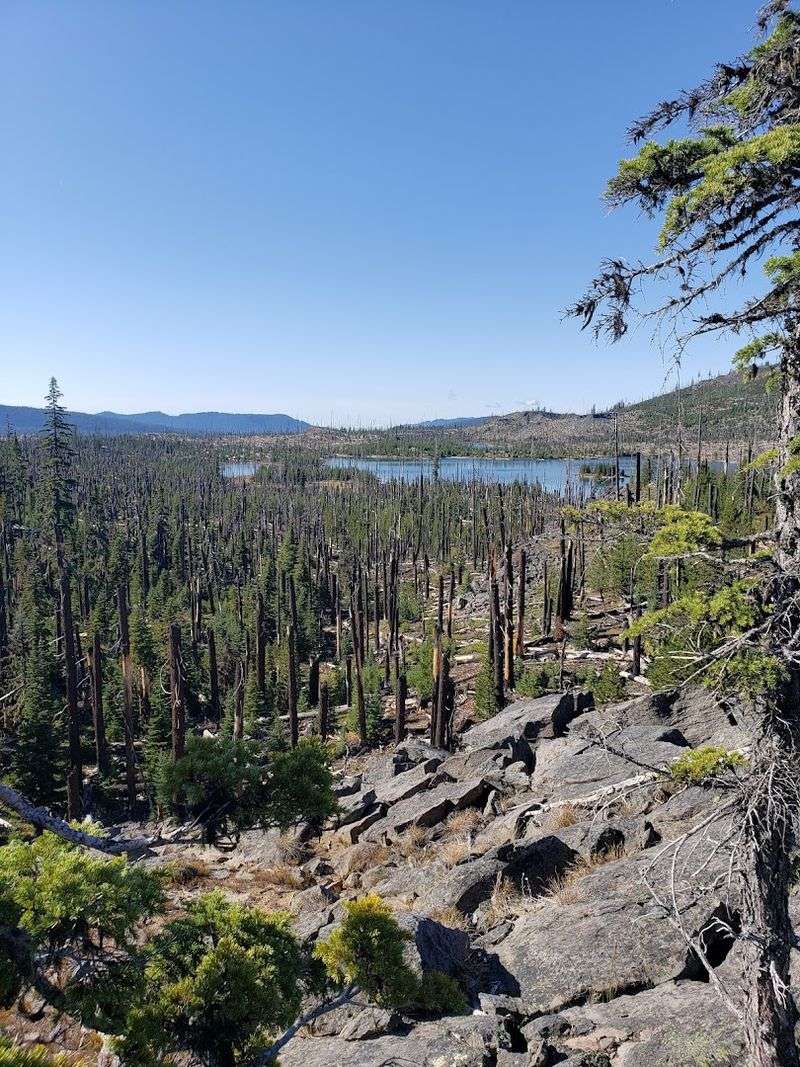
Along the way, the trail passes through old-growth forest, open meadows, and stretches of shoreline that offer unobstructed lake views. Dozens of smaller alpine lakes dot the Waldo Wilderness area surrounding the main lake.
Spotting them from the trail is one of the quiet joys of the longer route.
Shorter day hikes are just as rewarding. The trails near North Waldo Campground are relatively flat and easy to follow.
Good hiking shoes matter more than heavy boots on most routes here. The forest is thick with Douglas fir and hemlock, and the air smells like pine and damp earth.
Wildlife sightings are common, especially in early morning hours.
The Mosquito Situation (And How to Handle It)
Almost every visitor to Waldo Lake mentions the mosquitoes, and they are not exaggerating. Early summer, especially June and July, brings swarms that can make outdoor activities genuinely uncomfortable.
They are aggressive and persistent.
The good news is that the situation improves significantly by late summer. August and September tend to be much more manageable, especially in drier years.
Timing your visit around this window makes a real difference in how much you enjoy the experience.
Bug repellent is non-negotiable here. Pack more than you think you need.
Long sleeves and pants in the evening hours help a lot. Some visitors bring head nets, which might look funny but work extremely well near the shoreline at dusk.
The mosquitoes are worst in shady, damp areas close to the water’s edge. Open, breezy spots on the water are noticeably better.
Despite the bugs, the vast majority of visitors say the lake is absolutely worth the nuisance. The beauty of the place has a way of making even the worst bug evening feel secondary to everything else around you.
Fishing in One of Oregon’s Deepest Natural Lakes
Waldo Lake’s depth and clarity make it a unique fishing destination. The lake plunges to 420 feet at its deepest point.
That is an impressive number for an alpine lake sitting above 5,000 feet in the Oregon Cascades.
The fishery here is relatively sparse compared to nutrient-rich lowland lakes. The same purity that makes the water so beautiful also limits food sources for fish.
Rainbow trout and brook trout are present, but patience is part of the deal. Fly fishing from a kayak or canoe is a popular approach.
The no-motor rule keeps the lake calm and undisturbed, which actually benefits fishing. Fish are not spooked by engine noise, and the surface stays smooth enough to read the water properly.
Early morning is the most productive time, especially near rocky points and shallower bays. Bring a valid Oregon fishing license and check current regulations before heading out.
The History and Name Behind the Lake
Waldo Lake carries the name of John B. Waldo, an Oregon politician, judge, and passionate conservationist who lived in the 1800s.
He was deeply committed to protecting Oregon’s wild places at a time when conservation was not yet a popular idea.
Waldo spent years exploring the Cascade Mountains and advocated for the preservation of forests and wild land. His connection to the region made naming this particular lake after him feel fitting.
It sits in one of the most pristine corners of the Oregon Cascades, exactly the kind of place he worked to protect.
The lake’s history as a recreation destination goes back many decades. Early visitors arrived on rough forest roads to camp and fish in near-total solitude.
Today the area draws hikers, paddlers, and campers from across the Pacific Northwest and beyond. Despite growing popularity, the lake has retained much of its original wild character.
The no-motor rule has helped preserve both the silence and the water quality.
Swimming in Pure Alpine Water
Swimming at Waldo Lake feels different from swimming in most lakes. The water is cold, even in midsummer, because of the elevation and depth.
But it is also remarkably clean and free of the murky quality that makes some lake swimming feel questionable.
The sandy bottom in shallow areas near Islet Campground makes entry easy and comfortable. Water shoes help when navigating rockier stretches of shoreline.
The cold temperature is invigorating rather than punishing on a warm August afternoon.
Because there are no gas motors allowed, the surface stays calm and the water stays clean. You are not swimming through boat exhaust or churned-up sediment.
The clarity means you can see everything around you underwater, which is both beautiful and a little surreal. Some swimmers describe it as feeling like floating in a giant aquarium.
Mossy rocks exist in certain spots, so sandals or water shoes are worth packing. The beaches near the campgrounds fill up on summer weekends, so arriving early guarantees a good spot.
Cold, clear, and completely refreshing, it is hard to beat.
How to Get There and What to Bring
Getting to Waldo Lake is straightforward once you know the route. Take Highway 58 east from Eugene, then turn north onto Forest Road 5897.
The paved road winds through thick Cascade forest before opening up to the lake. The drive from Eugene takes roughly an hour and a half.
A Northwest Forest Pass is required for parking at the lake. Wilderness Passes are needed for hiking beyond the campground areas.
Plan ahead, because the nearest town with supplies is Oakridge, about 35 miles away. Stock up before you head up the mountain.
Pack layers regardless of the season. Temperatures drop fast at elevation, especially after sunset.
Sunscreen matters more than most people expect at 5,400 feet. Bug repellent is essential from June through early August.
A reusable water bottle is handy, though the lake water is reportedly among the purest in the world. Cell service is essentially nonexistent up here, so download offline maps before leaving.
Waldo Lake rewards visitors who prepare well. The payoff for a little planning is one of the most beautiful lake experiences in the entire Pacific Northwest.
