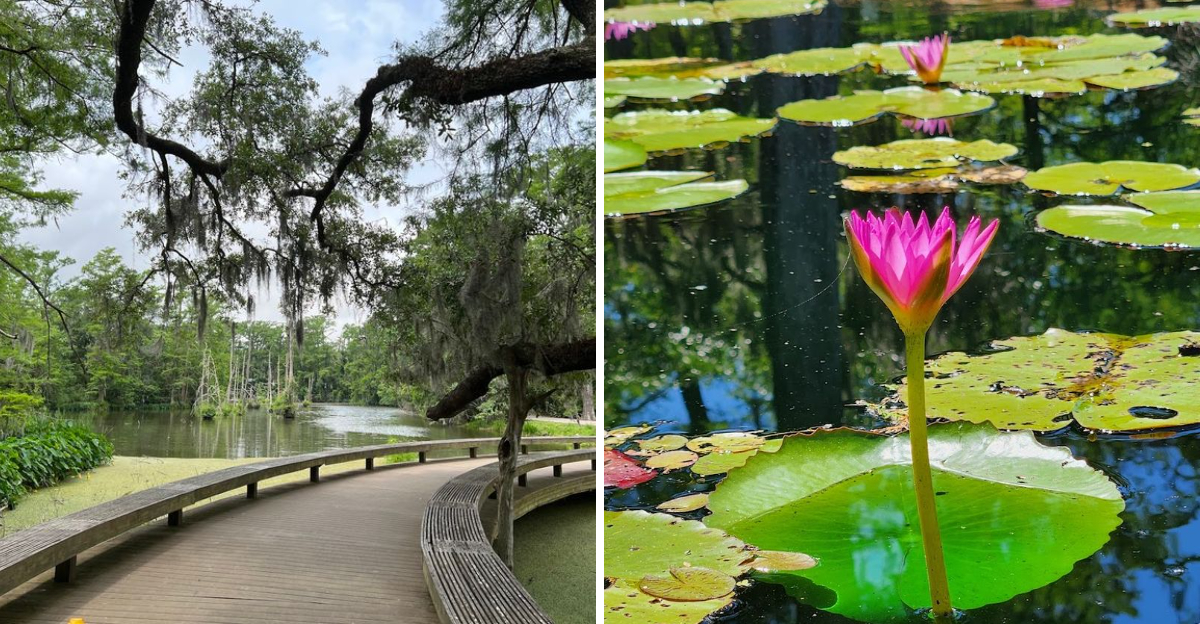
A botanical garden this stunning should be packed with visitors. But somehow, it stays under the radar.
This Texas spot is a hidden treasure, filled with native plants, exotic flowers, and walking paths that invite you to slow down and take it all in. The gardens are well-maintained, the ponds are peaceful, and the whole place feels like a quiet escape.
You can wander for hours without running into crowds, which makes it feel even more special. It is the kind of place where you can breathe deeply, enjoy the colors, and feel like you have discovered something secret.
If you love gardens, this one is worth the trip. Go before everyone else finds out about it.
The History Behind the Name and the Man Who Built It
Not many botanical gardens come with a story rooted in a beloved novel, but this one does. The name Shangri La was borrowed from James Hilton’s 1933 book Lost Horizon, a fictional paradise of peace, beauty, and enlightenment.
H.J. Lutcher Stark, a well-known philanthropist born and raised in Orange, Texas, felt the name suited his vision perfectly.
Stark began developing the gardens back in 1937, and by 1946, his azalea collection was drawing thousands of visitors each spring. People came from all over to see the blooms and wander paths lined with flowering plants that felt almost impossibly beautiful for a small Texas town.
The gardens became a genuine point of civic pride.
Then in 1958, a devastating snowstorm swept through the region and wiped out much of the plantings. Stark had no choice but to close the gates.
He passed away in 1965, never seeing his gardens restored to their former glory.
That mission fell to the Nelda C. and H.J. Lutcher Stark Foundation, which had been established in 1961.
Decades of planning and work followed, and in March 2008, Shangri La reopened with modern facilities and a renewed sense of purpose. Hurricane Ike forced another temporary closure later that same year, but the gardens came back stronger.
Permanently reopened on March 7, 2009, the place now stands as a living tribute to one man’s belief that beauty and nature belong to everyone.
The Pond of the Blue Moon and the Formal Garden Rooms
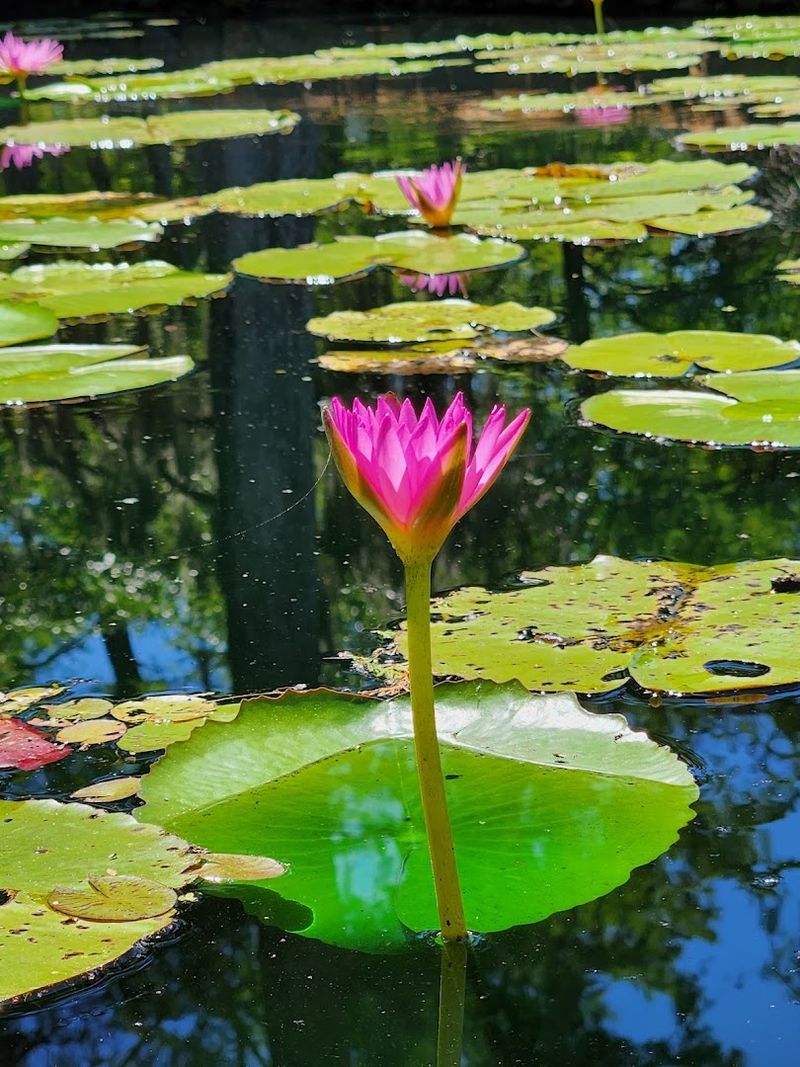
The Pond of the Blue Moon is one of those spots that earns its poetic name without even trying. Azaleas line its edges in thick, colorful clusters, some of them direct descendants from H.J.
Lutcher Stark’s original plantings decades ago. The reflection of sky and trees on the water’s surface makes the whole scene feel doubled, like the garden exists in two worlds at once.
Surrounding the pond, the formal Botanical Gardens are arranged into five garden rooms and four sculpture rooms. Each space has its own distinct personality.
Some feel open and airy, others feel hidden away and intimate, like you have wandered into someone’s private backyard by happy accident.
More than 300 plant species are represented across these spaces. The horticultural team rotates seasonal displays four times a year, so the garden shifts its palette depending on when you visit.
Winter brings cooler tones, spring arrives in pastels, summer blazes with hot colors, and fall settles into warm harvest shades.
The sculpture rooms add another layer of discovery. Art placed among living plants creates unexpected conversations between human creativity and natural growth.
I found myself pausing longer in those rooms than I expected, not because I was analyzing anything, just because the combination of form and foliage was genuinely surprising. This part of Shangri La rewards slow walkers.
The more time you give it, the more it gives back.
The Epiphyte House and Exhibition Greenhouses
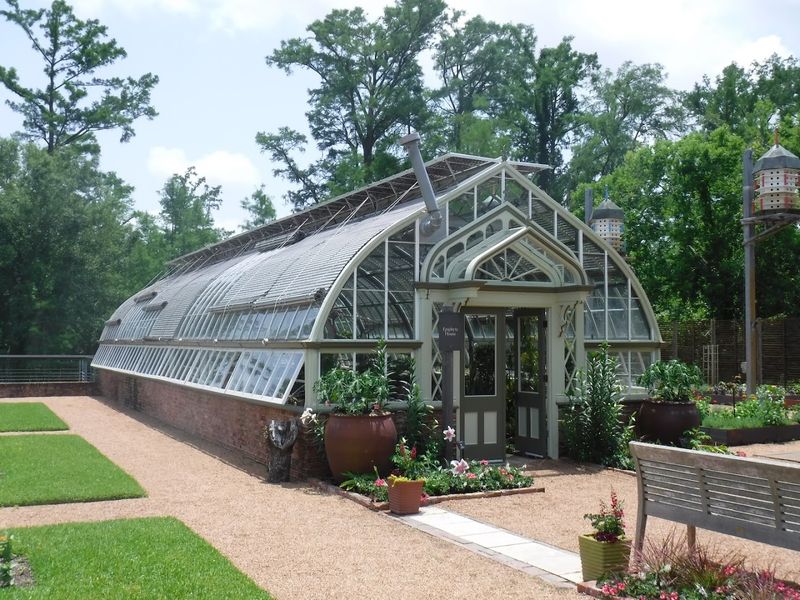
Built in the early 1900s for H.J. Lutcher Stark’s mother, the Epiphyte House carries a quiet elegance that feels both historic and alive.
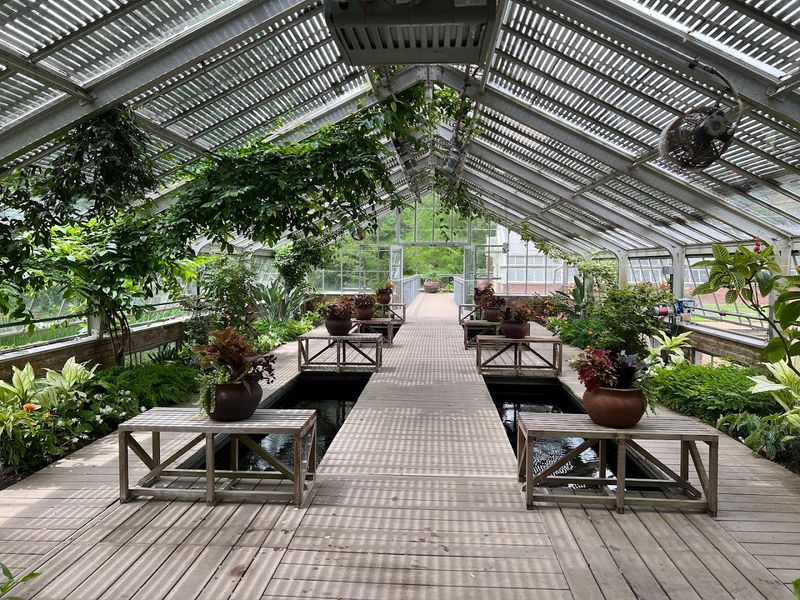
Epiphytes are plants that grow on other plants without taking nutrients from them, clinging to bark or branches and pulling everything they need from the air and rain around them. Seeing them up close is genuinely strange in the best possible way.
The building itself has a warmth to it that newer structures rarely achieve. You can feel the age in the architecture, and yet the plants inside look completely at home, thriving in the humid air like they have always lived there.
It is one of the more quietly fascinating stops on the property.
The Exhibition Greenhouses next door offer a different kind of experience. The Display and Classroom Greenhouses showcase tropical botanical collections and host educational workshops for visitors of all ages.
What makes them especially interesting from a design standpoint is the use of original cisterns for rainwater collection and temperature moderation.
Sustainability is baked into the bones of this place, and the greenhouses are a clear example of that thinking. Rainwater gets captured, stored, and put to work rather than wasted.
The classroom space means real learning happens here on a regular basis, not just for school groups but for curious adults too. I left knowing the names of at least three plants I had never heard of before, which felt like a small but satisfying win.
The Children’s Garden and Family-Friendly Features
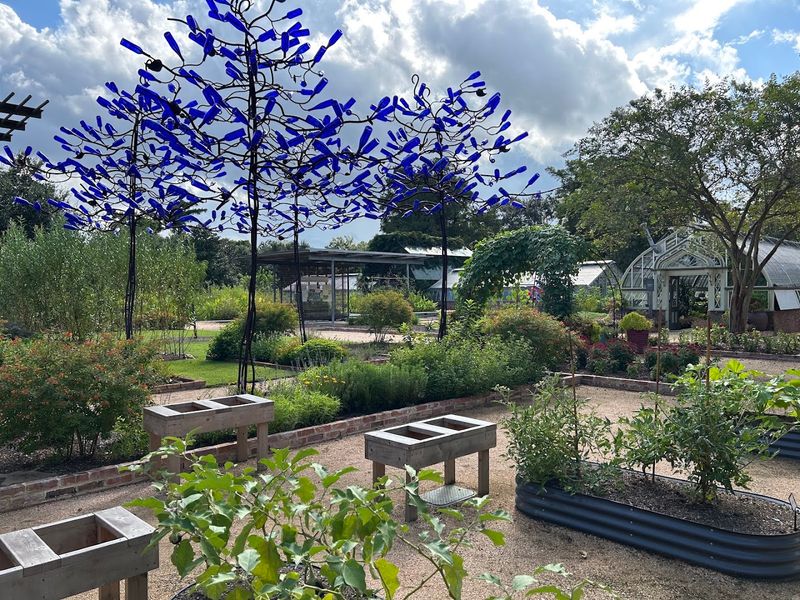
Here We Grow! is the name of the children’s garden at Shangri La, and it delivers exactly what that name promises. Designed to engage kids on multiple levels, the space blends hands-on exhibits with genuine outdoor exploration.
It is not just a corner of the property with a few cute signs. It is a fully thought-out experience built around how children actually learn.
The garden promotes cognitive, emotional, social, and physical development all at once. Kids can dig, observe, touch, and question in ways that feel natural rather than forced.
Recent donations have helped expand and enhance its interactive elements, keeping the space fresh and engaging for returning visitors.
Parents tend to appreciate places that hold a child’s attention without screens involved. This garden does that with ease.
There is enough sensory variety, from textures to smells to movement, that kids stay genuinely curious rather than restless. That is not always easy to pull off outdoors.
Beyond the children’s garden, Shangri La hosts a lineup of family-friendly events throughout the year. Spring and fall bring themed festivals celebrating nature and the changing seasons.
The Scarecrow Festival in October draws families for a completely different kind of botanical experience. And every December, the Christmas Strolls transform the gardens into something magical with lights and seasonal decorations.
Shangri La understands that families return when a place keeps reinventing itself, and the calendar here reflects that understanding clearly.
The Nature Center, Bayou Tours, and Wildlife Watching
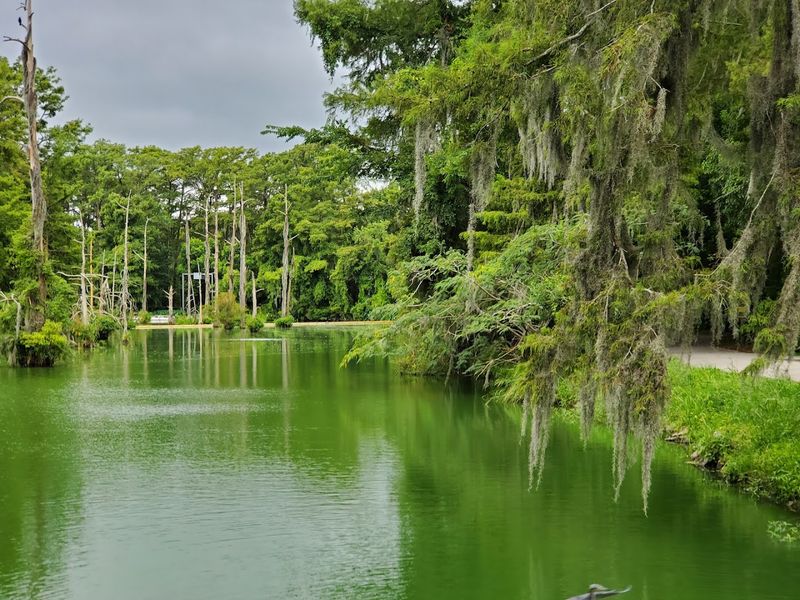
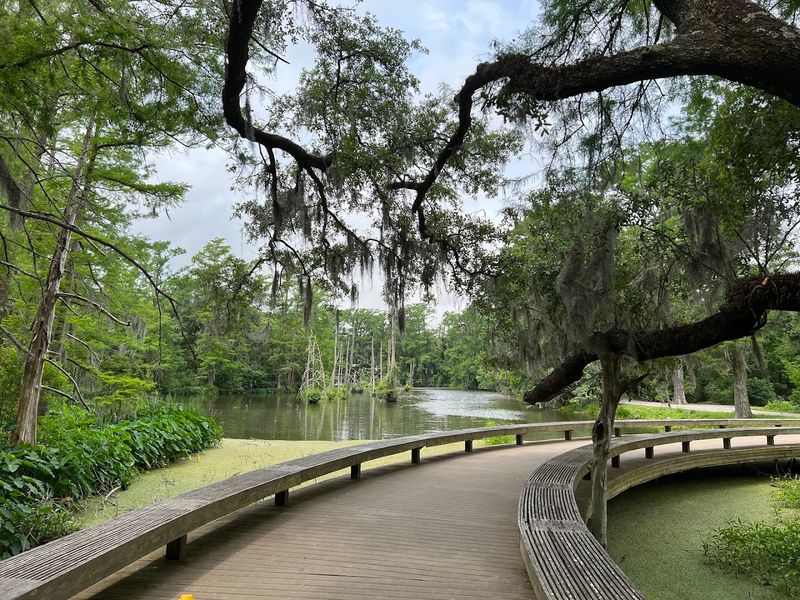
The Nature Center side of Shangri La is where things shift from curated beauty to raw, breathing wildness. Adams Bayou runs through the property, and a 15-acre Beaver Pond sits at the heart of the wetland ecosystem.
Wooden boardwalks carry you through a cypress-tupelo swamp where the air smells like earth and green things and something ancient.
Ruby Lake hosts thousands of nesting birds, and the state-of-the-art bird blind nearby lets you watch them without causing any disturbance. Herons, egrets, and other wading birds move through the heronry in slow, deliberate patterns that are surprisingly absorbing to watch.
I went in thinking I would spend ten minutes at the bird blind and ended up staying much longer.
Outpost Tours take the experience out onto the water. Guided pontoon journeys along Adams Bayou bring visitors through wetlands, upland forests, and grasslands while a knowledgeable guide points out wildlife and explains the surrounding ecosystem.
These tours are available by appointment and are fully wheelchair accessible.
Back on land, the Nature Discovery Center offers hands-on exhibits focused on Shangri La’s wetland environments. Up Close with Nature programs feature live animal presentations by the wildlife curator, spotlighting local creatures and how they have adapted to life in Southeast Texas.
Bird Watching Wednesdays give adults a dedicated space to focus on resident and migratory bird species. The Nature Center is the kind of place that makes you feel like you have been somewhere real, not just somewhere pretty.
LEED Platinum Certification and Sustainability Features
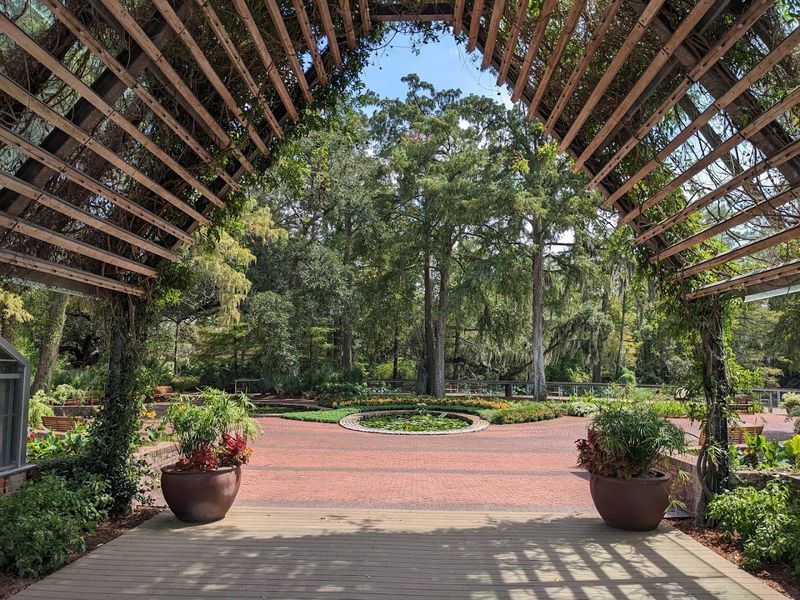
Shangri La holds a distinction that most visitors do not know about until someone mentions it, and then it becomes one of the most impressive facts about the entire property. It was the first project in Texas and the 50th globally to earn the U.S.
Green Building Council’s Platinum certification for LEED-NC, which stands for Leadership in Energy and Environmental Design for New Construction. That is the highest level of green building achievement available.
The sustainability features woven into Shangri La are not decorative. They are functional and deliberate.
Solar panels on the orientation center buildings generate roughly 40 percent of the electricity used there. A geothermal well system handles heating and cooling.
Metal cisterns collect rainwater for toilet flushing. Parking areas use recycled asphalt.
Even the building materials tell a story. Fallen cypress trees from Hurricane Rita were milled directly on-site and turned into benches and boardwalks.
Concrete foundations contain 40 percent fly ash. Floor coverings include corn-based carpet made from renewable materials.
Plastic walkways are built from recycled wood and plastic composite.
The waterless urinals and reflective metal roofing might seem like small details, but they add up to something significant when you look at the full picture. The design team’s goal was to make Shangri La the greenest project in the state, and the certification confirms they succeeded.
Visiting here is a reminder that environmental responsibility and genuine beauty are not opposites. They can coexist, and in Orange, Texas, they absolutely do.
Seasonal Events, Festivals, and Special Exhibitions
One visit to Shangri La is great. Multiple visits across different seasons are something else entirely.
The events calendar here is one of the most thoughtfully designed aspects of the whole operation, and it gives the gardens a living, evolving quality that static attractions simply cannot match.
Spring kicks things off with the Davis Rogers Big Bugs Exhibition running from March through May, where oversized sculptural insects appear among the plantings in ways that are equally surprising and delightful.
March also brings Celebrate Orchids, a showcase of one of the most diverse plant families on Earth.
April follows with the Eco-Fest and Butterfly Release, which tends to be a favorite for families with younger kids. Watching butterflies take flight in a garden setting is one of those experiences that lands differently than you expect it to.
October transforms the whole mood with the Scarecrow Festival. Creative, handcrafted scarecrows appear throughout the gardens, and the fall foliage palette makes the whole property feel like a different place entirely.
It is a genuinely fun seasonal shift.
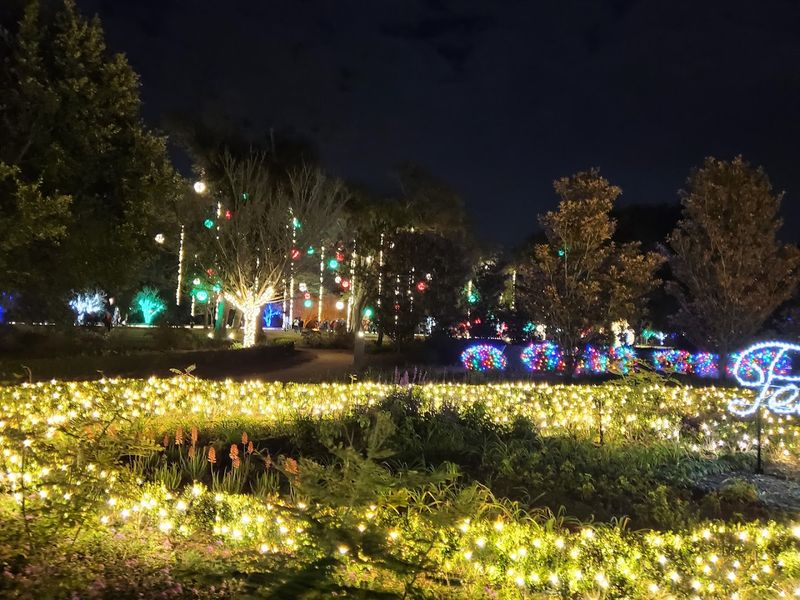
Then December arrives, and Christmas Strolls turn Shangri La into something magical. Lights fill the trees, pathways glow, and the gardens take on a warmth that feels almost theatrical.
It is one of those events that locals tend to return to year after year without needing much convincing. The horticultural team also rotates plant displays four times annually to match the seasons, so even on a regular Tuesday, the garden always has something new to show you.
Planning Your Visit to Shangri La in Orange, Texas
Admission to Shangri La is free during regular visiting hours, which already makes it one of the most generous cultural offerings in Southeast Texas. The gardens are open Tuesday through Saturday from 9:00 a.m. to 5:00 p.m., with the last entry accepted at 4:30 p.m.
That detail matters more than it sounds. Arriving with enough time to wander without rushing is genuinely worth planning around.
Group tours are available by appointment and come in two formats. Garden Tours are walking experiences, while Outpost Tours take visitors out on the water by pontoon.
Both are fully wheelchair accessible and conducted entirely outdoors, so comfortable footwear and weather-appropriate clothing are practical choices rather than optional ones.
The Exhibit Hall near the entrance gives a helpful orientation to the site’s history before you head out into the gardens. The Discovery Theater, a 75-seat auditorium, screens a short film about H.J.
Lutcher Stark that adds real context to everything you will see outside. The Meditation Pavilion, featuring a fountain built from petrified wood Stark collected himself, offers a quiet spot to pause and absorb the surroundings.
Orange, Texas is not a city that gets a lot of tourist attention, which makes Shangri La feel even more like a find.
The surrounding community is warm and welcoming, and the gardens play an active role in local life through educational programs, environmental workshops, and events like the Community Trash-Off.
This is not just a place to visit. It is a place that genuinely matters to the people around it.
Address: 2111 W Park Ave, Orange, TX 77630
