You drive through the Hill Country and suddenly the water looks like something from the coast. It is that bright, that blue, that clear.
The lake sits quietly among the hills, but the water itself steals the whole show. You can swim, paddle, or just stand there and stare at the color.
It stays this way all year because the water level barely moves. That means no disappearing shoreline or muddy surprises.
Just reliable, beautiful blue water waiting for you.
The Sparkling Blue Water That Defies Texas Expectations
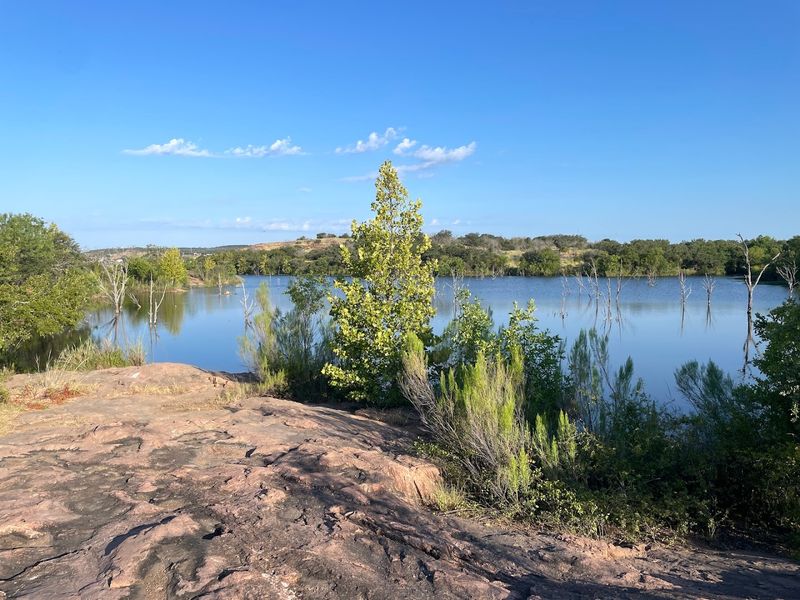
Most people picture Texas lakes as wide, brown, and a little murky. Inks Lake flips that image completely, offering water so clear and blue it genuinely feels like a different state altogether.
The color comes from a combination of the granite and gneiss geology beneath the lake and the relatively stable water levels that reduce sediment churn. Unlike many Texas reservoirs that fill and drain with the seasons, Inks Lake is a run-of-the-river lake, which means its level stays consistent year-round.
That consistency keeps the water cleaner and clearer than most.
On a calm morning, the surface reflects the sky like a mirror. The blue deepens toward the center of the lake, shifting from a bright aqua near the rocky shores to a richer, almost coastal navy further out.
Scuba divers actually visit Inks Lake specifically because of this underwater visibility, which is not something you hear about most inland Texas lakes. Swimming here feels more like a Caribbean snorkel trip than a Hill Country afternoon, and that contrast is exactly what makes Inks Lake so memorable.
It earns every bit of its reputation.
Devil’s Waterhole: The Heartbeat of the Lake
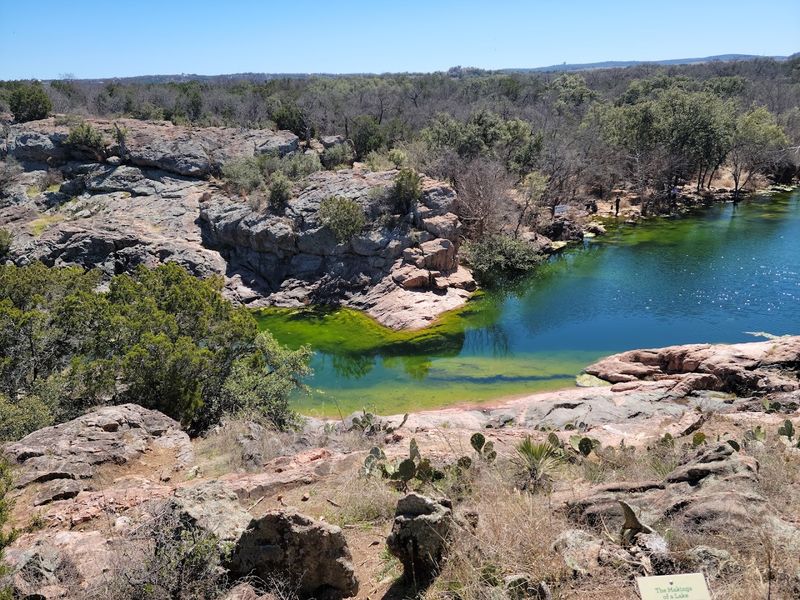
If Inks Lake has one spot that defines the whole experience, it is Devil’s Waterhole. The name sounds dramatic, and the place actually delivers on that promise in the best possible way.
A natural alcove almost entirely encircled by rugged rock formations, the Waterhole creates a sheltered swimming area with some of the clearest water on the entire lake. The granite walls rise up around the water in layered, sun-warmed slabs that people use as natural diving platforms.
Cliff jumping here is a beloved tradition for visitors of all ages, and the energy on a summer afternoon is electric.
The rocks create a kind of natural amphitheater effect, bouncing sound around and giving the whole spot a lively, almost festive atmosphere. Even if jumping is not your thing, just floating in that enclosed pocket of blue water with granite walls on every side is an experience worth traveling for.
The geology around Devil’s Waterhole includes some of the most photogenic rock formations in the entire Hill Country. Layers of pink and rust-colored granite stack up against the waterline in patterns that look almost deliberate.
It is one of those places that photographs well but feels even better in person.
Pink Granite and Gneiss: A Geology Lover’s Playground
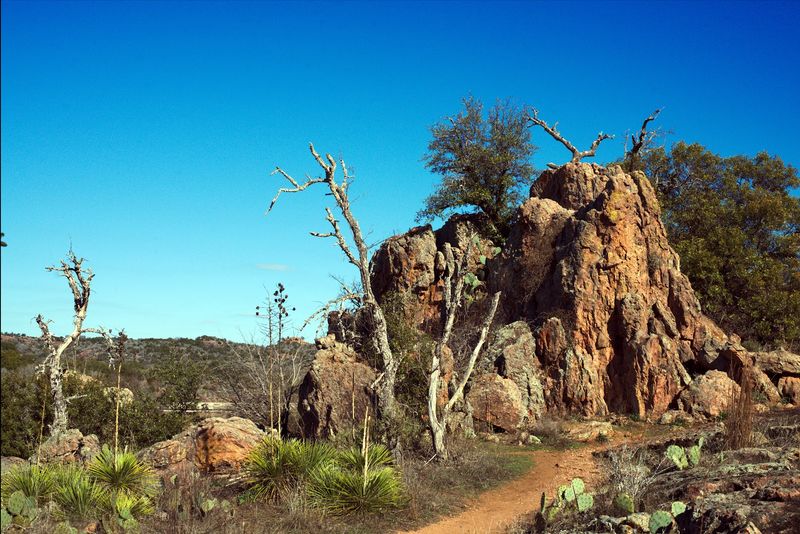
The rocks at Inks Lake are not just background scenery. They are a major part of what makes the place feel so visually striking and geologically fascinating.
The dominant rock types here are pink granite and gneiss, both ancient formations that have been sculpted over millions of years by wind, water, and time. The pink tones range from a soft blush to a deeper salmon, and when the afternoon sun hits them, the whole shoreline seems to glow.
These are not small pebbles either. We are talking about massive, smooth slabs and towering outcrops that create natural ledges, coves, and swimming platforms all along the water’s edge.
Geologically, the Llano Uplift region where Inks Lake sits is one of the oldest exposed rock surfaces in Texas. The granite here is roughly a billion years old, which is a number that takes a moment to actually absorb.
Touching those warm, sun-baked rocks and knowing they predate nearly everything on the continent adds a quiet sense of wonder to an already beautiful setting. Kids love scrambling over them.
Photographers love the color contrast against the blue water. Hikers appreciate how the rock formations shape the trails around the lake into something genuinely scenic.
Year-Round Swimming and Water Activities
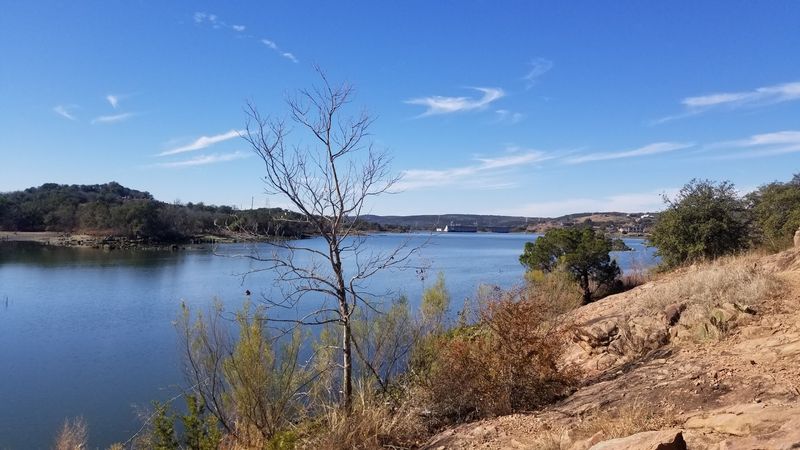
One of the most underrated things about Inks Lake is that it does not shut down when summer ends. Because it is a run-of-the-river lake with a naturally stable water level, activities here stay accessible across all four seasons.
Swimming is the obvious draw, and Inks Lake has been recognized as one of America’s best lakes for it. The water temperature stays pleasant through a long Texas summer, and the rocky shoreline creates natural entry points all around the lake.
Beyond swimming, the lake supports boating, water skiing, kayaking, paddleboarding, and even scuba diving. The clear water makes underwater exploration genuinely rewarding, with visibility that surprises first-timers.
Fishing is another consistent activity here. Largemouth bass, catfish, and sunfish are common catches, and the rocky ledges and coves create excellent habitat for them.
Early morning fishing from a kayak, with mist still sitting on the water and the granite glowing pink in the sunrise light, is one of those simple pleasures that sticks with you long after the trip ends.
Families with young kids find the lake especially welcoming because of the calm, protected coves scattered along the shoreline.
The variety of activities makes it easy to fill an entire weekend without ever leaving the water.
Inks Lake State Park: Where Camping Meets Scenery
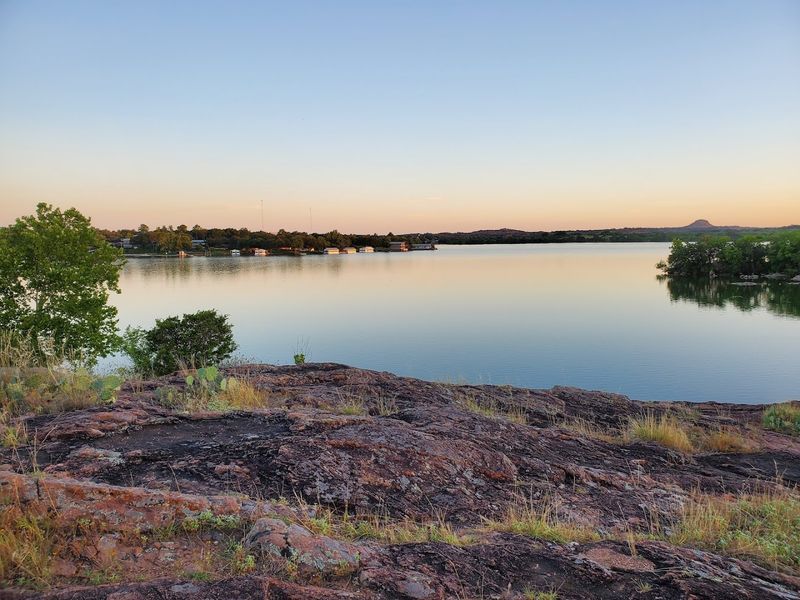
Inks Lake State Park wraps around much of the lake and gives visitors a proper base camp for exploring everything the area offers. The park covers about 1,200 acres and includes campsites, hiking trails, a golf course, and direct lake access.
Camping here puts you genuinely close to the water. Some sites sit right on the rocky shoreline, close enough that you can hear the water from your tent at night.
The park has both primitive camping spots and sites with full hookups, so it accommodates everyone from hardcore backpackers to families rolling in with an RV and a cooler full of snacks.
The hiking trails inside the park range from easy lakeside walks to more rugged paths that climb through cedar and oak forest and open up to elevated views of the water below.
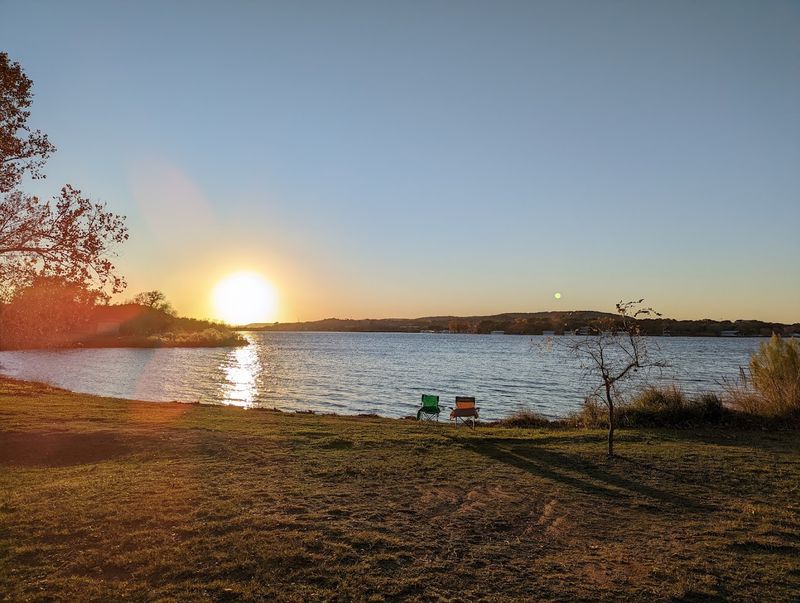
One of the best moments I had at the park was catching the sunset from a rocky overlook trail, watching the sky turn orange and pink above the blue lake.
The park also has a screened shelter and group facilities for larger gatherings, making it a popular spot for family reunions and scout trips. Reservations fill up fast on weekends, especially in spring and fall, so booking ahead is a smart move.
Address: 3630 Park Road 4 West, Burnet, Texas
The Sunsets That Make You Stop Everything
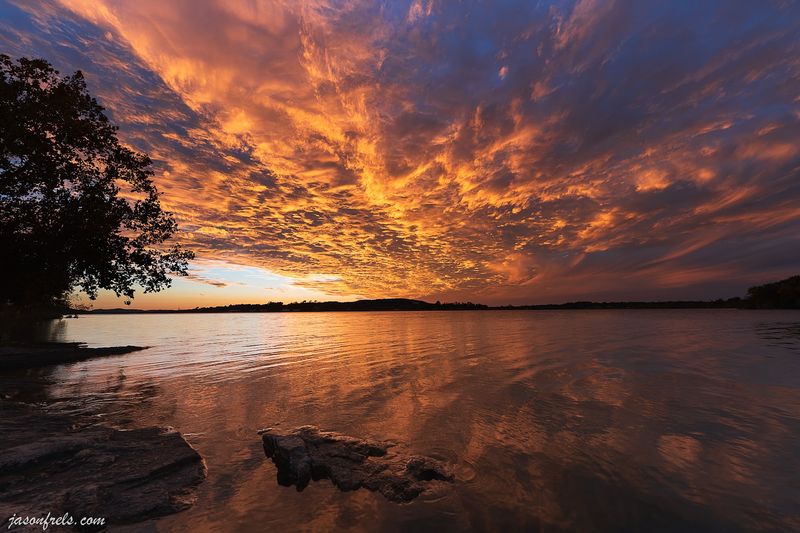
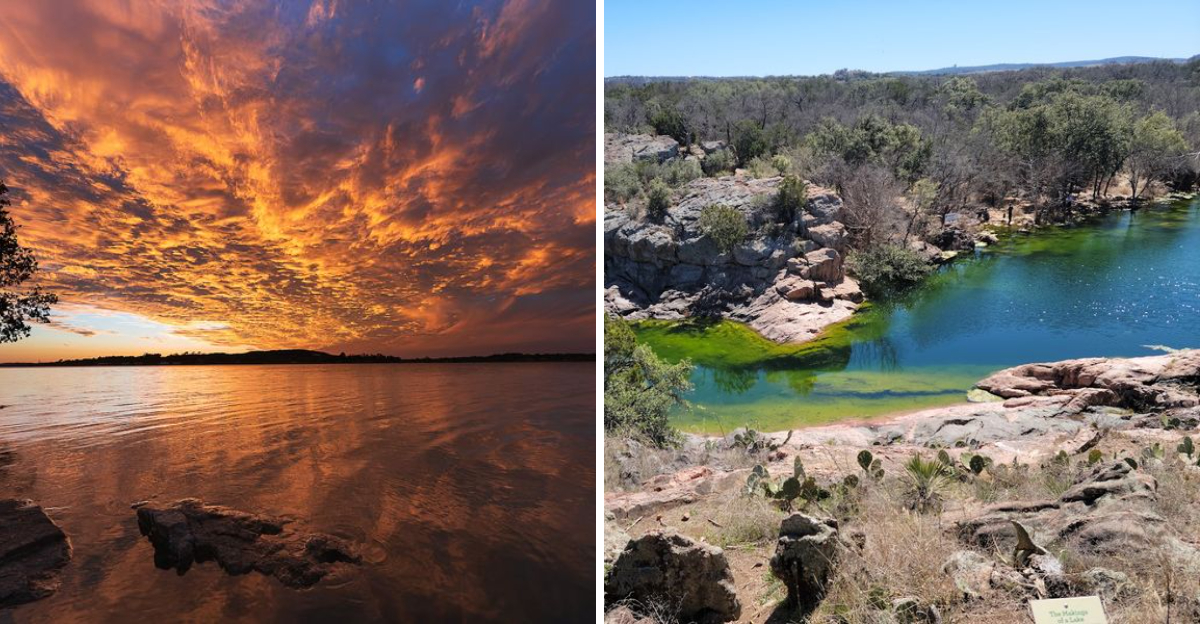
There is a particular quality to Hill Country sunsets that photographers chase and first-time visitors never quite expect. At Inks Lake, the combination of open water, elevated terrain, and that distinctive pink granite creates a sunset backdrop that feels almost theatrical.
The colors tend to build slowly, starting with a warm gold that spreads across the water’s surface, then shifting into deep orange and magenta as the sun drops behind the western hills. The granite boulders along the shore catch and hold the last light in a way that makes them look almost molten.
Reflected in the calm water below, the whole scene doubles in intensity.
I made a point of being near the water every evening during my visit, and not a single sunset was the same. Some were blazing and dramatic.
Others were soft and hazy, filtered through distant clouds. The best spot I found was a flat granite ledge just past the main swimming area, where you could sit with your feet near the water and watch the whole sky shift without any trees blocking the view.
Bringing a camera is worth it, but honestly, the best thing to do is just sit still and let it happen. Some moments are better experienced than photographed.
The Highland Lakes Chain: Inks Lake in Context
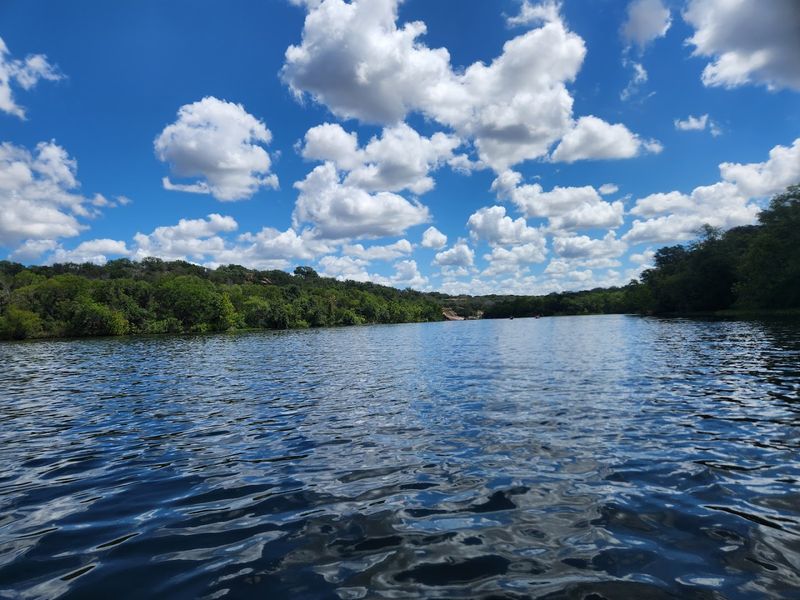
Inks Lake does not exist in isolation. It is one of six lakes that make up the Highland Lakes chain, a series of reservoirs along the Colorado River that stretches through the Texas Hill Country from Burnet County down toward Austin.
The chain includes Lake Buchanan, Inks Lake, Lake LBJ, Marble Falls Lake, Lake Travis, and Lake Austin. Each lake has its own personality and character, but Inks Lake is widely considered the most scenic and the most consistent in terms of water clarity.
Its position in the chain, fed by releases from Lake Buchanan upstream, helps maintain that steady water level that keeps things clear and swimmable.
Exploring the Highland Lakes as a broader road trip adds real depth to an Inks Lake visit. The small town of Marble Falls is just a short drive away and offers good food options and a charming downtown strip worth wandering.
Burnet, the county seat, sits nearby and hosts the famous Texas Bluebonnet Festival every spring when the roadsides explode with wildflowers. The region as a whole rewards slow travel.
Taking back roads between the lakes, stopping at overlooks, and letting the Hill Country unfold at its own pace makes the whole trip feel more like an adventure than a checklist.
Wildlife and Wildflowers Along the Shore
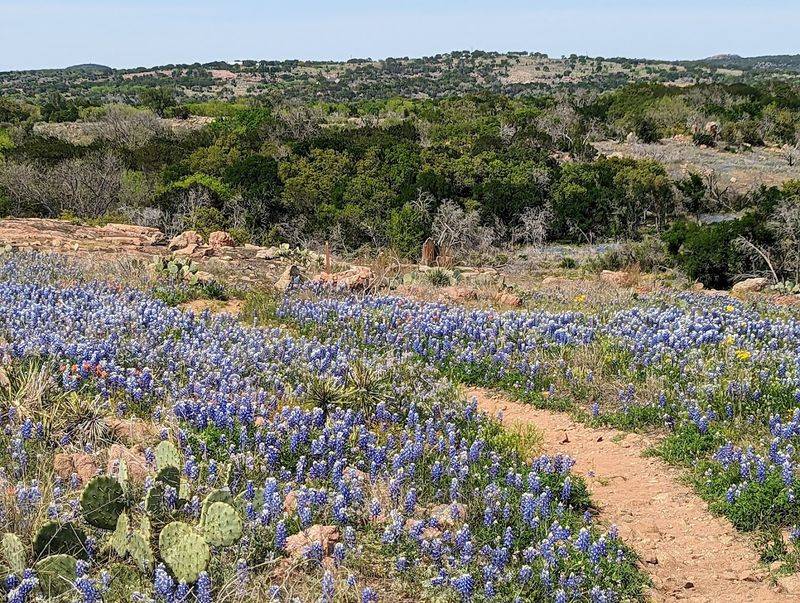
The area around Inks Lake is alive in ways that go well beyond the water. The Hill Country ecosystem supports a surprisingly rich variety of wildlife, and spending time along the shoreline or on the trails almost guarantees some interesting sightings.
White-tailed deer are practically neighborhood regulars here. They appear at dawn and dusk along the water’s edge, unbothered by the presence of campers nearby.
Wild turkeys cross the park roads with complete confidence. Armadillos rustle through the underbrush after dark, and if you are patient and quiet near the water at dusk, you might catch a great blue heron standing motionless in the shallows, waiting for a fish.
Spring brings a wildflower explosion across the Hill Country that is genuinely one of Texas’s great natural spectacles. Bluebonnets, Indian paintbrush, and primrose cover the roadsides and open hillsides in waves of purple, red, and yellow.
The wildflower season typically peaks in late March through April, and the park becomes especially photogenic during those weeks. Birding is another underrated activity in the area, with species like painted buntings and golden-cheeked warblers appearing in season.
The combination of water, granite habitat, cedar woodland, and open meadow creates a layered environment that supports more biodiversity than most visitors expect.
Practical Tips for Visiting Inks Lake
Getting the most out of an Inks Lake visit comes down to a few smart planning choices. The lake is popular, especially on summer weekends, and the state park fills up quickly.
Booking campsites through the Texas Parks and Wildlife reservation system well in advance is strongly recommended, particularly for holiday weekends and spring break.
The best time to visit for a balance of good weather and manageable crowds is late September through November or mid-March through early May. Temperatures are comfortable, the water is still usable, and the park feels more relaxed.
Summer visits are absolutely worthwhile, but expect more company at Devil’s Waterhole and along the main swimming areas.
Bring water shoes with good grip. The granite rocks are beautiful but uneven, and walking barefoot across them can be rough on your feet.
Sunscreen is non-negotiable because that open water reflects a lot of UV. A kayak or paddleboard rental can be arranged in the area and makes exploring the lake’s quieter coves much easier than swimming to them.
Pack light snacks and meals if you are camping, since the nearest grocery options require a short drive to Burnet or Marble Falls. Cell service in parts of the park is limited, so downloading offline maps before arrival saves frustration.
