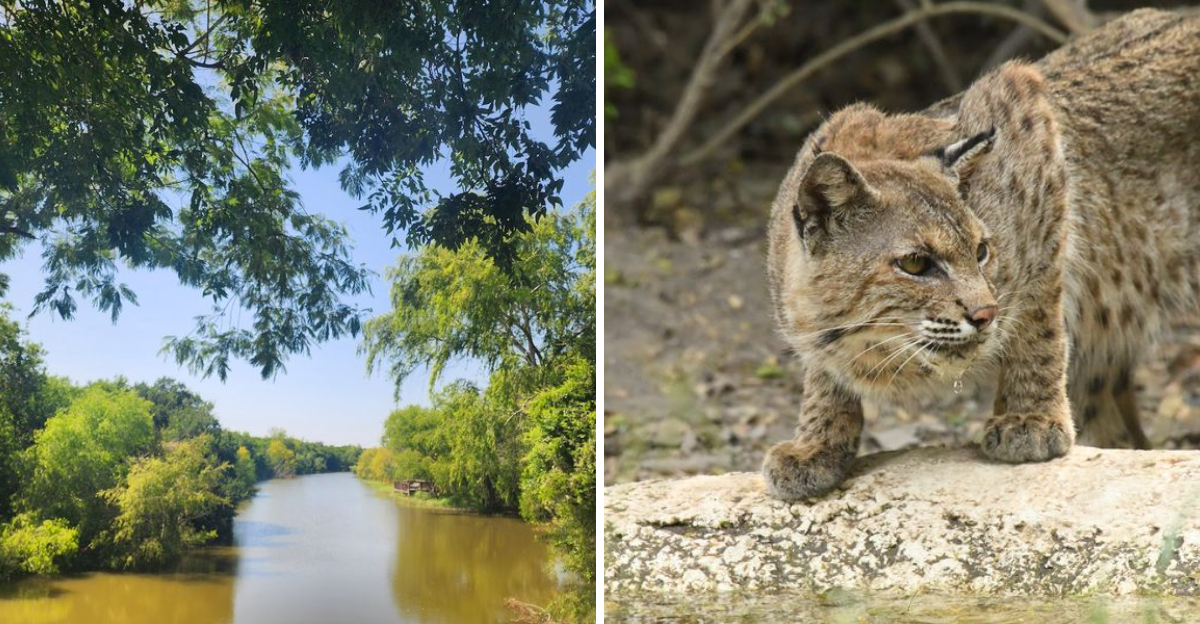
Wetlands next to savannah. Savannah next to woodlands.
All of it packed into one park that feels like nature decided to show off. This place is ridiculously biodiverse, the kind of spot where a person could walk a mile and pass through three completely different landscapes.
Birds are the main attraction here, hundreds of species, including the flashy green jay and the great horned owl, who sits in the trees like it owns the place. Trails are easy and flat, perfect for beginners or anyone who just wants to look up instead of down.
No mountain climbing required. The park sits in a part of Texas that does not always get the attention it deserves, but the birds know.
They show up in droves. A person could bring binoculars, a camera, or just a pair of eyes and still leave impressed.
Texas has bigger parks with more famous names, but this one quietly wins on pure variety.
Wetlands Teeming With Life Around Every Bend
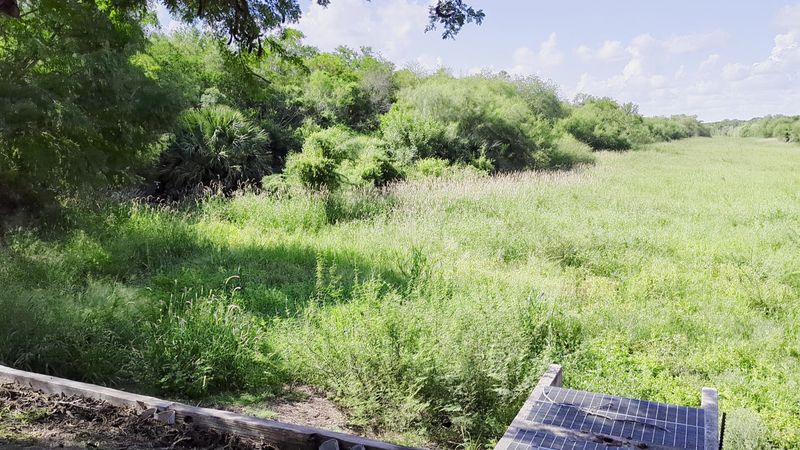
Sixty acres of wetland might not sound like much on paper, but in person it feels enormous. The wetland sections of this park are dense, layered, and absolutely packed with sound.
Frogs call from the reeds, red-winged blackbirds scold from the cattails, and black-bellied whistling-ducks seem to be everywhere at once.
The wetland habitat here is shaped primarily by the resacas and the banco woodlands that line their natural levees. Marsh vegetation grows thick along the water’s edge, creating shelter for species that need both water and cover.
That combination is rare and valuable, which is why the park protects it so carefully.
I noticed how quickly the mood changes when you enter a wetland stretch of trail. The air gets heavier and greener, almost humid in a way that feels distinct from the open savanna areas.
You start moving slower without even realizing it, because everything around you is worth pausing for.
Buffalo birds perch on low branches while buff-bellied hummingbirds zip through flowering shrubs nearby. The biodiversity in these sixty acres punches well above its weight.
For anyone who has only experienced Texas as a dry, scrubby landscape, the wetlands here are a genuine revelation. They prove that this state contains multitudes, and that the far southern tip holds some of its most surprising and irreplaceable ecosystems.
Woodlands Shaped By Ebony Trees And Thorny Brush
The woodlands at Resaca de la Palma are not the kind you find in East Texas or the Hill Country. These are Tamaulipan thorn woodlands, a habitat type that exists almost nowhere else in the United States and extends south into Mexico.
The trees here have a different vocabulary entirely.
Texas ebony trees dominate much of the 420 acres of mature woodland, and they are striking. Their dark, twisted trunks and dense canopy create a shaded world underneath that feels genuinely ancient.
Mesquite and anacua trees fill in the gaps, along with thorny shrubs that make off-trail wandering a very bad idea. The undergrowth is thick and tangled in the best possible way.
These woodlands are critical habitat for species that simply cannot survive anywhere else nearby. Long-billed thrashers rustle through the leaf litter with a kind of determined energy.
Olive sparrows flit between low branches. White-eyed vireos call from deep inside the brush, their songs surprisingly loud for such small birds.
There is something grounding about spending time in these woods. The light filters differently here, softer and more diffused than open areas of the park.
The sounds are layered too, bird calls mixing with the rustle of lizards and the occasional crash of something larger moving through the brush. Bobcats and raccoons live in these woodlands, though spotting one takes patience and a fair amount of luck.
The woods reward slowness above all else.
The Resacas That Give The Park Its Name And Soul
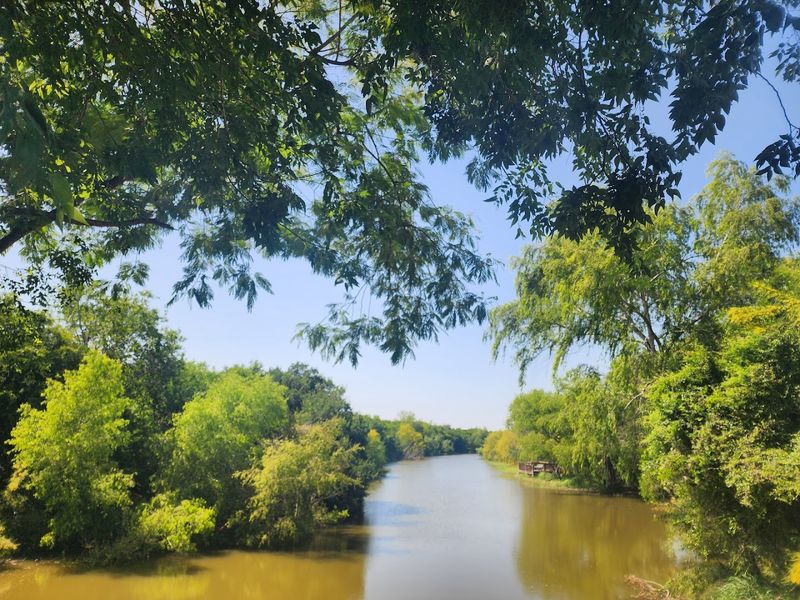
Most parks are named after a mountain or a founder. This one is named after ancient river channels, and honestly, that feels more poetic.
The resacas are former bends of the Rio Grande that were naturally cut off from the main river over time, leaving behind these long, curving oxbow lakes that now define the park’s entire character.
Park staff work to maintain water levels in the resacas year-round whenever possible, which keeps the whole ecosystem humming. That consistency matters enormously for the wildlife that depends on these water bodies.
Without the resacas, there would be no wetland habitat, no herons standing motionless at the water’s edge, and no whistling-ducks gliding in at dusk.
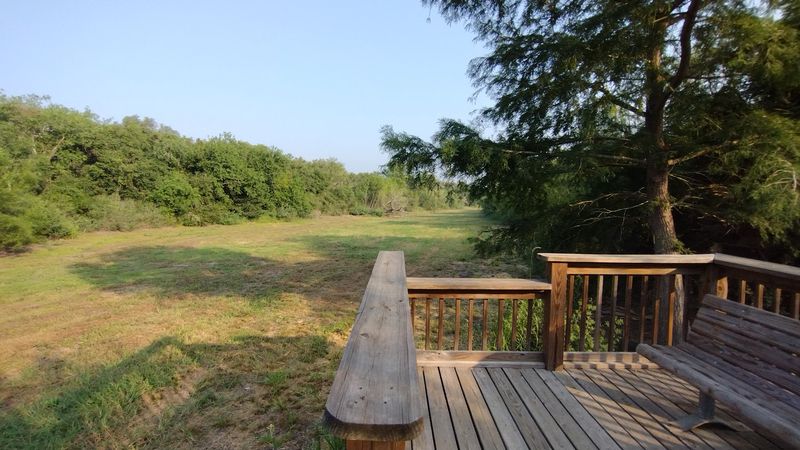
Walking along one of the observation decks that overlooks a resaca feels like watching a slow-motion nature documentary. The water is still and dark, often covered in patches of aquatic plants.
Turtles sun themselves on logs while least grebes dive and resurface nearby. Green herons crouch in the reeds with that particular focused energy they have, waiting for something to move beneath the surface.
What makes the resacas so special is how central they are to everything here. They are not just a scenic backdrop.
They are the engine that powers the park’s biodiversity. Every habitat in the park connects back to this water source in some way, making the resacas the beating heart of Resaca de la Palma State Park.
Savanna Landscapes Stretching Across The Heart Of The Park
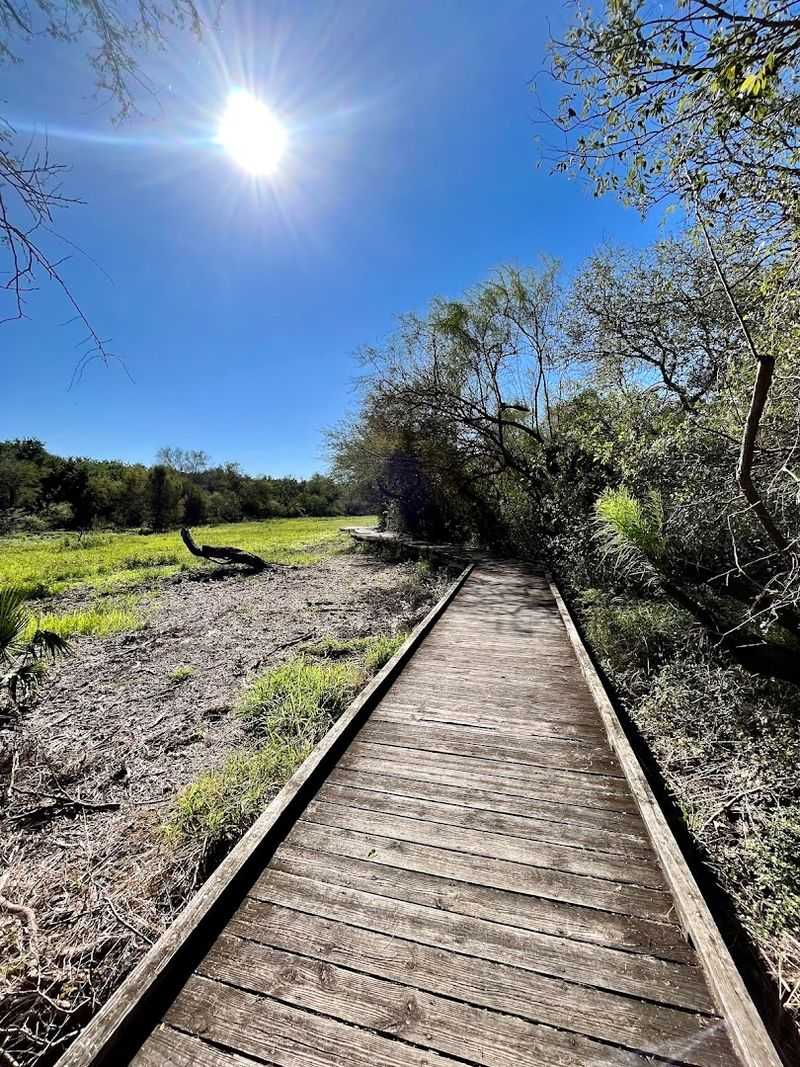
The savanna sections of this park surprised me more than anything else. After moving through dense woodland and wetland areas, suddenly breaking out into open mesquite-palmetto savanna feels like the park exhaling.
The sky opens up, the light gets sharp, and the landscape takes on a completely different personality.
Seven hundred and twenty acres of the park are classified as woodland and savanna habitat, primarily dominated by mesquite.
The mesquite-palmetto savannas are particularly striking, with low palmettos creating a ground layer beneath scattered mesquite trees that gives the whole area a look unlike anything else in Texas.
It is part South Texas brush country, part subtropical floodplain, and entirely its own thing.
White-tailed kites are often spotted hovering over the open areas, their bright white plumage catching the light. Harris’s hawks, which are known for hunting cooperatively in family groups, use the savanna edges to scan for prey.
Watching a Harris’s hawk work an area with its relatives is one of the more memorable wildlife experiences this park has to offer.
The savanna is also where armadillos tend to appear, especially near dusk, rooting through the grass with their noses down and their armored backs gleaming. They move with a funny, purposeful shuffle that is hard not to find charming.
The openness of the savanna makes it easier to spot wildlife from a distance, which is a welcome contrast to the more intimate, close-up encounters the woodlands provide.
Over 250 Bird Species That Draw Visitors From Around The World
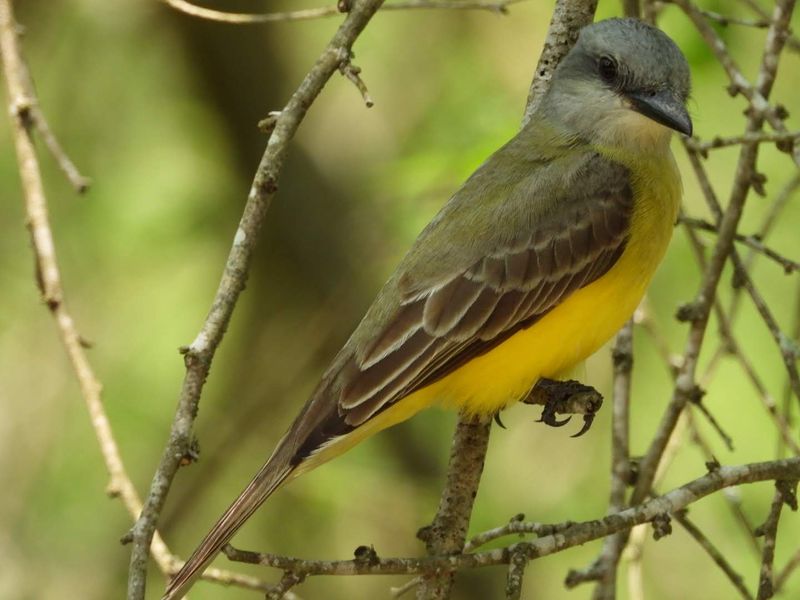
The bird list here reads like someone tried to write a fantasy novel and accidentally made it real. Over 250 species have been recorded at Resaca de la Palma, with some accounts pushing closer to 300.
For a park of this size, that number is extraordinary, and it is the main reason birders travel from across the country and beyond to visit Brownsville.
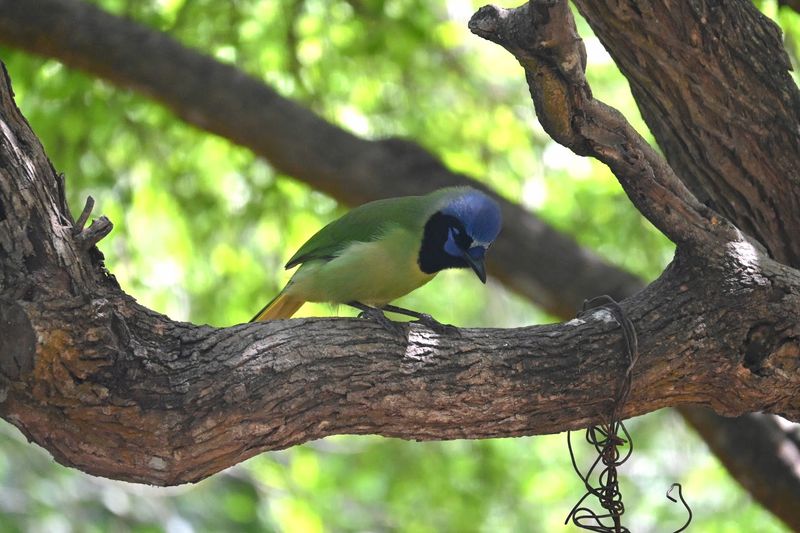
Green jays are the crowd favorite, and it is easy to understand why. Their electric combination of blue, green, and yellow makes them look almost tropical, which technically they are.
Altamira orioles hang their long, sock-shaped nests from the tips of tree branches, while plain chachalacas move through the brush in noisy groups that sound like a small riot. Groove-billed anis add their own strange, prehistoric energy to the mix.
The variety goes far beyond the showstoppers. Summer tanagers flash red through the canopy.
Yellow-breasted chats call from dense shrubs with an almost comical range of sounds. Migrating warblers pass through in waves during spring and fall, turning certain mornings into something close to sensory overload for anyone paying attention.
Rare sightings have included the Tropical Parula, the Roadside Hawk, and the Gray-collared Becard, birds that barely cross into the United States anywhere else.
The park sits at a geographic crossroads where North American and Neotropical species overlap, and that overlap creates a birdwatching experience that is genuinely hard to replicate anywhere else in the country.
Eight Miles Of Trails Through Distinct And Shifting Habitats
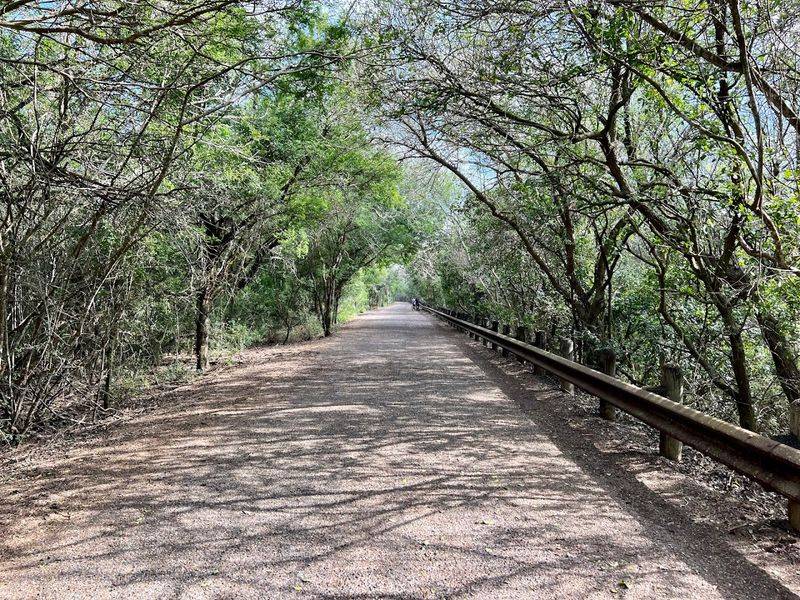
Eight miles of trails sounds like a moderate afternoon hike, but at this park it feels like much more. Each stretch of trail passes through a noticeably different habitat, so the experience keeps changing in ways that prevent any sense of repetition.
One moment you are in open savanna with wide sky overhead, and the next you are ducking under the canopy of a dense thorn woodland.
The trail system winds past the resacas, through the woodlands, and along the edges of the savanna areas, giving hikers access to all three major habitat types. Four observation decks are positioned along the resacas, and each one offers a slightly different perspective on the water and the wildlife using it.
Spending time on those decks quietly is one of the best strategies for seeing something memorable.
Bikes are allowed on the trails, and rentals are available at the visitor center. The park does not permit private vehicles beyond the entrance area, which keeps the interior genuinely quiet.
That absence of engine noise makes an enormous difference for both wildlife and visitors. You notice sounds you would otherwise miss entirely.
The trails are well-maintained and clearly marked, which makes navigation straightforward even for first-time visitors. Some sections run close to the water’s edge, offering great views of the resacas and the birds using them.
Others cut deeper into the brush, where the feeling of being surrounded by wild South Texas habitat is at its strongest. Every mile here earns its place.
Wildlife Beyond Birds Including Butterflies, Lizards, And Mammals
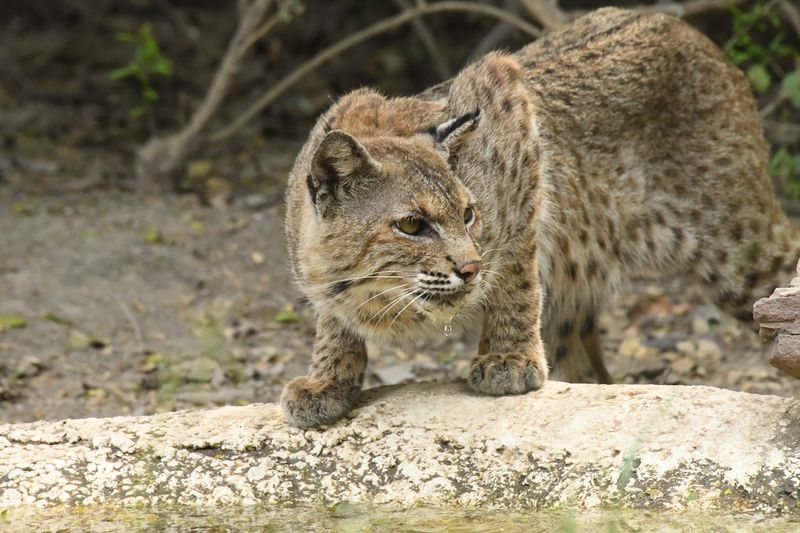
Birds get most of the attention at this park, and fairly so, but the non-avian wildlife here is just as impressive once you start paying attention. The park is home to a remarkable range of butterflies and moths, many of which are species that rarely appear north of the border.
Walking the trails with your eyes lower to the ground reveals a whole second layer of biodiversity that most visitors miss entirely.
Lizards are everywhere. Anoles change color on sun-warmed branches, and larger species dart across the trail so fast they are gone before you can fully register what you saw.
Snakes live here too, including some venomous species, which is a good reason to stay on the marked trails and watch where you step. It is not a reason to be afraid, just a reason to pay attention.
Mammals are less visible but very much present. Raccoons are common near the water, especially at dawn and dusk.
Bobcats live in the park’s woodlands, though seeing one requires patience and a certain amount of fortune. Armadillos are the most reliably spotted mammals, often visible in the late afternoon as they root through the leaf litter with single-minded focus.
The park’s semi-tropical location means it supports species that simply do not occur in most of the United States. That geographic reality gives every wildlife encounter here an extra layer of significance.
Even a common-looking butterfly might be something extraordinary once you look it up later.
The Tram Tour Experience For A Different Perspective On The Park
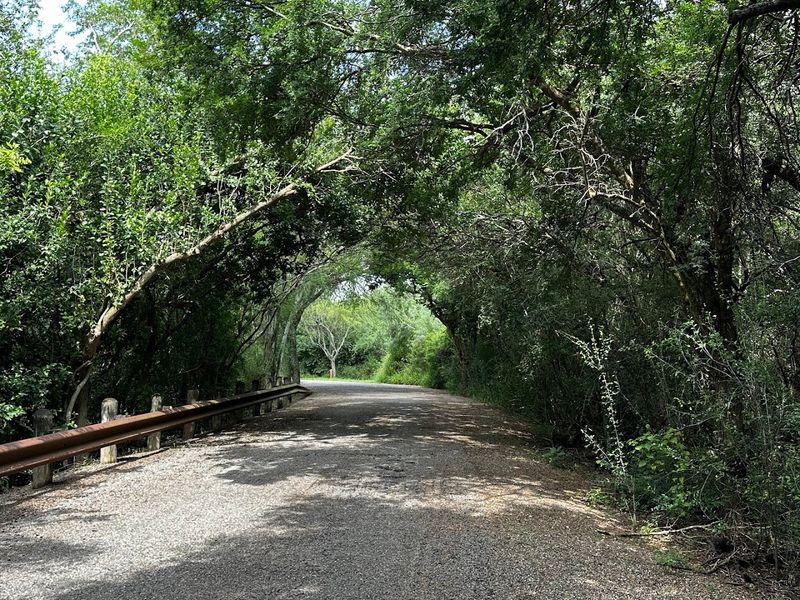
Not everyone wants to cover eight miles on foot, and the tram tour at Resaca de la Palma is a genuinely good alternative rather than just a consolation option.
The tram moves slowly through the park’s interior, covering terrain and habitat that would take hours to reach on foot, and the narration adds context that makes the whole experience richer.
Riding the tram gives you a different physical relationship with the landscape. You sit slightly elevated, which changes your sightlines and makes it easier to spot birds in the middle canopy.
The pace is unhurried, which is exactly right for a place like this. Slow travel suits a park where the interesting things happen quietly and close to the ground.
The tram also covers sections of the park that are further from the main entrance trails, meaning you might encounter wildlife that sees fewer visitors and behaves accordingly. White-tipped doves and long-billed thrashers seem less skittish in those quieter interior areas.
It is a noticeable difference from the stretches of trail closer to the visitor center.
For families with young children, older visitors, or anyone who wants an introduction to the park before committing to a longer hike, the tram tour is an ideal starting point. It provides a broad overview of the three main habitat types and gives you a sense of where you want to spend more time on foot.
I found myself mentally marking spots from the tram to return to later in the day.
Why Resaca de la Palma Is One Of Texas’s Most Important Natural Places
Texas has a lot of state parks, and some of them are spectacular. But Resaca de la Palma occupies a category that is genuinely its own.
As the largest park in the World Birding Center network, it carries a level of ecological significance that goes beyond recreation. This is a place that actively protects habitat types found almost nowhere else in the United States.
The park opened to the public in December 2008, which makes it relatively young in state park terms. That relative newness means it has benefited from thoughtful planning and modern conservation approaches.
The restriction on private vehicles, for example, is a policy that serves the wildlife first and visitors second, and it works beautifully for both.
Several endangered species call this park home, along with species that do not exist anywhere else in the country. That is not a minor distinction.
It means that the park’s continued protection directly affects whether certain plants and animals survive in the United States at all. Conservation here has real, measurable stakes.
Visiting Resaca de la Palma feels like participating in something larger than a day trip. The park is open daily from 6 a.m. to 10 p.m., and the visitor center runs Tuesday through Sunday from 8 a.m. to 4:30 p.m.
Children twelve and under enter free. The adult day-use fee is modest, and reservations are recommended on weekends.
Address: 1000 New Carmen Ave, Brownsville, TX 78521.
