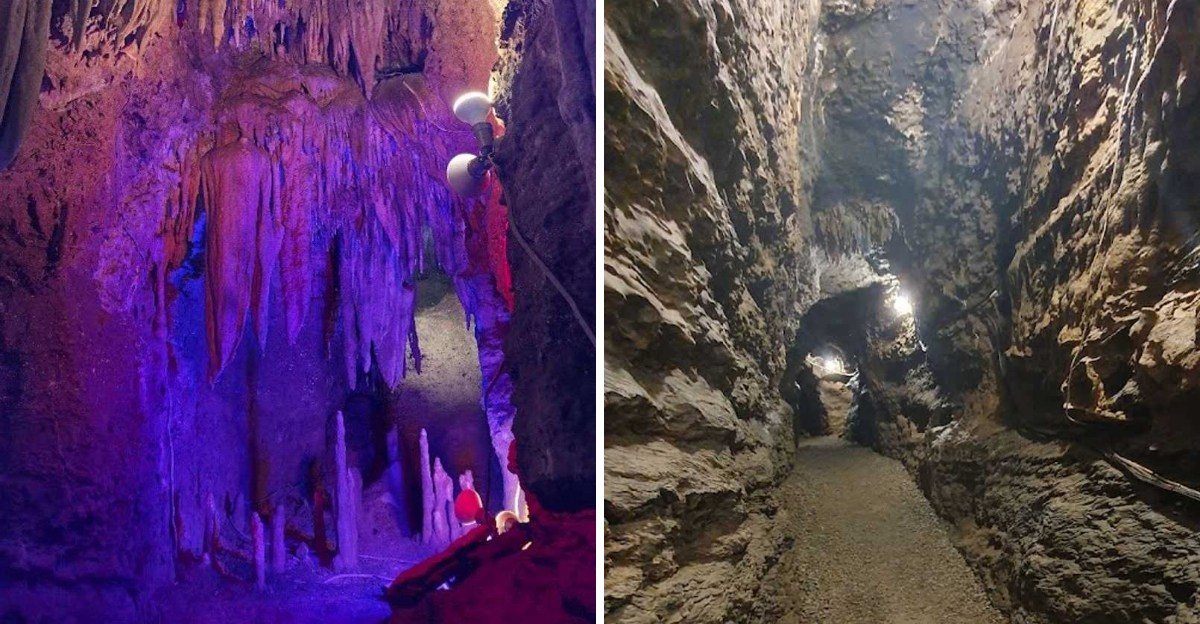
There is something genuinely surreal about standing at the edge of a hillside in rural Maryland, knowing that just a few feet below your boots, an entire underground world has been quietly glittering in the dark for millions of years.
Crystal Grottoes Caverns in Boonsboro caught me completely off guard the first time I visited, and I say that as someone who thought they had already seen most of what this state had to offer.
The cave was discovered entirely by accident in 1920, when workers drilling for road quarry material broke through into something they never expected to find.
What they uncovered turned out to be one of the most densely packed cave systems in the world, with more formations per square foot than any other known cave on the planet.
Maryland is full of surprising corners, but this one genuinely earns the word strange in the best possible way. If you have ever wanted to feel like you stepped into another dimension without leaving the mid-Atlantic, this is the place to do it.
A Cave That Was Never Meant to Be Found
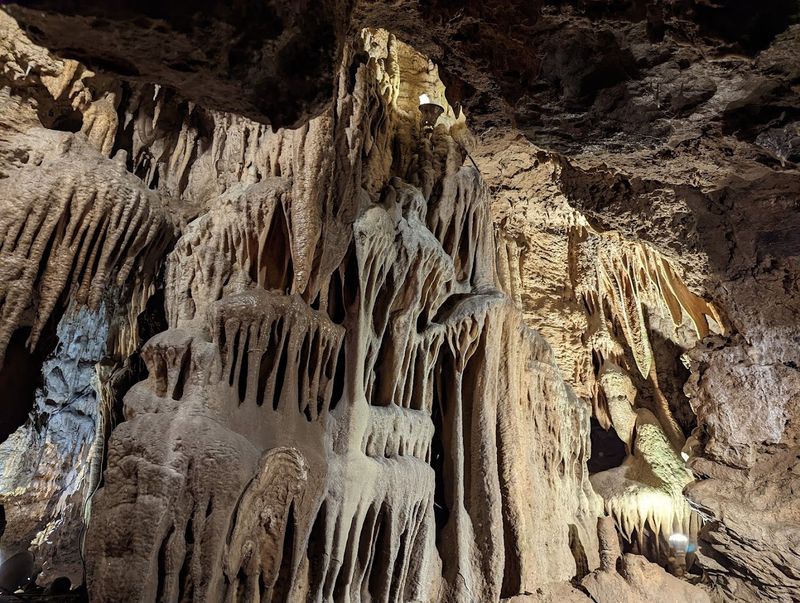
Sometimes the best discoveries happen when nobody is looking for anything at all. In 1920, a crew of workers was drilling into a hillside in Boonsboro, Maryland, searching for limestone to crush into road material.
What they hit instead changed local history forever.
The drill broke through into an open cavern, and suddenly the workers were staring into a world that had been sealed away for hundreds of millions of years. Crystal Grottoes Caverns opened to the public just two years later, in 1922, making it one of the earliest commercial show caves on the East Coast.
What makes this origin story so compelling is how ordinary the moment was before it became extraordinary. Nobody set out to find a cave.
There was no grand expedition or scientific mission. Just a routine job that accidentally punched a hole into deep geological time.
The cave sits within Tomstown Dolomite, a rock formation dating back to the Cambrian Era, over 500 million years ago. Groundwater slowly dissolved the rock over countless centuries, carving out the passages we can walk through today.
That kind of patience from nature is genuinely hard to wrap your head around.
Maryland’s Only Commercial Show Cave
Maryland does not have a long list of commercial caverns to choose from. Crystal Grottoes is the only one, which makes it genuinely special in a state that often gets overshadowed by its flashier neighbors.
Virginia and Pennsylvania have their famous caves, but Maryland quietly holds its own with this singular underground gem.
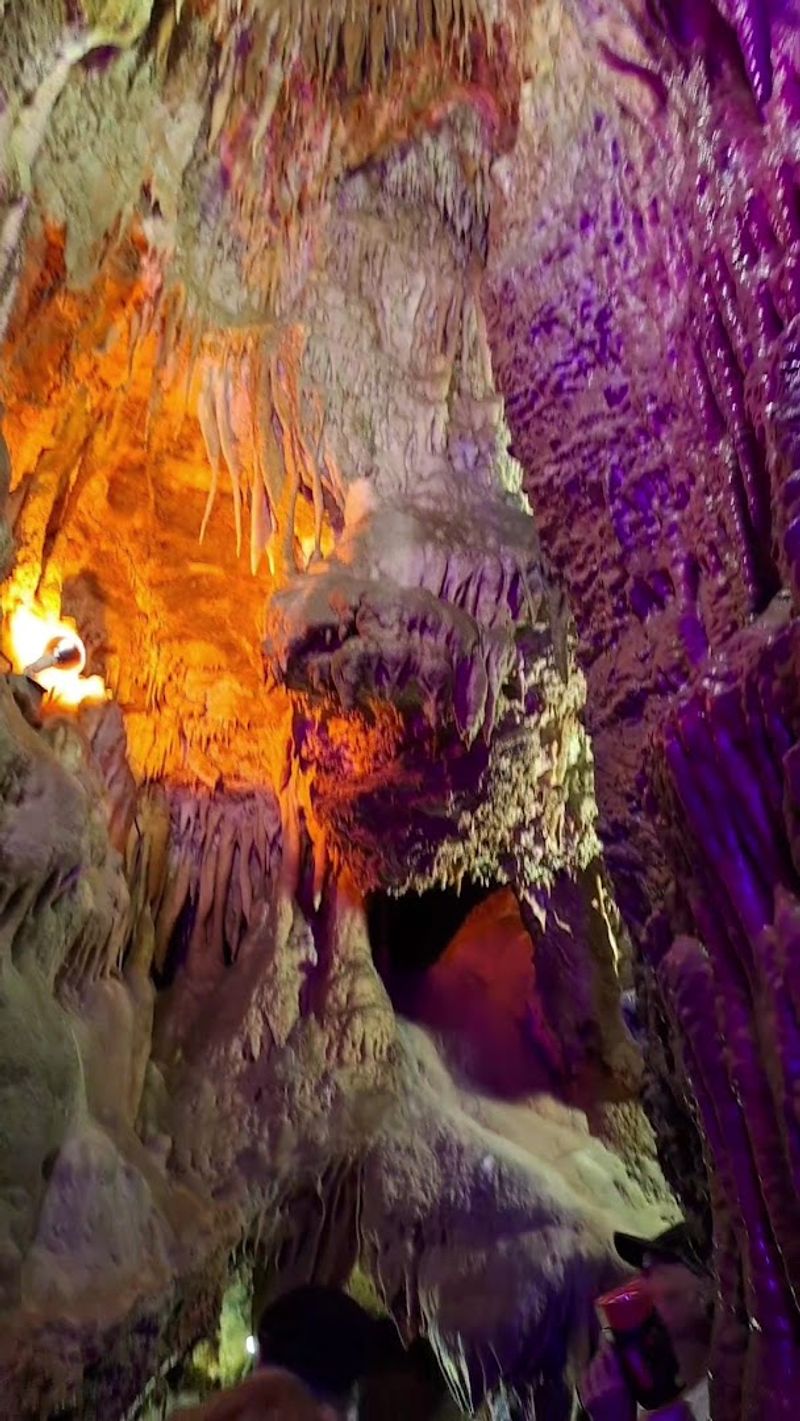
Unlike some show caves that have been heavily commercialized over the decades, Crystal Grottoes has maintained a remarkably natural feel. It is widely considered the most naturally preserved commercial cave in the world, with very little of its original structure altered since its discovery.
That is a genuinely rare distinction.
Roughly 900 feet of the cave system is accessible to the public, which represents about one-third of the total known passages. Guided tours run approximately 30 to 40 minutes, giving visitors a real taste of the underground world without feeling rushed.
It is the kind of place that rewards slow, curious exploration.
More Formations Per Square Foot Than Any Cave on Earth
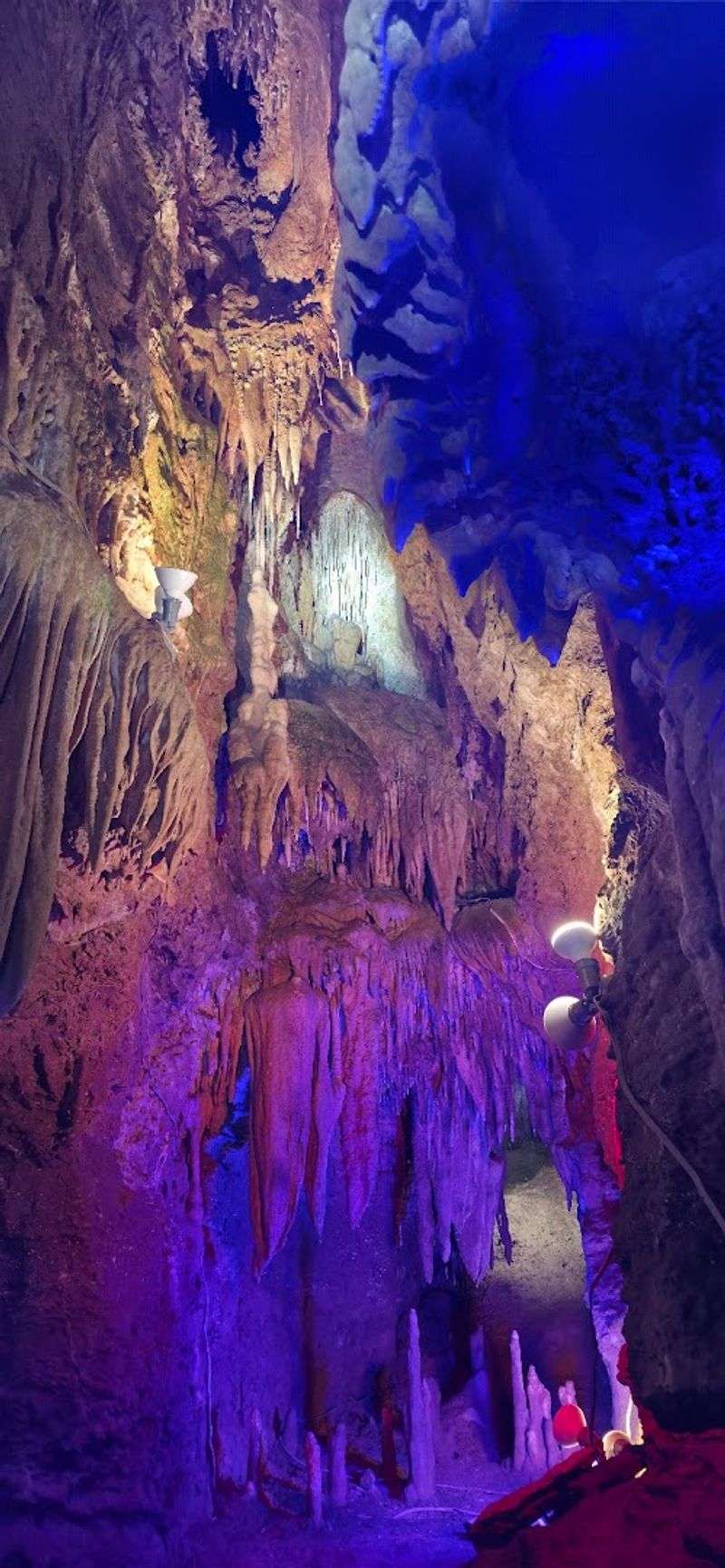
The first thing that genuinely stops you in your tracks inside Crystal Grottoes is just how packed it all is. Every surface seems to be doing something.
Formations grow from the ceiling, push up from the floor, and crowd together along the walls in a way that feels almost competitive.
The cave holds more speleothems per square foot than any other known cave in the world. That is not marketing language.
That is a geological fact that researchers and cave specialists have noted for decades. The density is almost disorienting at first.
Stalactites hang in thick curtains overhead. Stalagmites push up from below like slow-motion fountains frozen in time.
Where the two meet, they form columns, and those columns create a sense of ancient architecture that no human hand could replicate.
Then there are the draperies, thin translucent sheets of calcium carbonate that ripple like fabric caught mid-flow. Some sections look like someone draped a lace curtain across the rock and then slowly turned it to stone.
The sheer variety of forms in a relatively compact space makes every step feel like a new discovery, which is a pretty rare thing to feel underground.
Fairyland and The Blanket Room, Two Rooms You Will Not Forget
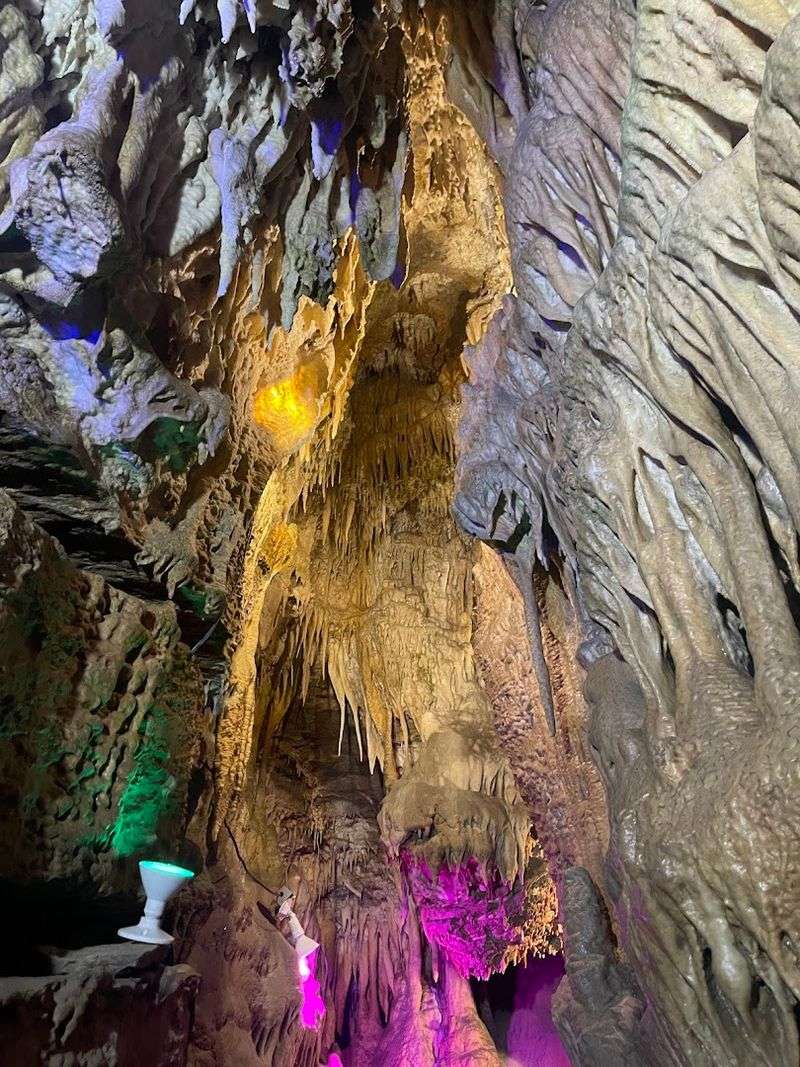
Not all cave rooms are created equal, and inside Crystal Grottoes, two spaces stand out with almost unfair intensity. The first is called Fairyland, and the name is not an exaggeration.
The formations here take on delicate hues of light blue and soft red, colors that feel completely out of place underground and yet somehow perfectly at home.
The effect is genuinely dreamlike. Thin, fragile formations catch the light in ways that make them look almost translucent.
It is the kind of room that makes you lower your voice without anyone asking you to.
Then there is The Blanket Room, the largest chamber in the accessible section of the cave. Here, enormous sheets of stalactites and draperies hang from the ceiling in overlapping layers, creating the impression of a room draped in stone fabric.
The scale shifts noticeably compared to the tighter passages leading up to it.
Both rooms feel like distinct personalities within the same underground system. Fairyland is delicate and whimsical, while The Blanket Room carries a heavier, more dramatic weight.
Experiencing both back to back gives you a real sense of how varied a single cave system can be, even within a relatively short walking distance.
The Quirky Formations That Look Like Everyday Objects
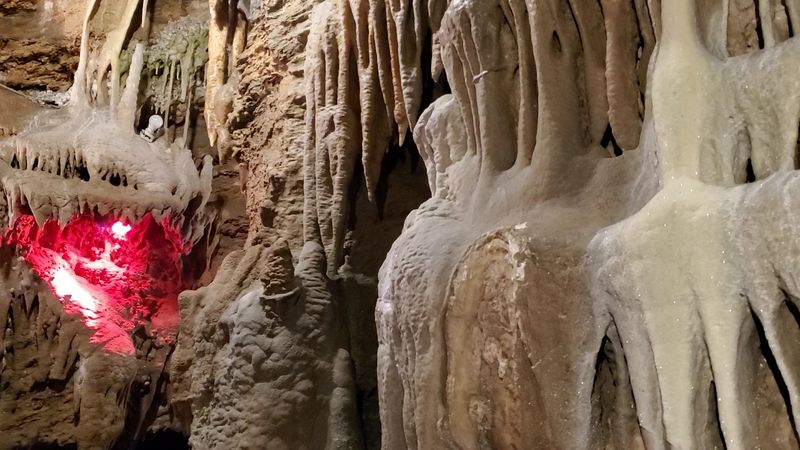
One of the more playful parts of touring Crystal Grottoes is the way the guides point out formations that look like things from everyday life. It sounds gimmicky until you actually see them, and then it just becomes genuinely funny and a little bit mind-bending.
There is a formation called Snowcap Mountain, covered in tiny sparkling crystals that catch the light like fresh snow. Another cluster is nicknamed the Bed of Nails, which is exactly as dramatic as it sounds.
But the real crowd-pleasers tend to be the ones that look like food.
Visitors have spotted shapes resembling carrots, grapes, potato chips, and even popcorn in the formations along the cave walls and ceiling.
The resemblance is close enough that it becomes a kind of underground scavenger hunt, especially for younger visitors who suddenly become very engaged with geology.
These formations are not carved or shaped by human hands. They grow naturally through the slow deposition of minerals over thousands of years.
The fact that nature produces shapes this specific and this recognizable without any intention behind them is one of those small, strange facts that sticks with you long after the tour ends.
Soda Straws, Bacon Rinds, and the Vocabulary of Cave Science
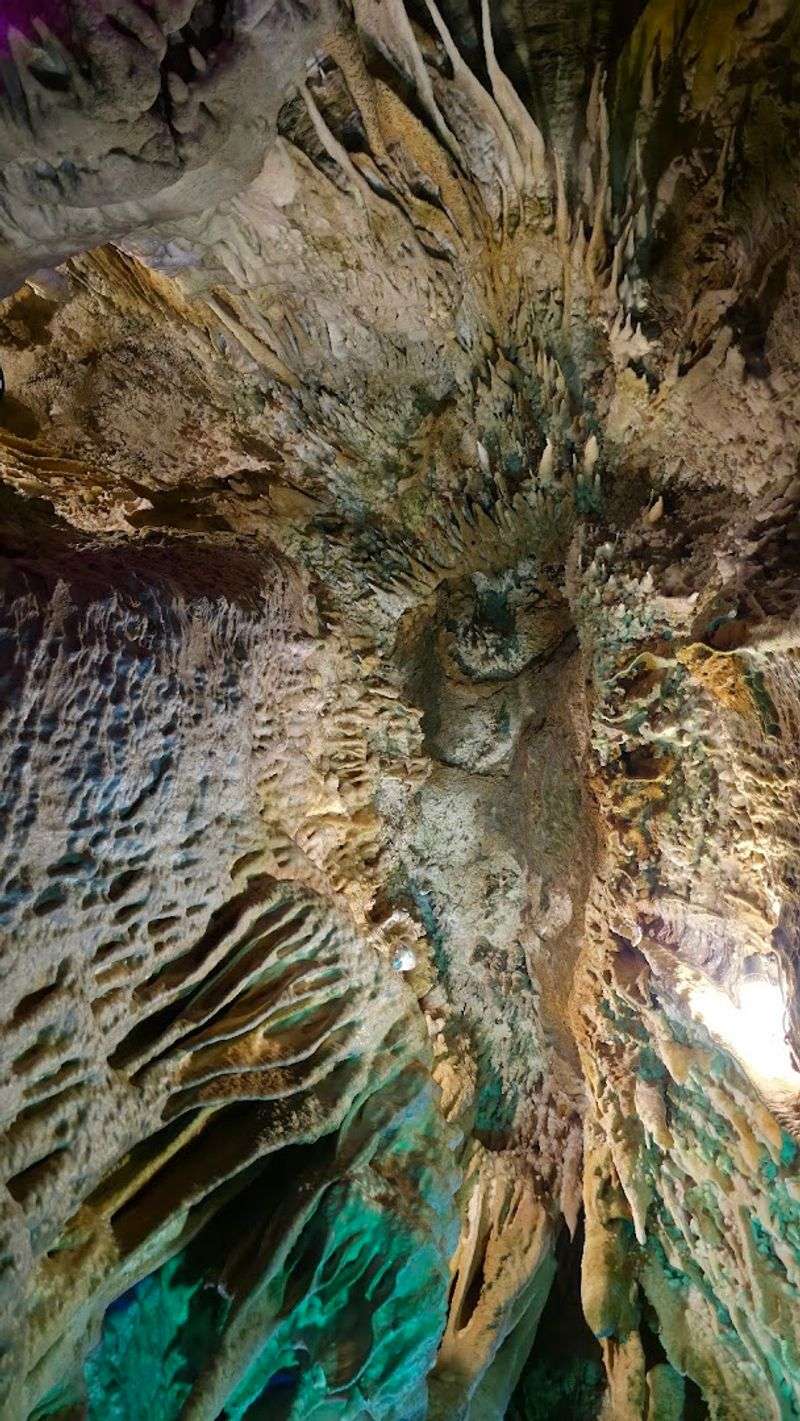
Cave science comes with its own vocabulary, and Crystal Grottoes is a good place to get introduced to it. Two of the most memorable terms you will hear on the tour are soda straws and bacon rinds, and both are exactly as descriptive as they sound.
Soda straws are hollow, tube-like stalactites that form when mineral-rich water drips slowly from a single point on the ceiling. They are incredibly fragile.
Some are no wider than a drinking straw, and they can extend downward for surprising lengths before eventually thickening into a standard stalactite shape.
Bacon rinds are a type of cave drapery that forms in wavy, layered sheets with alternating bands of color. The banding comes from slight variations in the mineral content of the water over time.
When lit from behind or at an angle, they really do look like strips of uncooked bacon, which is both accurate and a little absurd.
Learning these terms during the tour makes the whole experience feel more participatory. You start looking at formations differently, trying to identify what you are seeing before the guide names it.
It turns a passive walk into something more like a hands-on lesson, without any of the pressure of an actual classroom.
A Constant 54 Degrees, What to Wear and What to Expect
One practical detail that catches a lot of first-time visitors off guard is the temperature. Crystal Grottoes maintains a constant 54 degrees Fahrenheit year-round, regardless of what is happening above ground.
On a hot Maryland summer afternoon, that first blast of cool air at the cave entrance is genuinely refreshing.
In winter, though, 54 degrees can feel sharp if you are dressed for a mild outdoor walk. A light jacket or layer is worth throwing in the car no matter what season you visit.
The cave does not care what the calendar says.
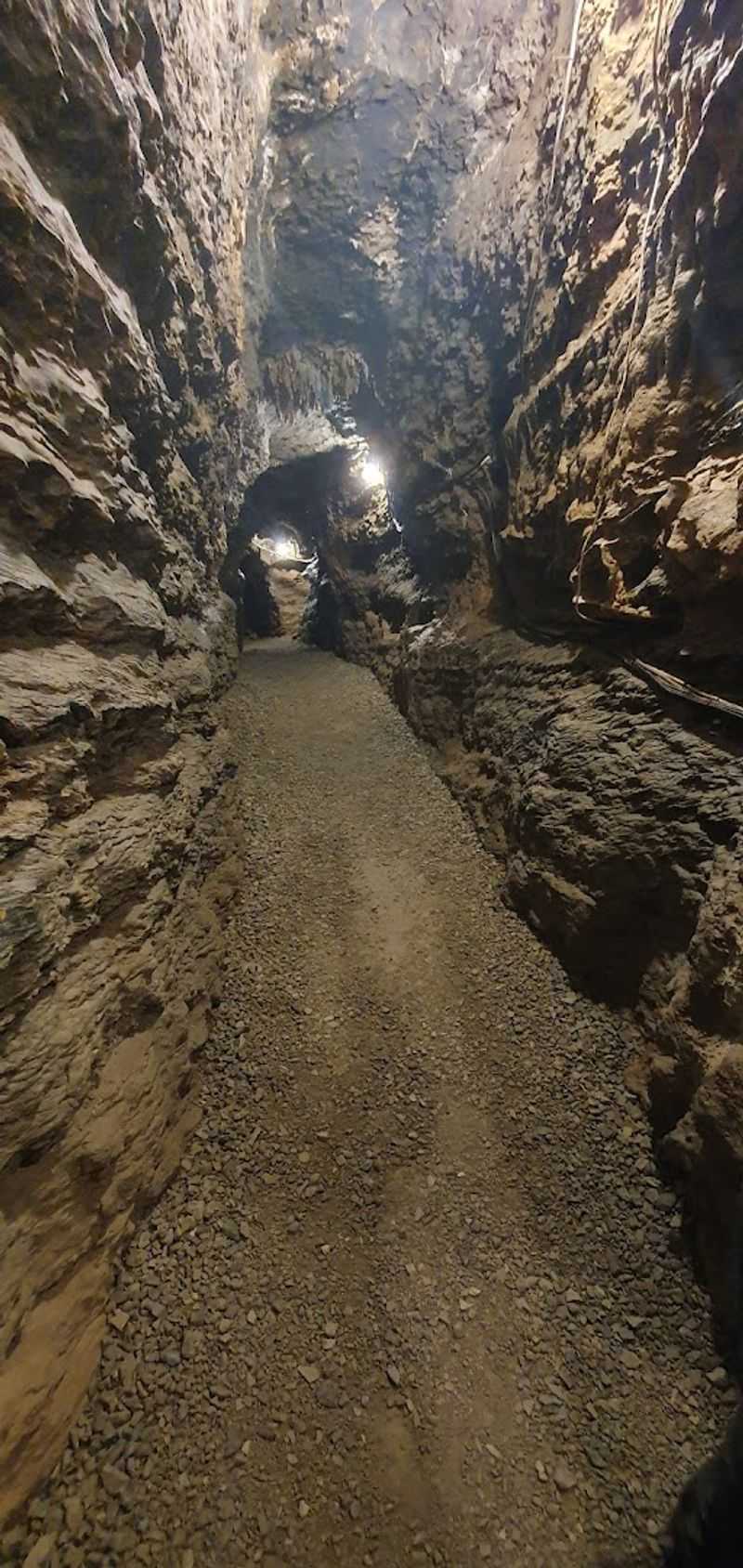
The passages inside are described as largely horizontal, but they are also notably high and narrow in many sections. This is not a cave with wide-open chambers you can wander through freely.
Some spots require turning sideways or ducking slightly, which adds to the adventure but also means the cave is not handicap accessible.
Comfortable, closed-toe shoes with decent grip are strongly recommended. The walkways are generally clean and well-maintained, but cave environments are naturally damp in places.
Going in with the right footwear makes the whole experience more comfortable and lets you focus on what you are actually looking at rather than where you are stepping.
The Fire of 2007 and the Cave That Survived
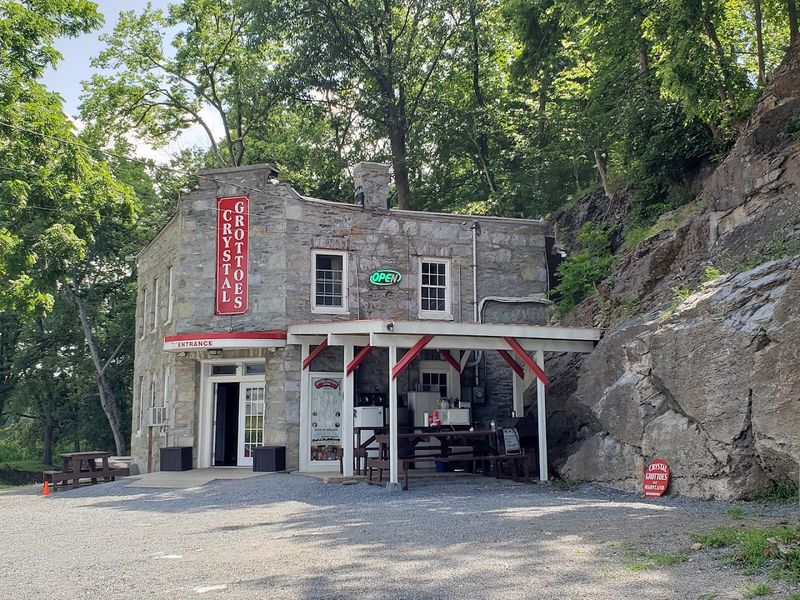
Not everything in Crystal Grottoes’ history has been quiet and geological. In 2007, a fire broke out in the building above the cave entrance, damaging the electrical system that powers the lighting inside the cavern.
For a cave that depends entirely on artificial lighting to be accessible and safe, that was a serious blow.
The cave itself, of course, was unaffected. Stone does not burn, and the formations that took hundreds of millions of years to grow were never in any real danger from a surface fire.
But the infrastructure needed to run public tours took significant damage and required real effort to restore.
The site was eventually brought back and reopened for visitors, a testament to the dedication of the people who have maintained this place over the decades. It would have been easy to simply close after a setback like that.
The fact that it did not says something about how much the cave means to the community around it.
Knowing this history adds a layer to the visit that you do not always get at more polished tourist attractions. Crystal Grottoes has had to fight a little bit to stay open, and that quiet resilience makes the whole experience feel more meaningful than a simple sightseeing stop.
Planning Your Visit to Crystal Grottoes Caverns
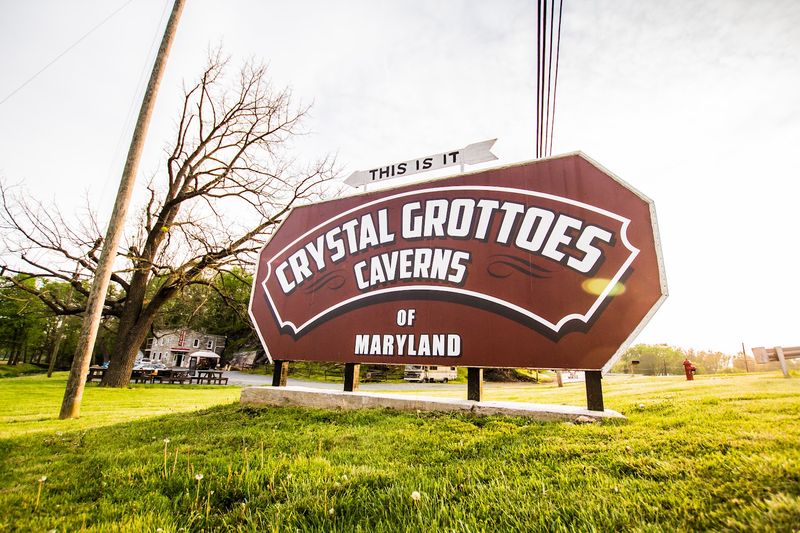
Getting to Crystal Grottoes is part of the experience. The drive along Shepherdstown Pike winds through the kind of Maryland countryside that reminds you how much green space this state still holds.
Rolling hills, old farmhouses, and very little traffic make the approach feel appropriately unhurried.
The cave is located at 19821 Shepherdstown Pike in Boonsboro, which puts it in a convenient spot for anyone exploring the western Maryland region. Antietam National Battlefield is nearby, as are several state parks and hiking trails that pair well with an underground detour.
Tours are guided and last roughly 30 to 40 minutes, covering about 900 feet of accessible passage. Groups stay together throughout, which means the pace is set by the guide rather than individual visitors.
That structure actually works in the cave’s favor, keeping the experience focused and informative.
Because the passages are narrow and twisting, the cave is not handicap accessible, which is worth knowing before you make the trip with anyone who has mobility concerns. Younger kids tend to love the tight spaces and unusual formations, so it works well as a family outing.
Checking current tour hours before visiting is always a smart move, since seasonal schedules can vary.
