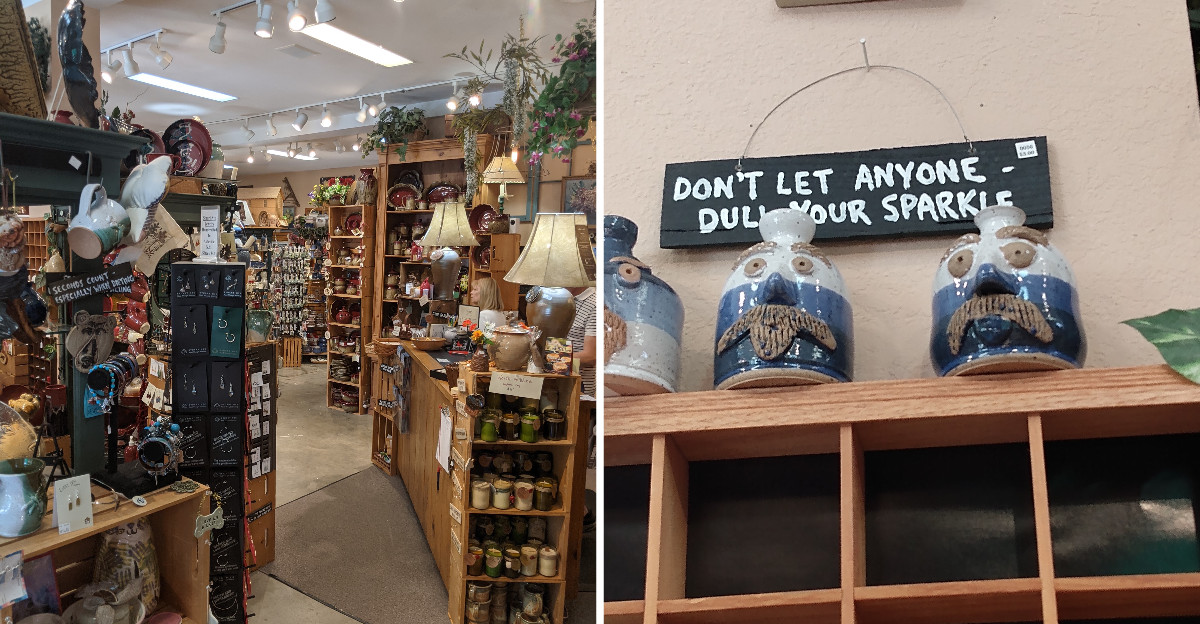
Clay dust on sneakers and a full trunk of pottery mark a day spent in a small North Carolina town that holds more than eighty potters and dozens of shops along its quiet country roads. Every turn reveals another hand-painted sign, another porch lined with mugs, another kiln cooling in a backyard.
The pottery tradition here stretches back centuries, which is why this place is called the Handmade Pottery Capital of the United States. A few hundred residents live here, yet the studios keep going and the shelves keep filling.
A new favorite coffee mug came home, along with a long list of studios still to visit. Handmade things, slow drives, and friendly faces fill this little place, and it deserves a spot on any map.
The potters here do not just make objects, they make the kind of things you want to hold every day.
Clay With a Story Thousands of Years Old
My first surprise in Seagrove had nothing to do with shopping. It came from learning how old the clay story here really is.
Native Americans were digging local clay and shaping pots roughly 3,000 years ago, long before any shop signs went up.
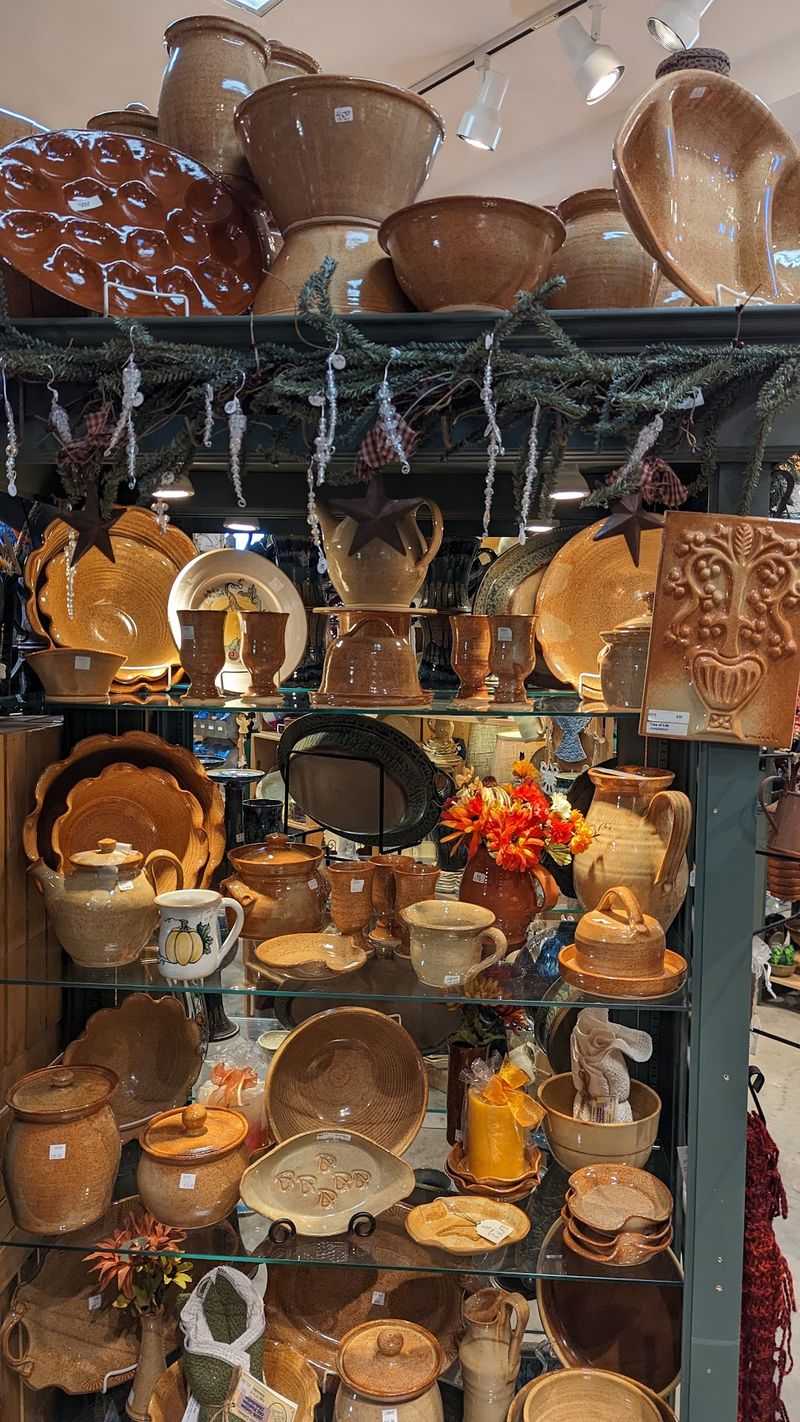
By the mid-1700s, English and German settlers arrived and found the same rich clay, plus thick forests full of firewood for their kilns. They started with redware, an earthy pottery that turns a warm reddish-orange when fired.
Later, many switched to salt-glazed stoneware, which is tougher and needs much hotter fires.
Roads helped the craft grow. The Old Plank Road in the mid-1800s, and then the railroad, carried Seagrove pots to buyers far beyond these hills.
A big turning point came in 1917. Artists Jacques and Juliana Busbee from Raleigh started Jugtown Pottery and helped share local work with the rest of the country, right when the old ways could have faded.
Today the area claims the longest continuous history of pottery making in the United States, stretching back more than 250 years. In 2005, Seagrove was officially named the State Birthplace of North Carolina Traditional Pottery.
I found that knowing this history made every mug on every shelf feel a little heavier in the best way, like holding a small piece of a very long family story.
Cruising the North Carolina Pottery Highway
Nobody warned me that NC Highway 705 would turn every single mile into a debate about pulling over again. Locals call this stretch the North Carolina Pottery Highway, and the name fits perfectly.
Hand-painted signs pop up between farm fields and patches of pine trees. One studio sits behind a tidy porch, another hides at the end of a gravel lane, and a few look like someone simply turned their backyard shed into a gallery.
More than 80 working potters are spread around this small area, which is likely the largest group of its kind anywhere in the country. That means you will never see everything in one day, so it helps to relax and pick favorites.
My best tip is to grab a pottery map first. You can find them at the North Carolina Pottery Center or the I-73/I-74 Heart of NC Visitor Center, and many shops keep a stack by the register too.
Many potters welcome visitors right into their workshops. If the wheel is spinning when you arrive, stay a few minutes and watch a lump of wet clay rise into a bowl.
It beats any museum video, and kids usually find it hypnotic.
Leave extra room in the trunk, too. Trust me, a pitcher riding in your lap on winding country roads is nobody’s idea of relaxing.
Seagrove Pottery on Broad Street Makes the Perfect First Stop
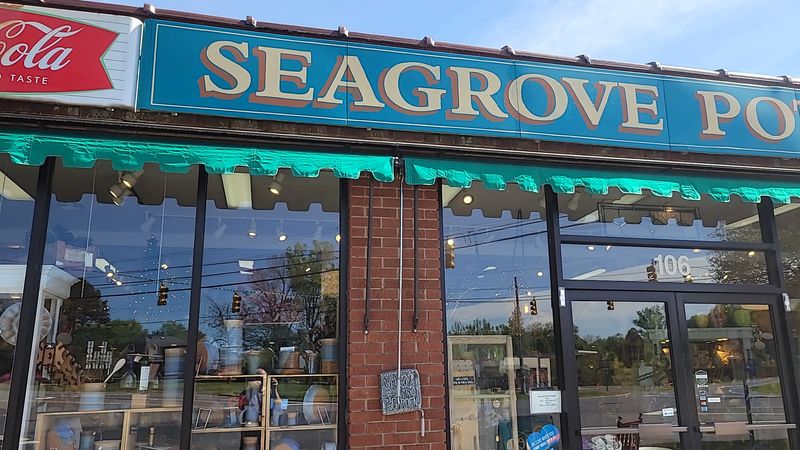
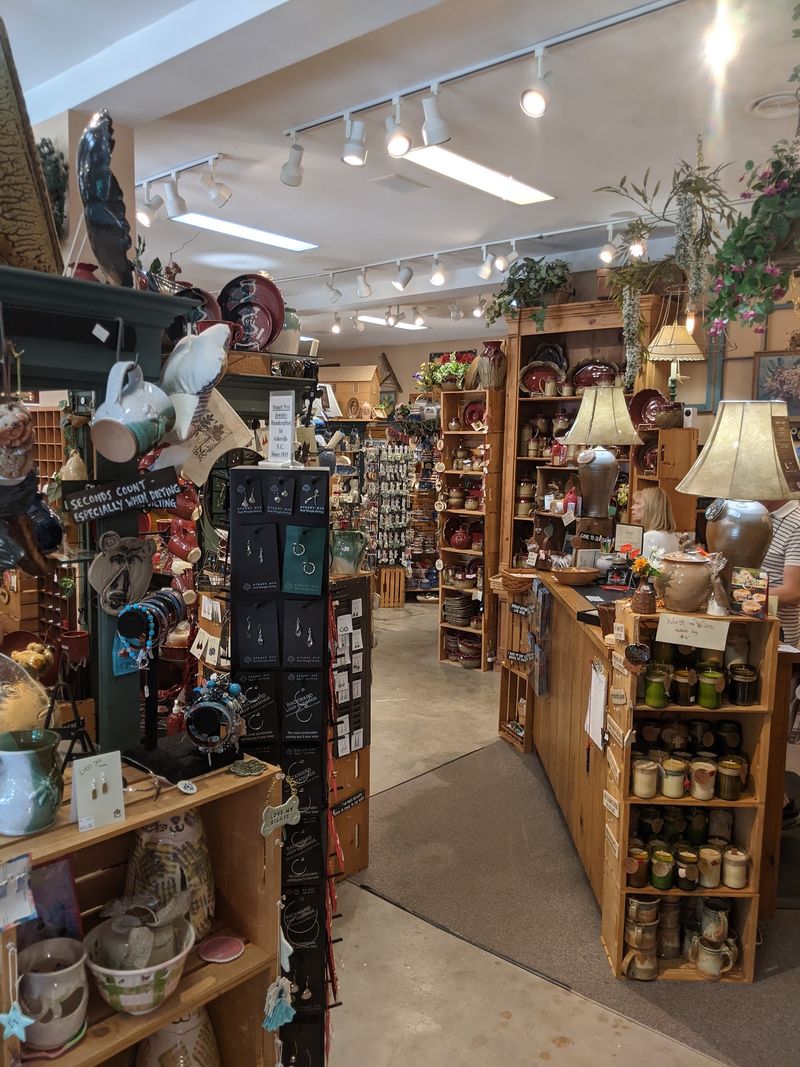
Some shops feel like a quick browse. Seagrove Pottery on North Broad Street felt more like a friendly treasure hunt, with shelves packed so full of color that I slowed down without even trying.
Owners Gene and Beverly King stock work from a big group of mostly local and regional potters, around fifty of them. That variety makes it a smart first stop, because you can study many styles in one room.
Once a certain glaze or shape catches your eye, the staff can point you toward that potter’s own studio down the road. They are also happy to share a pottery map and a few ideas for lunch nearby.
Pottery is not the only thing here. Shoppers also find jewelry, soaps, candles, cards, carved wooden bowls, and paintings from local artisans.
Then there is the back room, which surprised me most. It holds a full yarn shop with soft wools and knitting supplies, so crafters of every kind leave happy.
Keep an eye out for the small shop dog, a sweet greeter who seems to know everyone. Purchases get wrapped carefully for the trip home, which matters a lot with fragile pieces.
The store is open seven days a week, including Sunday afternoons, when a lot of individual studios stay closed. That makes it a lifesaver for weekend visitors.
Jugtown and Ben Owen, Where Family Roots Run Deep
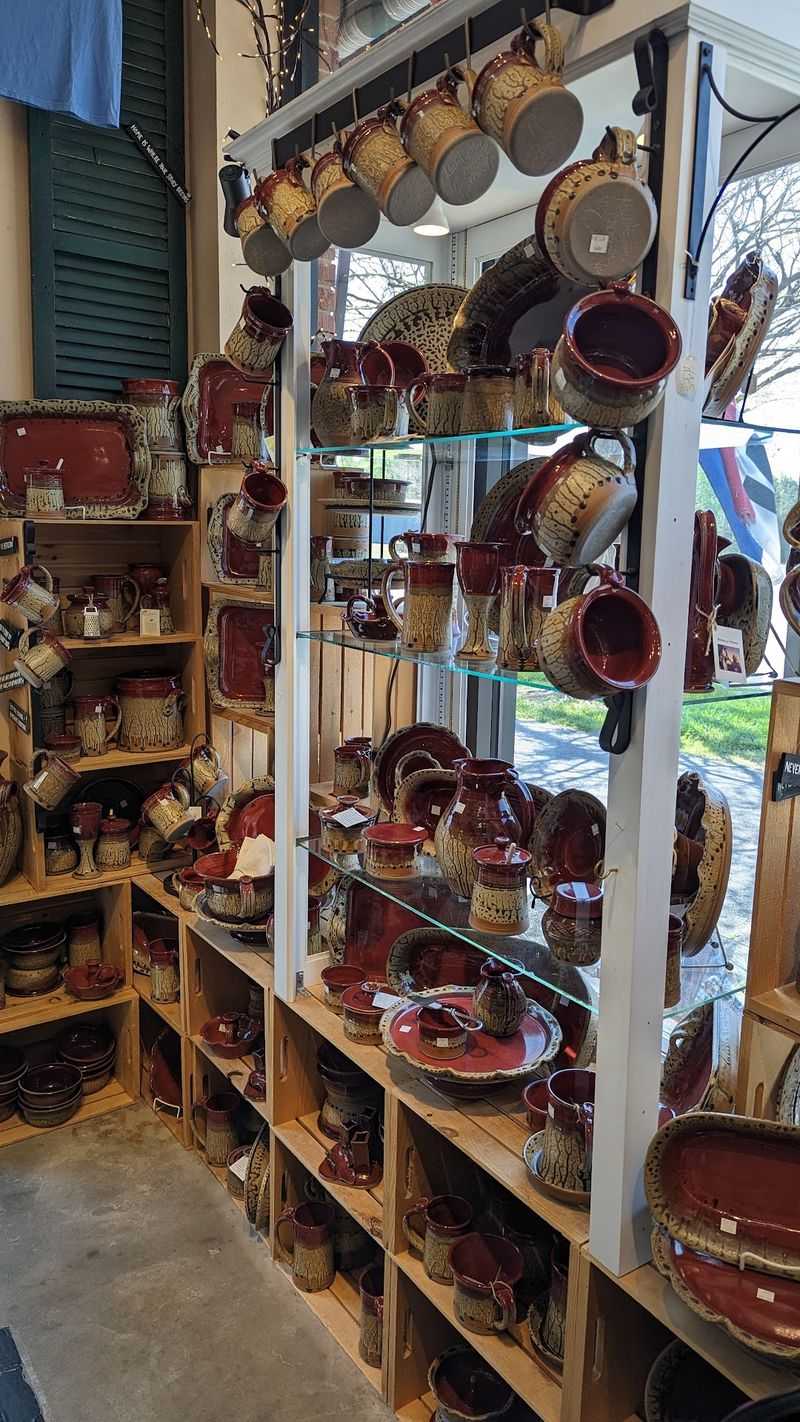
History buffs, this part is for you. Jugtown Pottery, started in 1917, still sits among original log cabins at 330 Jugtown Road, and the whole place is listed on the National Register of Historic Places.
I loved how the setting feels lived in rather than frozen. A working studio keeps turning out new pots, while a small museum explains how the Busbees helped carry Seagrove’s craft into homes across America.
Just down the way, Ben Owen Pottery at 105 Ben’s Place tells a family story of its own. Ben Owen III is a sixth-generation potter, which means working clay runs deep in his family tree.
His glazes are the showstoppers. Deep reds glow like embers, and bright turquoise pieces look almost like pools of water sitting on the shelf.
Take a peek at the big wood kilns if you get the chance. Firing with wood takes enormous patience, since the fire has to be fed for hours, and the flames and ash help shape the final look of each piece.
Another name worth knowing is Original Owens Pottery. Dating back to 1895, it is known as the oldest continuously operating pottery in North Carolina.
Visiting these spots in one morning gave me a real sense of how deep the roots go. Skills here pass from grandparents to grandkids, and it shows in every rim and handle.
Face Jugs, Swirlware and Other Delightful Surprises
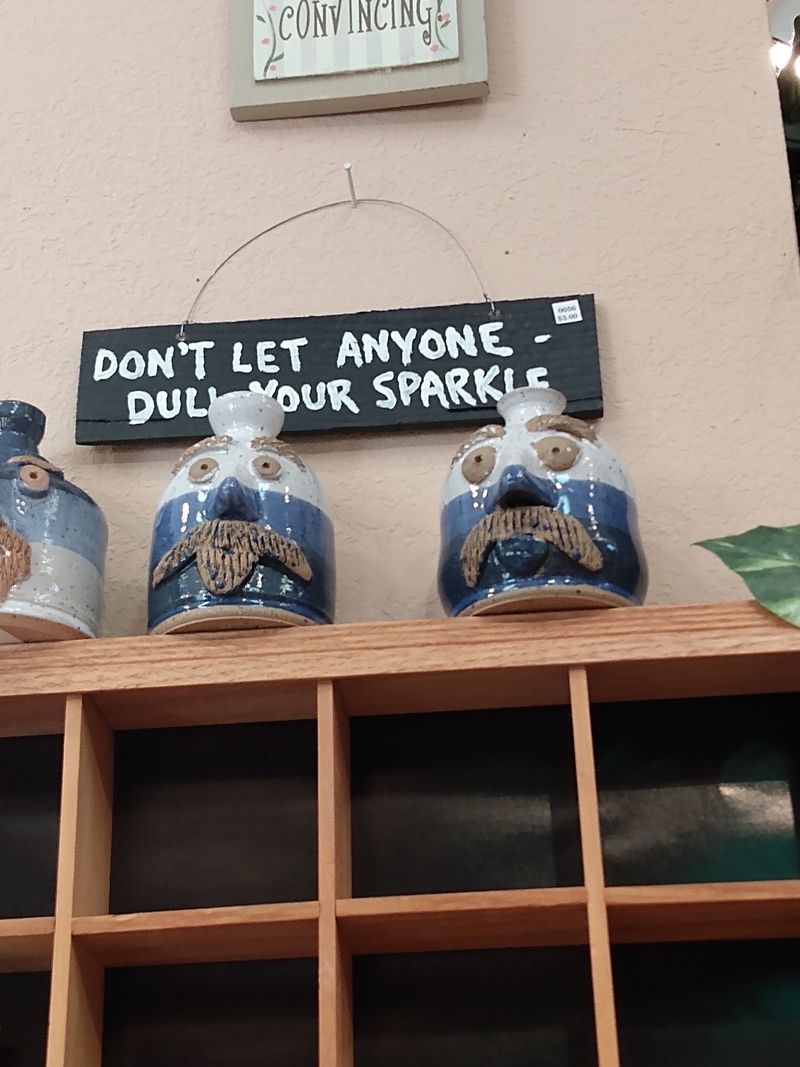
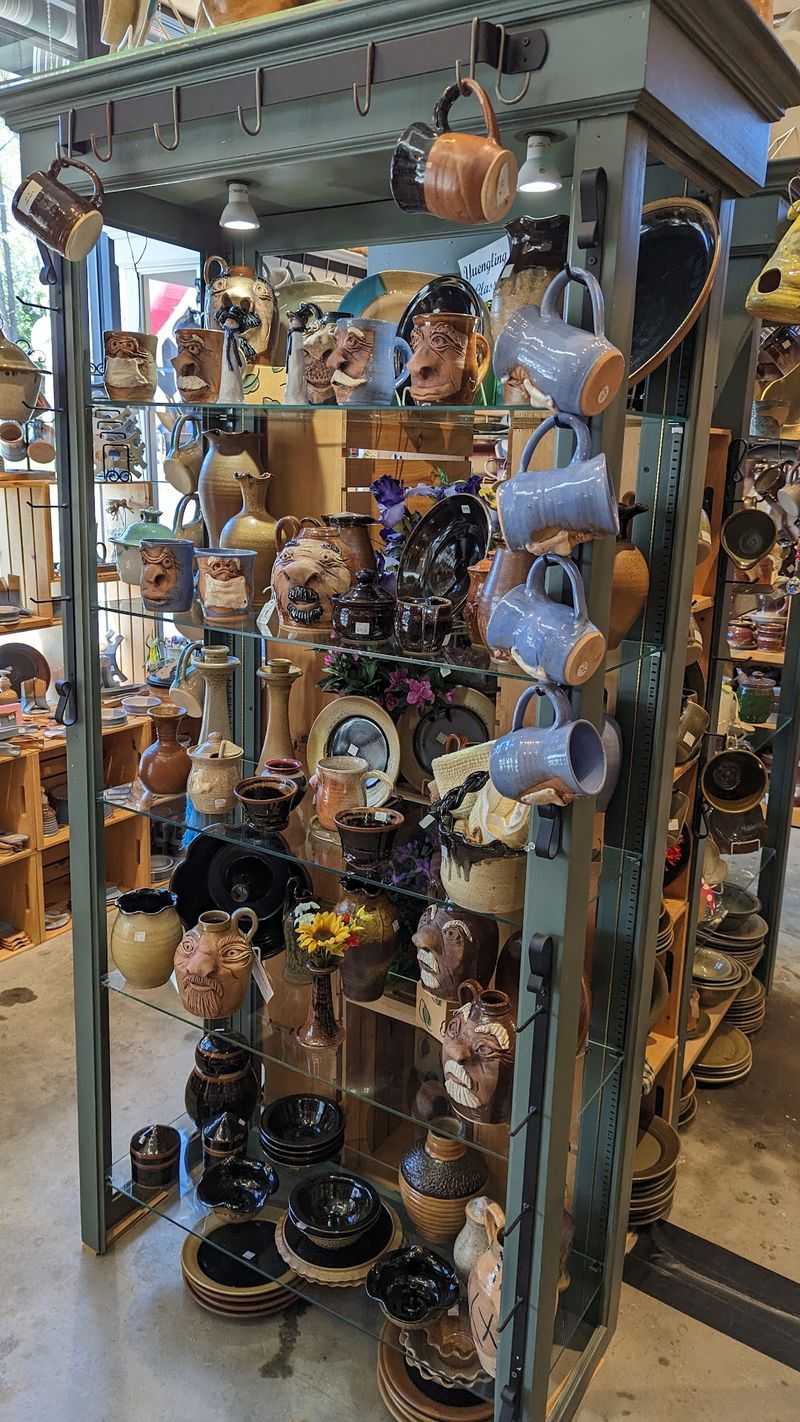
A pottery jug with bulging clay eyes and a toothy grin stared back at me, and I laughed out loud. Face jugs, sometimes called ugly face jugs, are a Southern tradition with deep roots here, and no two ever look alike.
Crystal King Pottery is a great place to meet these funny characters. Sid Luck, honored with the NC Living Treasure Award, also makes traditional wares and face jugs, often using clay he digs locally.
Swirly patterns caught my eye next. Eck McCanless is known as the only potter in the area making agateware, also called swirlware, where different colored clays twist together like marble cake.
Nature lovers get plenty to admire as well. At Thomas Pottery, Scott and Bobbie Thomas create hand-built trays, platters, and little woodland animal sculptures, while other artists press real leaves into clay or paint delicate dogwood blossoms.
Crystalline glazes are another treat. Tiny crystal patterns bloom across the surface during firing, and they sparkle like frost on a window.
Johnston and Gentithes Art Pottery blends local wild clay with English porcelain for artful animal sculptures. Meanwhile, the Triangle Studio, set inside a renovated old gas station at 1140 NC Highway 705, shows off modern ceramic art.
Of course, plain sturdy mugs and baking dishes still fill plenty of shelves. My advice is to buy something you will actually use every day.
Refueling, Resting and Lingering a Little Longer
Hunger sneaks up fast when you are hopping from studio to studio. Cagle’s Diner at 2172 NC Hwy 705 became my happy pause, a cozy spot serving comfort food like juicy burgers and crispy catfish.
Before or after lunch, save time for the North Carolina Pottery Center at 233 East Ave. Its exhibits, workshops, and demonstrations explain the whole state’s clay heritage, and it makes a great home base for planning.
Need a break from pottery? The Carolina Bronze Sculpture Garden and Foundry lets you stroll among more than 27 sculptures tucked into natural settings, and Walker Art Studios hosts exhibits and workshops too.
Flower fans can swing by Seagrove Orchids for blooms and care advice. Morning people will like Seagrove Cafe, known for coffee and homemade pastries.
Staying overnight lets the slow pace really sink in. The Duck Smith House Bed and Breakfast at 465 N.
Broad St. offers old-fashioned charm, and the Seagrove Stoneware Inn is run by potters themselves.
Seagrove also sits close to Asheboro, home of the huge North Carolina Zoo, so families can easily mix animals and art in one weekend. Raleigh and Charlotte are both within day-trip reach.
Before heading home, I circled back to Seagrove Pottery for one last look, because a town of a few hundred residents surrounded by more than 80 potters makes goodbyes very hard.
Address: 106 N Broad St, Seagrove, NC 27341
