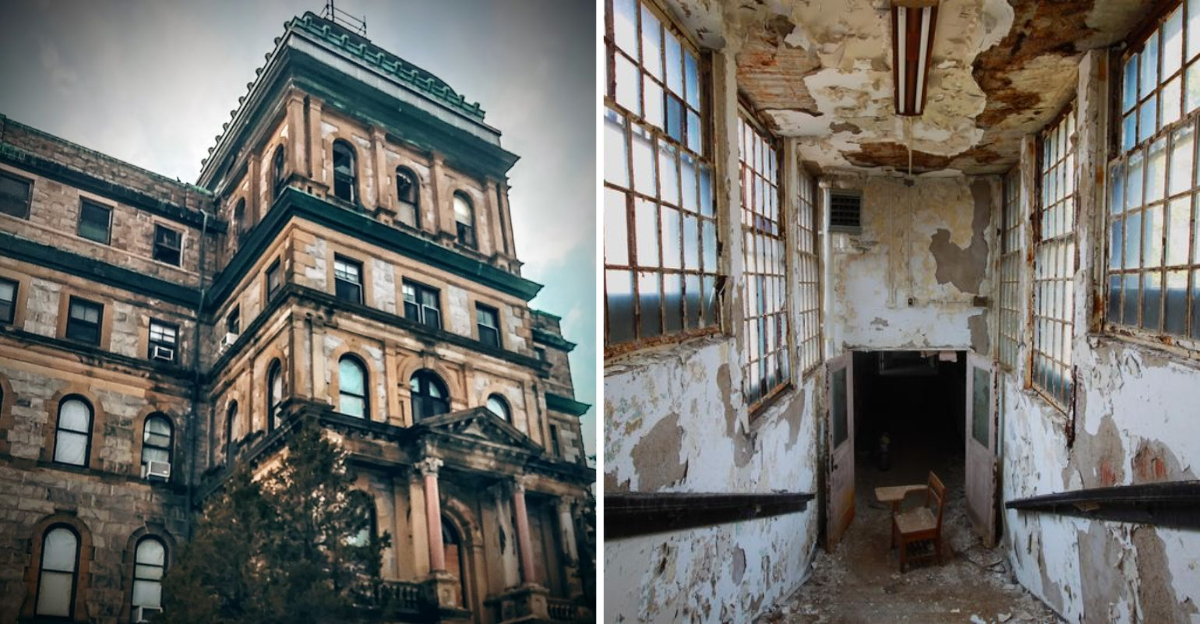
Let’s be honest: exploring an abandoned asylum takes a certain kind of bravery, the slightly questionable kind.
This New Jersey behemoth had dark hallways, peeling paint, and more uneasy vibes than a horror movie marathon.
Every creaking floorboard sounded like a suggestion to turn back immediately.
Only the truly bold wandered its crumbling corridors before demolition finally came knocking in 2015.
Good riddance? Maybe. But the stories stuck around.
The Kirkbride Building: A Victorian Giant Built With Good Intentions
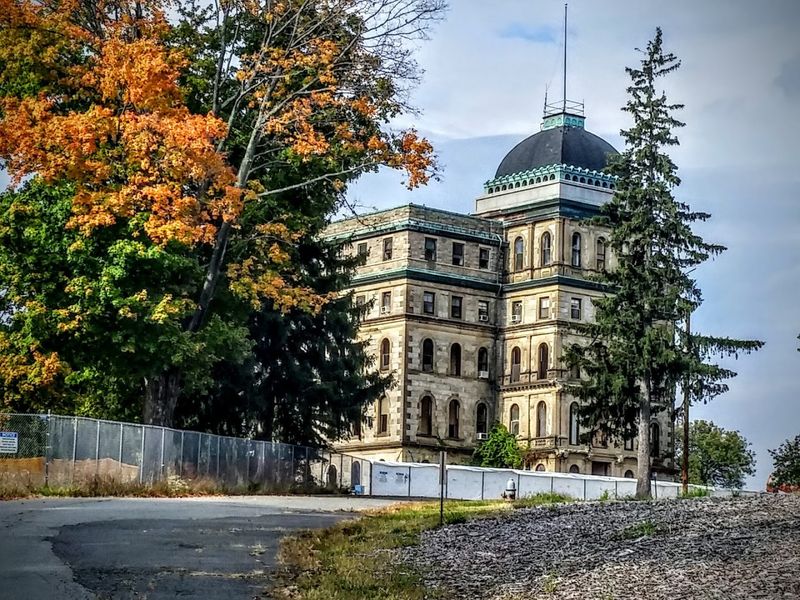
Built in 1876 as the New Jersey State Lunatic Asylum at Morristown, the Kirkbride building was never meant to be a place of fear. Architect Samuel Sloan designed it following the Kirkbride Plan, a progressive philosophy that believed beautiful surroundings could actually help heal the mind.
The idea was genuinely forward-thinking for its time. Fresh air, natural light, and a structured but humane layout were all part of the design.
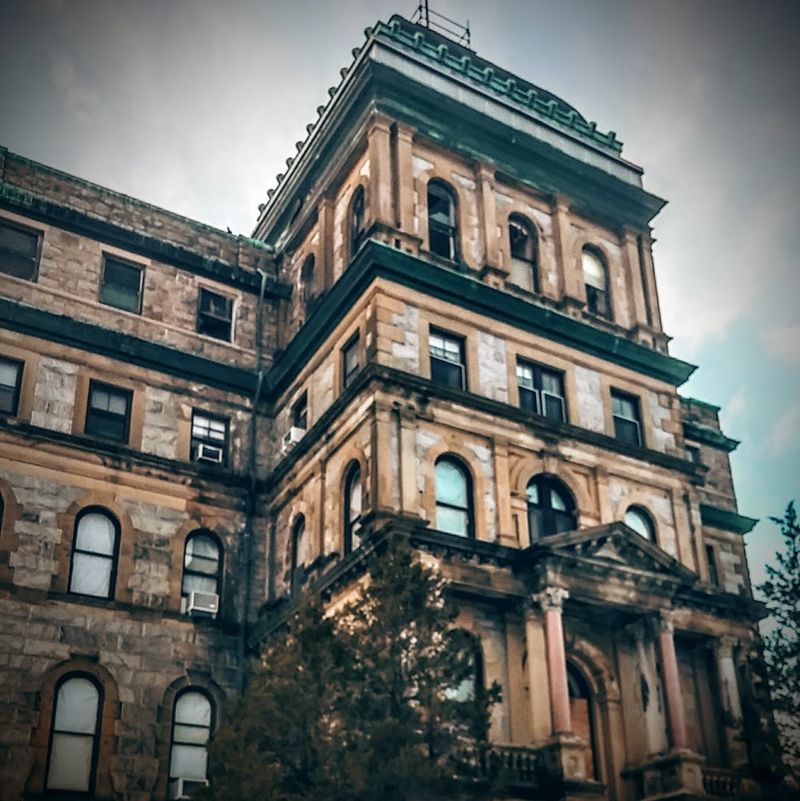
The Second Empire Victorian style gave the building its dramatic silhouette, with a tall central tower and wings that stretched outward like arms.
Originally built to house 350 patients, it eventually became one of the largest psychiatric facilities in the country. Standing before it, even in photographs, you can feel the ambition behind every brick.
It was a building that started with hope, and that contradiction makes its story all the more powerful and worth understanding.
Why New Jersey Needed This Asylum in the First Place
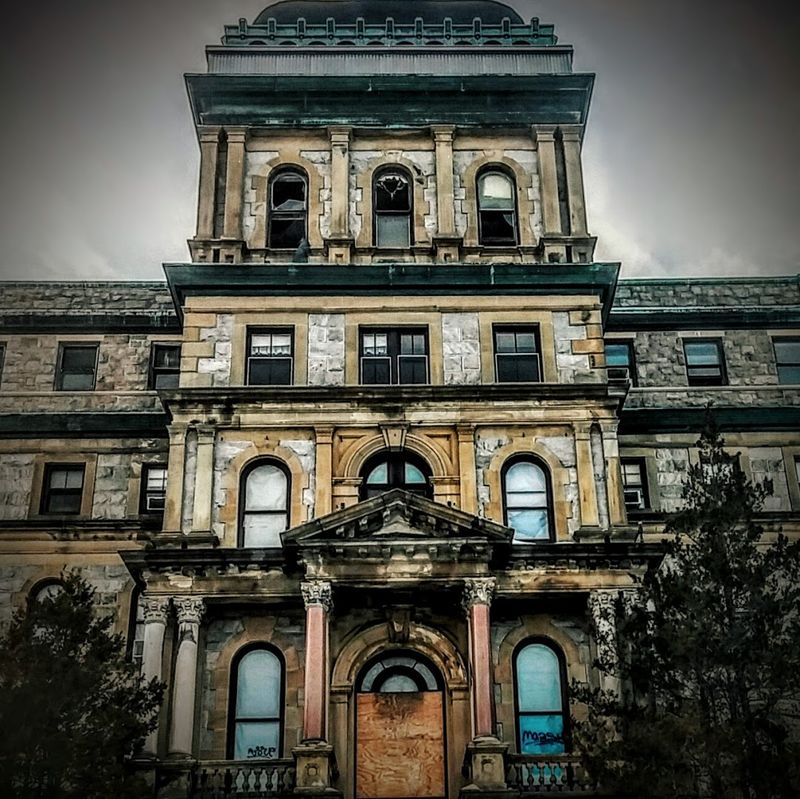
Before Greystone opened its doors, New Jersey had exactly one facility for the mentally ill, located in Trenton, and it was dangerously overcrowded. The state desperately needed a second option, and the pressure to build something new and better had been building for years.
Greystone was the answer to that crisis. Placed in Morris Plains on a large parcel of land, it was designed to give patients room to breathe, literally and figuratively.
The campus included farms, gardens, and open spaces that patients could use as part of their therapeutic routines.
That original vision of healing through environment was genuinely compassionate. The founders believed that removing people from chaotic urban environments and placing them somewhere calm and structured would support recovery.
Whether it always worked that way is a complicated question, but the intention behind the founding of Greystone was rooted in care, not cruelty, and that context matters when exploring its full story.
From 350 Patients to Over 7,700: The Overcrowding Crisis
What started as a facility for 350 people ballooned into something almost unimaginable. By 1953, Greystone housed more than 7,700 patients, a number that staggers the mind when you picture the original building’s footprint.
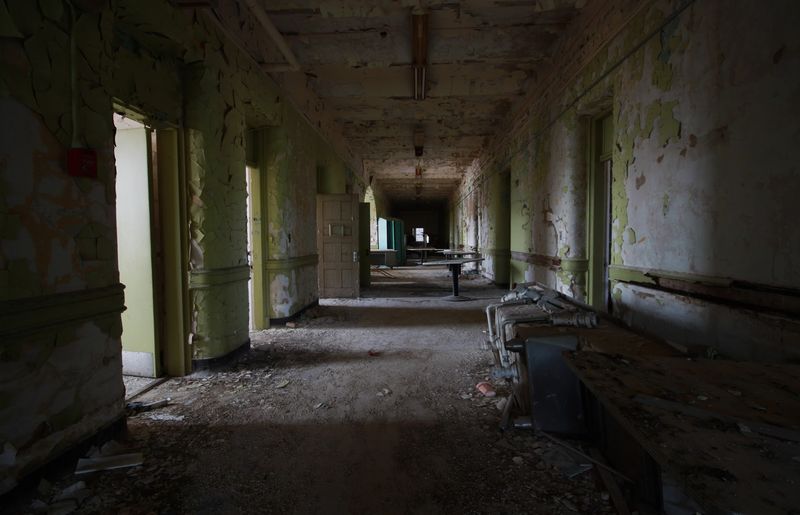
Every hallway, every room, every available corner became a space that had to serve far more people than it was ever built to hold. The campus expanded over the decades with additional buildings and cottages, but the population kept growing faster than the infrastructure could handle.
That overcrowding is one of the most sobering chapters of Greystone’s history. It reflects a nationwide pattern where good intentions collided with inadequate funding, shifting social policies, and a system that struggled to keep pace with need.
Walking through those long corridors in your imagination, knowing how many lives unfolded there, gives you a very different relationship with the place than a simple ghost story ever could. The numbers tell a human story that deserves to be remembered.
The Slow Abandonment of the Main Building
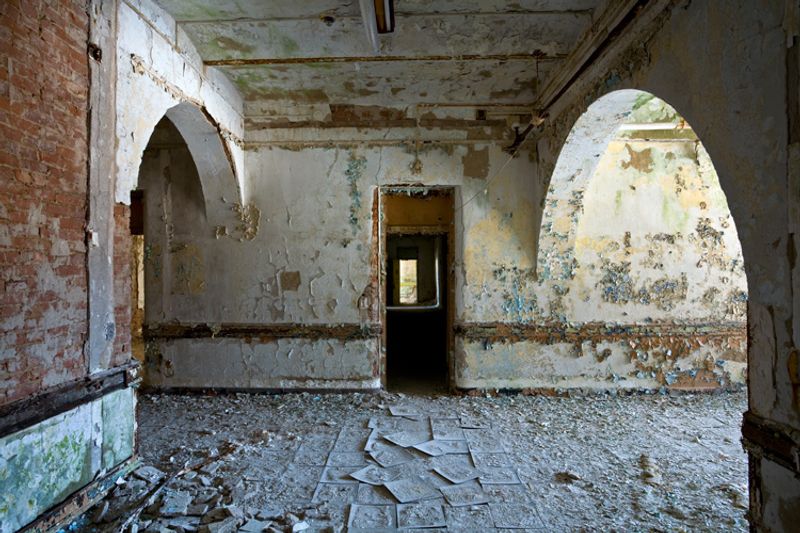
By 1988, patients had been gradually moved out of the main Kirkbride building, and the wings fell mostly silent. Only the central section stayed active for administrative purposes, a small heartbeat in a very large, very quiet body.
The building did not collapse overnight. It aged slowly, the way old structures do when no one is tending to them.
Paint peeled from walls that once held decades of institutional life. Floors warped.
Ceilings sagged. Nature began reclaiming what humans had left behind.
For urban explorers who discovered the place in the years that followed, this slow decay was part of the draw. Every crumbling room felt like a chapter left unfinished.
There is something deeply human about wanting to bear witness to a place that held so many stories, even when those stories are difficult. The abandonment of the Kirkbride building was not dramatic or sudden.
It was a long, quiet exhale that lasted decades before anyone decided what to do next.
Urban Explorers and the Pull of Forbidden History
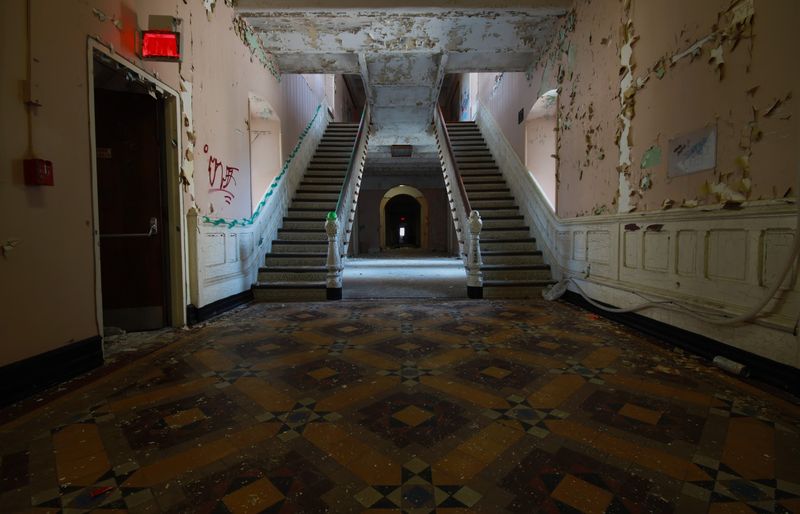
Long before the demolition crews arrived, a different kind of visitor was drawn to Greystone. Urban explorers, photographers, and history enthusiasts found ways onto the grounds to document what was left behind.
It took nerve, no question about that.
The building had a presence that people described in very different ways. Some felt the weight of history pressing down on every room.
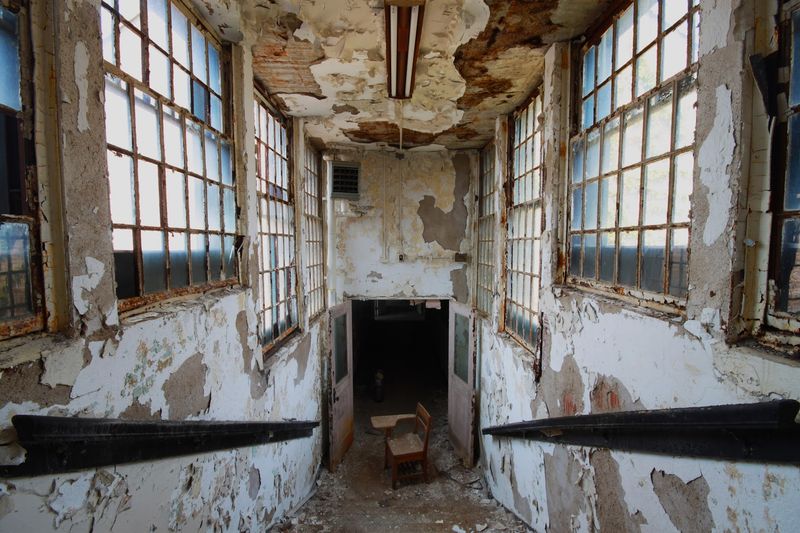
Others were struck by the strange beauty of light filtering through broken windows onto floors covered in plaster dust and old paperwork.
Photography from those visits has become some of the most compelling documentation of what the Kirkbride building looked like in its final years. Long hallways stretching into shadow, tiled rooms with cracked ceilings, staircases leading nowhere in particular.
Those images captured something that official records could not, the texture and atmosphere of a place that housed human lives for over a century. The explorers who dared to go inside left behind a visual record that now feels irreplaceable.
Woody Guthrie and the Famous Connections to Greystone
One detail about Greystone that tends to stop people in their tracks is the connection to Woody Guthrie, the legendary American folk musician. Guthrie spent time at Greystone as a patient, and it was there that a young Bob Dylan famously visited him.
That visit became the stuff of American music history. Dylan, barely out of his teens and already burning with artistic ambition, sat with Guthrie and played for him.
The encounter shaped Dylan’s early work in ways that reverberated through an entire generation of music.
Naomi Ginsberg, mother of poet Allen Ginsberg, also spent time at Greystone, and Allen’s poetry reflected that painful chapter of their family’s life. These connections remind us that Greystone was not just a building or an institution.
It was a place where real human lives unfolded, including the lives of people whose creativity changed American culture. That layer of history gives the site a depth that goes far beyond its architectural drama.
The Fight to Save the Kirkbride Building
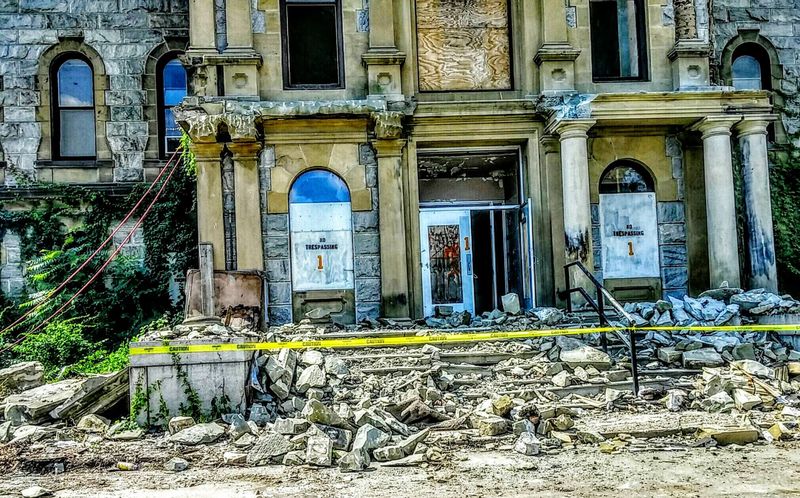
When word spread that the Kirkbride building was slated for demolition, a passionate group of advocates pushed back hard. The organization known as Preserve Greystone mounted a serious campaign to save the structure, arguing that it could be repurposed without costing the state a cent.
Proposals for adaptive reuse circulated widely. The building’s scale and architectural significance made it a compelling candidate for conversion into apartments, a hotel, or a cultural center.
Similar Kirkbride buildings across the country had been successfully transformed into new community spaces.
Governor Chris Christie’s administration moved forward with demolition anyway, and the state declined to list the building on historic registers, which would have offered legal protections. For preservationists, it felt like watching something irreplaceable disappear for no good reason.
The fight over Greystone sparked a broader national conversation about how communities value historic structures, especially those tied to complicated or painful histories. That conversation is still happening today, and Greystone is often cited as a cautionary example.
The Demolition That Divided New Jersey
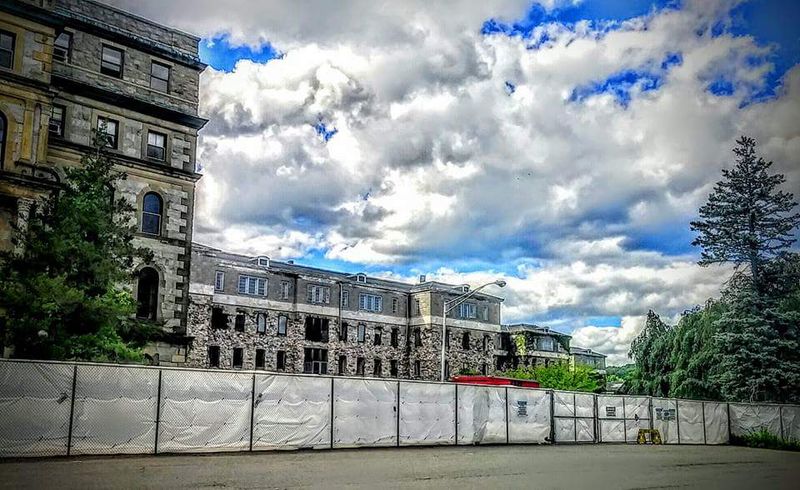
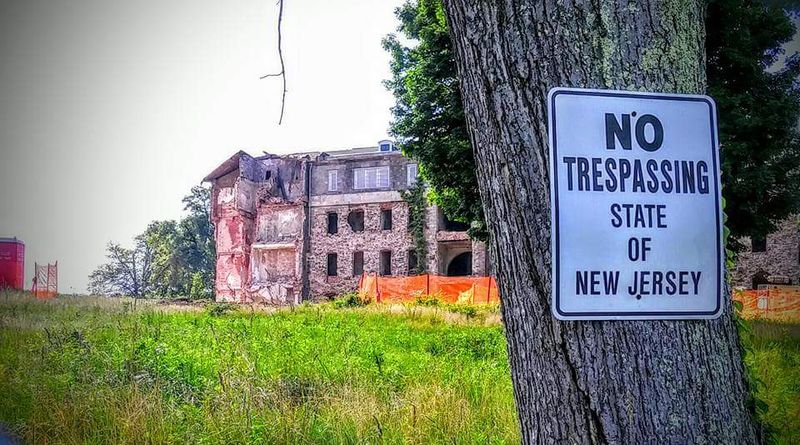
Demolition of the main Kirkbride building began in April 2015 and was completed by October of the same year. For those who had fought to save it, those months felt like watching a slow-motion loss that could not be stopped.
By September 2017, not a single remnant of the Kirkbride building was visible at the site. A structure that had stood for nearly 140 years, that had housed thousands of people and witnessed entire lifetimes, was simply gone.
The land where it stood became flat and quiet.
Historians and architectural experts have since described the demolition as one of the darkest moments in New Jersey’s architectural history. That is not a small claim, and it reflects how significant the loss truly was.
The Kirkbride building at Greystone was not just a building; it was a record of how society treated its most vulnerable members across more than a century. Erasing it meant erasing a complicated, necessary piece of that record.
Dr. House Was Filmed Here and Fans Still Remember
Before the cameras of history stopped rolling, Hollywood found Greystone first. The iconic TV show House M.D. used the Kirkbride building as a filming location, and its dramatic corridors and grand architecture became part of the show’s visual identity in several episodes.
For fans of the show, the connection adds another layer to Greystone’s already layered story. The building’s scale and atmosphere made it a natural fit for a medical drama, and the production team clearly understood how to use the space.
Those scenes carry a different weight now that the building no longer exists.
One reviewer mentioned wishing they could have visited just to photograph where House was filmed before it came down. That sentiment is shared by many who followed the show and later learned about the real history behind those walls.
It is a reminder that a place can carry multiple identities at once, historical landmark, cultural symbol, film set, and all of them matter to different people in different ways.
What Remains Today and Why the Story Still Matters
A new psychiatric facility was built on the Greystone campus to replace the old Kirkbride building, and it opened to continue serving patients in a modern, purpose-built environment.
The address at 59 Koch Ave in Morris Plains still functions as an active mental health facility today.
Some older structures on the campus were also demolished in 2007 and 2008, clearing space for the transition to the new building. The landscape has changed dramatically, but the mission of providing mental health care in Morris Plains continues.
The story of Greystone matters because it forces us to sit with uncomfortable questions about how society cares for vulnerable people, how we value history, and what we choose to preserve or erase.
The brave souls who explored those halls before demolition left behind photographs and memories that keep the conversation alive.
Greystone was imperfect, complicated, and deeply human, and that is exactly why it deserves to be remembered.
Address: 59 Koch Ave, Morris Plains, NJ
