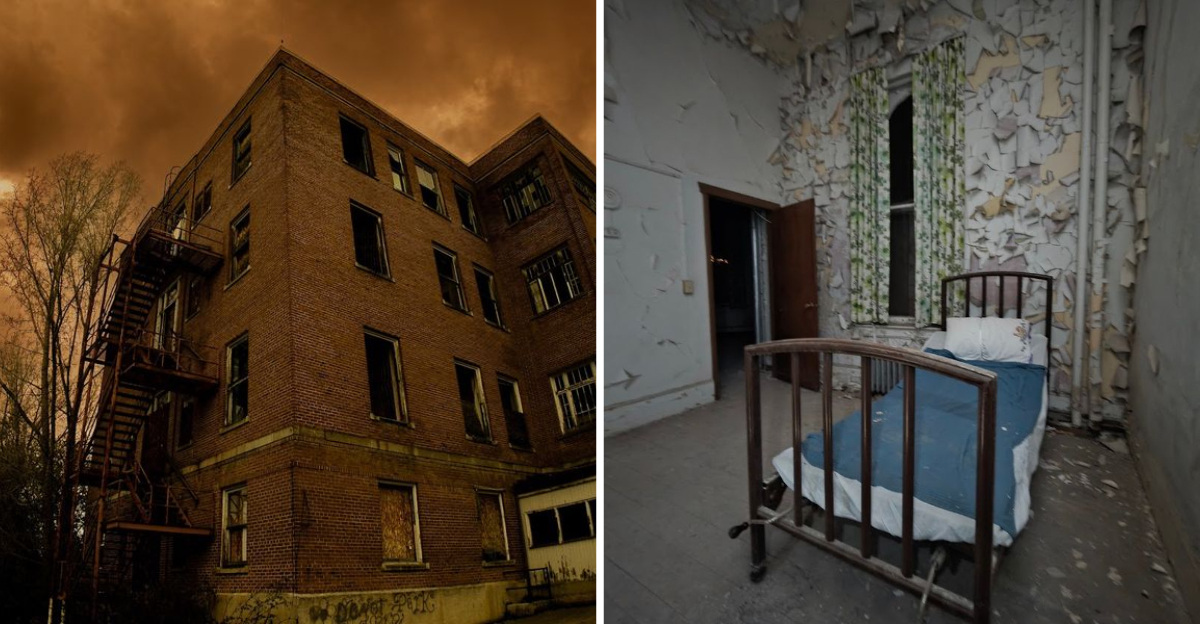
This Washington hospital carries a weight that you feel before you even step inside.
Built in 1893 by the Sisters of Charity, this six-story, 50,000-square-foot structure served the inland Pacific Northwest for decades before closing its doors as a hospital in 1964.
The building sat empty, then reopened as an assisted living facility, then fell silent again, and somewhere along the way, it stopped being just a building.
I walked the hallways on a guided tour, and even with a group of people around me, the silence pressed in like something alive.
Visitors today describe oppressive atmospheres, cold spots on warm days, and voices that seem to come from no one at all.
No matter if you believe in the paranormal or not, this place has a way of making you reconsider what you think you know about old walls and the stories they hold.
A Building That Has Never Truly Been Empty
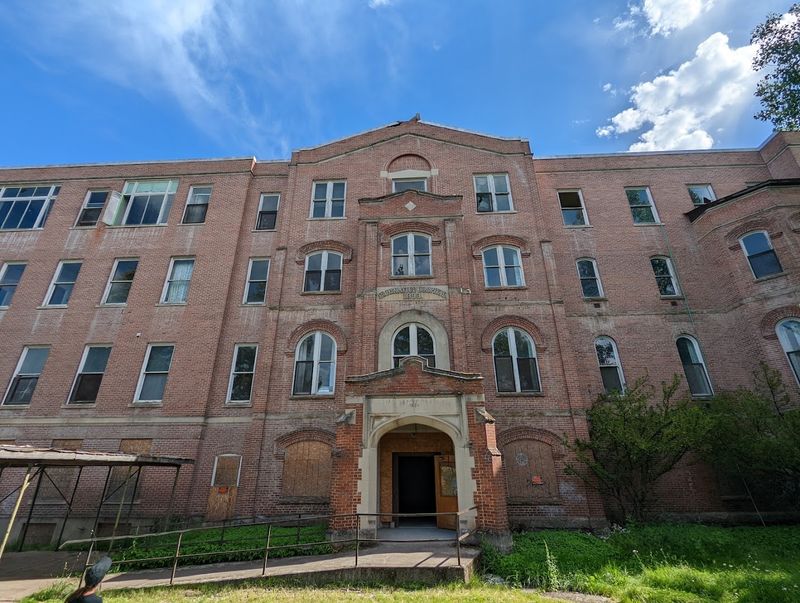
The moment you see St. Ignatius Hospital from the street, something about it pulls at you. It is not subtle.
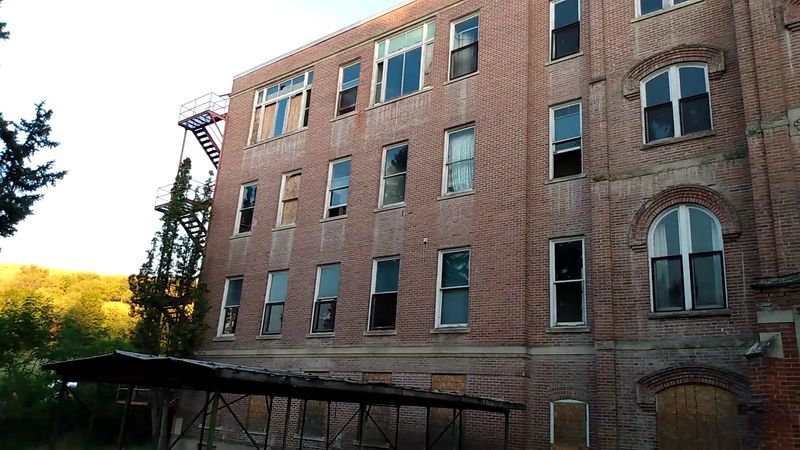
The massive red-brick structure looms over South Mill Street with the kind of presence that makes you slow down and stare, even if you are just passing through Colfax.
The building was constructed in 1893 under the direction of Mother Joseph Pariseau, a woman known for her fierce determination to bring healthcare to the remote corners of inland Washington.
The Sisters of Charity built something meant to last, and it has, even if time has not been entirely kind to it.
Six floors, a basement morgue, and more than 50,000 square feet of space that once hummed with the sounds of a working hospital.
Operations as a hospital ceased in August 1964 when escalating costs made continued use impossible. The Sisters simply could not finance the upgrades the building needed.
For four years after that, the structure sat vacant, and that is when the rumors started.
Neighbors began reporting figures standing in the windows. Lights appeared in rooms that had no power.
The building seemed to breathe on its own schedule. It was repurposed as St. Ignatius Manor, an assisted living facility, in 1968, but that chapter ended around 2000 to 2003, leaving the place empty again.
Austin and Laura Storm purchased the property in 2021 with a genuine plan to restore it. Renovation work has been ongoing, and tours now help fund the effort.
The building endures, stubborn and watchful, as if it simply refuses to be forgotten.
Room 312 and the Rage of Michael
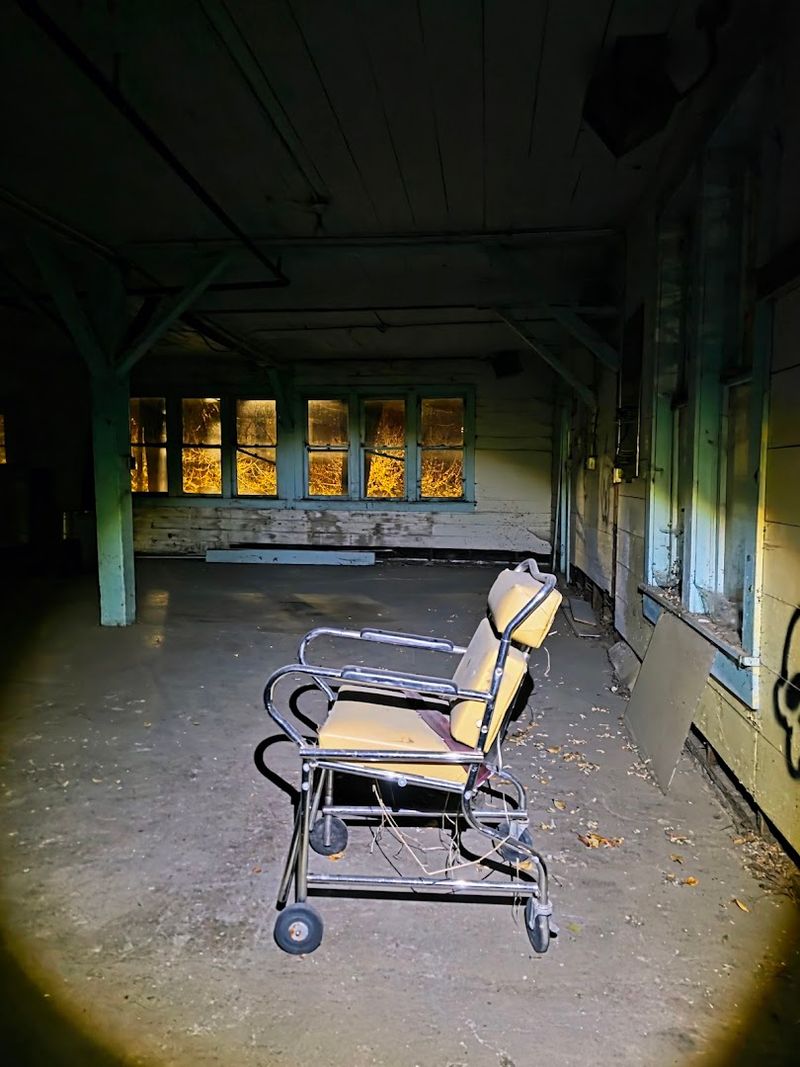
Not every ghost story is gentle. Room 312 at St. Ignatius Hospital carries a reputation that even seasoned paranormal investigators approach with caution.
The entity believed to occupy this space is known simply as Michael, and by all accounts, he was not an easy person in life and has not softened in afterlife.
Visitors who have spent time near Room 312 describe a sharp shift in energy. The air reportedly feels heavier, almost pressurized, and the mood in the space turns irritable fast.
Some guests have reported being physically shoved or feeling sudden, unexplained aggression rise in their own chests, the kind that does not belong to them.
One of the more unsettling details tied to Michael is the recurring phenomenon of flies. Swarms of them have been reported gathering in and around his room even when the rest of the building shows no such activity.
It is a strange, specific detail that tends to stick with people long after the tour ends.
Electronic voice phenomena, or EVPs, captured in this area have reflected a hostile tone. The energy is not the kind that invites conversation.
It is the kind that makes you want to keep moving down the hallway.
St. Ignatius has been featured on television programs including Paranormal Lockdown in 2017 and Ghost Adventures in 2019, and Michael’s room has drawn attention from investigators on multiple occasions. Whether his story is rooted in a specific patient record or has grown through years of accumulated experience, the feeling in that room is hard to explain away.
Rosemary, the Woman Who Knocks on Walls
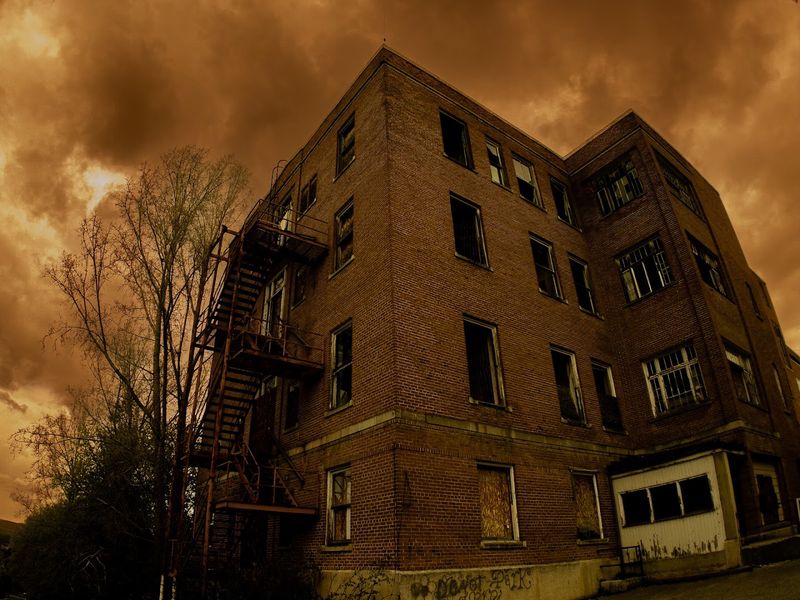
There is something oddly personal about the spirit known as Rosemary, or Rose, as the guides sometimes call her. She was a resident of St. Ignatius Manor during its years as an assisted living facility, a real woman with a real history, and her presence in the building feels less like a haunting and more like an unfinished conversation.
Rose reportedly suffered from dementia during her time there. She was known for a sour mood and a restless energy that apparently followed her beyond her physical life.
Visitors have described being knocked on walls near her room, shoved from behind with no one standing there, and hearing sharp, impatient sounds that seem to come from inside the walls themselves.
Her anger has reportedly been captured in EVP recordings, which tour guides describe as some of the clearest audio evidence collected in the building. The emotional charge in her space feels different from the raw hostility of Room 312.
Rose feels frustrated rather than furious, like someone who wants to be acknowledged rather than feared.
One visitor tip that gets passed around is to stop by her room and ring the bell on the door frame to let her know you are there. Multiple guests have described this small gesture leading to noticeable responses on ghost detection equipment.
It is a strangely touching ritual in a building full of darker moments.
Ghost Files featured St. Ignatius in 2022, and Rose’s room was among the spaces that drew significant attention. Her story is a reminder that not every haunting is about terror.
Some are just about being remembered.
The First Passing and the Railroad Man Who Never Left
June 1893 was barely a month into St. Ignatius Hospital’s existence when its first recorded passing occurred. A railroad employee named F.E.
Martin was brought in after being crushed between railroad cars, and he did not survive. The hospital had barely opened, and already the weight of loss had settled into its walls.
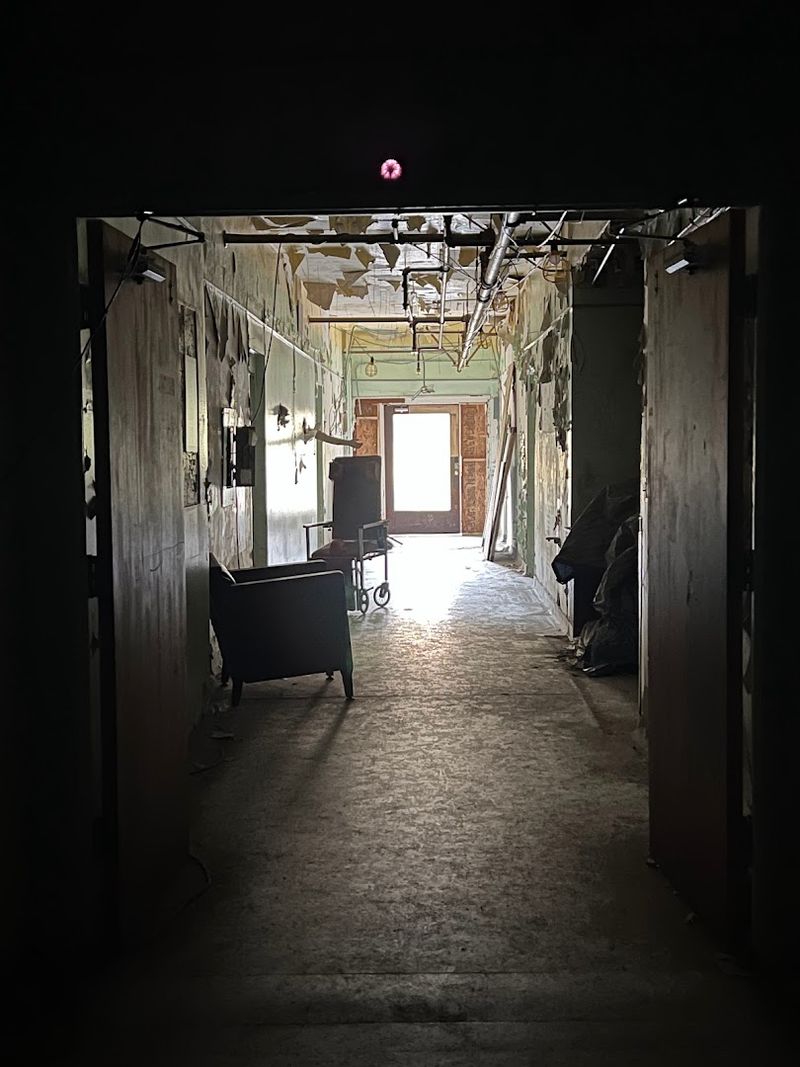
His name appears in historical records tied to the building, and paranormal investigators have long pointed to his energy as one of the original presences in the structure. The basement level, which once housed the morgue, is particularly associated with lingering activity from the hospital’s earliest decades.
That space does not appear on daytime tours, which adds to its mystique for those who return for night expeditions.
There is something haunting about being the first. Martin’s story is tied not just to tragedy but to a moment when the hospital was still full of hope, still new, still smelling of fresh construction and the ambition of the Sisters of Charity.
The contrast between that beginning and what the building has become over 130 years is striking.
Other named entities tied to historical records include John and Father Ryan, both of whom are believed to move through the building’s upper floors. The fact that these are not invented characters but figures with actual connections to documented history gives the paranormal claims at St. Ignatius a grounding that sets it apart from more theatrical haunted attractions.
The building holds its history honestly. That is part of what makes it feel so heavy when you walk its halls.
Oppressive Atmospheres and What Visitors Actually Experience
People who visit St. Ignatius for the first time often describe a shift in how they feel as soon as they reach the second floor. One visitor wrote about a strange pain in their chest that arrived without warning and lingered for weeks after the tour.
Another described the ghost detection equipment provided by the tour going off continuously from the moment they entered.
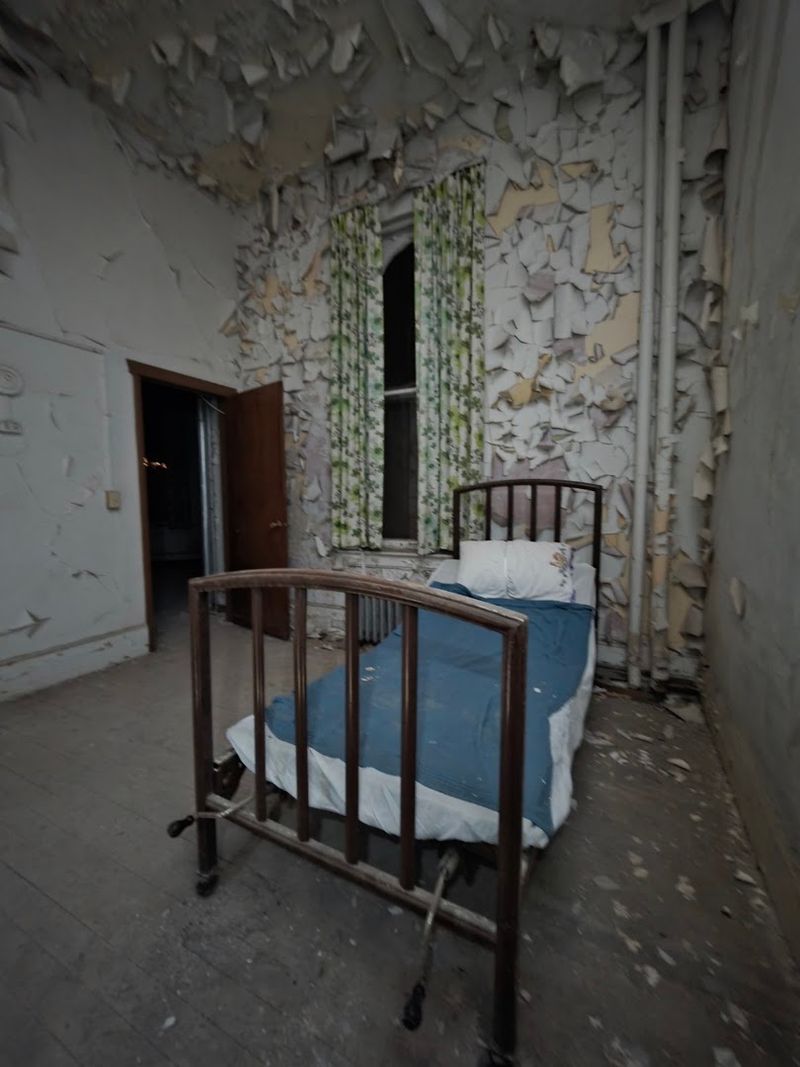
The atmosphere inside is genuinely cold on the ground floor, even on hot summer days. Most of the building relies on natural light, which means large sections sit in a half-dark that your eyes never fully adjust to.
Paint peels from the walls in long curling sheets, and the structure groans and settles with a personality all its own.
Tour guides, particularly Valoree Gregory of the Whitman County Historical Society, bring an irreplaceable depth to the experience. She was born in the building and knew some of the patients personally.
That kind of connection to a place transforms a tour from an entertainment into something closer to a real reckoning with history.
One of the most chilling EVP recordings captured at the hospital reportedly features a voice commanding an investigator to stop praying. The specificity of that command, its directness, its awareness of what the investigator was doing, is the detail that tends to unsettle even skeptics.
Visitors are encouraged to book tickets well in advance, especially for night tours, which include access to the basement morgue. Equipment is provided, though guests are welcome to bring their own.
Ouija boards are not permitted on the property.
Saving a Building That History Refuses to Release
St. Ignatius Hospital has been on the Washington Trust for Historic Preservation’s Most Endangered Watch List since 2015. That designation is not a ghost story.
It is a real and pressing concern about the future of a structure that has quietly shaped Colfax for well over a century.
Austin and Laura Storm stepped in during early 2021 with a restoration plan that takes the building’s complicated identity seriously. They are not trying to sanitize it or turn it into something it is not.
The goal is a multi-use site that honors both the medical history and the paranormal reputation that has made St. Ignatius nationally known.
Their approach breaks into three phases: stabilization first, then preservation through tours and events, and eventually full rehabilitation and reuse as a hospitality center. As recently as May 2025, work was visible on the property, including window replacements and structural repairs.
The tours are not just entertainment. They are the primary funding mechanism keeping the restoration alive.
Artifacts from the hospital’s operational years are being collected and placed throughout the rooms, giving visitors a tangible connection to the building’s past. The historical rooms are consistently cited by guests as the most memorable parts of the experience, the spaces where the weight of real lives lived and lost becomes impossible to ignore.
The tours have also had an unexpected effect on Colfax itself, contributing to new business openings in the downtown area. A building once left to decay is now drawing visitors from across the country and beyond, keeping a piece of Washington’s medical and cultural history from disappearing entirely.
Address: 1009 S Mill St, Colfax, WA 99111
