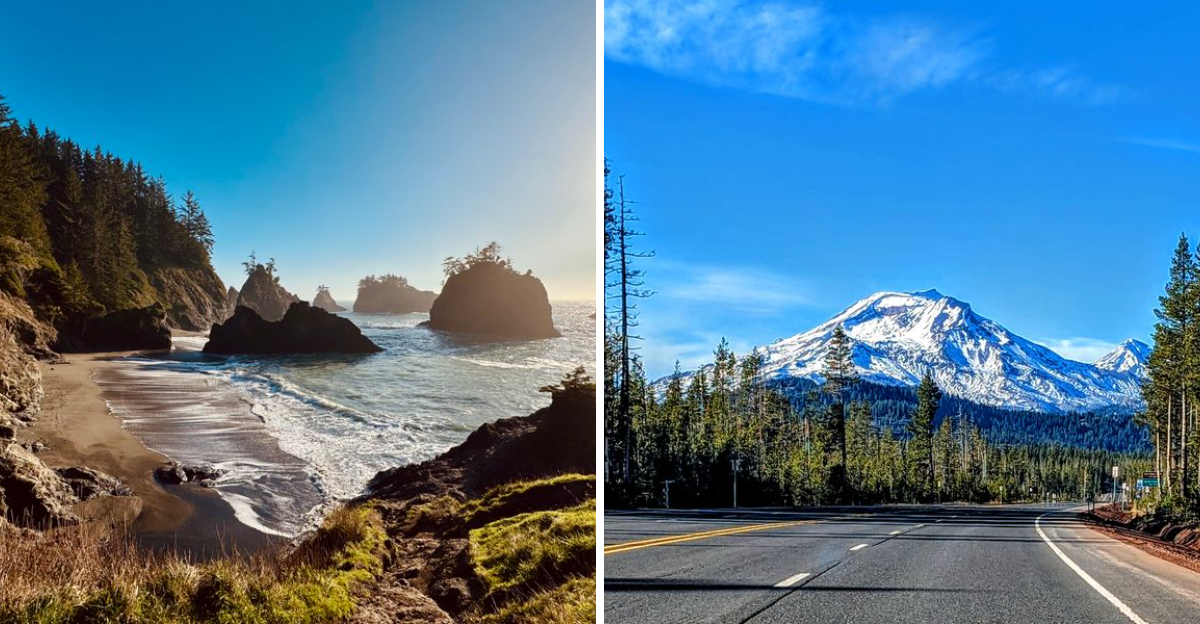
Oregon has this magical quality where you can wake up in a cozy town, grab breakfast, and be standing on a windswept beach or under towering Douglas firs before your coffee gets cold. That’s not an exaggeration.
It’s just how this state works.
Most places make you choose between ocean waves, mountain peaks, or thick forest trails. Oregon laughs at that idea and hands you all three within a 20-minute radius.
Whether you’re based in a riverside village or a high-desert hub, the wilderness is always close enough to feel like your backyard.
In 2026, these 10 destinations continue to prove that adventure doesn’t require a road trip marathon. Pack light, drive short, and prepare to be amazed at how quickly pavement turns into paradise.
1. Cannon Beach
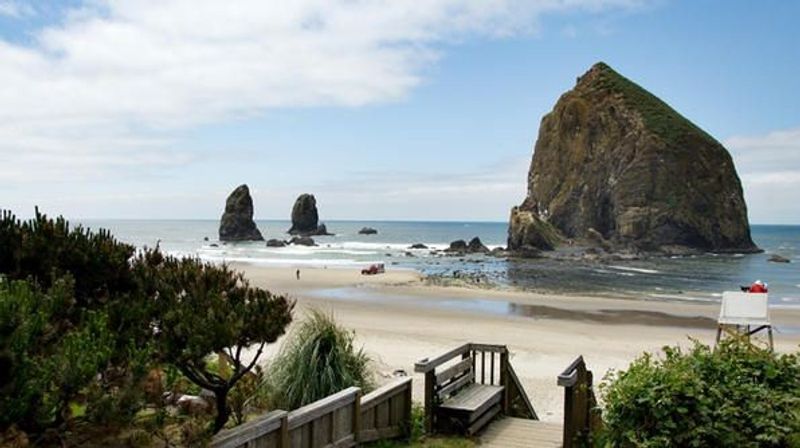
Few coastal towns deliver instant wilderness access quite like this one. Haystack Rock dominates the shoreline, but the real magic happens when you point your car north for five minutes.
Ecola State Park unfolds like a Pacific Northwest postcard brought to life. Sitka spruce trees cling to cliffsides that drop straight into churning ocean waters, creating that classic Oregon coast drama everyone talks about but few places actually deliver.
The park’s trail system weaves through old-growth forest before spitting you out onto viewpoints where the coastline stretches endlessly in both directions. Elk browse in meadows between the trees, seemingly unbothered by hikers snapping photos from respectful distances.
Tide pools near the beach reveal entire underwater neighborhoods during low tide. Starfish cling to rocks while anemones wave their tentacles in shallow pools, creating natural aquariums that beat any museum display.
Summer brings crowds, but early morning visits offer solitude even during peak season. Fog often blankets the coast until mid-morning, adding an ethereal quality to sunrise walks along the sand.
The town itself provides all necessary amenities without feeling overdeveloped. Local shops and galleries line the main street, offering everything from practical rain gear to handcrafted souvenirs worth actually keeping.
Winter storms transform the coastline into a theatrical performance of crashing waves and wind-bent trees, attracting storm watchers who appreciate nature’s more dramatic moods.
2. Yachats
Small doesn’t mean boring, and this village proves it every single day. The Central Coast Range rises immediately behind town, creating a geographic setup that puts serious natural features within ridiculous reach.
Cape Perpetua sits less than 10 minutes south, holding the title of highest point on the Oregon coast accessible by car. That fact alone makes it special, but the old-growth forest trails and coastal phenomena seal the deal.
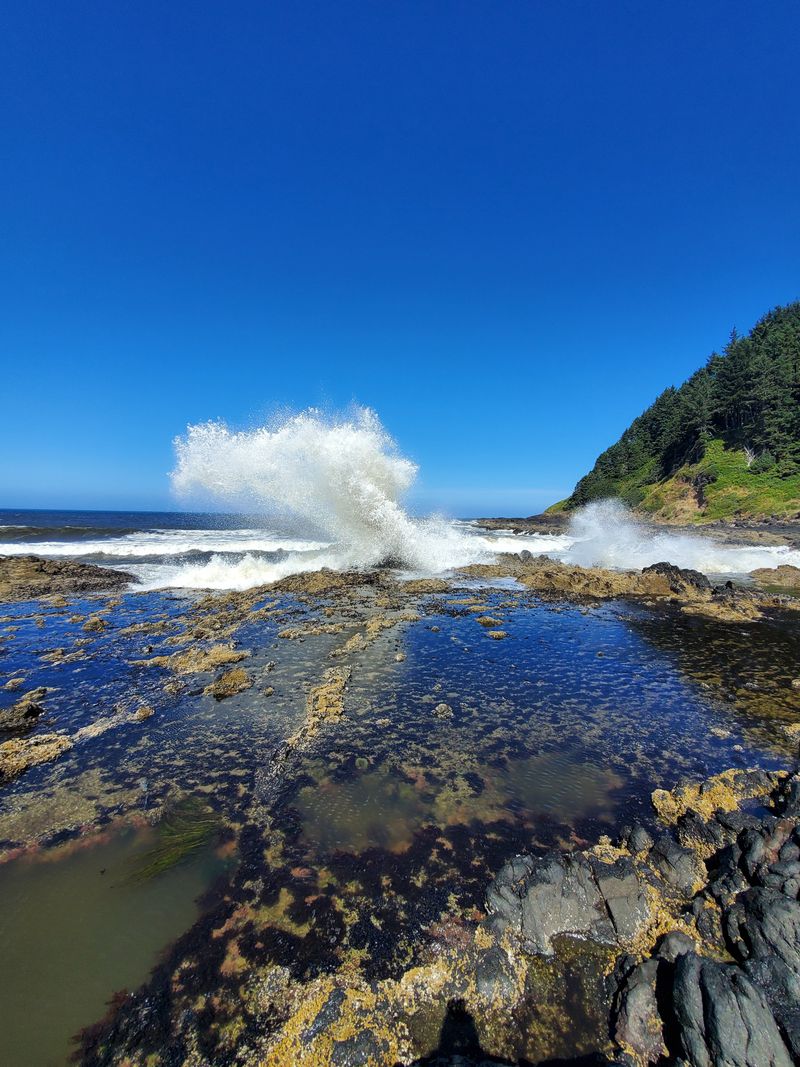
Thor’s Well captures imaginations and Instagram feeds with equal efficiency. This natural sinkhole appears to drain the ocean itself during high tide, creating a hypnotic swirl of water that photographers camp out to capture.
Timing matters here, so check tide charts before making the trip.
The cape’s trail network ranges from easy coastal walks to steeper forest climbs that reward effort with panoramic views. Giant Spruce Trail loops through trees that were already ancient when European settlers first arrived.
Town itself maintains a relaxed vibe that feels genuinely welcoming rather than tourist-trap fake. Local restaurants serve fresh seafood without the pretentious pricing some coastal spots demand.
Smelt Sands State Recreation Site offers beach access right from the village center. Rocky tidepools here rival anything found at more famous locations, minus the elbow-to-elbow crowds.
Gray whales migrate past these shores twice yearly, and several viewpoints provide excellent spotting opportunities without requiring boat tours or special equipment beyond basic binoculars.
3. Astoria
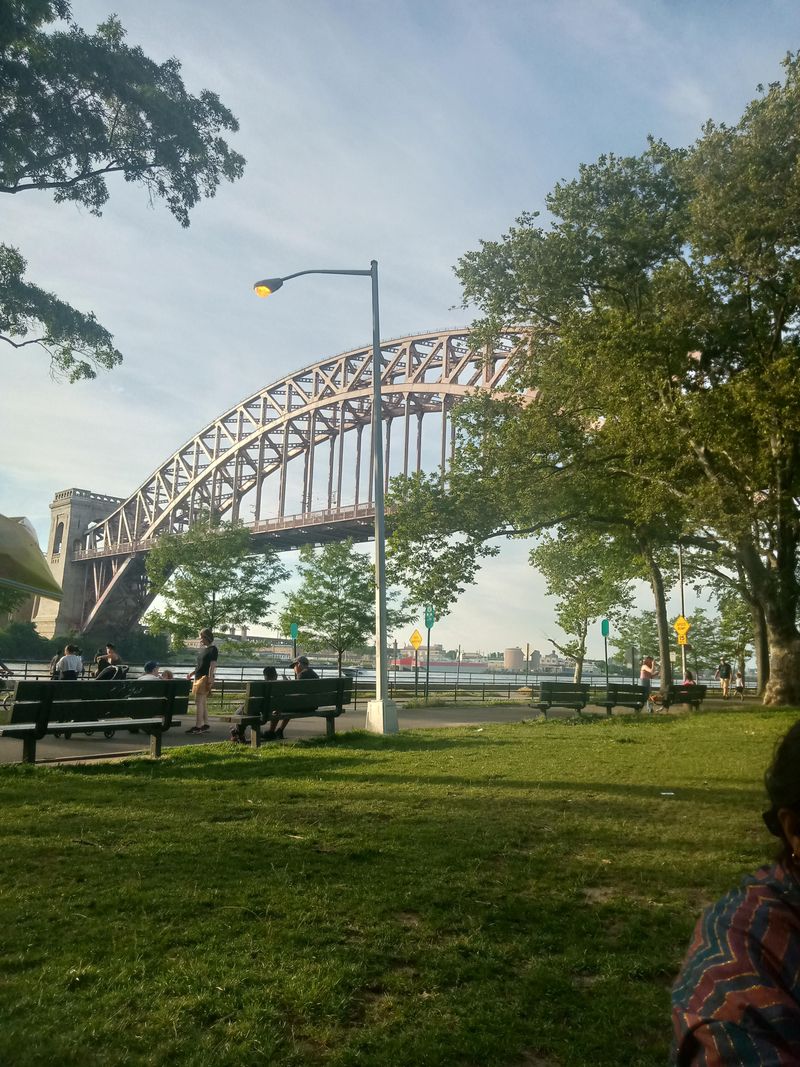
Where river meets ocean, history meets wilderness in ways that feel both accidental and perfectly planned. The Columbia River’s massive flow collides with Pacific tides here, creating a geographic junction that shaped centuries of human activity.
Fort Stevens State Park sits just across Youngs Bay Bridge, making it closer than some people’s daily commute. Miles of forested trails wind through what was once a military installation, now reclaimed by nature with fascinating historical remnants scattered throughout.
The Peter Iredale shipwreck rusts peacefully on the beach, its skeleton ribs jutting from sand like the bones of some prehistoric creature. It’s been there since 1906, and the ocean continues its slow work of reclamation.
Beach access here feels different than typical Oregon coast spots. The river’s influence creates wider, flatter stretches of sand backed by shore pine forests that provide natural windbreaks on blustery days.
Town itself offers genuine character built over generations rather than manufactured for tourists. Victorian-era buildings climb hillsides, creating neighborhoods that feel more like San Francisco’s little sibling than typical coastal villages.
The Astoria Column provides 360-degree views after climbing 164 spiral steps. On clear days, the panorama stretches from Cascade peaks to ocean horizon, encompassing everything that makes this region special.
Local museums document maritime history and Native American heritage with depth that respects both subjects. Rainy days never feel wasted when educational options run this deep.
4. Manzanita
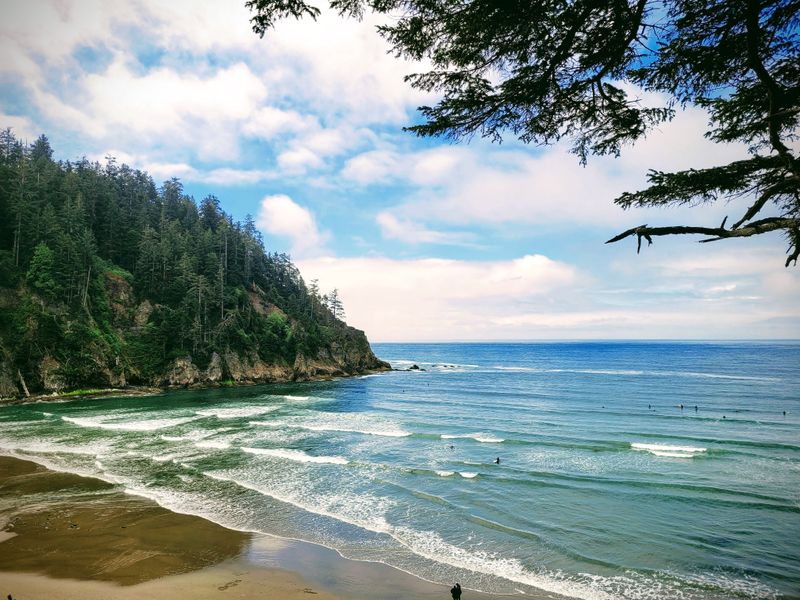
Quiet villages shouldn’t be this well-positioned, but geography plays favorites sometimes. Neahkahnie Mountain rises immediately behind this tiny coastal community, while Oswald West State Park begins literally two minutes north by car.
Short Sand Beach earned its nickname Smuggler Cove from local legends about pirates and buried treasure. Whether those stories hold truth matters less than the beach itself, which remains one of Oregon’s most beautiful hidden spots.
Reaching the cove requires a short hike through temperate rainforest so thick and mossy it feels like walking through a nature documentary. The trail isn’t difficult, but it’s enough to discourage casual visitors, keeping crowds manageable even during summer.
Surfers favor this beach for its protected position and consistent waves. Beginners find it less intimidating than open-coast breaks, while experienced riders appreciate the quality and relative solitude.
The forest here exemplifies what people imagine when they hear “Pacific Northwest.” Massive Sitka spruce and western hemlock create cathedral-like canopies, while sword ferns and salal form dense understory layers that stay green year-round.
Manzanita town itself remains refreshingly low-key. No boardwalks, no saltwater taffy shops, no miniature golf courses.
Just a few essential businesses and miles of uncrowded beach stretching in both directions.
Neahkahnie Mountain’s summit trail offers serious elevation gain but rewards climbers with views that justify every burning quadricep. The trail crosses private land in sections, so respecting posted guidelines keeps access open for everyone.
5. Brookings
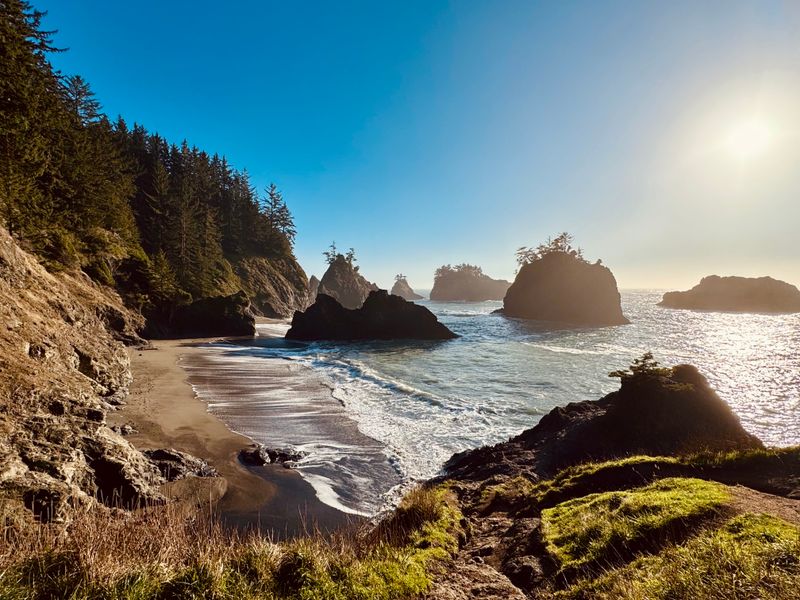
The “Banana Belt” nickname sounds silly until you experience winter here and realize it’s 15 degrees warmer than locations just 50 miles north. Mild climate combined with spectacular scenery creates a combination that feels almost unfair to other coastal towns.
Samuel H. Boardman State Scenic Corridor begins 10 minutes north, delivering 12 miles of the most dramatic coastline Oregon offers.
Sea stacks rise from churning waters like ancient monuments, while hidden beaches nestle between rocky headlands.
Secret Beach lives up to its name despite being marked on maps. A short but steep trail drops through coastal forest to a small cove framed by towering rock formations.
Arrive at low tide to explore tide pools teeming with marine life.
Natural Bridges viewpoint showcases exactly what its name promises—rock arches carved by millennia of wave action. Multiple pullouts along the corridor provide different perspectives, each worth the brief stop.
The forest throughout this area differs slightly from northern coast vegetation. Drier conditions favor different species, creating subtle but noticeable changes in the plant communities.
Brookings harbor supports both commercial fishing and recreational boating. Fresh seafood availability here rivals anywhere on the coast, with several spots serving catches mere hours removed from ocean waters.
Azalea State Park blooms spectacularly in late spring when wild azaleas paint hillsides pink and white. Even outside bloom season, the park’s trails offer pleasant forest walks minutes from downtown.
6. Bend
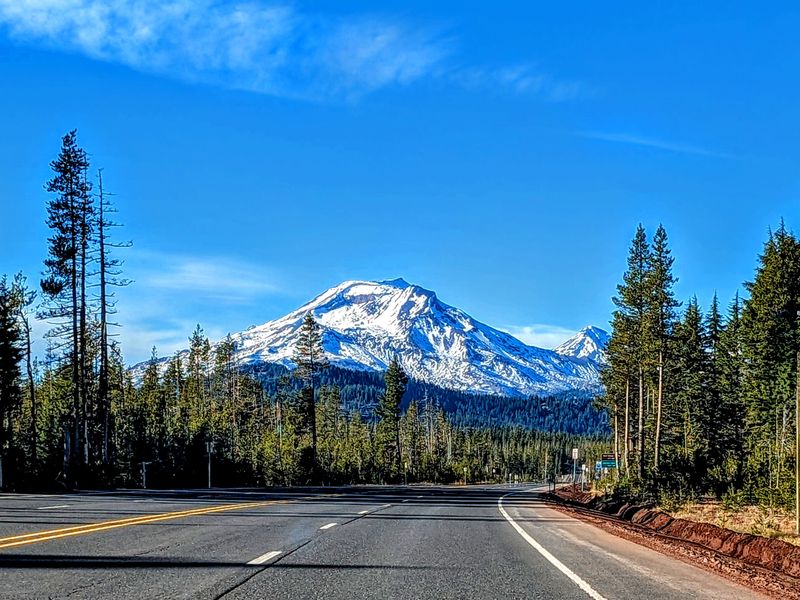
High desert doesn’t sound like prime wilderness territory until you realize the Cascade Mountains rise 20 minutes west. This geographic position creates access to multiple ecosystems within a radius most people consider a reasonable drive for groceries.
Mount Bachelor dominates the western skyline, offering world-class skiing in winter and scenic chairlift rides during warmer months. The volcano’s summit reaches above 9,000 feet, providing views across Central Oregon’s volcanic landscape.
Deschutes National Forest surrounds the area, containing enough trails, rivers, and volcanic features to fill months of exploration. Ponderosa pine forests smell like butterscotch on hot days, creating an olfactory experience that defines Central Oregon summers.
The Deschutes River flows directly through town, providing urban river access that feels more like wilderness than city amenity. Kayakers, paddleboarders, and tubers float past parks and breweries with equal enthusiasm.
Lava landscapes near town showcase Oregon’s volcanic heritage through features like Lava River Cave and Lava Butte. Walking through a mile-long lava tube feels like exploring another planet without leaving the state.
Town growth has been explosive in recent years, transforming Bend from outdoor secret to outdoor destination. That shift brings both benefits and challenges, including increased trail usage and higher costs.
Four distinct seasons provide year-round recreation opportunities. Summer brings hot, dry days perfect for water activities.
Winter transforms the region into a snow sports paradise. Spring and fall offer comfortable temperatures for hiking and biking.
7. Hood River
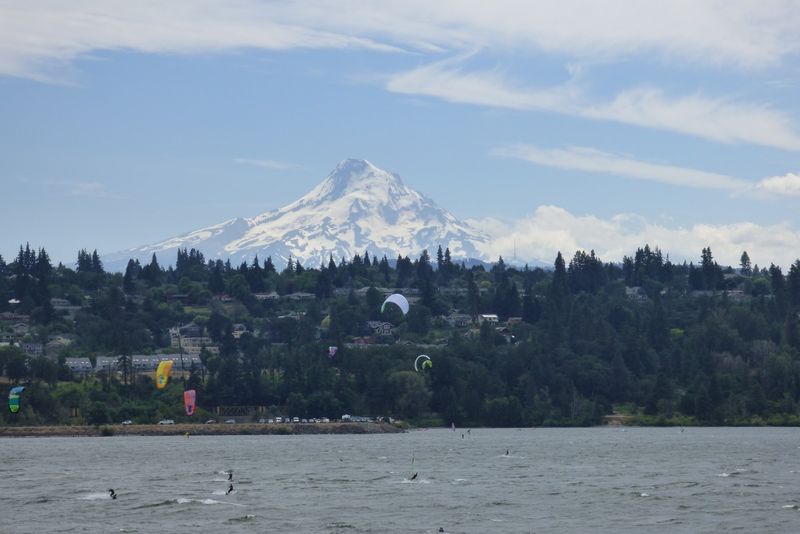
Wind and water define this town in ways that shape both landscape and lifestyle. The Columbia River Gorge funnels constant breezes that made this area famous among windsurfers and kiteboaders, while Mount Hood National Forest begins minutes south.
Mount Hood itself dominates southern views, its snowy peak visible from countless town locations. The mountain provides year-round skiing on Palmer Glacier, making it one of few North American locations offering July powder turns.
Waterfall density in this region exceeds anywhere else in the Pacific Northwest. Multnomah Falls gets the fame and crowds, but dozens of other cascades tumble through moss-covered basalt cliffs within short drives.
Fruit orchards blanket the valley, creating spectacular spring blossom displays and fall harvest opportunities. U-pick farms welcome visitors to gather apples, pears, and cherries straight from trees.
The historic Columbia River Highway winds through the gorge, offering a slower alternative to Interstate 84. Built in the early 1900s, this engineering marvel provides access to viewpoints and trailheads that modern highways bypass.
Town itself maintains a laid-back vibe despite increasing popularity. Main street shops range from outdoor gear retailers to art galleries, reflecting the community’s diverse interests.
Lost Lake sits 25 miles south, offering classic postcard views of Mount Hood reflected in calm waters. The lake remains relatively uncrowded compared to more accessible locations, rewarding those willing to drive gravel roads.
8. Joseph
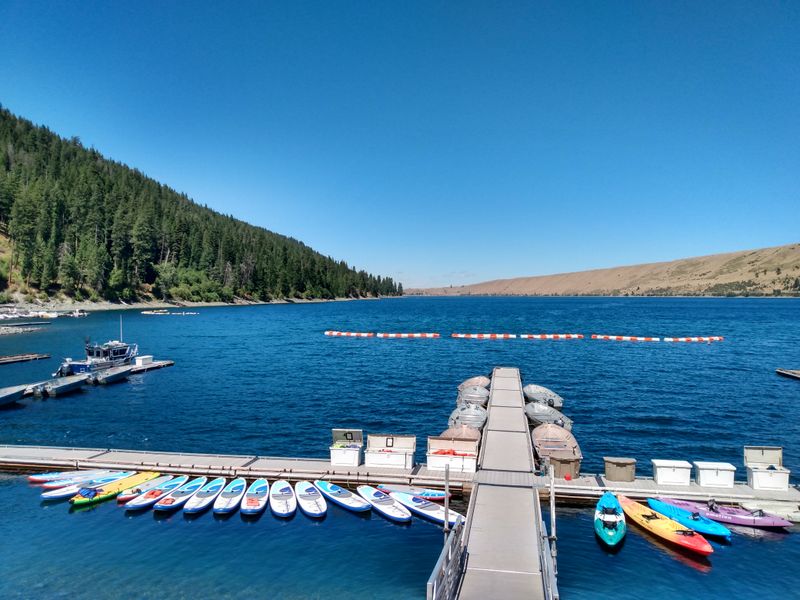
Eastern Oregon doesn’t get the attention its western counterpart receives, which works perfectly for people who prefer their wilderness less crowded. The Wallowa Mountains rise immediately behind this small town, creating an alpine backdrop that earned comparisons to Swiss Alps.
Wallowa Lake sits less than five miles from downtown, offering instant access to glacial waters backed by peaks that seem impossibly steep. The lake stretches for miles, its depth and clarity creating shades of blue that photographs never quite capture accurately.
Wallowa Lake Tramway carries passengers 3,700 vertical feet to Mount Howard’s summit in about 15 minutes. Views from the top span multiple mountain ranges and valleys, encompassing thousands of square miles of wilderness.
The Wallowa-Whitman National Forest contains over 2.3 million acres, much of it designated wilderness where motorized vehicles can’t venture. Trail networks here range from gentle lake loops to serious alpine routes requiring proper equipment and experience.
Joseph itself maintains authentic small-town character enhanced by an unexpected art scene. Bronze foundries and galleries showcase Western and wildlife art that attracts collectors from across the country.
Wildlife viewing opportunities here exceed most Oregon locations. Elk, deer, black bears, and occasional wolves inhabit these mountains, though sightings require patience and luck.
Winter transforms the area into a quieter version of itself. While some businesses close seasonally, those that remain open provide services to snowmobilers, cross-country skiers, and people who appreciate mountain towns without tourist crowds.
9. Sunriver
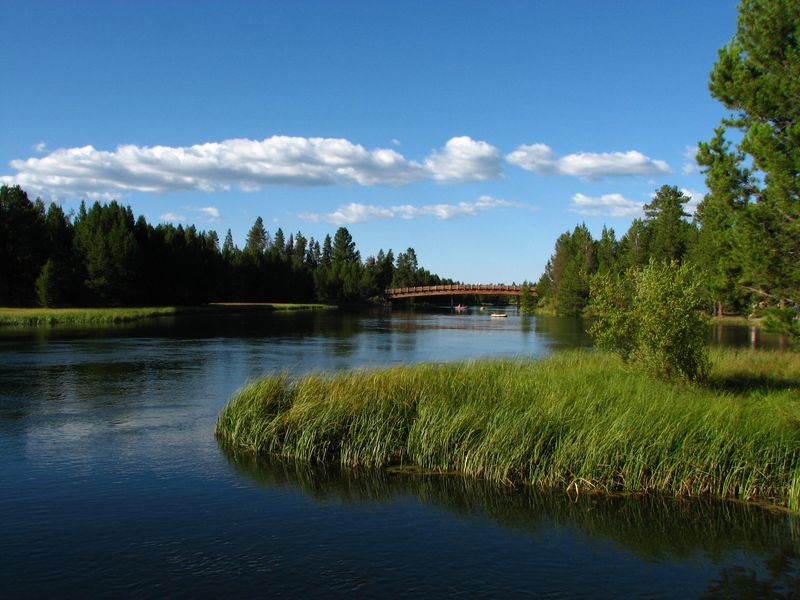
Resort communities sometimes feel artificial, but this one’s location provides authenticity through sheer geographic advantage. Sitting 20 minutes south of Bend, it offers even faster access to Newberry National Volcanic Monument and surrounding wilderness.
Newberry Volcano might not look like typical cone-shaped peaks, but this massive shield volcano covers 500 square miles. Its caldera contains two alpine lakes, obsidian flows, and pumice deposits that tell stories of explosive eruptions.
Lava Lands Visitor Center sits minutes away, providing education about the region’s volcanic history through exhibits and ranger programs. Lava Butte’s summit offers panoramic views across lava flows that look fresh despite being thousands of years old.
The Big Obsidian Flow trail loops through a field of volcanic glass that glitters in sunlight. Obsidian chunks litter the ground, though collecting samples is prohibited to preserve this unique landscape.
Paulina Lake and East Lake occupy Newberry’s caldera, offering fishing, camping, and boating opportunities at elevations that keep summer temperatures comfortable. These lakes contain unique fish populations adapted to volcanic water chemistry.
Ponderosa pine forests surround the area, providing endless trails for hiking, mountain biking, and horseback riding. The trees’ distinctive bark patterns and vanilla-scented needles create sensory experiences that define Central Oregon.
Sunriver’s developed infrastructure includes bike paths that total over 30 miles, connecting neighborhoods to shopping areas and natural features without requiring car travel. This design makes it particularly family-friendly for active vacations.
10. Silverton
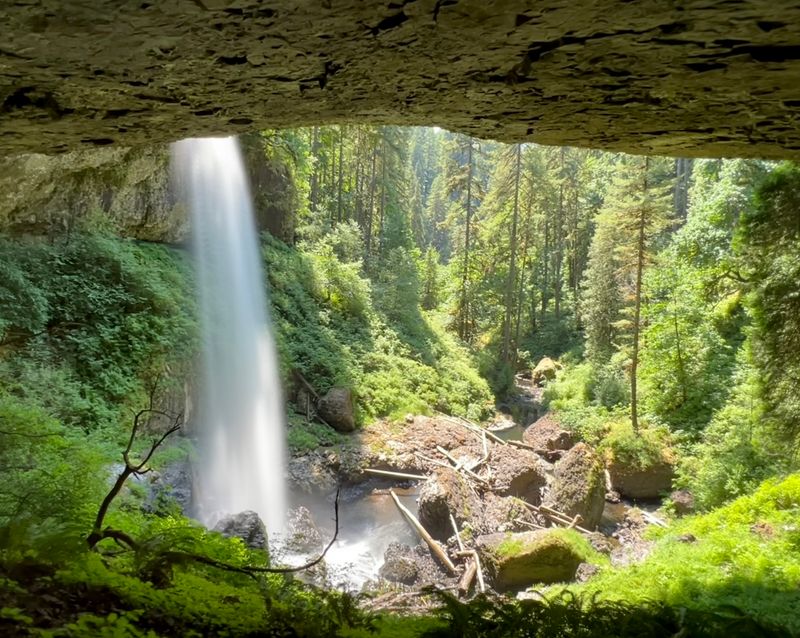
Waterfalls come in impressive quantities here, specifically 10 major ones concentrated along a single trail system. Silver Falls State Park sits 20 minutes from this charming town, earning its “Crown Jewel” designation through sheer spectacular abundance.
The Trail of Ten Falls loops 7.2 miles through a canyon that seems designed specifically to showcase falling water. Four of these waterfalls allow hikers to walk behind the cascades, creating experiences that feel more adventurous than they actually are.
South Falls drops 177 feet, making it the park’s tallest and most photographed waterfall. The trail passes behind it through a natural amphitheater carved by millennia of spray and erosion.
Ancient forests throughout the park contain Douglas fir, western hemlock, and western red cedar that create classic Pacific Northwest atmosphere. These trees provide constant shade, making summer hikes comfortable even during hot weather.
The full loop requires moderate fitness but doesn’t demand technical skills or special equipment beyond decent footwear. Families with school-age children complete it regularly, though younger kids might struggle with the distance.
Silverton itself offers more than just gateway status. Historic downtown buildings house shops and restaurants that serve both locals and visitors without feeling touristy or fake.
The Oregon Garden sits just outside town, showcasing 80 acres of specialty gardens ranging from native plants to formal displays. It provides a cultivated contrast to the wild forests found in the state park.
Spring runoff increases waterfall volumes dramatically, making April and May particularly spectacular times to visit despite potentially muddy trail conditions.
Dear Reader: This page may contain affiliate links which may earn a commission if you click through and make a purchase. Our independent journalism is not influenced by any advertiser or commercial initiative unless it is clearly marked as sponsored content. As travel products change, please be sure to reconfirm all details and stay up to date with current events to ensure a safe and successful trip.
