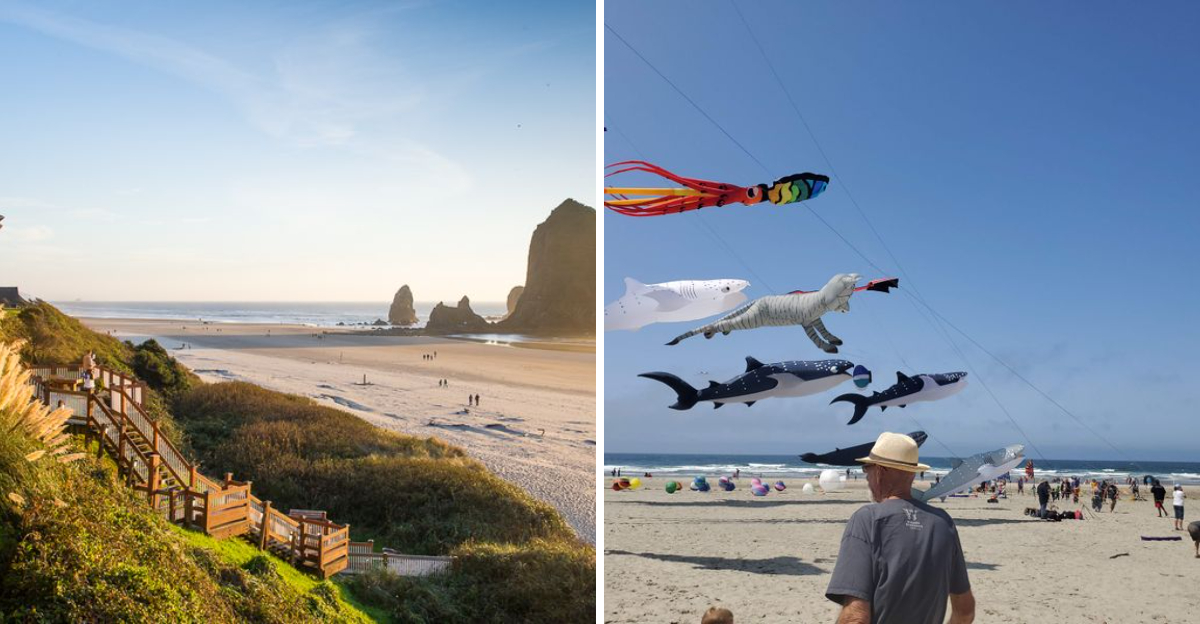
Oregon’s coastline stretches for over 360 miles, offering dramatic cliffs, sandy shores, and charming seaside towns that have captivated travelers for generations.
What was once a collection of peaceful retreats has transformed into a series of popular destinations where crowds now gather to witness natural wonders and experience coastal culture.
The surge in visitor numbers has brought both economic benefits and complex challenges, reshaping how locals and tourists alike interact with these beautiful beaches.
Understanding how tourism has altered these coastal communities helps us appreciate the delicate balance between sharing natural beauty and preserving it for future generations.
1. Cannon Beach: From Tranquil Retreat to Tourist Hub
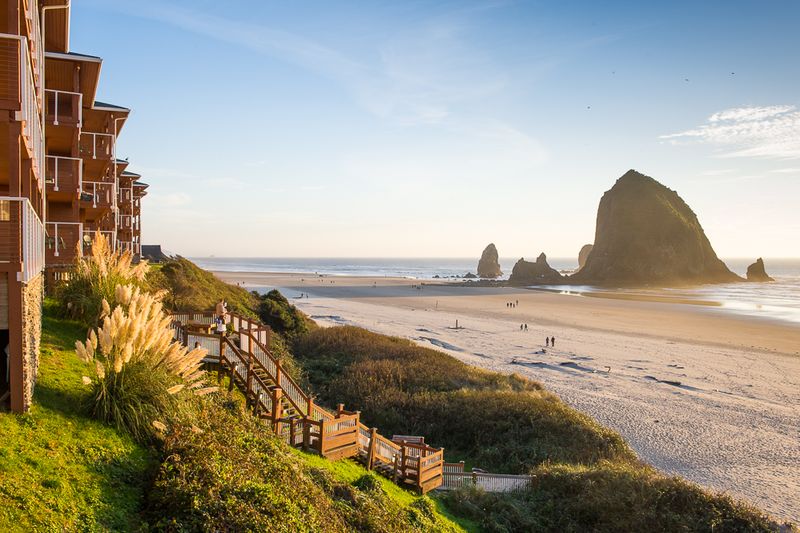
Haystack Rock rises 235 feet from the sand, creating one of the most photographed scenes along the entire Pacific coast.
Cannon Beach once offered a quiet escape where families could stroll along empty stretches of sand and artists found inspiration in the solitude.
Today, the experience has changed dramatically as thousands of visitors descend upon this small town, especially during summer months and holiday weekends.
Parking has become a significant challenge, with cars circling blocks repeatedly in search of available spots near the beach access points.
Sidewalks that once accommodated leisurely window shopping now feel congested, making it difficult to navigate through the downtown area.
Local officials have responded by implementing new parking regulations and exploring shuttle systems to reduce vehicle congestion.
Conservation efforts have intensified around Haystack Rock, where marine life and nesting seabirds face increased pressure from curious visitors.
Educational programs now teach tourists about the fragile intertidal ecosystem and the importance of maintaining respectful distances from wildlife.
Despite these challenges, the town retains much of its artistic character, with galleries and boutiques showcasing local talent.
Early morning visits offer a glimpse of the beach’s former tranquility, before the daily wave of tourists arrives.
The community continues working to find sustainable solutions that honor both the natural environment and the economic benefits tourism provides.
Balancing preservation with accessibility remains an ongoing conversation among residents, business owners, and visitors.
2. Seaside: Balancing Tradition with Modern Tourism
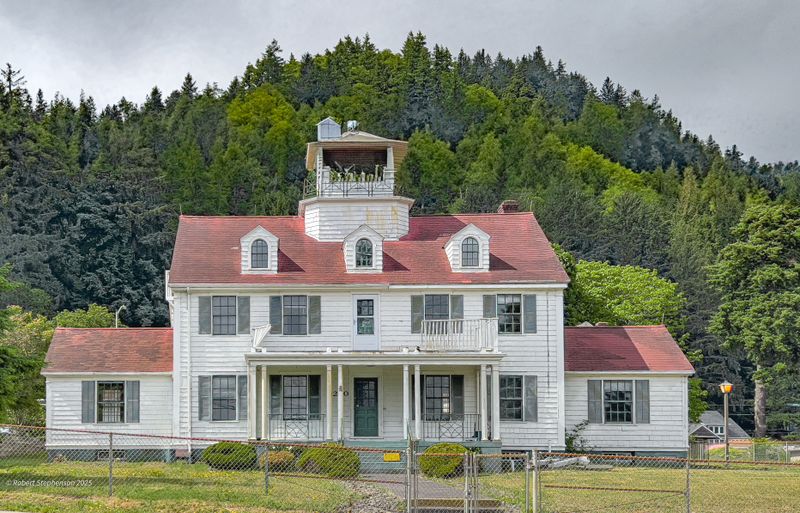
Seaside holds the distinction of being Oregon’s oldest beach resort, with a history dating back to the 1870s when it first welcomed vacationers.
The classic promenade, affectionately called “The Prom,” stretches along the waterfront and has been a gathering place for generations.
Increased visitor numbers have strained the town’s infrastructure, from water systems to roads that were designed for a smaller population.
Traffic congestion during peak season can turn a simple drive through town into a lengthy ordeal.
The traditional charm that once defined Seaside faces pressure from modern development and chain establishments seeking to capitalize on tourist dollars.
Community members have voiced concerns about maintaining the town’s unique identity while accommodating growth.
Approximately 47 percent of residents view tourism’s impact on their quality of life positively, revealing mixed feelings about the changes.
City planners are working on comprehensive strategies to manage visitor flow and preserve the historic character that makes Seaside special.
The iconic turnaround at the end of Broadway remains a beloved landmark, though it now sees far more foot traffic than in decades past.
Family-owned businesses that have operated for generations find themselves competing with newer establishments catering to different tourist expectations.
Beach access points have been improved to handle larger crowds, with better facilities and clearer signage directing visitors.
The ongoing challenge involves honoring Seaside’s nostalgic appeal while adapting to contemporary tourism demands.
3. Lincoln City: Managing Overcrowding
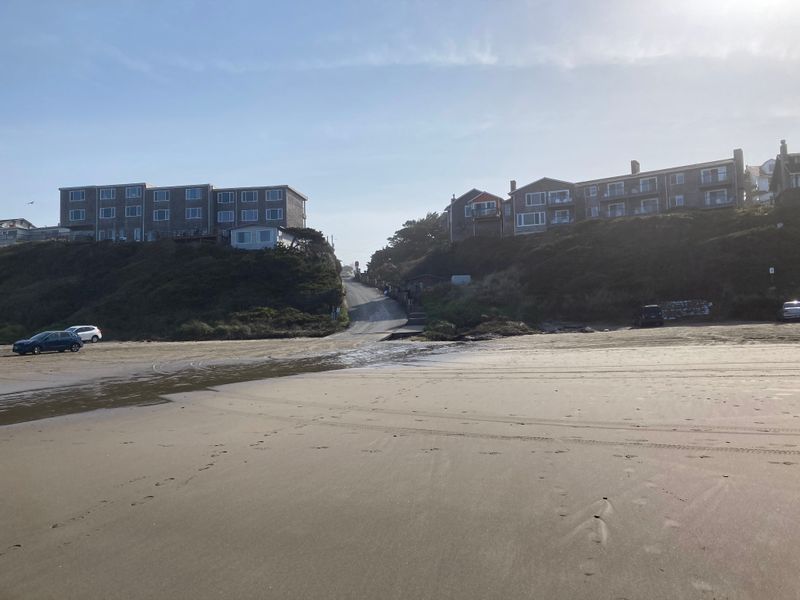
Seven miles of continuous beach once provided ample space for everyone seeking sand and surf along this central Oregon coast stretch.
Lincoln City formed in 1965 when five smaller communities merged, creating a unique beach town with diverse neighborhoods.
Peak season weekends now bring congestion that challenges the city’s ability to accommodate everyone comfortably.
Popular access points become packed with beachgoers, making it difficult to find space to spread out a blanket or set up beach chairs.
The city has introduced shuttle services connecting various neighborhoods to beach access areas, reducing the need for individual cars.
Improved signage helps direct visitors to less crowded sections of the beach, distributing people more evenly along the coastline.
The famous glass floats hidden along the beach as part of a community art project now attract treasure hunters year-round.
This popular program, while delightful, has increased foot traffic even during traditionally quieter months.
Local businesses have flourished with the tourism boom, but residents sometimes struggle with the seasonal influx affecting daily life.
Grocery stores, restaurants, and gas stations experience long lines during high season, testing the patience of both locals and visitors.
City officials continue developing creative solutions to enhance visitor experiences while maintaining community livability.
The balance between welcoming tourists and preserving quality of life remains a central focus for Lincoln City’s future planning efforts.
4. Nye Beach: Preserving Historic Charm Amid Development
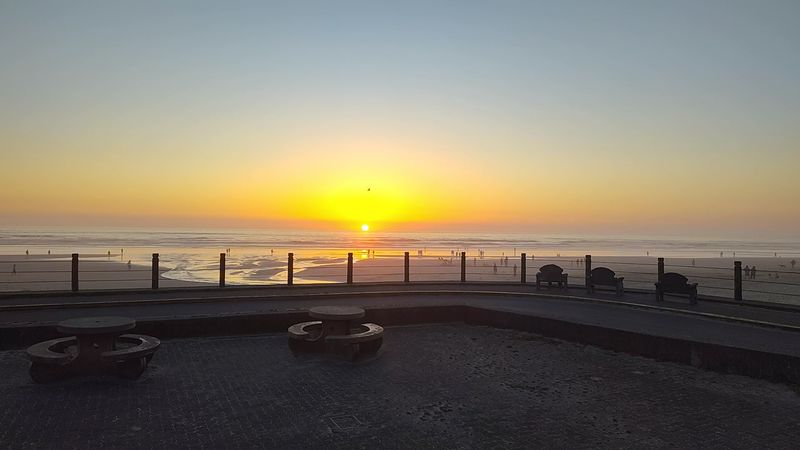
Newport’s Nye Beach district emerged in the late 1800s as a bohemian enclave where artists, writers, and free spirits gathered.
The neighborhood’s quirky character and historic cottages have long distinguished it from more commercial beach destinations.
Recent years have brought increased development pressure as property values rise and investors recognize the area’s appeal.
New establishments blend with older structures, creating a sometimes jarring mix of architectural styles and purposes.
Long-time residents worry that the unique artistic heritage could be diluted by generic development catering to mass tourism.
The Nye Beach Turnaround offers spectacular ocean views but now attracts far more visitors than the small parking area can accommodate.
Local galleries and independent shops that defined the district’s character face rising rents that threaten their continued operation.
Community groups actively work to protect historic buildings and maintain zoning that preserves the neighborhood’s distinctive feel.
The visual arts center and performing arts venues continue nurturing the creative spirit that made Nye Beach famous.
Balancing economic growth with cultural preservation requires ongoing vigilance and community engagement.
Tourists seeking authentic experiences appreciate the area’s bohemian roots, yet their presence ironically contributes to pressures threatening that authenticity.
Nye Beach stands at a crossroads, with its future depending on decisions made today about development and preservation priorities.
5. Pacific City’s Cape Kiwanda: Environmental Concerns
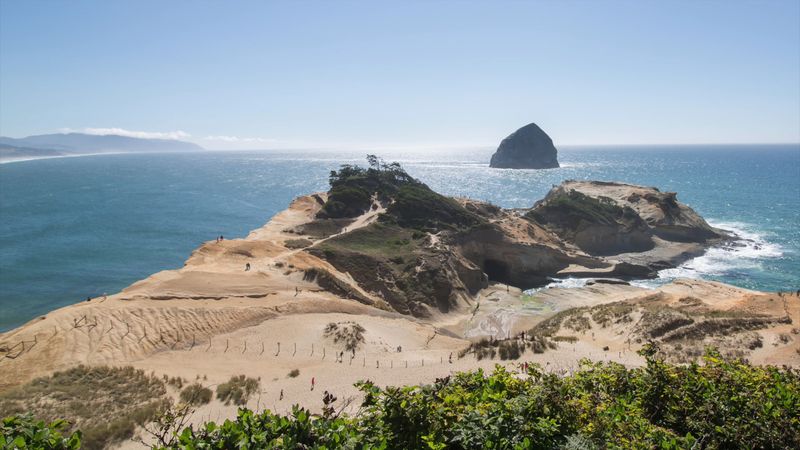
Cape Kiwanda’s golden sandstone cliffs and towering sand dune create a landscape unlike anywhere else on the Oregon coast.
Social media has transformed this once moderately visited spot into a must-see destination for photographers and adventure seekers.
Instagram-worthy shots of people standing atop the dune have gone viral, inspiring thousands to recreate the same dramatic images.
This surge in visitors has accelerated erosion of the fragile sand formations, threatening the very features that attract people.
The dune ecosystem supports specialized plants and provides habitat for various species now facing increased disturbance.
Tragically, several visitors have been injured or killed falling from the cliff edges while attempting to capture the perfect photograph.
Authorities have intensified educational efforts, posting signs warning about dangers and explaining the environmental impacts of climbing.
The traditional dory fishing fleet that launches from the beach adds cultural significance to this location’s natural beauty.
Fishermen now navigate around crowds of tourists who may not understand beach launching protocols or safety zones.
Parking lots overflow during summer weekends, with vehicles sometimes blocking roads and creating traffic hazards.
Conservation groups partner with local agencies to develop strategies protecting both visitor safety and environmental integrity.
The challenge lies in allowing people to experience Cape Kiwanda’s magnificence while ensuring its preservation for future generations.
6. Rockaway Beach: Small-Town Feel Amidst Tourism
Rockaway Beach earned its name from early visitors who thought the area resembled New York’s famous Rockaway Beach.
This seven-mile stretch of sand offered a peaceful alternative to busier coastal towns, attracting families seeking low-key vacations.
The town’s population swells dramatically during summer months and special events, changing the daily rhythm for year-round residents.
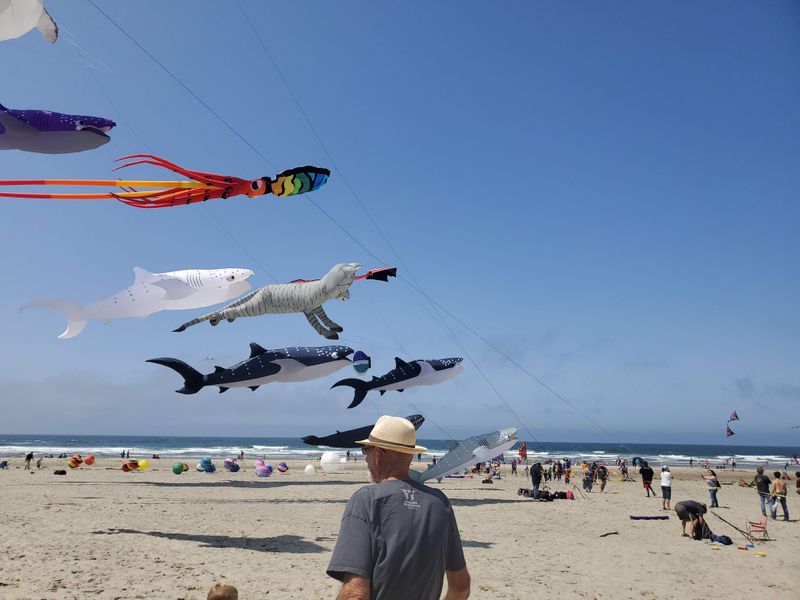
Kite festivals, sandcastle contests, and other organized activities now bring crowds that transform the once-sleepy community.
While these events boost local businesses and create vibrant energy, they also disrupt the quiet atmosphere many residents cherish.
Grocery shopping becomes an adventure during peak season, with checkout lines stretching through store aisles.
The single main road through town experiences congestion that would have been unimaginable just a decade ago.
Local officials work to maintain the small-town character while recognizing tourism’s economic importance to the community.
Family-owned motels and vacation rentals have expanded to meet demand, though this growth brings concerns about neighborhood character.
The beach itself remains relatively uncrowded compared to other popular destinations, offering space for visitors to spread out.
Residents express appreciation for tourism revenue while longing for the quieter days when everyone knew their neighbors.
Finding equilibrium between welcoming visitors and preserving community identity continues to be an evolving conversation in Rockaway Beach.
7. Manzanita: Protecting a Hidden Gem
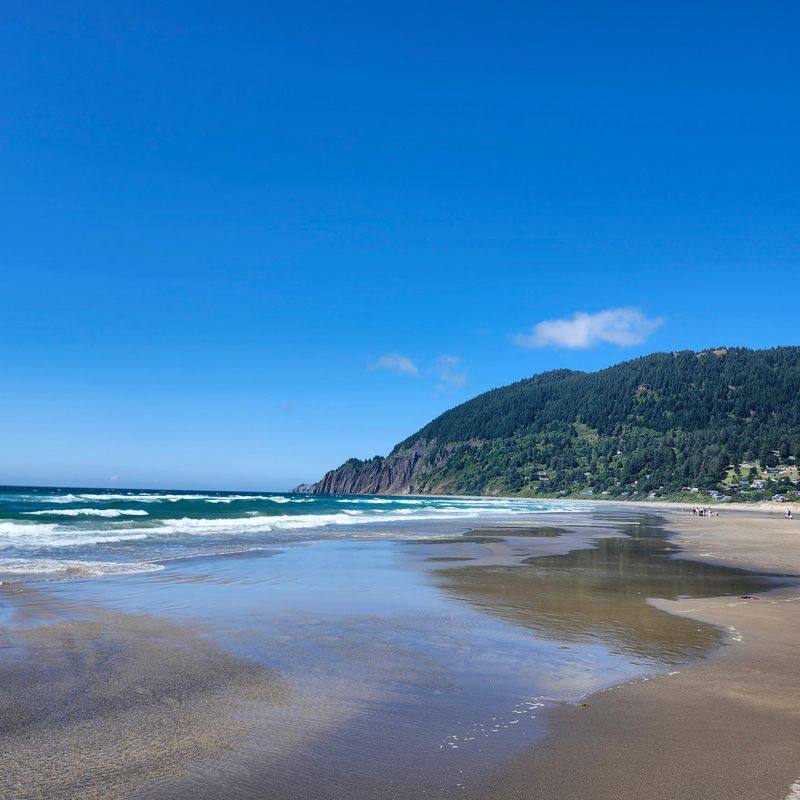
Manzanita remained relatively unknown for decades, treasured by those who discovered its pristine beach and unhurried pace.
The village deliberately avoided commercial development, maintaining strict building codes that preserved its residential character.
Word has spread about this hidden gem, and visitor numbers have increased steadily as people seek alternatives to crowded beach towns.
The very qualities that make Manzanita special face pressure as more tourists discover its charms.
Limited parking reflects the community’s desire to keep things small-scale, though this creates frustration for visitors unable to find spaces.
Vacation rentals have proliferated, changing neighborhood dynamics as fewer homes serve as primary residences.
Long-time property owners debate whether increased tourism threatens the tranquil atmosphere they’ve worked to maintain.
The beach remains beautifully uncrowded compared to other destinations, but locals notice more footprints in the sand each year.
Neahkahnie Mountain provides a dramatic backdrop and hiking opportunities that attract outdoor enthusiasts year-round.
Local businesses walk a fine line between serving tourists and maintaining the low-key vibe that defines Manzanita.
Community meetings address tourism management, with residents passionate about protecting their village’s unique character.
The challenge involves sharing this beautiful place without loving it to death through overuse and development pressures.
8. Bandon: Balancing Natural Beauty with Visitor Impact
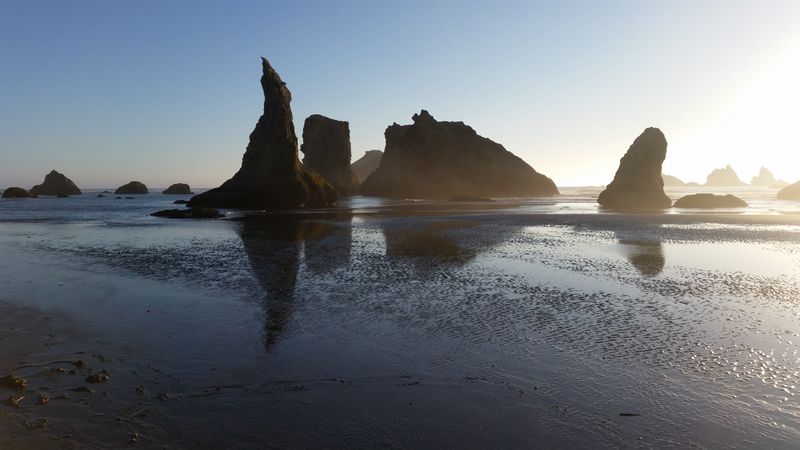
Bandon’s dramatic coastline features stunning rock formations that rise from the surf like ancient sentinels guarding the shore.
Face Rock, the most famous of these formations, draws visitors who come to see the profile resembling a woman gazing skyward.
Southern Oregon’s coast remained less developed than northern areas for many years, giving Bandon a more remote feel.
Tourism growth has accelerated as travelers seek out the spectacular scenery that makes this stretch of coast unforgettable.
The town rebuilt itself after devastating fires in the 1930s and 1940s, creating the charming Old Town district that exists today.
Beach access points near the rock formations now see heavy use, with trails showing signs of erosion from constant foot traffic.
Photographers arrive at dawn and dusk to capture the magical light on the sea stacks, sometimes crowding popular viewpoints.
The local economy benefits significantly from tourism, with galleries, restaurants, and shops thriving on visitor spending.
Wildlife viewing opportunities attract nature enthusiasts hoping to spot seabirds, seals, and migrating whales.
Increased human presence affects animal behavior, with some species becoming more wary or altering their habitat use.
Community leaders recognize the need for sustainable tourism practices that protect the natural assets drawing people to Bandon.
Preserving the wild beauty while welcoming visitors requires thoughtful planning and ongoing commitment to conservation principles.
Dear Reader: This page may contain affiliate links which may earn a commission if you click through and make a purchase. Our independent journalism is not influenced by any advertiser or commercial initiative unless it is clearly marked as sponsored content. As travel products change, please be sure to reconfirm all details and stay up to date with current events to ensure a safe and successful trip.
