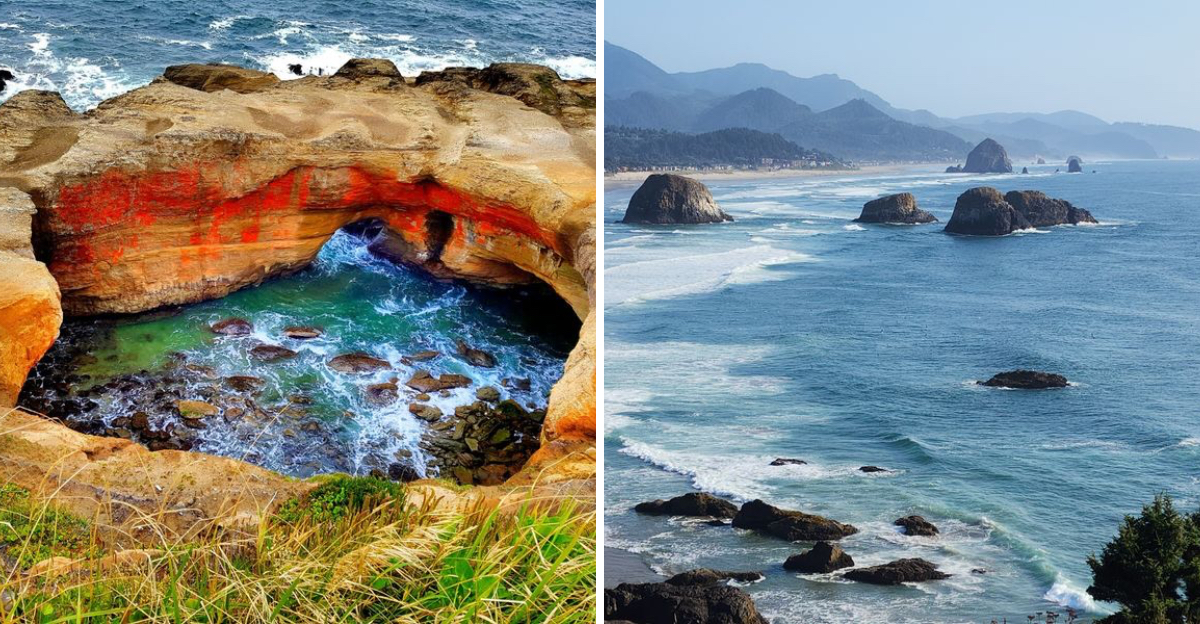
Highway 101 threads along Oregon’s wild edge, linking towns that once felt sleepy and secluded.
In recent years, social media and road trip playlists brought crowds that changed how these places function.
Locals still love them, but many now plan visits during shoulder seasons or at off-peak hours.
If you are mapping a route, this guide highlights the busiest stops and how to enjoy them respectfully and comfortably.
1. Cannon Beach and Haystack Rock
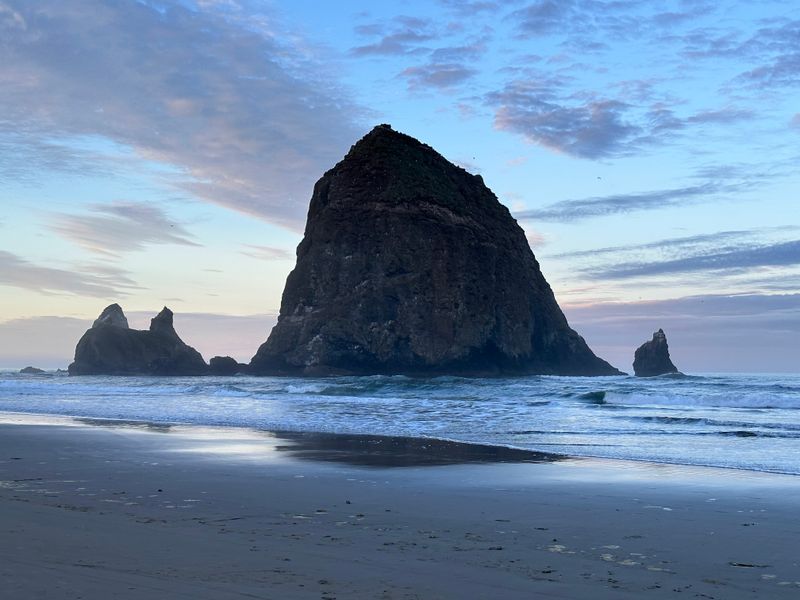
Cannon Beach draws steady attention for Haystack Rock’s tidal pools and the broad, photogenic shoreline.
Oregon agencies warn visitors to keep distance from nesting seabirds and intertidal life, which helps the marine garden remain healthy.
Congestion builds near public access points, and parking rules are actively enforced, especially on weekends and holidays.
If you go, arrive early, use official lots, and walk in from less obvious beach entries.
Tide charts are widely available and can transform the experience by revealing calmer periods.
Shops and galleries still operate year-round, with many pivoting to shoulder-season hours.
Cloudy days can be the most rewarding for photography and fewer footprints.
The state continues updating signage to protect wildlife and guide visitors.
Respecting closures and leashing dogs near nesting zones keeps the shoreline welcoming for everyone.
Morning light casts beautiful shadows across the rock face, creating ideal conditions for capturing memorable images.
Local businesses have adapted to seasonal fluctuations by offering extended hours during summer months while maintaining core services throughout winter.
Visitors who take time to explore quieter stretches of beach often discover hidden tide pools teeming with colorful sea stars and anemones.
The town itself maintains a charming character despite increased tourism, with locally owned shops offering unique coastal treasures.
Planning your visit around natural rhythms rather than peak convenience times rewards you with a more authentic coastal experience.
2. Oswald West State Park (Short Sand Beach)
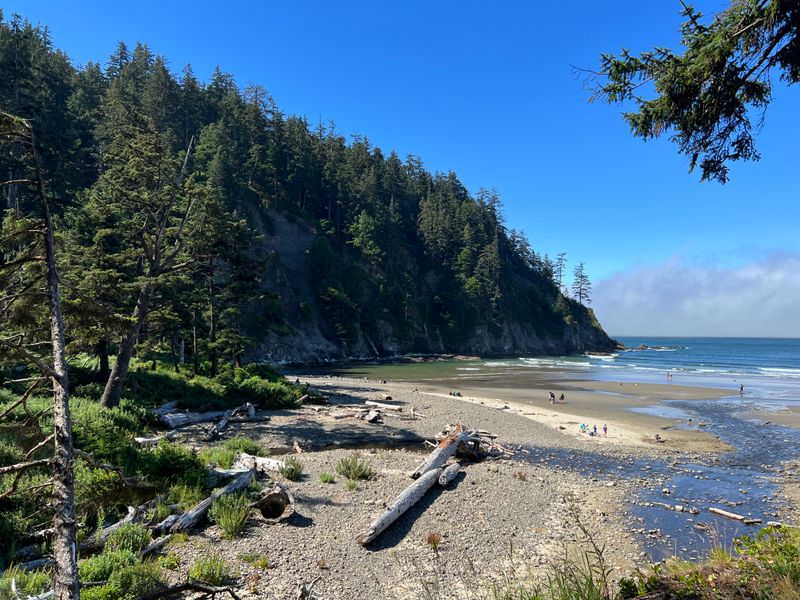
Oswald West State Park shelters Short Sand Beach inside a forested cove that feels hidden, which partly explains its popularity.
The trail is short and inviting, and surfers frequent the break year-round.
Oregon State Parks advise locking cars and packing out all garbage, since overflowing bins encourage wildlife conflicts.
Weekdays outside peak travel months bring more breathing room on the path and at the waterline.
Footbridges and roots can be slick, so sturdy footwear matters even on sunny days.
The cove’s acoustics amplify the surf, making conversation easy without shouting.
Rangers update trail notices when winter storms down trees or shift creek crossings.
Choosing smaller groups reduces impact on narrow approaches.
Visitors who keep to marked routes protect fragile understory plants that stabilize slopes around the cove.
Wheelbarrows at the trailhead help families transport gear to the beach, a thoughtful touch that makes the quarter-mile walk manageable.
Dense Sitka spruce and western hemlock create a cathedral-like canopy that filters light into soft green beams.
The beach’s sheltered position makes it popular with beginning surfers who appreciate gentler conditions than exposed breaks.
Driftwood logs provide natural seating for watching wave sets roll through the narrow entrance.
Respecting the delicate balance between accessibility and preservation ensures this special place remains intact for future generations.
3. Ecola State Park Viewpoints
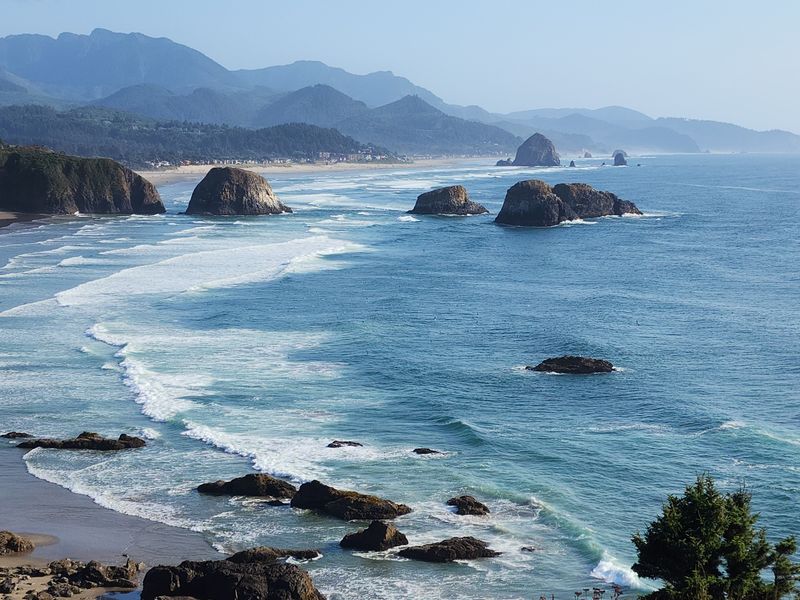
Ecola State Park delivers sweeping views toward Tillamook Head and offshore sea stacks that fill postcards and feeds.
The scenic road and headland trails can stack up with cars by midmorning, especially during whale-watching seasons and school breaks.
Oregon State Parks periodically close sections after heavy rains to protect visitors and prevent erosion, so checking alerts is wise.
When open, the overlooks reward patience with cleaner horizons as morning haze lifts.
Bring a wind layer because headlands funnel gusts even on warm days.
Picnic spots are limited, and sharing space courteously keeps turnover moving.
Binoculars help spot murres and cormorants without approaching cliff edges.
Visit early or late to avoid backups at the entrance booth.
Clear wayfinding signs reflect ongoing efforts to keep foot traffic on durable surfaces.
The park’s name comes from the Tillamook word for whale, honoring the indigenous connection to these waters.
Multiple pullouts along the access road offer varying perspectives, each with unique compositions of rock and wave.
Winter storms create dramatic wave action that photographers prize, though conditions require extra caution and weatherproof gear.
The trail to Indian Beach descends through old-growth forest, offering a quieter alternative when viewpoint crowds feel overwhelming.
Timing your visit with migration patterns increases chances of spotting gray whales breaching offshore.
4. Hug Point State Recreation Site
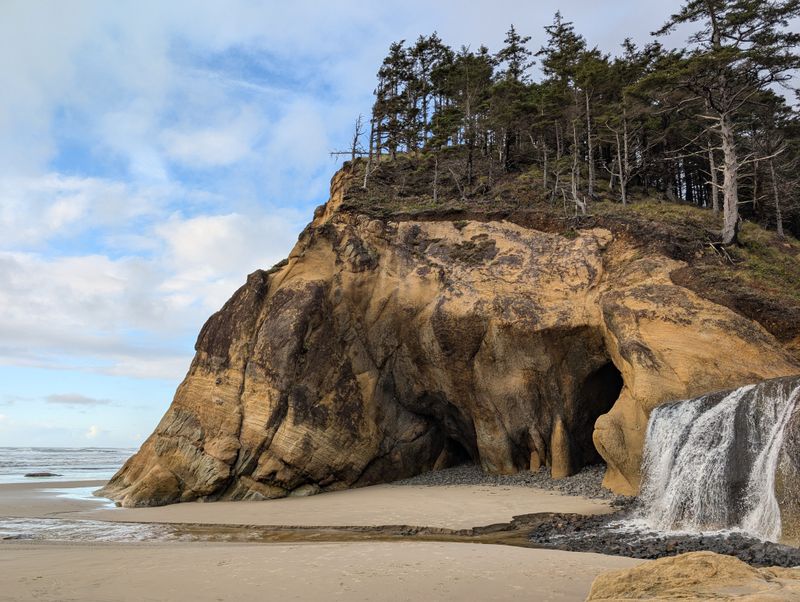
Hug Point’s driveable-at-low-tide shelf and small waterfalls create a photogenic stop that fills quickly on weekends.
Oregon authorities stress that timing is everything here, as incoming tides can cut off return routes around the point.
Parking is limited and turnover slow, so visitors often spill onto nearby shoulders where restrictions apply.
Checking tide predictions and arriving during falling tides increases safety and access to the sea cave area.
The sandstone is slick and fragile, making careful footing essential.
Families appreciate the shorter walk to the beach, but vigilance near surge zones is important.
Photographers find soft evening light rewarding after crowds thin.
Be mindful of cultural resources and avoid carving rock surfaces.
Leaving the site cleaner than you found it helps this compact beach handle heavy interest.
The name comes from stagecoach days when travelers had to hug the cliff face to pass at low tide.
Remnants of the old roadway remain visible, carved directly into the rock and offering a tangible connection to coastal history.
Small waterfalls trickle down the cliff face year-round, creating delicate curtains that catch afternoon sun.
Tide pools near the northern rocks host purple sea urchins and bright orange starfish worth careful observation.
Respecting tide schedules protects both visitors and the fragile intertidal ecosystem that makes this spot special.
5. Cape Kiwanda and Pacific City
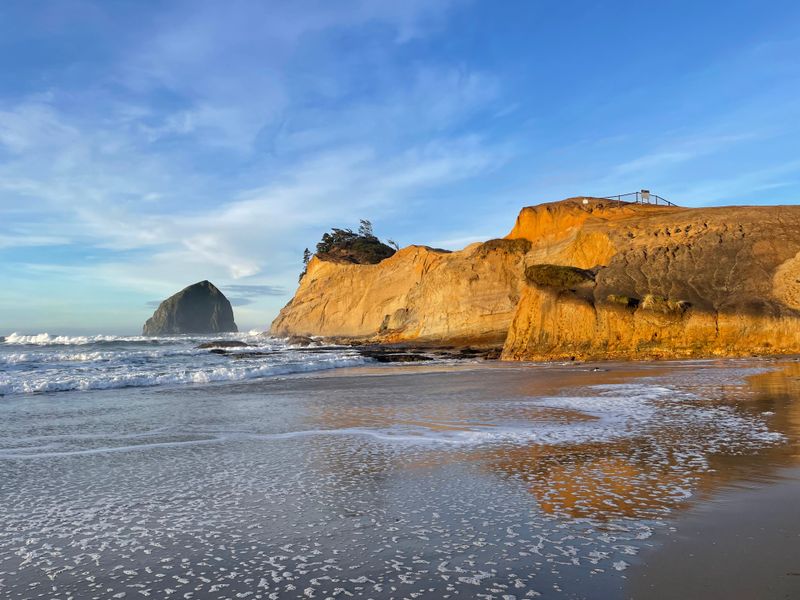
Cape Kiwanda’s golden sandstone headland and the offshore Haystack Rock near Pacific City attract photographers, surfers, and tide-watchers.
The area’s sand dune is sensitive to off-trail shortcuts, and fencing marks closures that protect unstable edges.
Local agencies and Oregon State Parks have increased signage to keep visitors off dangerous cornices.
Mornings often provide calmer wind and fewer vehicles along beach access points.
Using designated walkways and staying behind barriers preserves the cliff face and reduces rescues.
Shorebirds feed near the tideline, so leashing pets prevents flushes that waste their energy.
Pack a wind shell and eye protection, as blowing sand can sting on gusty afternoons.
The nearby town offers services year-round, though hours shift seasonally.
Visitors who plan ahead help reduce bottlenecks along this scenic stretch.
Dory boats still launch directly through surf here, a tradition that draws curious onlookers and photography enthusiasts.
The sandstone formation glows amber during golden hour, creating dramatic contrasts against deep blue ocean water.
Climbing the dune offers panoramic rewards, but steep descents require control to avoid tumbling and damaging fragile plants.
Pacific City’s breweries and cafes provide welcoming spots to warm up after windy beach walks.
Respecting natural boundaries ensures this beloved Oregon destination remains safe and beautiful for everyone who visits.
6. Devils Punchbowl State Natural Area
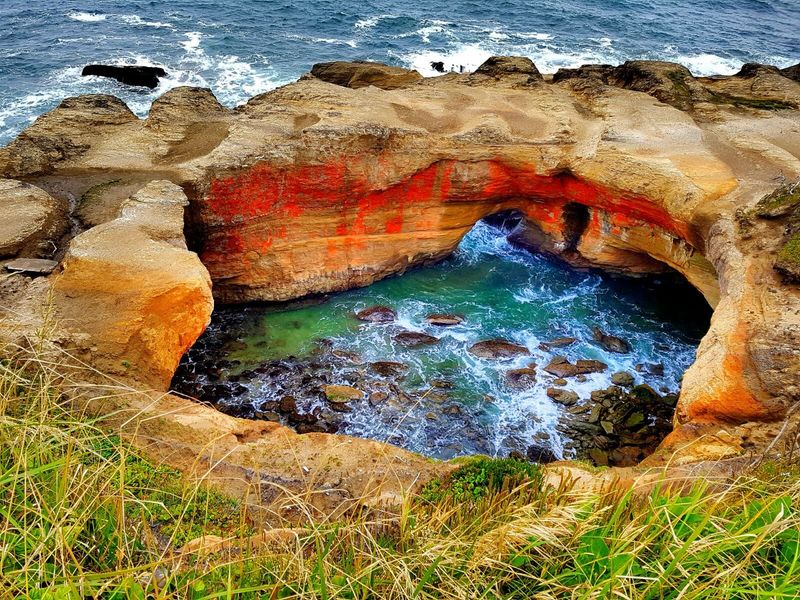
Devils Punchbowl draws onlookers who want to see wave energy slam into a collapsed sea cave from a cliff-top viewpoint.
Winter swells amplify the effect and can create blowback mist that drenches railings.
Oregon officials advise staying within railings and avoiding cliff edges, which can undercut silently.
Parking fills during sunset windows and during whale migration peaks.
Low tide reveals nearby tidepools to the north, where gentle steps and mindful foot placement protect living communities.
Local volunteers sometimes host interpretive talks when conditions permit.
Bring layers, as wind accelerates across the open headland.
Tripods need weight or a steady hand in gusty periods.
A calm weekday visit changes the tone entirely, letting you hear the resonant echo inside the Punchbowl between sets.
The formation’s roof collapsed centuries ago, leaving a circular bowl where waves surge and retreat with hypnotic rhythm.
During extreme high tides, water shoots upward through fissures, creating temporary geysers that delight spectators.
The adjacent Marine Gardens offer quieter exploration opportunities for those seeking gentler interactions with coastal life.
Interpretive panels explain the geological forces that shaped this unique feature over thousands of years.
Patience rewards visitors with moments when wave timing creates perfect visual harmony inside the bowl.
7. Yaquina Head Outstanding Natural Area
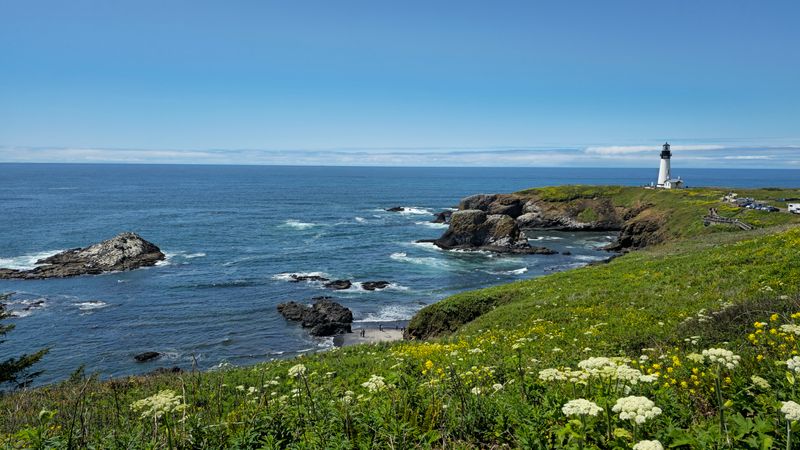
Managed by the Bureau of Land Management, Yaquina Head features a historic lighthouse, basalt tidepools, and reliable seabird nesting cliffs.
Reservations and timed entry can apply in busy seasons, and rangers post updates on closures and wildlife sensitivity.
Oregon’s coast authority partners emphasize staying on stairs and established paths to limit wear on the headland.
Tidepool etiquette includes wetting hands before gently touching and never collecting animals.
Wind rises quickly here, so secure hats and keep camera straps snug.
Interpretation inside the visitor center adds context on gray whales, murres, and the basalt flow that formed the head.
Crowds cluster at the lighthouse during prime light, but quieter views await down by Cobble Beach.
Patience rewards you with harbor seal sightings offshore on calmer days.
The lighthouse has guided mariners since 1873, and tours offer glimpses into keeper life and maritime history.
Basalt columns create geometric patterns that contrast beautifully with organic tidepool shapes below.
Common murres nest on offshore rocks in dense colonies, their calls echoing across the headland during breeding season.
Cobble Beach’s rounded stones clatter musically as waves wash over them, creating a soundscape unique to this spot.
Educational programs run seasonally, connecting visitors with marine biology and coastal ecology through hands-on activities.
8. Thor’s Well and Cape Perpetua
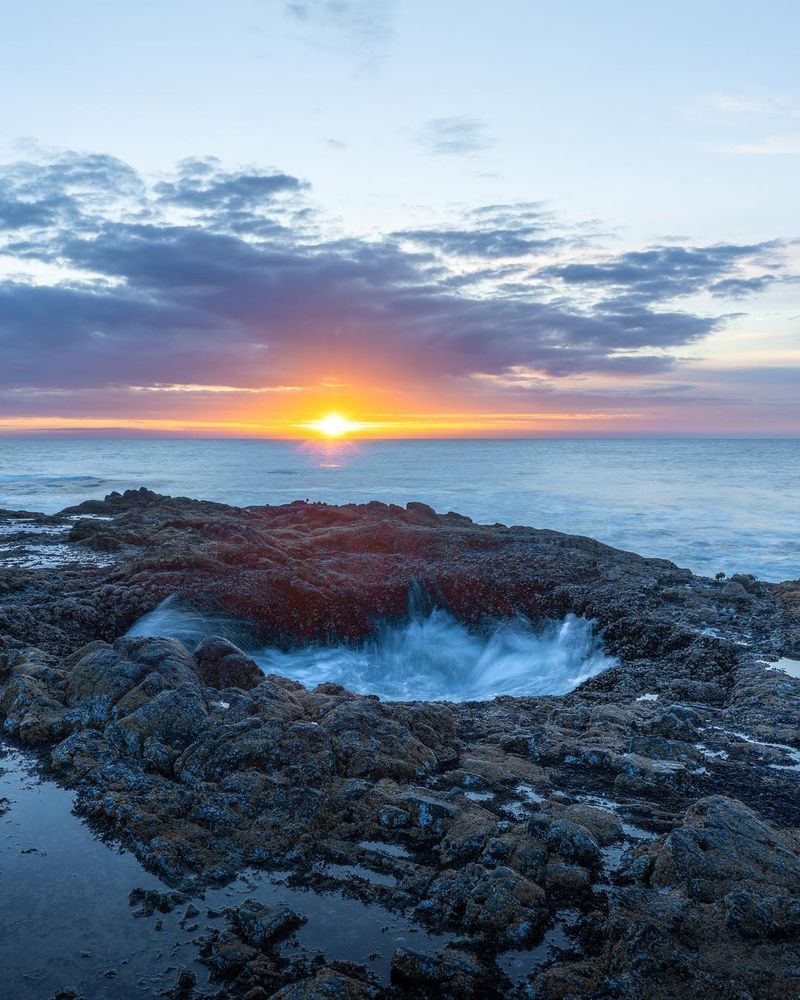
Thor’s Well near Cape Perpetua has gone viral, which increased close approaches to a feature with real hazards.
The U.S. Forest Service and Oregon safety campaigns recommend viewing from stable rock and avoiding sneaker waves.
High water can knock people off balance, and rescue access is limited.
The broader Cape Perpetua Scenic Area offers safer, signed overlooks and forest trails that disperse crowds.
Visit during lower swell periods for calmer conditions and better footing.
Tripods should be set well back from edges, and waterproof footwear helps if spray reaches the platform.
Benches at the visitor center give context on ancient lava flows and native plants.
A little patience after sunset often yields a quieter, more reflective scene.
The well appears to drain the ocean itself, though it is actually a bowl that fills and empties with each wave cycle.
Photographers chase the perfect shot of water swirling into the void, but safety must always come first.
Cape Perpetua’s summit trail climbs to the highest point on the Oregon coast accessible by car, offering breathtaking panoramas.
Old-growth Sitka spruce forests inland provide serene contrast to the dramatic shoreline features.
Interpretive centers explain how volcanic activity shaped this unique coastline millions of years ago.
Respecting barriers and heeding warnings ensures this natural wonder remains accessible while protecting visitor safety.
9. Heceta Head Lighthouse and Beach
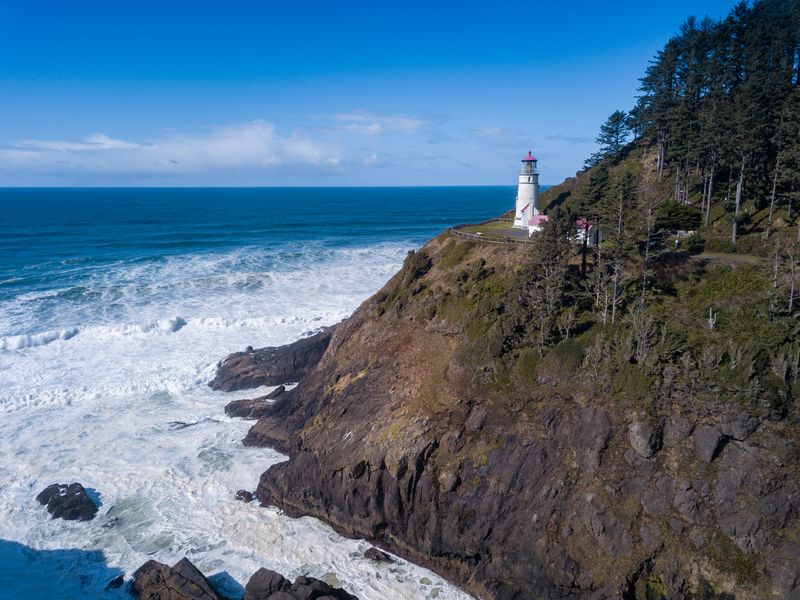
Heceta Head’s postcard lighthouse, keeper’s house, and sheltered cove draw steady foot traffic along Highway 101.
Trail segments climb to overlooks where migrating gray whales sometimes surface offshore.
Parking is limited, and Oregon State Parks encourages paying attention to posted hours and designated spaces.
The lighthouse tours operate seasonally, and schedules shift with staffing and maintenance.
Arrive early to enjoy gentle morning light on the cliffs and quieter paths.
Sea spray can coat lenses, so pack a microfiber cloth.
Beach-goers share space with harbor seals that occasionally rest on sand; officials advise keeping a wide buffer.
Interpretive signs tell the site’s human and natural history, rewarding longer visits.
Courteous pacing on narrow trails keeps this beloved landmark welcoming despite its popularity.
The keeper’s house now operates as a bed and breakfast, offering overnight guests a rare chance to experience lighthouse life.
Built in 1894, the lighthouse remains one of the most photographed on the entire West Coast.
The beam from its Fresnel lens is visible twenty-one miles at sea, still serving as a vital navigation aid.
Wildflowers blanket the headland in spring, adding splashes of color to already stunning coastal views.
Taking time to appreciate both natural beauty and human history makes every visit to Heceta Head memorable.
Dear Reader: This page may contain affiliate links which may earn a commission if you click through and make a purchase. Our independent journalism is not influenced by any advertiser or commercial initiative unless it is clearly marked as sponsored content. As travel products change, please be sure to reconfirm all details and stay up to date with current events to ensure a safe and successful trip.
