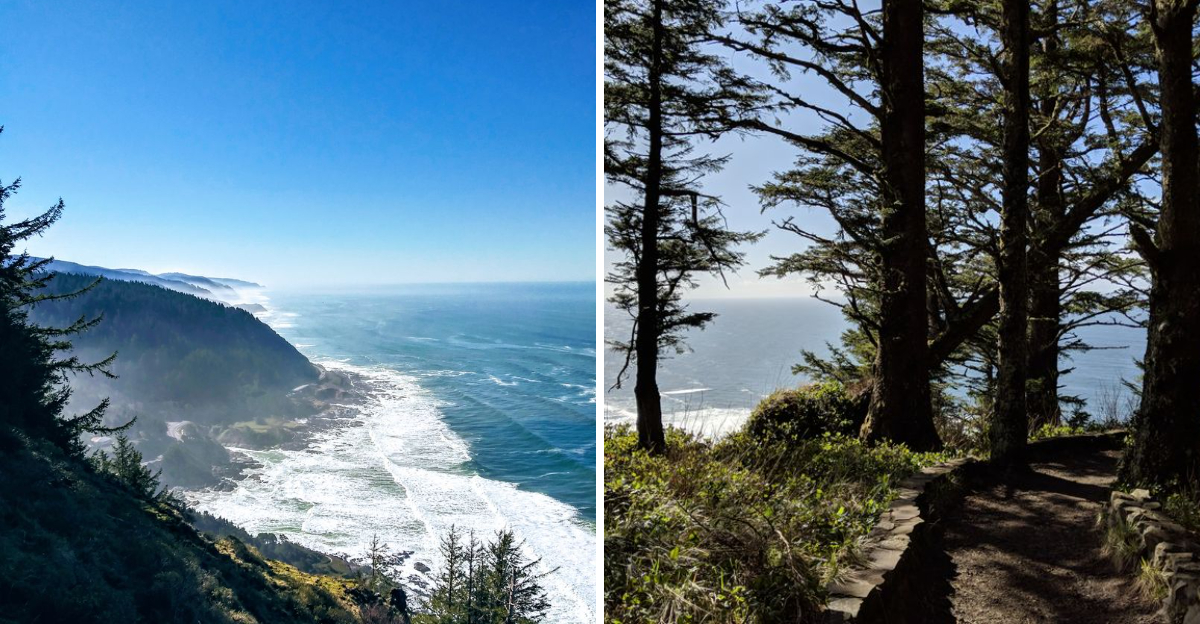
I stumbled onto Cape Perpetua Scenic Area near Yachats a few years back, and let me tell you, it completely changed how I see the Oregon Coast.
Most tourists flock to the same crowded beaches, but locals know this spot is where you go when you want the waves, wind, and wilderness all to yourself.
Towering spruce forests, dramatic cliffs plunging into the Pacific, and trails that feel like secret passages through an ancient world make this place pure magic. You can hike to panoramic overlooks, explore tide pools teeming with life, or simply sit on a rocky outcrop and watch the ocean do its thing without another soul in sight.
Forget the Instagram mobs at Cannon Beach. Cape Perpetua is where Oregon shows off without trying.
I’m talking jaw-dropping views from 800 feet above sea level, hidden coves that require a little effort to reach, and trails that wind through rainforests so lush you’ll feel like you’ve stepped into another dimension.
Pack your boots, bring your sense of adventure, and get ready to fall head over heels for the Oregon Coast’s best-kept secret.
1. Cape Perpetua Overlook: The Summit That Steals Your Breath
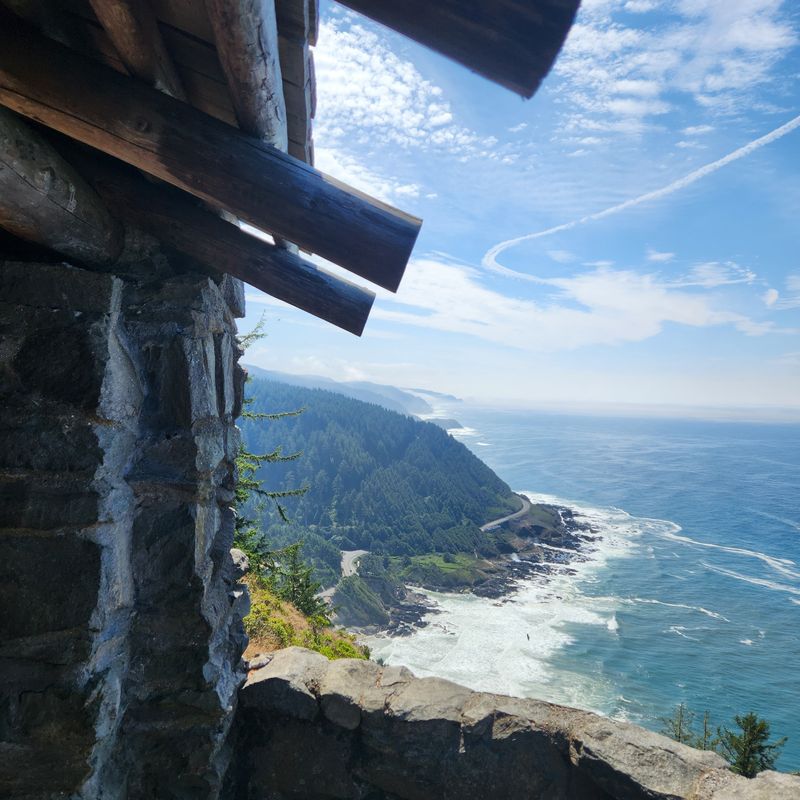
Standing 800 feet above the crashing Pacific at Cape Perpetua Lookout in Yachats, Oregon 97498, I felt like I’d climbed to the edge of the world. The stone shelter built by the Civilian Conservation Corps in the 1930s still stands proud, offering sweeping views that stretch for miles in both directions along the coastline.
You can drive right to the top if you prefer, but I hiked the Saint Perpetua Trail and earned every inch of that view.
The trail gains about 650 feet over 1.6 miles through a spruce forest so thick with undergrowth and wildflowers that you forget civilization exists. Your anticipation builds because the views only reveal themselves in the last few hundred feet.
Once you reach the summit, you can peer straight down at Thor’s Well and watch waves explode against the rocks far below.
Parking requires a US Forest Pass, but after 5 PM it’s free. The lot fills up fast on sunny days, so arrive early or be prepared to park down the road.
There’s a vault toilet and picnic tables if you want to linger. On foggy days, the mystery deepens as hints of ocean peek through the mist, creating an ethereal atmosphere that’s equally stunning.
2. Amanda Trail: The Local’s Long Game to Solitude
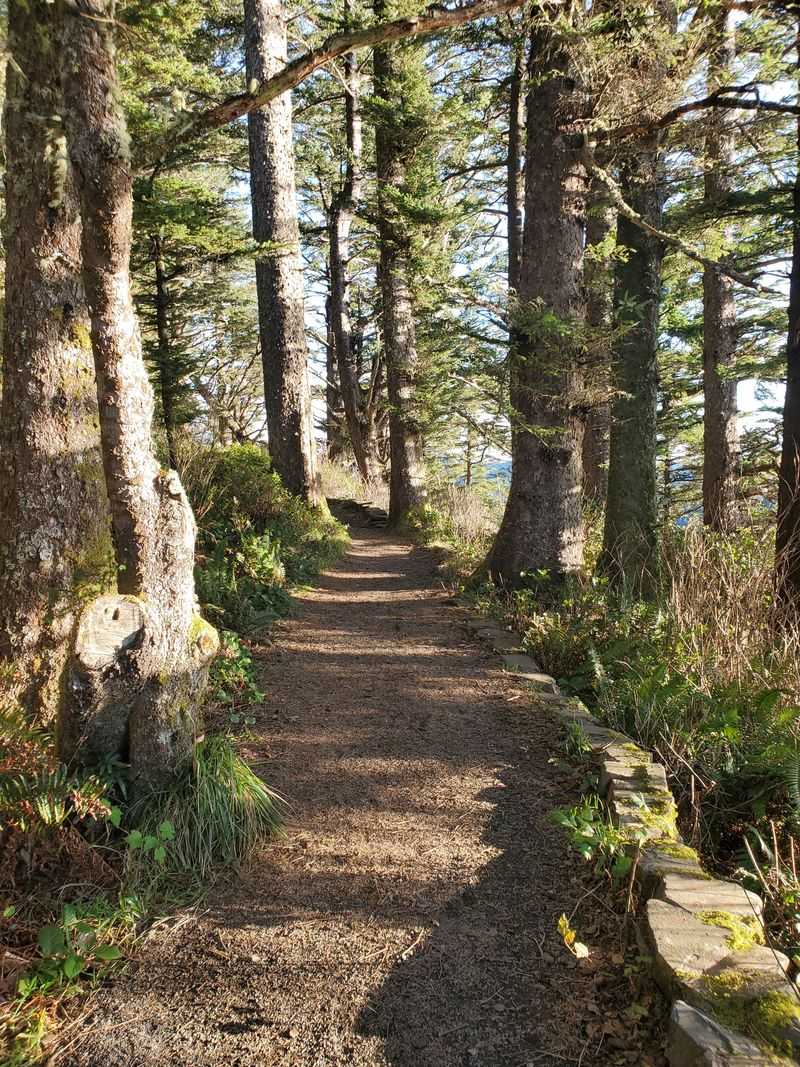
Most visitors take the shorter Saint Perpetua Trail, which means the Amanda Trail remains blissfully quiet even during peak season. Starting from the north side in Yachats, this longer and more challenging route rewards those willing to put in the effort with solitude that’s increasingly rare on the Oregon Coast.
I’ve hiked it three times and never encountered more than a handful of people.
The trail winds through old-growth forest where moss drapes from branches like nature’s curtains and the air smells perpetually of rain and earth. Sword ferns create a green carpet that seems to glow in the filtered light.
The elevation gain is steady but manageable if you pace yourself and take breaks to appreciate the forest’s quiet beauty.
What I love most about this trail is how it transitions from dense forest to coastal views gradually, giving you time to mentally shift from the everyday world to something more profound. The Amanda Trail connects to the gathering area near the summit, where you can rest before tackling the final push to the overlook.
Wear sturdy boots because even on dry days, sections can be muddy from the coastal moisture that never fully evaporates.
3. Cook’s Ridge and Gwynn Creek Loop: Where Forest Meets Ocean
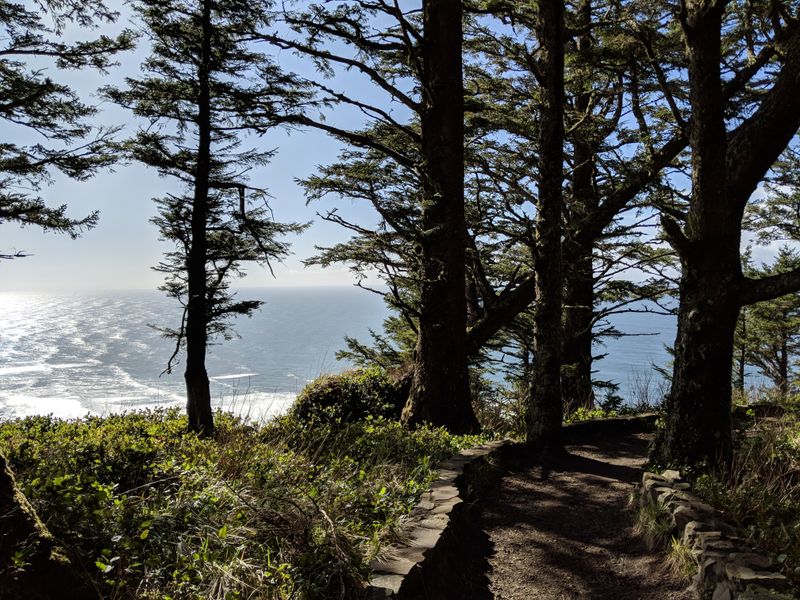
This loop trail combines everything that makes Cape Perpetua special into one spectacular hike. Starting from the visitor center area, the Cook’s Ridge and Gwynn Creek Loop takes you through ancient Sitka spruce forests, past cascading creeks, and along ridgelines where ocean views suddenly appear through breaks in the trees.
It’s about 2.5 miles of constantly changing scenery that never gets boring.
I particularly love how this trail showcases the diversity of coastal ecosystems in Oregon. One moment you’re in a cathedral of towering trees where silence feels sacred, and the next you’re crossing a wooden bridge over Gwynn Creek as it tumbles toward the sea.
The sound of rushing water mingles with distant waves, creating a natural symphony that no streaming service could ever replicate.
The loop is moderately challenging with some elevation changes, but nothing too strenuous for anyone with reasonable fitness. Interpretive signs along the way explain the ecology and history of the area, making it educational without feeling like a classroom.
I’ve spotted banana slugs, varied thrushes, and once even a Roosevelt elk browsing near the trail. Because it requires more time and effort than the quick overlook visit, you’ll often have long stretches completely to yourself.
4. Cape Perpetua West Shelter: A Depression-Era Marvel
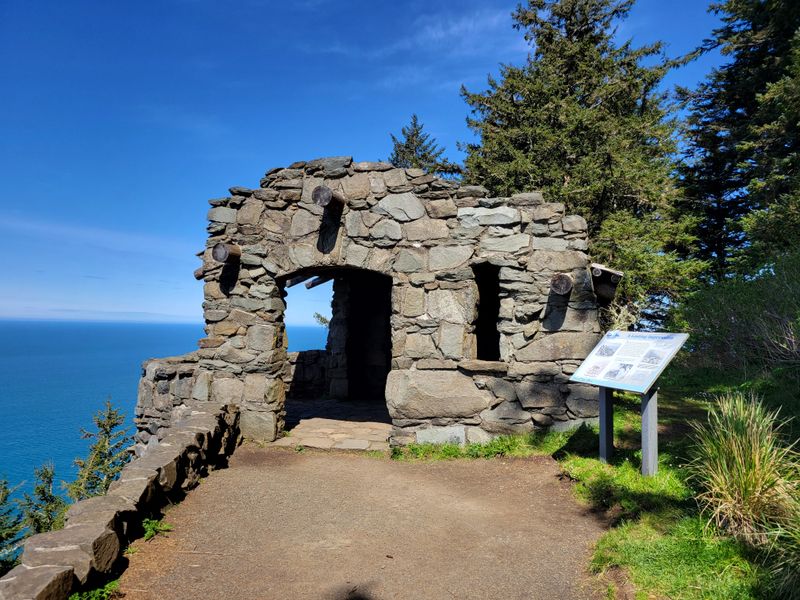
History buffs and architecture enthusiasts should make a point of examining the West Shelter closely. Built by the Civilian Conservation Corps during the Great Depression, this stone structure represents an era when craftsmanship and public works merged to create lasting monuments.
The stonework is impeccable, with each rock carefully selected and placed to withstand decades of brutal coastal weather.
Standing inside the shelter, I always imagine the young men who built it, many of them desperate for work during America’s darkest economic period. They created something that still serves visitors nearly a century later, which feels profound in our disposable age.
The shelter provides protection from wind and rain while framing the Pacific Ocean like a living photograph.
The circular design and strategic window openings maximize views while providing structural stability against the relentless coastal elements. On blustery days, the shelter becomes a gathering place where strangers share the experience of watching storms roll in across the water.
I’ve met fascinating people here, from retired teachers to young families, all drawn by the same magnetic pull of this place. The shelter reminds us that sometimes the best things we build are the simplest ones designed to help people connect with nature.
5. Cummins Ridge Trail: The Road Less Traveled
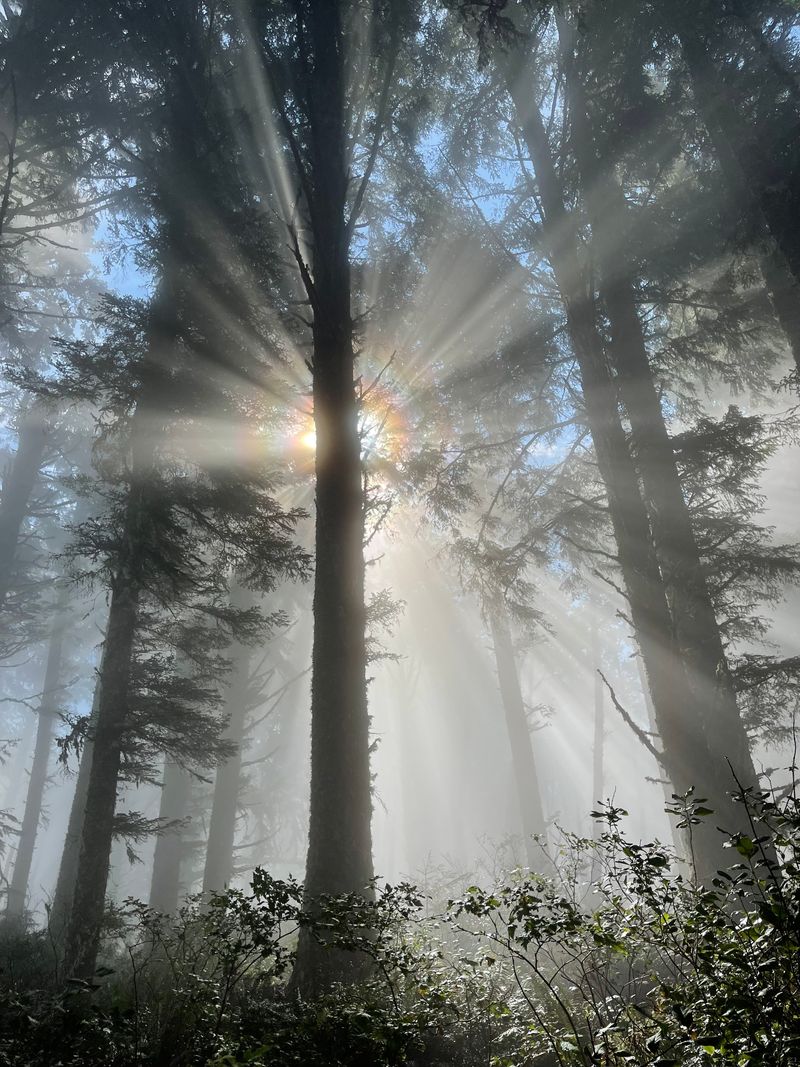
If you really want to escape the crowds, Cummins Ridge Trail is your ticket to solitude. This lesser-known trail climbs through forest that feels untouched by modern times, where nurse logs support entire ecosystems and the only sounds are your footsteps and birdsong.
I’ve hiked it on summer weekends without seeing another person, which is practically unheard of on the Oregon Coast these days.
The trail gains elevation steadily as it follows the ridge, offering occasional glimpses of the ocean through the trees. What makes this hike special is the sense of wilderness it provides despite being relatively close to Highway 101.
The forest here feels older somehow, more mysterious, with trees that have witnessed centuries of storms and seasons.
Wildflowers bloom along the trail in spring and early summer, creating pockets of color against the endless green. Trilliums, bleeding hearts, and wild iris add delicate beauty to the rugged landscape.
The trail can be muddy and overgrown in sections, which actually helps keep it quiet because casual visitors stick to the more maintained paths. Bring plenty of water and snacks because once you’re on Cummins Ridge, you’re committed to the journey.
The reward is a genuine wilderness experience that’s increasingly rare.
6. Cape Cove Beach: The Steep Descent to Paradise
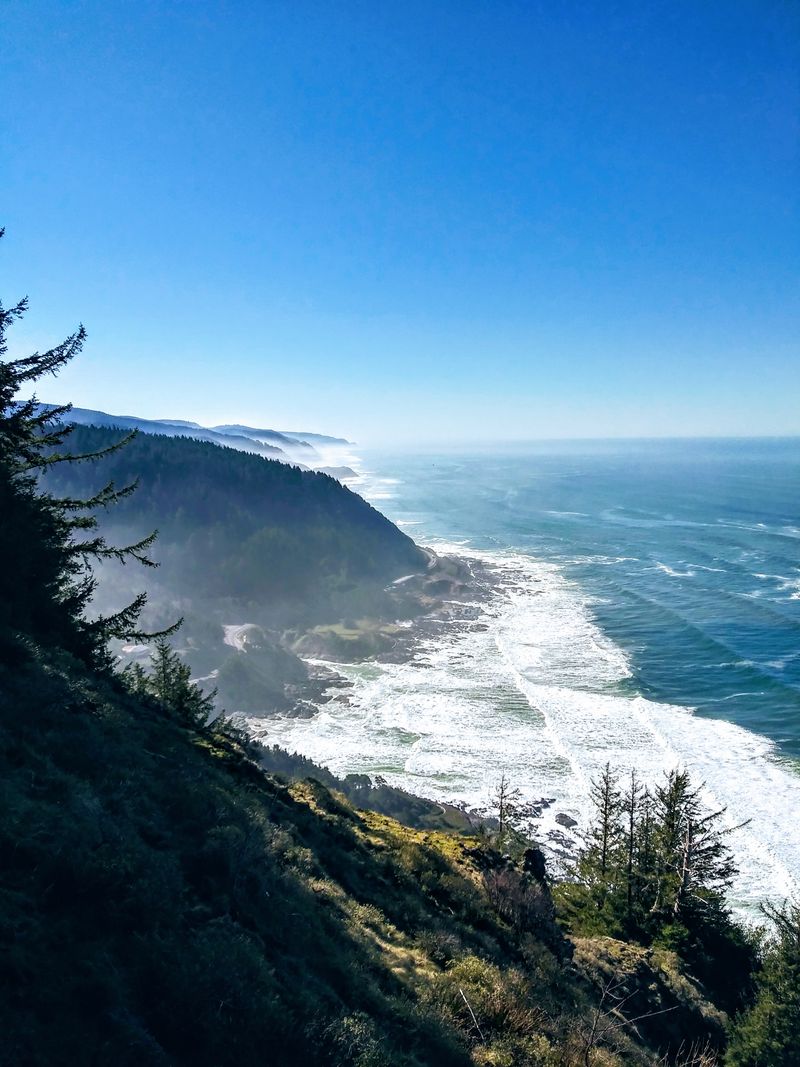
Getting to Cape Cove Beach requires commitment, which is exactly why it remains one of the most peaceful spots in the Cape Perpetua area. The steep trail down to the beach keeps away anyone not willing to work for their ocean solitude.
I’ve spent entire afternoons here with only seabirds and harbor seals for company, feeling like I’d discovered my own private slice of the Pacific.
The beach itself is rocky and dramatic, with tide pools that reveal entire miniature worlds at low tide. Sea anemones wave their tentacles in the current, hermit crabs scuttle between rocks, and bright orange sea stars cling to boulders.
The waves here have a different quality than at sandy beaches, crashing with more force and creating that deep, resonant boom that you feel in your chest.
Remember that what goes down must come back up, and that steep trail feels twice as long on the return journey. Take your time and rest when needed.
The limited parking at the trailhead naturally controls crowds, so if the small pullout is full, that’s nature’s way of saying try again another time. Bring sturdy shoes with good traction because the trail can be slippery, especially after rain, which in Oregon means most of the year.
7. Stonefield Beach State Recreation Site: The Quiet Neighbor
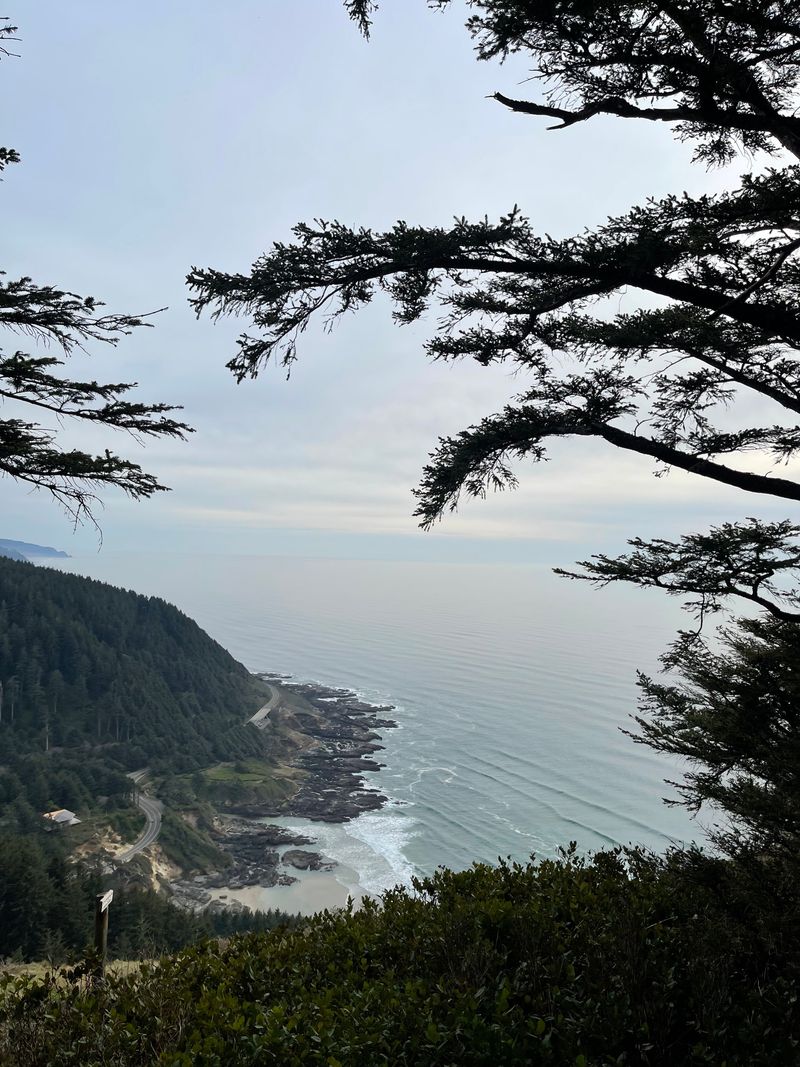
Just south of Cape Perpetua, Stonefield Beach flies under the radar despite offering everything people love about the Oregon Coast without the crowds. The beach stretches for a good distance, giving you room to wander and explore without constantly encountering other visitors.
I’ve walked here on summer Saturdays and had hundred-yard stretches entirely to myself, which feels like winning the lottery.
The rocky outcroppings create natural barriers that divide the beach into semi-private sections, perfect for those who want to feel alone with the ocean. Driftwood piles up in artistic arrangements that look deliberately placed by some cosmic sculptor.
The combination of sand and stone creates interesting textures and patterns, especially when wet from receding waves.
Access is easy with a short walk from the parking area, making it perfect for those who want solitude without extreme effort. The site has basic facilities including restrooms, which is appreciated after a long day of exploring.
Watching sunset from Stonefield Beach ranks among my favorite Oregon Coast experiences because the light plays off the rocks and water in constantly changing ways. The relative lack of visitors means you can actually hear the ocean rather than competing voices and music from portable speakers.
8. Strawberry Hill Wayside: Tide Pool Paradise
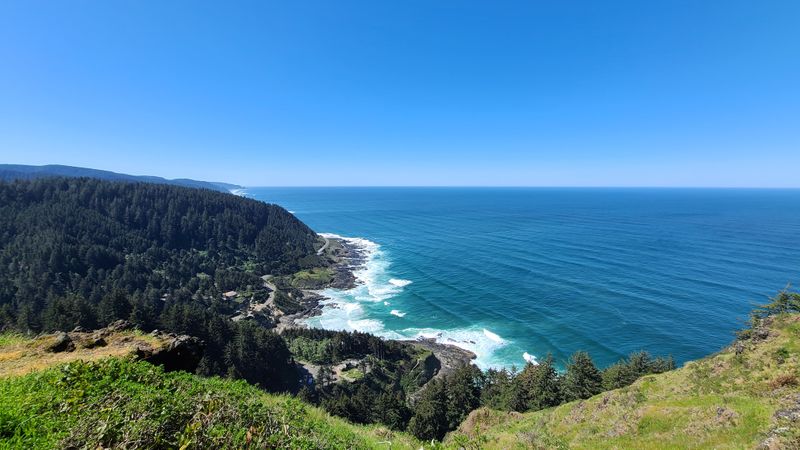
Strawberry Hill Wayside deserves recognition as one of the finest tide pooling locations along the entire Oregon Coast. The rocky shelves exposed at low tide host an incredible diversity of marine life that will fascinate anyone curious about ocean ecosystems.
I’ve spent hours crouched over these pools, watching sea stars slowly navigate their underwater landscape and sea anemones contract when touched.
Timing is everything here, so check tide tables before visiting. You want to arrive during a minus tide for the best exploration opportunities.
The lower the tide, the more of the intertidal zone becomes accessible, revealing creatures that spend most of their lives underwater. Bring a waterproof field guide if you want to identify the species you encounter, or just enjoy the discovery without needing to name everything.
The wayside includes a small parking area that fills quickly during summer low tides, so arrive early or be flexible with your timing. A short trail leads from the parking area down to the tide pool zone.
Watch your footing because wet rocks are treacherously slippery, and a fall here could mean more than just embarrassment. Please practice tide pool etiquette by looking without touching, never removing creatures from their habitat, and being mindful of where you step to avoid crushing delicate marine life.
9. Neptune North Pull-Off: The Viewpoint Nobody Mentions
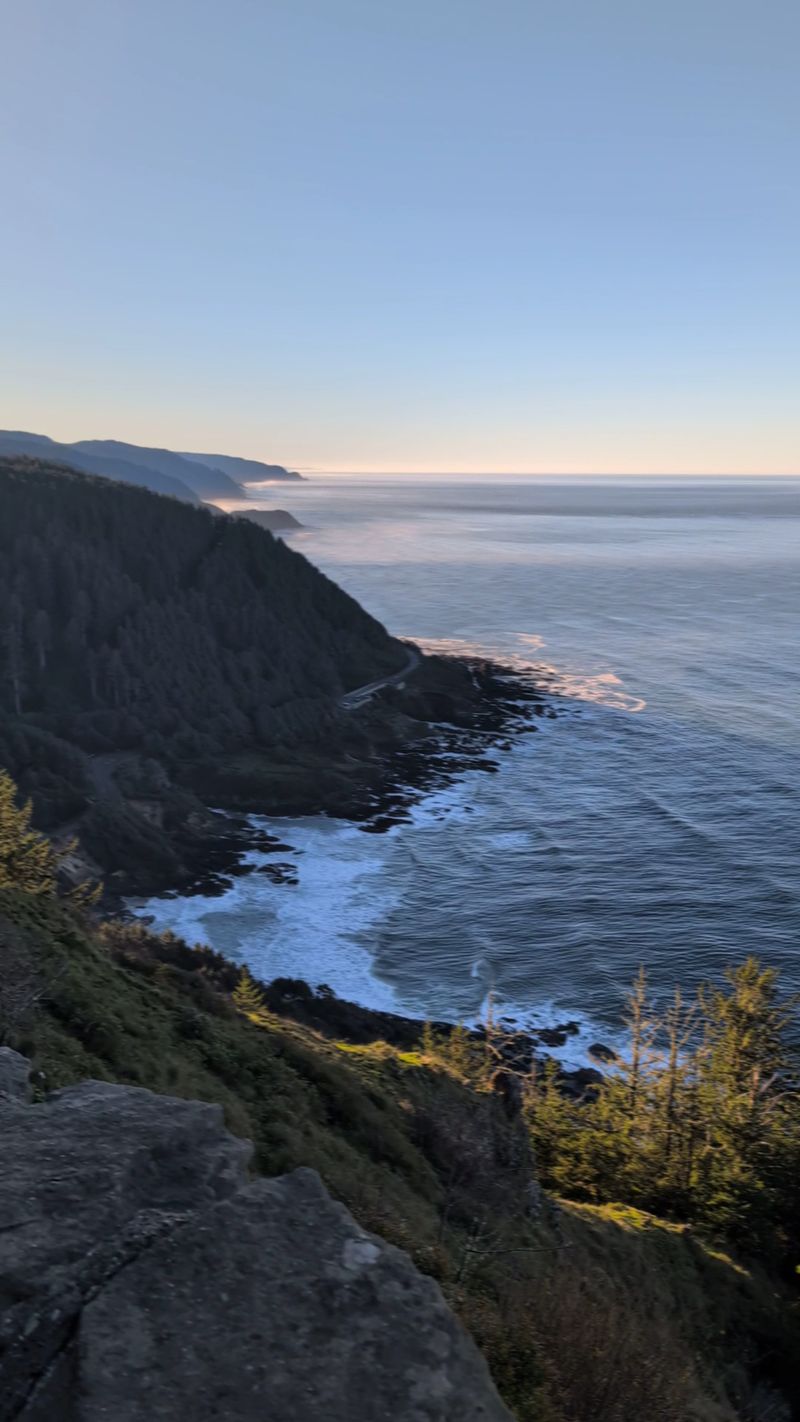
Sometimes the best discoveries happen by accident, and Neptune North Pull-Off is one of those happy surprises that most people drive right past. This small roadside viewpoint offers dramatic ocean vistas without requiring any hiking effort whatsoever.
I’ve stopped here dozens of times, often just to take a breath and recalibrate my perspective while driving the coast.
The pull-off accommodates only a few vehicles, which naturally limits crowds and ensures a peaceful experience. From here you can watch waves explode against offshore rocks, sending spray high into the air.
During whale migration seasons, this is an excellent spot to scan the horizon for the telltale spouts of gray whales passing by. Bring binoculars if you have them.
What I appreciate most about Neptune North is its simplicity and accessibility. Not everyone can hike steep trails or scramble over rocks, but everyone can pull over and enjoy this view.
The lack of facilities or formal development means it stays off most tourist itineraries, reserved for locals and travelers who prefer discovery to following guidebooks. On stormy days, the drama intensifies as waves grow massive and the wind howls.
Just stay in or near your vehicle during extreme weather because rogue waves are real and dangerous along this stretch of the Oregon Coast.
10. Bob Creek: The Hidden Gem in Plain Sight
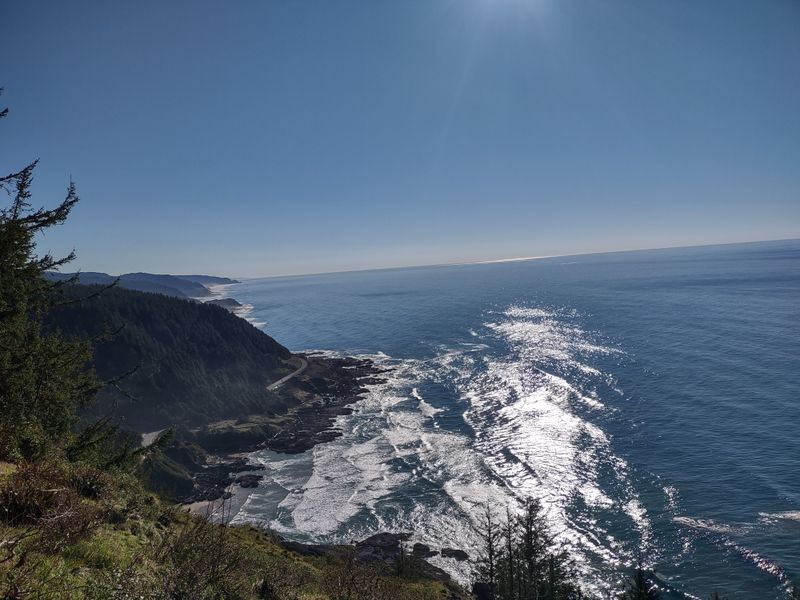
Bob Creek represents the perfect example of how the best spots along the Oregon Coast often hide in plain sight. Most drivers zoom past on Highway 101, focused on reaching more famous destinations, never realizing what they’re missing.
The small parking area here provides access to a lovely stretch of beach and the creek itself, which creates interesting patterns as it flows across the sand to meet the ocean.
I love watching the intersection of fresh and salt water here, where two ecosystems meet and mingle. Birds gather at the creek mouth to feed on small fish and invertebrates carried by the current.
The beach extends in both directions, offering plenty of space to explore without encountering crowds. Agates and interesting rocks collect in certain areas, making this a favorite spot for beachcombers.
The creek provides a natural feature that makes this beach more interesting than simple stretches of sand. Kids especially enjoy playing where the creek spreads shallow across the beach, creating a safer water experience than the powerful ocean waves.
The surrounding vegetation and creek habitat attract wildlife including various bird species and occasionally river otters. Visit during different seasons to see how the creek and beach change character with rainfall and ocean conditions throughout the year.
Dear Reader: This page may contain affiliate links which may earn a commission if you click through and make a purchase. Our independent journalism is not influenced by any advertiser or commercial initiative unless it is clearly marked as sponsored content. As travel products change, please be sure to reconfirm all details and stay up to date with current events to ensure a safe and successful trip.
