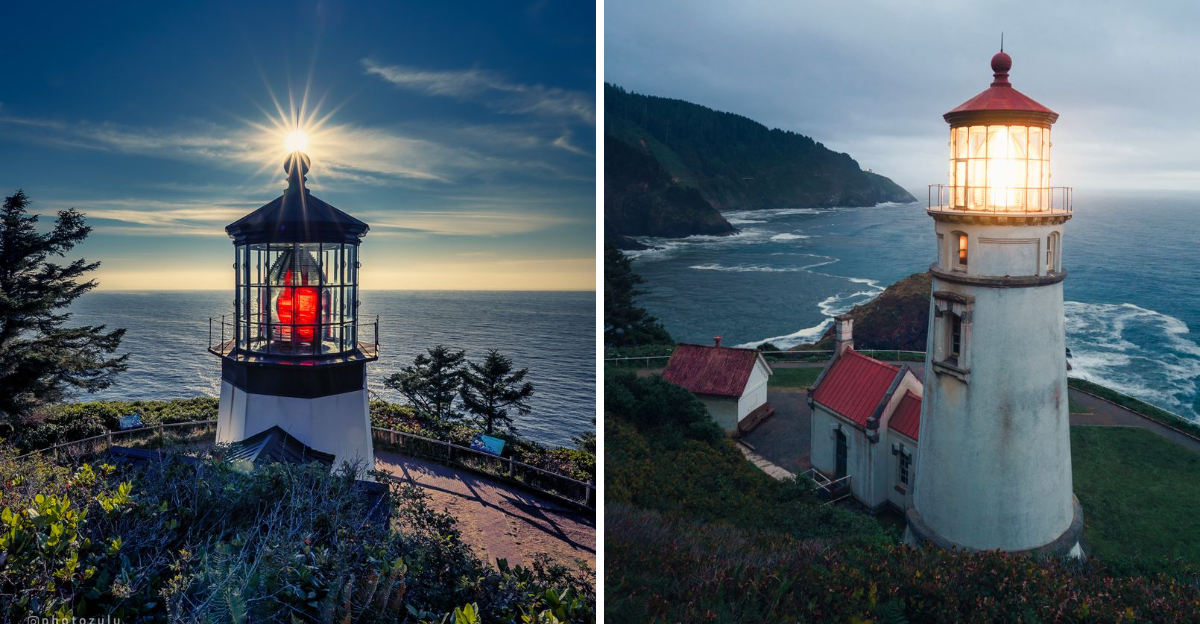
Oregon’s rugged coastline stretches for more than 360 miles, where the Pacific crashes against cliffs and sandy shores beneath towering sentinels of light. Most visitors know about the famous lighthouses that dot this dramatic landscape, but few realize these beacons hold secrets far stranger than simple navigation stories.
Behind the whitewashed walls and flashing lenses lie tales of bizarre transformations, fictional ghosts that became real legends, and construction so perilous workers had to be hidden away.
Some lighthouses fell into the sea within years of being built, while others became final resting places for the departed with satellite TV thrown in as a perk.
One was even built by a lighthouse historian as his own private home and navigation aid. Ready to explore beacons that double as columbariums, trees that cradled the dead, and ghosts debunked by their own descendants?
Pack your curiosity and a healthy sense of wonder because Oregon’s coast is about to get delightfully weird. These aren’t your typical postcard lighthouses with predictable keeper tales and polished tour scripts.
Forget everything you thought you knew about these towers because the real stories are way more entertaining than any brochure could ever promise!
1. Tillamook Lighthouse: The Columbarium With a TV Deal
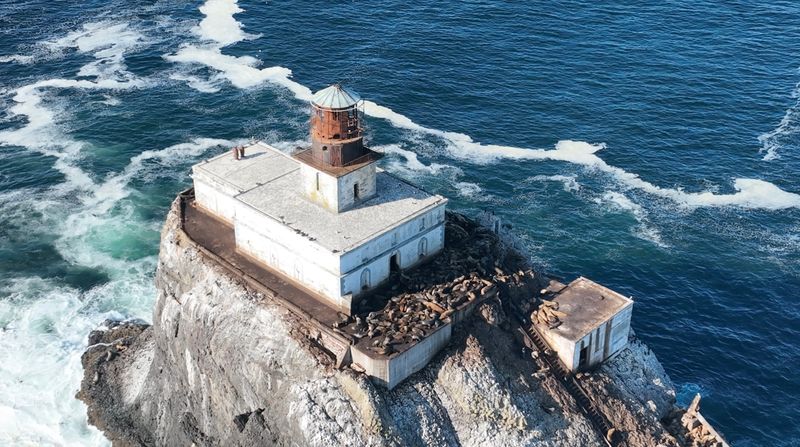
Construction crews faced such horrifying danger building this offshore sentinel that supervisors secretly housed workers in Washington to keep them from hearing casualty reports and fleeing the project. Perched on a wave-battered rock a mile offshore from Cannon Beach, the lighthouse earned the nickname “Terrible Tilly” for the brutal conditions keepers endured during its 77 years of operation.
Waves routinely crashed over the tower, and supplies had to be hoisted up by rope when the sea allowed any approach at all.
After decommissioning in 1957, the structure sat abandoned for decades until a private company purchased it in the 1980s with a truly unexpected vision. They transformed the historic beacon into a columbarium, a repository for cremated remains, marketing it as an eternal resting place surrounded by the power of the Pacific.
The most bizarre promotional twist came when early buyers received a promise of free satellite television for life if they reserved their niche ahead of time.
Today, the ashes of hundreds rest inside chambers where keepers once tended the light, making this one of the most unusual repurposings of any lighthouse in America. Access remains extremely limited, and the tower is visible only from shore or by boat, adding to its mystique.
The combination of deadly construction history and its current role as a final resting spot creates a narrative unlike any other beacon on the Oregon coast. Terrible Tilly went from guiding ships through treacherous waters to becoming a permanent home for those who loved the sea, complete with entertainment perks that sound straight out of a surreal marketing pitch.
2. Yaquina Bay Lighthouse: Saved by a Fictional Ghost
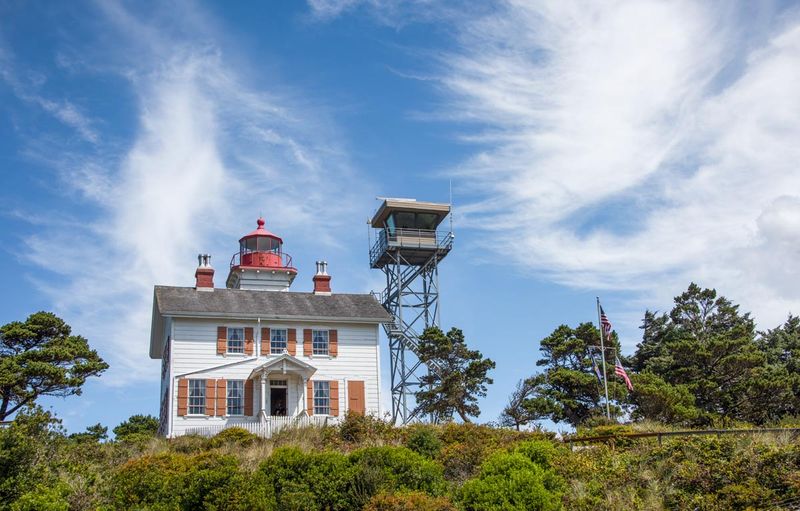
Standing proudly near the entrance to Newport’s harbor, Yaquina Bay Lighthouse holds the peculiar distinction of being rescued from demolition by a ghost who never existed. During the early 1900s, a writer penned a short story about a young woman named Muriel who supposedly vanished into a secret chute inside the lighthouse, never to be seen again.
The tale was pure fiction, crafted for entertainment, yet it spread through the community like wildfire and eventually became accepted as genuine local history.
By the 1930s, when officials considered tearing down the aging structure, residents rallied to save it, citing the tragic legend of Muriel as proof of the building’s cultural importance. The ghost story had woven itself so deeply into Newport’s identity that people genuinely believed the lighthouse was haunted, and demolition would disrespect her memory.
Preservationists leaned into the legend, using it as a rallying cry to generate public support and funding for restoration efforts.
Decades later, historians uncovered the truth and revealed that Muriel’s disappearance was entirely invented, yet the lighthouse had already been saved and restored thanks to the fictional haunting. The building now serves as a museum and interpretive center, celebrating both its authentic maritime history and the bizarre power of storytelling.
Visitors still ask about Muriel, and guides happily share the tale while clarifying its origins, turning the hoax into a charming chapter of Oregon folklore. Without that made-up ghost, one of the coast’s most photogenic lighthouses might have been reduced to rubble, proving that sometimes fiction can have very real consequences for preservation.
3. Cape Meares Lighthouse: Guarded by the Octopus Tree
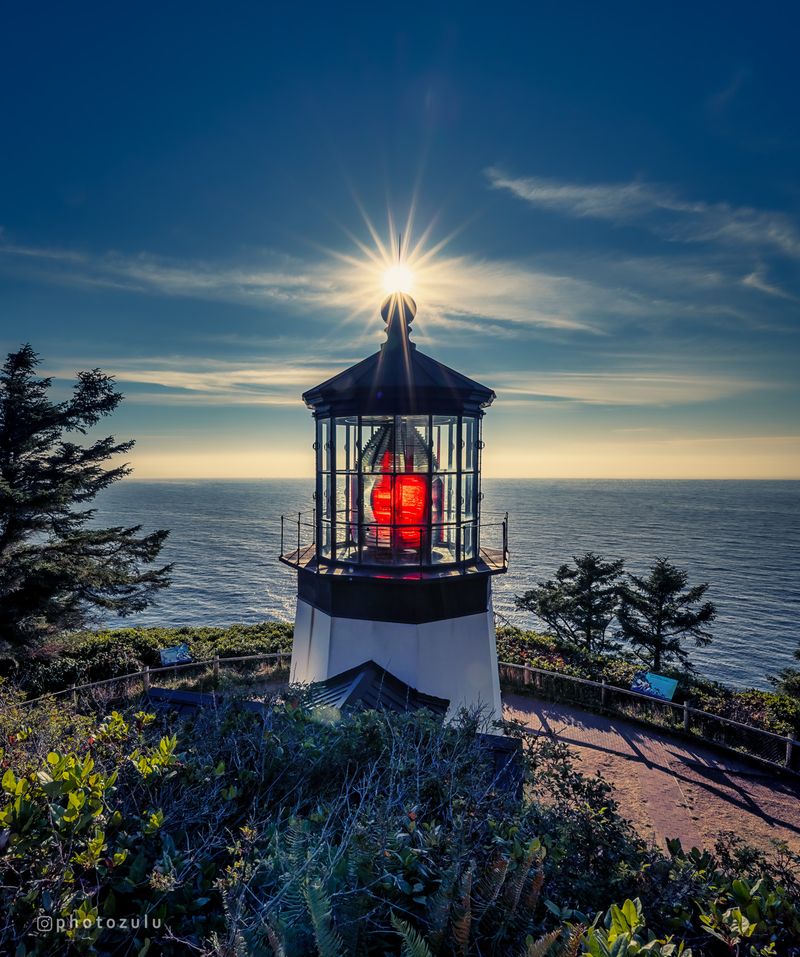
Perched on a dramatic headland at 3500 Cape Meares Loop, this squat iron tower might lack traditional ghost stories, but its surroundings hold a haunting history all their own. Just a short walk from the lighthouse stands the Octopus Tree, a massive Sitka spruce whose trunk splits into multiple limbs that stretch outward like tentacles before turning skyward.
The tree’s bizarre candelabra shape has fascinated visitors for generations, but its origins are rooted in sacred indigenous practices rather than natural growth patterns.
Local tribes used this ancient spruce as a burial site, carefully placing their deceased loved ones in canoes and securing them high within the branches. The weight and arrangement of these canoes over many years shaped the young tree’s growth, bending its limbs outward and creating the unusual form that persists today.
This living monument served as both a final resting place and a connection between the earthly and spiritual realms, honoring the dead while keeping them close to the sea and sky.
The lighthouse itself, built in 1890, is one of the shortest on the Oregon coast at just 38 feet tall, yet its clifftop location places the light 200 feet above the waves. Visitors who make the easy walk from the parking area encounter both the charming beacon and the eerie, sacred tree standing as silent witnesses to centuries of history.
Cape Meares offers a rare glimpse into how natural landmarks and human structures can intertwine, creating layers of meaning that go far beyond simple navigation. The Octopus Tree remains a powerful reminder that some of the coast’s most compelling stories aren’t found inside lighthouse walls but in the landscape surrounding them.
4. Heceta Head Lighthouse: The Grey Lady Who Cleans Up After You
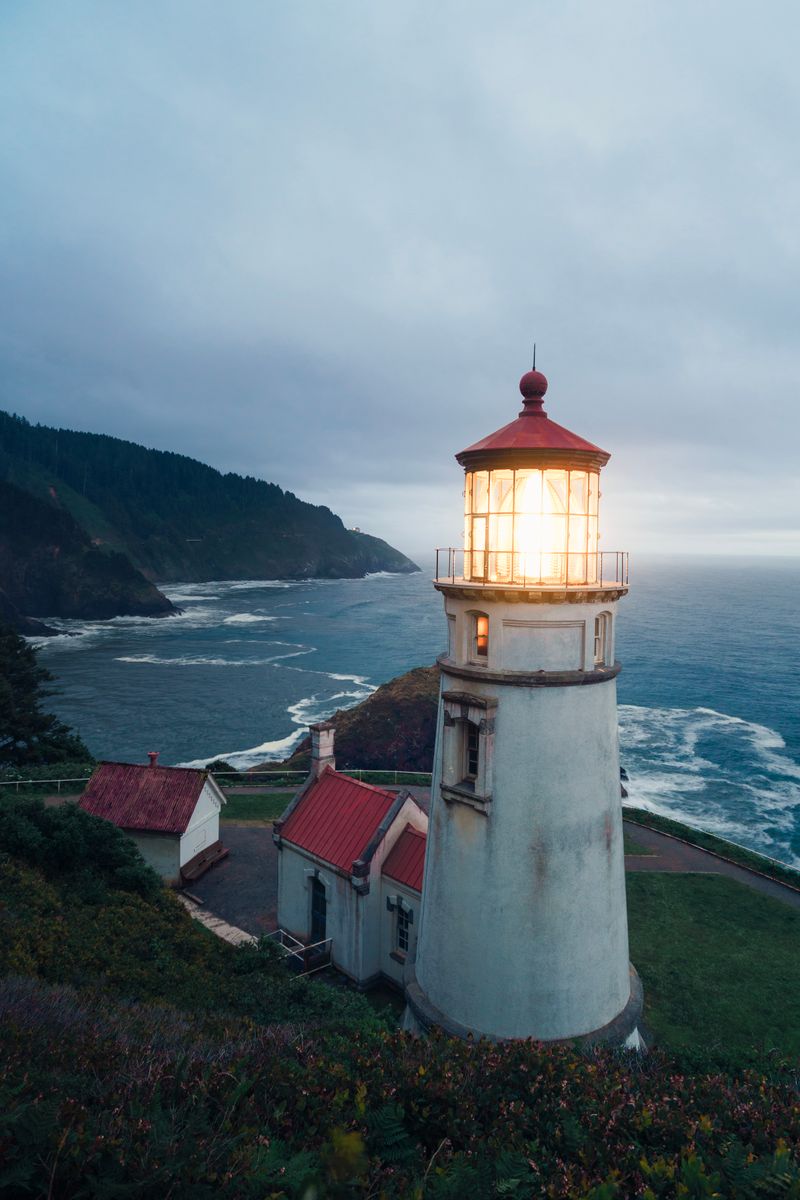
Arguably Oregon’s most photographed lighthouse, Heceta Head at 725 Summer Street boasts more than just stunning views from its perch 205 feet above the Pacific. The keeper’s house is home to one of the coast’s most active and oddly helpful ghosts, known as the Grey Lady or “Rue,” believed to be a keeper’s wife eternally searching for her child’s grave somewhere on the windswept grounds.
Her presence has been reported for decades, with sightings of a spectral woman in old-fashioned clothing drifting through rooms and peering out windows toward the sea.
The most famous incident involving Rue occurred when a maintenance worker accidentally broke a pane of glass in an attic window and, spooked by the eerie atmosphere, refused to clean it up before leaving for the day. When he returned the next morning, he discovered all the shards swept into a tidy pile in the corner, though no one else had entered the building overnight.
The worker quit shortly after, convinced that Rue had taken care of the mess he left behind, displaying a ghostly sense of housekeeping that goes beyond typical haunting behavior.
Today, the keeper’s house operates as a bed and breakfast, and guests frequently report unexplained footsteps, the scent of flowers with no source, and objects moved from where they were left. Staff members have grown accustomed to Rue’s presence, treating her as a permanent, if unseen, resident who prefers things neat and orderly.
Whether you believe in spirits or not, spending a night in one of the most hauntingly beautiful settings on the Oregon coast makes for an unforgettable experience, complete with a ghost who might just tidy up after you.
5. Yaquina Head Lighthouse: The Ghost Debunked by Descendants
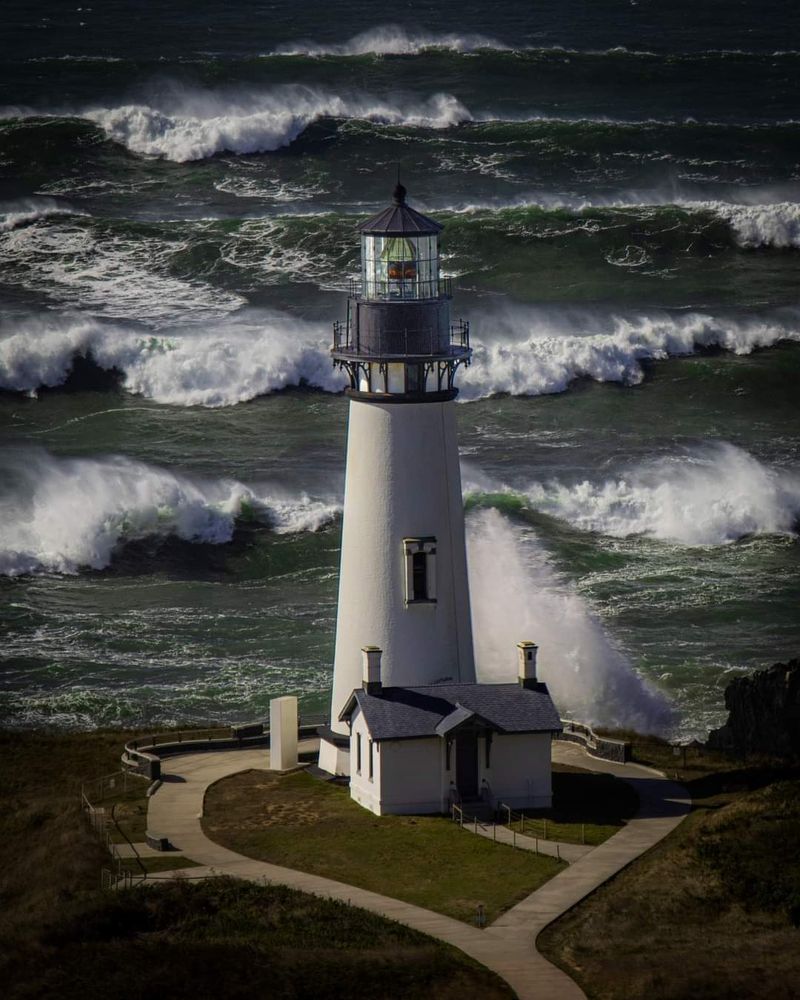
Rising 93 feet above the rocky headland at 750 NW Lighthouse Dr, Yaquina Head Lighthouse is Oregon’s tallest beacon and has guided mariners since 1873. For years, the tower carried a reputation for being haunted by a keeper named Higgins, who supposedly died tragically on the spiral staircase inside the tower, his spirit forever climbing the steps in an endless loop.
Tour guides shared the tale with visitors, and the legend became a staple of the lighthouse’s spooky appeal, adding a layer of mystery to the already impressive structure.
Everything changed when descendants of the real keeper Higgins came forward with documents and records proving that their ancestor never died at the lighthouse or anywhere near it. Instead, he retired from lighthouse service, moved to Portland, and lived a long, uneventful life before passing away peacefully of natural causes in the 1930s.
The family provided census records, obituaries, and other evidence that completely dismantled the ghost story, leaving historians and tour operators scrambling to correct decades of misinformation.
The debunking became a case study in how legends can take on a life of their own, especially in atmospheric locations like lighthouses where imagination runs wild. Yaquina Head’s actual history is fascinating enough without embellishment, from its construction challenges to its role in guiding ships through one of the most treacherous stretches of the Pacific.
Visitors today can still climb the 114 steps to the top, enjoying panoramic views and learning the true stories of the keepers who served there. Sometimes the real history is more interesting than the ghost tales, and Yaquina Head proves that facts can be just as compelling as fiction when given the chance to shine.
6. Coquille River Lighthouse: Command Center During the Flames
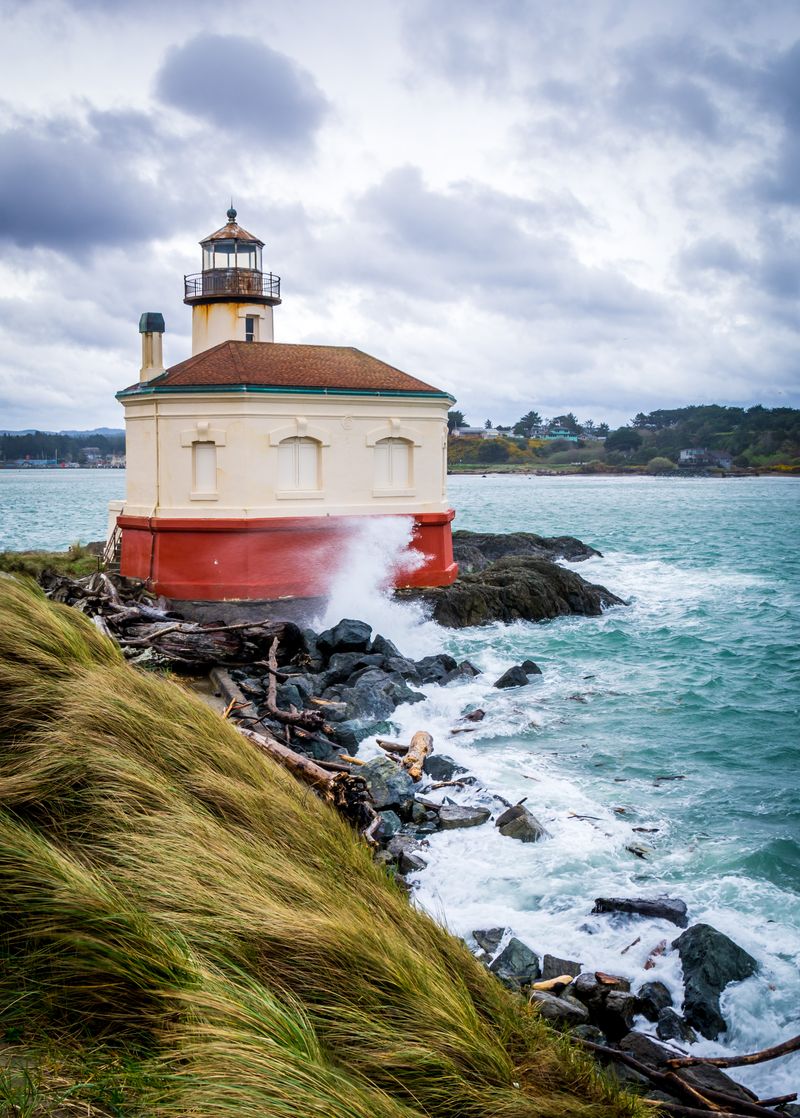
Situated at 56487 Bullards Beach Rd, Coquille River Lighthouse may look like a peaceful sentinel at the river’s mouth today, but in 1936 it played a critical role during one of Oregon’s most catastrophic disasters. The Bandon fire roared through the coastal town with terrifying speed, driven by gale-force winds that turned the entire area into an inferno.
Residents fled in panic as flames consumed homes, businesses, and forests, and the lighthouse became an unexpected refuge and coordination point for survivors and emergency responders.
The sturdy masonry structure, isolated at the edge of the river, offered protection from the advancing flames and a vantage point to assess the unfolding devastation. Keepers and volunteers used the lighthouse as a command center, coordinating rescue efforts and providing shelter to families who had lost everything in a matter of hours.
The beacon’s light continued to burn through the smoke-filled night, serving as a symbol of hope and orientation for those fleeing the firestorm and boats attempting to evacuate people from the shore.
After the fire subsided, the lighthouse stood as one of the few structures in the area to survive relatively unscathed, a testament to its solid construction and strategic location. The disaster reshaped Bandon entirely, and the lighthouse’s role during those desperate hours became a defining chapter in its history.
Today, visitors can explore the restored tower and learn about both its maritime mission and its unexpected service during the 1936 catastrophe. Coquille River Lighthouse reminds us that these beacons served their communities in ways far beyond simply guiding ships, stepping up during emergencies to become lifesaving landmarks when people needed them most.
7. Umpqua River Lighthouse: Oregon’s First Tumbled Into the Sea
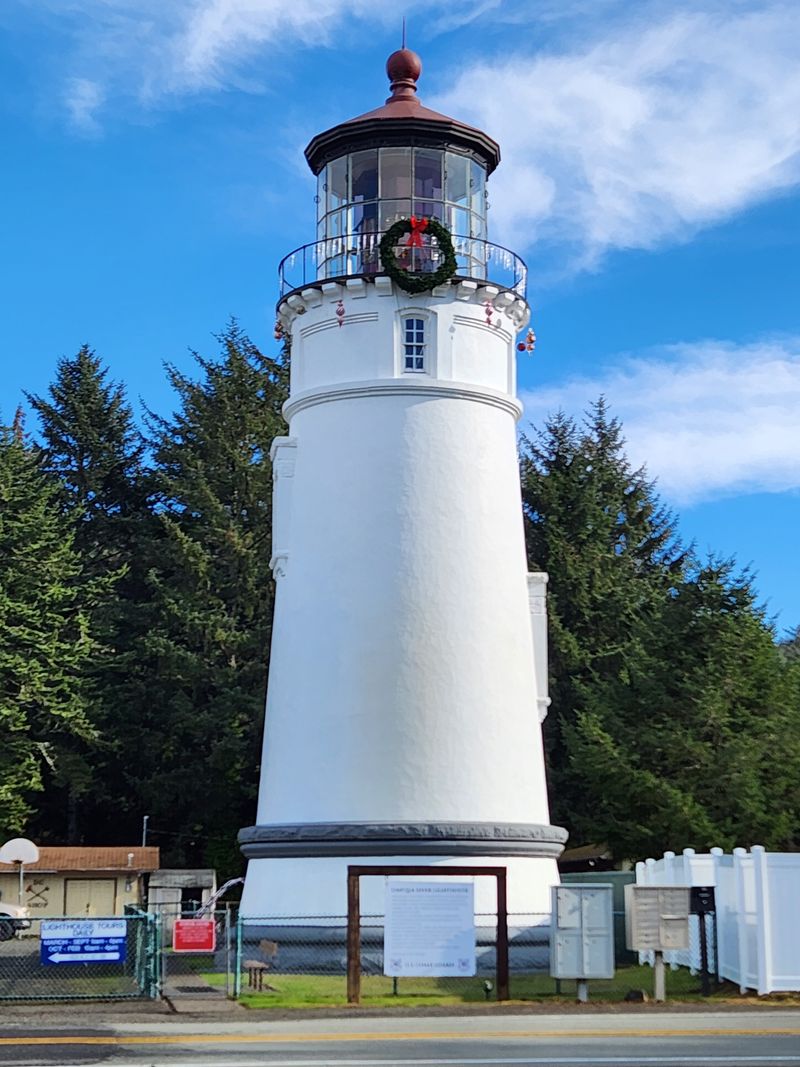
Located at 1020 Lighthouse Rd, the current Umpqua River Lighthouse stands as a proud example of Victorian-era engineering, but it replaced Oregon’s very first lighthouse, which met an embarrassing and swift demise. Built in 1857 to mark the entrance to the Umpqua River, the original tower was supposed to herald a new era of safe navigation along the treacherous southern coast.
Engineers and builders celebrated its completion, confident they had planted a permanent beacon to guide ships through the notorious river bar.
Their confidence proved tragically misplaced when, just four years after construction, the entire structure collapsed into the river due to severe shoreline erosion. Planners had positioned the tower far too close to the water’s edge, underestimating the relentless power of tides, storms, and the river’s shifting course.
The lighthouse literally fell apart and disappeared into the waves, leaving mariners without the critical guidance they desperately needed and officials scrambling to explain the costly failure.
The replacement lighthouse, completed in 1894 and still standing today, was wisely built farther inland on more stable ground, learning from the spectacular mistake of its predecessor. The museum and visitor center at the site now tell the full story, including the humbling lesson about respecting natural forces when building permanent structures.
Visitors can climb the 64-foot tower, explore exhibits about lighthouse technology, and hear about the original tower’s short, soggy existence. Umpqua River Lighthouse serves as a reminder that even the best intentions and solid construction mean nothing if you ignore the landscape’s power, and sometimes the most important stories are about the failures that taught us how to succeed.
8. Cape Blanco Lighthouse: Where Compasses Go Haywire
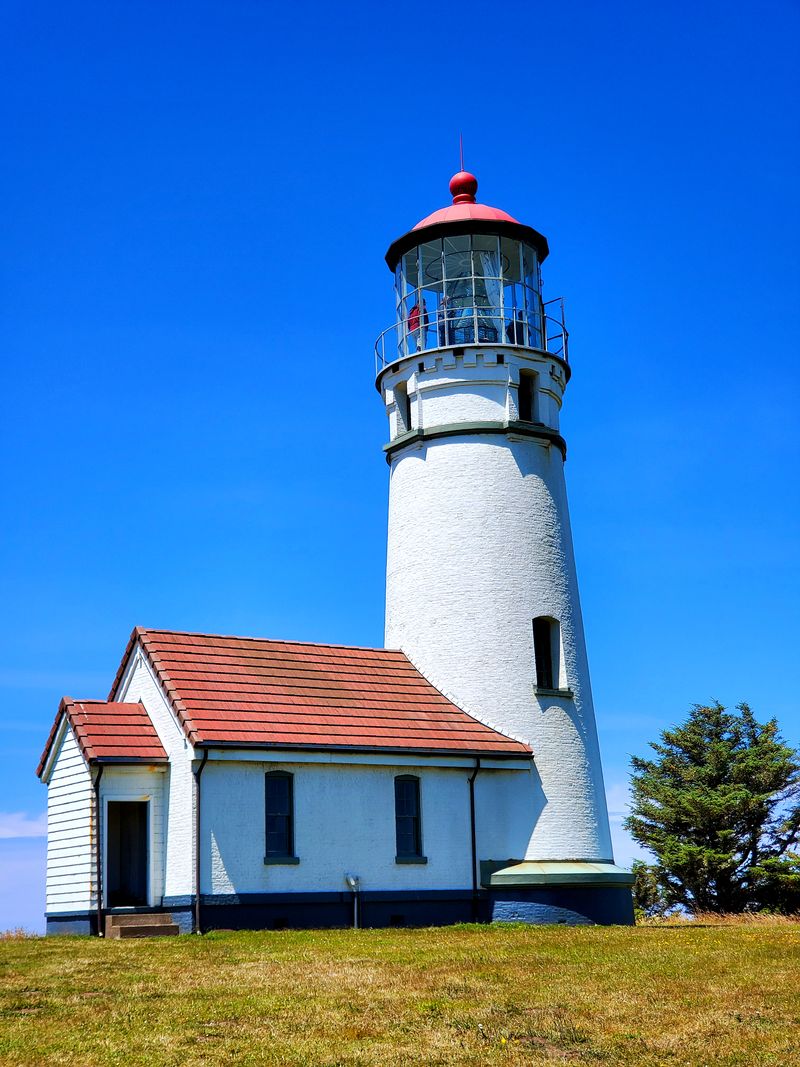
Standing at 91100 Cape Blanco Rd, Cape Blanco Lighthouse holds the dual distinction of being both the oldest continuously operating lighthouse in Oregon and the westernmost point in the state. First lit in 1870, the tower has guided ships past treacherous reefs and rocky headlands for more than 150 years, a testament to the skill of its builders and the dedication of generations of keepers.
The first head keeper, James Langlois, served an astounding 42 years at this remote outpost, enduring harsh weather, isolation, and the constant demands of maintaining the light through every season.
What makes Cape Blanco truly unique, however, is the geological quirk that still affects navigation today: the surrounding rock is so rich in magnetized iron ore that it can cause ship compasses to malfunction when vessels pass too close to shore. Mariners have reported erratic compass readings and unexpected deviations, forcing them to rely on visual landmarks and modern GPS rather than traditional magnetic navigation.
This natural phenomenon added an extra layer of danger to an already challenging stretch of coastline, making the lighthouse’s presence even more critical.
The tower rises 59 feet and sits atop a headland that places the light 245 feet above sea level, providing visibility for miles in clear conditions. Visitors today can tour the lighthouse and keeper’s quarters, learning about the lives of those who served in this isolated location and the strange magnetic forces that continue to puzzle sailors.
Cape Blanco Lighthouse stands as a reminder that nature still holds surprises and challenges, even in an age of advanced technology, and that the old beacons remain as relevant and fascinating as ever along Oregon’s wild and wonderful coast.
Dear Reader: This page may contain affiliate links which may earn a commission if you click through and make a purchase. Our independent journalism is not influenced by any advertiser or commercial initiative unless it is clearly marked as sponsored content. As travel products change, please be sure to reconfirm all details and stay up to date with current events to ensure a safe and successful trip.
