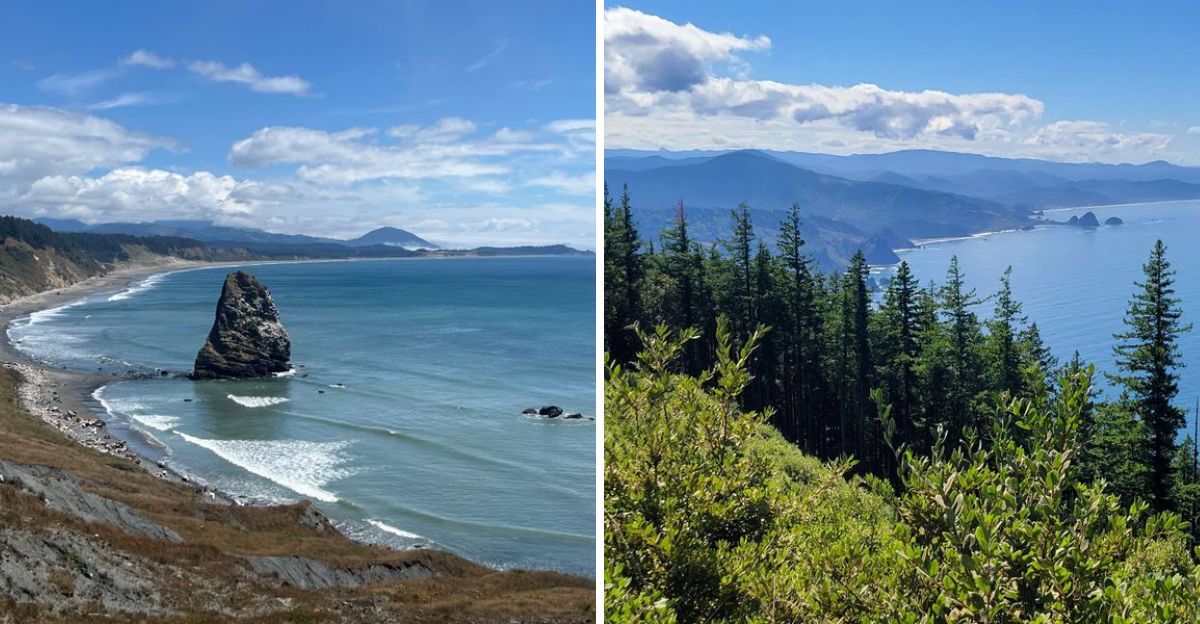
Oregon’s coastline stretches over 360 miles of dramatic cliffs, hidden coves, and windswept headlands that few travelers ever truly discover.
While crowds flock to the famous spots, there exists a collection of lookouts where the only sounds are crashing waves and seabird calls echoing across the rocks.
These peaceful vantage points offer something increasingly rare along popular coastlines: solitude paired with breathtaking views that feel like your own secret discovery.
Whether you’re chasing sunrise colors over the Pacific or simply need a quiet moment away from the noise of daily life, these Oregon coastal gems deliver tranquility without compromise.
This list is guided by atmosphere, setting, and how consistently each lookout offers a quieter experience, based on editorial research and local insight.
Crowd levels and conditions can vary with season and weather, and the order reflects perspective rather than a definitive ranking.
1. Cape Ferrelo Viewpoint
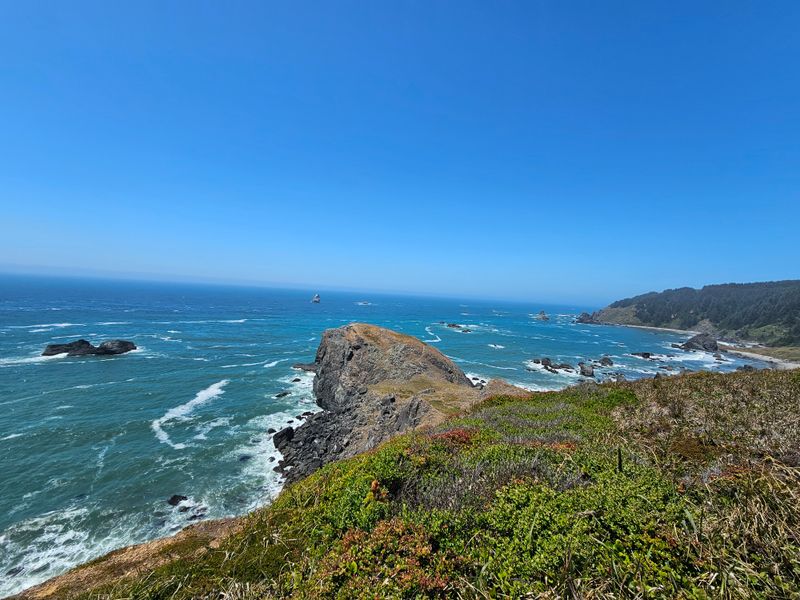
Tucked away in the far southern reaches of Oregon, Cape Ferrelo remains one of the coast’s best-kept secrets despite offering some of the most stunning panoramas in the entire state.
Named after Spanish explorer Bartolomé Ferrelo, this windswept promontory sits just north of the California border and provides sweeping views that extend for miles in both directions.
The short trail from the parking area winds through coastal scrub and wildflowers before opening onto a dramatic clifftop perch where the Pacific stretches endlessly before you.
What makes this spot particularly special is its remoteness from major tourist corridors.
Most visitors racing along Highway 101 never notice the small turnoff, leaving this spectacular viewpoint blissfully uncrowded even during peak summer months.
Rocky offshore formations create natural sculptures as waves crash against ancient stone, sending spray high into the air on windy days.
Seabirds nest along the cliff faces, and during migration seasons, you might spot whales breaching in the distance.
The light here changes throughout the day, painting the landscape in different moods from dawn’s soft pastels to the golden glow of late afternoon.
Sunset transforms the entire scene into something almost otherworldly as the sun sinks into the Pacific horizon.
Bring a jacket regardless of season because coastal winds can be brisk, but that same breeze keeps the air fresh and invigorating.
There are no facilities here, which only adds to the wild, untouched feeling of the place.
For photographers and contemplative souls alike, Cape Ferrelo delivers exactly what peaceful coastal lookouts should: uninterrupted beauty and blessed quiet.
2. Cascade Head Trail Summit
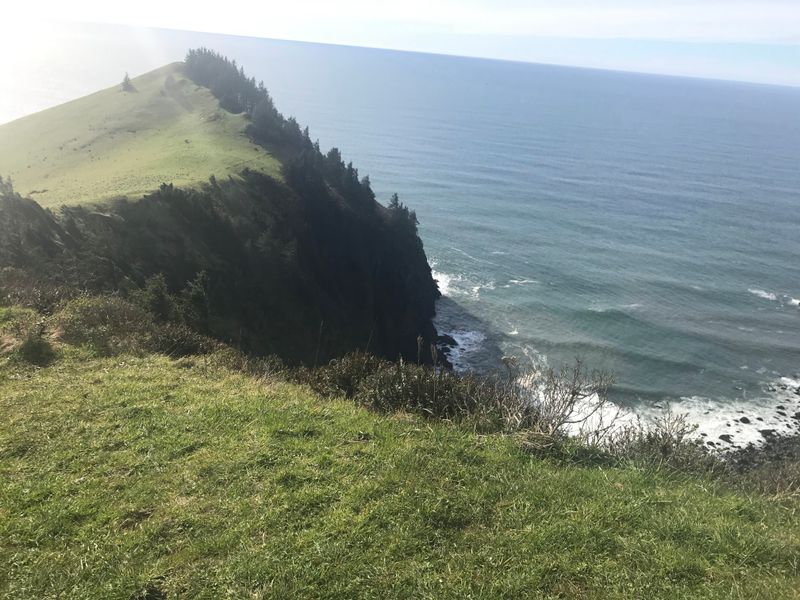
Rising dramatically from the ocean between Lincoln City and Neskowin, Cascade Head presents a different kind of coastal experience altogether.
This Nature Conservancy preserve protects one of the rarest ecosystems along the entire Pacific coast, and the trail to its summit rewards hikers with views that feel almost Polynesian in their lush beauty.
The moderately challenging hike climbs through old-growth Sitka spruce forest before emerging onto open grasslands that tumble toward sheer ocean cliffs.
Standing atop these verdant slopes with the wind rushing up from below creates a sensation of flying.
The headland juts far enough into the Pacific that you gain perspective on the coastline itself, seeing how the land curves and the beaches stretch in graceful arcs.
Because the trail requires some effort to reach, casual sightseers typically skip it, meaning you’ll often share the summit with only a handful of fellow hikers who appreciate the journey.
Wildflowers blanket the grasslands in spring and early summer, creating natural gardens that seem impossibly vibrant against the blue ocean backdrop.
Elk sometimes graze on the lower slopes, and bald eagles soar on thermal currents rising from the warming cliffs.
The preserve restricts access during sensitive nesting seasons, which helps maintain the area’s ecological integrity and peaceful character.
Pack water and snacks for the climb, and time your visit for weekday mornings when solitude comes easiest.
The summit offers multiple vantage points, so you can find your own private perch among the grasses.
This is Oregon coastal scenery at its most unspoiled, where nature still dictates the rhythm and human presence remains appropriately humble.
3. Yaquina Head Outstanding Natural Area
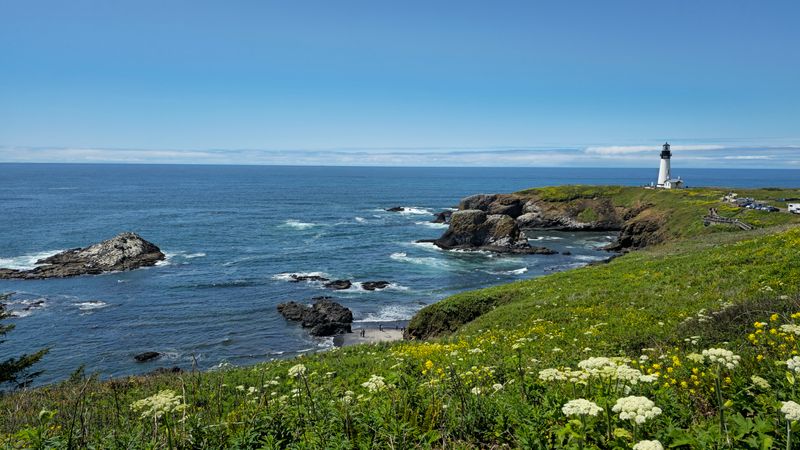
Just north of Newport, Yaquina Head extends nearly a mile into the Pacific, creating a natural platform for observing both ocean and wildlife in remarkable proximity.
While the historic lighthouse draws some visitors, most never venture beyond the paved paths, leaving the outer reaches of the headland surprisingly tranquil.
The Bureau of Land Management maintains this outstanding natural area with careful attention to preserving its wild character while allowing thoughtful access.
Rocky intertidal zones at the base of the headland teem with sea stars, anemones, and hermit crabs, creating natural aquariums that fascinate tide pool explorers.
Above, the basalt cliffs provide nesting sites for common murres, cormorants, and pigeon guillemots that fill the air with their calls during breeding season.
Harbor seals haul out on offshore rocks, and gray whales pass close to shore during their annual migrations.
The headland’s geology tells a volcanic story millions of years in the making, with columnar basalt formations revealing the area’s fiery origins.
Several viewpoints scattered around the headland offer different perspectives, from sweeping coastal panoramas to intimate views of wave action against ancient rock.
Early morning visits before tour buses arrive guarantee peaceful contemplation, when fog might still cling to the water and the light turns everything silver and gold.
The interpretive center provides context without overwhelming the experience, and rangers offer occasional guided walks that deepen understanding without disturbing the peace.
Wheelchair-accessible paths make portions of the headland available to all visitors, though the most secluded spots require navigating uneven terrain.
This is a place where geological time, biological abundance, and human appreciation intersect gracefully, creating moments of connection with something far larger than ourselves.
4. Neahkahnie Mountain Summit
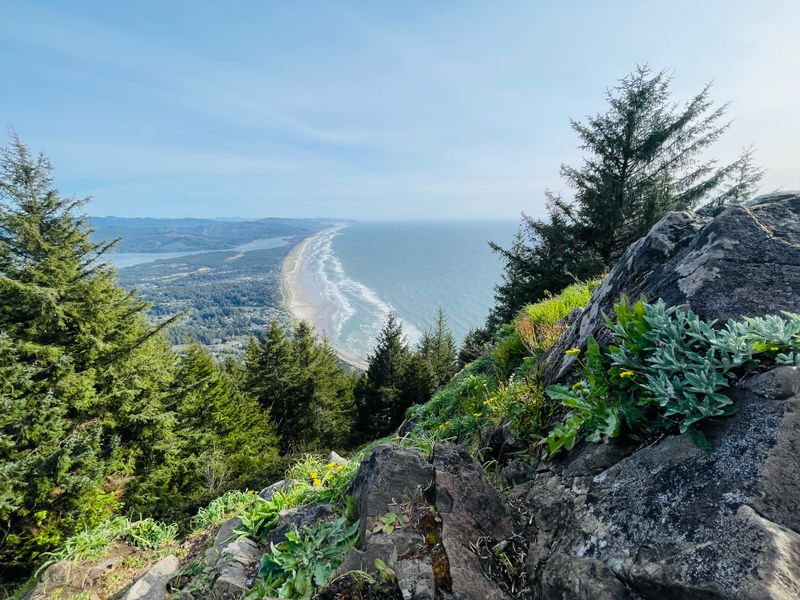
Towering 1,600 feet directly above the Pacific, Neahkahnie Mountain offers perhaps the most dramatic elevation gain along the entire Oregon coast.
The trail climbs steeply through coastal forest before breaking into open meadows where the full scope of the view suddenly reveals itself in breathtaking fashion.
From the summit, the coastline unfolds in both directions like a living map, with Manzanita Beach curving gracefully below and Cascade Head visible to the south on clear days.
Legend speaks of Spanish treasure buried somewhere on the mountain’s slopes, adding an element of mystery to the already compelling landscape.
Whether gold exists or not, the real treasure is the panoramic perspective gained from standing atop this ancient volcanic remnant.
The hike demands effort, which naturally filters out those seeking easy roadside views and preserves a sense of earned solitude at the top.
Wildflowers including lupine and paintbrush color the upper meadows in spring, while fall brings golden grasses that glow in the slanting light.
Hawks and ravens ride wind currents along the mountain’s face, and on fortunate days, you might watch whales spouting far below.
Weather changes rapidly at this elevation, so layers are essential even when the trailhead feels warm.
The summit provides multiple rocky outcrops perfect for settling in with a thermos and simply absorbing the magnitude of ocean, forest, and sky.
This is not a quick stop but rather a destination requiring commitment, which is precisely why it remains peaceful despite its spectacular views.
The descent offers different perspectives as you drop back into the forest, where the roar of distant surf gradually fades beneath the canopy.
5. Cape Blanco Lighthouse Grounds
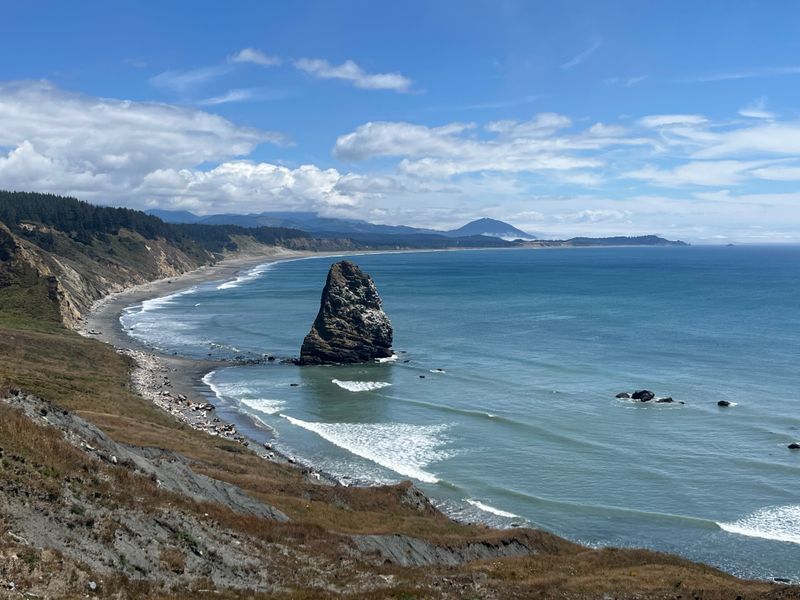
Standing on the westernmost point in Oregon, Cape Blanco Lighthouse has guided mariners since 1870 from atop cliffs that plunge dramatically to the churning sea below.
While the lighthouse itself attracts history enthusiasts, the surrounding grounds offer expansive views with surprisingly few visitors once you wander beyond the immediate tower area.
The cape extends far enough into the Pacific that you gain a sailor’s perspective, understanding why this promontory has witnessed countless shipwrecks over the centuries.
Wind-sculpted vegetation clings low to the ground, shaped by relentless ocean gales that have bent and twisted every plant into submission.
Several trails wind around the headland, leading to different vantage points where you can watch waves attack the cliffs with hypnotic repetition.
The lighthouse grounds feel remote despite their accessibility, perhaps because the landscape itself seems so wild and untamed.
On clear days, visibility extends for dozens of miles, while foggy mornings transform the cape into something mysterious and slightly haunting.
The historic lighthouse keeper’s homes add human context to the scene, reminding visitors of the hardy souls who once lived in such isolation.
Spring wildflowers briefly soften the windswept character, but the overall impression remains one of raw coastal power.
Photographers prize the dramatic light conditions here, where storms and sunshine can alternate within minutes.
The road to the cape winds through Hughes House and past the lighthouse access, but most tourists turn back before exploring the full extent of the headland.
This leaves the outer reaches peaceful for those willing to walk a bit and embrace the wind.
Sunset from Cape Blanco ranks among Oregon’s finest, with the sun sinking directly into the Pacific in a blaze of color.
6. Humbug Mountain Summit Trail
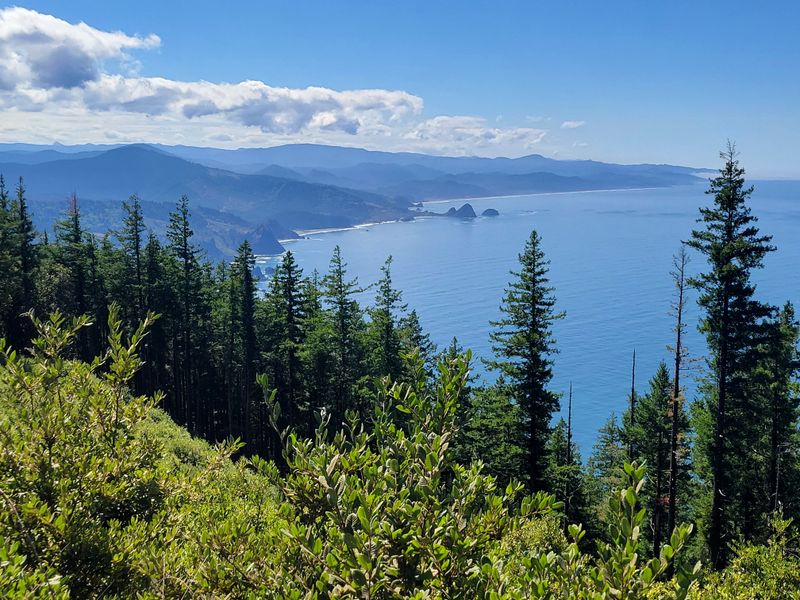
Rising sharply from sea level to over 1,700 feet, Humbug Mountain presents one of the coast’s most challenging yet rewarding hikes.
The trail switchbacks through old-growth forest where massive Douglas firs and myrtle trees create a cathedral-like atmosphere before emerging at a rocky summit with commanding views.
This is not a casual stroll but rather a proper mountain ascent that keeps crowds minimal and rewards those who make the climb with genuine solitude.
The summit perch sits above the tree line, offering 360-degree views that encompass ocean, forest, and the Rogue River valley stretching inland.
On exceptionally clear days, you can see from Cape Blanco in the south to Cape Sebastian in the north, a span of coastline that reveals the true scale of Oregon’s maritime edge.
The mountain’s name supposedly derives from early settlers who thought they could reach the top quickly, only to discover the summit much farther than anticipated.
Modern hikers should heed that lesson and allow three to four hours for the round trip, bringing plenty of water and snacks.
The microclimate at the summit can differ dramatically from the trailhead, with winds significantly stronger and temperatures noticeably cooler.
Spring brings trillium and other forest wildflowers along the lower trail, while the summit remains stark and windswept year-round.
Few experiences along the Oregon coast match the satisfaction of reaching Humbug’s peak after the sustained effort required.
The descent provides time to reflect on the views while your legs recover from the climb.
Because the trail demands real commitment, you’ll rarely encounter more than a handful of other hikers, even on beautiful summer weekends.
This is peace earned through effort, making the tranquility feel even more precious.
7. Cape Perpetua Scenic Area Overlook
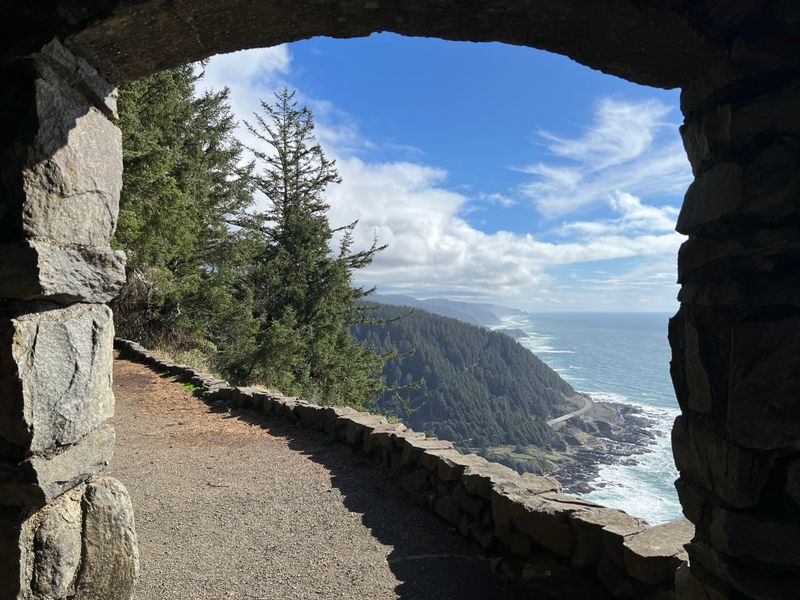
Soaring 800 feet above the Pacific, Cape Perpetua provides one of the highest coastal viewpoints accessible by car, though the most peaceful experiences come from exploring the network of trails that web across the headland.
The Forest Service manages this diverse area where ancient Sitka spruce forests meet dramatic coastal cliffs in a landscape that feels both primordial and immediate.
Captain James Cook named the cape on March 7, 1778, Saint Perpetua’s feast day, as he sailed northward exploring the Pacific coast.
Today, the area protects a remarkable concentration of coastal ecosystems within a compact area.
The main overlook offers spectacular views, but walking the Whispering Spruce Trail around the summit reveals quieter perspectives where the forest and ocean meet in perfect harmony.
Tide pools at the cape’s base rank among the coast’s finest, though accessing them requires descending steep trails that discourage casual visitors.
The Devil’s Churn, a narrow inlet where waves explode with tremendous force, demonstrates the ocean’s raw power in concentrated form.
Throughout the area, interpretive signs provide context without overwhelming the natural experience, explaining geology, ecology, and cultural history in accessible terms.
Old-growth forest trails offer peaceful alternatives to the coastal viewpoints, where massive trees create their own sense of cathedral quiet.
The cape’s elevation means weather can change rapidly, with fog rolling in to transform sunny views into mysterious gray landscapes within minutes.
Early morning visits before the visitor center opens guarantee the most solitude, when you might have entire trails to yourself.
This is one of Oregon’s most accessible yet still peaceful coastal destinations, where thoughtful management preserves natural character despite proximity to Highway 101.
8. Face Rock Scenic Viewpoint
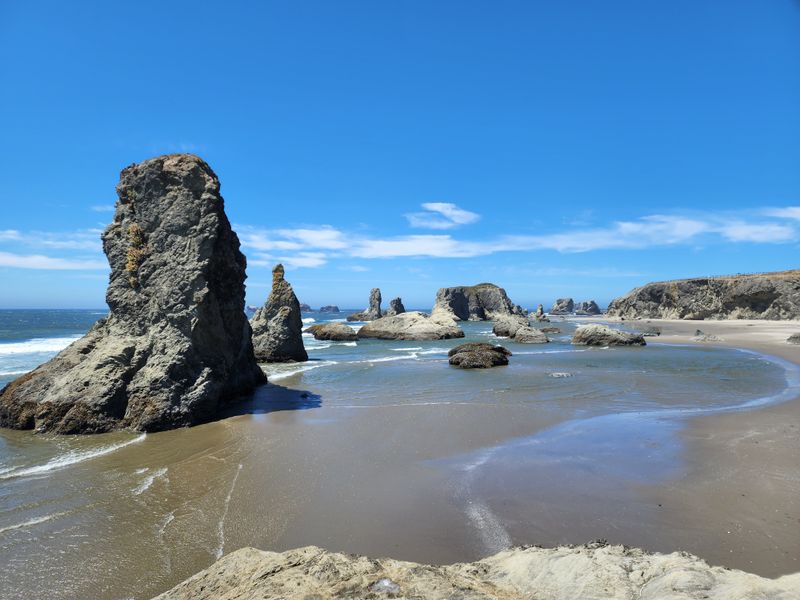
Along Bandon’s southern coastline, Face Rock rises from the surf like a geological sculpture, its features resembling a human profile gazing eternally skyward.
Native American legend tells of a young woman turned to stone by an evil sea spirit, and the formation’s resemblance to a face lends credence to the ancient story.
The viewpoint overlooking this distinctive rock sits within a larger complex of sea stacks and formations that make this stretch of coast particularly photogenic.
What keeps Face Rock relatively peaceful despite its accessibility is timing and awareness.
Most visitors cluster at the main parking area, but walking south along the beach or exploring the bluff trails reveals numerous quiet spots with equally compelling views.
The rock formations change character with the tides, sometimes standing isolated on wet sand, other times surrounded by churning surf.
Sunset paints the entire scene in warm tones that make the rocks glow against the darkening sea.
Photographers arrive early to capture the dawn light, but mid-morning after the initial rush often provides surprising solitude.
The beach extends for miles, allowing endless exploration of tide pools, smaller rock formations, and hidden coves.
Bandon’s location on the southern Oregon coast means fewer visitors than the more heavily trafficked central areas, contributing to a generally relaxed atmosphere.
The viewpoint itself requires only a short walk from parking, making it accessible while still feeling somewhat removed from the highway.
Winter storms create dramatic wave action that draws hardy souls willing to brave the weather for spectacular displays of natural power.
This is a place where geology and storytelling intersect, where ancient rock becomes a canvas for imagination while providing very real beauty that needs no embellishment.
9. Otter Point State Recreation Site
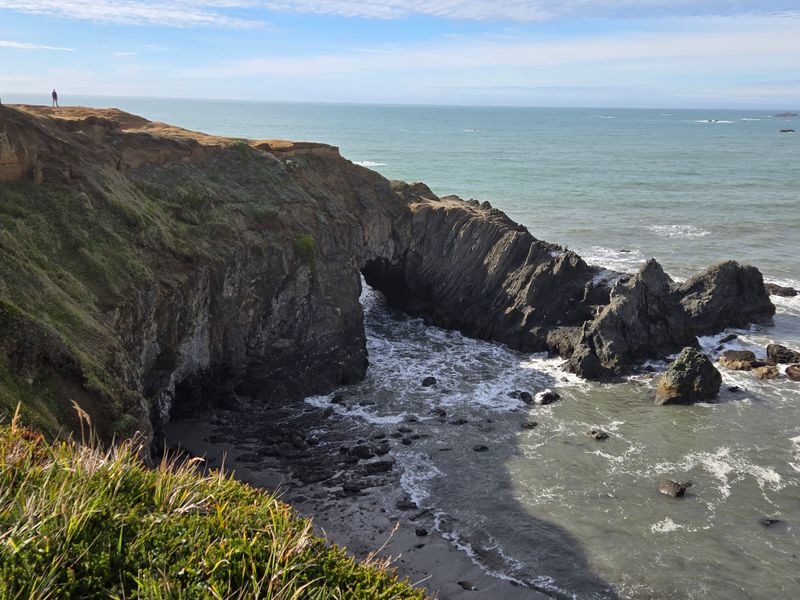
Between Gold Beach and Port Orford, Otter Point juts into the Pacific as a rocky promontory where offshore formations create natural sculpture gardens in the surf.
This small state recreation site receives far less attention than nearby larger parks, making it a genuine hidden gem for those seeking coastal peace.
The parking area sits directly adjacent to the viewpoint, requiring virtually no walking, yet the site remains surprisingly uncrowded most days.
Rocky outcrops provide multiple perches for settling in with binoculars or a sketchbook, watching waves pattern themselves against ancient stone.
The point offers excellent whale watching during migration seasons, as the mammals pass close to shore in these protected waters.
Sea otters occasionally appear in the kelp beds, floating on their backs while cracking open shellfish with characteristic charm.
The relatively small size of the site means it never feels overwhelming or commercialized, retaining an intimate scale that larger parks often lose.
Picnic tables scattered among the rocks invite lingering, turning a quick stop into an extended stay as the rhythm of waves works its meditative magic.
The southern Oregon coast receives less rainfall than areas farther north, meaning Otter Point often enjoys clear skies when fog blankets beaches near Newport or Lincoln City.
Spring wildflowers including sea thrift and coastal lupine add color to the rocky landscape, softening the otherwise stark geology.
Because Highway 101 curves inland slightly at this point, the site feels removed from traffic noise despite its roadside location.
This is proof that peaceful coastal lookouts need not be remote or difficult to reach, sometimes hiding in plain sight along the highway, waiting for those who simply know to stop.
Dear Reader: This page may contain affiliate links which may earn a commission if you click through and make a purchase. Our independent journalism is not influenced by any advertiser or commercial initiative unless it is clearly marked as sponsored content. As travel products change, please be sure to reconfirm all details and stay up to date with current events to ensure a safe and successful trip.
