Ever felt that pull towards the forgotten corners of history? If the thought of peeling back layers of the past, with a touch of the eerie, gets your adventurer’s heart racing, then buckle up!
We’ve put together an incredible road trip through some of Oregon’s most atmospheric, long-abandoned settlements. Imagine wandering through silent, weathered buildings, each whispering tales of pioneers, prospectors, and a bygone era.
This isn’t just a drive; it’s a journey into the soul of a different time, perfect for anyone craving a unique blend of history, mystery, and stunning Oregon scenery. Grab your keys – adventure awaits!
1. Shaniko, Oregon
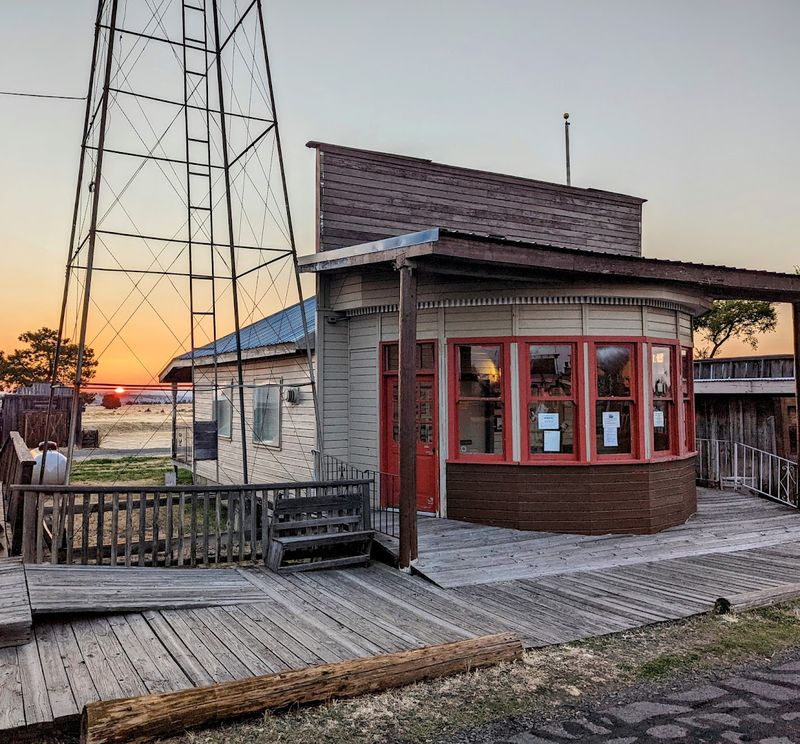
At one point in history, Shaniko was known as the wool capital of the world. Hard to believe when you roll through today and find sun-bleached buildings standing quietly along a nearly empty main street in north-central Oregon.
The town sits in Wasco County, in the high desert plateau east of the Cascades. It boomed in the early 1900s as a major railroad shipping hub for wool and wheat, and then faded just as fast once the railroad lines shifted.
What makes Shaniko special is that many of its original buildings are still standing. The old water tower, the hotel, and the city hall are all remarkably intact compared to most ghost towns.
You can walk the streets and actually get a sense of what the layout once looked like.
The Shaniko Historic Hotel has gone through various stages of restoration over the years, so check ahead to see what is currently open to visitors. The surrounding landscape is also stunning in a stark, wide-open way that feels almost cinematic.
If you time your visit for a weekend morning, you might catch a few local vendors or small events that pop up in warmer months. Shaniko rewards slow exploration, so give yourself at least an hour or two to really soak in the atmosphere before moving on to the next stop.
2. Hardman, Oregon

Most people drive right past Hardman without realizing it was ever anything more than a bend in the road. Located in Morrow County in northeastern Oregon, this tiny settlement once served as a farming and ranching community with a school, church, and general store.
Today, a handful of old structures still cling to the landscape, slowly being reclaimed by the surrounding hills. The atmosphere here is genuinely quiet in a way that feels different from just being remote.
There is a specific stillness that comes from a place that used to be full of people and now simply is not.
Hardman is a great stop for photographers who love rustic textures. Peeling paint, sagging rooflines, and weathered wood create compositions that practically frame themselves.
The surrounding countryside is also beautiful in an understated way, with rolling grasslands stretching toward the horizon.
Since there are no formal visitor facilities, come prepared with water and snacks. The roads leading in can be rough depending on the season, so a vehicle with decent clearance is helpful.
What I appreciate most about Hardman is that it has not been turned into a tourist attraction. It exists as it is, slowly and honestly.
That authenticity is increasingly rare, and it makes stopping here feel like a genuine discovery rather than a curated experience.
3. Richmond, Oregon

Richmond sits in Grant County in the remote high desert of central Oregon, and getting there is half the adventure. The town once served as a supply hub for surrounding ranches and farms in the late 1800s, complete with a post office, school, and small businesses.
By the mid-20th century, the population had dwindled to almost nothing. What remains today is a scattered collection of structures in various states of decay, surrounded by open range land that stretches in every direction.
The isolation here is real. Cell service is limited, the roads are unpaved, and the nearest town with services is a significant drive away.
That said, the sense of being completely removed from modern life is exactly what makes Richmond so memorable.
Sunrise and sunset are particularly dramatic in this part of Oregon. The light hits the old buildings at angles that turn everything golden and a little otherworldly.
If you can time your visit around those hours, the visual payoff is worth the effort.
Bring a paper map or download offline navigation before heading out, because GPS can be unreliable in this stretch of the state. Richmond is not the easiest place to reach, but visitors who make the effort consistently say it feels like stepping into a painting of the old American West that nobody else knows about.
4. Cornucopia, Oregon

Gold brought people to Cornucopia, and the mountains eventually took them back. Perched in the Wallowa Mountains of Baker County in northeastern Oregon, this former mining settlement reached its peak in the late 1800s when rich gold and silver deposits drew hundreds of hopeful prospectors.
The town once had a hotel, saloons, a school, and enough infrastructure to support a thriving community. When the ore ran out and mining operations became too costly, the population evaporated almost overnight.
What visitors find today is a hauntingly beautiful collection of collapsed structures half-swallowed by forest. The setting is genuinely dramatic, with steep peaks and dense pine trees surrounding the remnants on all sides.
It feels less like a town and more like something the wilderness is slowly digesting.
The hike into Cornucopia adds to the experience. Depending on the route and season, you may need to walk a portion of the way in, which filters out casual visitors and makes the whole visit feel more earned.
Summer is the best season to go, since snow can block access routes well into spring. Wildlife sightings are common in this part of Oregon, so keep your eyes open for deer and birds along the way.
Cornucopia is one of those places that lingers in your memory long after you have driven home, mostly because it is so strikingly beautiful even in its state of quiet collapse.
5. Sumpter, Oregon

Sumpter is the kind of ghost town that actually invites you in rather than just tolerating your presence. Located in Baker County in northeastern Oregon, it sits in the Powder River Valley and draws visitors with its most famous landmark: the Sumpter Valley Gold Dredge.
This enormous bucket-line dredge operated in the early to mid-1900s, churning through river gravel in search of gold and leaving behind the distinctive rocky tailings piles you can still see today. The dredge itself is preserved as part of a state heritage area and is genuinely impressive up close.
Sumpter still has a small permanent population and a few active businesses, which gives it a slightly livelier feel than a fully abandoned town. There are shops, a small museum, and seasonal events that make it a comfortable stop for families or anyone who prefers a bit of infrastructure with their history.
The Sumpter Valley Railroad also runs scenic narrow-gauge train rides in warmer months, connecting Sumpter to nearby McEwen and offering a fun way to see the landscape from a different angle.
Fall is a particularly stunning time to visit, when the surrounding hills turn gold and amber and the whole valley looks like it belongs on a postcard. Between the dredge, the train, and the authentic western townscape, Sumpter packs more into a single stop than almost anywhere else on this route.
6. Whitney, Oregon

A short drive from Sumpter along the Elkhorn Scenic Byway brings you to Whitney, a small ghost town that most road-trippers overlook entirely. That is a mistake worth correcting.
Whitney was established as a railroad and logging community in Baker County, northeastern Oregon, and once had a sawmill, hotel, and enough activity to qualify as a proper town. When the timber industry shifted and the railroad pulled back, Whitney quietly emptied out.
What remains today is a loose collection of weathered structures scattered among pines and open meadow. The setting has a storybook quality to it, especially in the soft morning light when mist sometimes hangs low over the grass.
Because Whitney sits along a paved scenic byway, it is easier to access than many other ghost towns on this list. You can pull over, walk around the remaining buildings, and take in the surroundings without needing special gear or a high-clearance vehicle.
The Elkhorn Scenic Byway itself is worth the drive regardless of the ghost town stops. It loops through some of the most beautiful mountain and forest scenery in eastern Oregon, with several viewpoints and recreation areas along the way.
Whitney works well as a companion stop to Sumpter since they are so close together. Pairing the two gives you a fuller picture of how this part of Oregon looked and operated during its most active era.
7. Galena, Oregon

Galena has the feel of a place that the modern world simply forgot to notice. Located in Grant County in the John Day River area of central Oregon, this former silver and gold mining settlement dates back to the 1870s.
At its peak, Galena had a population of several hundred people and all the trappings of a working mining community, including stores, a post office, and residential buildings. Today, only a few structures remain standing, and they are in various stages of natural decline.
Getting to Galena requires some navigation on unpaved roads, and the route can be challenging in wet conditions. That extra effort does serve a purpose though, because it means you are unlikely to arrive and find a crowd waiting for you.
The surrounding landscape is classic central Oregon high country, with dramatic rock formations, open skies, and the kind of quiet that makes you realize how loud everyday life usually is. The John Day Fossil Beds National Monument is not far away, which makes Galena a natural addition to a broader exploration of the region.
If you are the type of traveler who finds joy in places that require a little work to reach, Galena will absolutely deliver. The combination of genuine history, remote beauty, and total solitude creates an experience that feels more like an expedition than a typical sightseeing stop.
8. Golden, Oregon

Golden stands out from most Oregon ghost towns because it has been partially preserved as a state heritage site, giving visitors a more structured experience without losing the authentic atmosphere. Located in Josephine County in southwestern Oregon, the town developed in the 1890s around mining and small-scale agriculture.
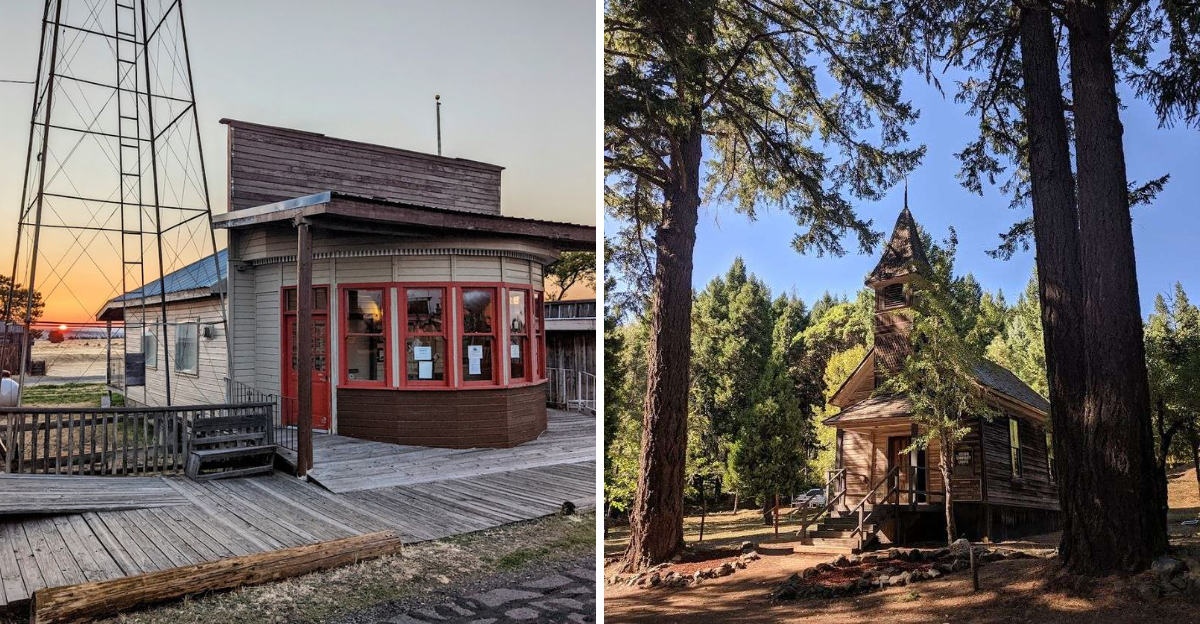
The most striking feature of Golden is its white wooden church, which still stands in remarkably good condition and has become something of an icon for Oregon ghost town photography. Seeing it in person, surrounded by tall trees and quiet hills, is a genuinely affecting moment.
Several other structures are also preserved on the site, including a general store and residential buildings that give a clear picture of what small-town life looked like in this part of Oregon over a century ago.
Access to Golden is via a gravel road off Highway 227, and the drive itself passes through lovely forested terrain. The site is managed to allow visitors to walk around and explore, though touching or entering the buildings is generally not permitted.
Josephine County has a lot going on for outdoor enthusiasts, including the Wild Rivers Coast and the Illinois Valley, so Golden fits naturally into a longer southwestern Oregon itinerary.
The combination of scenic setting, photogenic structures, and accessible location makes Golden one of the most satisfying stops on this entire route, especially for first-time ghost town explorers.
9. Valsetz, Oregon

Valsetz is the most unusual stop on this route because there is almost nothing left to see, and somehow that makes it the most haunting of all. Located in Polk County in the Oregon Coast Range, this former logging town was not simply abandoned but deliberately demolished by the timber company that owned it in 1984.
At its peak, Valsetz was a company town with around 300 residents, a school, a post office, and a genuine community identity. When the timber operations became unprofitable, the company made the decision to remove the town entirely rather than sell or donate it.
Today, the forest has largely reclaimed the land. The roads that once led through town are overgrown, and only careful exploration reveals any trace that a community once existed here.
It is a deeply strange and thought-provoking experience.
Reaching Valsetz requires driving into the Coast Range on logging roads, and access can be restricted depending on active timber operations in the area. Checking current road conditions before you go is essential.
The surrounding forest is lush and green in the way that only the wet western Oregon climate can produce. Even without visible ruins, the landscape itself tells a story about industry, community, and what happens when both come to an end.
Valsetz is not for everyone, but for the right kind of curious traveler, it is the most unforgettable stop on the entire route.
Dear Reader: This page may contain affiliate links which may earn a commission if you click through and make a purchase. Our independent journalism is not influenced by any advertiser or commercial initiative unless it is clearly marked as sponsored content. As travel products change, please be sure to reconfirm all details and stay up to date with current events to ensure a safe and successful trip.
