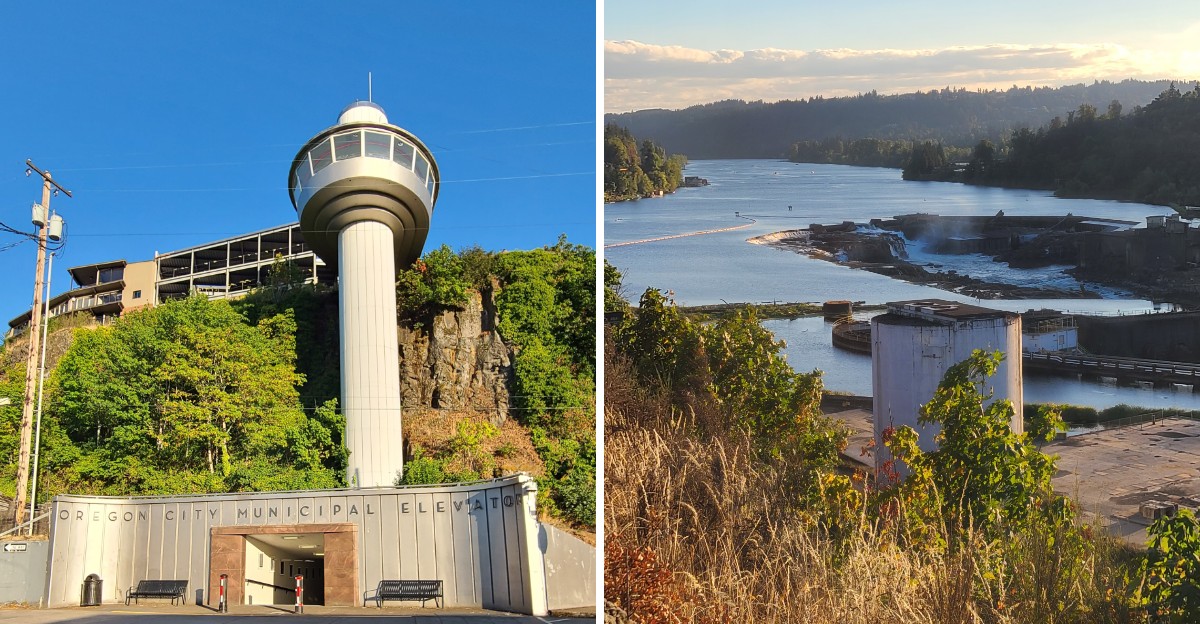
A city street runs vertically through a 130-foot elevator tower, carrying passengers roughly 90 feet up a cliff in just 15 seconds. That’s real, and it’s free to ride.
I find it easy to appreciate how practical the whole idea is. A tall basalt cliff splits one small Oregon town into two levels.
One detail I find worth mentioning is the top. It looks like a flying saucer parked on a cliff, and it wasn’t even meant to look fancy. Planners wanted it plain to save money, and the result turned sci-fi anyway.
Then there’s the view. A big waterfall, a winding river, and old bridges all spread out below the deck.
The Only Street In North America Where You Push A Button To Travel
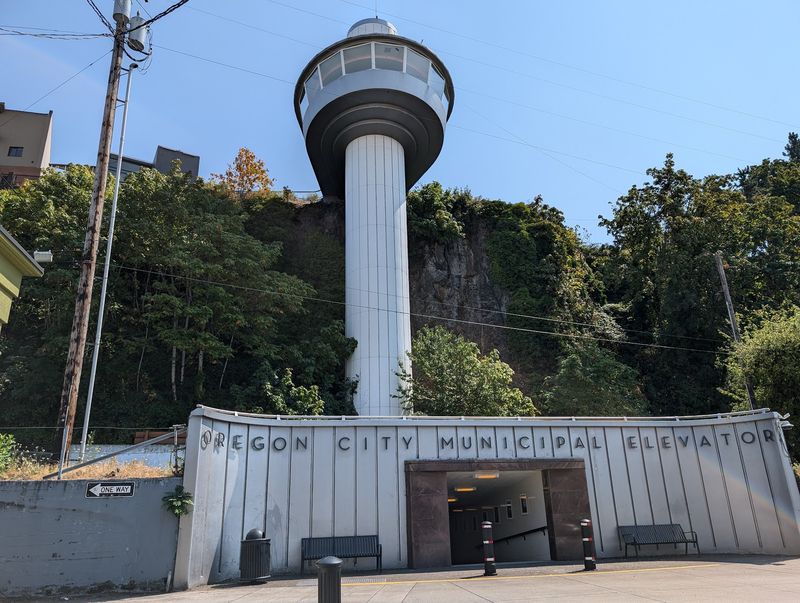
Most streets get potholes and parking meters. The Oregon City Municipal Elevator gets a call button instead, and the city officially calls it Elevator Street.
It holds the title of the only vertical street in North America. Both the upper and lower landings connect to 7th Street, so the ride works like a single block of that road. That block just happens to point at the sky.
The reason makes perfect sense once you see the town. Oregon City sits on two levels, split by a dramatic basalt cliff. Downtown and the riverfront spread out below, while homes and neighborhoods sit up on the bluff.
Getting between those levels used to be a real workout. People climbed hundreds of steps or used old Native American trails cut into the hillside. An elevator was a clever fix, and the city treated it like the public road it really is.
That street status shapes how it runs today. It’s a public utility, not a ticketed attraction, so riding costs nothing at all. You can use it to reach a coffee date uptown or just to say you’ve traveled a street vertically.
Bragging rights included, no extra charge. Not many road trips let you claim that.
Those 722 Steps Explain Why Voters Finally Said Yes
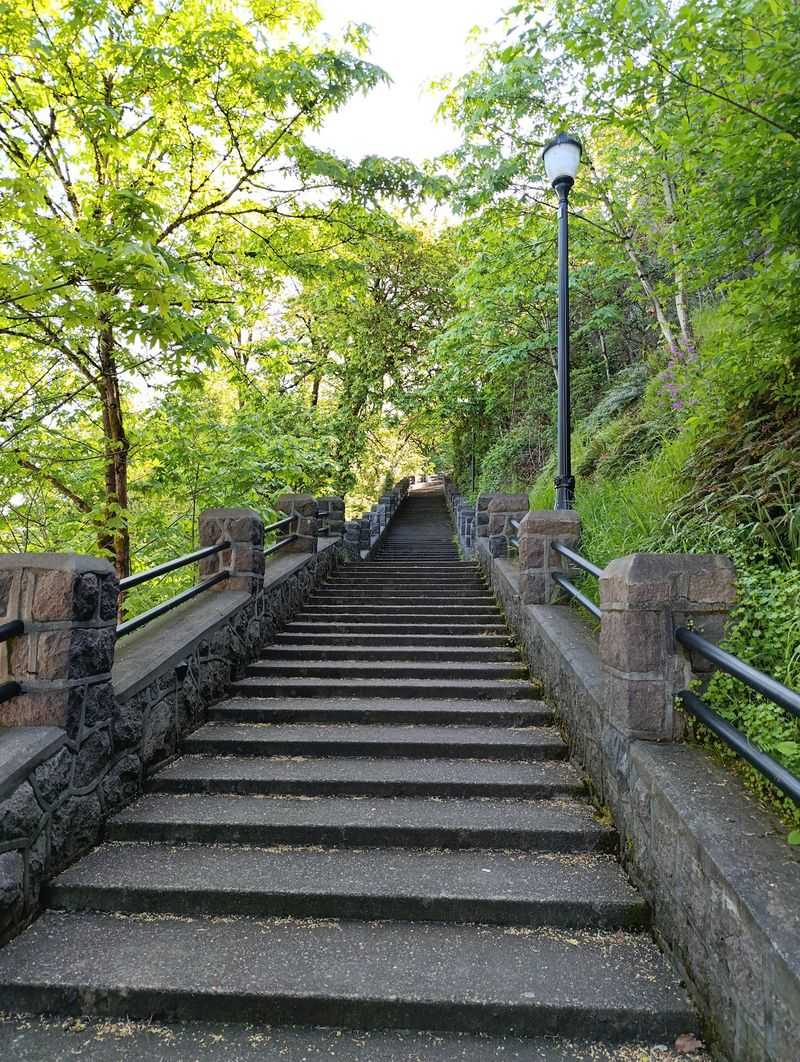
Seven hundred and twenty-two steps. That was the old route between downtown and the bluff, and nobody’s calves wanted a rematch every morning.
City leaders proposed a municipal elevator as the answer. Voters turned the idea down at first, which feels very human. Then, in December 1912, they finally approved it.
The first elevator opened on November 27, 1915. Builders made it from wood and steel, and it traveled 89 feet up the cliff. It ran on water power, which sounds charming until you hear the details.
Every trip could drop the water pressure in nearby homes for the length of the ride. The ride itself took about three to five minutes, so neighbors might notice. Bad timing for anyone mid-shower.
Stalls had their own adventure plan. Stuck passengers could crawl through a trap door and climb down a narrow ladder. That’s one way to make a commute memorable.
Things improved a lot in 1924. The elevator switched to electric power, and the trip shrank to about 30 seconds. Reliability got a major boost too.
Knowing that rocky start makes today’s smooth ride feel even better. Every modern trip quietly honors those patient early riders.
Your Trip Starts With A Tunnel Under The Railroad
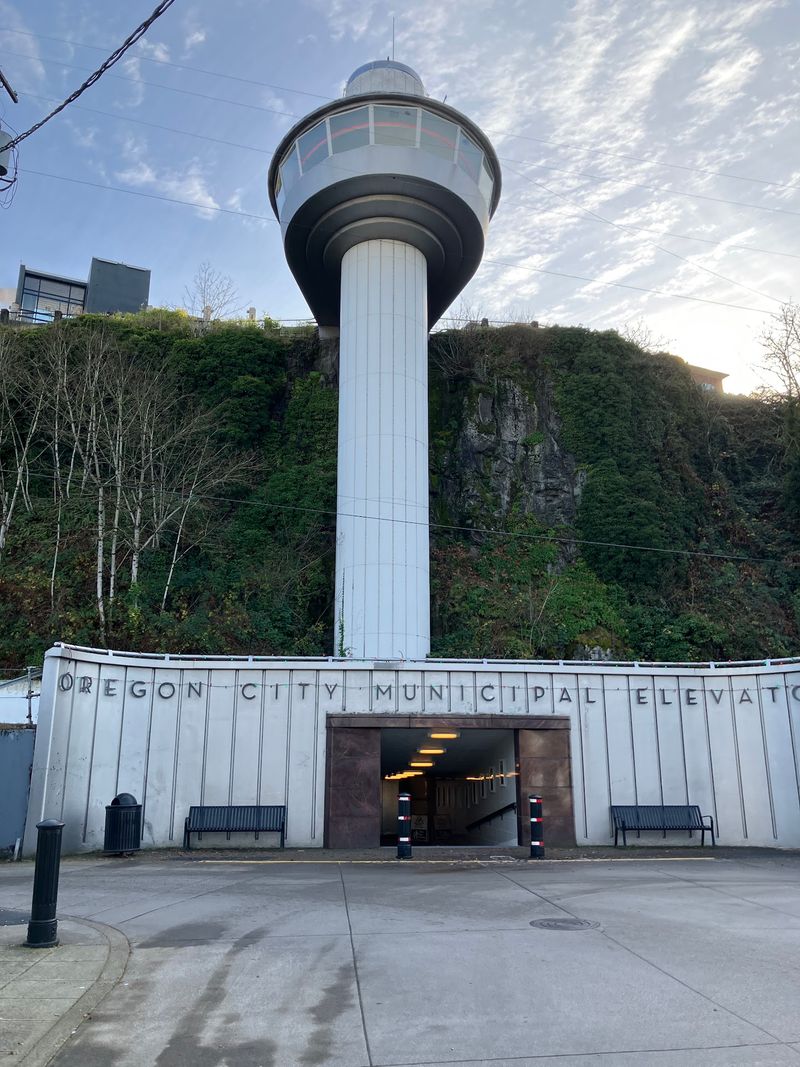
Down on Railroad Avenue, the entrance wall and tall shaft announce themselves pretty loudly. Then comes a fun twist before you even reach the doors.
A short pedestrian tunnel leads you under the Union Pacific Railroad tracks. It adds a little drama to an everyday ride. You head underground briefly before shooting straight up.
Finding the start is simple. The lower entrance sits near 7th Street and Railroad Avenue, at 6 Railroad Ave, Oregon City, OR 97045. Look for the towering shaft and you’re basically there.
Parking nearby may involve a small fee, so keep a little change or a payment app handy. A public restroom at the base is also a welcome sight. Walkers exploring downtown Oregon will appreciate that detail.
The tunnel isn’t just a hallway, either. It carries part of the artwork that tells the town’s story. That makes the walk to the elevator feel like the first chapter.
Got kids who love trains or tunnels? They’ll probably be thrilled before the elevator even moves. Adults may sneak a smile too.
If stairs are your style, a stone stairway offers another route up the cliff. Riding is quicker, but both options deliver the view.
Blink And The Ride Is Basically Over
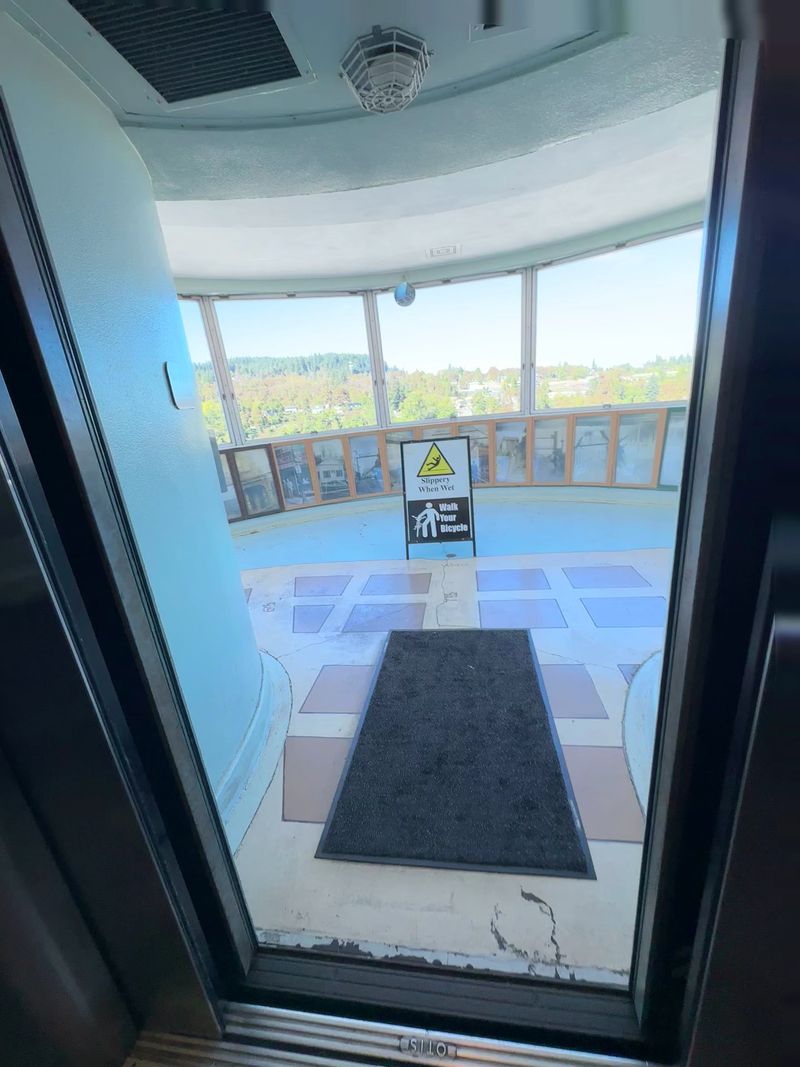
Fifteen seconds. That’s the whole ride from bottom to top, which is shorter than most toaster cycles.
The early version took several minutes, and the 1924 upgrade cut it to about 30 seconds. Today’s elevator halves that again. Your ears barely have time to notice.
Operators once ran the car for riders. Today, trained operators run the elevator, taking passengers between downtown Oregon City and the bluff in about 15 seconds. It feels oddly satisfying to steer your own trip up a city street.
Inside, the walls and floor aren’t plain at all. Lenticular prints show then-and-now images of downtown, historic figures, and the elevator’s construction. Tilt your head and the past shifts into the present.
That art belongs to a project called Elevations in Transition. It stretches through the connecting tunnel as well. Even a quick ride ends up packed with local history.
Fifteen seconds isn’t much time to study everything, though. Riding down and back up again is free, so a second look is easy. No one’s counting.
Honestly, the speed is part of the fun. You get a tiny history lesson and a cliff climb in less time than reading this paragraph.
A Budget Design Accidentally Became A Flying Saucer
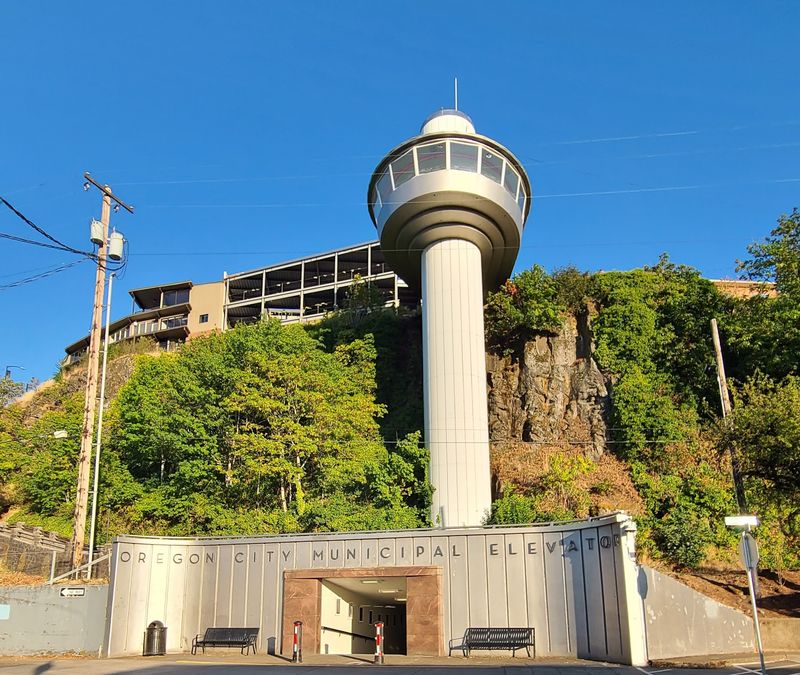
Saving money rarely produces an icon. Somehow, the current elevator pulled it off.
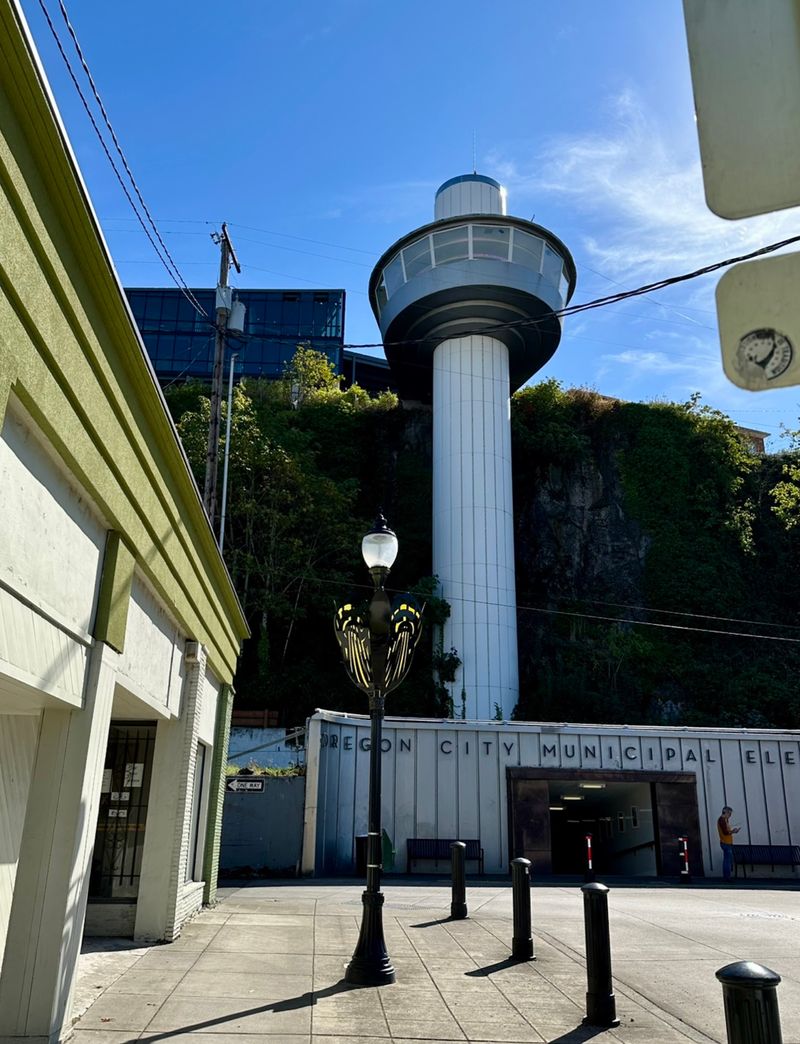
Architect Gordon E. Trapp designed the tower now standing at 130 feet tall. It was dedicated on May 5, 1955, replacing the original wooden version. The plan called for a design kept as plain as possible to control costs.
Plain turned out to look wonderfully strange. The round upper deck resembles a flying saucer resting on top of a tall shaft. It’s pure mid-century modern, and it gives the whole town a retro space-age wink.
Lightweight concrete played a big part in that look. The material helps the observation deck appear to hover above the street. From below, it seems ready to lift off toward the clouds.
I’m particularly drawn to how unplanned the charm feels. Nobody set out to build a sci-fi landmark for selfies. They just wanted an affordable way up a cliff.
The structure earned a spot on the National Register of Historic Places in 2014. That recognition covers both its unusual role and its distinctive design. Not bad for a project trying hard to be boring.
Bring a camera and step back across the street. The full shape is easier to appreciate from a distance.
Stretch Your Legs Along The Promenade After The Ride
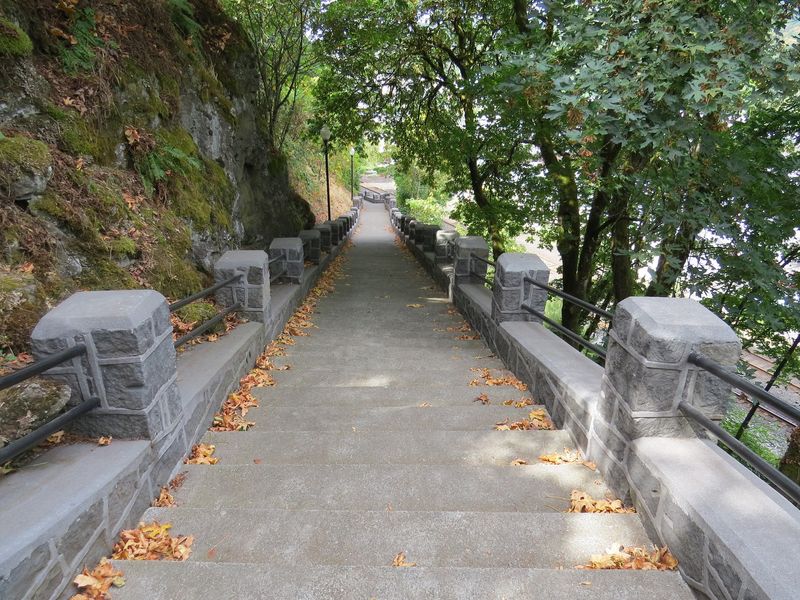
Stepping out at the top doesn’t end the adventure. It opens up a whole new level of town.
A walking path runs along the bluff from the upper landing. It’s a pleasant stroll with river views and peeks toward Willamette Falls. Old mills and hydroelectric structures add industrial character to the scenery.
Staff at the top have pointed riders toward this promenade and nearby stairs. That makes it easy to build a short loop. Ride up, walk the bluff, and maybe take the stairs back down.
The neighborhood above includes green space for relaxing. A picnic with that kind of backdrop sounds hard to beat. Pack snacks and let the river do the entertaining.
History fans will enjoy the setting too. Oregon City played a big role in early Oregon history, and the bluff shows off the landscape that shaped it. The elevator connects those stories physically, one level to the next.
Comfortable shoes help, especially if you choose the stairs. They’re nicely designed but a bit long.
Think of the elevator as your shortcut to a better walk. Fifteen seconds up, then all the time you want to wander.
Willamette Falls Steals The Show From Up Top
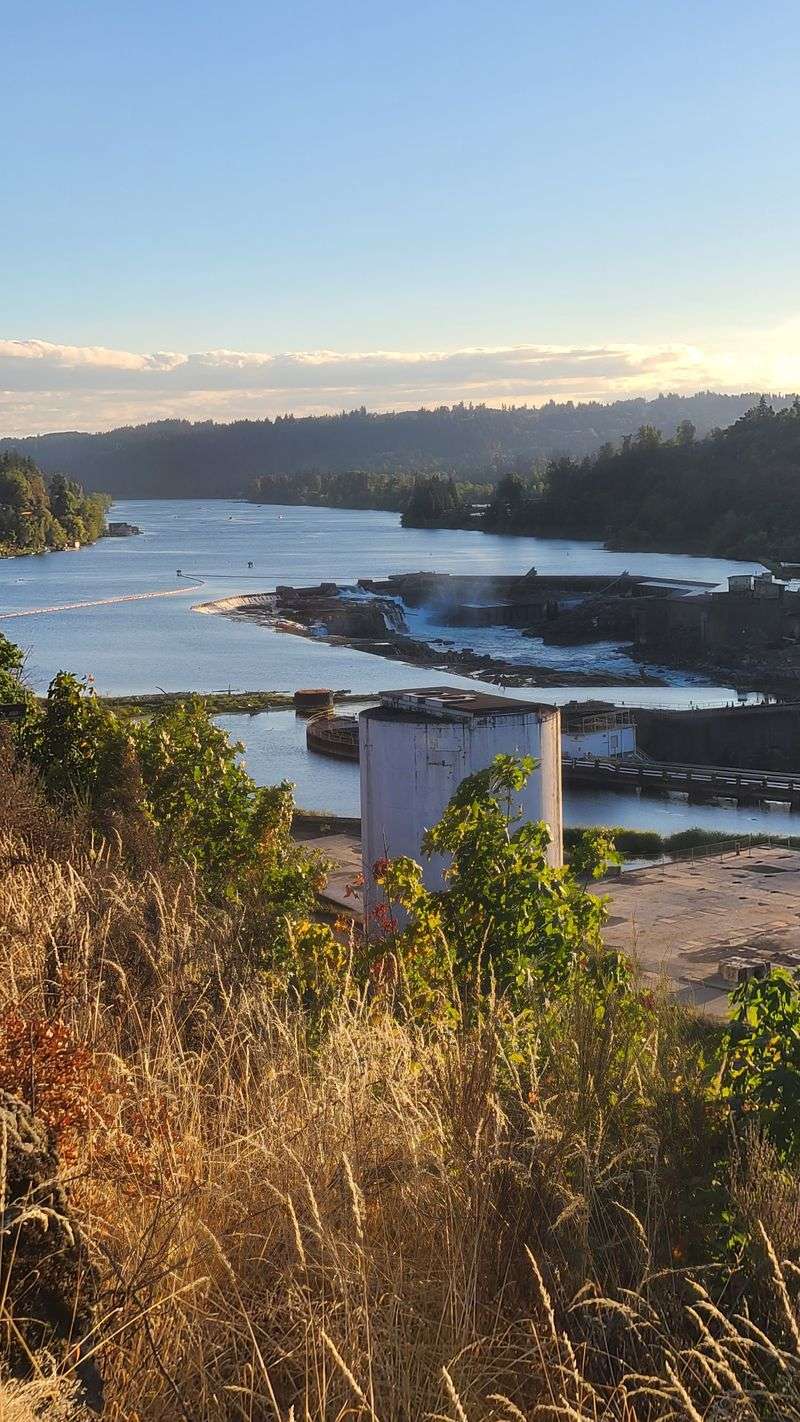
Waterfalls usually require hiking boots. Here, you get one after a 15-second elevator ride.
The observation deck offers a wide sweep of the area below. The Willamette River curves past downtown, and the Oregon City Bridge and Abernethy Bridge come into view. Rooftops and streets spread out like a living map.
The headliner is Willamette Falls. It ranks as the second-largest waterfall by volume in the United States, behind Niagara Falls. Seeing that kind of power from a city sidewalk feels like a cheat code.
Look closely at the floor too. It slopes slightly downward toward the outer edges, which helps drain water. The tilt can feel a bit odd at first.
An information desk at the top shares history about the elevator and the area. Plaques, photos, and posters fill in even more details. It’s an easy place to learn something without trying.
Clear days may add mountains to the scene. Cloudy days still deliver river views and that classic Pacific Northwest mood.
Plan a few minutes to linger. The view rewards patience, and the deck makes a natural pause before exploring the bluff above.
After Dark, The Tower Turns Into A Glowing Landmark
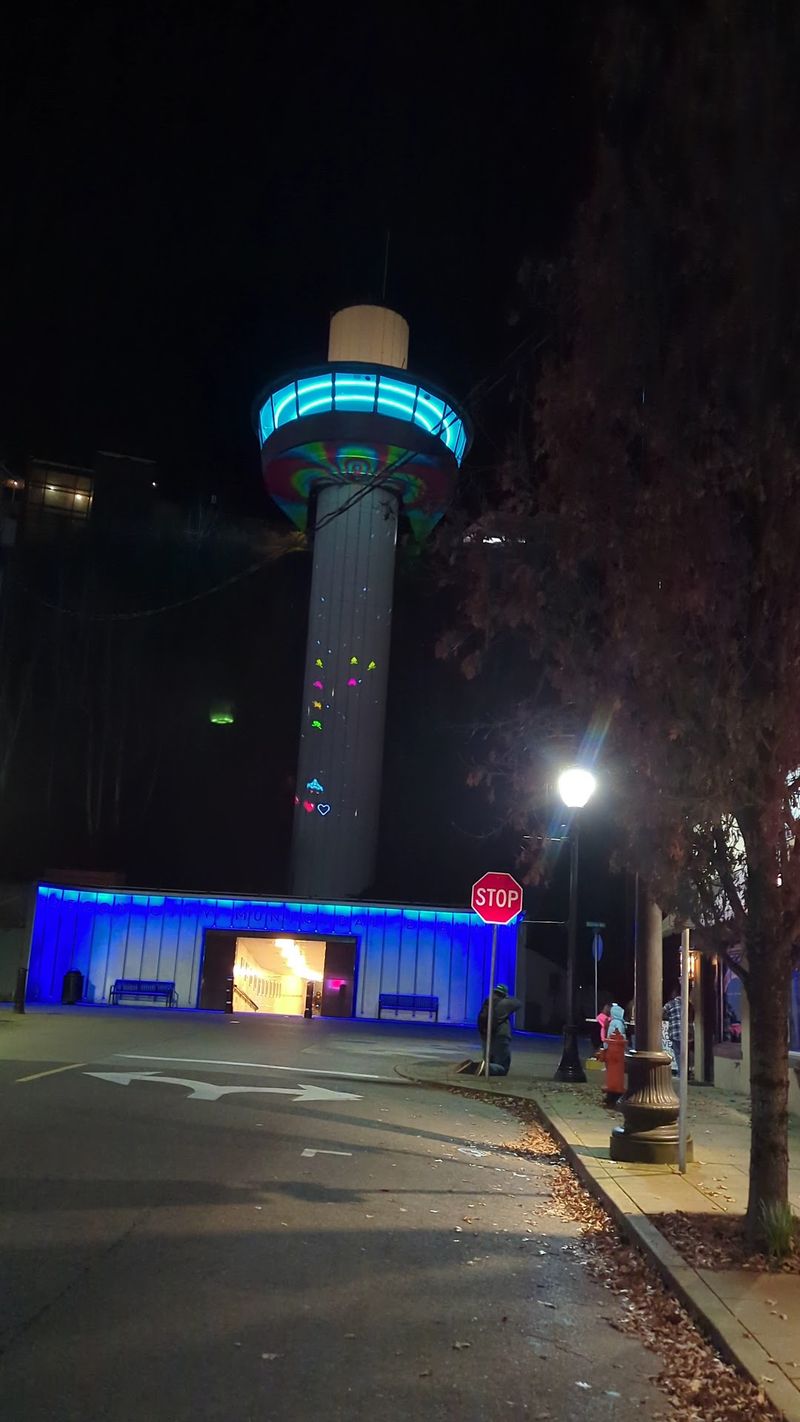
Silver and white make up the color scheme on the shaft, observation platform, and tunnel entrance. Those shades were chosen for a bold yet timeless look.
Once the sun drops, that palette really works. Energy-efficient floodlights brighten the structure, sometimes with subtle blue strip accents. The saucer deck practically glows over downtown.
The Illuminate Oregon City project once took things even further. It turned the elevator into a giant video screen. Projections highlighted local sites right on the tower itself.
Evening hours make a night visit possible on several days. From Wednesday through Saturday, rides run later into the evening. That gives you a chance to watch the town lights come on from above.
Sunset fans may want to time things carefully. The river and falls take on a different mood as daylight fades. Bats sometimes flutter around at dusk too, adding a little nature show.
Bring a jacket, since Oregon evenings can turn cool quickly. A phone with a decent night mode helps capture the lit tower from the street.
Daytime offers the clearest views. Nighttime offers the coolest photos. Choosing between them might mean visiting twice.
Free Rides, Daily Hours, And A Few Holiday Breaks
Good news for every budget: riding the Oregon City Municipal Elevator costs zero dollars. As a public utility and an official street, it stays free.
The elevator runs every day of the week. Monday and Tuesday hours run from 7 a.m. to 7 p.m. Wednesday through Saturday stretch from 7 a.m. to 9:30 p.m.
Sundays start later in the morning and close at 7 p.m. Opening times can shift, so a quick check before visiting is smart. Nobody wants to stare at closed doors at the bottom of a cliff.
Holidays bring a few closures too. Expect it to be shut on New Year’s Day, Memorial Day, Independence Day, Labor Day, Thanksgiving, and Christmas. Plan those trips around the calendar.
Summer gets busy, with ridership reaching up to about 1,300 people a day. Arriving earlier may mean fewer folks sharing your 15 seconds. Either way, the line moves fast.
It’s one of only a handful of municipal elevators worldwide. That makes this Oregon oddity a fun stop for road-trippers, history buffs, and anyone who loves quirky engineering.
Free, fast, and a street that points up. Hard to find a better deal anywhere.
