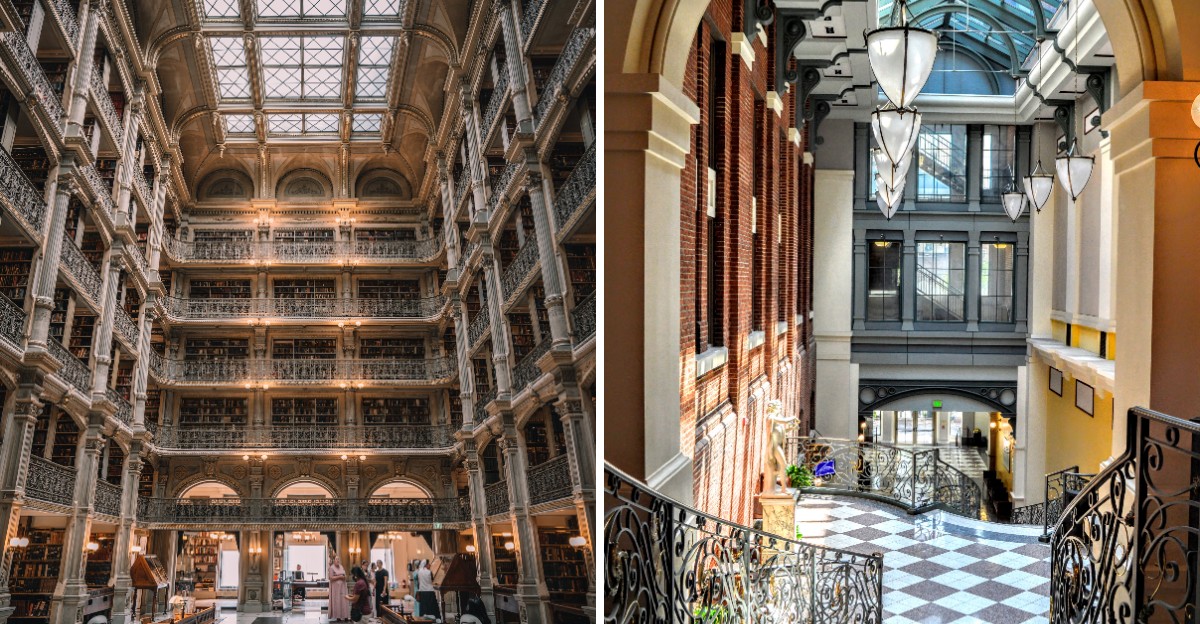
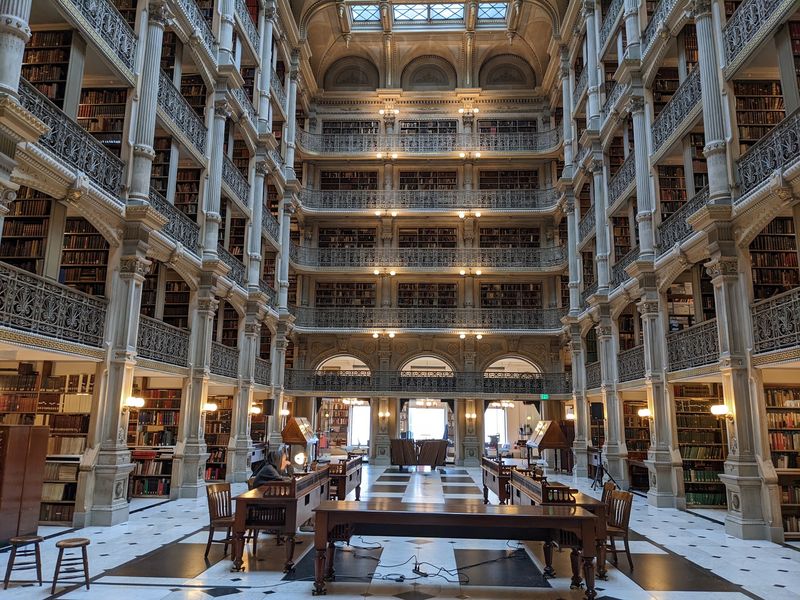
Ornate cast-iron balconies rise around a black-and-white marble floor, reaching toward a glass skylight overhead. Shelves of books line every level, giving this Maryland library a grander interior than many actual palaces.
Its collection holds more than 300,000 volumes, largely from the nineteenth century, covering subjects from art and architecture to history and exploration. The surprising part?
Admission is free, even though the building looks like it should require a ticket.
The detail that gets me is the view from the main floor. Visitors aren’t allowed onto the upper balconies, so you stand below those intricate railings and look up at five tiers of books.
The collection doesn’t circulate, but researchers can request materials for use on site. Even without opening a single volume, there’s enough craftsmanship here to make an ordinary library visit feel completely different.
Those Five Floors of Iron Balconies Steal the Whole Show
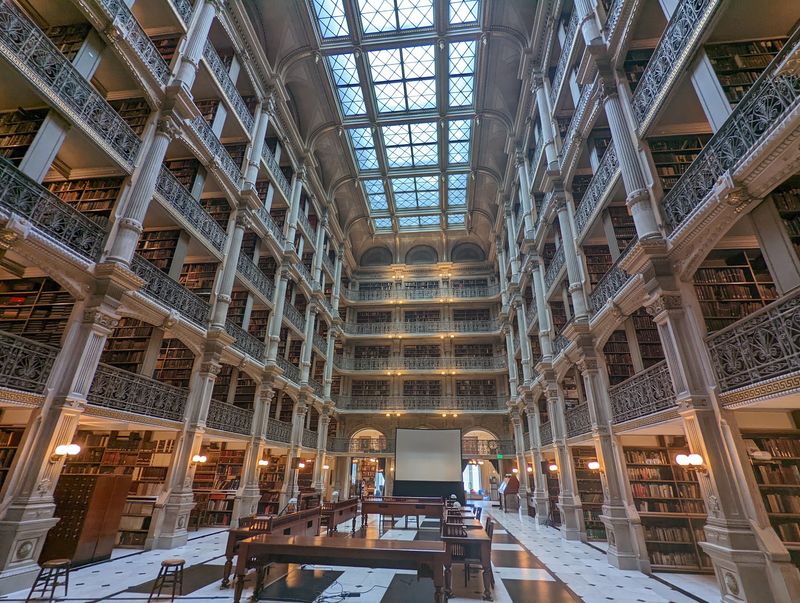
Most libraries hide their books on plain shelves. The George Peabody Library shows them off on five tiers of ornamental black cast-iron balconies.
Each level wraps around the room like a frame around a painting. The ironwork is detailed and dark, which makes the rows of leather spines look even richer.
Gold-scalloped columns add just enough sparkle to make the whole space feel royal.
Standing on the ground floor, you get the best possible view. Your eyes travel up, level after level, until they hit the skylight.
It feels a bit like being inside a giant, beautiful jewelry box made of books.
The balconies are the reason so many people call this one of the most beautiful libraries in the world. Photos can’t fully capture the scale, though they certainly try.
The pattern repeats on every side, so the room feels balanced and calm.
Here’s a practical tip for your visit. Bring a phone with a wide-angle setting if you have one.
A regular shot only grabs a slice of those tiers. A wide view lets you catch the iron, the books, and the glowing ceiling all at once, which is the real magic of this room.
Look Up, Way Up, at a Skylight 61 Feet Overhead
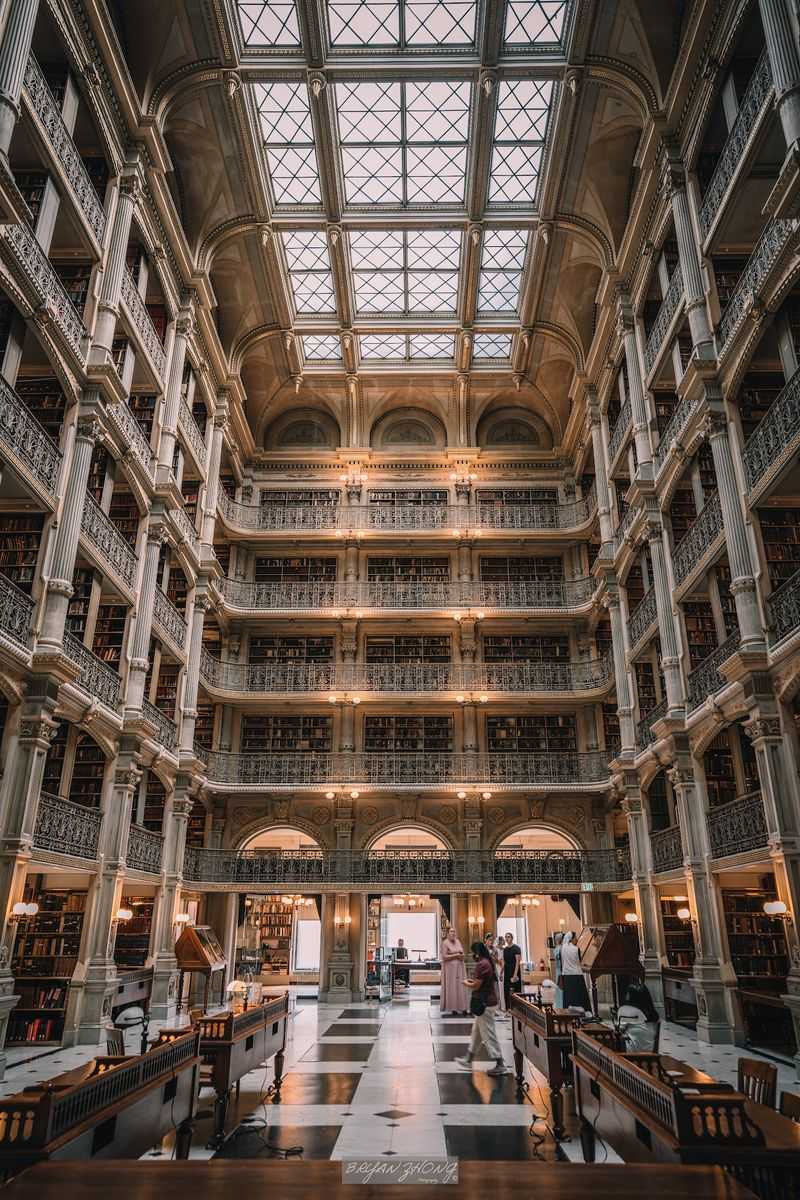
Sixty-one feet is roughly the height of a six-story building. That’s how far the atrium rises before it reaches a latticed glass skylight.
The skylight is the room’s natural light source. Daylight pours down through the glass and spreads across the balconies below.
The light shifts with the weather, so a sunny afternoon and a cloudy morning can feel like two different rooms.
The height also changes how the space sounds and feels. Everything seems open and airy, even with 300,000 books packed around you.
It’s hard not to slow down and lower your voice in a room this tall.
Neck strain is a real risk here, honestly. You’ll spend more time looking at the ceiling than you expect.
Take breaks, step back toward the edges, and try different angles.
Photographers love the straight-up shot from the center of the floor. The balconies form neat rings that lead your eye toward the glass.
It looks almost like a tunnel made of iron and books. If you only take one picture in Baltimore, this might be the one worth framing for your wall at home.
A Generous Banker Dreamed Up This Gift for Baltimore
George Peabody was a wealthy businessman with a big idea. He wanted to give the people of Baltimore a place for learning, art, and culture.
His gift created the Peabody Institute, and the library became one of its crown pieces. The doors opened in 1878.
Peabody wanted it to be a place where anyone could come to read and research, not just a few scholars.
That vision still matters today. The George Peabody Library remains open to the public for consultation.
Its collection now belongs to the Sheridan Libraries Special Collections at Johns Hopkins University.
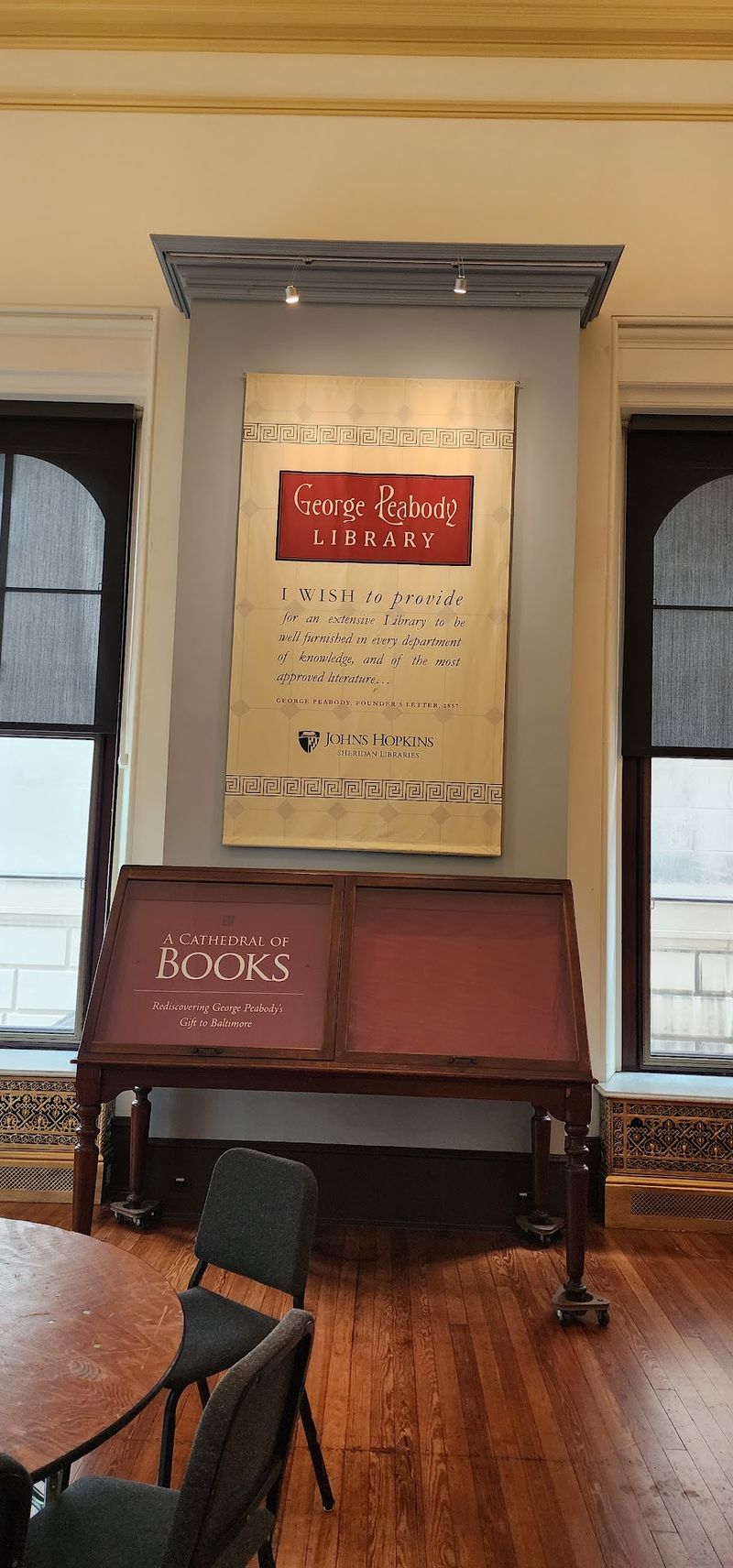
Fun fact for history fans. Before you reach the main hall, there’s a small exhibit space near the entrance.
It shares background on Peabody and the institute he founded, so you get the story before the big reveal.
I like this order of things. Learning about the founder first makes the room feel more personal when you finally step inside.
You’re not just admiring pretty shelves. You’re seeing one man’s wish for a smarter, more curious city, still standing nearly 150 years later in Maryland.
Credit Goes to an Architect Who Thought Big
Edmund G. Lind was a Baltimore architect, and he clearly didn’t believe in boring buildings.
He designed this library in the Neo-Grec style, working with Peabody provost Nathaniel H. Morison.
Neo-Grec mixes classic Greek ideas with sharper, more decorative details. You can spot it in the columns, the patterns on the ironwork, and the careful balance of the room.
Nothing feels random.
Morison gets credit for the famous nickname. He described the library as a cathedral of books.
After one look at that soaring hall, it’s hard to argue with him.
The teamwork shows in the details. An architect handled the beauty, while a scholar made sure the space worked for books.
The result is both practical storage and pure showmanship.
So here’s a small challenge for your visit. Pick one column and study it closely for a full minute.
Notice the gold touches, the shapes, and how it connects to the balconies above. You’ll start seeing the planning behind every inch.
It turns a quick photo stop into a mini architecture lesson, no textbook required.
Inside Those 300,000 Books Lives the 1800s
Three hundred thousand volumes is a staggering number. If you read one book a day, you’d need more than 800 years to finish.
The collection focuses mainly on 19th-century research materials. Think history, science, art, travel, and other subjects scholars cared about back then.
Many of these books are old, rare, and fragile.
That’s why the shelves are treated with extra care. The upper stacks aren’t open to wander through.
Instead, researchers can request materials and work with library staff to use them.
Some visitors might feel a little teased by this. All those books, just out of reach!
But the rules help protect pieces of history that can’t easily be replaced.
A helpful tip if you’re a student or writer. The library supports real research, not just sightseeing.
If a topic from the 1800s interests you, check with Johns Hopkins Special Collections before your trip. You might get to read something that has been sitting on those iron shelves for generations.
That’s a pretty cool story to tell your friends back home.
Free Admission Makes This an Easy Yes
Good news for your wallet. Visiting the George Peabody Library doesn’t cost a thing.
You can explore the ground floor and look up at all five tiers. The upper levels are closed to visitors, so plan on staying at floor level.
Honestly, that’s where the best view is anyway.
Hours matter here, so plan ahead. The library is generally open Monday through Wednesday from 10 AM to 5 PM.
Thursday runs 10 AM to 4 PM, and Sunday is 11 AM to 5 PM.
Friday and Saturday are closed days. That catches weekend travelers off guard.
Because it’s part of a university, schedules can also change, so check the Johns Hopkins hours page before you go.
Remember that this is a working library. People come here to study and research, so keep your voice low.
Phones on silent is a kind move too.
The building also hosts private events, which can affect access. A quick check before leaving home saves a lot of disappointment.
Nobody wants to arrive at a palace of books and find the doors shut.
Mount Vernon Place Is the Perfect Front Yard
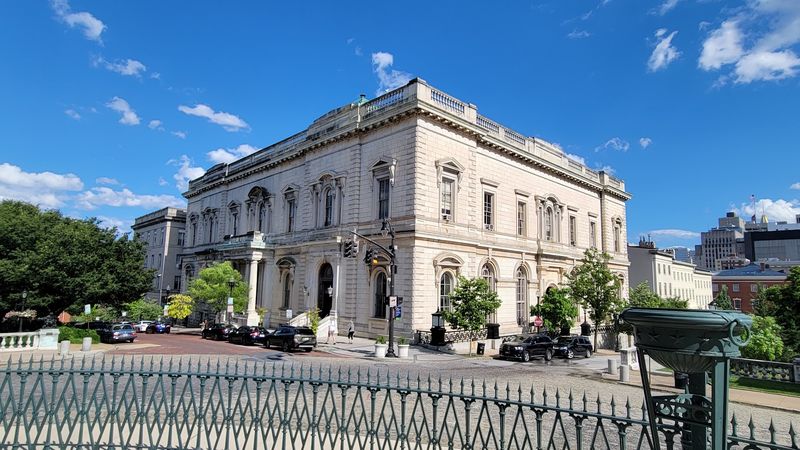
Location is a big bonus here. The library sits at 17 E Mount Vernon Pl, Baltimore, MD 21202, in one of the city’s most elegant neighborhoods.
Mount Vernon is famous for its historic buildings and park squares. The original Washington Monument stands nearby, rising above the neighborhood.
Grand churches and old row houses add to the classic city feel.
That makes the library easy to pair with a longer stroll. Spend some time outside admiring the architecture, then head indoors for the main event.
The quiet hall feels even more impressive after the street views.
Getting there by car takes a little planning. Metered street parking is available in the area, but spots can fill up.
Arriving earlier in the day usually gives you better odds.
The library is part of the Peabody Institute campus. Look for the entrance and follow the signs toward the exhibit area and main hall.
A short visit can easily stretch into an afternoon. Between the monument, the squares, and the historic streets, Mount Vernon gives your library trip a beautiful backdrop worth exploring on foot.
Bring a Book Lover and Watch Their Face Light Up
Some places are fun to visit once. The George Peabody Library is the kind of spot you’ll want to show off to friends.
Book lovers get the obvious thrill. Floor after floor of old volumes is a dream view.
Architecture fans get just as much to admire, from the ironwork to the columns.
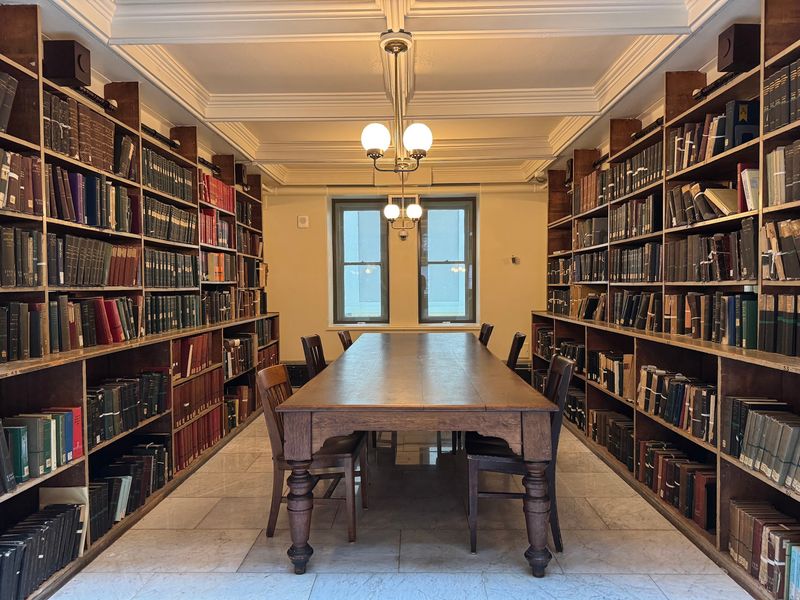
Students and writers can find value too. Tables in the side alcoves offer a calm space to read or work.
It beats a noisy café when you really need to focus.
Families can make it a learning trip. Kids often love the scale of the room and the idea of a library that looks like a palace.
Just remind them to use library voices.
My favorite suggestion is simple. Give yourself a few extra minutes to sit and soak it in.
Watch how the light moves across the balconies. Count the tiers, spot the gold details, and enjoy the hush.
Maryland has plenty of great attractions, but few feel this magical for free. It’s a room that makes reading look like royalty, and that’s worth the trip.
