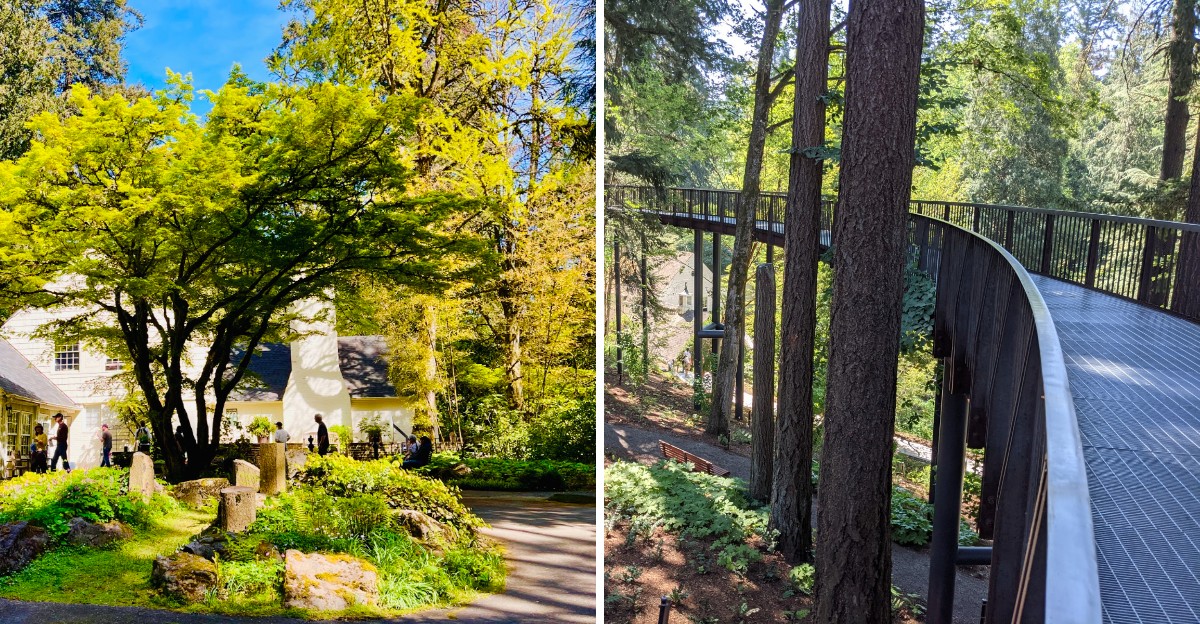
Treetops usually belong to squirrels and birds, yet here a walkway lifts visitors right into their neighborhood. Steps rise gently from the garden floor until the ground slips away and a canopy of leaves surrounds every direction.
Kids race ahead, grown-ups slow down to look, and nobody complains about the climb, since the payoff is a bird’s-eye view that makes a regular stroll feel like an adventure in Oregon.
Creating a space like this takes patience, a lot of gardening skill, and a real love of plants. Every bed seems placed with care, which is why each turn on the trail offers something new to notice.
Pack a camera, wear comfy shoes, and wander without a schedule. Some gardens ask you to look at plants, but this corner of Oregon lets you float right through the middle of them.
The Story of John and Lilla Leach
Every great garden starts with someone who cared a lot about plants. Here, that someone was actually two people
In 1936, the couple bought land along Johnson Creek and slowly turned it into a home filled with plants they treasured. Many of them came from their own adventures in the mountains and forests of the Pacific Northwest. You can almost picture them hauling cuttings back in muddy boots.
After their time here, the property was donated to the City of Portland in 1980. That gift is the reason anyone can wander these paths today. Pretty generous, right?
Learning about the Leaches changes how the garden feels. Suddenly a plain trail becomes a path someone carefully planned, and a quiet corner becomes a spot they probably loved. Keep an eye out for signs that share bits of their history.
Reading them as you go adds a sweet, personal layer to the whole visit.
A Creek That Sets the Mood
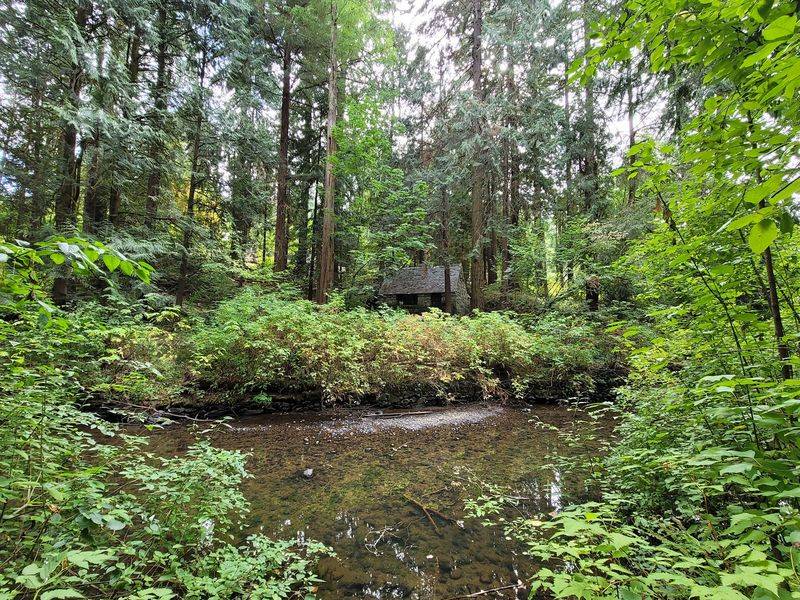
Water has a way of slowing everything down. Johnson Creek runs right through the lower part of the garden, and its gentle rushing sound follows you along many of the trails. I caught myself walking slower without even trying.
A short path winds along the creek near the bottom of the property. It is a lovely place to watch the water tumble over rocks and swirl around fallen branches. Mossy banks and shady ferns make the whole scene look like a painting.
Kids tend to love this area too. There is always something to spot, from ripples and leaves floating by to birds hopping along the edges. Bring a sense of curiosity and a little patience.
The creek also helps explain why the Leaches picked this land in the first place. Running water keeps plants healthy and attracts all kinds of wildlife. On a warm day, the air near the creek feels noticeably cooler, which is a nice bonus during summer visits.
Find a bench nearby and just listen for a while.
Up in the Branches on the Aerial Tree Walk
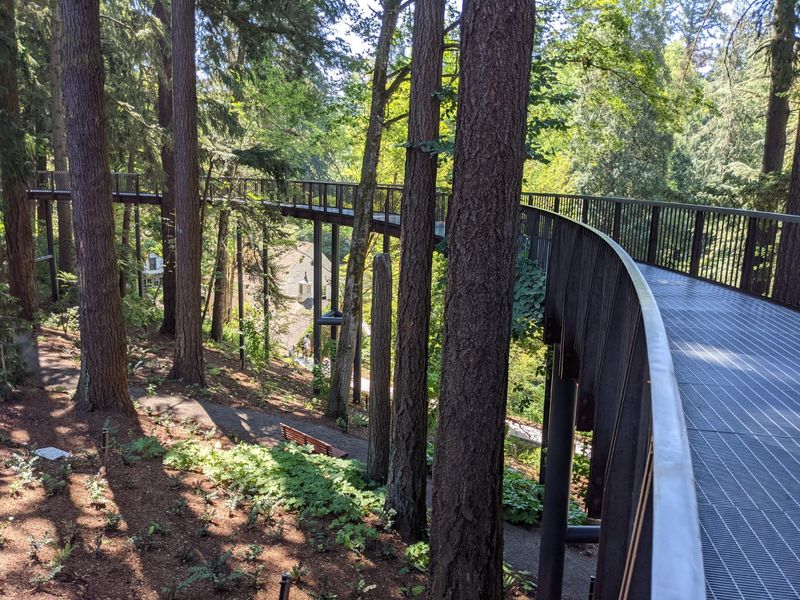
My heart did a happy little jump the moment the ground dropped away beneath the walkway. The Aerial Tree Walk in the Upper Garden is a sleek steel path that lifts visitors right up into the tree canopy.
Suddenly you are eye level with branches, mossy trunks, and birds that usually hide way overhead.
Towering red cedars and firs surround the path, so the air smells fresh and woodsy. Light filters through the needles in soft, shifting patches. It honestly feels like borrowing a squirrel’s commute for a few minutes.
One of the best parts is that the walkway is fully accessible. There are no steep climbs to reach it, which means people using wheelchairs, families with strollers, and anyone who prefers a smooth surface can enjoy the same treetop views. That kind of thoughtful design is rare in a forest setting.
Take your time up here. Pause at the railings and look straight down at the ferns, then up toward the tallest tips of the trees. Photos are great, but standing still and listening to the breeze in the branches might be even better.
A Stone Cabin Built by Hand
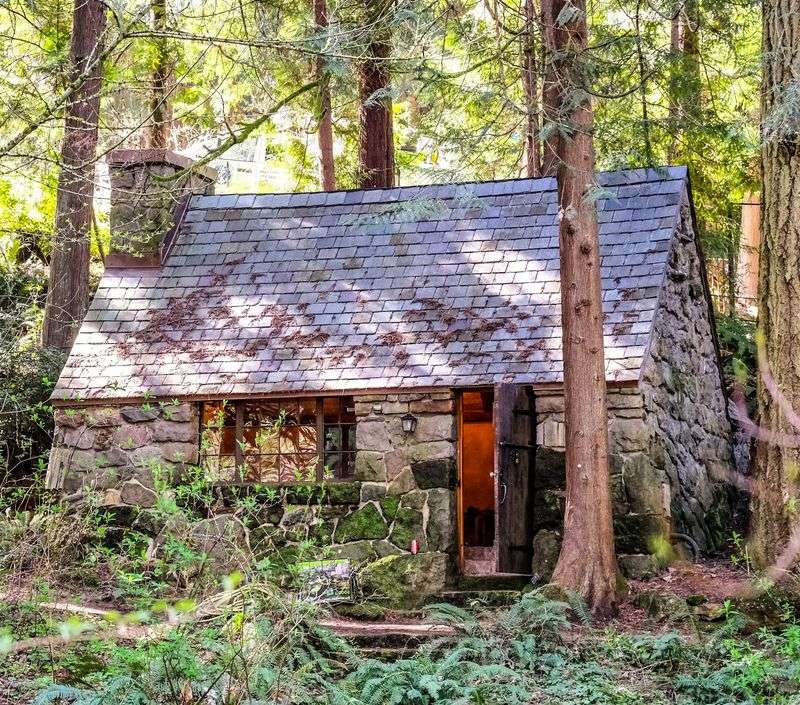
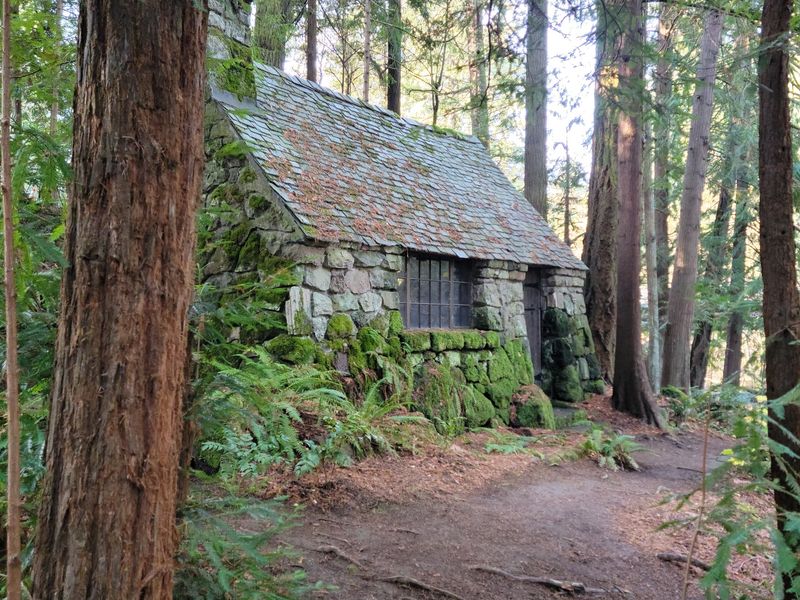
Some buildings are built by big crews with heavy machines. The stone cabin at Leach Botanical Garden was built by the Leaches themselves, stone by stone. That fact alone made me look at every wall a little more closely.
Tucked into the woods in the lower garden, the cabin looks like something from a storybook. Moss creeps over the rocks, and trees lean in around it like they are keeping watch. It feels cozy even from the outside.
Imagine the work it took. Picking out each stone, fitting it into place, and making sure the whole thing stayed sturdy for decades. It shows how much the couple loved this land and wanted to be part of it.
Photographers will find plenty to work with here. The rough gray stones look beautiful against all the green, especially on cloudy days when colors seem richer. Take a moment to walk around it slowly and notice the small details.
Old buildings like this one remind visitors that the garden was once someone’s very real, very personal home.
Inside the Manor and Its Terrazzo Floor
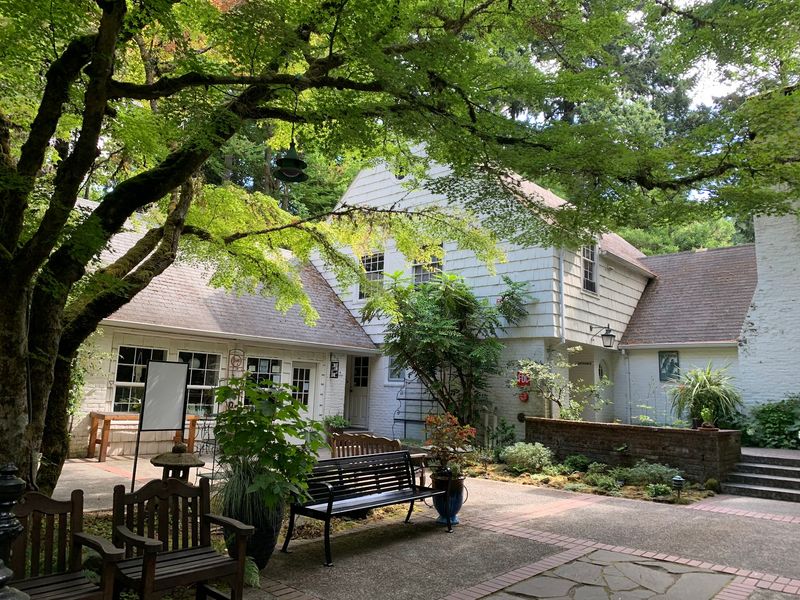
Floors rarely get much attention, but this one deserves applause. Inside the historic Leach manor house, a terrazzo floor shines with tiny chips of stone set into a smooth, polished surface. It is one of those details that is easy to miss if you rush.
The manor sits in the lower garden, surrounded by mature trees and planted beds. Its style feels warm and lived in, not stiff or fancy. You can easily picture the Leaches coming in from the garden with dirt on their hands.
The house helps connect the plants outside to the people who first cared for them. A small gift shop on the lower level is also worth a peek. Spending a few minutes indoors makes a nice break between trails, especially if Portland drizzle decides to make a surprise appearance.
Meet the Giant Ginkgo
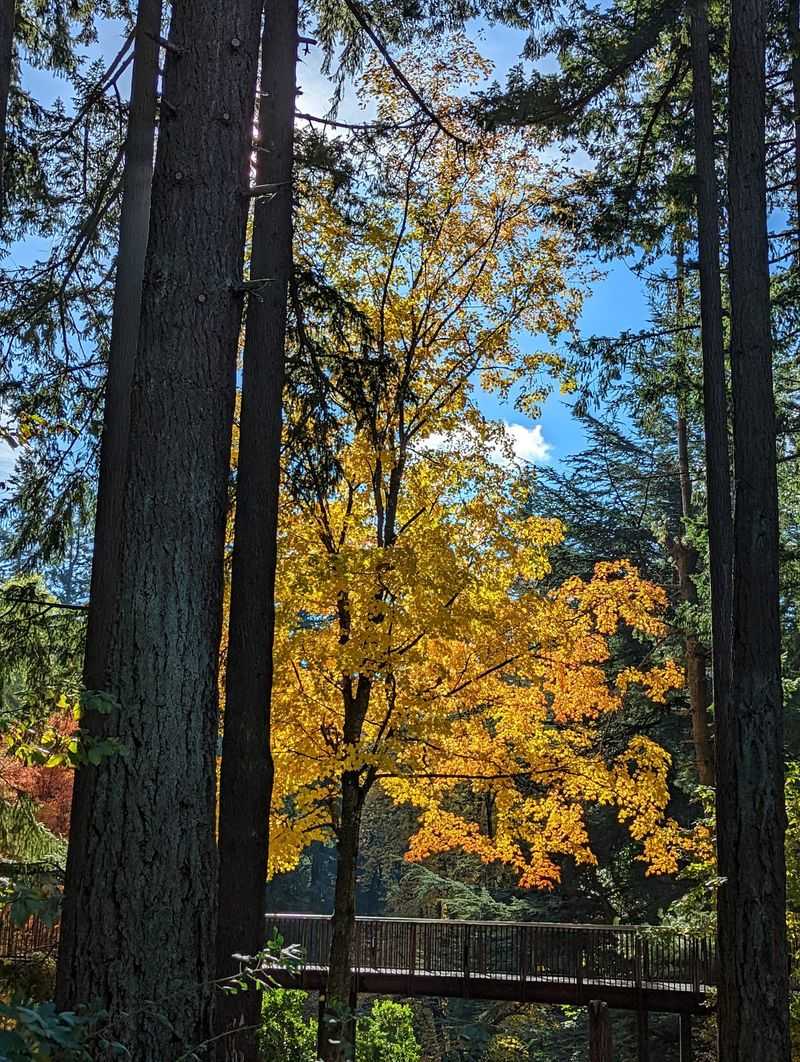
Ginkgo trees are basically living fossils. Their family has been around since the time of dinosaurs, and they have hardly changed since. So spotting a massive one near the manor house feels a bit like meeting royalty.
This ginkgo is huge, much bigger than the ones usually seen along city streets. Its fan-shaped leaves flutter in the breeze and look almost like tiny paper folding fans. Kids love picking up the fallen ones to study their shape.
Fall is the showstopper season. The leaves turn bright butter yellow and then often drop within a short window, covering the ground in a golden carpet. Timing a visit for that moment takes some luck, but wow, is it worth trying.
Even in spring and summer, the tree is a great spot to pause. Stand beneath it and look straight up through the branches. The sheer size makes you realize how long it has been growing here.
A tree like this quietly tells a story about patience, and maybe about the folks who planted and protected it.
Buzzing Life in the Pollinator Garden
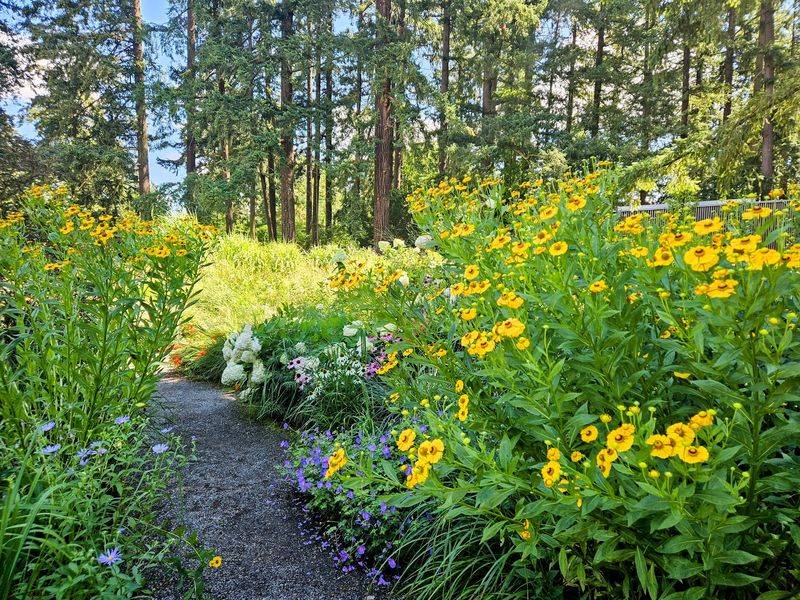
Bees here clearly have their favorite restaurants. The pollinator garden is packed with flowers chosen to feed bees, butterflies, and hummingbirds, and on a sunny day the whole patch hums with activity.
Bright blooms mix with leafy greens in a cheerful, slightly wild way. It is not a neat row of identical flowers. Instead, it feels natural, like a meadow that decided to settle down in one spot.
Pollinators matter more than many people realize. They help plants make seeds and fruit, which keeps both gardens and food crops growing. Seeing them at work up close makes that lesson click in a fun way.
Here is a tip. Stand still for a minute and count how many different insects you can spot. You might be surprised by the variety.
Bring a phone or camera with a good zoom, because butterflies are not big fans of posing.
The garden also offers great ideas for home yards. Notice which flowers attract the most visitors, then think about planting a few at your own place.
Little Explorers Have Their Own Corner
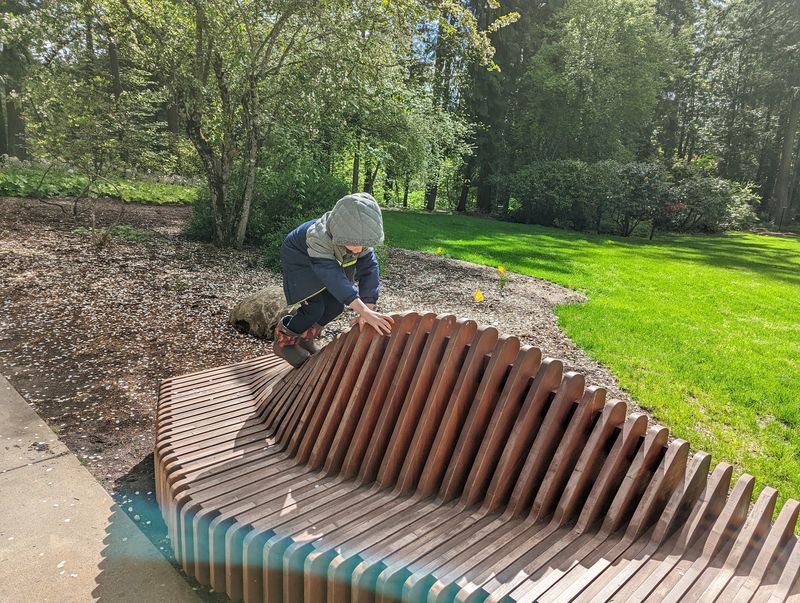
Tiny hikers get serious treatment here, and it is adorable. A dedicated children’s garden sits near the Claybourne entrance, giving young visitors a place to roam, touch, and discover at their own speed.
The garden has also offered guided toddler hikes. During these walks, kids can borrow little backpacks stuffed with exploration tools to use along the trail. Picture a three year old marching off with a magnifying glass, fully convinced they are a famous scientist.
The Upper Garden paths are short and friendly for small legs. There is room to run off some energy without wandering too far. Parents can relax a bit, which might be the real magic.
Not every area is easy with strollers, though. Some lower trails include stairs and stone steps, so a carrier can be handy for babies. Plan to start up top, then decide how far down to go.
Trails, Benches, and a Brand New Bridge
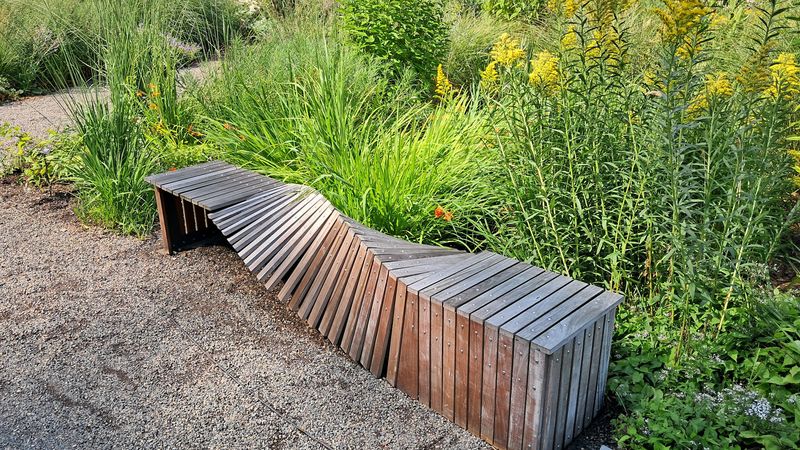
Plenty of gardens hurry you along, but this one practically begs you to sit down. Benches and chairs are tucked all over the property, often in shady spots that look out over ferns, flowers, or the creek.
The trails wind up and down hills, sometimes with stone steps that add a little workout. A quick loop can take under an hour. Hitting every trail stretches the visit to a couple of hours, easily.
A newer footbridge now crosses the creek to the south garden. It opens up even more space to explore and makes for great photos with the water below. I loved pausing in the middle just to watch the current slide by.
Wear shoes with good grip, especially after rain, since some paths get slick. Visitors with mobility concerns may want to focus on the Upper Garden, where the ground is flatter and the Tree Walk is easy to reach.
Plan a Visit and Take a Plant Home
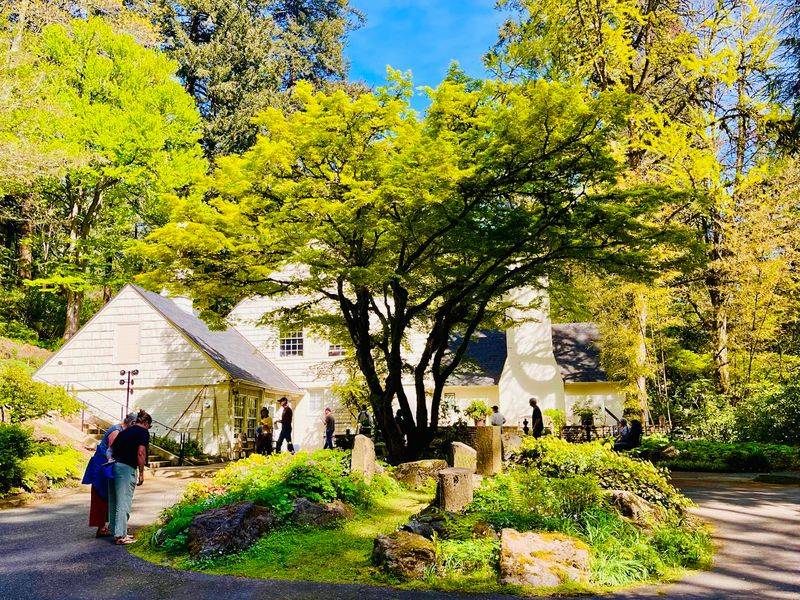
Leaving empty-handed is tough when native plants are for sale. The garden sells a selection of Pacific Northwest natives, so visitors can bring a small piece of the experience back to their own yards or balconies.
Native plants are a smart choice for local gardens. They are used to Oregon weather, often need less water once settled, and support local birds and insects. Ask the friendly staff for suggestions if you are unsure what to pick.
Timing matters for a smooth trip. The garden is typically open Thursday through Sunday from 10 AM to 4 PM and closed Monday through Wednesday, so check the official website before heading out. Spring brings woodland blooms like trilliums, while fall paints the trees with warm color.
Supporting the garden through visits, memberships, or donations helps keep it thriving, especially during tight budget times. Every season offers something different, so returning feels fresh each time.
Ready to wander? Set your map to Leach Botanical Garden, 6704 SE 122nd Ave, Portland, OR 97236, and get ready for a green, peaceful afternoon.
