Fish rarely earn celebrity status, yet one enormous sturgeon here draws crowds specifically to see it, name and reputation included.
Visitors lean over the tank for a while, waiting patiently for this massive creature to drift into view. Its size alone stuns first timers, decades of growth resulting in something far larger than anyone expects a fish to actually get.
Building a following around a single animal takes more than just impressive size alone. Consistency helped too, the same sturgeon greeting visitors for years, becoming a familiar face rather than a one time novelty sighting.
Few fish achieve this level of local fame. Oregon families keep returning specifically to check on their favorite sturgeon, treating the visit almost like catching up with an old friend.
The underwater viewing house where the glass does the talking
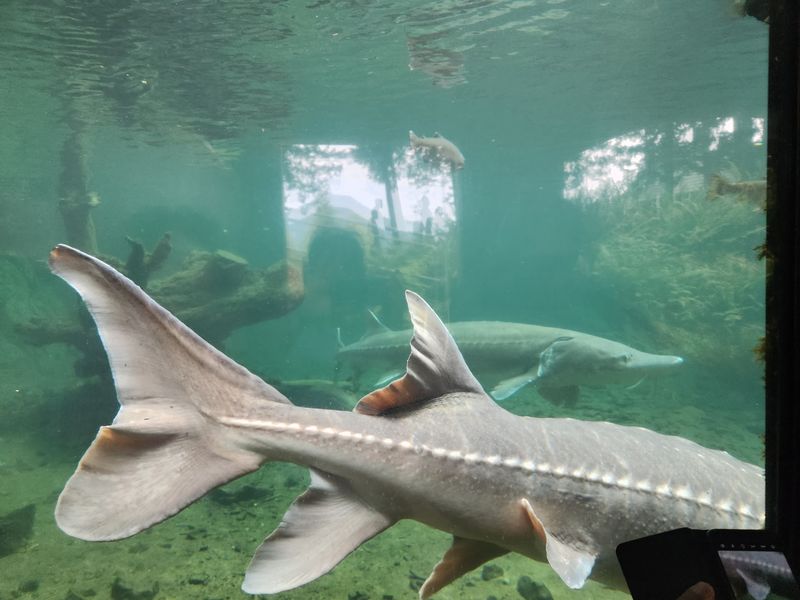
A short ramp on the north side of the sturgeon pond leads down into a low stone building, and the temperature drops the moment the light does. Inside, one big window opens straight into the water.
Green light wobbles across the walls. Then a shadow slides in from the left, and suddenly there is a fish the length of a canoe hovering inches from the glass.
The viewing house is what separates this stop from ordinary pond-side wildlife watching. Looking down from above only shows a dark outline, while the underwater angle reveals the mouth, the barbels, the slow pulse of the gills.
Smaller sturgeon share the pond, so there is usually movement even when Herman drifts off to a corner. Bring a little patience if a school group arrives ahead of the crowd. The room is compact, and groups rotate through quickly.
The ramp makes the space reachable for strollers and wheelchairs, which is rarer than it should be at places like this.
Feeding the rainbow trout, a quarter at a time
Bring coins. A handful of pellets from the little dispensers costs a quarter, and that quarter buys the loudest thirty seconds on the property.
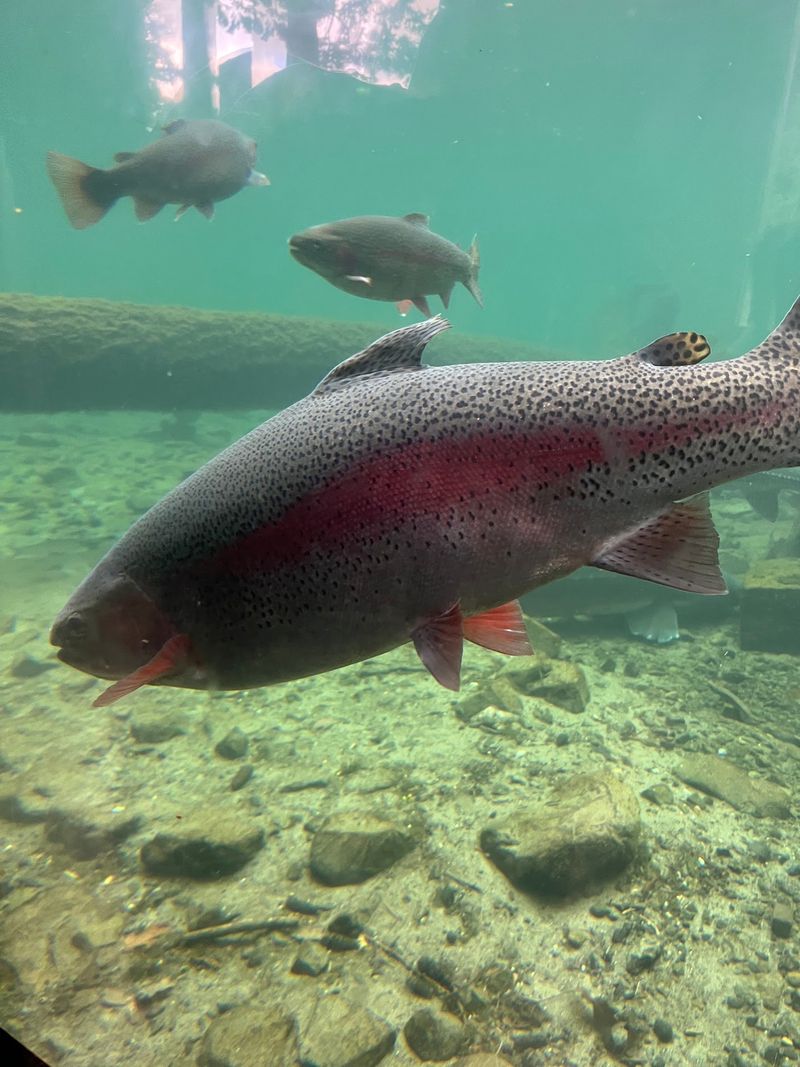
The rainbow trout in the display ponds are big, glossy, and completely unbothered by an audience. Toss a scattering of food and the surface turns into a scramble of backs and tails, water slapping over the concrete lip.
Kids can get right to the edge of these ponds, close enough that the fish seem almost reachable. Parents tend to hover. The trout do not care. Gulls crash the party within seconds, snatching pellets midair, which somehow makes the whole thing funnier.
A practical tip worth remembering is to pack hand sanitizer or wipes, since pellet dust sticks to fingers.
Several ponds run in a row, separated by walkways, so crowds spread out naturally even on warm weekends. Stock up on a few quarters before arriving and the visit stretches considerably longer.
Herman the Sturgeon, the fish everyone drives here to meet
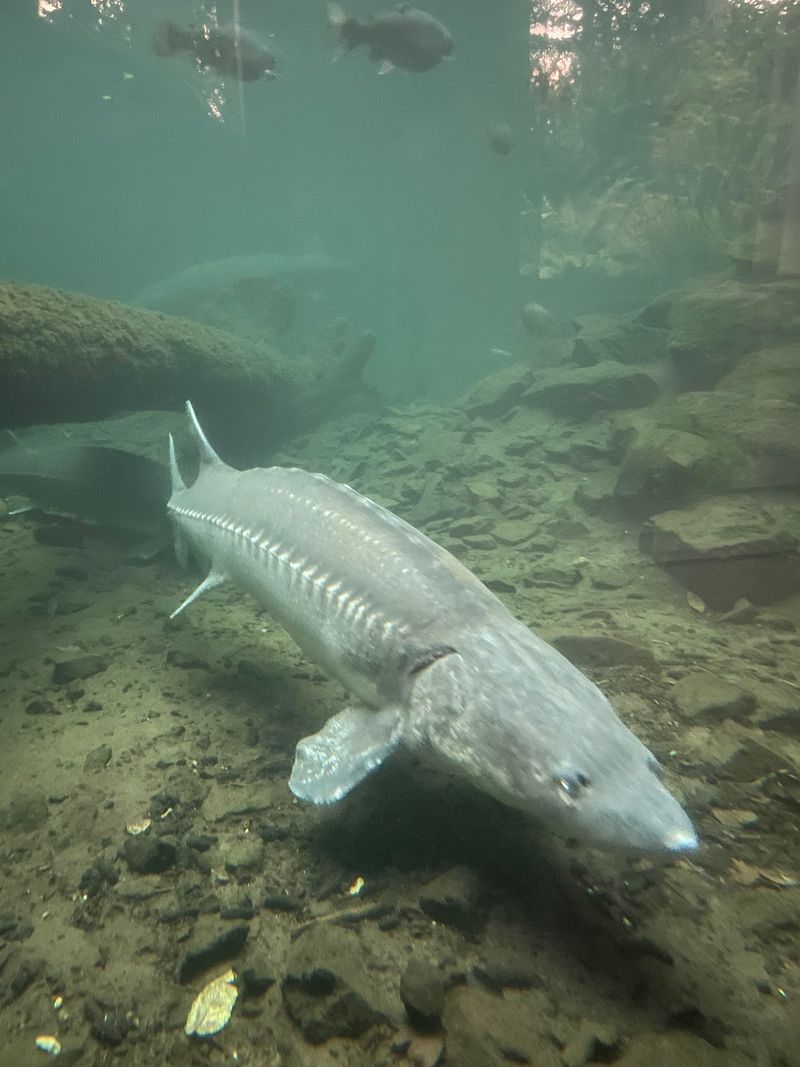
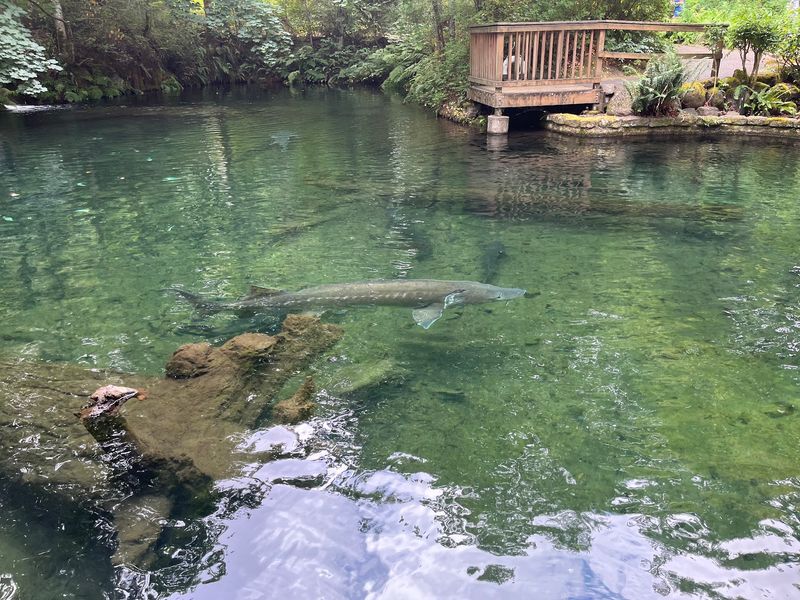
Herman gets top billing at this hatchery, and the hype holds up. The white sturgeon stretches around ten feet, weighs several hundred pounds, and has been swimming for decades longer than most of the people leaning over his railing.
He cruises slow laps through his pond, tail sweeping like a paddle, snout skimming the gravel. Kids shriek. Adults go quiet.
What catches first-timers off guard is his shape. Sturgeon look prehistoric because they essentially are, with bony plates called scutes ridged along the back instead of ordinary scales, plus whisker-like barbels used to feel for food on river bottoms.
Herman is not the first fish to carry the name either. Oregon has used the Herman title for its display sturgeon for generations, part of a long habit of introducing people to a species almost nobody spots in the wild.
Patience pays off here. Give him a few minutes and he loops back past the glass, close enough to count the plates on his spine.
Salmon rearing ponds and the real work behind the scenes
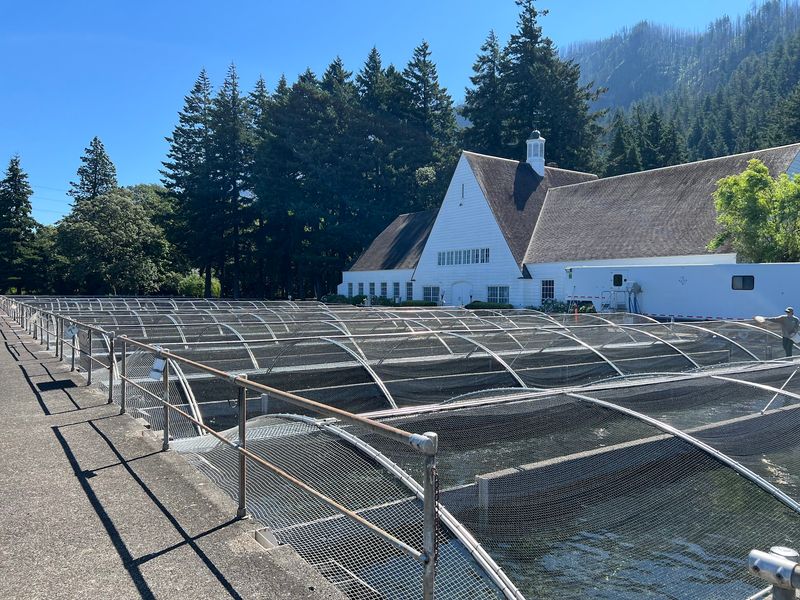
Past the crowd-pleasers, the working part of the hatchery gets more interesting the longer anyone looks. Long concrete raceways hold young salmon at various stages, from tiny fry to smolts nearly ready for the river.
Water moves constantly through the channels, fed by nearby springs and creeks. The sound alone is worth standing around for.
Bonneville Hatchery raises Chinook and coho salmon along with steelhead, releasing millions of young fish to support runs throughout the Columbia system. Adults return in fall, and the spawning operations happen on site.
Signage walks through the full cycle, including why dams, habitat loss, and passage problems made hatchery programs necessary in the first place. Timing shapes what visitors see. Late summer and fall bring returning adults, while spring shows the ponds packed with juveniles.
Staff activity happens on a working schedule rather than a show schedule, so a weekday stop often means watching actual hatchery tasks rather than an empty raceway.
Sturgeon ponds from above, where the scale really lands
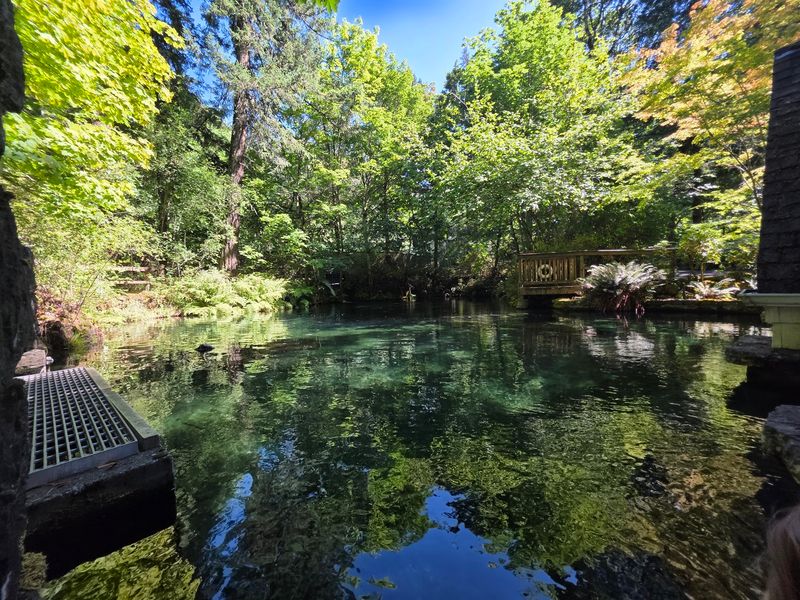
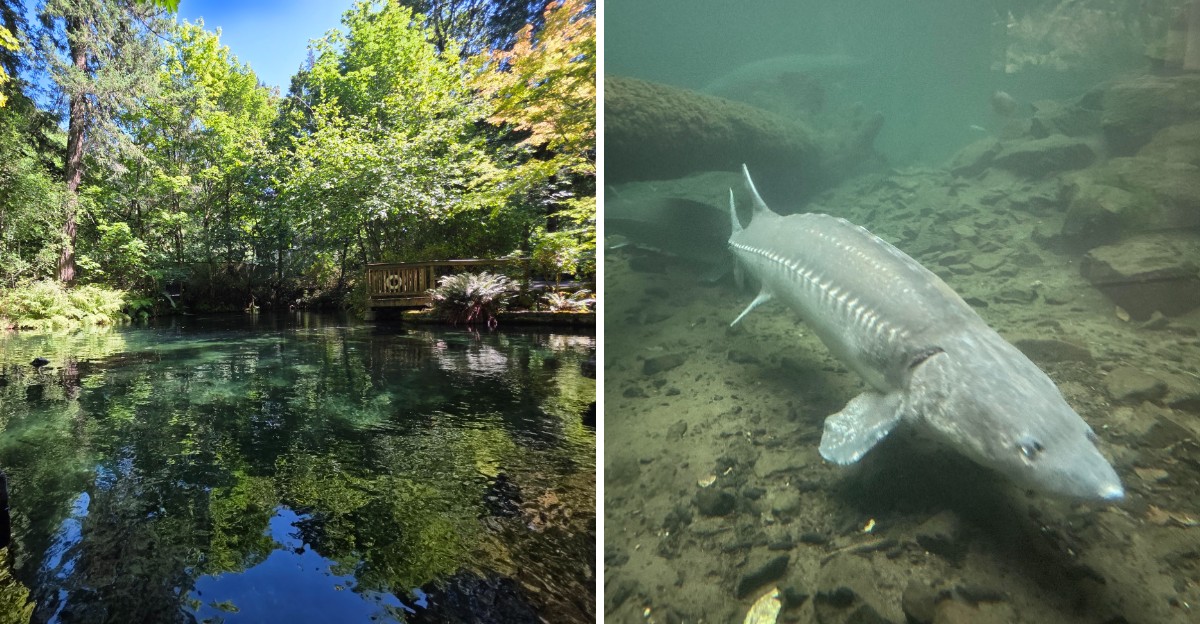
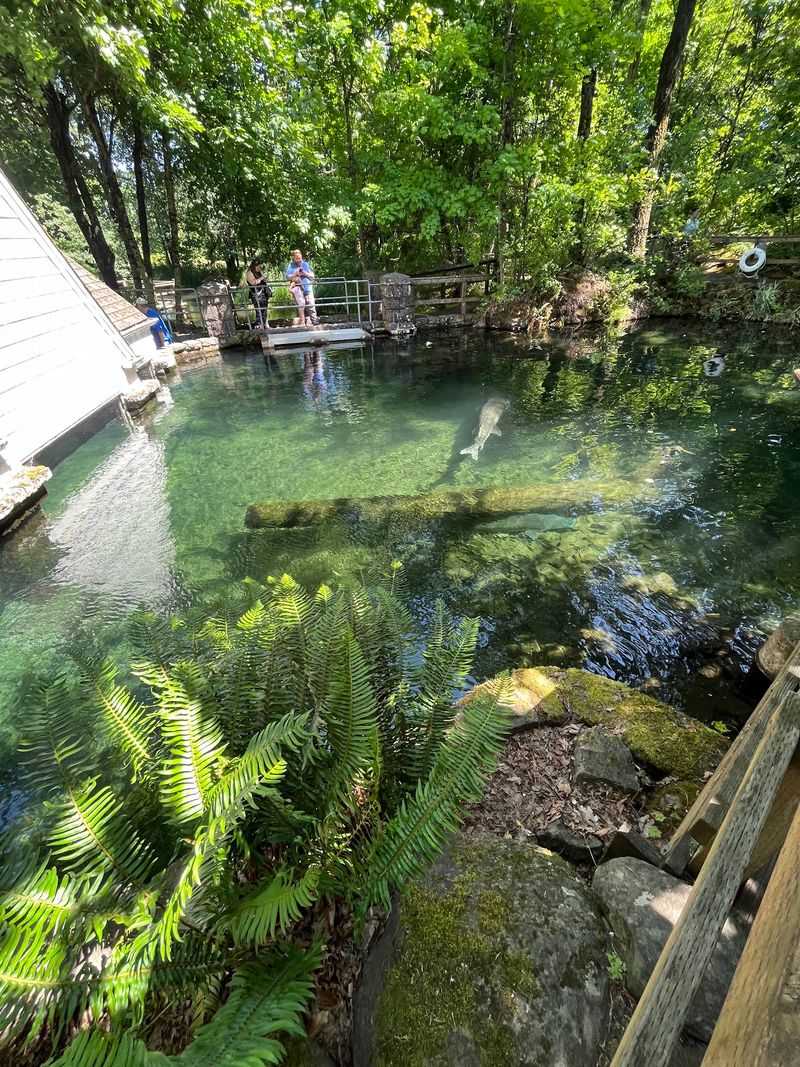
Above ground, the sturgeon ponds sit ringed by low walls and clipped lawn, shaded on one side by mature firs. Standing water reflects the trees until a fin breaks the surface and ruins the mirror.
From this angle the size registers differently. Instead of one fish framed by glass, the whole pond comes into view, and the long dark bodies look almost too big for the space they occupy.
Several sturgeon share these ponds at different sizes, which helps explain how slowly the species grows. A fish that looks impressive here may still be young by sturgeon standards.
Interpretive signs nearby cover diet, lifespan, and how white sturgeon travel between the Columbia River and the ocean. Morning light works best for photos, before the sun hits the water straight on.
Watch for herons and gulls hanging around the edges. They have figured out the feeding routine, and they are not subtle about it.
Exhibits and the short film that tie it all together
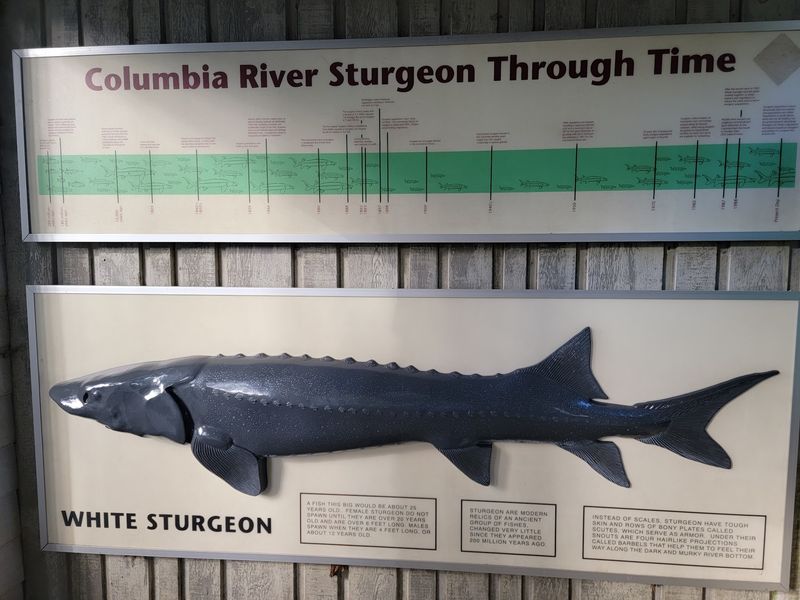
Skipping the visitor center would be a mistake, even for people who came only for the big fish. Inside, exhibits break down the salmon life cycle, fish passage at the dam, and how hatchery crews manage eggs through release.
A short educational video runs for anyone who wants the story in one sitting. It is straightforward, not preachy, and it makes the ponds outside make far more sense.
Models, photographs, and cross-section displays explain how young fish migrate downriver, what they face along the way, and why adults struggle to reach their original spawning gravel. The whole setup is self-guided, so nobody is stuck waiting for a tour time.
Younger visitors gravitate to the hands-on panels. Older ones tend to linger over the historical photos of hatchery construction and early Columbia River fisheries.
Fifteen minutes here reframes the rest of the walk, turning a pretty stop into something closer to an outdoor classroom with excellent scenery.
Coffee, souvenirs, and a Sasquatch photo op
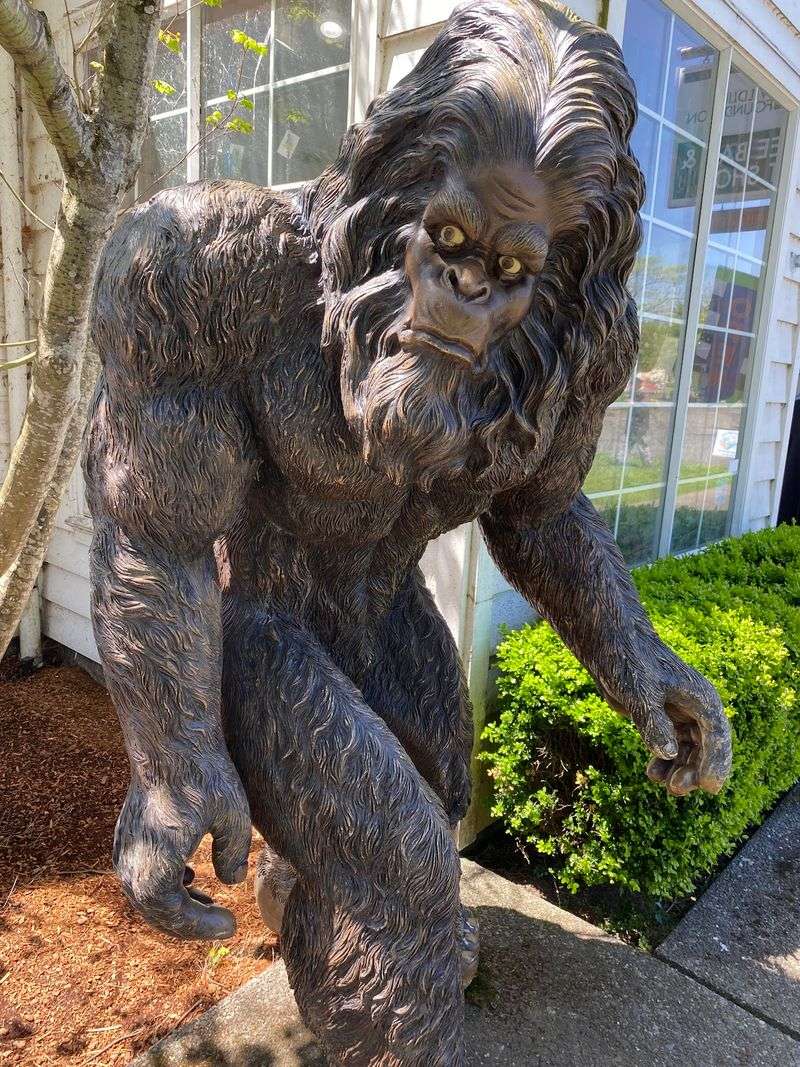
A small gift shop operated by the Oregon Wildlife Foundation sits near the main grounds, and it doubles as a coffee stop. On a gray Gorge morning, that matters more than it sounds.
Shelves hold books, fish-themed souvenirs, stickers, and local gifts, with proceeds supporting conservation work around the state. Outside, a Sasquatch figure waits for the obligatory photo. Nobody walks past without at least considering it.
Warm drinks plus restrooms make the shop a natural halfway point, especially for families circling back after the trout ponds. Rainy days turn it into a welcome pause rather than a quick errand.
Dogs are welcome on leash across the grounds, though not inside the shop, so plan for a handoff at the door.
Hours generally match the hatchery day, and staff there tend to know which ponds are most active. Asking a quick question at the counter often points visitors toward something they would have walked right past.
Grounds that feel more like a garden than a fish farm
Most hatcheries look industrial. Not this one. Flowering rhododendrons, trimmed hedges, big-leaf maples, and tall firs turn the walkways into something closer to a park, and the shade is genuinely good on a hot afternoon.
Paths loop between ponds on easy grades, paved and wide, with benches tucked into shady corners. A small footbridge near the main parking area has become a favorite photo spot, framed by greenery and moving water. Spring brings the heaviest bloom, while autumn turns the maples gold.
Toward the overflow parking lot, a viewpoint aims northwest toward Beacon Rock, though trees have grown in enough to hide most of it. Step onto the grass and only the top shows. Squirrels, songbirds, and the occasional deer wander through, which adds to the garden atmosphere.
Twenty minutes of slow walking covers the whole property comfortably. Rushing it feels wrong, and there is no reason to, since nothing here operates on a schedule that hurries anyone along.
Picnic tables, leashed dogs, and easy paths for everyone
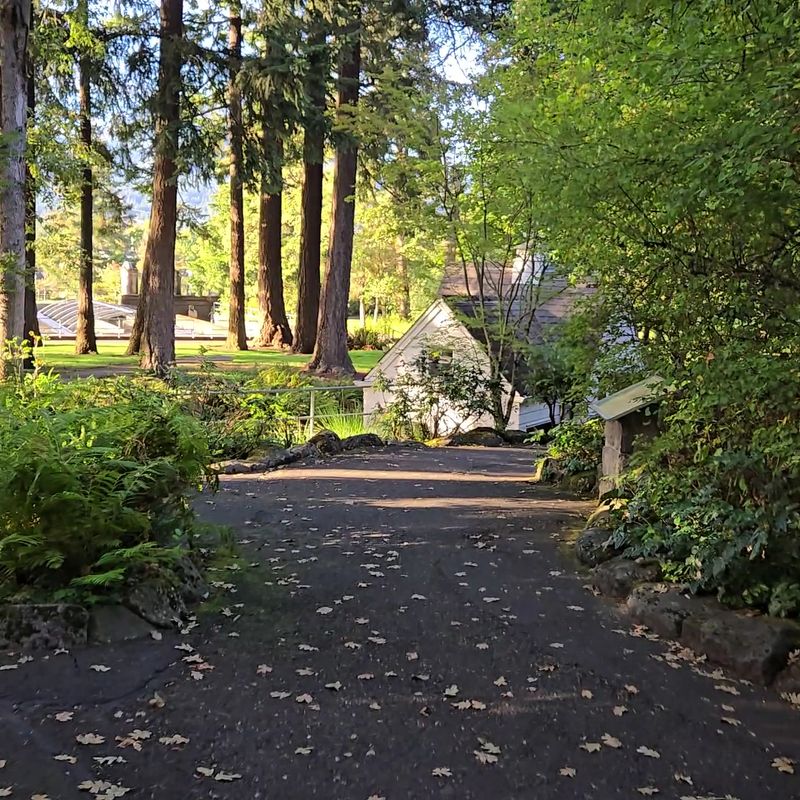
Packing lunch turns this into an afternoon instead of a pit stop. Picnic tables sit under trees near the ponds, with grass around them and restrooms a short walk away. Families settle in, kids run between tables and trout, and the whole scene stays relaxed even when the parking lot fills.
Accessibility deserves a mention because so much of the property works well for wheelchairs and strollers. Paved routes connect the main ponds, and the ramp into the underwater viewing house avoids stairs entirely.
Leashed dogs are allowed throughout the outdoor areas, which makes the hatchery a solid break on a longer Gorge drive. Shade is plentiful, so summer heat rarely becomes a problem.
There are no electric vehicle chargers on site, worth knowing for anyone planning charging stops along Interstate 84. Cascade Locks sits just minutes away for gas, snacks, and anything else a road trip suddenly requires.
Timing the visit for the calmest, best experience
Weekdays win, easily. Summer weekends bring enough visitors that the pond railings get crowded and the viewing house turns into a short line, while a Tuesday morning feels almost private.
Doors open at 7:30 AM daily and the grounds close at 4:30 PM, so early arrivals get soft light, cool air, and active fish.
Spring and fall are the standouts. Blossoms and juvenile salmon fill the spring visit, and autumn brings returning adults plus serious color in the maples. Rainy days should not scare anyone off, since the covered viewing area and the coffee counter make weather manageable.
Admission is free, parking is plentiful, and the whole stop pairs naturally with the fish ladder viewing at nearby Bradford Island in the Bonneville Lock and Dam complex.
Plan on an hour minimum, two if children come along with a pocket of quarters. The address is 70543 NE Herman Loop, Cascade Locks, OR 97014.
