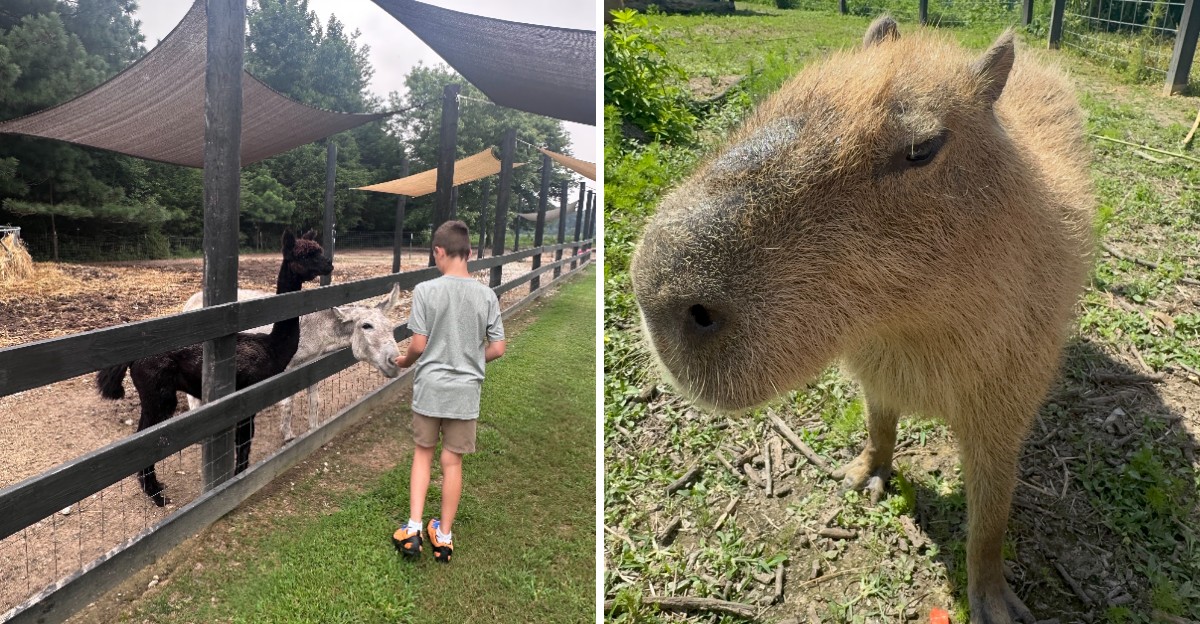
The goat wants your snacks. The zebra wants absolutely nothing to do with you.
The capybara looks like it has nowhere else to be. That seems to be the social hierarchy on this Alabama farm, where a lineup of animals makes the usual petting-zoo formula considerably more interesting.
Goats trot over for treats while zebras graze nearby, lemurs jump through the branches, and a baby kangaroo can appear from a pouch like the world’s strangest surprise guest. The farm changes with the seasons too.
Blueberries fill the fields in summer. Pumpkins arrive in fall.
Hayrides turn the whole place into a different kind of outing. The animals may be the reason to come, but the sheer weirdness of seeing them all sharing the same farm is what makes the visit stick.
A Surprise Safari Tucked Into Hazel Green
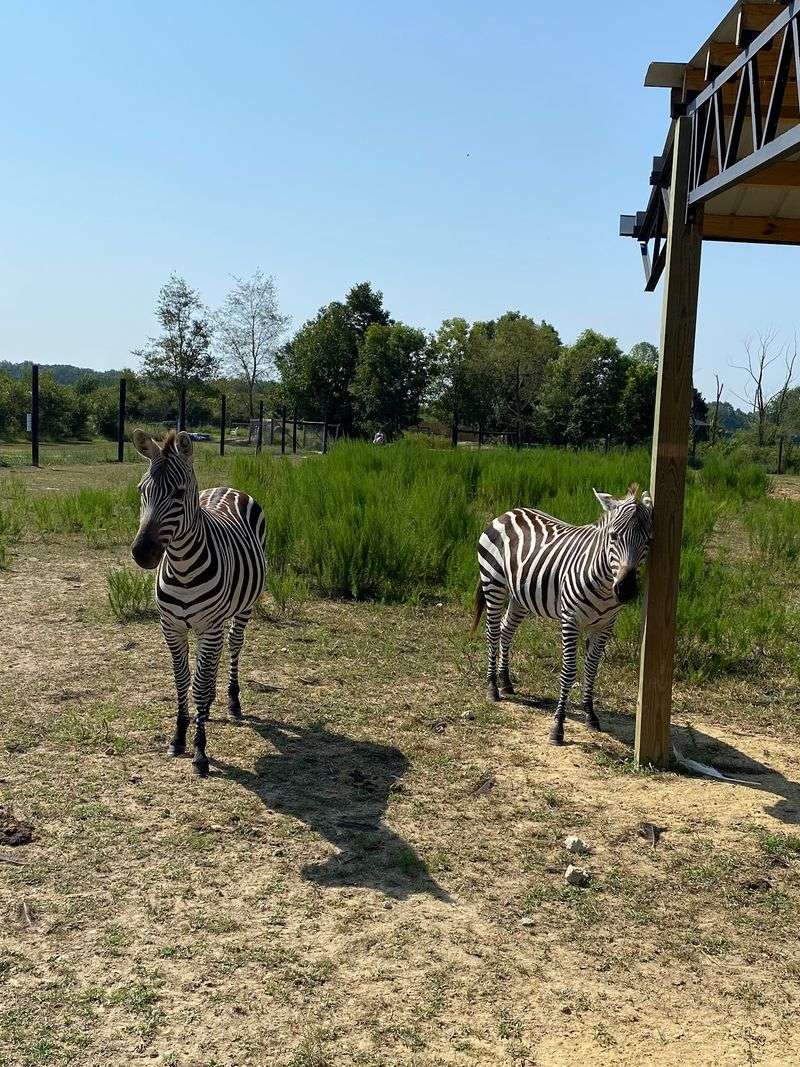
Few people expect to spot a zebra while cruising past quiet fields in far north Alabama. Yet that is exactly what waits at 916 State Line Rd, Hazel Green, AL 35750, a short country drive of roughly half an hour from downtown Huntsville.
The Wild Reserve at The Boyd Family Farm sits right near the Tennessee line, where rolling land and wide skies set a calm mood. Pull in, and the first sounds are a funny mix of goat bleats, bird calls, and the rustle of something much less ordinary.
Honestly, it takes a minute to process.
Owners Jared and Elaine Boyd built this place out of a deep love for animals and farming, all while holding down careers in tech. Jared once worked as a zoo educator, and that background shows in the way the reserve is set up.
Enclosures are clean and roomy, and signs around the grounds share facts about each species.
Locals often call it North Alabama’s closest zoo-style attraction, but it keeps a small-town, family-run feel. There are no giant crowds or confusing maps here.
Just winding paths, curious animals, and plenty of chances to learn something new.
For families in Madison County, it makes an easy half-day trip that never feels like a chore. Visitors from southern Tennessee can reach it quickly too.
Keep the camera ready, because the first stripes usually appear sooner than anyone expects.
Zebras in North Alabama, Yes Really
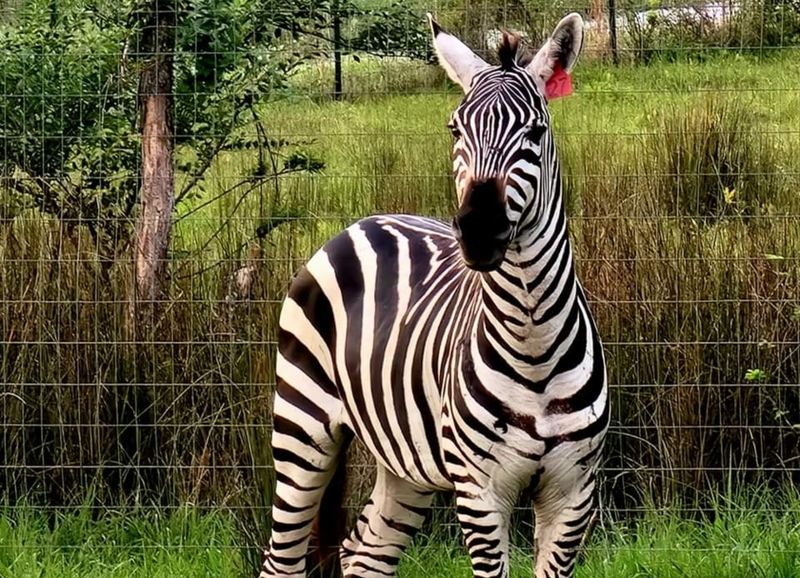
Stripes on a zebra are as unique as a fingerprint, and no two animals share the exact same pattern. Spend a few minutes watching the zebras at the Wild Reserve, and that fact starts to make sense.
Each one looks a little different up close.
Seeing these African grazers against a backdrop of Alabama pasture is a strange and wonderful sight. They swish their tails, stamp their hooves, and trot around their space with surprising energy.
Sometimes they stand perfectly still, which somehow makes them even more striking.
Scientists still debate why zebras have stripes at all. One popular idea is that the bold pattern helps keep biting flies away, while another suggests it confuses predators when a whole herd runs together.
Kids love hearing both theories and picking a favorite.
For the best view, move slowly and keep voices calm near the fence. Zebras are wild at heart, so this is a look-but-admire moment rather than a petting one.
Morning visits often bring more activity, especially on cooler days when the herd feels lively.
Photographers, take note. The black and white coats pop beautifully against green grass, so a phone camera can capture a frame-worthy shot without any fancy gear.
It is hard to find another spot near Huntsville where a safari snapshot happens this close to home, and the drive back feels a lot shorter with that picture saved.
Capybaras, the Chillest Rodents Around
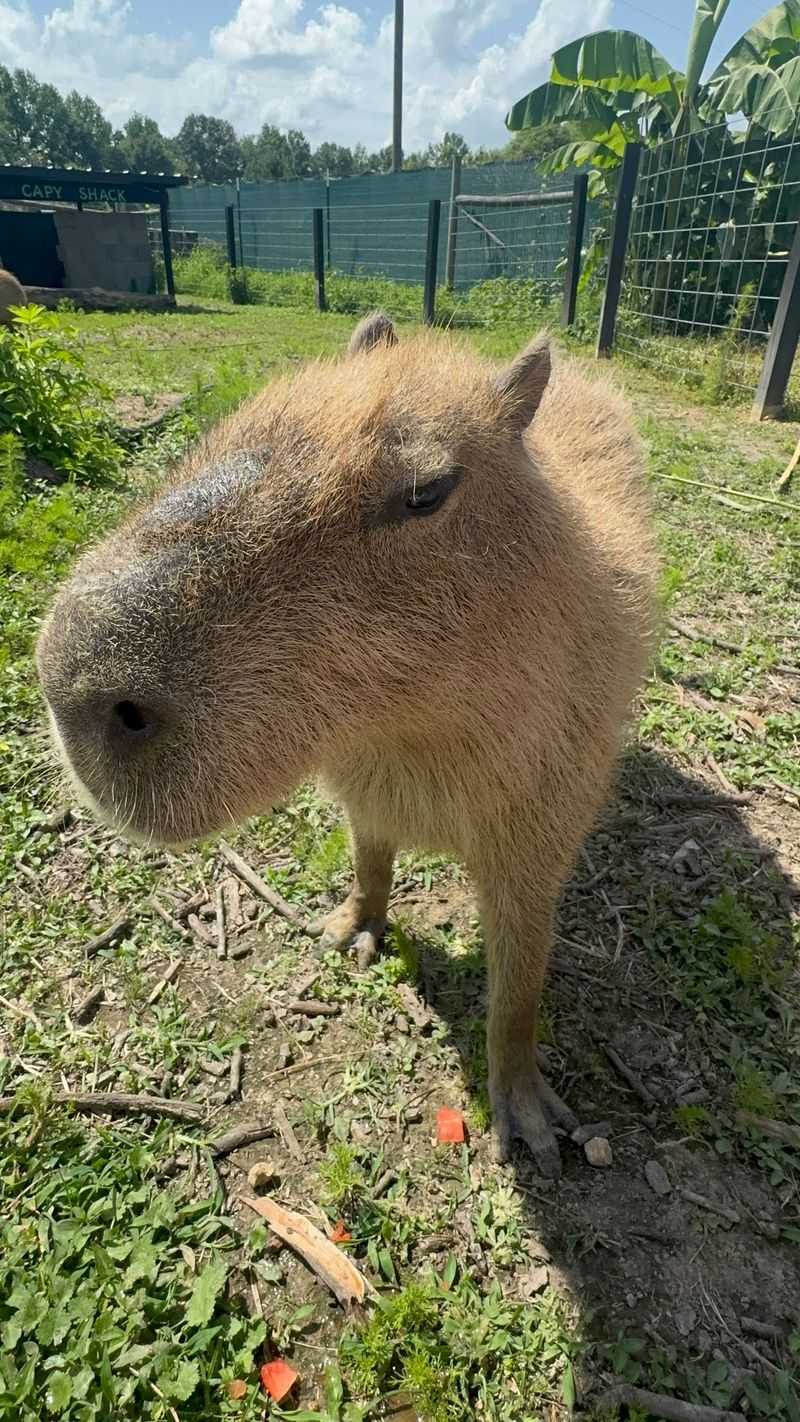
Picture a giant guinea pig with the mood of someone on permanent vacation. That is a capybara, the largest rodent on Earth, and the Wild Reserve has a few of them lounging around like they own the place.
Calm is their whole brand.
Native to South America, capybaras spend much of their time near water in the wild. They are strong swimmers and can even stay underwater for several minutes to hide from danger.
Their eyes, ears, and nose sit high on their heads, a bit like a hippo, so they can peek above the surface.
At the farm, they tend to move at a slow and steady pace. Some visitors catch them napping in the shade, while others find them munching grass without a care in the world.
Nothing seems to bother them much.
That relaxed attitude is a big reason capybaras have become internet stars. Online, they are often shown sitting calmly next to birds, monkeys, and all kinds of other animals.
Seeing one in real life feels like meeting a celebrity who turned out to be totally down to earth.
The reserve sometimes offers special capybara meet-and-greet encounters, which let guests get even closer under a keeper’s guidance. Spots can be limited, so check the official website before the trip to see what is available.
Even without a booked session, a quiet few minutes by their habitat is wonderfully soothing.
Lemurs, Joeys and a Few Delightful Oddballs
Plenty of kids know lemurs from animated movies, but the real ones are even more entertaining. At the Wild Reserve, these wide-eyed primates leap, climb, and peer at visitors with expressions that seem almost human.
A lemur named Dobby has become a favorite of the owners themselves.
Lemurs come only from Madagascar, an island off the coast of Africa, and nowhere else in the wild. The farm has offered a walk-up experience called Lemur Lunch, a fun way to watch feeding time up close.
Ask staff whether it is running on the day of the visit.
Over in another corner, the kangaroos bring their own bouncy charm. Watch closely and a tiny joey might poke its head out of its mother’s pouch.
On some days, guests even get the chance to pet or hold a baby kangaroo for a kangaroo selfie, which tends to become the photo of the year.
Then come the surprises. A porcupine, a clever raccoon, colorful macaws, and elegant white peacocks all call the reserve home.
When a white peacock fans its snowy tail, conversations tend to stop mid-sentence.
Fun fact for the ride home. Porcupines are born with soft quills that harden within a few hours, which makes birth much easier on mom.
Macaws, meanwhile, can live for decades, which means some of these feathered residents may greet visitors for many years to come.
Bring a Bucket, the Goats Are Waiting
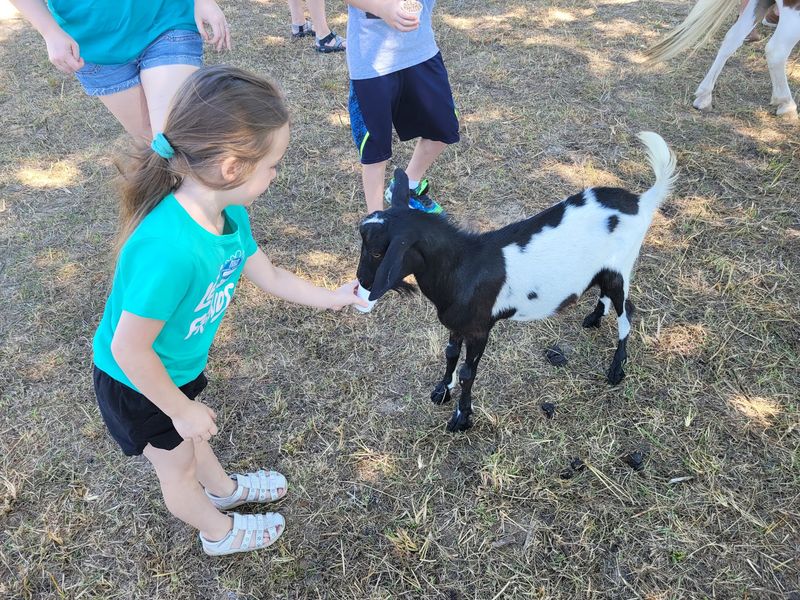
Nothing sparks giggles quite like a goat that has spotted a feed cup. At the petting zoo, the friendly farm crowd knows exactly what visitors carry, and they are not shy about saying hello.
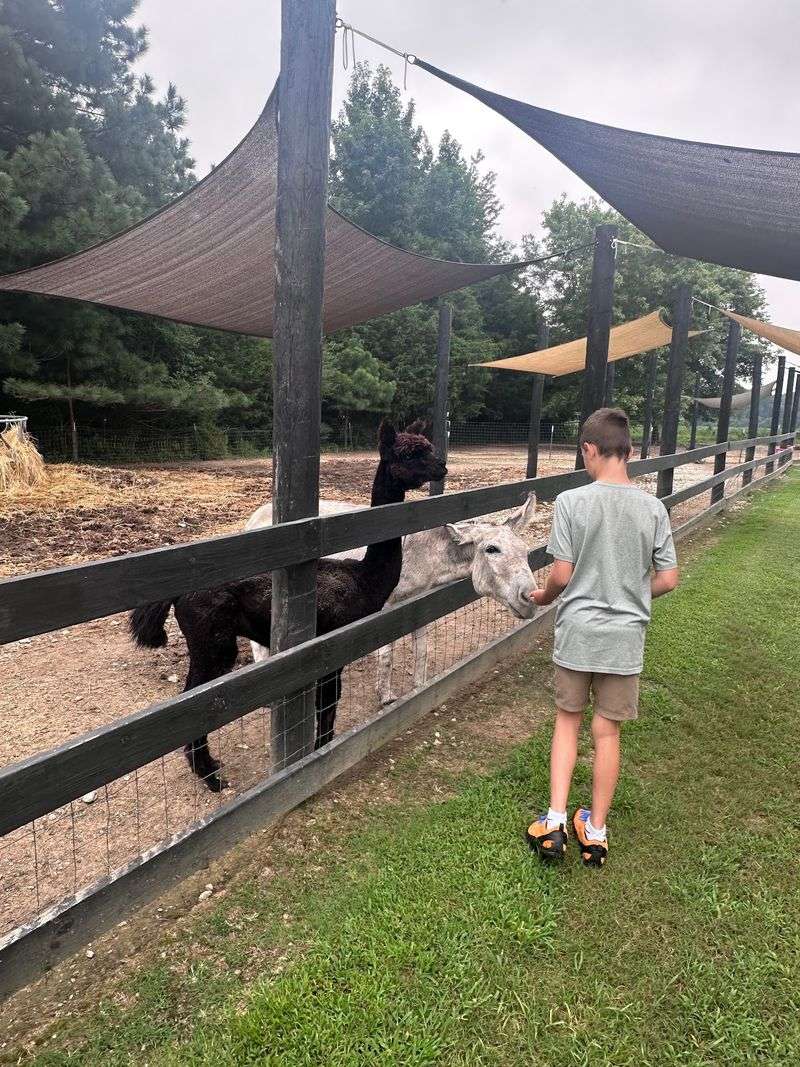
Alpacas with soft, fluffy fleece often steal the spotlight. Llamas, donkeys, goats, and mini horses round out the welcoming committee, each with its own quirky personality.
Some nibble politely, while others seem to think faster eating earns bonus points.
Here is a quick way to tell alpacas and llamas apart. Alpacas are smaller with short, rounded ears, while llamas are taller and have long ears shaped like bananas.
Once kids learn that trick, they tend to point it out at every pen.
Feed is available on site, and the General Store sells official Boyd Family Farm buckets for holding it. Guests can also bring a bucket from home or borrow a free rental one.
Hold the feed with a flat, open palm so eager lips do not mistake fingers for snacks.
The pens are known for being tidy and well kept, and the animals look healthy and content. Hand sanitizer is available around the grounds, so cleanup after feeding is simple.
Younger children should stay close to an adult, especially around the larger donkeys.
Right nearby, a playground and plenty of seating give little legs a break. Parents can rest while kids burn off leftover energy, a win for everyone.
Purple Fingers in Summer, Pumpkins in Fall
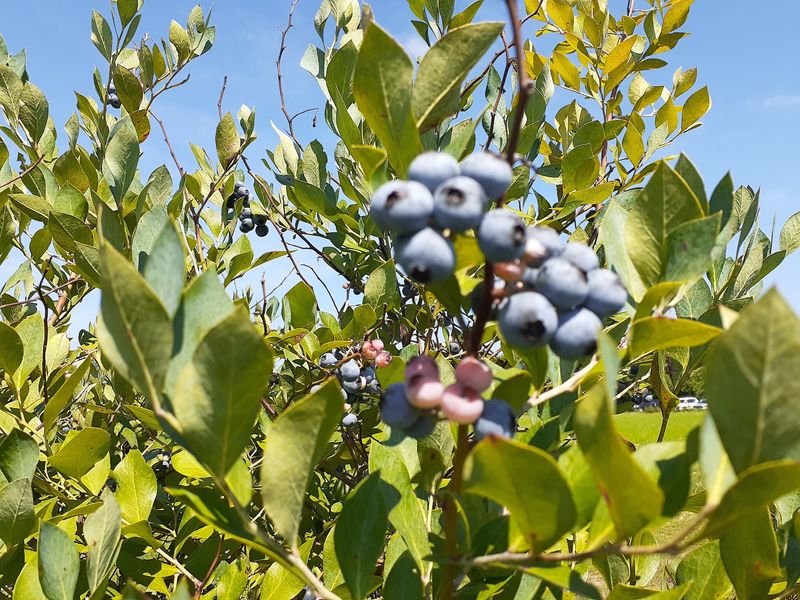
Sticky, purple fingertips are the unofficial souvenir of summer at The Boyd Family Farm. When the berries ripen, the property turns into North Alabama’s largest u-pick blueberry farm, with more than four acres and over 2,000 organic bushes.
Rows stretch out in leafy green lines, dotted with clusters of blue. Some paths are wide and easy for strollers, while others require a little ducking and weaving between branches.
Kids treat it like a treasure hunt.
A quick tip helps a lot. Ripe blueberries should be fully blue with no red or green near the stem, and they roll off easily with a gentle touch.
If a berry resists, it needs a few more days on the bush.
Blueberries are one of the few fruits native to North America, and Indigenous peoples used them for food and natural dye long before farms like this existed. Picking them fresh connects visitors to that long history in a simple, tasty way.
When the air turns crisp, the farm shifts gears for Pumpkin Days. A bright pumpkin patch pops up, and hayrides roll through on Fridays and Saturdays during the season.
Choosing the perfect pumpkin becomes a serious family debate.
Season dates change each year based on weather and crops, so a quick look at the farm’s website or social pages before heading out saves disappointment. Wear sturdy shoes, bring sunscreen in summer, and pack a jacket for cool fall mornings.
Picnic Blankets, Pavilions and Other Smart Moves
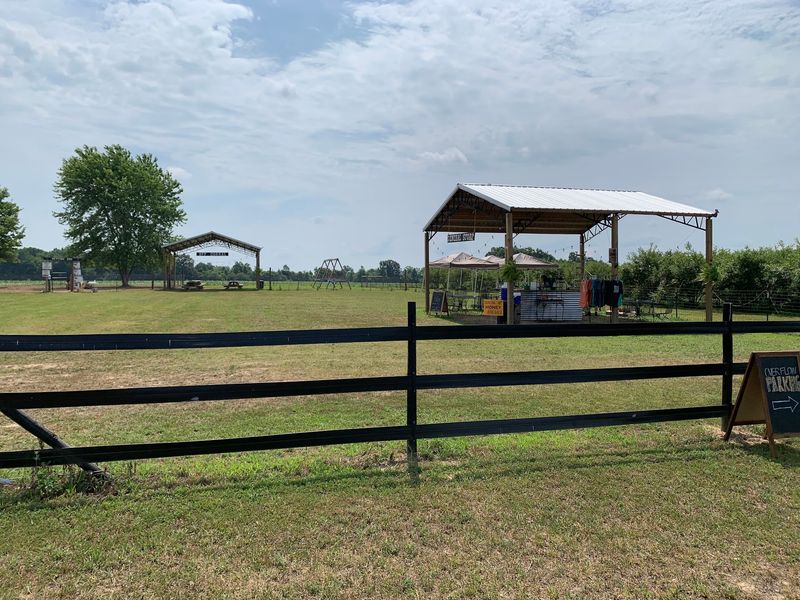
A good farm day runs on snacks, sunscreen, and a loose plan. The Wild Reserve keeps things simple, which is part of its charm.
Regular hours run Wednesday through Saturday from 9 am to 4 pm, with Sunday afternoon visits from 1 to 5 pm. The farm is closed on Mondays and Tuesdays.
The entrance drive is a shared country road with pull-offs for passing cars, so take it slow and enjoy the scenery. Parking is straightforward once there.
A dedicated picnic area welcomes families who bring their own lunch. Spreading out a blanket with animal sounds drifting in the background makes even a plain sandwich feel special.
Planning a birthday instead? Pavilions can be rented for gatherings of up to 50 guests, offering an open-air setting that kids remember.
Animal lovers who want a deeper look can ask about the keeper experience, which brings guests closer to several residents with a knowledgeable guide. Teachers can also reach out about school field trips, since the reserve welcomes educators and classes.
Plan on at least an hour to see everything, longer with little ones who want to feed every goat twice. Arriving right at opening often means quieter paths and hungrier animals.
Kids also love the farm slide, which moves faster than it looks.
