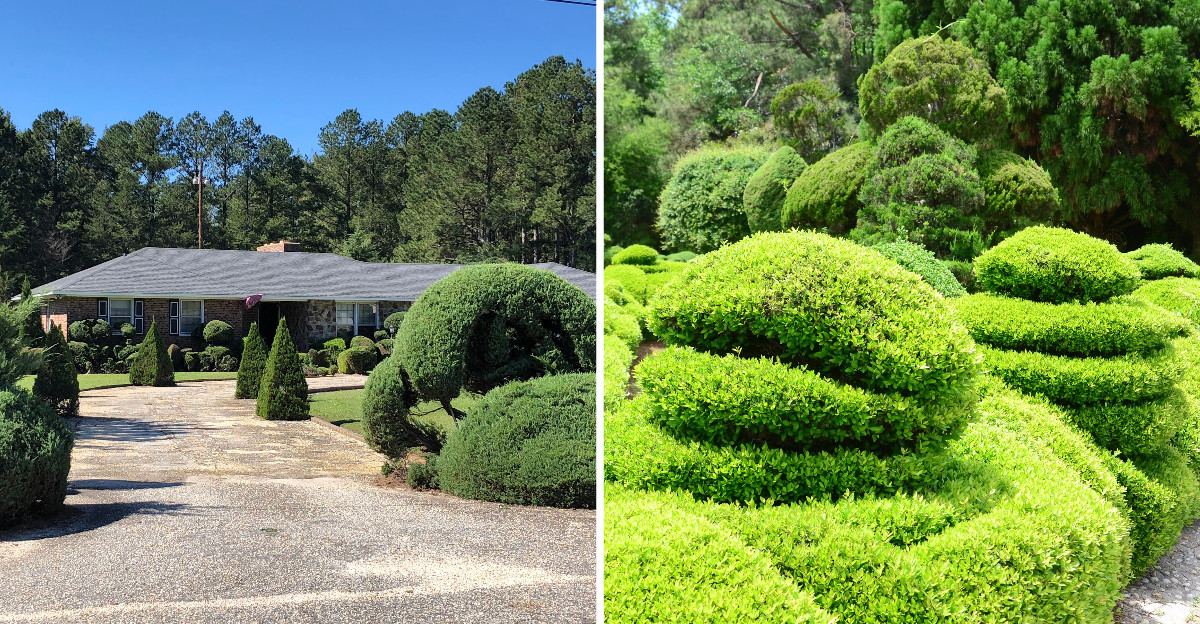
Spirals, arches, and curling green towers rise out of an ordinary front yard in South Carolina, and the shapes start appearing before the brain can make sense of them. Nothing about the road suggests anything unusual.
Then the turn is almost missed. Parking on the grass, stepping out, standing there grinning like a kid at a carnival.
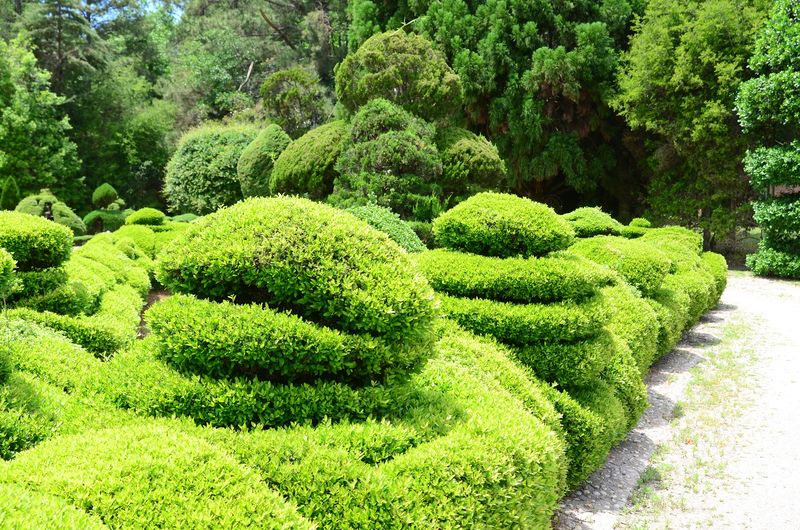
One man shaped all of this himself, using plants that nurseries had tossed onto compost piles because nobody wanted them. Three acres of rescued shrubs, trimmed into swooping abstract forms that look more like modern art than landscaping.
What was meant as a quick photo stop turned into an hour of wandering, completely charmed. The garden is free to visit, and the man who made it still lives nearby, occasionally stepping out to chat with visitors.
Most people drive past without knowing what waits behind the fence. South Carolina hides this kind of surprise in plain sight.
The Cornfield That Became a Canvas
Hard to believe, but all of this started as rows of corn. When Pearl Fryar and his wife Metra settled in Bishopville in the late 1970s, the land beside their house was farmland, plain and unremarkable.
He cleared it himself in the early 1980s and began planting, with no plan grand enough to predict what would follow.
What pulled me in was how the space still feels like a yard rather than a museum. There are no ticket booths or velvet ropes, just a house, a driveway, and shapes that keep multiplying the farther you walk.
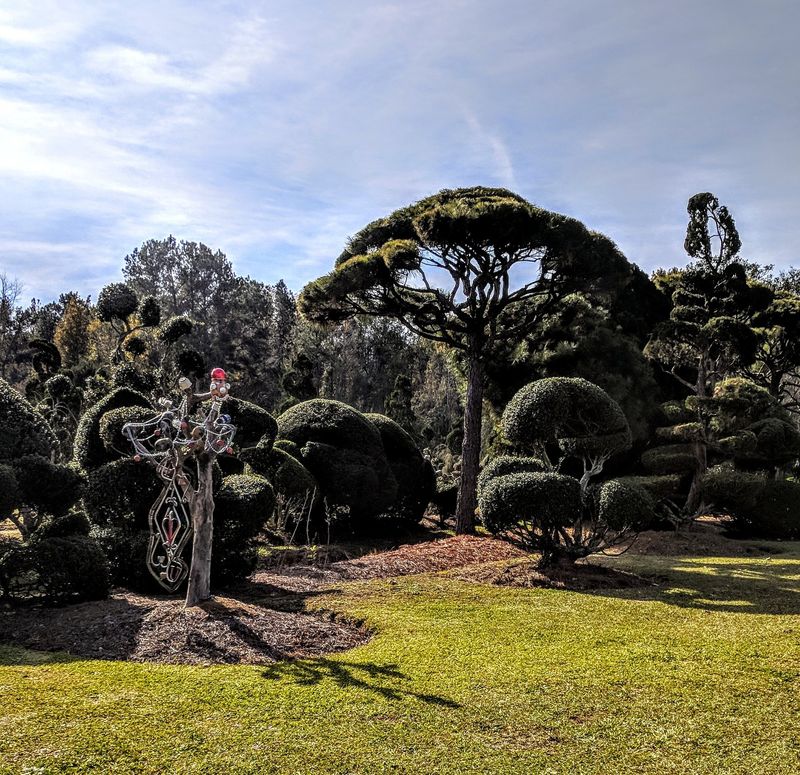
Over 400 sculpted plants fill the property now, and they lean, twist, and arch in ways that make the flat Carolina landscape feel suddenly three-dimensional.
I kept turning around to look at forms I had already passed, because they change completely depending on where you stand.
The scale sneaks up on you slowly. From the road it looks like a tidy front garden, but once you walk behind the house the sculptures keep going, stretching back across the old cornfield in loose, wandering rows that invite you deeper.
Rescued From the Compost Pile
Most gardeners buy healthy plants. Pearl Fryar dug through nursery scrap heaps instead, hauling home the half-dried leftovers other people had given up on.
Those discarded shrubs became the backbone of everything growing here, which is the detail I keep repeating to friends who ask about the trip.
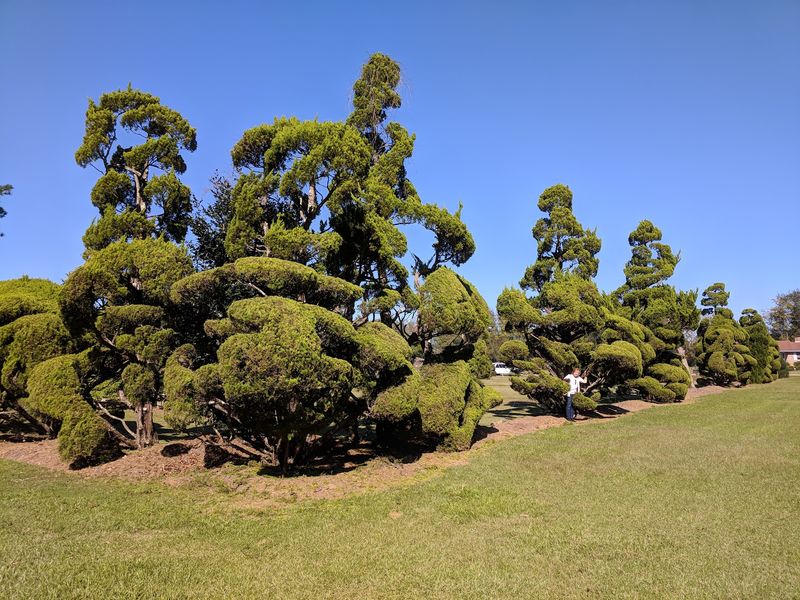
Dwarf yaupon hollies, Hollywood junipers, Leyland cypresses, boxwood, yew, fir, and loblolly pine all found second lives under his clippers. Some of them are not even species that typically do well in this part of South Carolina, yet they thrived anyway.
He worked without pesticides or fertilizers and rarely watered, which honestly sounds impossible until you see the results standing in front of you.
There is something quietly hopeful about a garden built entirely from rejects. Nobody expected these plants to live, let alone become art that draws travelers from other continents.
I walked away thinking about how much potential gets thrown out simply because it looks rough at first glance, and how one patient person with a pair of shears proved otherwise for four decades straight.
That idea follows you through the entire property. Trees that might have ended up in a landfill instead became towering sculptures with curves, spirals, and shapes nobody could have predicted.
The garden feels like proof that patience can completely rewrite the future of something once considered damaged, unwanted, or simply not worth saving.
Why They Call Him the Picasso of Plants
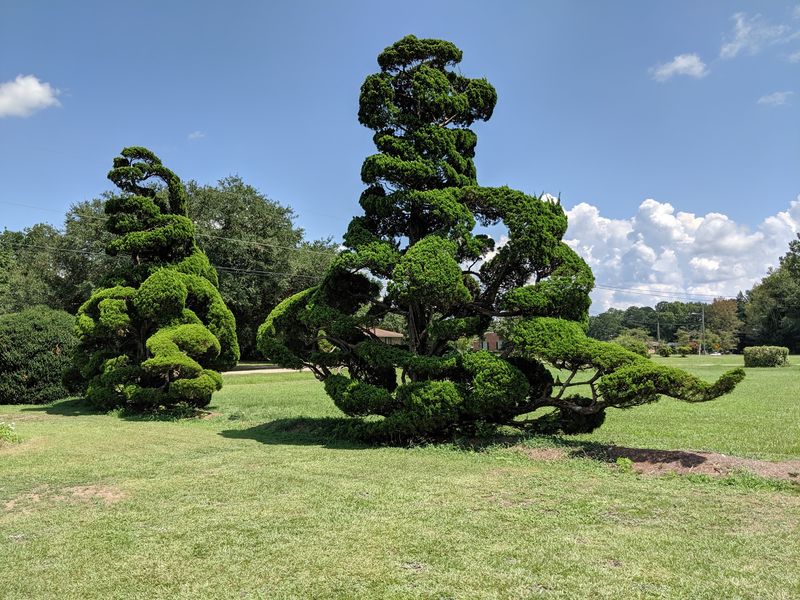
Forget the hedge animals you see at theme parks. Nothing here looks like a rabbit or a teddy bear, and that is exactly the point.
Fryar never took a horticulture class, never studied under a master gardener, and never learned the traditional rules of topiary. So he ignored them entirely.
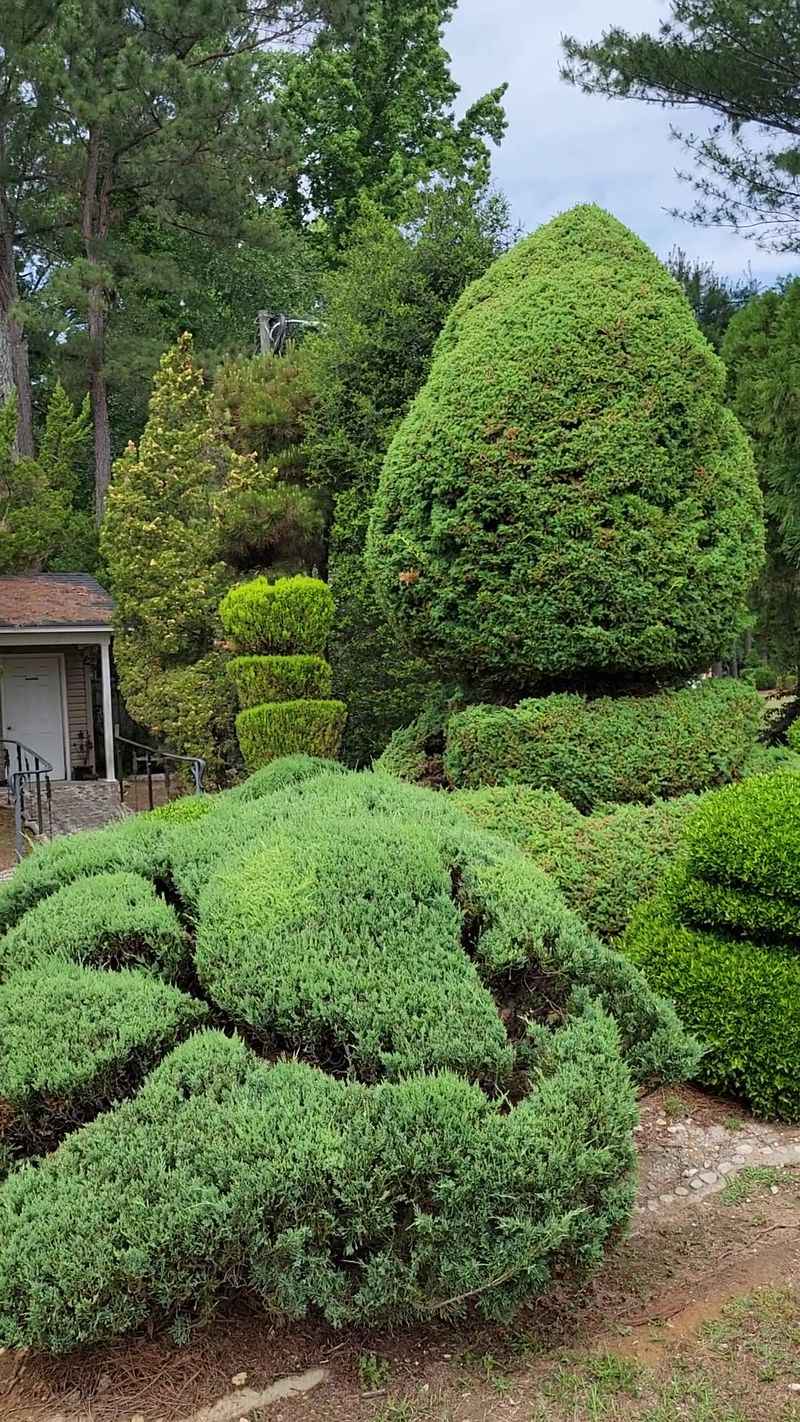
His shapes curl outward in loops and fins and stacked layers, some of them balanced on impossibly thin trunks. The nickname Picasso of Plants fits, because the forms are abstract enough that two visitors standing side by side will describe them differently.
I thought one looked like a cresting wave. The person walking behind me said it reminded them of a chess piece.
He used a plain electric hedge trimmer and hand clippers for most of it, and in 2009 he finally got a cherry picker to reach the tallest work.
Knowing the tools were that simple made the whole place more impressive, not less. It is proof that vision matters more than equipment, and that untrained eyes sometimes see possibilities trained ones never would.
Love, Peace and Goodwill Written in Greenery
A message runs through this property, and once you notice it you start seeing it everywhere. Love, Peace and Goodwill.
Fryar spelled it out in the garden itself, turning his lawn into a statement rather than just decoration.
The words carry extra weight when you know the backstory. He originally wanted to win the local garden club’s Yard of the Month award, partly in response to being told by residents of an all-white neighborhood that a Black family would not keep up a property properly.
He answered that with shears and stubbornness, and eventually with three acres nobody could argue with.
What struck me most was the absence of bitterness in the place. There is no monument to the slight, no plaque rehashing the insult, just an enormous amount of beauty offered freely to anyone who drives up.
His philosophy leaned on positive thinking, hard work, and refusing to quit.
Reading those three words while surrounded by plants he saved from the trash made the whole visit land differently than I expected. It is a garden with a spine.
Junk Art Tucked Between the Hedges
Between the sculpted shrubs, another whole collection waits for anyone paying attention. Scrap metal, old pottery, glass bottles, cast-off machine parts, all repurposed into sculptures that sit right alongside the living work.
Some carry words. Hate Hurts.
Peace. Love.
I found a fountain built from an old stove, which made me laugh out loud, and a bare tree hung with bells and chains that rang faintly when the breeze moved. The junk art keeps the garden from feeling too precious.
It reminds you that this is somebody’s yard, assembled over years from whatever happened to be available.
Look down as you walk, because plenty of small pieces sit low to the ground and are easy to stride right past. Cats sometimes wander through too, adding to the lived-in feeling.
The mix of metal and greenery gives the place texture that photographs never quite capture, since half the charm comes from discovering things in an order nobody planned.
Give yourself time to poke around rather than rushing the loop. The details are where the personality hides.
The Neighbors Caught the Bug Too
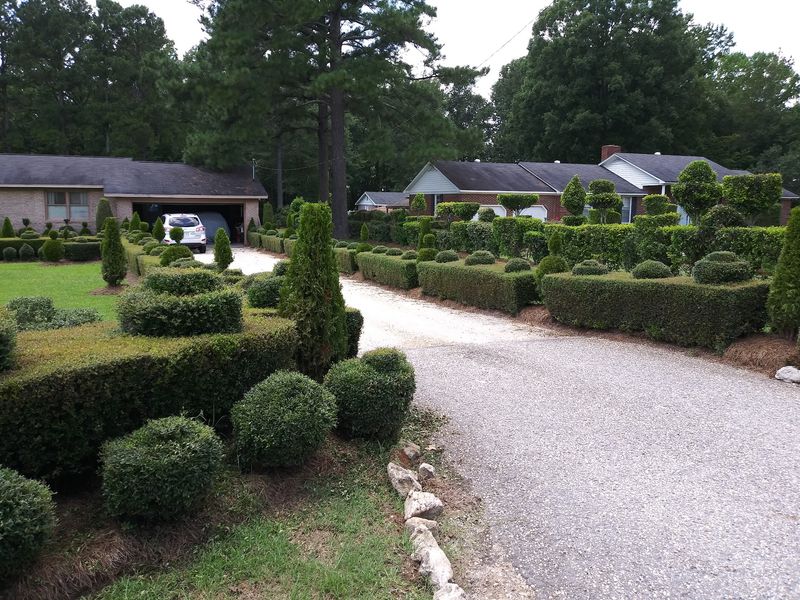
Here is something nobody told me before I went: the garden does not stop at the property line. Drive slowly down Broad Acres Road and you will spot trimmed shapes in other front yards, clearly inspired by the work next door.
Neighbors picked up clippers and started shaping their own shrubs over the years.
Some of Fryar’s work even shows up around Bishopville itself, so the town gives you a preview before you reach the main event. I noticed sculpted forms near the road and wondered if I had already arrived.
Walking the street instead of driving it is the better choice, assuming the weather cooperates.
The pace is slow out here, traffic is almost nonexistent, and the whole block has an unhurried quality that makes you breathe differently. One artist changed how an entire neighborhood thinks about its yards, which might be the most impressive part of the whole story.
Budget a few extra minutes for that stroll. It turns a quick stop into an actual experience, and it costs nothing but time.
Planning Your Visit to Bishopville
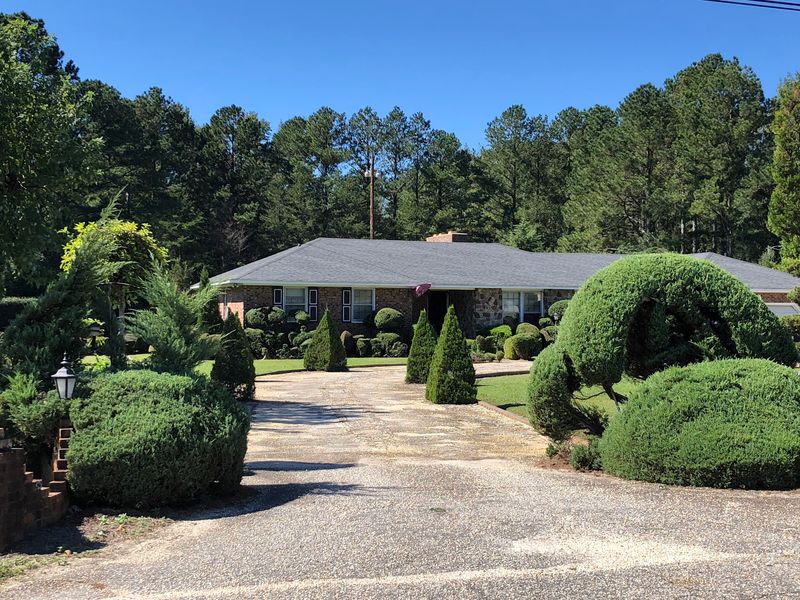
Practical stuff helps here, since the garden is genuinely easy to miss. Parking is a big grassy lot across the road from the house, and the information station with brochures sits on the right side of the property as you face it.
Restrooms are around the back on that same side.
Admission is free, which still surprises people, though a donation box sits near the entrance and the nonprofit that maintains the grounds relies on it. Fryar passed away in April 2026, and Pearl Fryar Topiary Garden, Inc. now cares for the property as a living memorial.
Open Tuesday through Saturday from 10 am to 4 pm, closed Sunday and Monday.
Most visitors spend roughly thirty minutes walking the self-guided route, longer if you stop to examine the junk art or chat with whoever is working that day.
Watch the 2006 documentary A Man Named Pearl beforehand if you can, because understanding the effort behind each shape changes how you see them.
It is an easy stop to fit into a road trip, but leave enough time to slow down and appreciate the details.
Address: 145 Broad Acres Road, Bishopville, South Carolina
